 Opel Astra H (2004–2010)
Specs, engines, safety and known problems
Published Sources (6) Report an error
By Felix Hartmann, Automotive Technology & EV Contributor Reviewed by Oleksandr Hnatiuk
- Power
- 66–177 kW (90–241 PS)
- Boot
- 380 l
- Generation
- 3 of 6
Model timeline
Where the H sits in the Astra story
Predecessor Astra G (1998–2004) Successor Astra J (2009–2015)


H and J overlapped in 2009–2010, so J sits on a second lane
Newest first · 6 generations since 1991
-
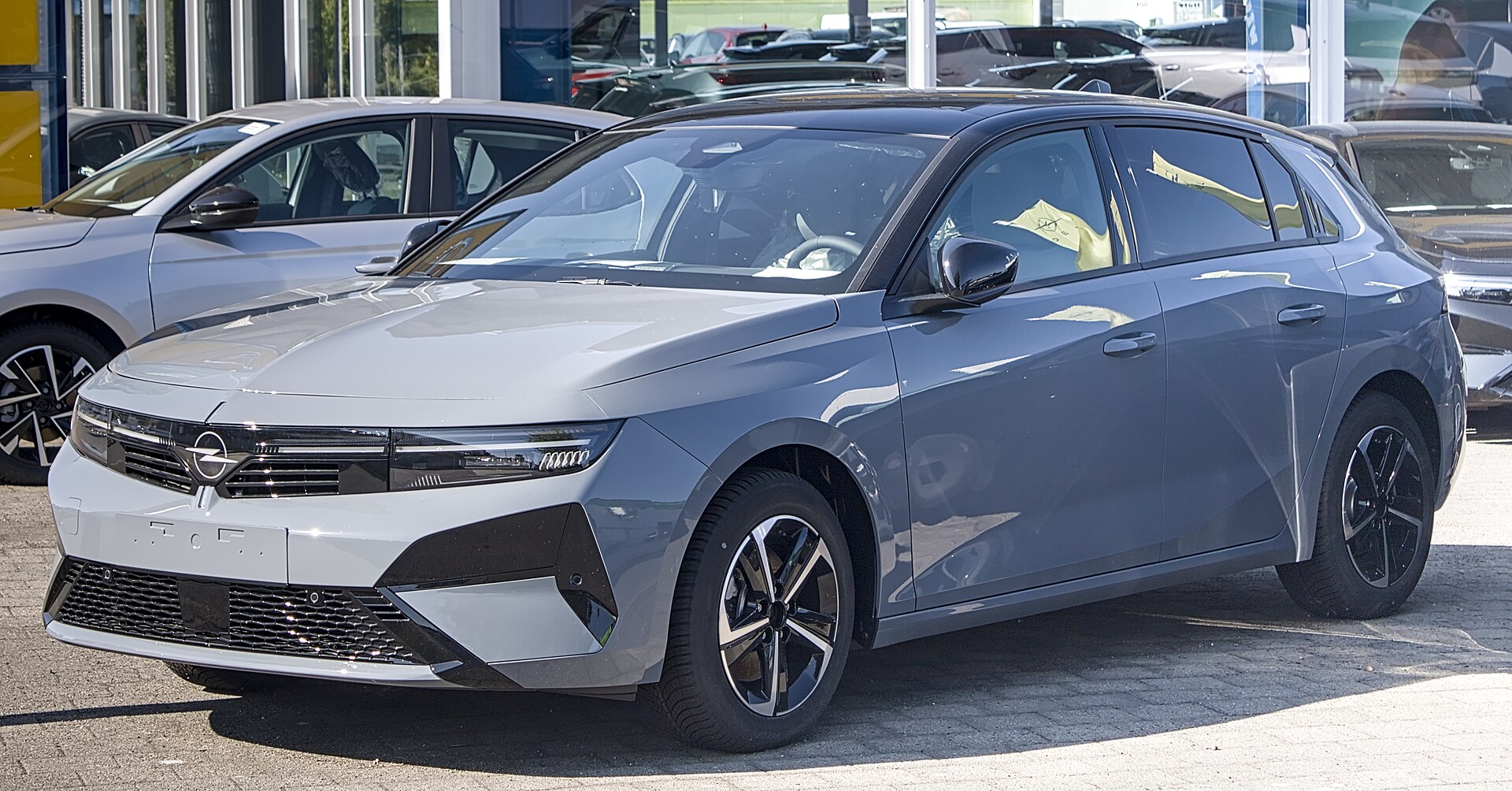
2021
-
2015
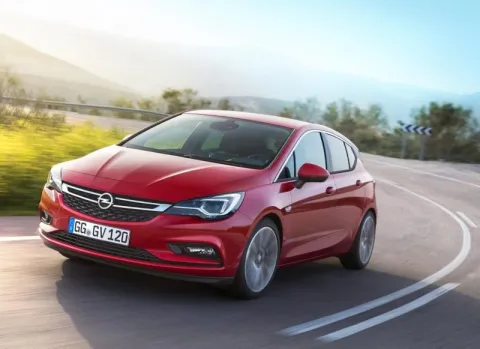 K 2015–2021 · Hatchback, Station wagon · 66–147 kW (90–200 PS)
-
2009
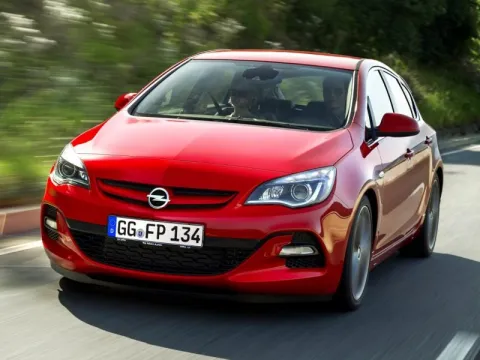 J 2009–2015 · Sedan, Hatchback · 64–206 kW (87–280 PS)
H and J overlapped in 2009–2010
-
2004
-
1998
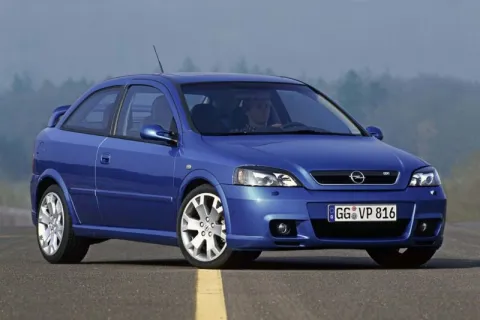 G 1998–2004 · Sedan, Hatchback · 48–147 kW (65–200 PS)
-
1991
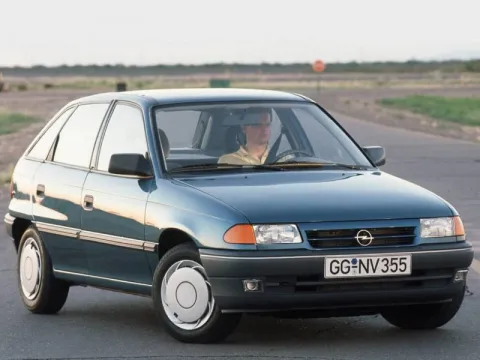 F 1991–1998 · Sedan, Hatchback · 42–110 kW (57–150 PS)
All generations by year: Astra L (2021–now) · Astra K (2015–2021) · Astra J (2009–2015) · Astra H (2004–2010) · Astra G (1998–2004) · Astra F (1991–1998)
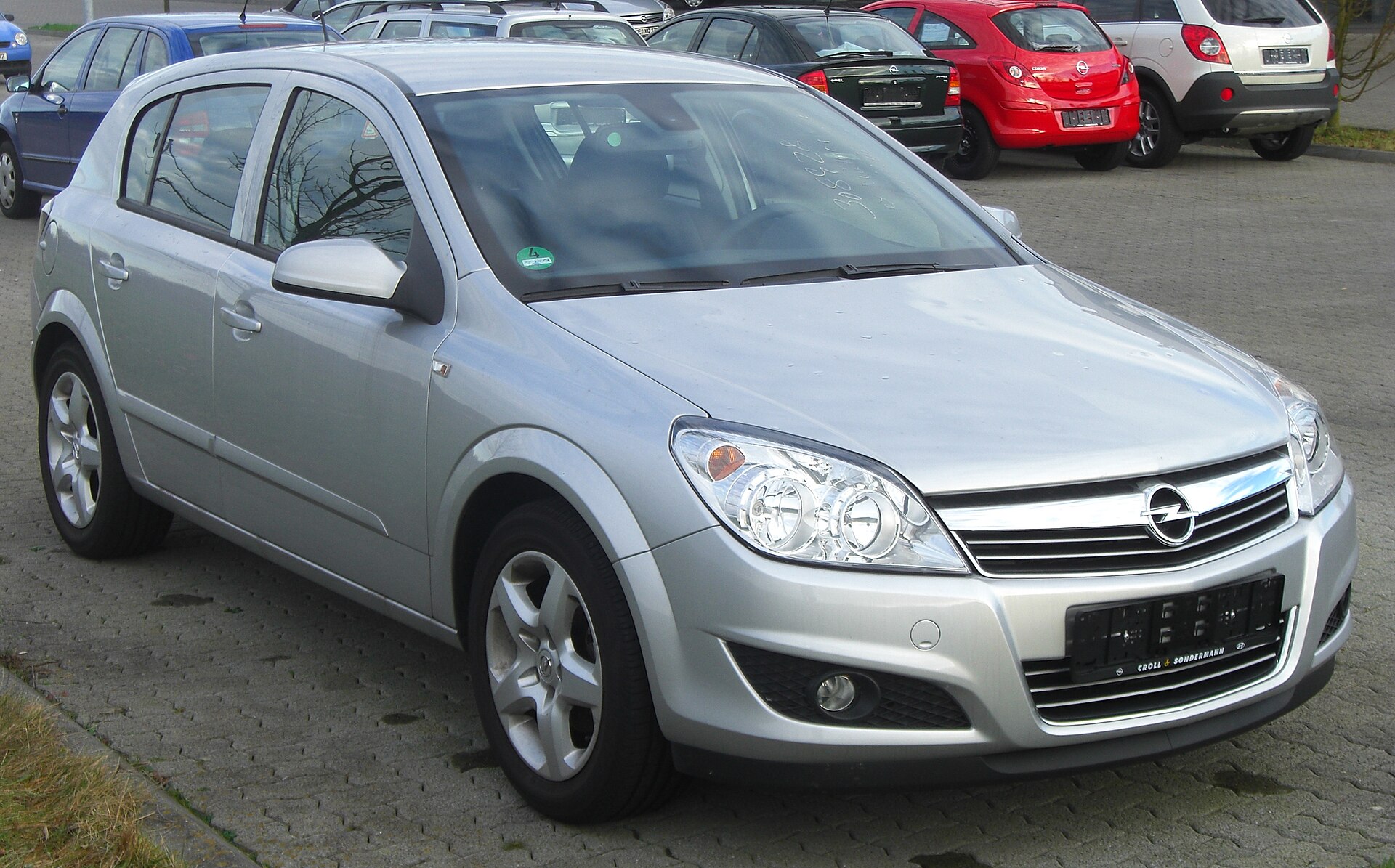
The Opel Astra H is the third Astra, made for Europe from March 2004 until September 2010. It is the generation that brought the three-door GTC, the TwinTop folding hardtop and a 177 kW OPC. Sold in Britain as the Vauxhall Astra Mk5, it came with six airbags and ESPplus stability control as standard on German-market cars.
In short
- Five-door from 2004, Caravan estate from August 2004, GTC from March 2005, TwinTop from May 2006 and a saloon from October 2006.
- Petrol engines from a 66 kW (90 PS) 1.4 to the OPC's 2.0 Turbo with 177 kW (240 PS); diesels from 1.3 to 1.9 CDTI.
- A facelift in February 2007 brought clear rear lamps and new bumpers; a diesel particulate filter became standard from late 2006.
- Built mainly in Poland, Belgium and Germany; an Astra Classic III version stayed in German production until December 2014.
Size at a glance
Peugeot 308 II
The Opel Astra H is 51 mm narrower and 17 mm lower than the Peugeot 308 II.
| Dimensions | Opel Astra H | Peugeot 308 II | Difference |
|---|---|---|---|
| Length | 4,249 mm167.3 in | 4,253 mm167.4 in | −4 mm−0.2 in |
| Width | 1,753 mm69.0 in | 1,804 mm71.0 in | −51 mm−2.0 in |
| Height | 1,440 mm56.7 in | 1,457 mm57.4 in | −17 mm−0.7 in |
| Wheelbase | 2,614 mm102.9 in | 2,620 mm103.1 in | −6 mm−0.2 in |
| Boot | 380 L13.4 cu ft | 470 L16.6 cu ft | −90 L−3.2 cu ft |
Ford Focus II
The Opel Astra H is 239 mm shorter, 87 mm narrower and 57 mm lower than the Ford Focus II.
| Dimensions | Opel Astra H | Ford Focus II | Difference |
|---|---|---|---|
| Length | 4,249 mm167.3 in | 4,488 mm176.7 in | −239 mm−9.4 in |
| Width | 1,753 mm69.0 in | 1,840 mm72.4 in | −87 mm−3.4 in |
| Height | 1,440 mm56.7 in | 1,497 mm58.9 in | −57 mm−2.2 in |
| Wheelbase | 2,614 mm102.9 in | 2,640 mm103.9 in | −26 mm−1.0 in |
| Boot | 380 L13.4 cu ft | 526 L18.6 cu ft | −146 L−5.2 cu ft |
Opel Astra G
The Opel Astra H is 139 mm longer, 44 mm wider and 15 mm taller than the Opel Astra G.
| Dimensions | Opel Astra H | Opel Astra G | Difference |
|---|---|---|---|
| Length | 4,249 mm167.3 in | 4,110 mm161.8 in | +139 mm+5.5 in |
| Width | 1,753 mm69.0 in | 1,709 mm67.3 in | +44 mm+1.7 in |
| Height | 1,440 mm56.7 in | 1,425 mm56.1 in | +15 mm+0.6 in |
| Wheelbase | 2,614 mm102.9 in | 2,606 mm102.6 in | +8 mm+0.3 in |
| Boot | 380 L13.4 cu ft | 370 L13.1 cu ft | +10 L+0.4 cu ft |
Astra H specs by version
Engines
| Version | Engine | Power | Drive |
|---|---|---|---|
| Diesel · 3 versions | |||
| 1.7 74 kW (101 PS) | 1.7 l · Diesel 1,700 cc | 74 kW 101 PS99 hp | Front-wheel drive |
| 1.7 92 kW (125 PS) | 1.7 l · Diesel 1,700 cc | 92 kW 125 PS123 hp | Front-wheel drive |
| 177 kW (241 PS) | Diesel | 177 kW 241 PS237 hp | Front-wheel drive |
| Petrol · 1 version | |||
| 1.3 66 kW (90 PS) | 1.3 l · Petrol 1,300 cc | 66 kW 90 PS89 hp | Front-wheel drive |
| Other · 1 version | |||
| 1.6 85 kW (116 PS) | 1.6 l 1,600 cc | 85 kW 116 PS114 hp | Front-wheel drive |
Performance
Show all 1 versions
| Version | 0–100 km/h | Top speed |
|---|---|---|
| 177 kW (241 PS) | 6.4 s 0–62 mph | 244 km/h152 mph |
Dimensions and weight
Show all 5 versions
| Version | Height |
|---|---|
| Diesel · 3 versions | |
| 1.7 74 kW (101 PS) | 1,440 mm56.7 in |
| 1.7 92 kW (125 PS) | 1,440 mm56.7 in |
| 177 kW (241 PS) | 1,440 mm56.7 in |
| Petrol · 1 version | |
| 1.3 66 kW (90 PS) | 1,440 mm56.7 in |
| Other · 1 version | |
| 1.6 85 kW (116 PS) | 1,440 mm56.7 in |
Verified Manufacturer and type-approval data from our catalog · Sources and methodology
What Opel changed after the Astra G
The H was longer than the car it replaced by roughly 10 to 23 cm, depending on body style, according to German Wikipedia. Sources disagree on what to call its platform: German Wikipedia names GM's Delta architecture, also used by Vauxhall, Holden and Saturn, while English Wikipedia describes an updated version of the older GM T platform. Either way, the mechanical layout stayed conventional, with transverse engines and front-wheel drive.
The bigger change was in equipment and chassis electronics. German-market cars came with six airbags, ABS, ESPplus stability control, TCplus traction control, Cornering Brake Control and brake assist as standard. Options included IDS+ electronic damper control, adaptive forward lighting with bi-xenon headlamps, a DVD navigation system, Bluetooth hands-free, tyre pressure monitoring and parking sensors. That list put the H closer to the class leaders of its day than the more basic G.
During its run the 10-millionth Astra was built, in 2008, a figure German Wikipedia gives for the whole Astra line. How the H compares with the five other Astras is summarised in the Opel Astra model overview.
Body styles from 2004 to 2010 and the 2007 facelift
German Wikipedia gives these production windows for the European cars:
- Five-door hatchback: March 2004 to September 2009.
- Caravan estate: August 2004 to September 2010.
- GTC three-door: March 2005 to September 2010, sold as the Sport Hatch in the UK.
- TwinTop: May 2006 to 2010, with a folding steel roof; English Wikipedia says the last cars were built in November 2010.
- Saloon: October 2006 to March 2010, aimed mainly at Eastern Europe; it reached German showrooms only in October 2008, with the 1.6 Twinport engine.
- Astravan: a three-door panel van added in 2006.
The facelift of February 2007 swapped the body-coloured rear lamp lenses for clear ones and changed both bumpers. The GTC and TwinTop received only a new grille with a rectangular mesh insert. A diesel particulate filter, optional at launch, became standard with the late-2006 update.
In Germany, list prices in June 2007 ran from 16,360 to 30,150 euros, according to German Wikipedia. After the J arrived, a cheaper Astra Classic III kept the H going in Germany until December 2014. In North America the car was sold as the Saturn Astra for 2008 and 2009, built in Belgium with a 1.8 engine.
Twinport, CDTI and turbo engines of the Astra H
English Wikipedia lists outputs in PS; the kW values below are converted from those figures, except where German Wikipedia gives kW directly. All versions are front-wheel drive.
| Engine | Code | Power |
|---|---|---|
| 1.4 Twinport | Z14XEP | 66 kW (90 PS) |
| 1.6 Twinport | Z16XEP | 77 kW (105 PS) |
| 1.6 | Z16XER | 85 kW (115 PS) |
| 1.6 Turbo | Z16LET | 132 kW (180 PS) |
| 1.8 | Z18XE / Z18XER (from Dec 2005) | 92 kW (125 PS) / 103 kW (140 PS) |
| 2.0 Turbo | Z20LEL / Z20LER | 125 kW (170 PS) / 147 kW (200 PS) |
| 2.0 Turbo OPC | Z20LEH | 177 kW (240 PS) |
| 1.3 CDTI | — | 66 kW (90 PS) |
| 1.7 CDTI | — | 59 to 92 kW (80 to 125 PS) |
| 1.9 CDTI | — | 74 to 110 kW (100 to 150 PS) |
The 1.3 CDTI won its class (1.0 to 1.4 litres) in the International Engine of the Year awards in 2005. The 1.7 CDTI came from Isuzu, and its 92 kW (125 PS) version arrived in 2007.
A five-speed manual was standard, with a six-speed manual on stronger engines. Opel also offered four- and six-speed automatics and Easytronic, an automated manual with five gears; German Wikipedia mentions a six-speed Easytronic for the 1.3 CDTI. Every version had a 52 L (11.4 UK gal) tank.
OPC and VXR: the 177 kW flagship
The Astra OPC went on sale in autumn 2005, based on the GTC body. Its 2.0 turbo engine produces 177 kW, quoted as 240 PS in most sources and 241 PS in some. German Wikipedia gives 6.4 seconds from 0 to 100 km/h and 244 km/h (152 mph). In Britain the same car was the Astra VXR.
Wider bumpers and sills, a centre-exit exhaust, 18-inch wheels (19-inch optional) and Recaro sports seats set it apart. At the end of October 2005, Manuel Reuter lapped the Nürburgring Nordschleife in 8:35.93 minutes, beating the previous class record by four seconds. A Nürburgring Edition of 2008 was limited to 835 cars with 19-inch two-tone wheels and IDS-Plus2 damping. The 2009 Race Camp, painted white with black details, used the mechanical chassis of the British VXR and had less equipment. The OPC was built until September 2010.
Astra H size by body: GTC, Caravan, TwinTop
The figures mix two sources: five-door length and height are rounded values from German Wikipedia, the other bodies come from English Wikipedia. Boot volumes are German Wikipedia figures (rear seats up / folded).
| Parameter | Metric | Imperial |
|---|---|---|
| Length: five-door (about) | 4,250 mm | 167.3 in |
| Length: GTC / Caravan | 4,288 / 4,515 mm | 168.8 / 177.8 in |
| Length: saloon / TwinTop | 4,587 / 4,476 mm | 180.6 / 176.2 in |
| Width without / with mirrors (about) | 1,750 / 2,030 mm | 68.9 / 79.9 in |
| Height: GTC / Caravan / TwinTop | 1,415 / 1,500 / 1,411 mm | 55.7 / 59.1 / 55.6 in |
| Wheelbase: saloon and Caravan | 2,703 mm | 106.4 in |
| Boot: five-door | 380–1,295 L | 13.4–45.7 cu ft |
| Boot: GTC | 340–1,070 L | 12.0–37.8 cu ft |
| Boot: Caravan | 500–1,590 L | 17.7–56.2 cu ft |
| Boot: TwinTop, roof closed / open | 440 / about 200 L | 15.5 / 7.1 cu ft |
German Wikipedia gives the GTC height as about 1.44 m, so the two sources do not agree on that figure. The Caravan is the practical choice here and competes with other estate cars of the period, including the Skoda Octavia Combi.
Astra H in the 2004 Euro NCAP test
The car Euro NCAP crashed in 2004 was a left-hand-drive 1.6 Enjoy. English Wikipedia lists the result as 34 points for adult occupant protection, 39 for child occupants and 3 for pedestrian protection. We could not open the Euro NCAP record itself, so this page does not state a star rating. ADAC also crash-tested the H in 2004, but its result is not given in our sources.
The US-market Saturn Astra was rated by the IIHS, but it is a different specification and those results should not be read across to European cars. What can be said with confidence is the standard kit listed above: six airbags and ESPplus on German-market cars from launch.
Buying an Astra H today
The H is old enough that condition and history matter more than the badge. A few points come from the sources we used:
- Gearbox: German Wikipedia says the six-speed M32 manual fitted to the 1.7 CDTI (Z17DTH) is more failure-prone than the five-speed F23. Listen for gearbox noise on a test drive.
- Diesel particulate filter: the filter regenerates roughly every 1,000 to 2,000 km. While it does, fuel use rises by 5 to 10 L/100 km for a few kilometres.
- TwinTop roof: with the roof folded, the boot shrinks to about 200 L, so check that the mechanism opens and closes fully before buying.
- Easytronic: an automated manual rather than a torque-converter automatic, so it shifts differently; drive one before deciding.
For performance, the OPC is the pick, and the Nürburgring Edition the rarest version. For everyday use, the 1.8 with 103 kW (140 PS) or a 1.9 CDTI in the Caravan are the more versatile options. Rivals of the same era included the Ford Focus, while the larger Opel Vectra sat above it in the range. Current models are listed in the Opel catalogue.
Did you know?
- The Astra H is generation 3 of 6 of the Opel Astra in our catalog.
- The Astra H offers up to 177 kW (241 PS) — 30 kW more than the Astra G (1998–2004) (+20%).
- At up to 4,249 mm long, it is 139 mm longer than the Astra G (1998–2004).
Image credits · Photos from Wikimedia Commons under free licences
- Opel Astra F · Photo: Mr.choppers / Wikimedia Commons, CC BY-SA 3.0
- Opel Astra G · Photo: The original uploader was Topfklao at German Wikipedia. / Wikimedia Commons, Attribution
- Opel Astra H · Photo: No machine-readable author provided. M 93 assumed (based on copyright claims). / Wikimedia Commons, CC BY-SA 3.0
- Opel Astra J · Photo: Acgskup / Wikimedia Commons, CC BY 4.0
- Opel Astra K · Photo: Danny Galvez from Pinoso, España / Wikimedia Commons, CC BY-SA 2.0
- Opel Astra L · Photo: Alexander Migl / Wikimedia Commons, CC BY-SA 4.0
H rivals
-
Ended 2021
- Years
- 2013–2021
- Body
- Hatchback
- Fuel
- Petrol, Diesel
- Power
- 60–199 kW (82–271 PS)
-
EV version
Ended 2025
- Years
- 1998–2025
- Body
- Sedan, Hatchback
- Fuel
- Petrol, Diesel, Electric
- Power
- 63–257 kW (86–349 PS)
4 generations
- I
- II
- C346
- IV
-
Ended 2004
- Years
- 1987–2004
- Body
- Hatchback
- Fuel
- Petrol
- Power
- 40–53 kW (54–72 PS)


FAQ
When did Astra H production start and end?
European production ran from March 2004 to September 2010. The five-door ended in September 2009, the other bodies in 2010, and an Astra Classic III was built in Germany until December 2014.
How much power does the Astra H OPC have?
The OPC's 2.0 turbo engine gives 177 kW (240 PS), with 0 to 100 km/h in 6.4 seconds and a top speed of 244 km/h (152 mph). It was sold as the VXR in the UK.
What is the Astra H TwinTop?
It is a two-door convertible with a folding steel roof, built from May 2006 to 2010. Boot space is 440 L with the roof up and about 200 L with it stowed.
What is the difference between the Astra H and the GTC?
The GTC is the three-door Astra H, launched in March 2005. It is lower than the five-door and has a smaller boot of 340 to 1,070 L.
Does the Astra H have a diesel particulate filter?
It was optional at launch and became standard on diesels with the late-2006 update. The filter regenerates roughly every 1,000 to 2,000 km.
Data sources
Data checked by an editor against the sources below.
- 1cars archive: Opel Astra: Generations, Specs and History
- The text of this article (1cars archive)
- Wikipedia — Opel Astra
- Wikipedia — Opel Astra H
- Am-online
- Carsized — Opel Astra 2004 5 Door Hatchback