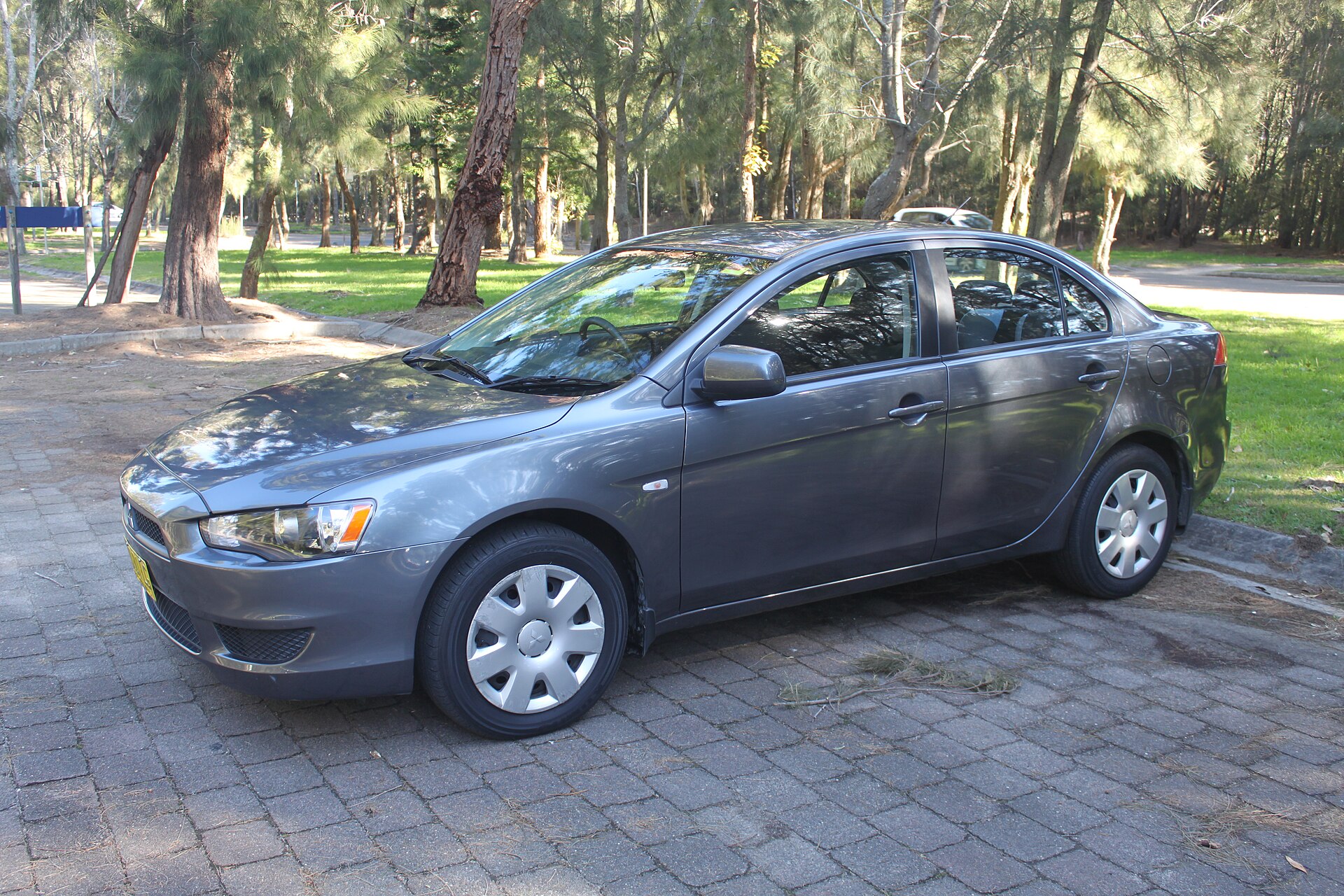
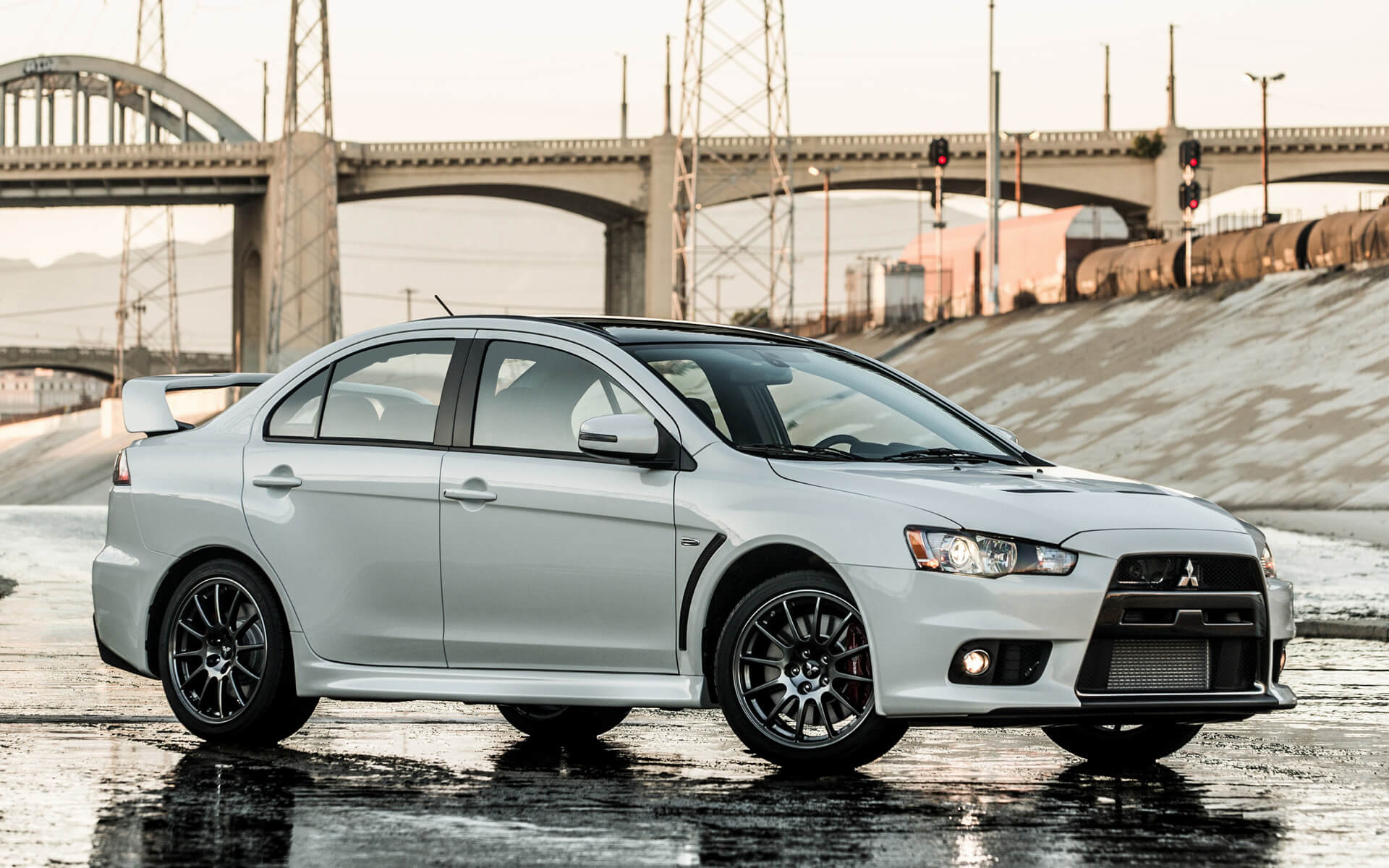
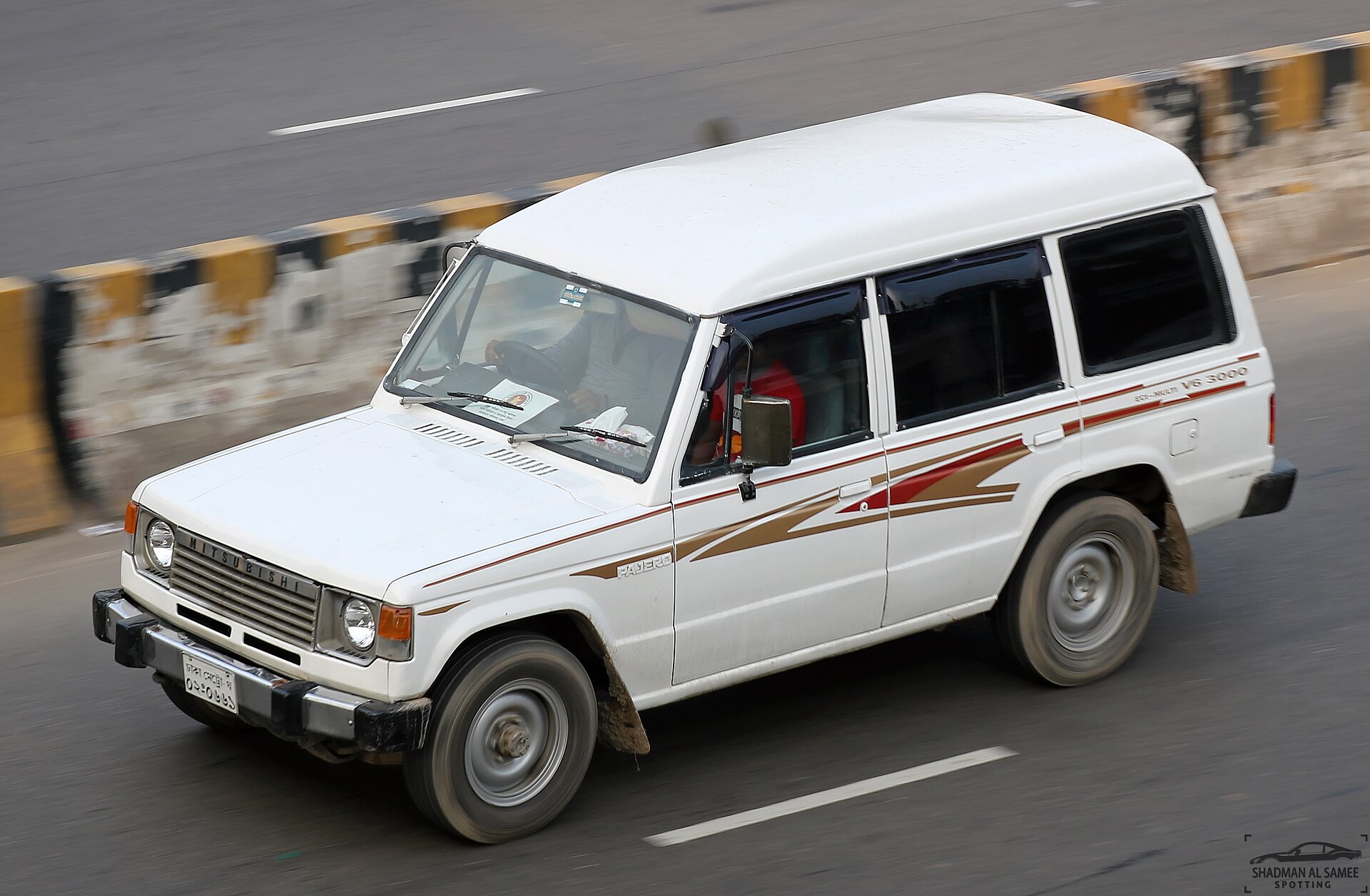
 Mitsubishi Pajero I L040 (1982–1991)
Specs, engines, safety and known problems
Published Sources (3) Report an error
By Sarah Whitmore, Senior Automotive Writer Reviewed by Oleksandr Hnatiuk
- Power
- 62–104 kW (84–141 PS)
- Generation
- 1 of 5
Model timeline
Where the L040 sits in the Pajero story
Successor Pajero V20/V30 (1991–1999)
Newest first · 5 generations since 1982
- 2026 V In production 2026–now · SUV · 150 kW (204 PS)
-
2006
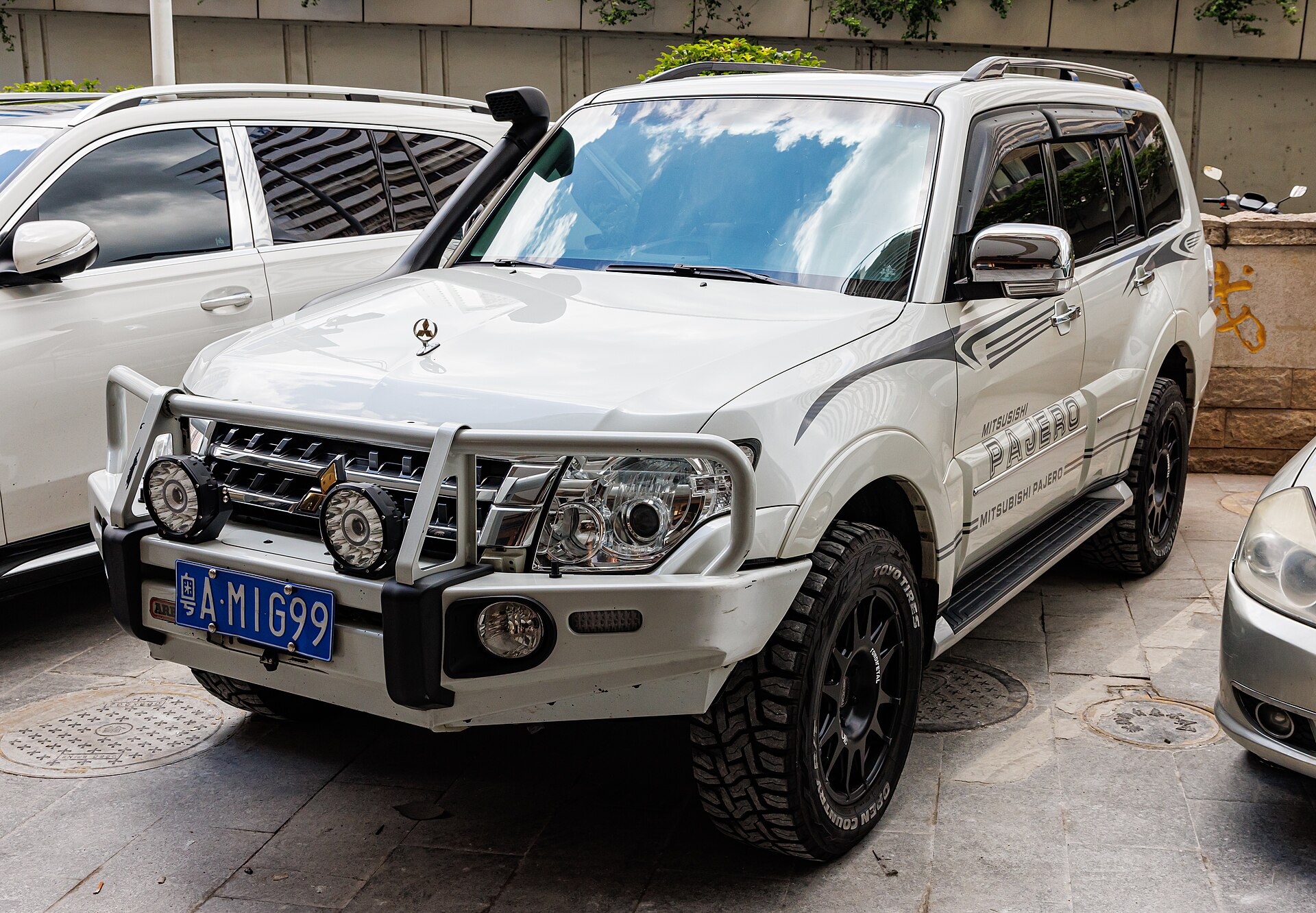
-
1999
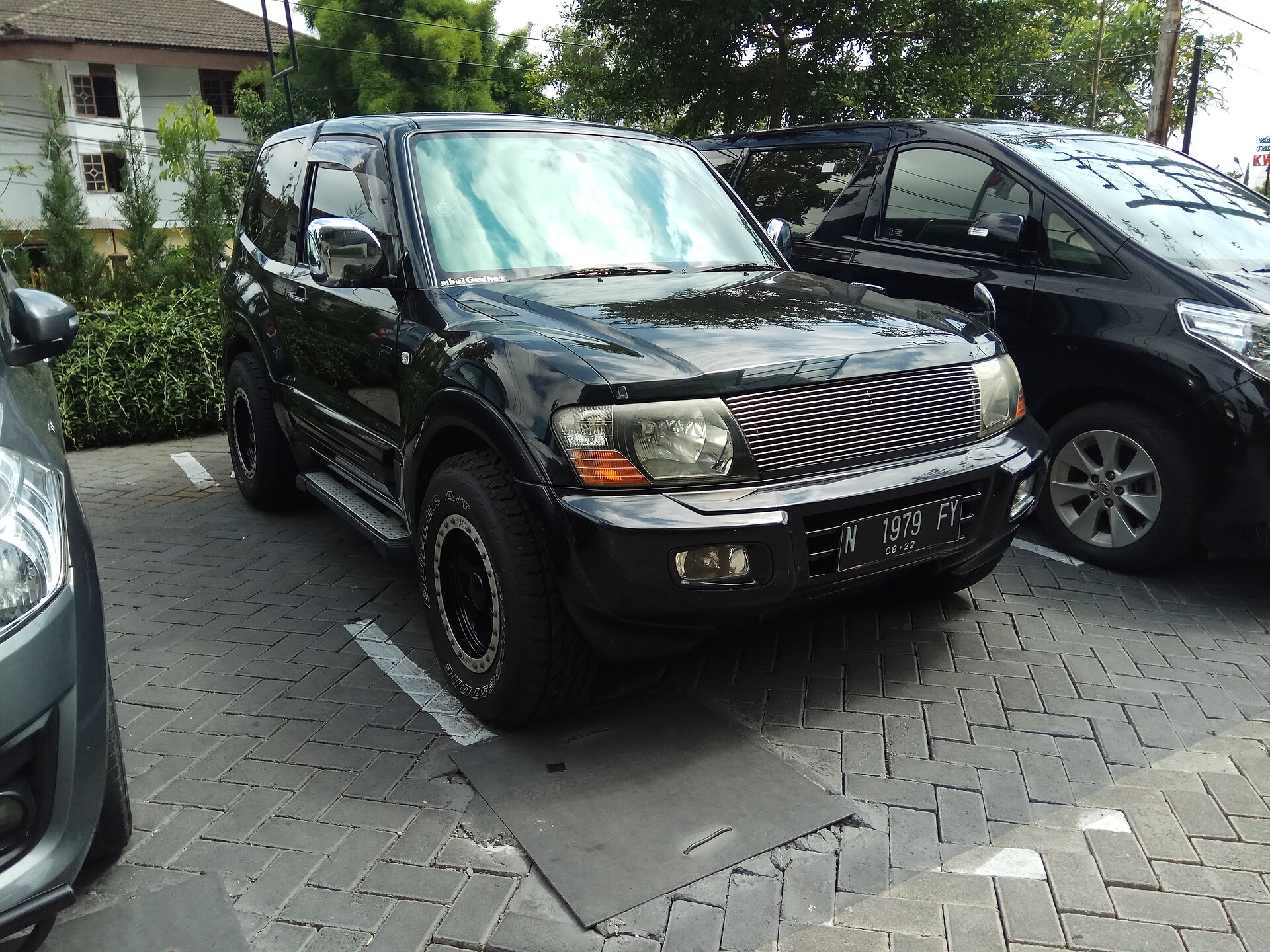
-
1991
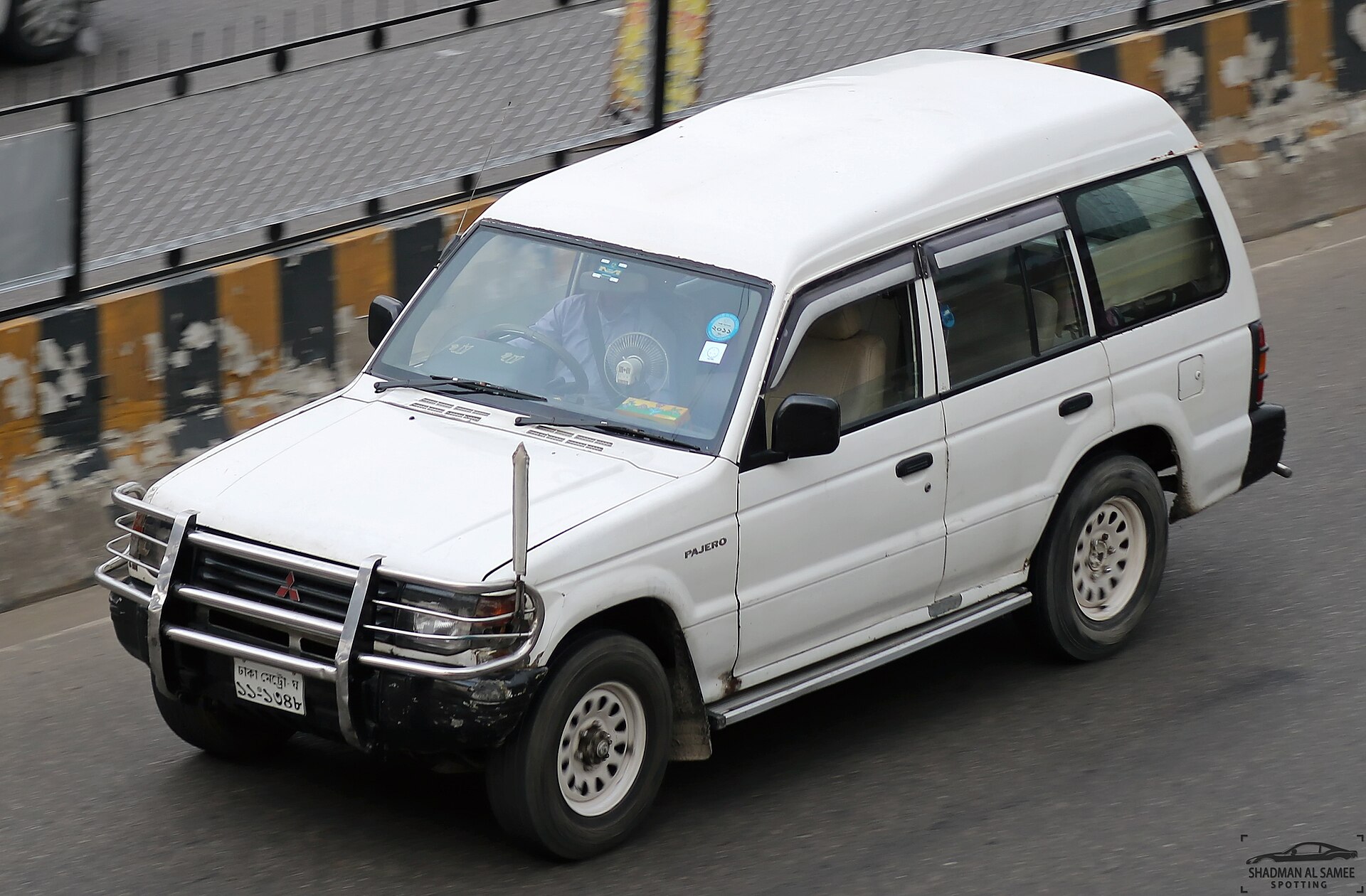
-
1982


All generations by year: Pajero V (2026–now) · Pajero V80/V90 (2006–2021) · Pajero V60/V70 (1999–2006) · Pajero V20/V30 (1991–1999) · Pajero I (L040) (1982–1991)
The first Mitsubishi Pajero, usually coded L040, is the boxy off-roader Mitsubishi sold from May 1982 until the second generation arrived in January 1991. It began as a short three-door with a metal or canvas top, gained a long five-door in 1983 and finished with a 3.0 V6. Mitsubishi puts its sales at around 630,000, and it gave the Pajero its first Dakar win.
In short
- Built in Japan from 1982 to 1991; Japanese sales began in May 1982 and European sales in early 1983.
- Separate ladder chassis, independent front suspension and part-time four-wheel drive with low range.
- Engines ranged from a 2.3 diesel with 62 kW (84 PS) to the 3.0 V6 with 104 kW (141 PS), added in late 1988.
- Sold in the US as the Dodge Raider and later licence-built in Korea as the Hyundai Galloper.
Pajero I (L040) specs by version
| Version | Engine | Power | Torque |
|---|---|---|---|
| Diesel · 4 versions | |||
| 2.3 TD diesel | 2.3 l · 6 cyl · Diesel 2,346 cc | 62 kW 84 PS83 hp | - |
| 2.5 TD diesel | 2.5 l · Diesel 2,477 cc | 62 kW 84 PS83 hp | - |
| 2.5 TD intercooled | 2.5 l · Diesel 2,477 cc | 70 kW 95 PS94 hp | 235 Nm173 lb-ft |
| 82 kW (111 PS) SUV | Diesel | 82 kW 111 PS110 hp | - |
| Petrol · 2 versions | |||
| 2.6 petrol | 2.6 l · 6 cyl · Petrol 2,555 cc | 76 kW 103 PS102 hp | 192 Nm142 lb-ft |
| 3.0 V6 petrol | 3.0 l · 6 cyl · Petrol 2,972 cc | 104 kW 141 PS139 hp | 225 Nm166 lb-ft |
Verified Manufacturer and type-approval data from our catalog · Sources and methodology
From Tokyo concept to the 1982 launch
The first Pajero took almost a decade to go from show stand to showroom. A concept appeared at the Tokyo Motor Show in November 1973, a second prototype followed in the late 1970s, and the production version was shown at the Tokyo show in October 1981. Sales in Japan started in May 1982.
Mitsubishi already built the licensed Jeep in Japan, and the Pajero replaced the Jeep Delivery Wagon in its line-up. The difference was comfort. Where earlier Japanese off-roaders were working vehicles, the Pajero offered power steering, suspension seats and, on higher trims, a well-finished interior. Mitsubishi's own history says it helped start an auto-camping trend in Japan.
The model is described in detail as part of the Mitsubishi Pajero story across all generations. This page covers only the original L040 series and the cars derived from it.
Pajero I chassis, bodies and the 1983 long wheelbase
The L040 sits on a separate ladder chassis related to Mitsubishi's Forte pick-up, later known as the L200. Front suspension is independent, with double wishbones and torsion bars; the rear has a rigid axle on leaf springs. From 1988 the long-wheelbase car switched to a coil-sprung rear axle, which improved the ride on rough tracks.
The launch car was the short three-door with a 2,350 mm (92.5 in) wheelbase, offered with a metal roof or a canvas top. The five-door long-wheelbase body arrived in 1983, followed by a high-roof version in July of that year. With the extra length came seating for up to seven. In Europe, the Pajero reached showrooms in early 1983; the UK knew it as the Shogun, while Spain and Latin America used Montero.
Updates during the run were steady rather than dramatic:
- 1985: four-wheel disc brakes on the long-wheelbase car and a four-speed automatic option in Japan.
- 1987: the plusher Exceed trim with two-tone paint and alloy wheels.
- 1988: the 3.0 V6, an intercooled turbo-diesel and coil springs at the rear of the five-door.
L040 engines: petrol, V6 and turbo-diesels
European buyers mostly chose between a 2.6 four-cylinder petrol and a series of turbo-diesels. The 2.5 TD replaced the 2.3 TD in 1986, and an intercooler raised its output in late 1988. Torque figures below come from one spec database and should be treated as indicative.
| Engine | Code | Displacement | Power | Torque | Years (Germany) |
|---|---|---|---|---|---|
| 2.6 petrol | 4G54 | 2,555 cm³ (155.9 cu in) | 76 kW (103 PS) at 4,500 rpm | 192 Nm (142 lb-ft) | 1982–1990 |
| 3.0 V6 petrol | 6G72 | 2,972 cm³ (181.4 cu in) | 104 kW (141 PS) at 5,000 rpm | 225 Nm (166 lb-ft) | 1988–1990 |
| 2.3 TD diesel | – | 2,346 cm³ (143.2 cu in) | 62 kW (84 PS) | not published | 1982–1986 |
| 2.5 TD diesel | 4D56 | 2,477 cm³ (151.2 cu in) | 62 kW (84 PS) | not published | 1986–1989 |
| 2.5 TD intercooled | 4D56 | 2,477 cm³ (151.2 cu in) | 70 kW (95 PS) at 4,200 rpm | 235 Nm (173 lb-ft) | 1988–1990 |
Other markets also had a 2.0 petrol, a 2.0 turbo petrol and a naturally aspirated 2.3 diesel. Japanese 2.6 engines were later quoted at 82 kW (111 PS). Gearboxes were four- and five-speed manuals, with the automatic added from 1985.
Every L040 has part-time four-wheel drive with a low-range transfer box, and drive modes are selected with the car at a standstill. A rear differential lock was an extra-cost option in Germany. The more convenient Super Select system, shiftable on the move, only came with the second generation.
Dimensions of the short and long Pajero I
Factory data for the L040 is scattered, and different sources list different trims. The table combines the short 2.6 three-door with the long 2.5 TD five-door; treat it as a guide rather than a homologation sheet.
| Parameter | Metric | Imperial |
|---|---|---|
| Wheelbase, 3-door | 2,350 mm | 92.5 in |
| Wheelbase, 5-door | 2,700 mm (2,695 mm also quoted) | 106.3 in |
| Length, 3-door | 3,870–4,000 mm (by version) | 152.4–157.5 in |
| Length, 5-door (2.5 TD) | 4,600 mm | 181.1 in |
| Width | 1,680 mm | 66.1 in |
| Height | 1,825–1,880 mm | 71.9–74.0 in |
| Kerb weight | 1,315 kg (2.6, 3-door) to 1,740 kg (2.5 TD, 5-door) | 2,899–3,836 lb |
| Fuel tank | 60 L (3-door) / 92 L (5-door) | 13.2 / 20.2 UK gal |
| Top speed (2.6 or 2.5 TD) | 140 km/h | 87 mph |
The long-wheelbase 2.5 TD is quoted at 11.4 L/100 km (24.8 mpg UK), and the short 3.0 V6 at 13.5 L/100 km (20.9 mpg UK).
Dodge Raider and Hyundai Galloper
The L040 had two notable relatives built under other badges. In the United States, Dodge sold it as the Raider from 1987 to 1989, in short three-door form only. It was one of several Mitsubishi products sold through Chrysler's dealers at the time; the history of Dodge shows how much the brand relied on such imports.
In Korea, Hyundai built a localised copy, the Galloper, from 1991, after Mitsubishi had moved on to the second generation. It kept the Pajero I body and chassis, with wheelbases of 2,350 and 2,695 mm, and used Hyundai versions of the 2.5 diesel and 3.0 V6. A 1997 facelift, the Galloper II, made it look more like the second-generation Pajero while keeping the old mechanicals, and that year it went on sale across much of Europe. More than 300,000 had been built by 1999. Sources date the end of production to 2003 or January 2004; the Terracan replaced it.
Pajero I safety and condition today
No crash-test rating exists for this generation. It predates Euro NCAP, which published its first results in 1997, and no comparable test of the L040 is on record. Brakes were advanced for an off-roader of the time, with ventilated front discs and, from 1985, discs all round on the long car, but there are no airbags or modern crumple zones.
Rust is the main reason few survivors remain. German sources say the first generation has almost disappeared from the roads because of corrosion. Anyone looking at one should inspect the chassis rails, sills and floor before the engine. The 2.5 TD has a cam belt, so ask for proof of when it was last changed.
Dakar debut and the first win
The Pajero's rally record started with this generation. Mitsubishi entered the 1983 Paris–Dakar, where Andrew Cowan won his class. In 1984 a Pajero with a turbocharged 2.6 petrol engine finished third overall. In 1985 Patrick Zaniroli and Jean da Silva took the model's first overall victory, the start of a record of 12 wins.
Mitsubishi's competition cars were heavily modified, so they say little about a road car's toughness. They did build the Pajero's reputation in Europe, which is part of Mitsubishi Motors' wider history. In 2023 the first Pajero was chosen as a historic car by the Japan Automotive Hall of Fame.
Which first-generation Pajero to look for
Today the L040 is a collector's car, listed among classic cars of the 1980s, and condition outweighs specification.
- Most usable: a late 2.5 TD intercooled five-door (1988–1990), with coil rear springs and seven seats.
- Most performance: the 3.0 V6 from late 1988, the most powerful L040 at 104 kW (141 PS).
- Simplest: an early 2.6 petrol three-door, light and easy to work on, though thirsty.
- Rarest: canvas-top short-wheelbase cars and, outside North America, Dodge Raiders.
For something newer from the same maker, browse Japanese SUVs or the Mitsubishi range.
Image credits · Photos from Wikimedia Commons under free licences
- Mitsubishi Pajero I (L040) · Photo: Shadman Samee from Dhaka, Bangladesh / Wikimedia Commons, CC BY-SA 2.0
- Mitsubishi Pajero V20/V30 · Photo: Shadman Samee from Dhaka, Bangladesh / Wikimedia Commons, CC BY-SA 2.0
- Mitsubishi Pajero V60/V70 · Photo: Alex Neman / Wikimedia Commons, CC BY-SA 4.0
- Mitsubishi Pajero V80/V90 · Photo: Dinkun Chen / Wikimedia Commons, CC BY-SA 4.0
L040 rivals
-
Ended 2021
- Years
- 2007–2021
- Body
- SUV
- Fuel
- Petrol, Diesel
- Power
- 173–286 kW (235–389 PS)
-
In production
- Years
- 1951–present
- Body
- SUV, Pickup
- Fuel
- Petrol, Diesel
- Power
- 55–369 kW (75–502 PS)
7 generations
- II
- III
- Y60
- Y61
- Y62
- Y63
- +1 earlier
-
Ended 2010
- Years
- 2005–2010
- Body
- SUV
- Fuel
- Petrol, Diesel
- Power
- 160–224 kW (218–305 PS)


FAQ
What years was the first-generation Mitsubishi Pajero made?
Japanese sales started in May 1982 and the L040 was replaced by the second generation in January 1991. European sales started in early 1983. The Hyundai Galloper, a licensed copy, stayed in production into the early 2000s.
What engines did the Pajero I have?
In Europe, a 2.6 petrol with 76 kW (103 PS), a 3.0 V6 with 104 kW (141 PS) from late 1988, and 2.3 and 2.5 turbo-diesels with 62–70 kW (84–95 PS). Other markets also had 2.0 petrol and turbo petrol engines.
Is the Dodge Raider the same as the Mitsubishi Pajero?
Yes. The Raider was the short three-door Pajero I sold by Dodge in the United States from 1987 to 1989 with minor badge and trim changes.
Does the first Pajero have Super Select 4WD?
No. It uses part-time four-wheel drive with low range, selected at a standstill. Super Select arrived with the second generation in 1991.
What should I check on a first-generation Pajero?
Rust in the chassis, sills and floor comes first, since corrosion has taken most of these cars off the road. On diesels, also check the cam belt history.
Data sources
Data checked by an editor against the sources below.
- 1cars archive: Mitsubishi Pajero: Generations, Specs and History
- The text of this article (1cars archive)
- Wikipedia - Mitsubishi Pajero