 Mitsubishi Pajero V (2026–present)
Specs, engines, safety and known problems
Published Sources (3) Report an error
By Sarah Whitmore, Senior Automotive Writer Reviewed by Oleksandr Hnatiuk
- Power
- 150 kW (204 PS)
- Generation
- 5 of 5
Model timeline
Where the V sits in the Pajero story
Predecessor Pajero V80/V90 (2006–2021)
Newest first · 5 generations since 1982
- 2026 V You are here 2026–now · SUV · 150 kW (204 PS)
-
2006
-
1999
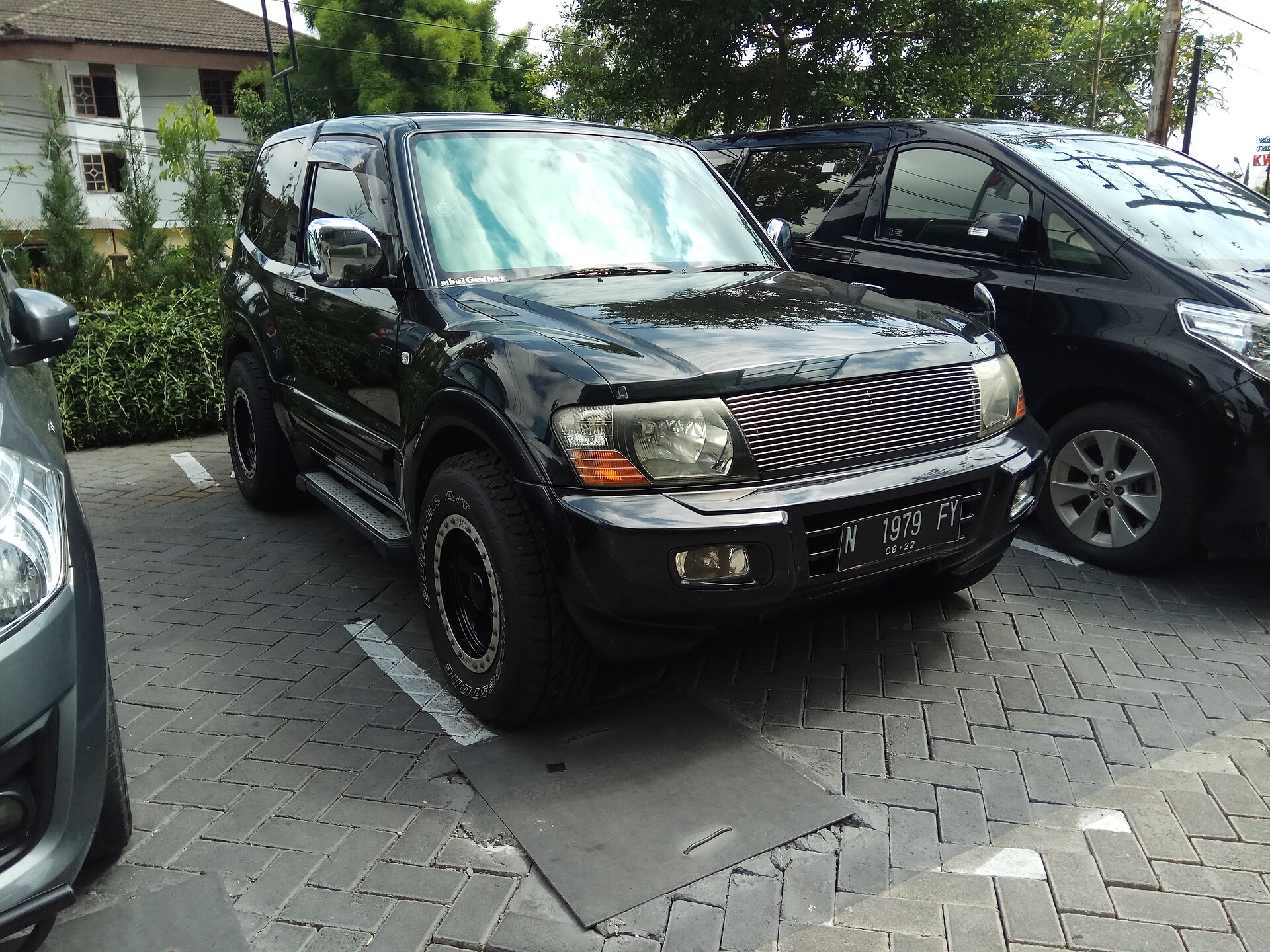
-
1991
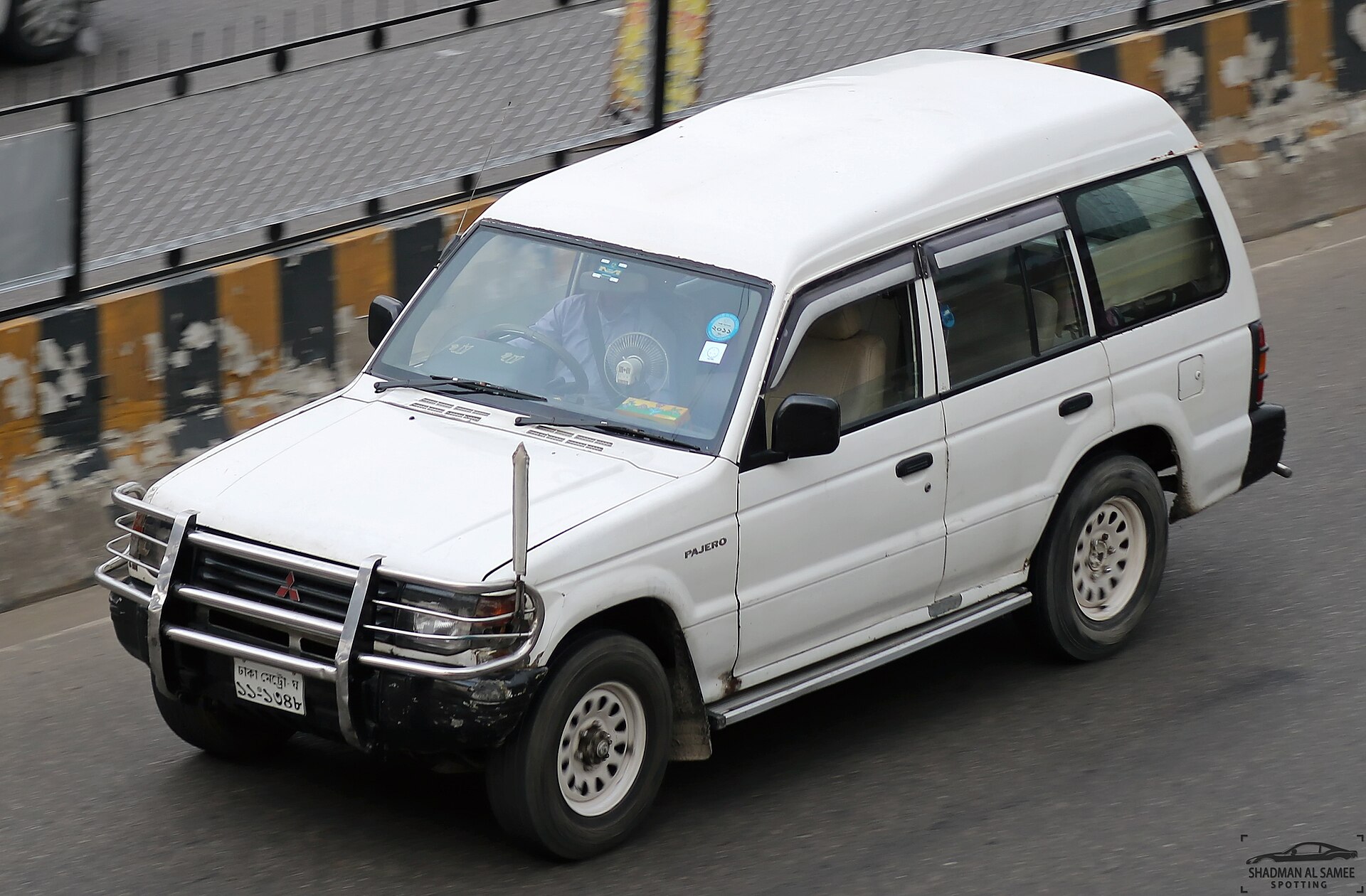
-
1982
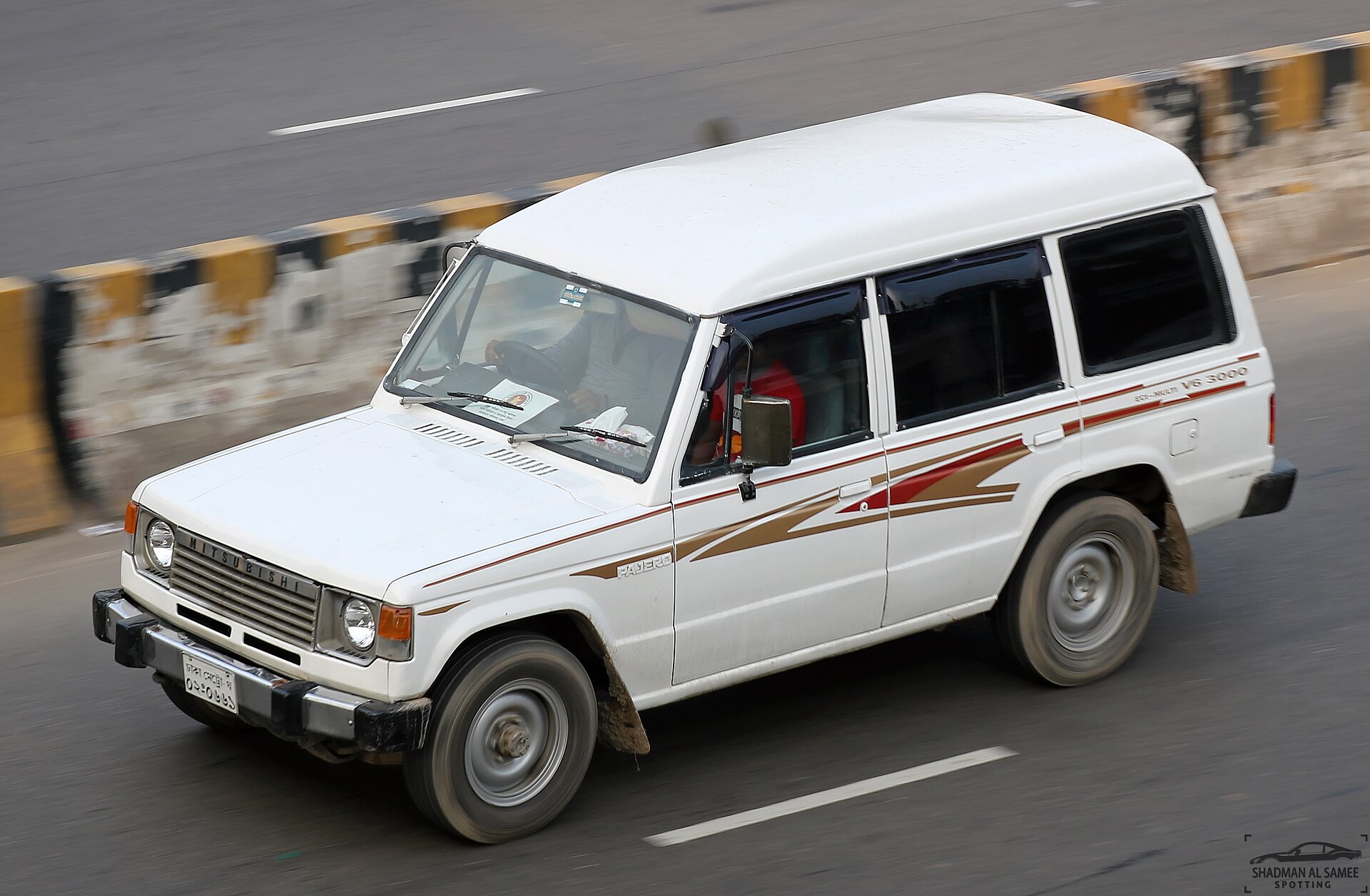


All generations by year: Pajero V (2026–now) · Pajero V80/V90 (2006–2021) · Pajero V60/V70 (1999–2006) · Pajero V20/V30 (1991–1999) · Pajero I (L040) (1982–1991)
The fifth-generation Mitsubishi Pajero was revealed in Japan on 2 September 2026, five years after production of the previous model ended. It is built in Thailand, uses a ladder-frame chassis and a 2.4-litre turbo-diesel, and goes on sale in Thailand first. This page sticks to what Mitsubishi and launch reports have published; prices, European plans and crash-test results were still unknown in October 2026.
In short
- Revealed on 2 September 2026; on sale in Thailand first, then in Japan and Australia from around December 2026, and in about 100 countries in 2027.
- One engine at launch: the 2.4-litre 4N16 turbo-diesel with 150 kW (204 PS) and 480 Nm, paired with an eight-speed automatic.
- The chassis returns to a separate ladder frame; only its front section and front floor are shared with the Triton pick-up.
- Europe and North America had not been confirmed as markets when this page was written.
Pajero V specs by version
Engines
Dimensions and weight
Verified Manufacturer and type-approval data from our catalog · Sources and methodology
Why the 2026 Pajero is a clean break
The Pajero IV, built from 2006 to 2021, used a monocoque body with an integrated ladder frame, a 3.2-litre diesel and a five-speed automatic. The new model changes all three. Mitsubishi chose a full ladder frame for strength and durability, according to carsales, and said it would explain the decision in more detail later.
Mitsubishi first teased the car on 29 May 2026 and presented it at an event in Tokyo. The styling follows a theme Mitsubishi calls "Grand Charisma". Mitsubishi Australia says the car followed five years of development and testing.
Compared with the last European Pajero IV five-door, the published figures show a car of similar length but a longer wheelbase and a wider body:
- Wheelbase: 2,870 mm against 2,780 mm, so 90 mm (3.5 in) more between the axles.
- Width: 1,925 mm against 1,875 mm, 50 mm (2.0 in) wider.
- Length: 4,920 mm against 4,900 mm, almost unchanged.
- Engine: 2.4 litres and four cylinders against 3.2 litres, with more torque (480 Nm against 441 Nm).
The full story of the earlier cars is in the Mitsubishi Pajero history and generations guide.
Ladder frame, suspension and the Triton link
The new Pajero shares its basic architecture with the sixth-generation Mitsubishi Triton pick-up (also sold as the L200), but carsales reports that only the front section of the frame and the front floor are carried over. The rest of the frame is new or re-engineered for the Pajero, and the English Wikipedia entry mentions extra cross-members and larger side members.
At the front there is double-wishbone suspension. Carsales describes the rear as a five-link rigid axle with long suspension travel. An aluminium bonnet saves some weight, and high-tensile steel is used in the structure.
One practical change is the spare wheel, which now sits under the car instead of on the tailgate.
4N16 diesel and eight-speed automatic
Mitsubishi has announced one engine so far. It is a development of the Triton's 2.4-litre turbo-diesel, with slightly more torque.
| Item | Launch specification |
|---|---|
| Engine | 2.4-litre four-cylinder turbo-diesel, code 4N16 |
| Maximum power | 150 kW (204 PS) |
| Maximum torque | 480 Nm (354 lb-ft); some reports quote 470–480 Nm |
| Turbocharger | variable geometry, water-cooled intercooler |
| Emissions hardware | dual-loop EGR, AdBlue, automatic stop-start |
| Emissions standard | Euro 6d, the first Mitsubishi engine to meet it (carsales) |
| Gearbox | eight-speed automatic with throttle blips on downshifts |
Fuel consumption, CO2 figures and performance times had not been published in October 2026. No petrol, hybrid or plug-in hybrid version has been announced, although Mitsubishi has said further Pajero models will follow.
Super Select II and off-road hardware
The four-wheel-drive system keeps the Super Select name and the four positions familiar from earlier Pajeros: 2H, 4H, 4HLc and 4LLc. The "Lc" settings lock the centre differential, and 4LLc adds the low-range reduction. A rear differential lock is fitted, and the system works with Super All Wheel Control and Active Yaw Control.
Drivers can choose from seven modes: Eco, Normal, Gravel, Snow, Mud, Sand and Rock. A 3D Multi Around Monitor uses four cameras, and its front under-floor view switches on automatically in 4HLc and 4LLc.
Published off-road figures are a 230 mm (9.1 in) ground clearance, a 30.4-degree approach angle, a 22.6-degree breakover angle and a 25.8-degree departure angle. Braked towing is rated at 3,500 kg (7,716 lb), the same headline figure as the European Pajero IV five-door.
Published dimensions of the 2026 Pajero
Mitsubishi had not released a full specification sheet when this page was written. The figures below come from the launch report by carsales and may change by market.
| Parameter | Metric | Imperial |
|---|---|---|
| Length | 4,920 mm | 193.7 in |
| Width | 1,925 mm | 75.8 in |
| Height | 1,910 mm | 75.2 in |
| Wheelbase | 2,870 mm | 113.0 in |
| Ground clearance | 230 mm | 9.1 in |
| Braked towing | 3,500 kg | 7,716 lb |
| Seats | up to 7 | – |
Kerb weight, boot volume, fuel-tank size and wading depth had not been published.
Cabin, seating and equipment
The Pajero offers up to seven seats, and Mitsubishi says access to the third row has been improved. In Australia, the announced trims are GLS 5, GLS 7, Exceed and GSR; the numbers in the GLS names point to five- and seven-seat versions.
The flagship equipment listed at the reveal includes:
- Twin 14.3-inch displays and a three-dial gauge cluster with an altimeter and pitch-and-roll indicators.
- Three-zone climate control, heated rear seats and a large panoramic sunroof.
- A 12-speaker Yamaha Ultimate audio system and, on top Japanese models, semi-aniline leather.
- Extra sound insulation, acoustic glass and better-isolated wheel arches.
Equipment varies by market. Thai trims are reported as Entry, Mid and Top, with two-wheel drive on the first two and four-wheel drive on the Top version, though this comes from a single source.
Markets, timing and Europe
Thailand, where the car is built, gets it first, with a market launch reported for October 2026. Japanese sales are reported to start on 17 December 2026, and Mitsubishi Australia says the car arrives in 2026, with carsales giving around December. Around 100 countries, including Latin America, South-East Asia and the Middle East, follow in 2027, and the Montero name is used in some of them.
Europe was not part of the announcement, and no decision on North America had been reported. The Pajero has not been sold in Europe since 2018, so European availability, prices and specifications remain open. The Pajero Sport is a separate, pick-up-based model, and the Mitsubishi range lists current models.
Safety ratings: none published yet
No crash-test rating existed for the new Pajero in October 2026. Euro NCAP, ANCAP and other test programmes had not published results, and Mitsubishi had not released a full list of driver-assistance systems. Ratings of the Pajero IV or of the Triton should not be assumed to apply to this car.
Mitsubishi Australia advertises a ten-year warranty for the new Pajero in that market.
If you are comparing it with other body-on-frame models, current options are grouped among diesel SUVs and Japanese SUVs.
Did you know?
- The Pajero V is generation 5 of 5 of the Mitsubishi Pajero in our catalog.
- The Pajero V offers up to 150 kW (204 PS) — 34 kW less than the Pajero V80/V90 (2006–2021) (−18%).
- At up to 4,920 mm long, it is 20 mm longer than the Pajero V80/V90 (2006–2021).
Image credits · Photos from Wikimedia Commons under free licences
- Mitsubishi Pajero I (L040) · Photo: Shadman Samee from Dhaka, Bangladesh / Wikimedia Commons, CC BY-SA 2.0
- Mitsubishi Pajero V20/V30 · Photo: Shadman Samee from Dhaka, Bangladesh / Wikimedia Commons, CC BY-SA 2.0
- Mitsubishi Pajero V60/V70 · Photo: Alex Neman / Wikimedia Commons, CC BY-SA 4.0
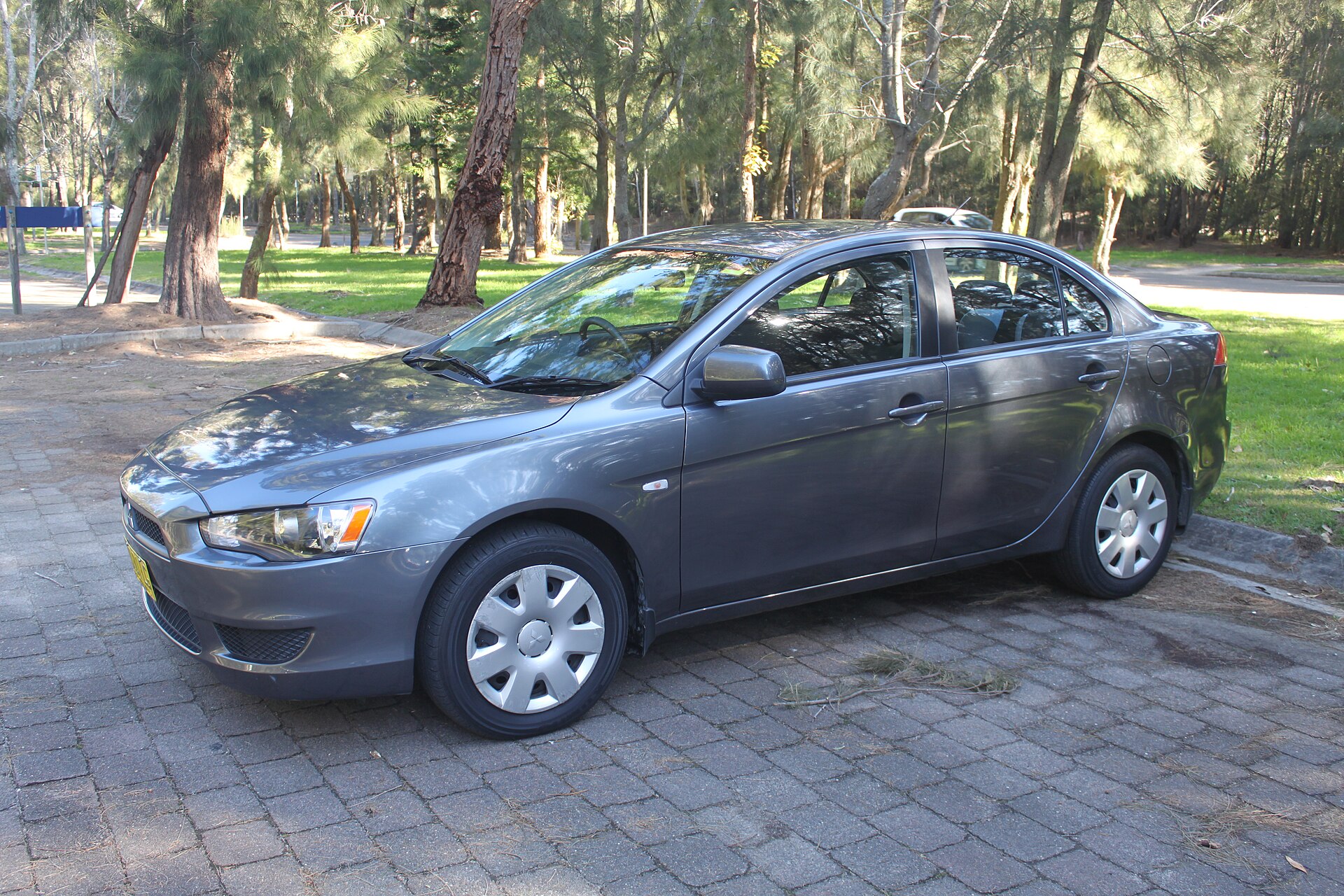
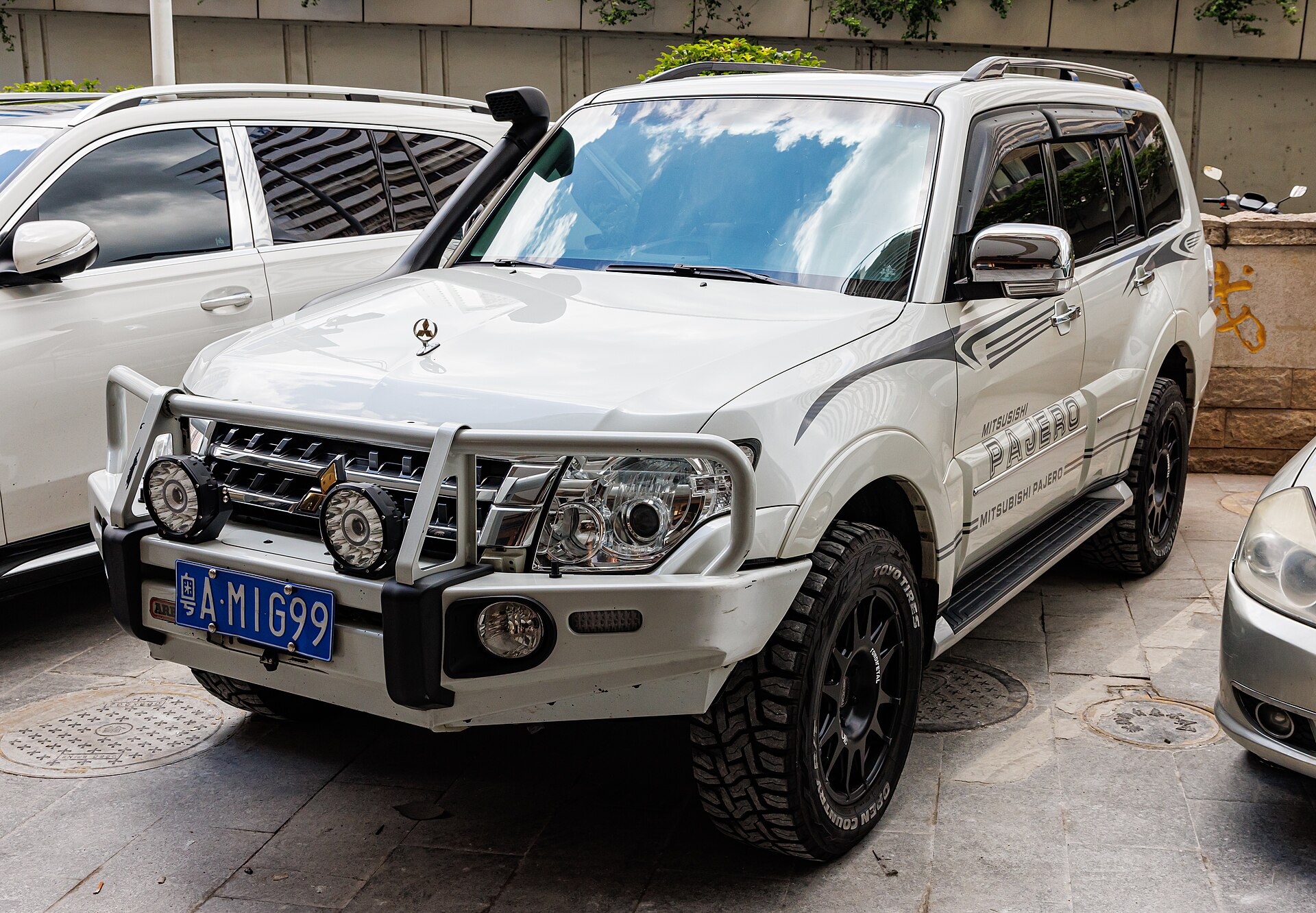
- Mitsubishi Pajero V80/V90 · Photo: Dinkun Chen / Wikimedia Commons, CC BY-SA 4.0
Rivals
Compare with…
Compare Mitsubishi Pajero with
- Toyota Land Cruiser quick spec comparison
- Nissan Patrol quick spec comparison
- SsangYong Rexton W quick spec comparison
-
Ended 2021
- Years
- 2007–2021
- Body
- SUV
- Fuel
- Petrol, Diesel
- Power
- 173–286 kW (235–389 PS)
-
In production
- Years
- 1951–present
- Body
- SUV, Pickup
- Fuel
- Petrol, Diesel
- Power
- 55–369 kW (75–502 PS)
7 generations
- II
- III
- Y60
- Y61
- Y62
- Y63
- +1 earlier
-
Ended 2017
- Years
- 2012–2017
- Body
- SUV
- Fuel
- Diesel
- Power
- 137 kW (186 PS)
-
Ended 2010
- Years
- 2005–2010
- Body
- SUV
- Fuel
- Petrol, Diesel
- Power
- 160–224 kW (218–305 PS)


FAQ
When was the new Mitsubishi Pajero revealed?
The fifth-generation Pajero was revealed in Japan on 2 September 2026, after a teaser on 29 May 2026. Thailand gets it first, followed by Japan and Australia from around December 2026.
What engine does the 2026 Pajero have?
A 2.4-litre 4N16 four-cylinder turbo-diesel with 150 kW (204 PS) and 480 Nm (354 lb-ft), driving through an eight-speed automatic and Super Select II four-wheel drive.
Will the new Pajero be sold in Europe?
Not confirmed. Launch reports list Thailand, Japan, Australia and about 100 other countries for 2027, but Europe was not part of the announcement in September 2026.
Is the 2026 Pajero a ladder-frame SUV?
Yes. Unlike the third and fourth generations, which used a monocoque with an integrated frame, it has a separate ladder frame whose front section and front floor are shared with the Triton.
How much can the 2026 Pajero tow?
Launch reports quote 3,500 kg (7,716 lb) braked. Unbraked towing and nose weight had not been published.
Data sources
Data checked by an editor against the sources below.
- The text of this article (1cars archive)
- Wikipedia — Mitsubishi Pajero
- Com — All New Mitsubishi Pajero Revealed 152887