
 Mitsubishi Pajero Sport
All generations, specs and history
Updated Published Sources (2) Report an error
By Sarah Whitmore, Senior Automotive Writer Reviewed by Oleksandr Hnatiuk
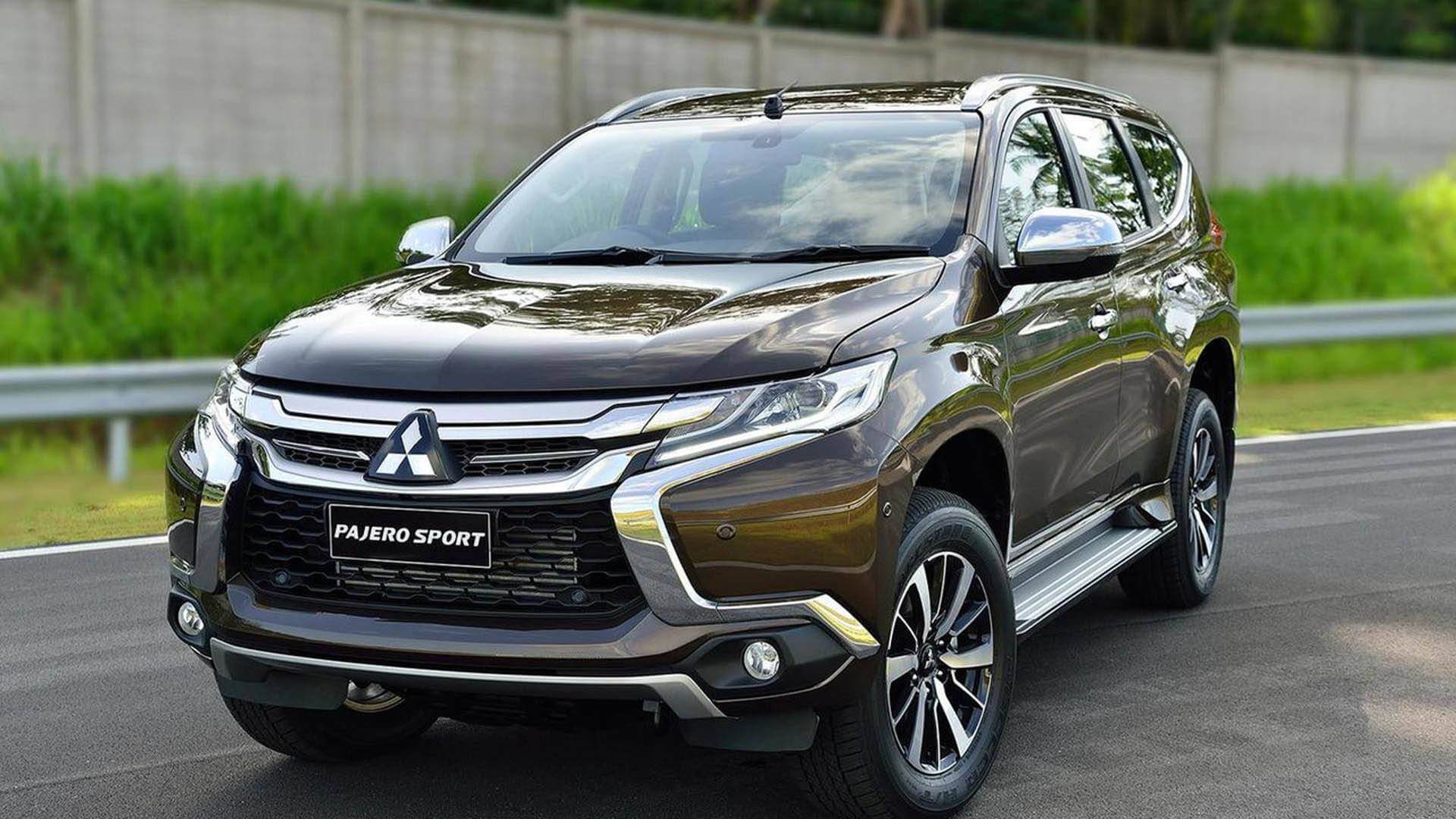
- Built
- 1996–present
- Generations
- 3
- Top power
- 163 kW (222 PS)
Timeline
Pajero Sport generations
Click a generation for its own page


I and II overlapped in 2008–2010, so II sits on a second lane
- Pajero Sport I 1996–2010 · SUV · 71–139 kW (97–189 PS)
- Pajero Sport II 2008–2015 · SUV · 118–163 kW (160–222 PS)
- Pajero Sport III Current 2015–now · SUV · 100–162 kW (136–220 PS)
Newest first · 3 generations since 1996
-
2015

-
2008

-
1996

All generations by year: Pajero Sport III (2015–now) · Pajero Sport II (2008–2015) · Pajero Sport I (1996–2010)
Which one is mine?
Pick the year of first registration to see which generation it is.
- Pajero Sport III 2015–present
- Pajero Sport II 2008–2015
- Pajero Sport I 1996–2010
Which Pajero Sport to buy
Our verdict · Sarah Whitmore
In Europe, the third-generation Shogun Sport (2018–2021) with the 2.4 diesel and eight-speed automatic is the most modern choice, with the best safety results. Second-generation diesels are durable and cheaper but less refined. Check the frame and underbody for corrosion and off-road damage, the condition of the four-wheel-drive system and the service history of the diesel.
The Mitsubishi Pajero Sport is a mid-size body-on-frame SUV built since 1996 and based on Mitsubishi's pickup trucks: the first generation on the Strada, the second and third on the Triton (L200). The current third generation, launched in 2015, uses a 2.4-litre diesel with 133 kW (181 PS) and 430 Nm, an eight-speed automatic and Super Select 4WD-II.
In short
- First generation (1996–c. 2008): Strada-based, petrol fours and V6s and 2.5–3.2 diesels; sold in central and western Europe until 2008.
- Second generation (2008–2015): Triton-based ladder frame, 2.5 and 3.2 diesels and 3.0/3.5 V6 petrol engines.
- Third generation (from 2015): 2.4 4N15 diesel with 133 kW, 3.0 V6 petrol with 162 kW, 8-speed automatic, Super Select 4WD-II; sold in the UK as the Shogun Sport from 2018 to 2021.
- ANCAP 2015: 15.22/16 in the frontal offset test and full marks in side and pole impacts.
Specs by version
| Version | Engine | Power |
|---|---|---|
| Diesel · 2 versions | ||
| Pajero Sport II · 2.5 131 kW (178 PS) | 2.5 l · Diesel 2,500 cc | 131 kW 178 PS176 hp |
| Pajero Sport II · 3.2 147 kW (200 PS) | 3.2 l · Diesel 3,200 cc | 147 kW 200 PS197 hp |
| Petrol · 2 versions | ||
| Pajero Sport II · 118 kW (160 PS) | 6 cyl · Petrol | 118 kW 160 PS158 hp |
| Pajero Sport II · 154 kW (209 PS) | 6 cyl · Petrol | 154 kW 209 PS207 hp |
Verified Manufacturer and type-approval data from our catalog · Sources and methodology
Pajero Sport at a glance
The Pajero Sport sits below the full-size Pajero in Mitsubishi's range. It combines a pickup-derived ladder frame, a rear live axle and four-wheel drive with low range in an SUV body. The brand's history is told in the history of Mitsubishi, and its models, including the larger Mitsubishi Pajero, are in the Mitsubishi catalogue.

| Generation | Years | Base | Main engines | Names |
|---|---|---|---|---|
| First | 1996–c. 2008 | Strada pickup, Pajero II wheelbase | 2.4/3.0/3.5 petrol, 2.5/2.8/3.2 diesel | Challenger, Montero Sport, Shogun Sport |
| Second | 2008–2015 | Triton | 2.4 petrol, 3.0/3.5 V6, 2.5/3.2 diesel | Pajero Sport, Challenger, Pajero Dakar |
| Third | 2015– | Triton | 2.4 4N15 diesel, 3.0 V6 petrol | Pajero Sport, Montero Sport, Shogun Sport |
First generation (1996–2008)
Production started in Japan in 1996, and most export markets received the car by 1997. Based on the Strada pickup with the wheelbase of the second-generation Pajero, it has independent front suspension with torsion bars and a live rear axle, which switched from leaf springs to coil springs in late 2000. It was built in Japan until 2008 and also in Thailand, China and Brazil.

| Engine | Type | Power |
|---|---|---|
| 4G64 | 2.4 petrol | 98.5 kW (134 PS) |
| 6G72 | 3.0 V6 petrol | 130 kW (177 PS) |
| 6G74 | 3.5 V6 petrol | 139 kW (189 PS) |
| 4D56 | 2.5 turbodiesel | 85 kW (116 PS) |
| 4M40 | 2.8 turbodiesel | 71–103 kW (97–140 PS) |
| 4M41 | 3.2 turbodiesel | 121 kW (165 PS) |
Gearboxes were a five-speed manual, a five-speed INVECS-II automatic and a four-speed automatic. According to the old 1cars text, the wheelbase is 2,725 mm and ground clearance 215 mm. In central and western Europe the first generation was sold until 2008.
Second generation (2008–2015)
The second Pajero Sport moved to the ladder frame of the Triton pickup. It was introduced across Southeast Asia and the Middle East from autumn 2008 and later reached Latin America as the Pajero Dakar.

| Engine | Type | Power | Torque |
|---|---|---|---|
| 4G64 | 2.4 petrol | 94 kW (128 PS) | – |
| 6B31 | 3.0 V6 petrol | 162 kW (220 PS) | – |
| 6G74 | 3.5 V6 petrol | 139 kW (189 PS) | – |
| 4D56 | 2.5 turbodiesel | 100–131 kW (136–178 PS) | 324–350 Nm |
| 4M41 | 3.2 turbodiesel | 121 kW (165 PS) | 343 Nm (163 PS version) |
Gearboxes included a five-speed manual, a five-speed INVECS-II automatic with sport mode and a four-speed Sportronic automatic. In the 2010 ANCAP test, the Australian Challenger scored 9.08/16 in the frontal offset test and 16/16 in the side impact, with stability control fitted as standard.
Third generation (2015 to today)
Unveiled in Thailand on 1 August 2015, the third generation went on sale in Australia in December 2015 and in the UK, as the Shogun Sport, in April 2018. It is built in Thailand, Indonesia and Bangladesh. The old 1cars text notes a flat load floor with about 700 litres of space behind the second row and a braked towing capacity of 3.1 tonnes.

| Engine | Type | Power | Torque | Gearboxes |
|---|---|---|---|---|
| 4N15 | 2.4 turbodiesel | 133 kW (181 PS) | 430 Nm | 6MT, 8-speed automatic |
| 6B31 | 3.0 V6 petrol | 162 kW (220 PS) | – | Automatic |
| 4D56 | 2.4 diesel (Indonesia) | 100 kW (136 PS) | 324 Nm | 5MT, 5AT |
| 4N16 | 2.4 diesel (2024 facelift, Thailand) | 135 kW (184 PS) | – | 6-speed Aisin automatic |
The eight-speed Aisin automatic and Super Select 4WD-II with an off-road mode and hill descent control are the key technical features. Facelifts arrived in 2019–2021 depending on the market, with a new front, an 8-inch instrument cluster and infotainment, 360-degree cameras, Apple CarPlay, Android Auto and a hands-free tailgate, and a second update followed in 2024.
| Test | Result |
|---|---|
| ANCAP 2015 | Frontal offset 15.22/16, side 16/16, pole 2/2, whiplash "Good", pedestrian "Adequate" |
| ASEAN NCAP 2015 | Adult 15.29 points, child 76% |
Four-wheel drive
The Pajero Sport's selling point is its off-road ability. The third generation's Super Select 4WD-II system offers several drive modes, including high and low ranges, and adds an off-road mode for different surfaces and hill descent control. According to the old 1cars text, the SUV can ford water up to 700 mm deep.

Rivals: how the Pajero Sport compares
The Pajero Sport competes with pickup-based SUVs such as the Toyota Fortuner and Ford Everest, and with rugged SUVs like the SsangYong Rexton. Its strengths are a strong ladder frame, real off-road ability with low range, high towing capacity and good safety scores for the third generation. Its weaknesses are a less car-like driving experience than monocoque SUVs and, with the V6 petrol, high fuel consumption: the old 1cars text quotes about 14.5 litres per 100 km in town. Our guide to the best SUVs for price and quality compares other 4x4 choices.


Mitsubishi Pajero Sport evolution in numbers
Did you know?
- The Mitsubishi Pajero Sport has been around for 30 years: 3 generations in our catalog since 1996.
- The longest-running generation is the Pajero Sport I (1996–2010): 14 years.
- The biggest jump in power came with the Pajero Sport II: up to 163 kW (222 PS), 24 kW more than the Pajero Sport I.
Most powerful version, kW
Figures from the 1cars catalog: power is the strongest version of each generation; generations without the figure are left out.
Mitsubishi Pajero Sport: first vs latest generation
| Spec | Pajero Sport I | Pajero Sport III | Change |
|---|---|---|---|
| Years | 1996–2010 | 2015–present | 19 years apart |
| Most powerful version | 139 kW (189 PS) | 162 kW (220 PS) | +23 kW (+17%) |
Oldest and newest generation in the 1cars catalog. Power is the strongest version of each; other rows are shown only when both generations have the figure.
Rivals
Compare with…
Compare Mitsubishi Pajero Sport with
- SsangYong Rexton W quick spec comparison
- SsangYong Kyron quick spec comparison
- Great Wall Hover H5 quick spec comparison
-
Ended 2017
- Years
- 2012–2017
- Body
- SUV
- Fuel
- Diesel
- Power
- 137 kW (186 PS)
-
Ended 2011
- Years
- 2005–2011
- Body
- SUV
- Fuel
- Petrol, Diesel
- Power
- 104–110 kW (141–150 PS)
-
Ended 2020
- Years
- 2010–2020
- Body
- SUV
- Fuel
- Petrol, Diesel
- Power
- 100–105 kW (136–143 PS)
-
In production
- Years
- 2014–present
- Body
- SUV
- Fuel
- Petrol, Diesel
- Power
- 84–110 kW (114–150 PS)
2 generations
- Patriot
- Patriot


Mitsubishi Pajero Sport in our rankings
- No. 78 of 1082 · Longest-running car nameplates (30 years · top 8%)
- No. 62 of 379 · Oldest car models still on sale (30 years · top 17%)
- No. 49 of 155 · Biggest engines: SUVs and crossovers (3,200 cc · top 32%)
- No. 56 of 175 · Most powerful diesel cars (147 kW · top 34%)
- No. 266 of 627 · Biggest engines: cars (3,200 cc · top 43%)
- No. 72 of 130 · Most powerful Japanese cars (163 kW · top 56%)
In production longer than 92% of ranked nameplates in the 1CARS catalog (No. 78 of 1082).
Mitsubishi Pajero Sport photos 29


Mitsubishi Pajero Sport videos 6

Mitsubishi Pajero Sport video 1

Mitsubishi Pajero Sport video 2

Mitsubishi Pajero Sport video 3

Mitsubishi Pajero Sport video 4

Mitsubishi Pajero Sport video 5

Mitsubishi Pajero Sport video 6
FAQ
How many generations of the Pajero Sport are there?
There are three: the Strada-based first generation from 1996, the Triton-based second generation from 2008 and the third generation from 2015, facelifted in 2019–2021 and again in 2024.
What engine does the third-generation Pajero Sport have?
Most markets use the 2.4-litre 4N15 diesel with 133 kW (181 PS) and 430 Nm, paired with an eight-speed automatic. A 3.0-litre V6 petrol with 162 kW is offered in some markets.
Is the Pajero Sport a real off-roader?
Yes. It is built on a ladder frame derived from Mitsubishi's pickups and has low-range four-wheel drive; the third generation uses Super Select 4WD-II with an off-road mode and hill descent control.
Was the Pajero Sport sold in the UK?
Yes. The first generation was sold as the Shogun Sport, and the third generation returned under that name in April 2018 before Mitsubishi stopped selling new cars in the UK in 2021.
How safe is the Pajero Sport?
The third generation scored 15.22 out of 16 in ANCAP's 2015 frontal offset test, full marks in side and pole tests, and 15.29 adult points in ASEAN NCAP 2015.
Data sources
Data checked by an editor against the sources below.
- The text of this article (1cars archive)
- Wikipedia - Mitsubishi Pajero Sport


