 Mitsubishi Pajero V20/V30 (1991–1999)
Specs, engines, safety and known problems
Published Sources (3) Report an error
By Sarah Whitmore, Senior Automotive Writer Reviewed by Oleksandr Hnatiuk
- Power
- 73–153 kW (99–208 PS)
- Generation
- 2 of 5
Model timeline
Where the V20/V30 sits in the Pajero story
Predecessor Pajero I (L040) (1982–1991) Successor Pajero V60/V70 (1999–2006)
Newest first · 5 generations since 1982
- 2026 V In production 2026–now · SUV · 150 kW (204 PS)
-
2006
-
1999
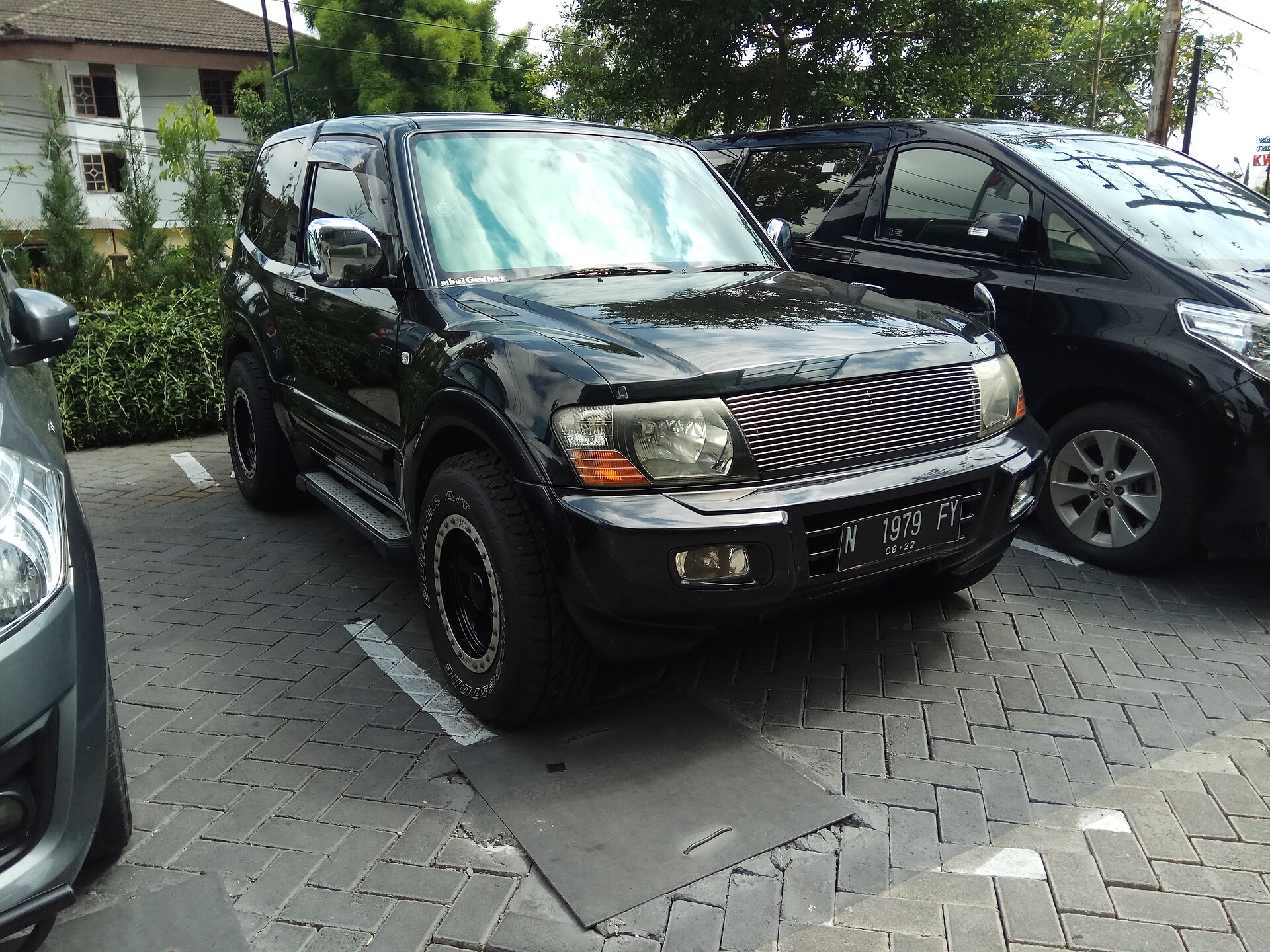
-
1991
-
1982
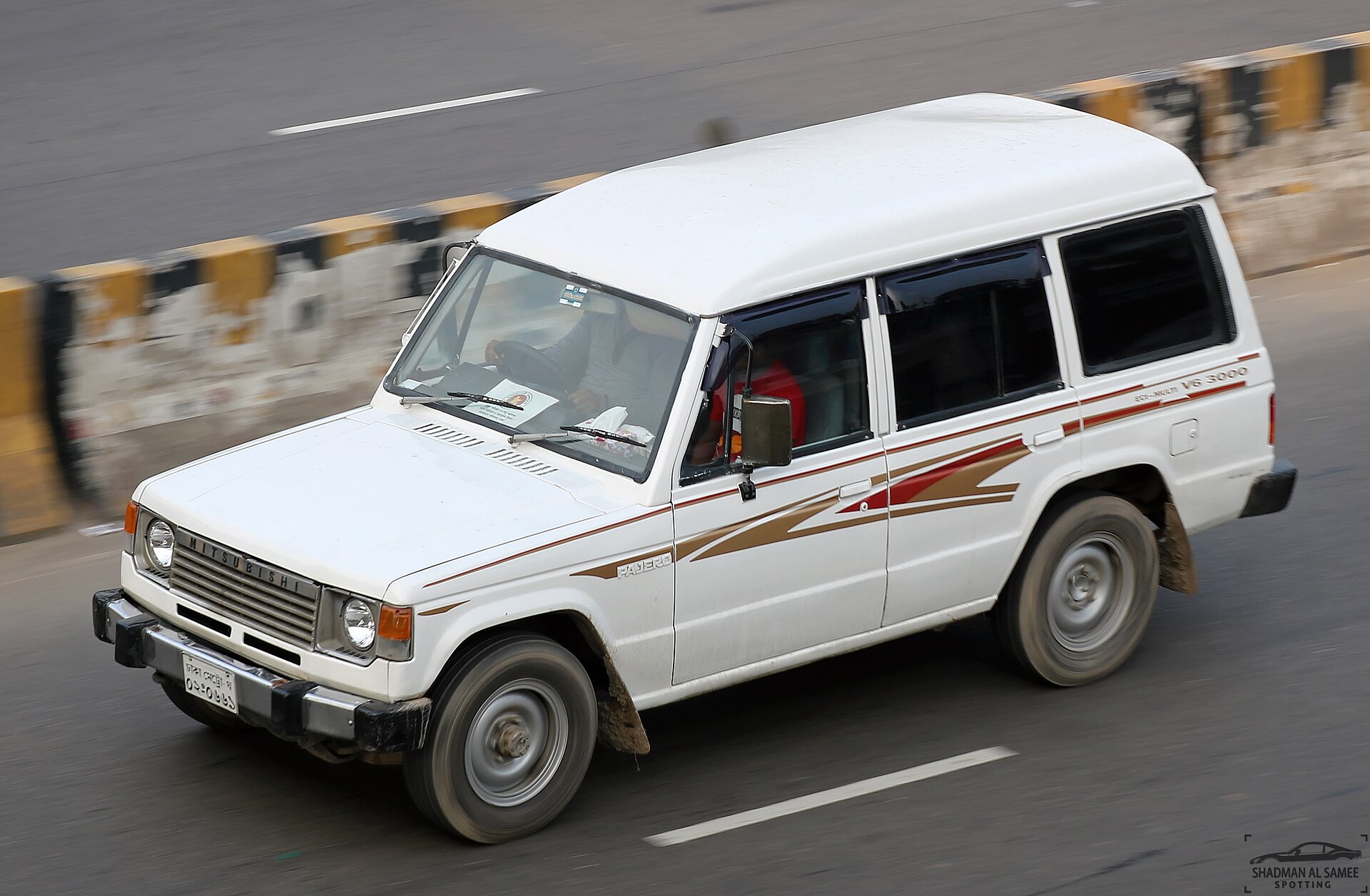


All generations by year: Pajero V (2026–now) · Pajero V80/V90 (2006–2021) · Pajero V60/V70 (1999–2006) · Pajero V20/V30 (1991–1999) · Pajero I (L040) (1982–1991)
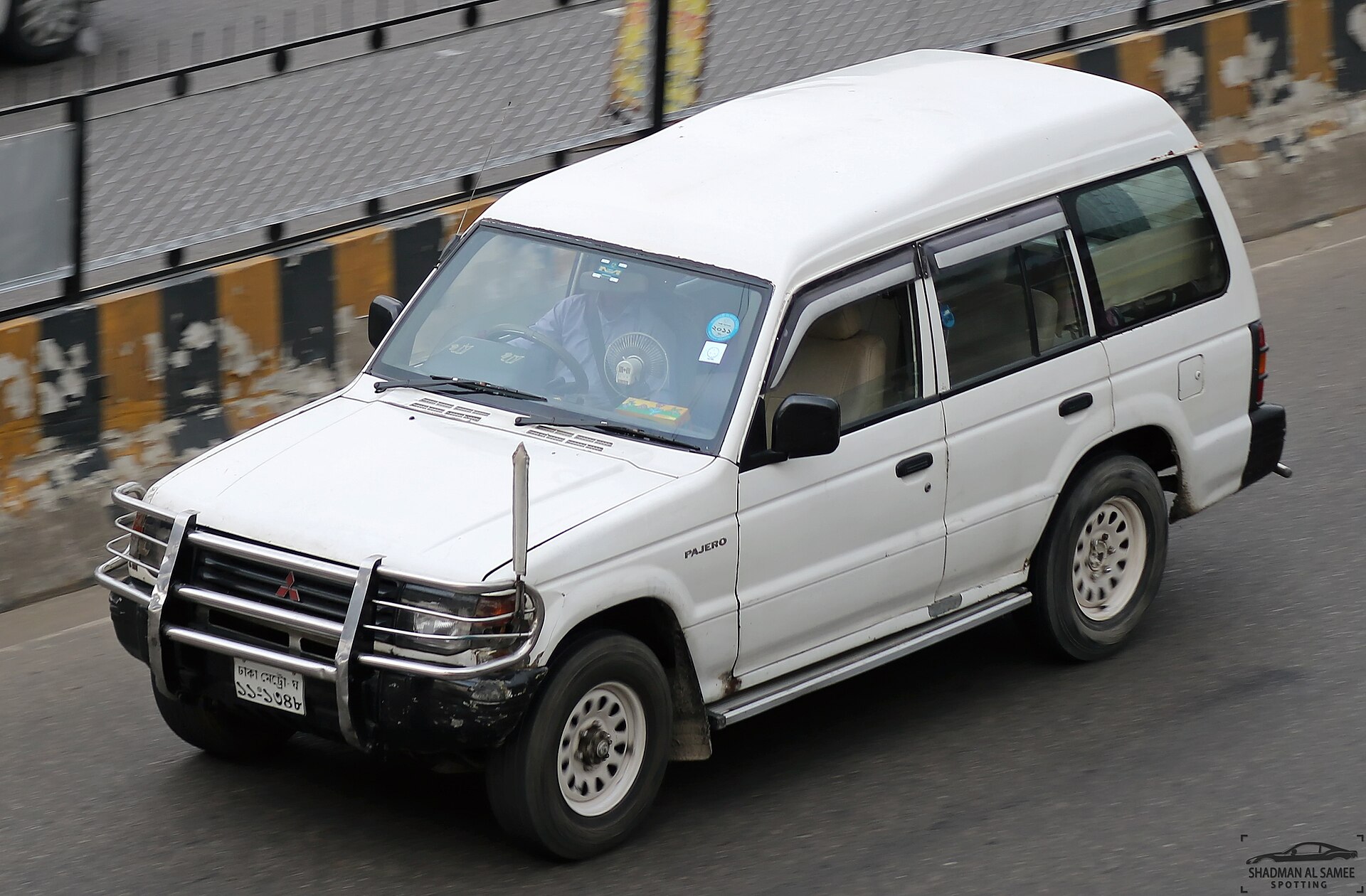
The second-generation Mitsubishi Pajero, coded V20 and V30 among other series codes, went on sale in Japan in January 1991 and stayed in Japanese production until 1999, with European convertibles sold into 2000. It was larger than the first car, offered three rows of seats and introduced Super Select 4WD. Production peaked at about 175,000 units in 1992.
In short
- Japanese launch in January 1991; built there until 1999 and assembled under licence in several other countries for years afterwards.
- Super Select 4WD let drivers switch between rear-wheel drive and full-time four-wheel drive on the move.
- European engines ran from the 2.5 TD with 73 kW (99 PS) to the 3.5 V6 with 153 kW (208 PS).
- The Pajero Evolution homologation special (1997–1999) and four Dakar wins belong to this era.
Pajero V20/V30 specs by version
| Version | Engine | Power | Torque | Production years |
|---|---|---|---|---|
| Diesel · 1 version | ||||
| 85 kW (116 PS) | Diesel | 85 kW 116 PS114 hp | — | 1997 |
| Petrol · 1 version | ||||
| 96 kW (131 PS) | Petrol | 96 kW 131 PS129 hp | — | 1998 |
| Other · 8 versions | ||||
| 2.5 TD | 6 cyl | 73 kW 99 PS98 hp | 240 Nm177 lb-ft | — |
| 2.4 petrol, 8 valves | — | 82 kW 111 PS110 hp | 184 Nm136 lb-ft | — |
| 2.8 TD | — | 92 kW 125 PS123 hp | 292 Nm215 lb-ft | — |
| 3.0 V6, 12 valves | — | 110 kW 150 PS148 hp | 236 Nm174 lb-ft | — |
| 130 kW (177 PS) | 6 cyl | 130 kW 177 PS174 hp | — | 1998 |
| 3.0 V6, 24 valves | — | 133 kW 181 PS178 hp | 255 Nm188 lb-ft | — |
| 3.5 V6 SOHC | — | 143 kW 194 PS192 hp | 313 Nm231 lb-ft | — |
| 3.5 V6 DOHC | 6 cyl | 153 kW 208 PS205 hp | 300 Nm221 lb-ft | — |
Verified Manufacturer and type-approval data from our catalog · Sources and methodology
Pajero II: bigger body and three rows
The V20 is an all-new design, not a facelift of the L040, although it kept a separate ladder chassis and torsion-bar front suspension. Both wheelbases grew: the short car by 70 mm to 2,420 mm (95.3 in) and the long car by 30 mm to 2,725 mm (107.3 in). Mitsubishi highlights the arrival of a three-row seating model as one of the generation's main changes.
The range was broad. Short-wheelbase buyers chose between a Metal Top and a Canvas Top, while the long-wheelbase car came as a Semi-High Roof or High Roof wagon. A three-door convertible joined later; in Germany the last version, a 3.0 V6 GLX, was listed from February 1999 to May 2000.
Mitsubishi's Thai history notes that this Pajero became a cultural fixture in Japan during the 1990s ski boom. The overview of every Pajero generation puts the V20 in context with the cars before and after it.
How Super Select 4WD works
Super Select 4WD is the technical heart of the second generation. Mitsubishi describes it as the first system to combine part-time and full-time four-wheel drive in one transfer case, and it remained a Pajero feature until 2021.
The driver has four modes:
- 2H: rear-wheel drive for dry roads and better economy.
- 4H: full-time four-wheel drive through a centre differential with a viscous coupling, usable on tarmac.
- 4HLc: the centre differential locked for mud, sand or snow.
- 4LLc: low range, quoted at 1.9:1, with the centre differential locked.
Changes between 2H and 4H can be made while driving; sources differ on the speed limit, quoting 80 km/h or 100 km/h. A rear differential lock was optional. Multi-mode ABS was designed to work in every drive mode, and some markets sold the system under the name Active Trac.
V20 engines and gearboxes in Europe
European buyers had one four-cylinder petrol, four V6 versions and two turbo-diesels. The figures below are taken from German catalogue data; the 3.5 V6 changed from a DOHC to a SOHC design in 1997, losing power but gaining torque.
| Engine | Code | Power | Torque | Years (Germany) |
|---|---|---|---|---|
| 2.4 petrol, 8 valves | 4G64 | 82 kW (112 PS) | 184 Nm (136 lb-ft) | 1991–2000 |
| 3.0 V6, 12 valves | 6G72 | 110 kW (150 PS) | 236 Nm (174 lb-ft) | 1990–1995 |
| 3.0 V6, 24 valves | 6G72 | 133 kW (181 PS) | 255 Nm (188 lb-ft) | 1994–2000 |
| 3.5 V6 DOHC | 6G74 | 153 kW (208 PS) at 5,000 rpm | 300 Nm (221 lb-ft) at 3,000 rpm | 1994–1998 |
| 3.5 V6 SOHC | 6G74 | 143 kW (194 PS) | 313 Nm (231 lb-ft) | 1997–2000 |
| 2.5 TD | 4D56 | 73 kW (99 PS) | 240 Nm (177 lb-ft) | 1990–2000 |
| 2.8 TD | 4M40 | 92 kW (125 PS) at 4,000 rpm | 292 Nm (215 lb-ft) at 2,000 rpm | 1994–2000 |
The convertible was also offered with a 1.8 GDI direct-injection petrol of 96 kW (131 PS) from 1998, and with a 130 kW (177 PS) version of the 3.0 V6. Mitsubishi's history credits the second generation with bringing its GDI technology to the Pajero range. Gearboxes were a five-speed manual or a four-speed automatic, and a larger transmission and transfer case arrived in 1993.
Performance depends heavily on the engine. ADAC lists the short 3.5 V6 DOHC manual at 9.5 seconds from 0 to 100 km/h, 185 km/h (115 mph) and 14.3 L/100 km (19.8 mpg UK). The long 2.8 TD manual needs 16.8 seconds, reaches 150 km/h (93 mph) and uses 12.4 L/100 km (22.8 mpg UK).
Pajero II dimensions: short and long
The table shows two German-market cars: a 3.5 V6 three-door (1994–1998) and a 2.8 TD GLX five-door (1997–2000). Both are narrow-body versions; wider bodies with flared wheel arches were sold in some export markets from 1997–1998.
| Parameter | Metric | Imperial |
|---|---|---|
| Length, 3-door / 5-door | 4,075 / 4,725 mm | 160.4 / 186.0 in |
| Width (narrow body) | 1,695 mm | 66.7 in |
| Height, 3-door / 5-door | 1,835 / 1,890 mm | 72.2 / 74.4 in |
| Wheelbase, 3-door / 5-door | 2,420 / 2,725 mm | 95.3 / 107.3 in |
| Kerb weight, 3-door / 5-door | 1,855 / 2,085 kg | 4,090 / 4,597 lb |
| Gross weight, 3-door / 5-door | 2,350 / 2,720 kg | 5,181 / 5,997 lb |
| Braked towing, 3-door / 5-door | 2,800 / 3,300 kg | 6,173 / 7,275 lb |
| Unbraked towing | 750 kg | 1,653 lb |
| Fuel tank | 75 L | 16.5 UK gal |
| Tyres, 3-door / 5-door | 265/70 R15 / 235/75 R15 | – |
Facelifts, safety kit and the 1996 recall
The V20 changed in stages. In mid-1994 the indicators moved into the headlamp units and turned white, and the rear lights were revised. For 1997–1998, export markets received wider "blister" wheel arches, new headlamps, grille and bumpers, while the narrow-body GLX stayed on as the base model.
Safety equipment improved during the run. German catalogue data lists driver and passenger airbags and ABS as standard on later cars, including the 3.5 V6 three-door from 1994 and the 2.8 TD GLX from 1997. Electronically adjustable dampers with three settings were a factory option in some markets. No Euro NCAP or ANCAP rating exists for this generation.
ADAC records one recall: in July 1996, front brake hoses that could leak, covering 45,172 Pajeros worldwide built between 1991 and 2000. Check that it was carried out on any car you consider.
Pajero Evolution and the Dakar years
The Pajero Evolution was built for one reason: homologation in the Dakar T2 class. Launched in October 1997, it used a 3.5-litre 24-valve MIVEC V6 with a revised intake and a new long-travel independent rear suspension, which later went into the third-generation road car. Production totalled 2,693 between 1997 and 1999; Mitsubishi rounds it to about 2,700. The same rally-led thinking produced the Lancer Evolution VI Tommi Makinen Edition.
Germany also received a Dakar Limited Edition of 50 three-door cars, converted by GeCo-Raid Sport under Sven Quandt with Recaro seats and 18-inch wheels.
During the V20's production years, Pajero-badged rally cars won the Dakar four times: Hubert Auriol and Philippe Monnet in 1992, Bruno Saby and Dominique Serieys in 1993, Kenjiro Shinozuka and Henri Magne in 1997, and Jean-Pierre Fontenay and Gilles Picard in 1998. These were competition prototypes rather than modified showroom cars.
Life after 1999: licence builds and the Pajero Classic
The V20 outlived its Japanese production by many years. Licensed assembly continued in the Philippines until 2008, in Colombia and India until 2012, and in China, where versions were built into 2021. Mitsubishi also used the second-generation chassis for the 1996 Challenger, sold as the Montero Sport and an ancestor of today's Mitsubishi Pajero Sport.
In Europe, Mitsubishi revived the V20 in summer 2002 as the Pajero Classic, a cheaper alternative to the third generation. It had a 2.5 TD with 85 kW (115 PS) and part-time four-wheel drive only, without Super Select.
Choosing a second-generation Pajero
A V20 bought today is an older 4x4 that needs careful inspection, not a modern family car.
- For towing: a long-wheelbase 2.8 TD, with a 3,300 kg (7,275 lb) braked limit and simple mechanicals.
- For performance: the 3.5 V6 DOHC with 153 kW (208 PS), at the cost of heavy fuel use.
- For collectors: the Pajero Evolution or a Dakar Limited Edition, both rare and well documented.
- Check carefully: chassis and body corrosion, the Super Select transfer case in all four modes, and the 1996 brake hose recall.
For more recent alternatives, browse diesel SUVs or the current Mitsubishi line-up.
Did you know?
- The Pajero V20/V30 is generation 2 of 5 of the Mitsubishi Pajero in our catalog.
- The Pajero V20/V30 offers up to 153 kW (208 PS) — 49 kW more than the Pajero I (L040) (1982–1991) (+47%).
Image credits · Photos from Wikimedia Commons under free licences
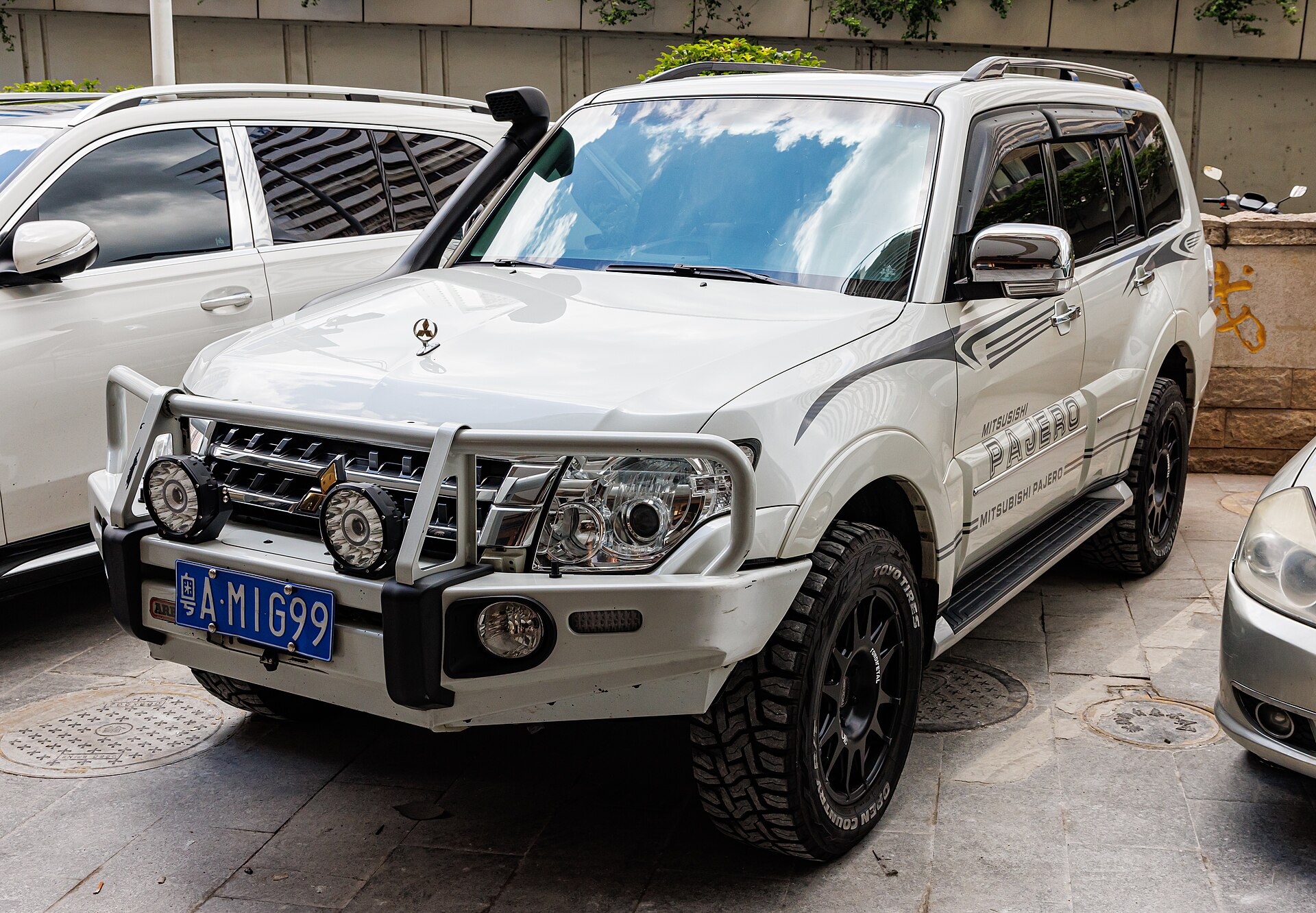
- Mitsubishi Pajero I (L040) · Photo: Shadman Samee from Dhaka, Bangladesh / Wikimedia Commons, CC BY-SA 2.0
- Mitsubishi Pajero V20/V30 · Photo: Shadman Samee from Dhaka, Bangladesh / Wikimedia Commons, CC BY-SA 2.0
- Mitsubishi Pajero V60/V70 · Photo: Alex Neman / Wikimedia Commons, CC BY-SA 4.0
- Mitsubishi Pajero V80/V90 · Photo: Dinkun Chen / Wikimedia Commons, CC BY-SA 4.0
V20/V30 rivals
-
Ended 2021
- Years
- 2007–2021
- Body
- SUV
- Fuel
- Petrol, Diesel
- Power
- 173–286 kW (235–389 PS)
-
In production
- Years
- 1951–present
- Body
- SUV, Pickup
- Fuel
- Petrol, Diesel
- Power
- 55–369 kW (75–502 PS)
7 generations
- II
- III
- Y60
- Y61
- Y62
- Y63
- +1 earlier
-
Ended 2017
- Years
- 2012–2017
- Body
- SUV
- Fuel
- Diesel
- Power
- 137 kW (186 PS)
-
Ended 2010
- Years
- 2005–2010
- Body
- SUV
- Fuel
- Petrol, Diesel
- Power
- 160–224 kW (218–305 PS)


FAQ
What years is the second-generation Pajero?
Japanese sales began in January 1991 and Japanese production ended in 1999. In Europe the convertible was sold until 2000, and the V20 returned as the Pajero Classic from 2002.
Does the Pajero II have Super Select 4WD?
Yes. This generation introduced it, with 2H, 4H, 4HLc and 4LLc modes and a viscous-coupling centre differential. The later Pajero Classic version used part-time four-wheel drive instead.
What is the most powerful Pajero II?
Among regular models, the 3.5 V6 DOHC with 153 kW (208 PS). The Pajero Evolution homologation car had a more powerful MIVEC version of the 3.5 V6, but sources disagree on its output.
How many Pajero Evolutions were built?
2,693 were produced between 1997 and 1999 for Dakar T2-class homologation; Mitsubishi rounds the figure to about 2,700.
How much can a Pajero II tow?
German data lists 2,800 kg (6,173 lb) braked for the short 3.5 V6 and 3,300 kg (7,275 lb) for the long 2.8 TD, with 750 kg (1,653 lb) unbraked.
Data sources
Data checked by an editor against the sources below.
- 1cars archive: Mitsubishi Pajero: Generations, Specs and History
- The text of this article (1cars archive)
- Wikipedia — Mitsubishi Pajero