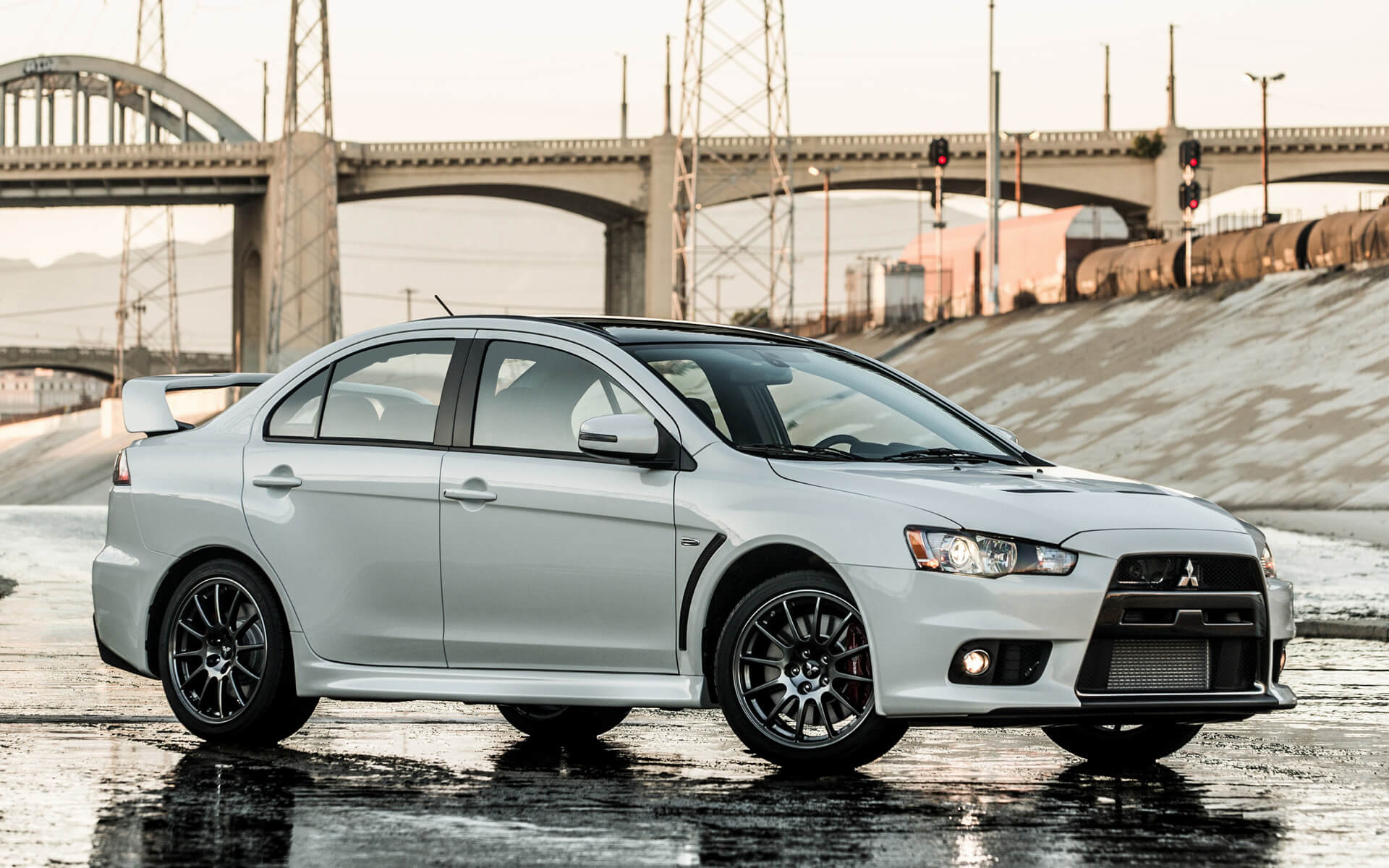
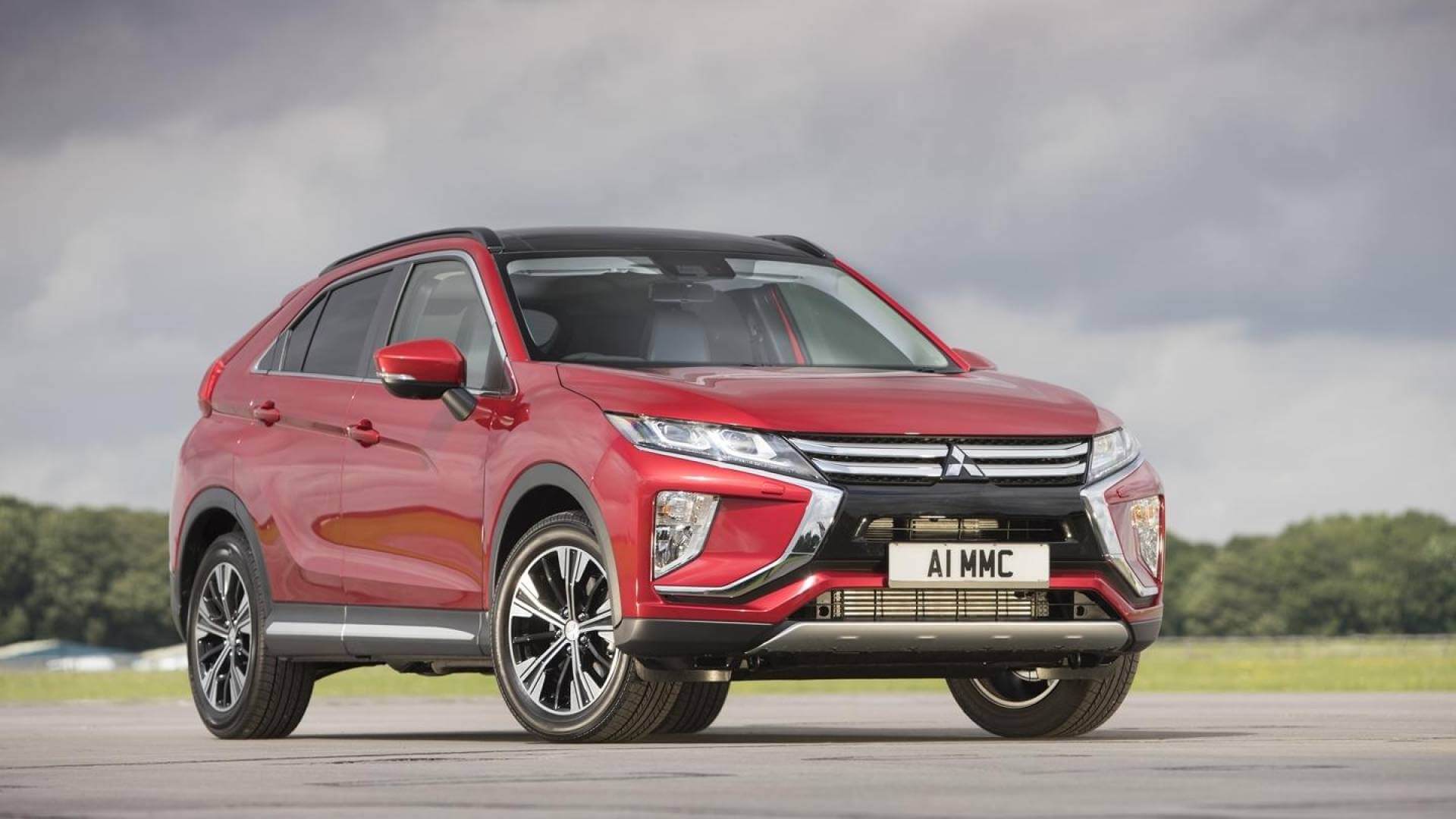
 Mitsubishi Lancer
Specs, engines and history
Published Sources (2) Report an error
By Sarah Whitmore, Senior Automotive Writer
- Built
- 2007–2024
- Top power
- 125 kW (170 PS)
Which Lancer to choose
Our verdict · Sarah Whitmore
- Classic and rally history: a first-generation 1600 GSR or an EX2000 Turbo, the two Lancers most closely tied to the model's rally record.
- Simple everyday car: a 2007-generation 1.6 or 1.8 DI-D saloon. They were cheap even when new.
- Practical diesel: the 1.8 DI-D+ Sportback with 110 kW, which combines a hatchback with the strongest diesel.
- Rivals and versions: our car comparison shows the 2007 Lancer next to its competitors, and the power converter turns the hp figures of export versions into kW and PS.
- Performance without Evo prices: the Ralliart. It shares the Evolution's engine type, drive system and gearbox, but uses the standard body.
Mitsubishi's path from shipbuilder to car maker is traced in our history of Mitsubishi Motors, and current and past models are in the Mitsubishi catalogue.
The Mitsubishi Lancer is the compact saloon that carried Mitsubishi's name in rallying and in family car parks for 51 years. It was launched in Japan in February 1973, and the last global generation ended production in August 2017. In Taiwan, the locally developed Grand Lancer kept the name alive until 1 April 2024. Wikipedia puts sales at over six million cars between 1973 and 2008. The Lancer Evolution grew out of the front-drive Lancer in 1992.
In short
- Rear-wheel drive from 1973 to 1987, front-wheel drive (with some all-wheel-drive versions) after that.
- Rally record: the 1600 GSR won the Safari Rally twice and the Southern Cross Rally four times.
- The 2007 Lancer offered petrol and diesel engines from 86 to 125 kW, plus the Ralliart and the Evolution X.
- German price in February 2016: from €14,990 for the saloon, according to AUTOHAUS.
Size at a glance
| Dimensions | Mitsubishi Lancer |
|---|---|
| Length | 4,570 mm179.9 in |
| Width | 1,760 mm69.3 in |
| Height | 1,490 mm58.7 in |
| Wheelbase | 2,635 mm103.7 in |
| Boot | 400 L14.1 cu ft |
Specs by version
Engines
| Version | Engine | Power | Drive | Production years |
|---|---|---|---|---|
| Diesel · 3 versions | ||||
| 1.8 DI-D | Diesel | 85 kW 116 PS114 hp | Front-wheel drive | 2010 |
| 2.0 DI-D (Volkswagen PD-TDI) | Diesel | 103 kW 140 PS138 hp | Front-wheel drive | 2007–2010 |
| 1.8 DI-D+ Sportback | Diesel | 110 kW 150 PS148 hp | Front-wheel drive | — |
| Petrol · 3 versions | ||||
| 1.6 MIVEC | Petrol | 86 kW 117 PS115 hp | Front-wheel drive | — |
| 1.8 (4B10, Taiwan) | Petrol | 105 kW 143 PS141 hp | Front-wheel drive | — |
| 2.4 GTS (4B12) | Petrol | 125 kW 170 PS168 hp | Front-wheel drive | 2009 |
Dimensions and weight
Verified Manufacturer and type-approval data from our catalog · Sources and methodology
Mitsubishi Lancer at a glance
| Parameter | Value |
|---|---|
| Production | February 1973 – August 2017 worldwide; Taiwan to April 2024 |
| Generations | eight to 2007 by German counting; nine plus the Grand Lancer by English counting |
| Bodies | saloon, coupé, hardtop, estate, hatchback (Sportback) |
| Layout | rear-wheel drive 1973–1987; front-wheel drive later; AWD estates, Ralliart and Evolution |
| Power range | from 40 kW (1200 of 1973); 125 kW in the EX2000 Turbo and the 2.4 of 2009; Evolution X 217 kW |
| Other names | Lancer Fiore, Lancer Cedia, Galant Fortis (Japan), Virage (Taiwan), Grand Lancer |
| Related models | Lancer Evolution, Proton Inspira, Mitsubishi Mirage/Colt |
| Sales | over six million from 1973 to 2008 |
Why the generations are numbered differently
Mitsubishi sold different Lancers in different markets, often at the same time. Japan had rear-drive and front-drive Lancers side by side in the early 1980s, and the Lancer Fiore and later Lancers were related to the Mirage. Europe received its own selection. German Wikipedia counts eight generations and calls the 2007 car the eighth. English Wikipedia counts the same car as the ninth, because it includes Japanese and Asian models that Europe never got. It then lists the Taiwanese Grand Lancer of 2017 as the tenth. This page follows the German count for Europe and names both where they differ.
| Era (German count) | Years | Codes | Bodies | Key engines |
|---|---|---|---|---|
| 1st | 1973–1979 | A70 | 2/4-door saloon, coupé, estate | 1.2–1.6 l, 40–60 kW |
| 2nd (Lancer EX) | 1979–1983 in Europe; Japan to 1987 | — | 4-door saloon | 1.4–2.0 l, up to 125 kW (EX2000 Turbo) |
| 3rd | 1983–1988 | C12V–C37V | saloon, estate, AWD estate | 1.2–1.8 l, 40–66 kW |
| 4th | 1988–1991 | — | saloon, hatchback, estate | 1.3–1.8 l, up to 103 kW |
| 5th | 1991–1996 | CB1A–CD8A | saloon, estate | 1.3–1.8 l petrol, 2.0 l diesel, 50–103 kW |
| 6th | 1996–2003 | CJ0 | saloon, estate | 1.3–1.6 l, 55–66 kW |
| 7th | 2003–2007 | CS0 | saloon, estate | 1.3–2.0 l, 60–99 kW |
| 8th | 2007–2017 | CY0 | saloon, Sportback | 1.6–2.4 l petrol, 1.8–2.0 l diesel |
The rear-drive Lancers, 1973–1987
The first Lancer appeared in February 1973 to fill the gap between the Minica kei car and the larger Galant. It came as a two- or four-door saloon, a two-door hardtop and an estate, with 1.2-, 1.4- and 1.6-litre engines. In German Wikipedia's European data the 1200 gave 40 kW (55 PS) and the 1600 GSR 60 kW (82 PS). Europe got the car from 1977. The GSR made the name in rallying, with two Safari Rally wins and four in the Southern Cross Rally. A hatchback coupé, the Lancer Celeste, was added in 1975 and ran until July 1981.
The second car, the Lancer EX, arrived in 1979 and was shown in Europe at the Frankfurt show that year. It was a four-door saloon only. The 1.4-litre engine used Mitsubishi's MCA-Jet system and Silent Shaft balancer shafts and gave 59 kW (80 PS). A turbocharged 1.8 followed with 99 kW (135 PS) in 1980 and 118 kW (160 PS) with an intercooler in 1983. For Europe, the EX2000 Turbo used a 2.0-litre turbo with 125 kW (170 PS) and reached 200 km/h, more than twice the power of the first 1600 GSR. A Group 4/Group B rally version was rated at 206 kW (280 PS). Japan kept selling the EX alongside the front-drive Lancer Fiore until 1987.

Front-drive Lancers, 1983–2007
From 1983 the European Lancer was a front-drive saloon, joined by an estate in 1985 and an all-wheel-drive estate in 1986. In this era the Lancer moved closer to the Mirage, or Colt, from which the Japanese front-drive Lancers were derived. The 1988 car added a hatchback. Its GTi-16V of 1990–1991 was the first Lancer with four valves per cylinder, rated at 100 kW (136 PS). In 1992 a 1.8-litre with 103 kW (140 PS) followed.
The 1991 generation (codes CB1A–CD8A) offered a saloon, an estate from 1992 and four-wheel drive on the 1.6 estate. More importantly, it was the base of the first Lancer Evolution of 1992, a rally homologation saloon with 184 kW (250 PS). The Evolution story up to the Evo X is told on our separate Mitsubishi Lancer Evolution page.
The 1996 Lancer (CJ0) shared much with the Colt; in Germany only the 1.3-litre was sold for the first two years. In May 2000 Japan launched the Lancer Cedia, a saloon and estate that reached North America for the 2002 model year, replacing the Mirage there. North American cars had a 2.0-litre engine with 89 kW (120 hp), and Australian cars got a 2.4-litre with 115 kW (154 hp) from 2005. In Europe this car (CS0) arrived in 2003 with 1.3, 1.6 and 2.0-litre engines of 60 to 99 kW.

The 2007 Lancer: Galant Fortis, Sportback, Ralliart
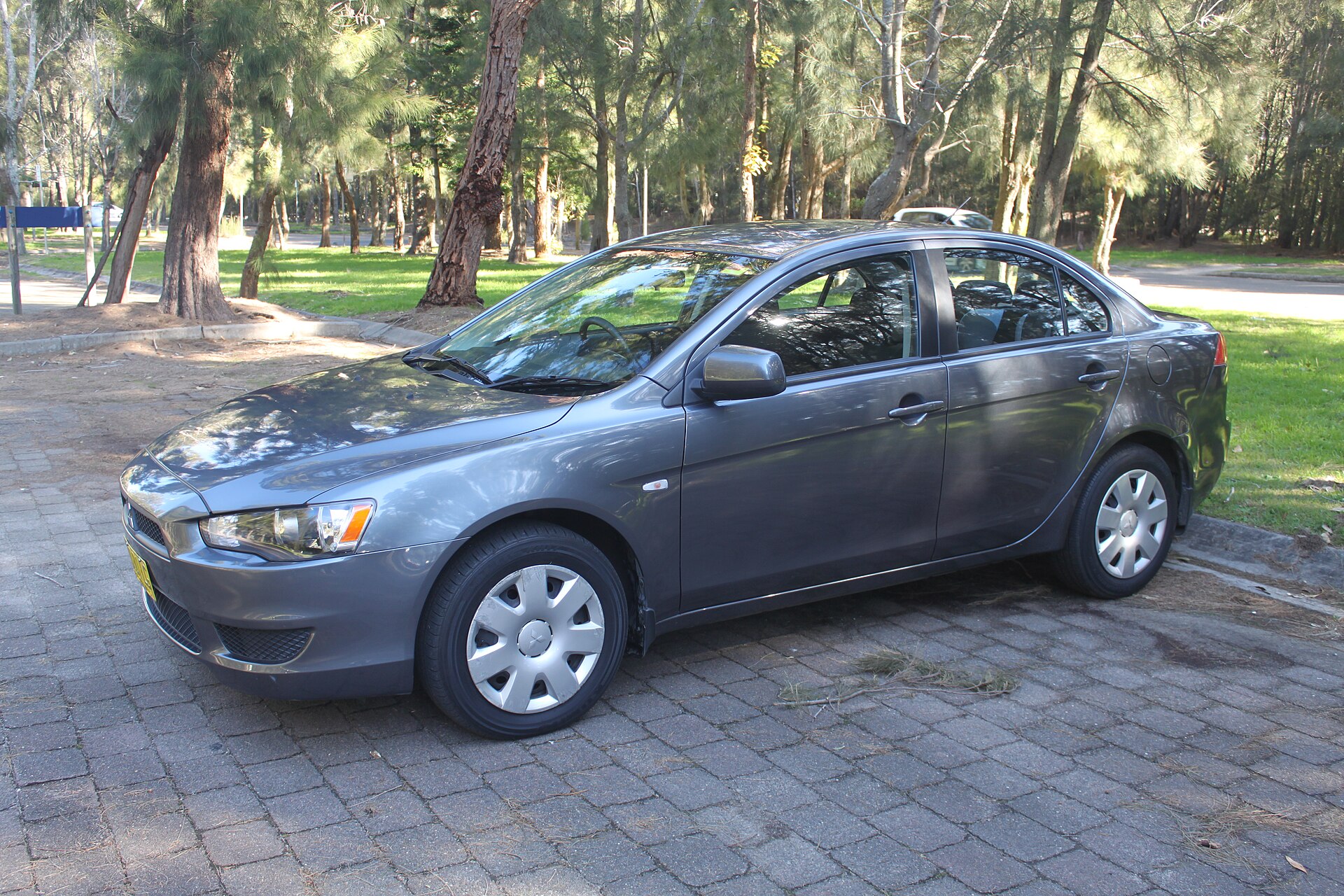
Mitsubishi unveiled the last global Lancer in Detroit in January 2007, and it went on sale in North America that March as a 2008 model. In Japan it was called the Galant Fortis; "fortis" is Latin for strong, brave and resolute. The body used Mitsubishi's RISE safety structure. The Sportback hatchback arrived on 15 November 2008 and replaced the estate in Europe.
| Engine | Market | Power | Notes |
|---|---|---|---|
| 1.6 MIVEC petrol | Europe | 86 kW (117 PS) | — |
| 1.8 4B10 petrol | Taiwan | 105 kW (143 PS) | — |
| 2.4 4B12 petrol | North America | 125 kW (168 hp) | GTS from 2009 |
| 2.0 4B11 turbo, Ralliart | various | — | AWD, 6-speed TC-SST twin-clutch |
| 2.0 4B11 turbo, Evolution X | various | 217 kW (295 PS) | separate Evolution model |
| 1.8 DI-D diesel | Europe, from 2010 | 85 kW (116 PS) | — |
| 1.8 DI-D+ diesel | Europe | 110 kW (150 PS) | Sportback only |
| 2.0 diesel (Volkswagen) | Europe, 2007–2010 | 103 kW (138 hp) | pump-nozzle TDI |
The Ralliart arrived in late 2008 in Australia. It put a turbocharged 4B11 2.0-litre, the engine family of the Evo X, plus all-wheel drive and the six-speed twin-clutch gearbox into the normal body. The Evolution X itself had 92 kW more than the 2.4 GTS.
In Australia the 2008 Lancer earned 15.56 of 16 points in ANCAP's frontal offset test, 14 of 16 for side impact and full points in the pole test with curtain airbags. Australian sales rose from 19,688 cars in 2008 to 23,064 in 2010, then fell to 7,560 by 2017. In Germany the Lancer was still listed from €14,990 in February 2016, only €1,000 above the new Fiat Tipo saloon. Worldwide production ended in August 2017 without a successor, although Brazil continued until 2019.


Grand Lancer and other relatives
In Taiwan, China Motor Corporation developed its own version and announced it in January 2017 as the Grand Lancer. It was a heavy facelift of the 2007 car, with Mitsubishi's Dynamic Shield grille, new panels and a new interior, styled with Pininfarina Shanghai. CMC confirmed the end of production on 1 April 2024, which closed the Lancer name after 51 years.
Partners also used Lancer engineering. Malaysia's Proton sold the 2007 Lancer as the Proton Inspira (see our history of Proton). An earlier Lancer-based car reached Europe as the Proton Persona 400.
Photo gallery


Mitsubishi Lancer in our rankings
- No. 11 of 67 · Longest hatchbacks (4,570 mm · top 17%)
- No. 30 of 86 · Smallest sedans (4,570 mm · top 35%)
- No. 306 of 912 · Longest-running car nameplates (12 years · top 35%)
- No. 54 of 106 · Most powerful hatchbacks (110 kW · top 53%)
- No. 220 of 420 · Longest cars (4,570 mm · top 53%)
- No. 219 of 420 · Smallest cars (4,570 mm · top 53%)
Longer than 83% of ranked hatchbacks in the 1CARS catalog (No. 11 of 67).
FAQ
When was the Mitsubishi Lancer discontinued?
Global production ended in August 2017 (Brazil continued until 2019). The Taiwanese Grand Lancer ended on 1 April 2024.
How many generations of the Lancer were there?
German Wikipedia counts eight up to the 2007 car; English Wikipedia counts nine plus the Taiwanese Grand Lancer, because it includes Japanese-market models.
What is the difference between the Lancer and the Lancer Evolution?
The Evolution is a rally-bred, turbocharged all-wheel-drive version of the Lancer, first built in 1992, with 184 kW in the first car and 217 kW in the Evo X.
What engines did the 2007 Lancer have in Europe?
A 1.6 MIVEC petrol with 86 kW, 1.8 DI-D diesels with 85 and 110 kW, and from 2007 to 2010 a Volkswagen-sourced 2.0 diesel with 103 kW.
Is the Lancer Ralliart the same as the Evo?
No. The Ralliart uses a turbocharged 4B11 from the same engine family, with all-wheel drive and the twin-clutch gearbox, but it keeps the normal Lancer body.
Data sources
Data checked by an editor against the sources below.
- Wikipedia — Mitsubishi Lancer
- Latribuneauto — 2625 Retrouvez Tous Les Resultats Et Les Classements Des Crashs Tests Euro Ncap 2009 2