
 Proton Persona 400
Specs, engines and history
Updated Published Sources (2) Report an error
By Oleksandr Hnatiuk, Automotive Editor & Used Car Specialist Reviewed by Felix Hartmann
- Built
- 1993–2009
- Top power
- 103 kW (140 PS)
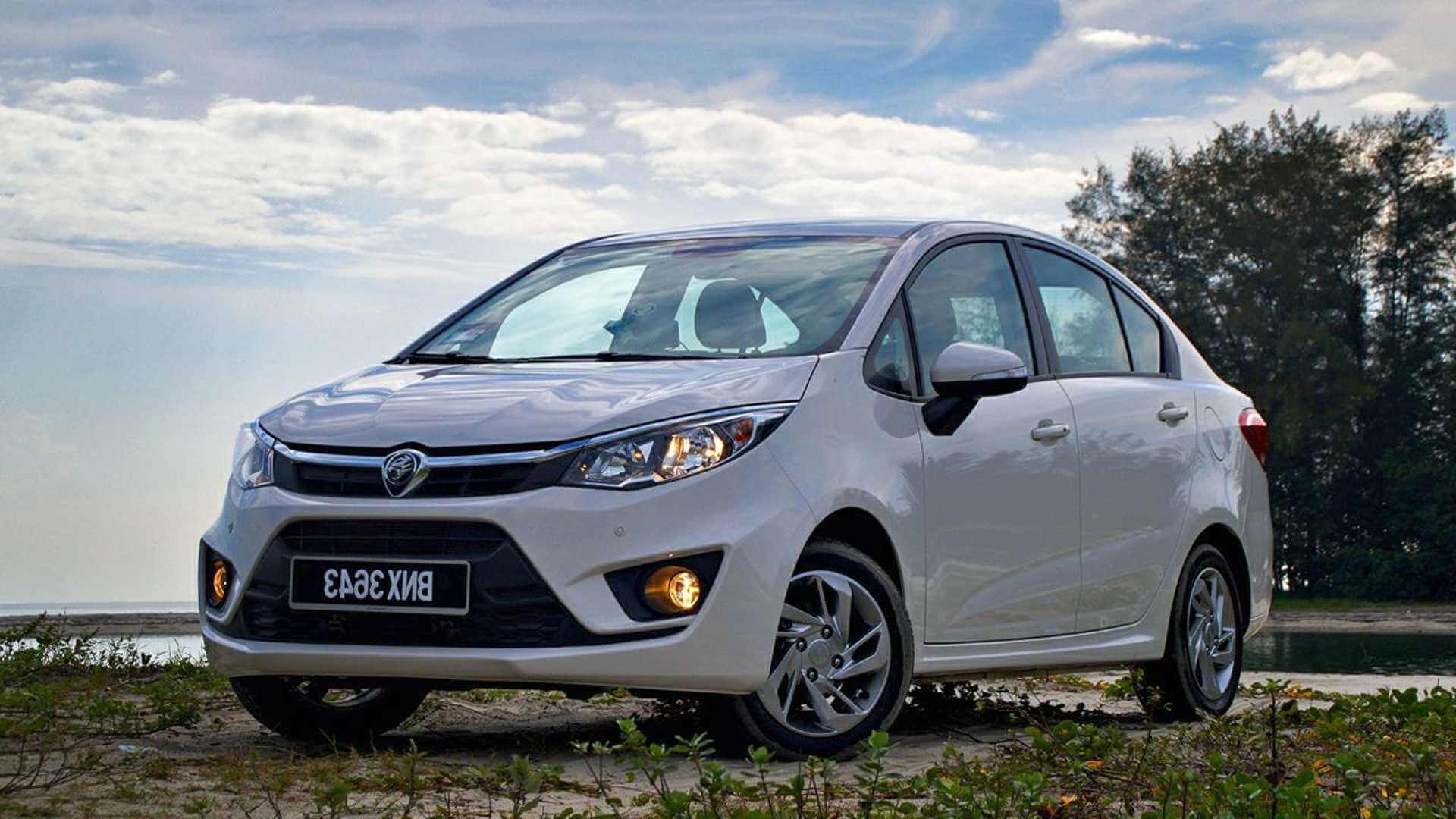
The Proton Persona 400 is the export name of the Proton Wira, a compact saloon and five-door hatchback built in Malaysia from May 1993 to June 2009. Based on the fourth-generation Mitsubishi Lancer, it used Mitsubishi engines from 1.3 to 1.8 litres, plus a 2.0 diesel. The 1.6 produced 83 kW (113 PS), and 952,216 Wiras were built in total.
In short
- Launched on 21 May 1993 as the Wira saloon; the Aeroback hatchback followed in October 1993.
- Sold in the UK as the Proton Persona from November 1993, with 400-series badges in Europe.
- Engines: 1.3, 1.5, 1.6 and 1.8 petrol (up to 103 kW) and a 2.0 diesel, front-wheel drive.
- Lotus tuned the suspension for the 2001 update; production ended in June 2009.

Running cost
Fuel · Persona 400 1.6 83 kW (113 PS)
about 1,850 EUR fuel a year at 15,000 km
7.0 l/100 km · petrol at 1.75 EUR/l · change mileage, fuel price or version
Specs by version
Engines
Performance
Show all 1 versions
| Version | Fuel consumption |
|---|---|
| 1.6 83 kW (113 PS) | 7.0 l/100 km33.6 mpg US · 40.4 mpg UK |
Dimensions and weight
Verified Manufacturer and type-approval data from our catalog · Sources and methodology
Proton Persona 400 key specifications
| Parameter | Metric | Imperial |
|---|---|---|
| Body | 4-door saloon, 5-door hatchback | - |
| Engines | 1.3–1.8 l petrol, 2.0 l diesel | 79–110 cu in, 122 cu in |
| Power (1.6 4G92) | 83 kW (113 PS) | 111 hp |
| Power (1.8 4G93 DOHC) | 103 kW (140 PS) | 138 hp |
| Gearbox | 5-speed manual; 3- or 4-speed automatic | - |
| Length / width / height | 4,270 / 1,680 / 1,385 mm | 168.1 / 66.1 / 54.5 in |
| Wheelbase | 2,500 mm | 98.4 in |
| Kerb weight | 980–1,011 kg | 2,161–2,229 lb |
| Top speed (1.6, old 1cars data) | about 187 km/h | 116 mph |
| Fuel use (1.6, old 1cars data) | about 7 l/100 km | 33.6 mpg (US) |
By our calculation, the 1.6 carries about 12.2 kg per kW and the 1.8 DOHC about 9.8 kg per kW. Check those ratios against other cars with the 1cars power-to-weight calculator.

Wira, Persona or 400: one car, three names
In Malaysia the car was the Proton Wira. When it reached Britain in November 1993, it was renamed the Proton Persona, and European cars carried 400-series model names. Australia received it in May 1995 and adopted the Persona name in November 1996. The Wira was sold in more than seventy countries and assembled in Indonesia, Vietnam and the Philippines.

The old 1cars text dated the car to 1996, the year it became widely known as the Persona 400 in some export markets. In fact, the saloon was launched on 21 May 1993. The hatchback, first badged Aeroback, followed in October 1993, and the 1.3 GL saloon and 1.5 GL hatchback joined in 1994.
Mitsubishi roots and design
Proton built the Wira on the fourth-generation Mitsubishi Lancer, known in some markets as the Mirage. Mitsubishi was then a partner of Proton, which explains the shared platform and engines. The front end came from Proton's Iswara, a member of the Saga family, so the car looked like a Proton rather than a rebadged Mitsubishi.

The saloon is 4,270 mm long on a 2,500 mm wheelbase, according to Wikipedia; the old 1cars text gave 4,360 mm. Either way, it was a compact family car in the class of the Ford Escort and Vauxhall Astra of the time. Related Proton models, including the Satria hatchback and the Putra coupé, shared its front styling.
Engines and gearboxes
| Engine | Type | Power | Gearbox |
|---|---|---|---|
| 1.3 4G13 | SOHC 12-valve petrol | - | 5-speed manual |
| 1.5 4G15 | SOHC 12-valve petrol | - | 5-speed manual or 3-speed automatic |
| 1.6 4G92 | SOHC 16-valve petrol, multi-point injection | 83 kW (113 PS) | 5-speed manual or 4-speed automatic |
| 1.8 4G93 | SOHC petrol (EXi automatic) | - | 4-speed automatic |
| 1.8 4G93 DOHC | DOHC 16-valve petrol | 103 kW (140 PS) | 5-speed manual |
| 2.0 4D68 | Diesel, naturally aspirated or turbo | 48 kW (64 hp) / 60 kW (80 hp) | 5-speed manual |
All versions have front-wheel drive, and the 1.8 DOHC was the sporting top model. The diesels made 123 Nm without a turbocharger and 172 Nm with one. The table leaves power blank where no reliable figure was found.

Lotus tuning, special editions and the police GTI
In 1996 Proton bought the British sports car maker Lotus, and the link showed in the Wira. When the car was updated in 2001, Lotus tuned the suspension. Two years earlier, a 1.8-litre Compact GTI developed with Lotus produced 133 bhp (99 kW) and was trialled by Humberside Police in England.

A homologation special came first. In 1996 Proton built 2,500 Wira 1.8 EXi DOHC cars for rallying rules: 2,450 in Majorca Black and 50 white RS versions. The Wira SE of 2004, based on the 1.5 GLi Aeroback, added its own seats, exhaust, wheels and trim. The story of the company and its links with Lotus and Mitsubishi is told in the history of Proton.
Cabin, equipment and safety
The cabin is simple and practical. The old 1cars text lists fabric seats, power steering, an adjustable steering column, a driver's airbag on many cars, air conditioning and a radio. The rear seat folds to extend the boot.

Safety equipment depended on the market. Base Malaysian models had only three-point belts with pretensioners and a laminated windscreen. Export models added a driver airbag, side-impact bars in the doors and anti-lock brakes; ABS later became an option in Malaysia too. No Euro NCAP crash test of the car was published.
Production numbers and the end of the Wira
The Wira was a big success at home. Malaysian registrations peaked at 98,211 in 2002 and fell to 1,990 in 2009; by our calculation, that is about 2 % of the peak. Sales in the last years were 14,908 in 2007, 1,907 in 2008 and 1,974 in 2009. The last UK registrations came in 2006.

Proton replaced the hatchback with the Gen-2 in 2004 and the saloon with the new Persona (CM) in 2007, which reused the name for a different car. Wira production ended in June 2009 after 952,216 cars.
Rivals in Europe and how it compared
| Model | Origin | Body | Engines |
|---|---|---|---|
| Proton Persona 400 | Malaysia | Saloon, hatchback | 1.3–1.8 petrol, 2.0 diesel |
| Mitsubishi Lancer (fourth generation) | Japan | Saloon, hatchback | Same engine family |
| Hyundai Accent | South Korea | Saloon, hatchback | 1.3–1.5 petrol |
| Daewoo Nexia | South Korea | Saloon, hatchback | 1.5 petrol |
The Persona shared its mechanicals with the Lancer and competed mainly on price and simplicity. Use the 1cars comparison tool to set it against other budget cars of the 1990s.

Is a used Proton Persona 400 worth buying?
Today the Persona 400 is a cheap, simple car for owners who can maintain an older Mitsubishi-based design. The 1.6 with a manual gearbox is the best all-round choice, and parts are shared with many Lancer and Proton models. The 1.8 DOHC is the quickest version, and an original EXi homologation car is the rarest. Check for rust, worn suspension bushes and the service history of the automatic gearbox. Other Proton models are on the Proton brand page, and the Mitsubishi history explains the technology behind the car.


Proton Persona 400 in our rankings
- No. 323 of 1092 · Longest-running car nameplates (13 years · top 31%)
- No. 142 of 307 · Most economical cars (7.0 l/100 km · top 47%)
- No. 844 of 1022 · Most powerful cars (103 kW · top 83%)
- No. 525 of 645 · Biggest engines: cars (1,600 cc · top 83%)
- No. 100 of 112 · Most powerful cars of the 1990s (83 kW · top 90%)
- No. 466 of 509 · Widest cars (1,690 mm · top 92%)
In production longer than 69% of ranked nameplates in the 1CARS catalog (No. 323 of 1092).
Proton Persona 400 photos 13


FAQ
Is the Proton Persona 400 the same as the Proton Wira?
Yes. Wira was the Malaysian name, while Britain and other export markets sold the car as the Proton Persona, with 400-series badges in Europe. It was built from 1993 to 2009 as a saloon and a five-door hatchback.
What car is the Proton Wira based on?
It is based on the fourth-generation Mitsubishi Lancer, also called the Mirage. Proton used Mitsubishi engines and the Lancer platform, and added its own front styling taken from the Iswara.
What engines did the Proton Persona 400 have?
Buyers could choose four Mitsubishi petrol engines between 1.3 and 1.8 litres, or a 2.0-litre diesel with or without a turbo. The strongest was the twin-cam 1.8 with 103 kW (140 PS), the sporting top of the range.
How many Proton Wiras were built?
Production totalled 952,216 cars between May 1993 and June 2009. Malaysian registrations peaked in 2002, when 98,211 were registered, and the car was sold in more than seventy countries.
Did Lotus work on the Proton Persona?
Yes. The British company, then owned by Proton, reworked the chassis settings when the car was refreshed in 2001. Earlier, in 1999, a Lotus-developed 1.8 Compact GTI with 133 bhp served on trial with an English police force.
Data sources
Data checked by an editor against the sources below.
- The text of this article (1cars archive)
- Wikipedia - Proton Wira


