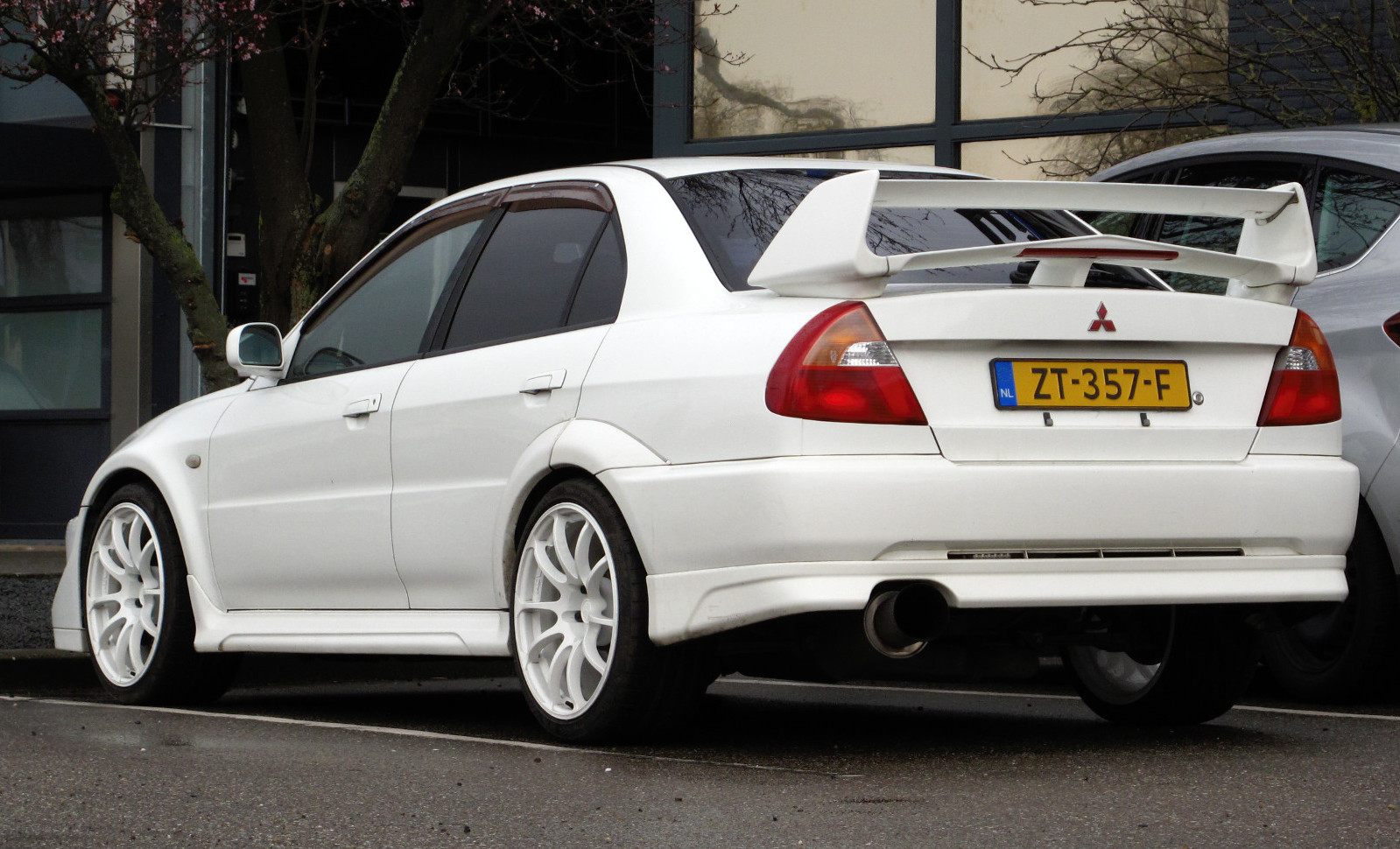
 Mitsubishi Space Star
All generations, specs and history
Published Sources (2) Report an error
By Felix Hartmann, Automotive Technology & EV Contributor
- Built
- 1998–2025
- Generations
- 2
- Top power
- 90 kW (122 PS)
- Euro NCAP
- 4 stars · A00
Timeline
Space Star generations
Click a generation for its own page


- Space Star I 1998–2005 · Minivan / MPV · 60–90 kW (82–122 PS)
- Space Star A00 2013–2025 · Hatchback · 52–59 kW (71–80 PS)
Newest first · 2 generations since 1998
-
2013
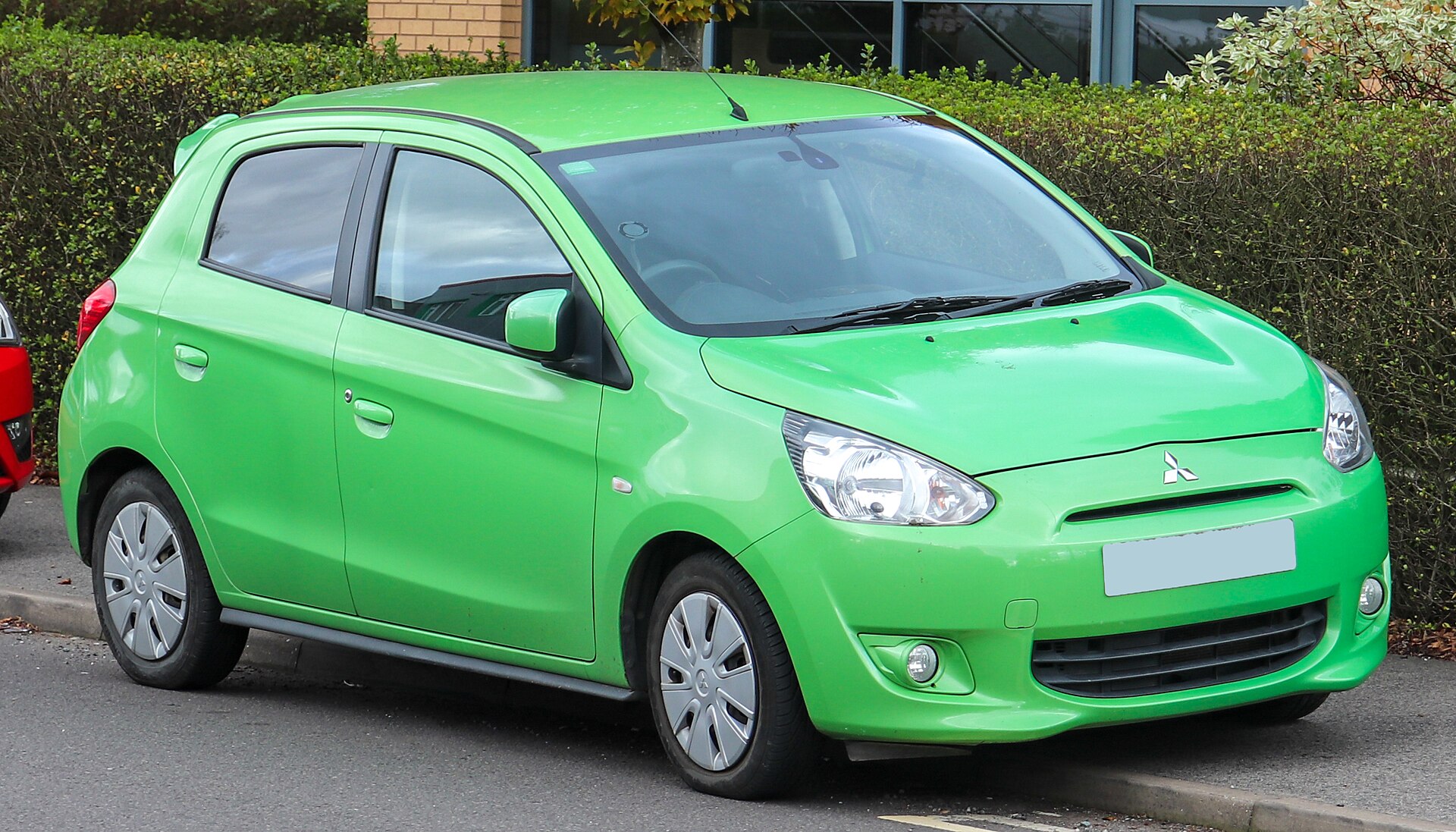
-
1998
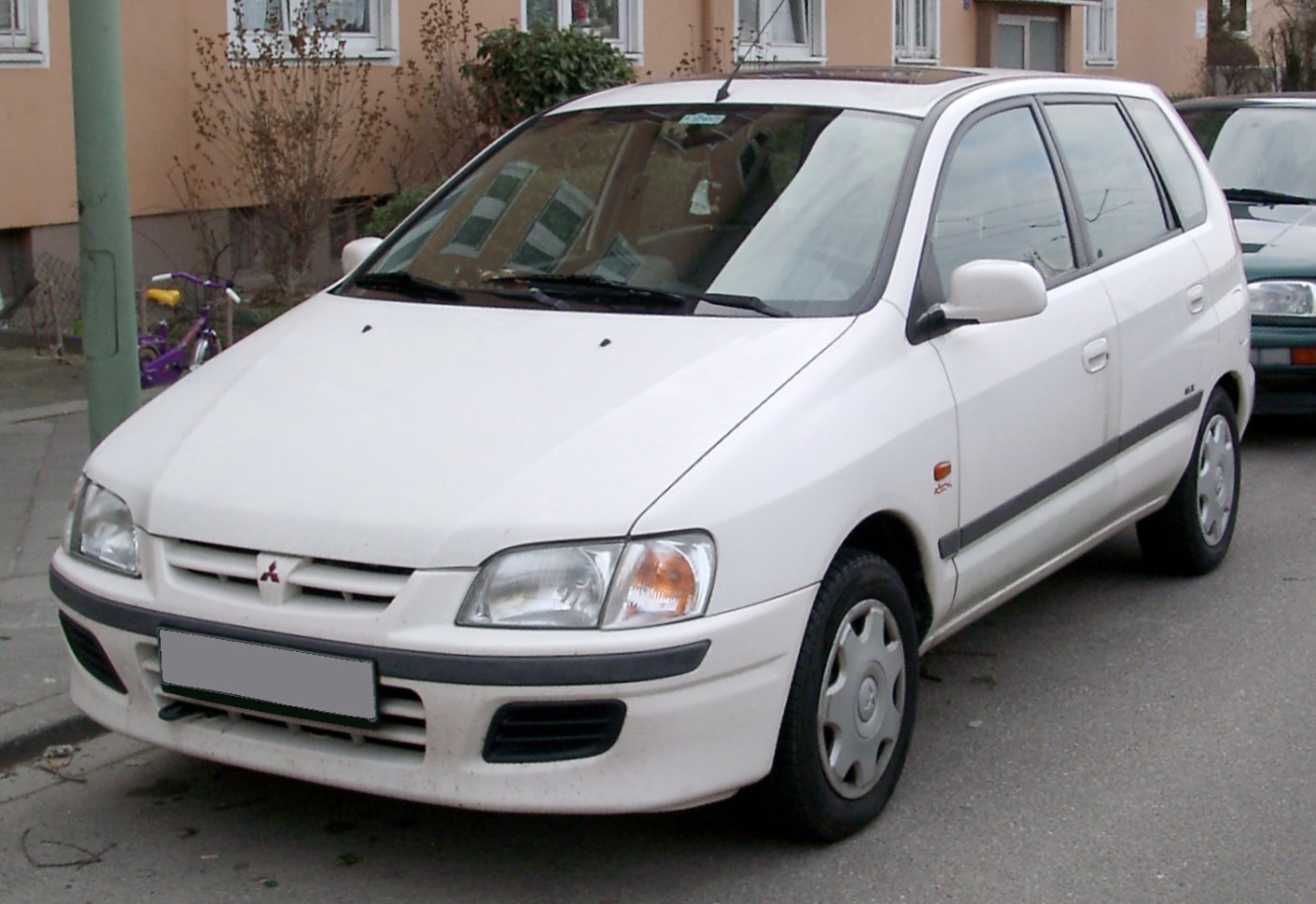
All generations by year: Space Star A00 (2013–2025) · Space Star I (1998–2005)
Which one is mine?
Pick the year of first registration to see which generation it is.
- A00 2013–2025
- Space Star I 1998–2005
Which one to buy
Our verdict · Felix Hartmann
- For maximum space per euro: a late Space Star I MPV, if you can find a well-kept one.
- For the lowest running costs: a Space Star II from 2020 with the 52 kW engine and a manual gearbox.
- For an automatic: the 1.2 with CVT.
- For a new car: the Space Star is no longer sold; Mitsubishi's replacement is the Colt.
Mitsubishi has used the Space Star name in Europe for two very different cars. The first was a compact MPV built at NedCar in Born, Netherlands, from 1998 to 2005; the second was the European name of the sixth-generation Mitsubishi Mirage, a small five-door hatchback imported from Thailand from 2013 until sales ended in early 2025. Both were front-wheel drive with petrol engines, and both were cheap, simple cars.
In short
- Space Star I (1998-2005): five-door mini MPV built in the Netherlands on the platform of the Mitsubishi Carisma and Volvo S40/V40, with 1.3 to 1.9-litre engines.
- Space Star II (2013-2025): European version of the Mirage, built in Laem Chabang, Thailand, with three-cylinder engines of 52-59 kW (71-80 PS).
- Euro NCAP: three stars for adult protection in 2001 (Space Star I), four stars in 2013 (Space Star II).
- In Germany the Space Star cost from EUR 11,990 in 2024, when Mitsubishi announced its withdrawal; the Renault Clio-based Colt took its place.
Safety
-
A00 · Euro NCAP 2013
Older protocol · Full Euro NCAP result
Stars from different years and organisations are not directly comparable: test protocols change every few years.
Mitsubishi Space Star at a glance
| Specification | Space Star I | Space Star II |
|---|---|---|
| Years in Europe | 1998-2005 | 2013-2025 |
| Segment | mini MPV | B-segment supermini (city car size) |
| Body | five-door hatchback/MPV | five-door hatchback |
| Plant | NedCar, Born, Netherlands | Laem Chabang, Thailand |
| Engines | 1.3-1.8 petrol, 1.9 diesel | 1.0 and 1.2 three-cylinder petrol |
| Power | 60-90 kW (80-121 hp) | 52-59 kW (71-80 PS) |
| Gearboxes | 5-speed manual, 4-speed automatic | manual, CVT (1.2) |
| Related models | Mitsubishi Carisma, Volvo S40/V40 | Mitsubishi Mirage, Attrage saloon |
Both cars are in our Mitsubishi catalogue. The old MPV replaced the Space Runner and was followed by the Colt; the hatchback was replaced by a new Colt based on the Renault Clio.
Generations
| Generation | Code | Years | Body styles | Engines | Power (hp / kW) |
|---|---|---|---|---|---|
| Space Star I | - | 1998-2005 | 5-door mini MPV | 1.3, 1.6, 1.8, 1.8 GDI petrol; 1.9 DI-D diesel | 60-90 kW (80-121 hp) |
| Space Star II | A00 (Mirage VI) | 2013-2025 | 5-door hatchback | 1.0 and 1.2 MIVEC petrol | 52-59 kW (71-80 PS) |
Space Star I (1998-2005): the Dutch-built mini MPV
The first Space Star went on sale in autumn 1998 as a successor to the Space Runner. It was built mainly for Europe at NedCar in Born, the plant Mitsubishi then shared with Volvo, and it used the platform of the Mitsubishi Carisma and the Volvo S40/V40. The tall five-door body with a 2,500 mm wheelbase put it between a hatchback and a small people carrier.
The 2002 facelift changed little: the overall shape stayed the same and the length grew from 4,030 mm to 4,050 mm. The 1.8 GDI direct-injection petrol was dropped at the facelift, and a 1.9 DI-D diesel made by Renault (F9Q) arrived in 2002, with a stronger version in 2003.
| Engine | Power | Note |
|---|---|---|
| 1.3 (4G13) | 60-63 kW (80-84 hp) | petrol, four cylinders |
| 1.6 (4G92) | 72 kW (97 hp) | petrol |
| 1.8 (4G93) | 84 kW (112 hp) | petrol |
| 1.8 GDI (4G93) | 90 kW (121 hp) | direct injection, until the 2002 facelift |
| 1.9 DI-D (Renault F9Q) | 75 kW (101 hp) | diesel, from 2002 |
| 1.9 DI-D | 86 kW (115 hp) | diesel, from 2003 |
Production peaked at 58,871 cars in 1999 and totalled 275,769 from 1998 to 2004, according to the production table on Wikipedia. Sales in Europe ran on until 2006, when only 612 were registered.


Space Star II (2013-2025): the Mirage for Europe
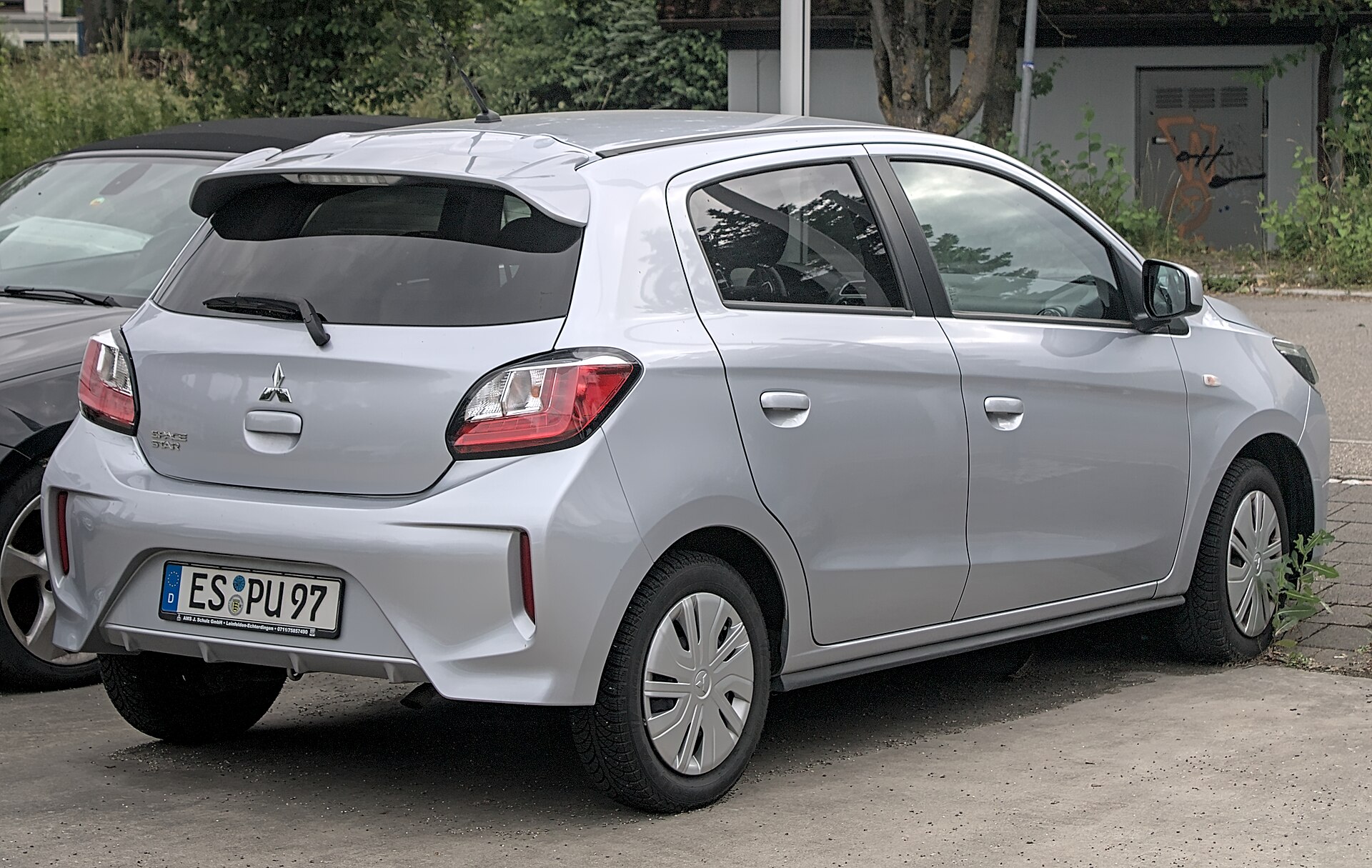
The sixth-generation Mirage went into production at Mitsubishi's plant in Laem Chabang, Thailand, in April 2012. Because of naming rights, Mitsubishi sold it as the Space Star in parts of Europe from 2013. It is a light five-door hatchback with three-cylinder MIVEC petrol engines; the saloon version, the Attrage, was not part of the European range.
ADAC divides the European car into three phases: the original model (2013-2016), a first facelift (2016-2020) and a second facelift (2020-2025). The 2020 update brought Mitsubishi's Dynamic Shield front end and stretched the car to just under 3.85 m.
| Engine | Power | Torque | Gearbox | 0-100 km/h |
|---|---|---|---|---|
| three-cylinder, entry version | 52 kW (71 PS) | 88 Nm | manual | 15.7 s |
| 1.2 MIVEC three-cylinder | 59 kW (80 PS) | - | manual or CVT | - |
Mitsubishi confirmed in 2024 that the Space Star would be withdrawn at the end of 2024 or the beginning of 2025, starting in Germany. The reason was new EU rules on driver assistance systems, cybersecurity and software updates from July 2024, which would have made the small car considerably more expensive. In 2024 Mitsubishi also dropped the Mirage in the United States.


Dimensions, space and boot
| Parameter | Space Star I | Space Star II (2020) |
|---|---|---|
| Length | 4,030-4,050 mm (158.7-159.4 in) | about 3,845 mm (151.4 in) |
| Width | 1,715 mm (67.5 in) | - |
| Height | 1,515 mm (59.6 in) | - |
| Wheelbase | 2,500 mm (98.4 in) | 2,550 mm (100.4 in) |
| Kerb weight | 1,160 kg (2,557 lb) | - |
| Boot | - | 235 l (8.3 cu ft) |
The later Space Star is shorter than the MPV but has a longer wheelbase. Its boot holds 235 litres. The drag coefficient of the Mirage family is 0.27 to 0.31, depending on version, which helps its fuel consumption. Compare the two cars with our size comparison tool.
Fuel economy and running costs
The 2020 Space Star with the 52 kW (71 PS) engine was rated at 4.5 l/100 km; in a test by Motor1 it averaged about 5.8 l/100 km. Low running costs and a low list price were the car's main selling points. In Germany in September 2020 the Intro Edition cost EUR 11,790, the 1.2 with 59 kW (80 PS) started at EUR 14,490 and the 1.2 with CVT at EUR 15,590 (2020 list prices). In 2024 the base car still started at EUR 11,990 without air conditioning, and EUR 13,590 bought the Select trim with air conditioning. Mitsubishi offered a five-year warranty in Germany. Use the cost of ownership calculator to estimate yearly costs.
The Space Star II sold well in Germany: more than 15,000 were registered there by July 2020, making it the brand's best-selling model in that market at the time.
Trims and equipment
In Germany the 2020 car came in base, Intro Edition, Intro Edition+ and Plus versions. Electrically adjustable mirrors and light and rain sensors were standard, a 6.5-inch touchscreen navigation system was an extra, and height-adjustable seats came only with the larger engine. In 2024 the base car had no air conditioning.
Safety
| Model | Euro NCAP year | Result |
|---|---|---|
| Space Star I | 2001 | three stars for adult occupants, two stars for pedestrians |
| Space Star II | 2013 | four stars |
See more results in our safety section.
Reliability and known issues
ADAC's breakdown statistics for the second Space Star are favourable for its age: 17.6 breakdowns per 1,000 cars for those registered in 2016, falling to 10.6 for 2018, 6.6 for 2020 and 3 for 2023. ADAC recorded spark plugs as a breakdown cause on cars built from 2016 to 2020. The engines are naturally aspirated three-cylinders without turbochargers. We have no sourced data on recurring faults of the 1998-2005 MPV.
Rivals
| Model | Engines | Power (hp) | Boot (l) | Price from (EUR) |
|---|---|---|---|---|
| Mitsubishi Space Star II | 1.0/1.2 three-cylinder | 52-59 kW (71-80 PS) | 235 | 11,990 (Germany, 2024) |
| Mitsubishi Colt (Clio-based) | petrol, hybrid | from 49 kW (67 PS) | - | about 12,090 (Germany, 2024) |
| Citroën C1 II | 1.0, 1.2 petrol | 51-60 kW (69-82 PS) | 196 | 9,990 (Germany, 2020) |
| Volkswagen up! | 1.0 petrol, electric | 44-85 kW (60-116 PS) | - | - |
Photo gallery

Mitsubishi Space Star: first vs latest generation
| Spec | Space Star I | Space Star A00 | Change |
|---|---|---|---|
| Years | 1998–2005 | 2013–2025 | 15 years apart |
| Most powerful version | 90 kW (122 PS) | 59 kW (80 PS) | −31 kW (−34%) |
Oldest and newest generation in the 1cars catalog. Power is the strongest version of each; other rows are shown only when both generations have the figure.
Mitsubishi Space Star in our rankings
- No. 366 of 1082 · Longest-running car nameplates (12 years · top 35%)
- No. 883 of 1011 · Most powerful cars (90 kW · top 88%)
- No. 23 of 26 · Most powerful minivans and MPVs (90 kW · top 89%)
- No. 127 of 141 · Most powerful hatchbacks (59 kW · top 91%)
- No. 125 of 130 · Most powerful Japanese cars (90 kW · top 97%)
- No. 356 of 411 · Cars with the most generations (2 generations)
In production longer than 65% of ranked nameplates in the 1CARS catalog (No. 366 of 1082).
FAQ
Is the Mitsubishi Space Star an MPV or a hatchback?
Both, depending on the year. The 1998-2005 Space Star is a mini MPV built in the Netherlands; the 2013-2025 Space Star is a small hatchback, the European name of the Mitsubishi Mirage.
Where was the Mitsubishi Space Star built?
The first generation at NedCar in Born, Netherlands; the second in Laem Chabang, Thailand.
Is the Space Star still sold?
No. Mitsubishi withdrew it from Europe at the end of 2024 and early 2025, starting with Germany.
How safe is the Space Star?
The 2013 Space Star received four Euro NCAP stars; the first-generation MPV scored three stars for adult occupants in 2001.
What replaced the Space Star?
The Mitsubishi Colt, which is based on the Renault Clio.
Data sources
Data checked by an editor against the sources below.
- Wikipedia - Mitsubishi Space Star
- Wikipedia - Mitsubishi Mirage