 Mitsubishi Pajero V80/V90 (2006–2021)
Specs, engines, safety and known problems
Published Sources (3) Report an error
By Sarah Whitmore, Senior Automotive Writer Reviewed by Oleksandr Hnatiuk
- Power
- 118–184 kW (160–250 PS)
- Boot
- 663 l
- Fuel, 3.2 DI-D diesel
- ~2,300 EUR a year
- Generation
- 4 of 5
Model timeline
Where the V80/V90 sits in the Pajero story
Predecessor Pajero V60/V70 (1999–2006) Successor Pajero V (2026–present)
Newest first · 5 generations since 1982
- 2026 V In production 2026–now · SUV · 150 kW (204 PS)
-
2006
-
1999
-
1991
-
1982
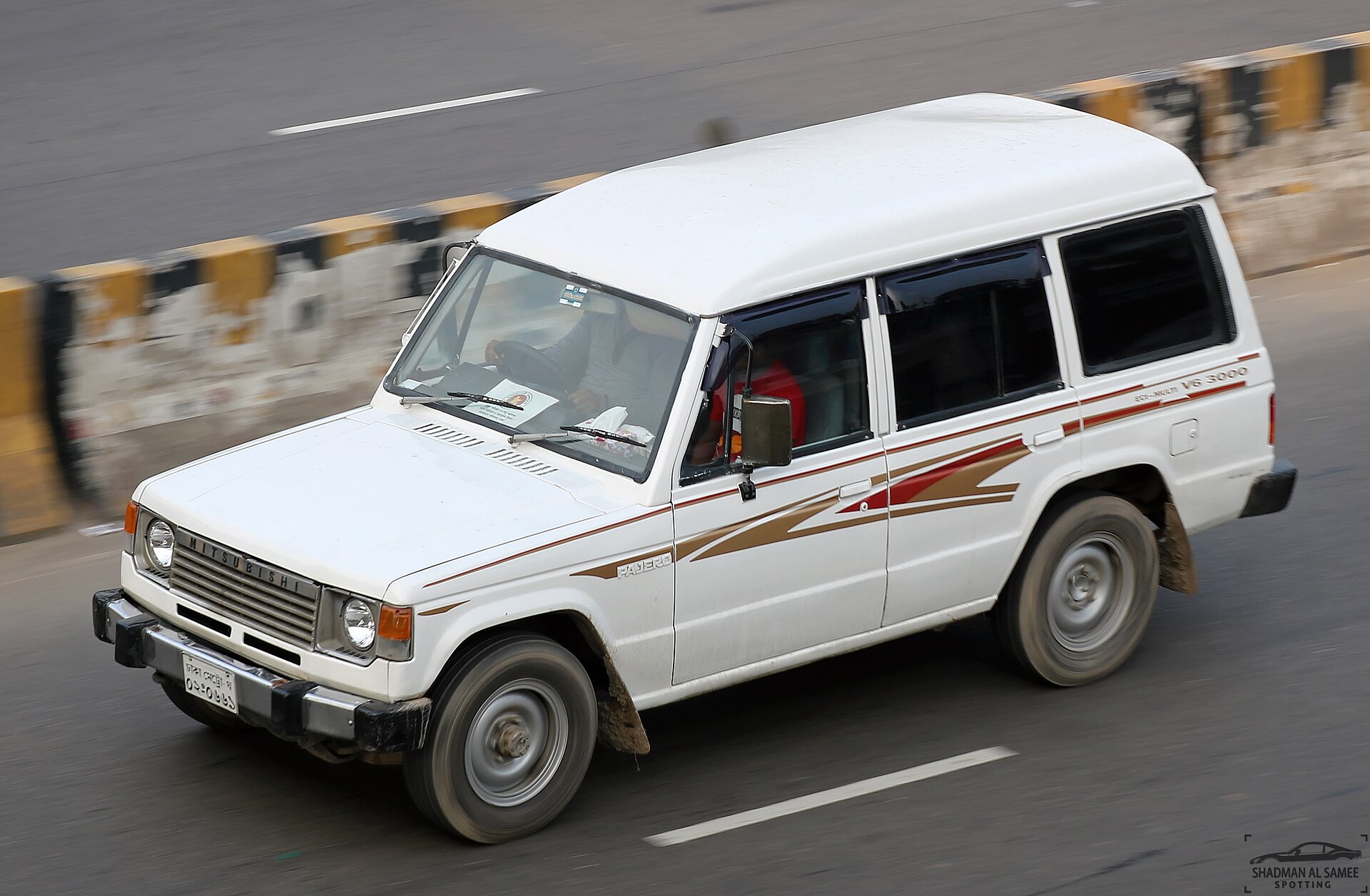


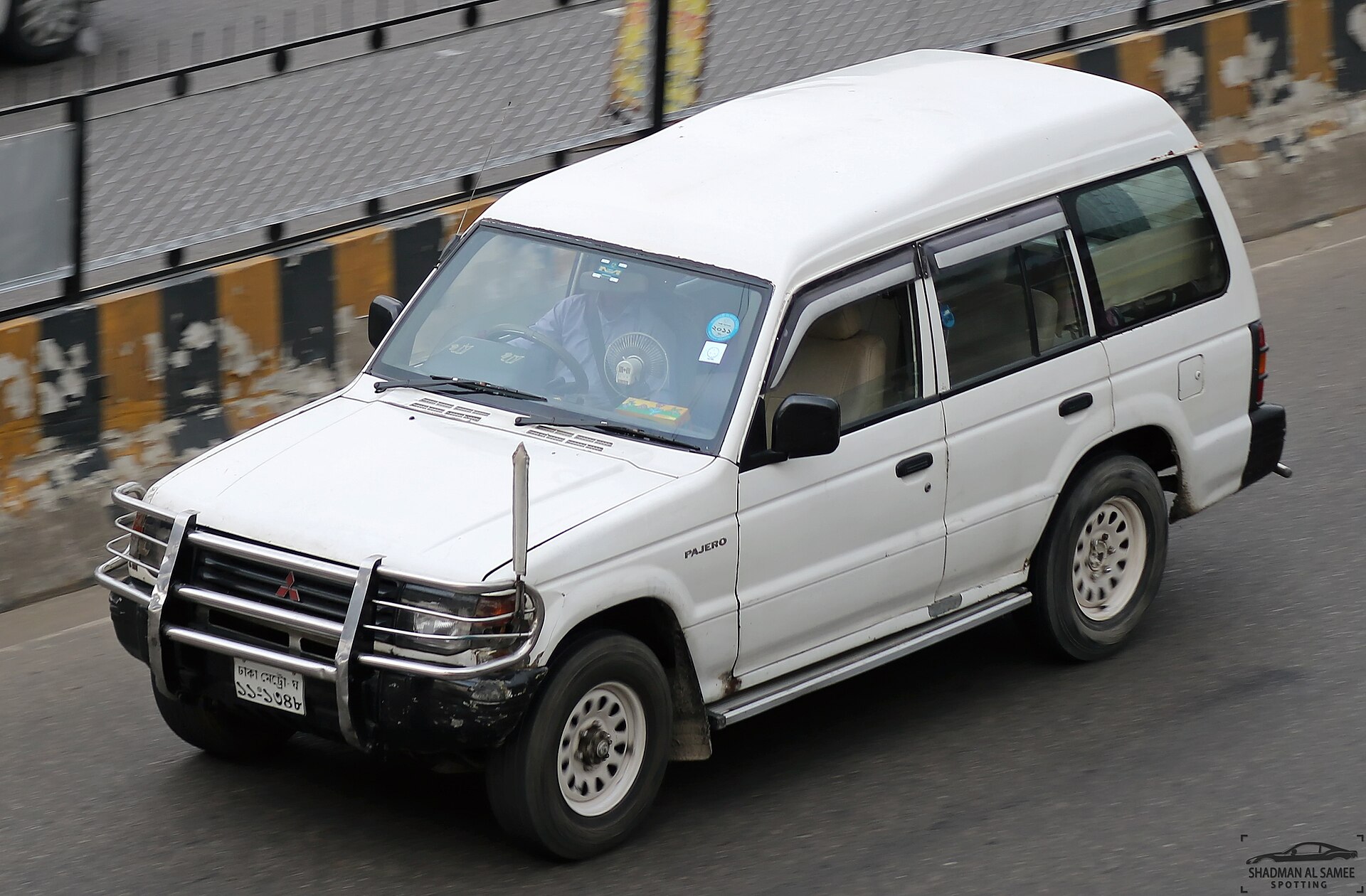
All generations by year: Pajero V (2026–now) · Pajero V80/V90 (2006–2021) · Pajero V60/V70 (1999–2006) · Pajero V20/V30 (1991–1999) · Pajero I (L040) (1982–1991)
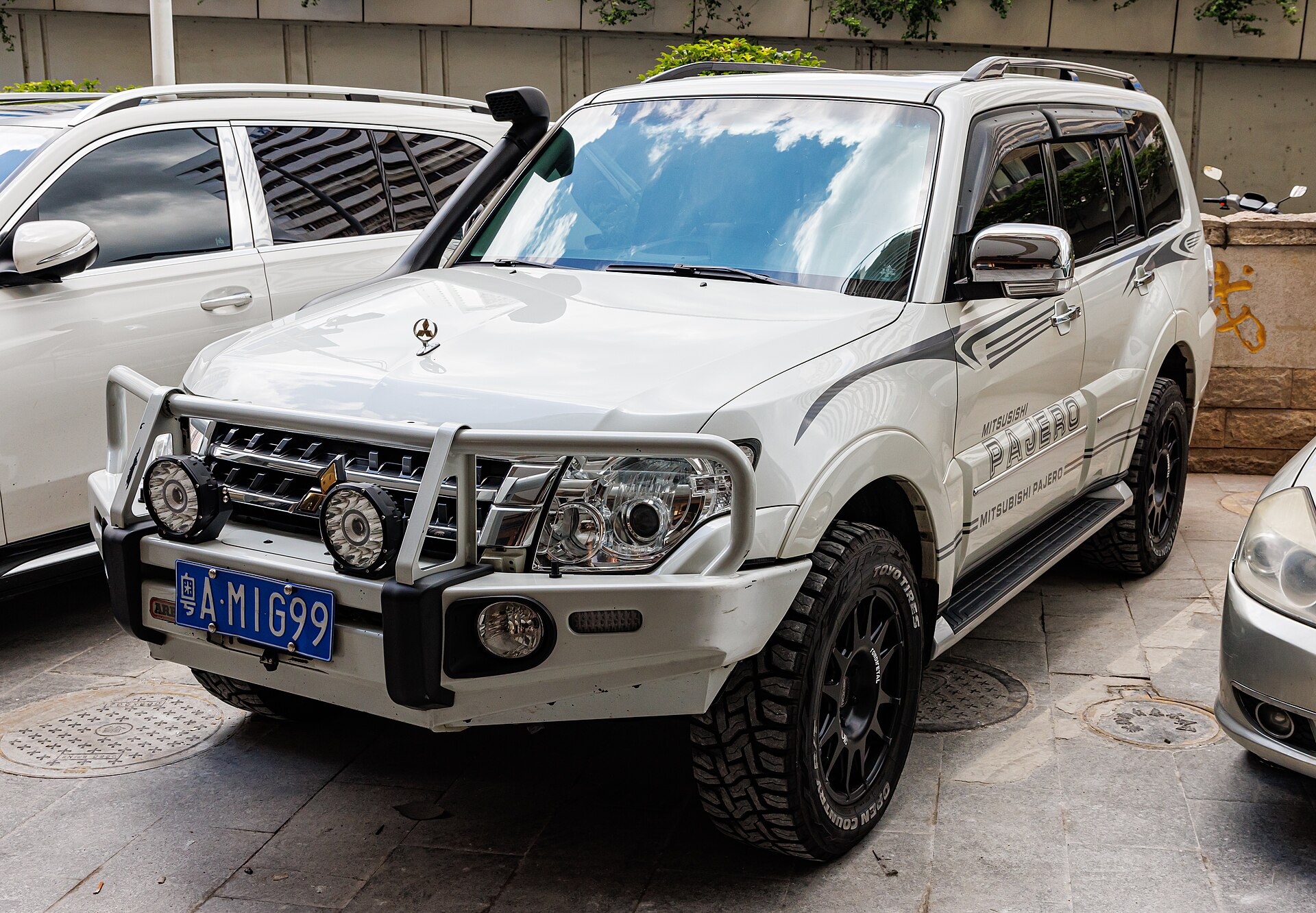
The fourth-generation Mitsubishi Pajero was shown at the Paris Motor Show on 30 September 2006 and stayed in production until March 2021, making it the longest-lived Pajero. Sold as the Shogun in the UK and the Montero in Spain, it kept the unibody structure of its predecessor and became, for most European buyers, a 3.2-litre diesel seven-seater with serious towing ability.
In short
- Built from 2006 to March 2021; European sales ended in 2018 and the three-door was dropped in February 2018.
- Europe's engine was the 3.2 DI-D (4M41) four-cylinder diesel, rated from 118 kW (160 PS) up to 147 kW (200 PS).
- Super Select 4WD-II with a low range came standard; a rear differential lock was standard from 2009.
- ANCAP in Australia: four stars for builds to March 2013, five stars from April 2013; Euro NCAP never tested it.
Size at a glance
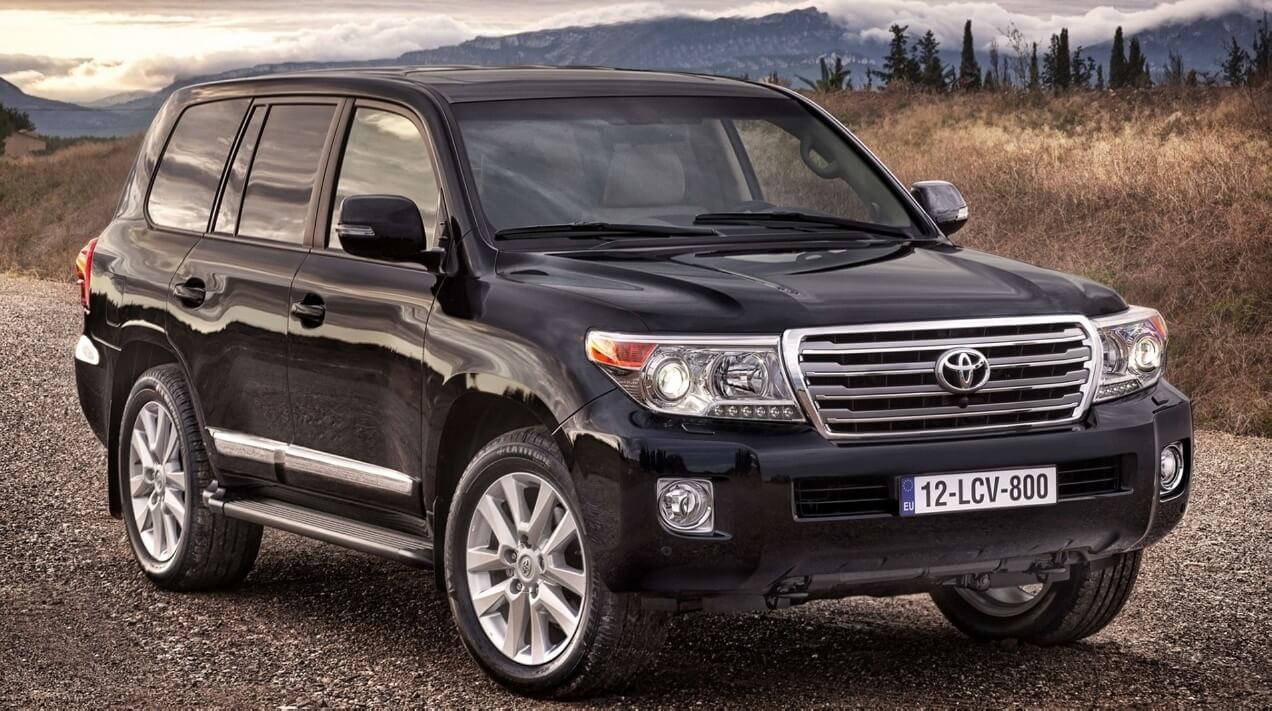
Toyota Land Cruiser J200
The Mitsubishi Pajero V80/V90 is 90 mm shorter, 105 mm narrower and 80 mm lower than the Toyota Land Cruiser J200.
| Dimensions | Mitsubishi Pajero V80/V90 | Toyota Land Cruiser J200 | Difference |
|---|---|---|---|
| Length | 4,900 mm192.9 in | 4,990 mm196.5 in | −90 mm−3.5 in |
| Width | 1,875 mm73.8 in | 1,980 mm78.0 in | −105 mm−4.1 in |
| Height | 1,890 mm74.4 in | 1,970 mm77.6 in | −80 mm−3.1 in |
| Wheelbase | 2,780 mm109.4 in | 2,850 mm112.2 in | −70 mm−2.8 in |
| Boot | 663 L23.4 cu ft | 655 L23.1 cu ft | +8 L+0.3 cu ft |
Nissan Patrol Y62
The Mitsubishi Pajero V80/V90 is 240 mm shorter, 120 mm narrower and 50 mm lower than the Nissan Patrol Y62.
| Dimensions | Mitsubishi Pajero V80/V90 | Nissan Patrol Y62 | Difference |
|---|---|---|---|
| Length | 4,900 mm192.9 in | 5,140 mm202.4 in | −240 mm−9.4 in |
| Width | 1,875 mm73.8 in | 1,995 mm78.5 in | −120 mm−4.7 in |
| Height | 1,890 mm74.4 in | 1,940 mm76.4 in | −50 mm−2.0 in |
| Wheelbase | 2,780 mm109.4 in | 3,075 mm121.1 in | −295 mm−11.6 in |
| Boot | 663 L23.4 cu ft | — | — |
Mitsubishi Pajero V60/V70
The Mitsubishi Pajero V80/V90 is 681 mm longer and 46 mm taller than the Mitsubishi Pajero V60/V70.
| Dimensions | Mitsubishi Pajero V80/V90 | Mitsubishi Pajero V60/V70 | Difference |
|---|---|---|---|
| Length | 4,900 mm192.9 in | 4,219 mm166.1 in | +681 mm+26.8 in |
| Width | 1,875 mm73.8 in | 1,875 mm73.8 in | Same |
| Height | 1,890 mm74.4 in | 1,844 mm72.6 in | +46 mm+1.8 in |
| Wheelbase | 2,780 mm109.4 in | 2,545 mm100.2 in | +235 mm+9.3 in |
| Boot | 663 L23.4 cu ft | — | — |
Running cost
Fuel · Pajero V80/V90 3.2 DI-D diesel
about 2,300 EUR fuel a year at 15,000 km
9.3 l/100 km · diesel at 1.65 EUR/l · change mileage, fuel price or version
Pajero V80/V90 specs by version
Engines
| Version | Engine | Power | Torque | Gearbox |
|---|---|---|---|---|
| Diesel · 4 versions | ||||
| 3.2 DI-D diesel | 4 cyl · Diesel | 118 kW 160 PS158 hp | 381 Nm281 lb-ft | 5-sp Manual |
| 3.2 DI-D diesel | Diesel | 125 kW 170 PS168 hp | 373 Nm275 lb-ft | Automatic |
| 3.2 DI-D diesel | Diesel | 140 kW 190 PS188 hp | 441 Nm325 lb-ft | 5-sp Automatic |
| 3.2 DI-D diesel | Diesel | 147 kW 200 PS197 hp | 441 Nm325 lb-ft | 5-sp Automatic |
| Petrol · 2 versions | ||||
| 3.0 V6 petrol | Petrol | 131 kW 178 PS176 hp | 255 Nm188 lb-ft | Automatic |
| 3.8 V6 MIVEC petrol | Petrol | 184 kW 250 PS247 hp | 329 Nm243 lb-ft | Automatic |
Performance
Show all 1 versions
| Version | Fuel consumption |
|---|---|
| 3.2 DI-D diesel | 9.3 l/100 km25.3 mpg US · 30.4 mpg UK |
Dimensions and weight
Show all 6 versions
| Version | Wheelbase |
|---|---|
| Diesel · 4 versions | |
| 3.2 DI-D diesel | 2,780 mm109.4 in |
| 3.2 DI-D diesel | 2,780 mm109.4 in |
| 3.2 DI-D diesel | 2,780 mm109.4 in |
| 3.2 DI-D diesel | 2,780 mm109.4 in |
| Petrol · 2 versions | |
| 3.0 V6 petrol | 2,780 mm109.4 in |
| 3.8 V6 MIVEC petrol | 2,780 mm109.4 in |
Verified Manufacturer and type-approval data from our catalog · Sources and methodology
How the Pajero IV differed from the third generation
Mitsubishi did not start from a clean sheet. The 2006 car carried over the monocoque body with a built-in ladder frame and the fully independent suspension that the third generation had introduced in 1999, and German sources describe the exterior changes as modest. The work went into safety, electronics and refinement.
The main additions at launch were:
- ASTC, Mitsubishi's active stability and traction control, together with electronic brakeforce distribution.
- A common-rail diesel with a particulate filter: the 3.2 DI-D was reworked and, in Germany, came with a standard DPF.
- Larger front brakes on the long-wheelbase car, with 332 mm discs, while the short car kept 289 mm discs for some years.
- A 3.8-litre MIVEC V6 for petrol buyers, which replaced the 3.5 GDI of the third generation.
Chassis codes vary by reference. European sources usually call the generation V80 (three-door) and V90 (five-door), while English-language references group it by series: NS from 2006, NT from 2009, NW from 2012 and NX from 2015. The Mitsubishi Pajero overview sets this generation against the four others.
Series updates from NS to NX
The fourth generation changed in steps rather than with one big facelift, and the year of a used car tells you a lot about its hardware.
- 2007: European deliveries began in February with the three-door on a 2,545 mm wheelbase and the five-door on 2,780 mm.
- 2009 (NT): the diesel gained a variable-geometry turbo and rose to 147 kW (200 PS) and 441 Nm; a rear locking differential became standard, and an Aisin A750F five-speed automatic replaced the earlier unit. Germany dropped the V6 petrol at about this time.
- 2012 (NW): new bumpers and grille, a stiffer body and revised suspension for less noise and vibration.
- July 2014 (NX): a second facelift for model year 2015, with LED daytime running lights and a revised grille; the cabin later gained a touchscreen with Apple CarPlay and Android Auto.
- September 2015: the European automatic diesel was rated at 140 kW (190 PS), with torque unchanged at 441 Nm.
Japan sold a 700-unit Final Edition from April 2019 and ended sales that September. Australia was the last big market, and production stopped in March 2021.
Pajero IV engines and gearboxes
In Europe the diesel carried the range; the V6 petrols mattered more in Japan, the Gulf and Australia. Outputs below come mainly from the German Wikipedia tables and ADAC data, in kW first with the metric PS figure.
| Engine | Code | Power | Torque | Gearbox | Years (market) |
|---|---|---|---|---|---|
| 3.2 DI-D diesel | 4M41 | 118 kW (160 PS) | 381 Nm (281 lb-ft) | 5-speed manual | 2007–2009 (Germany) |
| 3.2 DI-D diesel | 4M41 | 125 kW (170 PS) | 373 Nm (275 lb-ft) | automatic | 2007–2009 (Germany) |
| 3.2 DI-D diesel | 4M41 | 147 kW (200 PS) | 441 Nm (325 lb-ft) | 5-speed manual or automatic | 2009–2015 (Germany) |
| 3.2 DI-D diesel | 4M41 | 140 kW (190 PS) | 441 Nm (325 lb-ft) | 5-speed automatic | 2015–2018 (Germany) |
| 3.8 V6 MIVEC petrol | 6G75 | 182–184 kW (248–250 PS) | 329 Nm (243 lb-ft) | automatic | 2007 to about 2010 (Germany) |
| 3.0 V6 petrol | 6G72 | 128–131 kW (174–178 PS), sources differ | 255 Nm (188 lb-ft) | automatic | other markets, incl. Japan |
| 3.5 V6 petrol | 6G74 | 141 kW (192 PS) | 306 Nm (226 lb-ft) | automatic | Gulf states, from 2009 |
The 2009 diesel update made a clear difference on paper. German data list combined NEDC consumption falling from 9.3 L/100 km for the early five-door to 7.9 L/100 km for the 147 kW manual (8.3 L/100 km with the automatic), with CO2 from 209 g/km. The 3.0 V6 in the five-door is quoted at 13.6 seconds from 0 to 100 km/h and 175 km/h (109 mph).
All versions use Super Select 4WD-II. The driver can run in rear-wheel drive, in full-time four-wheel drive on any surface, or lock the centre differential and select low range for off-road work.
Three-door and five-door dimensions
The table uses ADAC data for the European five-door 3.2 DI-D automatic built from October 2011 to September 2014, with three-door figures from German Wikipedia where noted.
| Parameter | Metric | Imperial |
|---|---|---|
| Length, five-door / three-door | 4,900 mm / 4,385 mm | 192.9 in / 172.6 in |
| Width | 1,875 mm | 73.8 in |
| Height, five-door | 1,860–1,890 mm | 73.2–74.4 in |
| Wheelbase, five-door / three-door | 2,780 mm / 2,545 mm | 109.4 in / 100.2 in |
| Kerb weight, five-door (ADAC) | 2,340 kg | 5,159 lb |
| Kerb weight, three-door | 2,213–2,273 kg | 4,879–5,011 lb |
| Boot, five-door, rear bench folded | 1,758 L | 62.1 cu ft |
| Braked towing, five-door / three-door | 3,300–3,500 kg / 2,800–3,000 kg | 7,275–7,716 lb / 6,173–6,614 lb |
| Wading depth | 700 mm | 27.6 in |
| Fuel tank | 88 L | 19.4 UK gal |
| 0–100 km/h, 147 kW automatic | 11.1 s | 0–62 mph |
| Top speed, 147 kW automatic | 180 km/h | 112 mph |
Seating is five in the three-door and seven in the five-door. Towing limits vary by market and year: in Germany and Ireland the five-door is rated at 3,500 kg (7,716 lb) with a 150 kg nose weight, while other markets list 3,000 kg (6,614 lb) with 180 kg on the ball.
ANCAP results and safety equipment
No Euro NCAP test exists for this generation, a point Carbuyer also makes about the Shogun. The only full crash rating comes from ANCAP, which tested the Pajero in 2011.
| Build period | ANCAP stars | Overall | Frontal offset | Side impact | Pedestrian |
|---|---|---|---|---|---|
| 2006 to March 2013 | 4 | 28.41 / 37 | 11.41 / 16 | 16 / 16 | poor |
| April 2013 to October 2022 | 5 | 33.41 / 37 | 13.41 / 16 | 16 / 16 | poor |
The April 2013 rating also records full marks in the pole test. Standard equipment listed by ANCAP includes dual front airbags, side chest airbags and curtain airbags, ABS with electronic brakeforce distribution and stability control. Autonomous emergency braking and lane support were not available on any version, so the Pajero IV is a 2011-era design in safety terms, and the stars cannot be compared with current ratings.
Recalls and ownership evidence
There is no large European reliability survey for this Pajero, so recalls and owner surveys are the main evidence. In the UK, the Shogun finished 81st of 200 in the 2015 Driver Power survey, 89th for reliability, and Carbuyer expects its simple, long-serving mechanicals to prove dependable.
Two recalls are worth checking on any car:
- Airbags (October 2017, ADAC): parts could detach when the airbag deployed on cars built from 2007 to 2012.
- Front lower control arm (2019–2020): weak welds on 2017–2018 builds; 6,384 cars in Australia and 49,321 worldwide, including 2,460 in Germany.
In Germany the warranty started at three years or 100,000 km and later rose to five years, with 12 years against corrosion. Ask for proof that recall work was done and for a service record covering the diesel and the four-wheel-drive system.
Choosing a used Pajero IV
The best version depends on the job it has to do.
- Heavy towing: a five-door 3.2 DI-D from 2009 onwards, with 441 Nm (325 lb-ft), the rear locking differential and, in Germany, a 3,500 kg (7,716 lb) limit.
- Best safety rating: a car built from April 2013, which carries the five-star ANCAP result.
- Newest technology: an NX-series car from 2015, ideally with recall work on the control arms confirmed.
- Off-road and short wheelbase: the three-door, built until February 2018, is easier to place on narrow tracks but tows less.
If the Pajero is larger than you need, the pick-up-based Mitsubishi Pajero Sport is the closest alternative in the brand's line-up. Rivals of a similar type are grouped under diesel SUVs and Japanese SUVs, and the current Mitsubishi range shows the brand's line-up today.
Did you know?
- The Pajero V80/V90 is generation 4 of 5 of the Mitsubishi Pajero in our catalog.
- The Pajero V80/V90 offers up to 184 kW (250 PS) — 22 kW more than the Pajero V60/V70 (1999–2006) (+14%).
- At up to 4,900 mm long, it is 681 mm longer than the Pajero V60/V70 (1999–2006).
- Built for 15 years (2006–2021), it is the longest-running of the 5 generations in our catalog.
Image credits · Photos from Wikimedia Commons under free licences
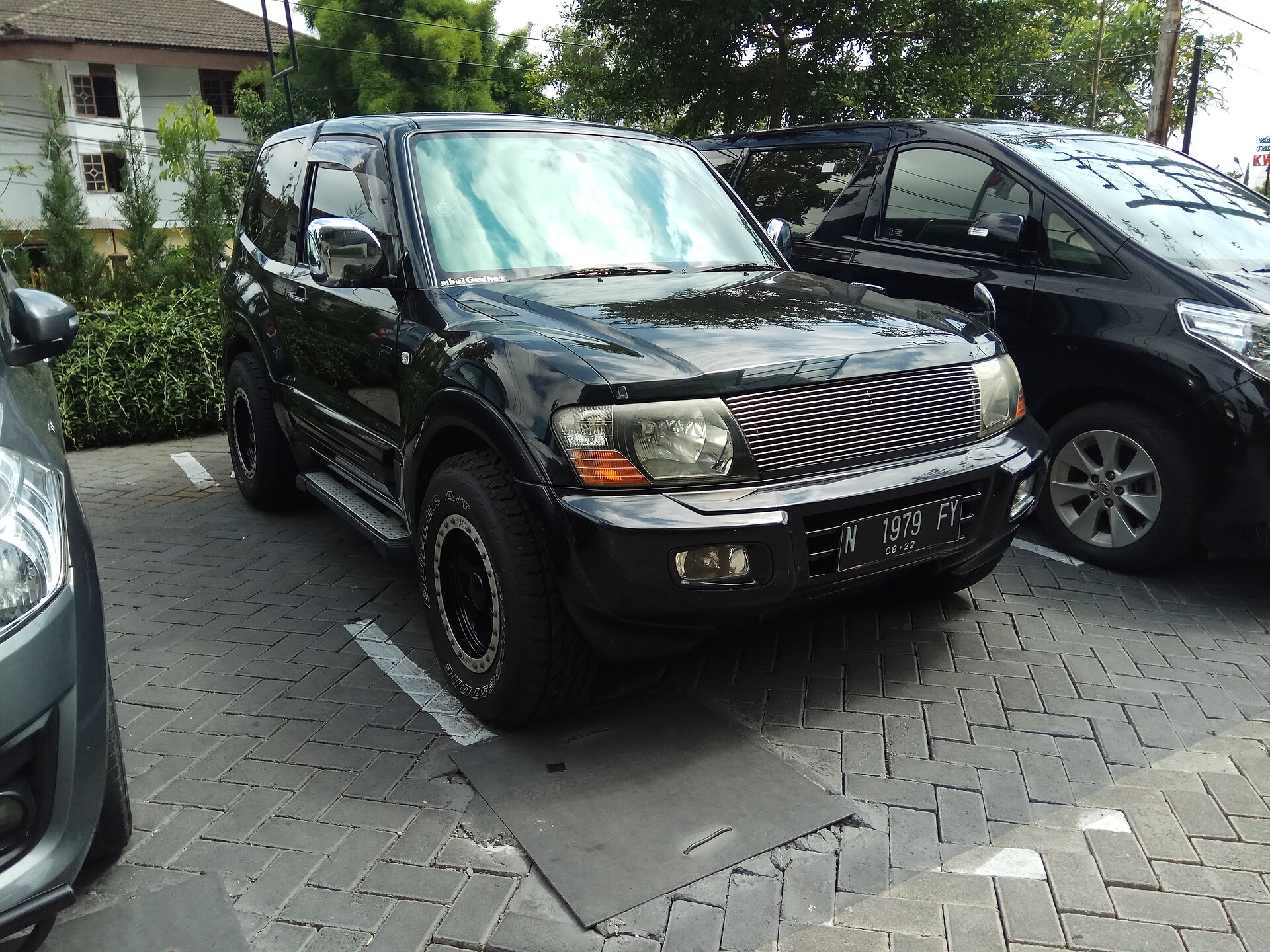
- Mitsubishi Pajero I (L040) · Photo: Shadman Samee from Dhaka, Bangladesh / Wikimedia Commons, CC BY-SA 2.0
- Mitsubishi Pajero V20/V30 · Photo: Shadman Samee from Dhaka, Bangladesh / Wikimedia Commons, CC BY-SA 2.0
- Mitsubishi Pajero V60/V70 · Photo: Alex Neman / Wikimedia Commons, CC BY-SA 4.0
- Mitsubishi Pajero V80/V90 · Photo: Dinkun Chen / Wikimedia Commons, CC BY-SA 4.0
V80/V90 rivals
-
Ended 2021
- Years
- 2007–2021
- Body
- SUV
- Fuel
- Petrol, Diesel
- Power
- 173–286 kW (235–389 PS)
-
In production
- Years
- 1951–present
- Body
- SUV, Pickup
- Fuel
- Petrol, Diesel
- Power
- 55–369 kW (75–502 PS)
7 generations
- II
- III
- Y60
- Y61
- Y62
- Y63
- +1 earlier
-
Ended 2017
- Years
- 2012–2017
- Body
- SUV
- Fuel
- Diesel
- Power
- 137 kW (186 PS)
-
Ended 2010
- Years
- 2005–2010
- Body
- SUV
- Fuel
- Petrol, Diesel
- Power
- 160–224 kW (218–305 PS)


FAQ
What years was the fourth-generation Pajero made?
It was revealed in Paris on 30 September 2006, reached Europe in early 2007 and stayed in production until March 2021. European sales ended in 2018 and Japanese sales in September 2019.
What engine does the Pajero IV have in Europe?
Almost all European cars have the 3.2 DI-D (4M41) diesel: 118–125 kW (160–170 PS) at first, 147 kW (200 PS) from 2009 and 140 kW (190 PS) from September 2015. A 3.8 V6 petrol was sold briefly.
Is the Pajero IV a seven-seater?
The five-door long-wheelbase model has seven seats. The three-door short-wheelbase version has five.
How much can a Pajero IV tow?
German data give 3,300–3,500 kg (7,275–7,716 lb) braked for the five-door and 2,800–3,000 kg (6,173–6,614 lb) for the three-door. Some other markets list 3,000 kg.
Does the Pajero IV have a Euro NCAP rating?
No. ANCAP in Australia rated it four stars for cars built up to March 2013 and five stars for cars built from April 2013, based on a 2011 test.
Data sources
Data checked by an editor against the sources below.
- The text of this article (1cars archive)
- Wikipedia — Mitsubishi Pajero
- Carsized — Mitsubishi Pajero 2006 Suv