Dodge: From the Dodge Brothers to the Hellcat
Dodge is an American car brand that began as a Detroit machining workshop, opened by the brothers John and Horace Dodge on 14 December 1900. It built its first car, the Model 30-35, in 1914, became part of Chrysler in 1928 and today belongs to Stellantis, which positions Dodge as its performance brand with the Charger and Durango.

Key takeaways
- The brothers first supplied parts to Oldsmobile and Ford, then launched their own all-steel car in 1914; by 1916 and again in 1920 Dodge was the second-best-selling car make in the United States.
- After both brothers died in 1920, their widows sold the company in 1925, and Chrysler bought it in 1928.
- Key models: the Power Wagon (1946), the Hemi V8 (1950s), the Charger (1966) and Challenger (1970), the Caravan minivan (1984) and the Viper (1992).
- Owners since 1998: DaimlerChrysler, Cerberus (2007), Fiat after the 2009 bankruptcy, FCA (2014) and Stellantis (2021).

Dodge at a glance
| Fact | Value |
|---|---|
| Founded | 14 December 1900, Detroit, as Dodge Brothers Company |
| Founders | John Francis Dodge and Horace Elgin Dodge |
| First car | Model 30-35 touring car, 1914 |
| Parent company | Chrysler (1928–1998), DaimlerChrysler, Chrysler LLC, FCA, Stellantis (since 2021) |
| Headquarters | Auburn Hills, Michigan (Stellantis North America) |
| Known for | muscle cars, the Hemi V8, the first modern minivan, the Viper |
| Current line-up | Charger, Durango and Hornet |
| Brand CEO | Matt McAlear (since June 2024) |
The old 1cars text described Dodge as a maker of minibuses and SUVs. That was true for parts of its history, but since 2014 Dodge has been Stellantis' performance brand, with the Ram trucks split off as a separate brand.
Origins: the Dodge brothers and their machining workshop
John and Horace Dodge opened their machining workshop in Detroit on 14 December 1900. In 1902 they won a contract to build transmissions for Oldsmobile, and in 1903 Henry Ford chose them to supply engines and chassis for the first Ford Model A. Ford paid them partly with a 10% stake in his new company, which later made the brothers very rich: they sued Ford over dividends, and he eventually bought their shares for a very large sum.

In 1910–1911 they built the large Dodge Main factory in Hamtramck, Michigan, and in 1913 founded the Dodge Brothers Motor Company to build their own car.
The first Dodge cars (1914–1928)
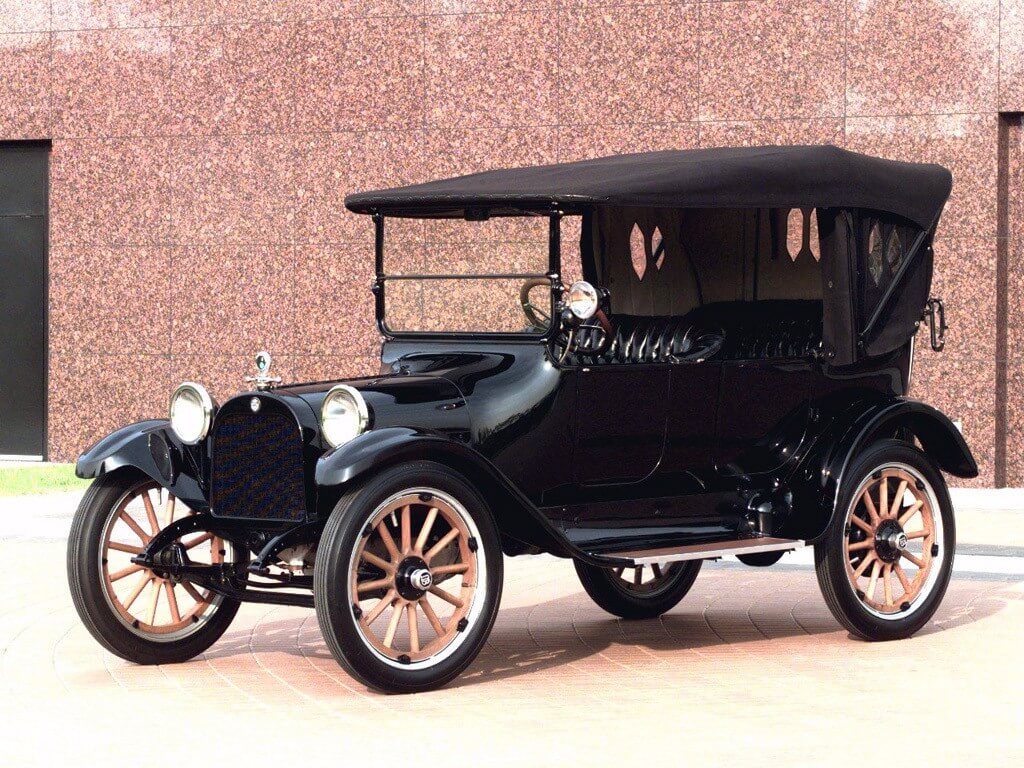
The Model 30-35 touring car of 1914 had a four-cylinder engine of about 26 kW (35 hp), against about 15 kW (20 hp) for the Ford Model T. It also had an all-steel body at a time when most cars had wooden frames under the panels. It sold well. By 1916 Dodge was the number two car make in the United States, and Dodge vehicles served in the US Army's 1916 Pancho Villa Expedition. In the First World War about 12,800 Dodge cars and light trucks were used, including more than 8,000 touring cars.

In 1920 Dodge was again second in US sales, but both brothers died that year: John of pneumonia in January and Horace in December. Their widows sold the company to the banking house Dillon, Read & Co. in 1925, one of the largest cash deals of the time. Dodge bought 51% of truck body builder Graham Brothers the same year. In 1928 Walter Chrysler's young company bought Dodge in a share transfer, gaining its dealer network and large factories.
The Chrysler years: Power Wagon, Hemi and muscle cars
Within Chrysler, it became the mid-priced brand, slightly below Chrysler itself. In the 1930s it introduced the "Wind Stream" styling (1935) and opened the Warren Truck plant (1938). Passenger cars stopped in February 1942, and during the Second World War the division built more than 400,000 military trucks, including the WC series.

After the war came the Power Wagon for 1946, a civilian four-wheel-drive truck based on the military design. In 1950 came the Coronet Diplomat hardtop and the first V8, the Red Ram Hemi. The PowerFlite automatic (1954) and the TorqueFlite (1957) followed. The 1960s brought compact cars, the Lancer (1961) and Dart (1963), and the start of the muscle car era: the Charger fastback of 1966 won in NASCAR, and the Challenger pony car arrived for 1970. The 1969 Charger Daytona, with its tall rear wing, is the best-known Dodge racer of the period.
| Year | Event |
|---|---|
| 1900 | Dodge Brothers machining workshop founded in Detroit (14 December) |
| 1914 | First Dodge car, the Model 30-35 |
| 1920 | Both brothers die |
| 1925 | Sold to Dillon, Read & Co. |
| 1928 | Bought by Chrysler |
| 1946 | Power Wagon |
| 1950 | First Dodge V8, the Red Ram Hemi |
| 1966 | Charger |
| 1970 | Challenger |
| 1984 | Caravan minivan (on sale from November 1983) |
| 1992 | Viper |
| 1998 | Merger into DaimlerChrysler |
| 2009 | Chrysler bankruptcy and Fiat partnership |
| 2011 | Ram becomes a separate brand |
| 2021 | Dodge becomes part of Stellantis |
Oil crisis, K-cars and the first minivan
The 1973 oil crisis hit the brand's large cars hard, and Chrysler was slow to build smaller ones; in 1979 it needed federal loan guarantees to avoid bankruptcy. The recovery came from the front-wheel-drive K platform. The Aries of 1981 was the first K-car, and the same year the pickups took the Ram name.

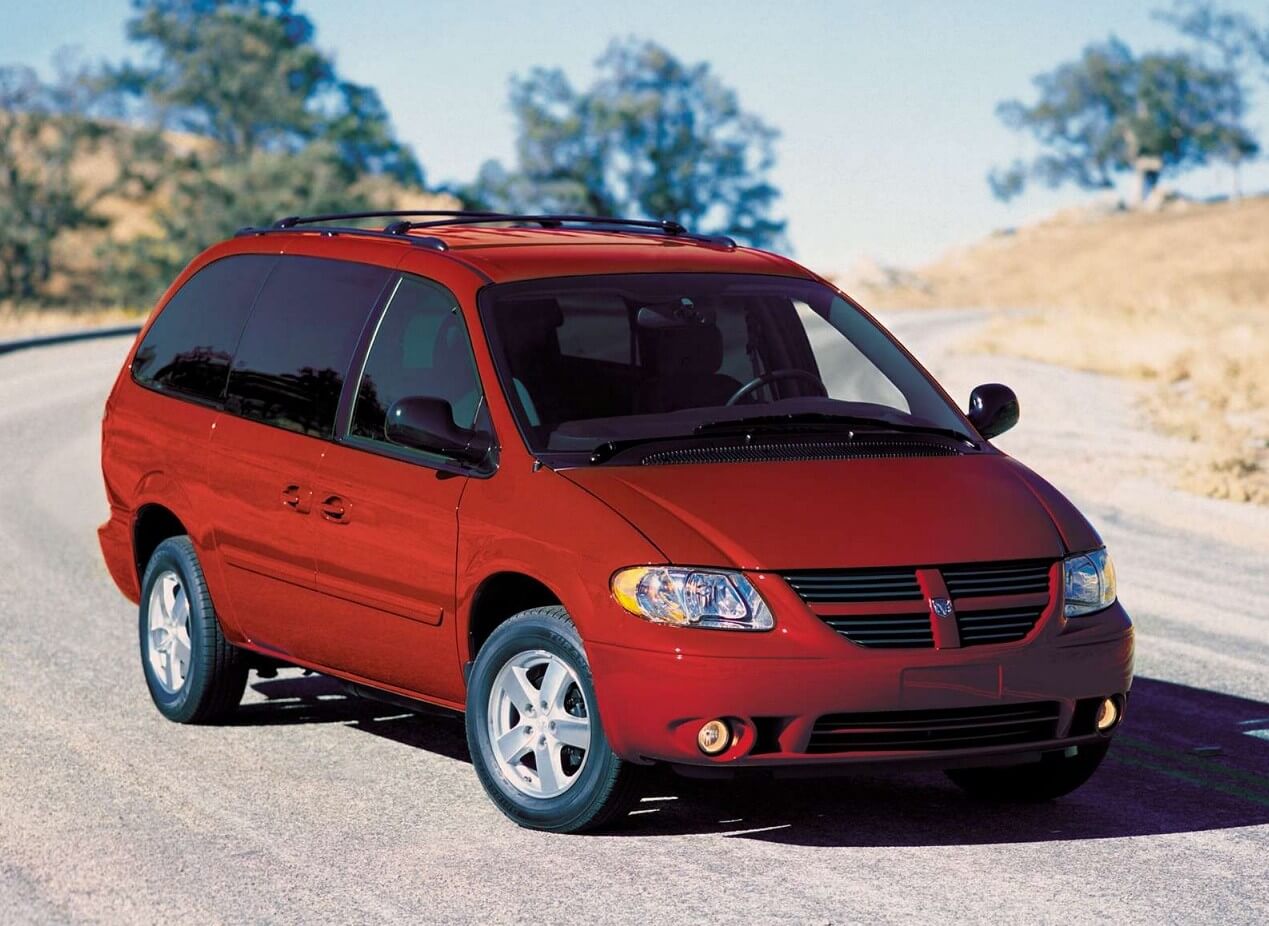
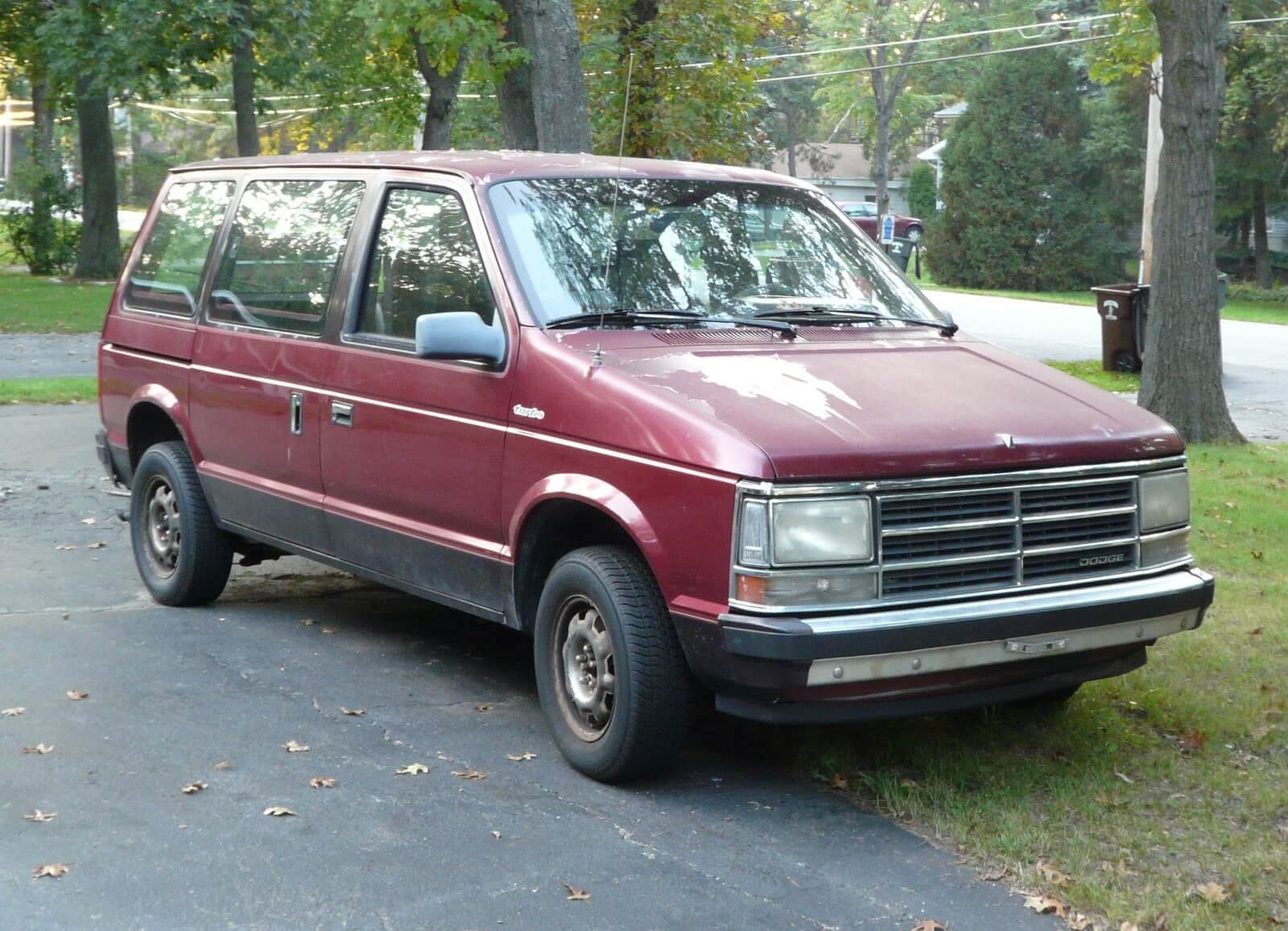
The most important K-based product was the Caravan, launched in November 1983 for the 1984 model year. With its car-like driving position, sliding rear door and flat floor, it created the modern minivan class and helped save Chrysler. The front-wheel-drive Daytona sports coupé of 1984 (49,347 built in its first year) kept a performance image alive.
Viper, Neon and the Daimler years
The Viper of 1992, with its 8.0-litre V10 and minimal equipment, became the brand's halo car, and later versions such as the Viper GTS-R won their class at Le Mans. The 2016 Viper ACR ranks seventh among the fastest cars in the 1cars catalogue at 335 km/h (October 2026). The Intrepid saloon followed in 1992, the second-generation Ram pickup of 1994 more than doubled Ram sales from 95,542 to 232,092, and the compact Neon arrived in the mid-1990s.
In 1998 Chrysler merged with Daimler-Benz, and the Durango SUV arrived the same year, and in 2005–2006 the Magnum estate and the new Charger saloon brought back the Hemi V8. In 2006 the brand returned to Europe with the Caliber, Avenger, Nitro, Journey and Viper, but it left the UK in 2010 and the rest of Europe on 1 June 2011.
Bankruptcy, FCA and the performance brand
Daimler sold Chrysler to Cerberus Capital Management in 2007. On 1 May 2009 Chrysler filed for bankruptcy, and on 10 June 2009 a new company was formed with Fiat as partner; the US government loan was repaid on 24 May 2011, five years early. In 2011 Ram and Viper became separate brands, and in 2013 the Dart returned on an Alfa Romeo-derived platform.

On 6 May 2014, under the new Fiat Chrysler Automobiles, the brand was turned into a performance label, and SRT was merged back into it. The supercharged Hellcat V8 of 2015 had 527 kW (707 hp): the Charger SRT Hellcat ranks second among the most powerful sedans in the 1cars data. The Challenger SRT Demon of 2017 reached 626 kW (840 hp) on race fuel. The Journey and Grand Caravan ended after 2020.
Dodge today
Since January 2021 it has been part of Stellantis, formed by the merger of FCA and the PSA Group. The V8 Challenger and Charger ended production at the end of 2023 after a "Last Call" series of special editions. Their successor, a new Charger revealed in 2024, is offered as the electric Charger Daytona and, from 2025, with the Sixpack straight-six petrol engine. The Hornet compact SUV, related to the Alfa Romeo Tonale, joined in 2022, and the Durango continues. The cars are sold mainly in North America and the Middle East.
Dodge in numbers
| Milestone | Figure |
|---|---|
| Model 30-35 engine (1914) | about 26 kW (35 hp), against 15 kW (20 hp) for the Model T |
| Dodge vehicles in the First World War | about 12,800 |
| Military trucks in the Second World War | more than 400,000 |
| 1984 Daytona, first year | 49,347 built |
| Ram sales, 1993 → 1994 | 95,542 → 232,092 |
| Hellcat V8 (2015) | 527 kW (707 hp) |
By our calculation, the 2015 Hellcat V8 has about 20 times the power of the four-cylinder engine in the first Dodge car of 1914.

You can compare any Dodge with its rivals in the 1cars comparison tool, and the full range is on the Dodge brand page. The parent company's story is in the history of Chrysler.

FAQ
Who owns Dodge today?
Dodge belongs to Stellantis, the group formed in January 2021 by the merger of Fiat Chrysler Automobiles and the PSA Group. Before that it was part of Chrysler from 1928, DaimlerChrysler from 1998, Cerberus from 2007 and FCA from 2014.
When was Dodge founded and by whom?
John and Horace Dodge founded the Dodge Brothers Company as a Detroit machining workshop on 14 December 1900. They supplied parts to Oldsmobile and Ford before building their own car, the Model 30-35, in 1914.
Where are Dodge cars made?
Most current models are built in North America: the Durango in Detroit, the new Charger in Windsor, Canada, and the Hornet in Pomigliano d'Arco, Italy, alongside the related Alfa Romeo Tonale.
What does the Dodge logo mean?
Early Dodge cars carried a six-pointed star badge. The ram mascot appeared from the 1930s, the "Fratzog" emblem was used in the 1960s and 1970s, and today Dodge uses two red stripes and the brand name, while the ram head belongs to Ram.
What is the best-selling or most famous Dodge?
The Caravan, built for more than three decades, was one of the best-selling Dodges and created the minivan class. The most famous performance models are the Charger, the Challenger and the Viper, and the Hellcat versions made Dodge synonymous with high-horsepower muscle cars.
Photos (7)