
 Ural- 377 (1965–1983)
Specs, engines, safety and known problems
Published Sources (3) Report an error
By Oleksandr Hnatiuk, Automotive Editor & Used Car Specialist Reviewed by Felix Hartmann
- Power
- 132 kW (179 PS)
- Fuel, 7.0 ZIL 7.0 L petrol V8 132 kW (179 PS)
- ~13,150 EUR a year
- Generation
- 3 of 3
Model timeline
Where the 377 sits in the Ural-375 story
Predecessor Ural-375D / 375DM (1964–1991)
375D and 377 overlapped in 1965–1991, so 377 sits on a second lane
Newest first · 3 generations since 1960
- 1965 377 You are here 1965–1983 · Truck, Tractor unit · 132 kW (179 PS) 375D and 377 overlapped in 1965–1991
-
1964
-
1960
 375 1960–1964 · Truck · 132 kW (179 PS)

All generations by year: Ural-377 / 377S (civilian 6x4) (1965–1983) · Ural-375D / 375DM (1964–1991) · Ural-375 (1960–1964)
The Ural-377 is the civilian 6×4 member of the Ural-375 family, built by UralAZ from 1965 to 1983. It did without drive to the front axle and without the central tyre-inflation system, kept the 7.0-litre ZIL petrol V8 of 132 kW (180 PS) and was rated for about 7.5 tonnes (16,535 lb) of payload. A 377S tractor unit was built alongside it.
In short
- Built from 1965 to 1983 according to most references; one source allows for a start in 1964.
- A 6×4 layout: power goes to the rear bogie only, while the front axle handles the steering.
- Payload of about 7.5 t (16,535 lb), some 2.7 t (5,952 lb) more than the 6×6 Ural-375D cargo truck.
- Trucks left the factory with an orange-painted cab so that a broken-down vehicle in remote country could be spotted from the air.
Running cost
Fuel · Ural-375 377 7.0 ZIL 7.0 L petrol V8 132 kW (179 PS)
about 13,150 EUR fuel a year at 15,000 km
50.0 l/100 km · petrol at 1.75 EUR/l · change mileage, fuel price or version
Ural-377 / 377S (civilian 6x4) specs by version
Engines
| Version | Engine | Power | Gearbox | Drive |
|---|---|---|---|---|
| 7.0 ZIL 7.0 L petrol V8 132 kW (179 PS) | 7.0 l · 8 cyl · Petrol ZIL 7.0 L petrol V8 | 132 kW 179 PS177 hp | Manual | Multi-axle drive (6×6, 8×8…) |
Performance
Show all 1 versions
| Version | Fuel consumption |
|---|---|
| 7.0 ZIL 7.0 L petrol V8 132 kW (179 PS) | 50.0 l/100 km4.7 mpg US · 5.6 mpg UK |
Dimensions and weight
Show all 1 versions
| Version | Wheelbase |
|---|---|
| 7.0 ZIL 7.0 L petrol V8 132 kW (179 PS) | 4,200 mm165.4 in |
Verified Manufacturer and type-approval data from our catalog · Sources and methodology
Why UralAZ built a 6×4 Ural
The Ural-377 existed because not every job needed drive to all three axles. A collector-market guide describes it as using the same bonneted layout and petrol V8 as the 6×6 trucks, with 6×4 drive for more conventional haulage. The German-language reference says it appeared at about the same time as the steel-cab Ural-375D, in 1964 or 1965, as a civilian version without all-wheel drive.
Removing the front-axle drive and the tyre-inflation equipment simplified the truck and raised its rated payload. The 377 was still a heavy bonneted three-axle lorry, built for serviceability, traction and load carrying at modest speed rather than for comfort. The 6×6 family it came from is described on the Ural-375 model page.
How the 377 differs from the 6×6 trucks
The differences come down to drive, tyres and payload. The sources agree on the following points, and the table lists the figures that could be confirmed.
| Parameter | Metric | Imperial |
|---|---|---|
| Layout | 6×4, front axle steered only | 6×4, front axle steered only |
| Engine | ZIL 7.0 L petrol V8 | ZIL petrol V8, about 427 cu in |
| Power | 132 kW (180 PS) | 132 kW (180 PS) |
| Gearbox | manual | manual |
| Payload | about 7,500 kg | about 16,535 lb |
| Central tyre inflation | not fitted | not fitted |
| Production | 1965–1983 | 1965–1983 |
Engine figures are given by the collector-market guide, which lists the 377 with the same 7.0-litre ZIL V8 and 180 PS as the 375D. The power in kW is converted from that metric figure. No source we could verify gives the 377's length, wheelbase, kerb weight, gross weight or top speed, so they are not shown here. The cab is closely related to the 375D's: according to the German reference, the steel cab of the 375D was developed from the one first used on the 377.
A wheelbase of 4,200 mm (165.4 in) is sometimes printed for "the 6×4 Ural", but we could not trace it to a reliable source. Because the 377 shares a name family with the 6×6 trucks, its data is easily mixed up with theirs; check which version any specification sheet actually describes. The engine's roots go back to the V8 of the ZIL-130 medium truck.
Ural-377S tractor and the later 377N
The 377S is a semi-trailer tractor based on the Ural-377. The German reference on the plant gives it the same production span, 1965 to 1983. No coupling load or semi-trailer rating for it appears in the sources we checked.
The English-language article on the plant also names a Ural-377N, which it says appeared in 1975, and states that production of the 6×4 versions continued until 1983. It gives no details of what the N suffix changed, and we found no second source, so the 377N is best treated as a lightly documented late version.
Orange cabs for remote regions
The colour is the 377's most distinctive feature. According to the German-language reference, the trucks were supplied from the start with the cab painted orange, so that a vehicle that had broken down in a remote region could be found more easily from the air. Original orange paint is therefore a useful clue when identifying a surviving truck, although a working vehicle may well have been repainted during its life.
What the sources do not tell us
Coverage of the Ural-377 is thin, and an honest page has to say so. No production total, no detailed dimensions and no official fuel figure for the 6×4 version were found in the sources we checked. The 375D, with its V8 and heavier 6×6 drivetrain, is quoted at 45–50 L/100 km on the road; the 377 used the same engine, but a separate figure for it is not published. The exact gearbox, axle ratios and tyre size of the 377 are also undocumented in the material available to us.
Finding and checking a Ural-377 today
The 6×6 trucks dominate what little collector coverage exists, and no price guide is published for the 377. The checks below are the ones that matter most for this version:
- Confirm the model. A non-driven front axle and the absence of tyre-inflation equipment point to a 377 or 377S; compare the chassis number with the data plate and documents.
- Tractor or truck. The 377S has a fifth-wheel coupling instead of a cargo platform; make sure the configuration matches the papers.
- Heavy-vehicle basics. Frame rails and cross-members, the air brakes and the age of the tyres need the same attention as on any old heavy truck.
- Parts. The engine family is shared with the 375D, which helps; parts unique to the 6×4 driveline may be harder to find.
The 377 belongs with the working classic vehicles of the 1960s. For a modern view of the same idea, the Ural-63685 is a later Ural with a 6×4 layout, and the Ural model range lists the brand's other trucks.
Image credits · Photos from Wikimedia Commons under free licences
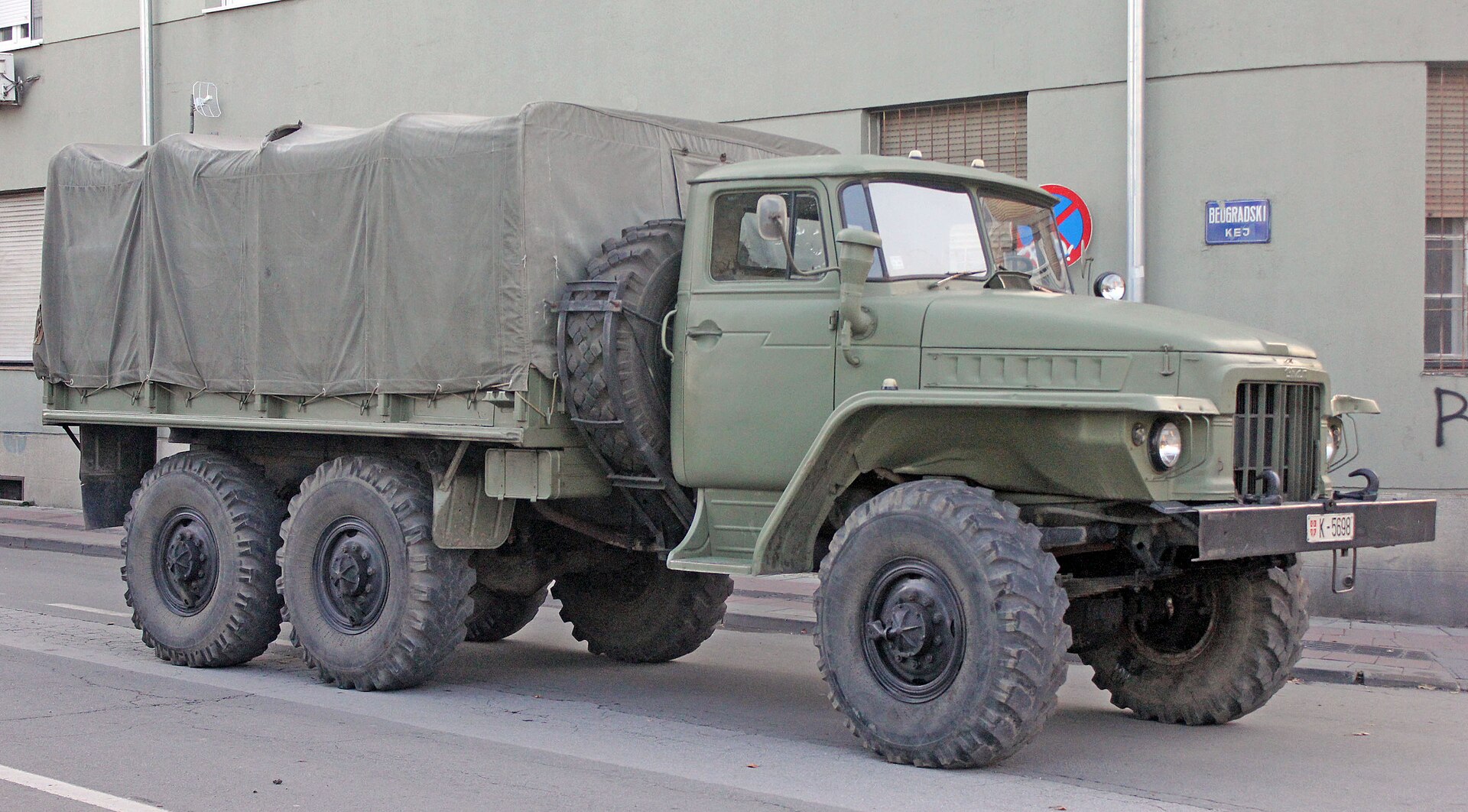
- Ural-375D / 375DM · Photo: Srđan Popović / Wikimedia Commons, CC BY-SA 4.0
377 rivals
-
Classic
- Years
- 1967–1990
- Body
- Truck
- Fuel
- Petrol, Diesel
- Power
- 77–110 kW (105–150 PS)


FAQ
What is the Ural-377?
It is the civilian 6×4 version of the Ural-375, built by UralAZ from 1965 to 1983. It has the same bonneted layout and ZIL petrol V8 as the 6×6 trucks but no front-axle drive and no tyre-inflation system, and it carries about 7.5 tonnes.
Is the Ural-377 four-wheel drive?
No. It is a three-axle 6×4, with drive to both rear axles and an undriven steering axle at the front. All-wheel drive was reserved for the 6×6 Ural-375 and 375D.
Why were Ural-377 cabs painted orange?
The German-language reference states that the trucks left the factory with orange cabs so that a vehicle stranded in a remote region could be located from the air.
What is the Ural-377S?
The 377S is a semi-trailer tractor based on the Ural-377, built over the same period, 1965 to 1983. Its towing ratings are not given in the sources we could verify.
Data sources
Data checked by an editor against the sources below.
- The text of this article (1cars archive)
- Wikipedia — Ural 375
- Wikipedia — Uralski Awtomobilny Sawod


