 Chevrolet Camaro III (1982–1992)
Specs, engines, safety and known problems
Published Sources (4) Report an error
By Sarah Whitmore, Senior Automotive Writer Reviewed by Oleksandr Hnatiuk

- Power
- 66–183 kW (90–249 PS)
- Generation
- 3 of 6
Model timeline
Where the III sits in the Camaro story
Predecessor Camaro II (1970–1981) Successor Camaro IV (1993–2002)
Newest first · 6 generations since 1966
-
2016
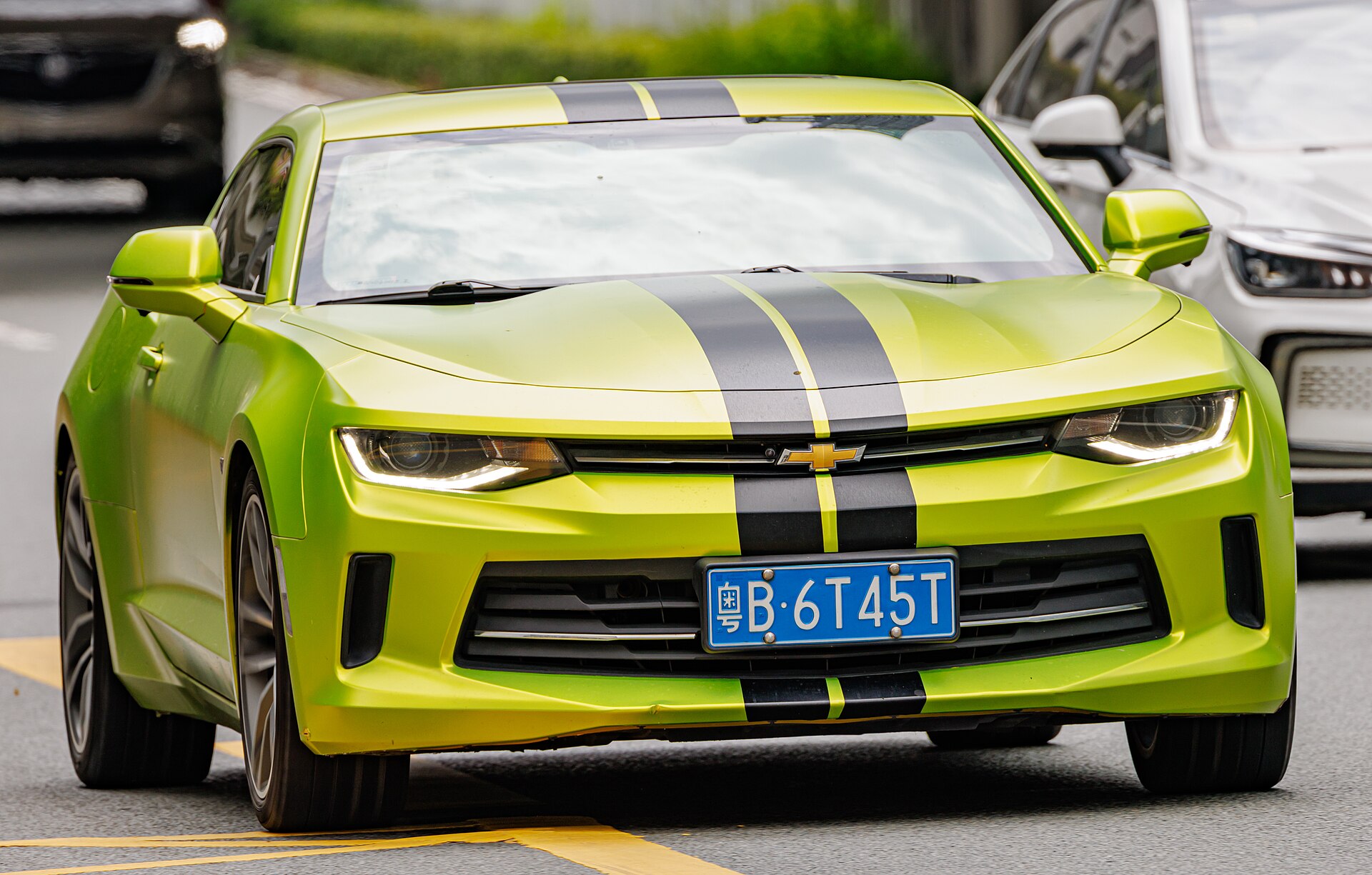
-
2009
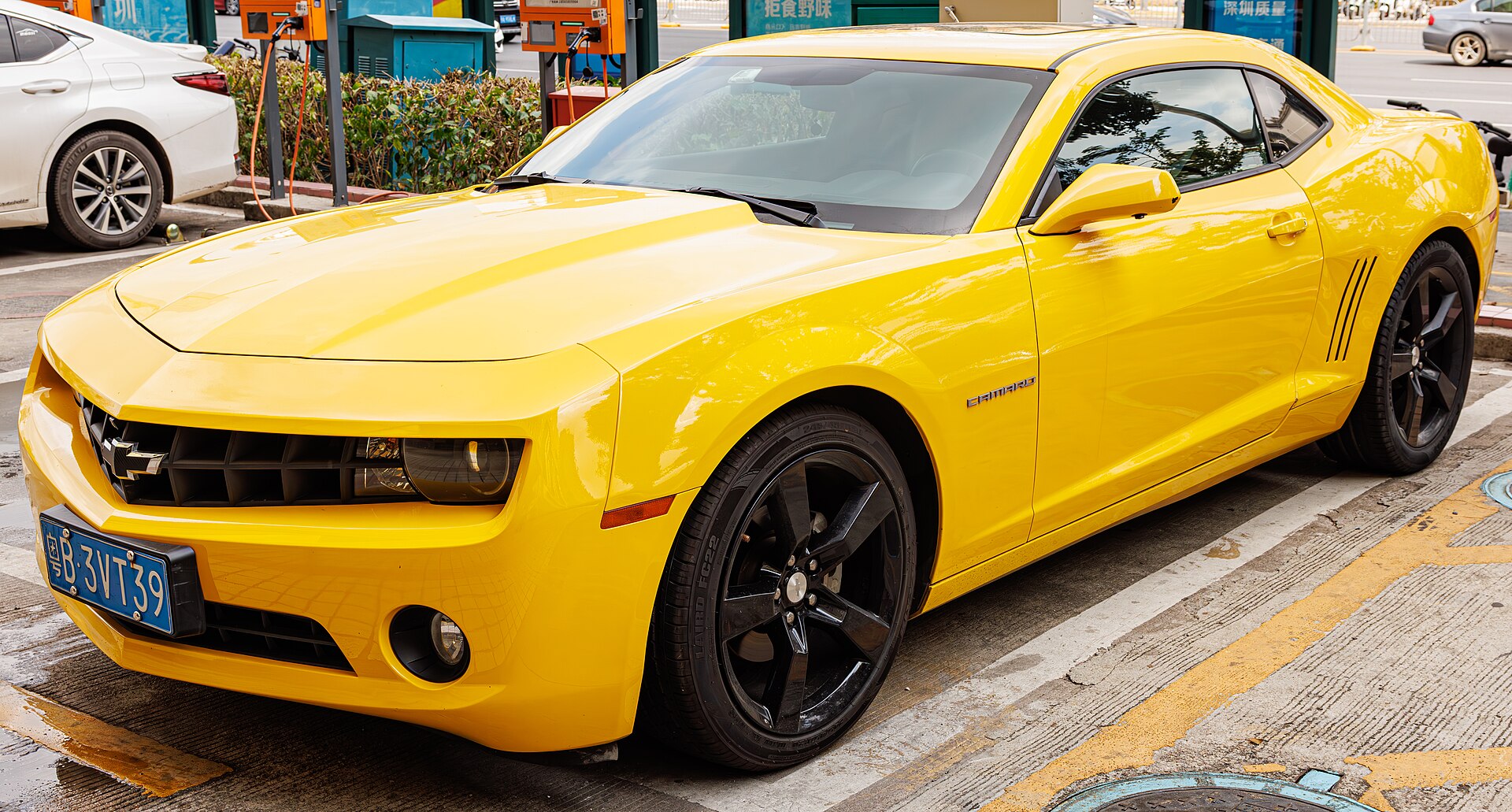
-
1993
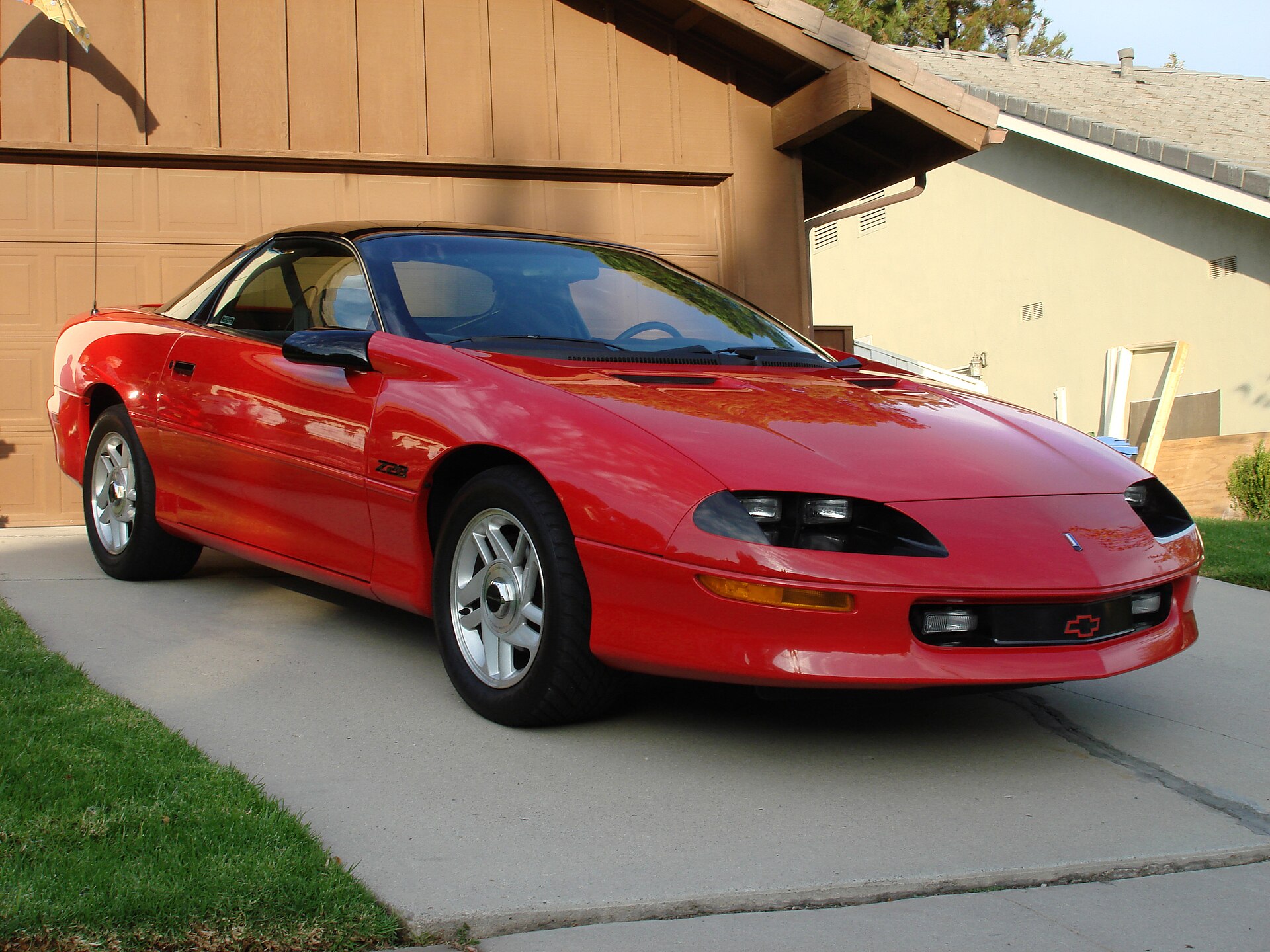
-
1982
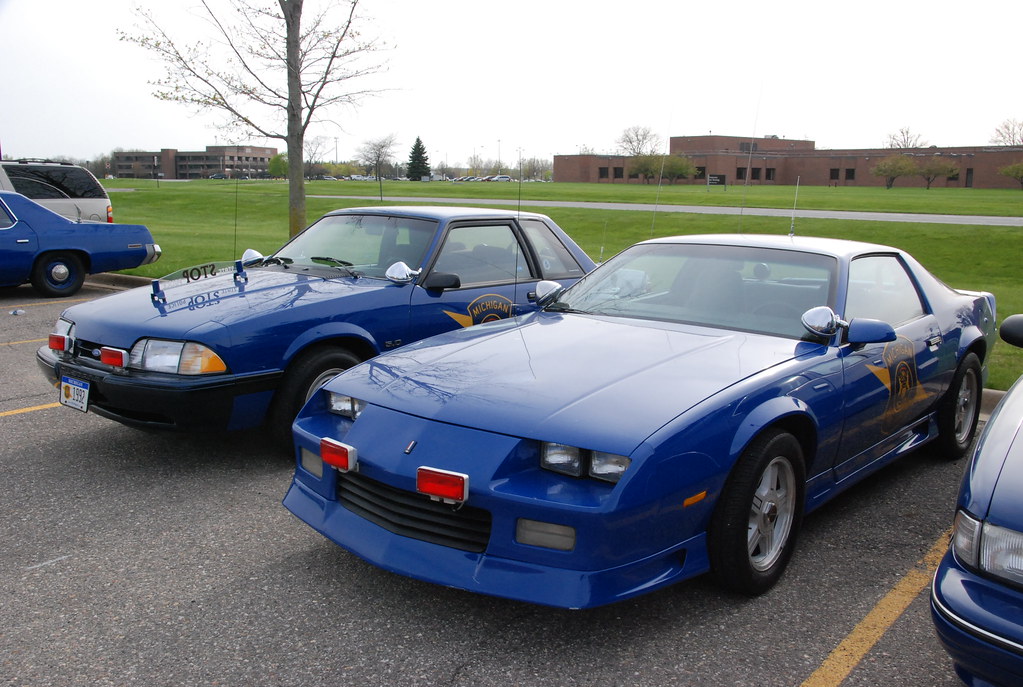
-
1970
-
1966


All generations by year: Camaro VI (2016–2024) · Camaro V (2009–2015) · Camaro IV (1993–2002) · Camaro III (1982–1992) · Camaro II (1970–1981) · Camaro I (1966–1969)
The third-generation Chevrolet Camaro is the hatchback coupé built from October 1981 to August 1992 for the 1982 to 1992 model years. It was the first Camaro with factory fuel injection and weighed roughly 227 kg (500 lb) less than the car it replaced. Engines ran from a 2.5-litre four to the 5.7-litre L98 V8, and a convertible came back in 1987.
In short
- Built from 12 October 1981 to 27 August 1992 at Van Nuys, California, and until 1987 also at Norwood, Ohio; 1,567,657 cars in total.
- Net outputs from 66 kW (88 hp) for the 1985 Iron Duke four to 183 kW (245 hp) for the 1990–92 L98 V8.
- The IROC-Z ran from 1985 to 1990; the 1LE track option and the B4C police package followed late in the run.
- NHTSA gave the 1991 and 1992 hatchback four stars for both front seats in its frontal crash test.
Size at a glance
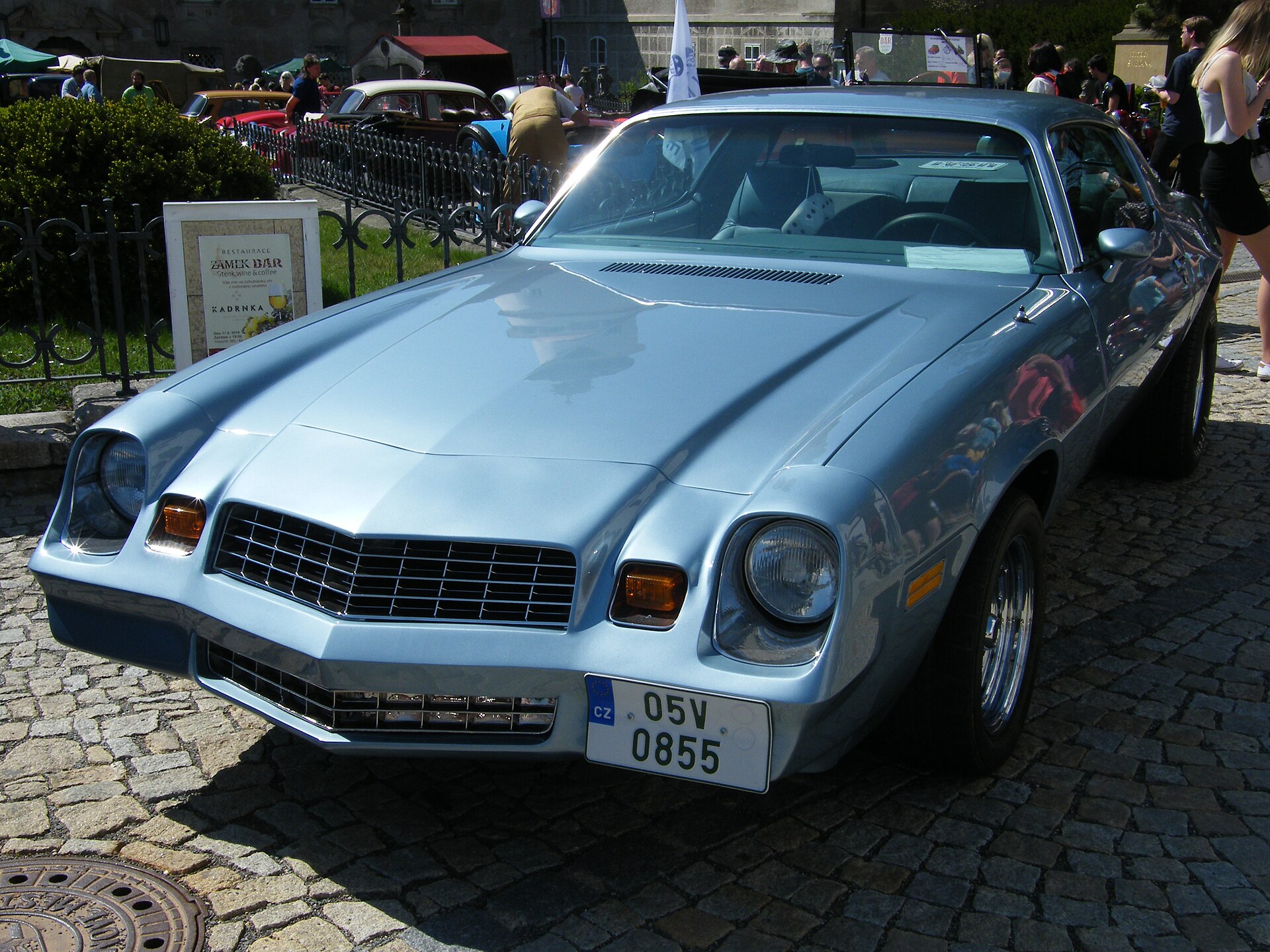
Chevrolet Camaro II
The Chevrolet Camaro III is 102 mm longer and 40 mm narrower than the Chevrolet Camaro II.
| Dimensions | Chevrolet Camaro III | Chevrolet Camaro II | Difference |
|---|---|---|---|
| Length | 4,877 mm192.0 in | 4,775 mm188.0 in | +102 mm+4.0 in |
| Width | 1,850 mm72.8 in | 1,890 mm74.4 in | −40 mm−1.6 in |
| Height | 1,275 mm50.2 in | 1,273 mm50.1 in | +2 mm+0.1 in |
| Wheelbase | 2,565 mm101.0 in | 2,743 mm108.0 in | −178 mm−7.0 in |
Camaro III specs by version
Engines
| Version | Power | Torque | Drive |
|---|---|---|---|
| 2.5 L (151 cu in) I4 "Iron Duke" | 69 kW 94 PS93 hp | 179 Nm132 lb-ft | Rear-wheel drive |
| 2.8 L (173 cu in) V6, carburettor | 80 kW 109 PS107 hp | 193 Nm142 lb-ft | Rear-wheel drive |
| 2.8 L (173 cu in) V6, injection | 101 kW 137 PS135 hp | 224 Nm165 lb-ft | Rear-wheel drive |
| 3.1 L (191 cu in) V6 | 104 kW 141 PS139 hp | 244 Nm180 lb-ft | Rear-wheel drive |
| 5.0 L (305 cu in) V8, 4-barrel | 116 kW 158 PS156 hp | 325 Nm240 lb-ft | Rear-wheel drive |
| 5.0 L V8, throttle-body injection | 127 kW 173 PS170 hp | 346 Nm255 lb-ft | Rear-wheel drive |
| 5.0 L V8, Cross-Fire Injection | 130 kW 177 PS174 hp | 325 Nm240 lb-ft | Rear-wheel drive |
| 5.0 L V8 H.O., 4-barrel | 142 kW 193 PS190 hp | 325 Nm240 lb-ft | Rear-wheel drive |
| 169 kW (230 PS) | 169 kW 230 PS227 hp | — | Rear-wheel drive |
| 5.0 L V8, Tuned Port Injection | 172 kW 234 PS231 hp | 373 Nm275 lb-ft | Rear-wheel drive |
| 5.7 L (350 cu in) V8, Tuned Port Injection | 183 kW 249 PS245 hp | 447 Nm330 lb-ft | Rear-wheel drive |
Performance
Show all 1 versions
| Version | 0–100 km/h |
|---|---|
| 169 kW (230 PS) | 5.8 s 0–62 mph |
Dimensions and weight
Verified Manufacturer and type-approval data from our catalog · Sources and methodology
Lighter, shorter, fuel-injected: the 1982 car against its predecessor
The 1982 Camaro was smaller in every direction that mattered for weight. The wheelbase fell from 2,743 mm (108 in) to 2,565 mm (101 in), the fastback gave way to a hatchback with a large glass tailgate, and the base engine became a four-cylinder for the first time. Sales began in December 1981.
Fuel injection was the technical headline. The Z28's optional LU5 V8 used Cross-Fire Injection, two throttle-body injectors on a single manifold, and later cars moved to multi-point Tuned Port Injection. The new car made an instant impression: a Z28 paced the 1982 Indianapolis 500, Chevrolet sold more than 6,000 replicas, and Motor Trend named the Camaro its Car of the Year. The actual pace car ran a special all-aluminium 5.7-litre V8 that was never sold to the public.
For the generations before and after this one, the Chevrolet Camaro hub page gives the full timeline.
Jerry Palmer's hatchback design
Jerry Palmer's design dates from 1978. Its most debated detail was the windscreen, raked at 62 degrees, beyond a 60-degree limit in GM's internal rules. Behind the cabin the rear seat folded flat under the big glass hatch, which made the Camaro more practical than its predecessor; it now sits naturally among hatchbacks as well as coupés.
The third generation kept the F-body name and continued to share its structure with the Pontiac Firebird. The 1982 range had three models: Sport Coupe, Berlinetta and Z28. From 1983 the Berlinetta had electronic instrument displays.
Iron Duke to L98: third-generation power units
All figures below are SAE net, the basis used throughout this generation. kW values are converted from the quoted hp, and outputs changed almost every year as Chevrolet revised induction and exhausts.
| Engine | Code | Years | Power | Torque |
|---|---|---|---|---|
| 2.5 L (151 cu in) I4 "Iron Duke" | LQ9 | 1982–86 | 66–69 kW (88–92 hp) | 179 Nm (132 lb-ft) |
| 2.8 L (173 cu in) V6, carburettor | LC1 | 1982–84 | 76–80 kW (102–107 hp) | 193–197 Nm (142–145 lb-ft) |
| 2.8 L (173 cu in) V6, injection | LB8 | 1985–89 | 101 kW (135 hp) | 224 Nm (165 lb-ft) |
| 3.1 L (191 cu in) V6 | LH0 | 1990–92 | 104 kW (140 hp) | 244 Nm (180 lb-ft) |
| 5.0 L (305 cu in) V8, 4-barrel | LG4 | 1982–85 | 108–116 kW (145–155 hp) | 325–332 Nm (240–245 lb-ft) |
| 5.0 L V8, Cross-Fire Injection | LU5 | 1982–83 | 123–130 kW (165–175 hp) | 325–339 Nm (240–250 lb-ft) |
| 5.0 L V8 H.O., 4-barrel | L69 | 1983–86 | 142 kW (190 hp) | 325 Nm (240 lb-ft) |
| 5.0 L V8, throttle-body injection | L03 | 1988–92 | 127 kW (170 hp) | 346 Nm (255 lb-ft) |
| 5.0 L V8, Tuned Port Injection | LB9 | 1985–92 | 142–172 kW (190–230 hp) | 373–407 Nm (275–300 lb-ft) |
| 5.7 L (350 cu in) V8, Tuned Port Injection | L98 | 1987–92 | 168–183 kW (225–245 hp) | 447–468 Nm (330–345 lb-ft) |
The 1985 LB9 was quoted at 160 kW (215 hp); the 230 hp versions of 1989–92 had dual exhausts and a manual gearbox. Early Z28s had a four-speed manual, replaced in 1983 by a Borg-Warner five-speed. The automatics were a three-speed TH200 at launch and, from 1983, the four-speed 700-R4 with overdrive. When the L98 arrived in 1987, it was offered only with the automatic.
IROC-Z, 1LE and B4C: the performance versions
The IROC-Z, named after the International Race of Champions series, arrived for 1985 as an option package on the Z28. It brought Delco-Bilstein dampers, a front frame brace known as the "wonder bar", 16 x 8-inch alloy wheels with 245/50VR16 Goodyear Gatorback tyres and, as an option, Tuned Port Injection. A California-only version, RPO 1C5, was limited to 500 cars, half black and half red. From 1988 the IROC-Z specification became standard on the Z28, and the name disappeared after 1990, when Chevrolet's agreement with the race series ended.
Two lesser-known packages appeal to collectors today. The 1LE was a track-oriented combination of performance options; sources date it to 1988 or 1989, when the first 111 cars were built, and production rose to 478 in 1991 and 705 in 1992. The G92 Performance Axle package was fitted to 1,426 IROC-Z coupés for 1989. For 1991 Chevrolet added the B4C "Special Service" package for police and government fleets, a Z28 drivetrain under plainer RS styling, with just under 600 sold that year and 589 in 1992.
Convertible return and late updates, 1987–1992
The convertible returned for 1987, eighteen years after the last open Camaro. The American Sunroof Company (ASC) carried out the conversions, and the first 1,007 were 20th Anniversary editions. The same year the LT name replaced the Berlinetta, the L98 joined the options and the Norwood plant built its last Camaros.
The range was simplified for 1988 to the base coupé and the IROC-Z, and every engine was now fuel-injected. The RS returned as the V6 base model for 1989. The 3.1-litre V6 and an airbag arrived for 1990. A 1991 facelift brought new body kits for the RS and Z28, and the Z28 gained a tall rear spoiler and non-functional bonnet bulges. A 25th Anniversary model with Corvette cylinder heads and a six-speed gearbox was planned for 1992 but replaced by the Z03 Heritage Package, which was stripes and badges only. The final third-generation car, a red Z28 coupé, was built on 27 August 1992.
Third-generation body dimensions and weights
Sources give one set of dimensions for the hatchback, with small changes after the 1988 update. Kerb weight depends on engine and equipment.
| Parameter | Metric | Imperial |
|---|---|---|
| Wheelbase | 2,565 mm | 101.0 in |
| Length (1982–87) | 4,877 mm | 192.0 in |
| Length (1988–92) | 4,890 mm | 192.5 in |
| Width | 1,850 mm | 72.8 in |
| Height (1982–87) | 1,275 mm | 50.2 in |
| Height (1988–92 coupé) | 1,280 mm | 50.4 in |
| Height (1991–92 convertible) | 1,283 mm | 50.5 in |
| Kerb weight | 1,400–1,525 kg | 3,086–3,362 lb |
Yearly output peaked in 1984 at about 261,000 cars, then fell steadily; by 1992 it was around 70,000. Of the 1,567,657 total, 1,417,021 were coupés, 119,197 Berlinettas and 31,439 convertibles.
NHTSA frontal results for the 1991–92 hatchback
NHTSA's public database lists frontal crash ratings for the 1991 and 1992 Camaro two-door hatchback, both with four stars for the driver and four for the front passenger. No side-impact rating was published, and the database lists no rating for the 1990 model year or for earlier third-generation cars.
These were results from NHTSA's original 35 mph frontal test and cannot be compared with modern ratings. A centre high-mounted stop lamp became mandatory for 1986, and the airbag arrived for 1990.
Picking a 1982–92 Camaro
No reliability survey covers this generation, so check each car's history rather than relying on the model year. The main decisions are about engine and specification.
- Strongest performance: a 1990–92 Z28 with the 5.7 L98 at 183 kW (245 hp), or a dual-exhaust 5.0 TPI manual at 172 kW (230 hp).
- Collector interest: IROC-Z, 1LE, B4C and G92 cars; confirm the option codes on the build documents, since badges are easy to add.
- Open-top driving: a 1987–92 convertible, of which only 31,439 were built.
- Simplest choice: the 3.1 V6 of 1990–92, which has more power than any earlier six in this generation.
Do not assume every Z28 has fuel injection: carburetted LG4 and L69 engines were fitted in the early years. In the 1980s the Camaro competed with the Ford Mustang, while Japanese rear-drive coupés such as the Toyota Supra offered a different take on the sports car. The wider Chevrolet story is told in the history of Chevrolet.
Did you know?
- The Camaro III is generation 3 of 6 of the Chevrolet Camaro in our catalog.
- The Camaro III offers up to 183 kW (249 PS) — 97 kW less than the Camaro II (1970–1981) (−35%).
- At up to 4,877 mm long, it is 102 mm longer than the Camaro II (1970–1981).
Image credits · Photos from Wikimedia Commons under free licences
- Chevrolet Camaro I · Photo: Sicnag / Wikimedia Commons, CC BY 2.0
- Chevrolet Camaro II · Photo: Addvisor / Wikimedia Commons, CC BY-SA 4.0
- Chevrolet Camaro III · Photo: Corvair Owner / Flickr, CC BY-SA 2.0
- Chevrolet Camaro IV · Photo: Rich Niewiroski Jr. / Wikimedia Commons, CC BY 2.5
- Chevrolet Camaro V · Photo: Dinkun Chen / Wikimedia Commons, CC BY-SA 4.0
- Chevrolet Camaro VI · Photo: Dinkun Chen / Wikimedia Commons, CC BY-SA 4.0
Rivals
Compare with…
Compare Chevrolet Camaro with
- Ford Mustang Fastback quick spec comparison
- Ford Mustang GT500 quick spec comparison
- Dodge Challenger SRT Demon quick spec comparison
-
Classic
- Years
- 1964
- Body
- Coupe
- Fuel
- Petrol
- Power
- 202 kW (275 PS)
-
Classic
- Years
- 1967–1970
- Body
- Coupe
- Fuel
- Petrol
- Power
- 265 kW (360 PS)
-
Ended 2023
- Years
- 2018–2023
- Body
- Coupe
- Fuel
- Petrol
- Power
- 603–764 kW (820–1,039 PS)
2 generations
- LC
- 170
-
Classic
- Years
- 1964–1974
- Body
- Coupe, Convertible
- Fuel
- Petrol
- Power
- 75–317 kW (102–431 PS)
3 generations
- I
- II
- III


FAQ
What years are third-generation Camaros?
The 1982 to 1992 model years. Production started on 12 October 1981, sales began in December 1981, and the last car was built on 27 August 1992.
What does IROC-Z mean?
IROC stands for International Race of Champions, the racing series the package was named after. The IROC-Z package was offered from 1985 to 1990 and was dropped when Chevrolet's contract with the series ended.
What is the most powerful third-generation Camaro?
The 1990–92 cars with the 5.7-litre L98 Tuned Port Injection V8, rated at 183 kW (245 hp) net and 468 Nm (345 lb-ft).
Was there a third-generation Camaro convertible?
Yes, from 1987. The cars were converted by the American Sunroof Company, and 31,439 convertibles were built by the end of 1992.
How safe is a third-generation Camaro?
NHTSA rated the 1991 and 1992 hatchback at four stars for the driver and four for the front passenger in its frontal test. No side-impact or earlier ratings were published.
Data sources
Data checked by an editor against the sources below.
- 1cars archive: Chevrolet Camaro: Six Generations, Specs and History
- The text of this article (1cars archive)
- Wikipedia — Chevrolet Camaro
- Wikipedia — Chevrolet Camaro (third generation)