 Chevrolet Biscayne
All generations, specs and history
Published Sources (2) Report an error
By Sarah Whitmore, Senior Automotive Writer
- Built
- 1958–1975
- Generations
- 5
- Top power
- 317 kW (431 PS)
Timeline
Biscayne generations
Click a generation for its own page
- Biscayne I 1958 · Sedan · 108–235 kW (147–320 PS)
- Biscayne II 1959–1960 · Sedan
- Biscayne III 1961–1964 · Sedan, Station wagon
- Biscayne IV 1965–1970 · Sedan, Station wagon
- Biscayne V 1971–1975 · Sedan, Station wagon
Newest first · 5 generations since 1958
-
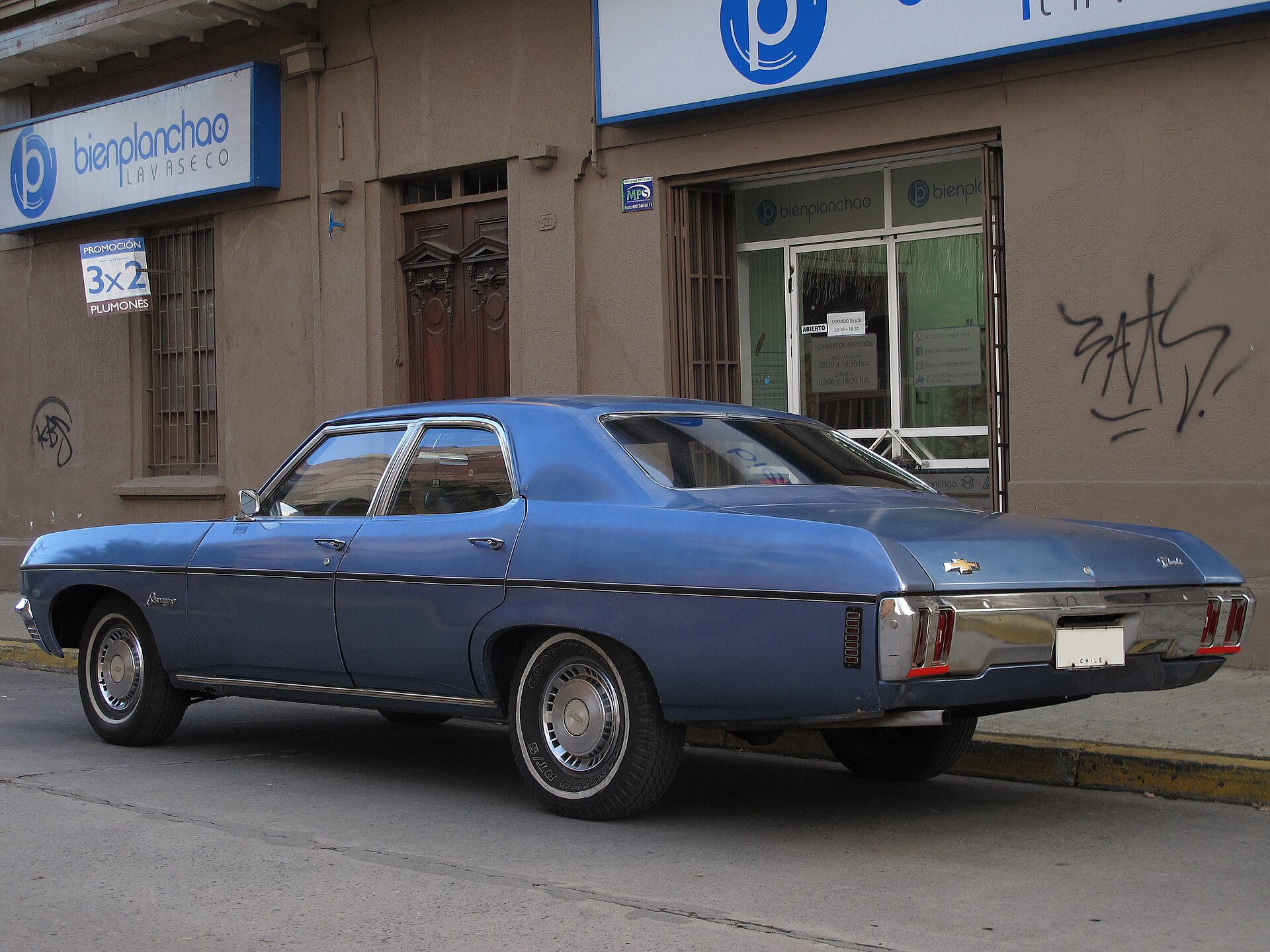
1971
-
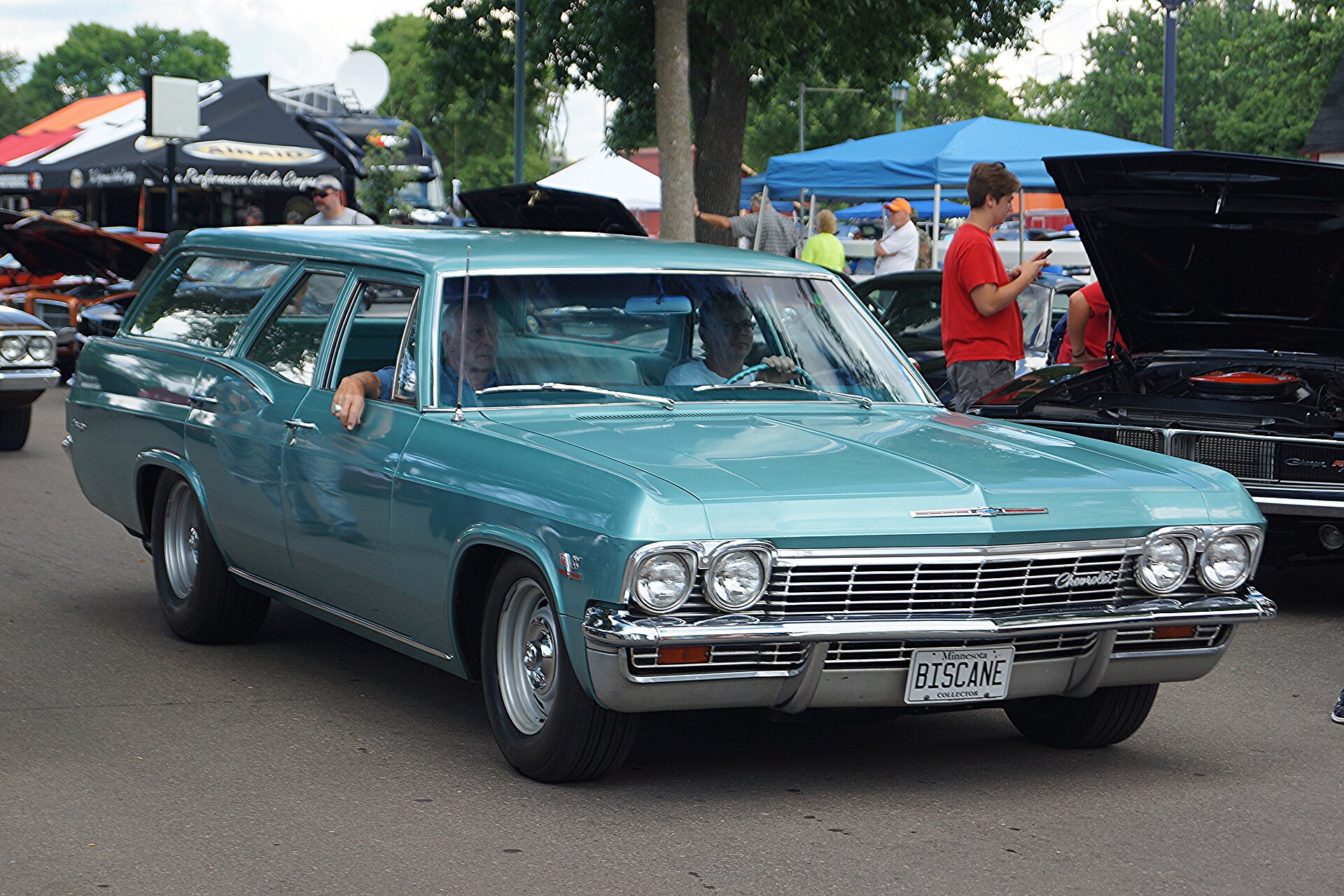
1965
-
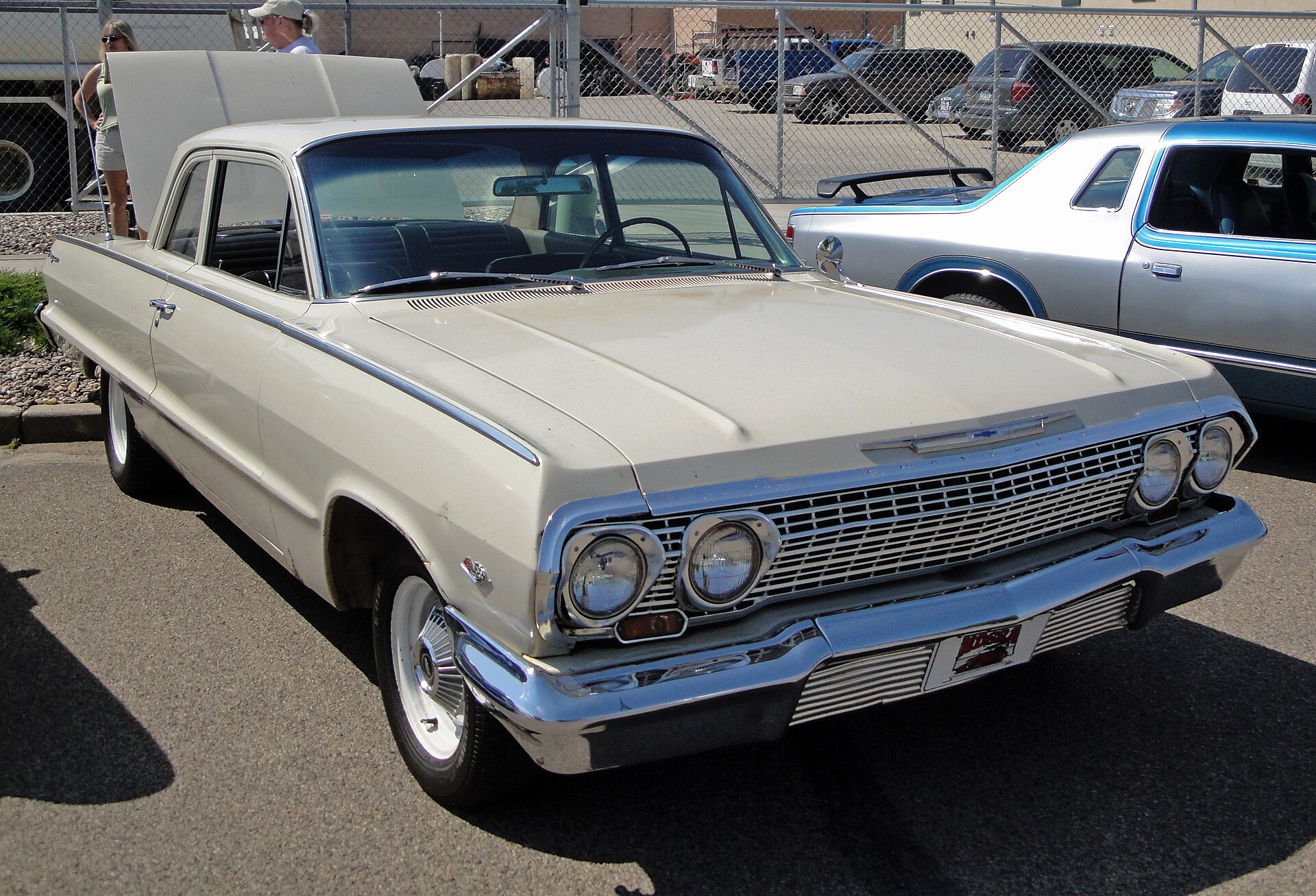
1961
-
1959
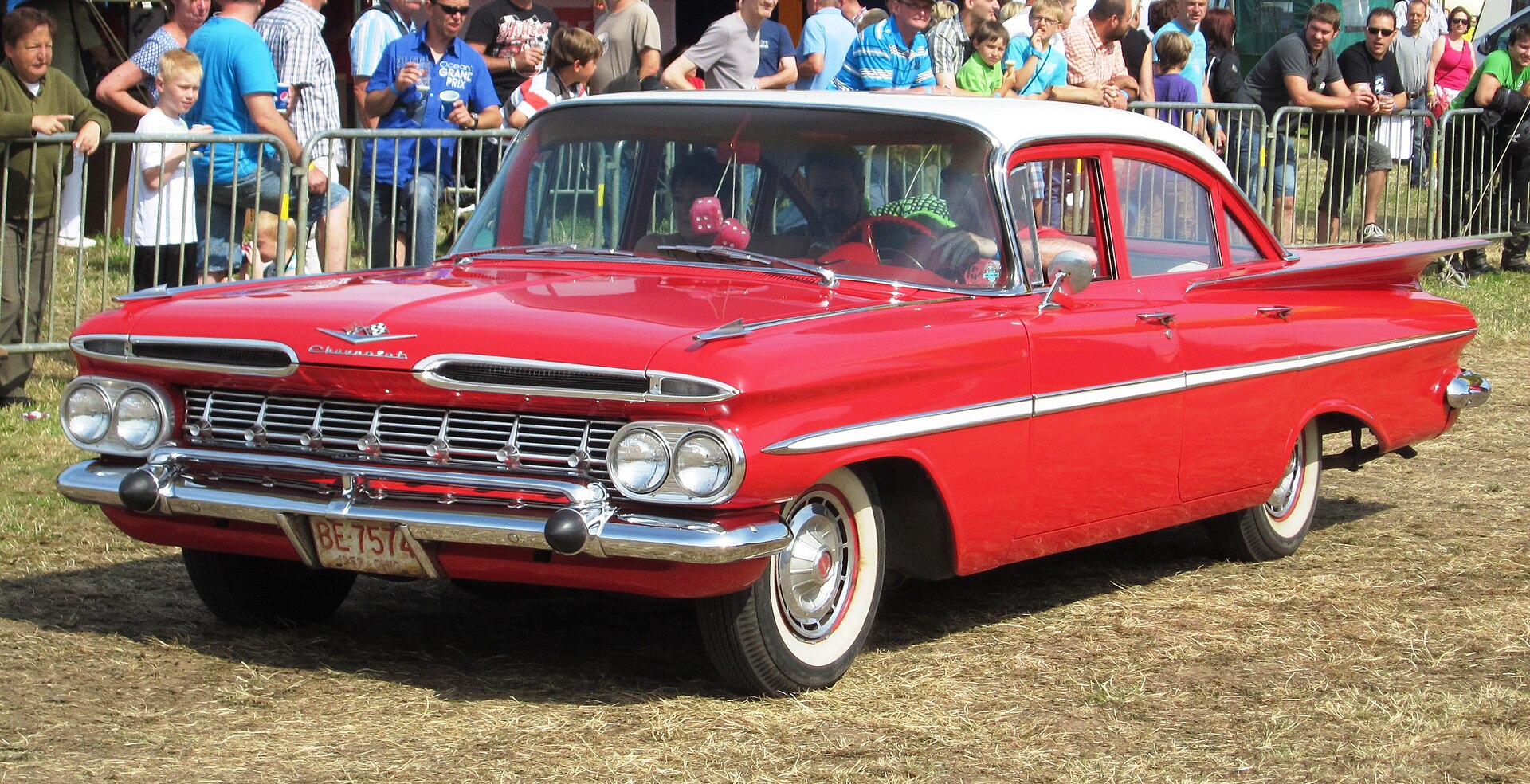
-
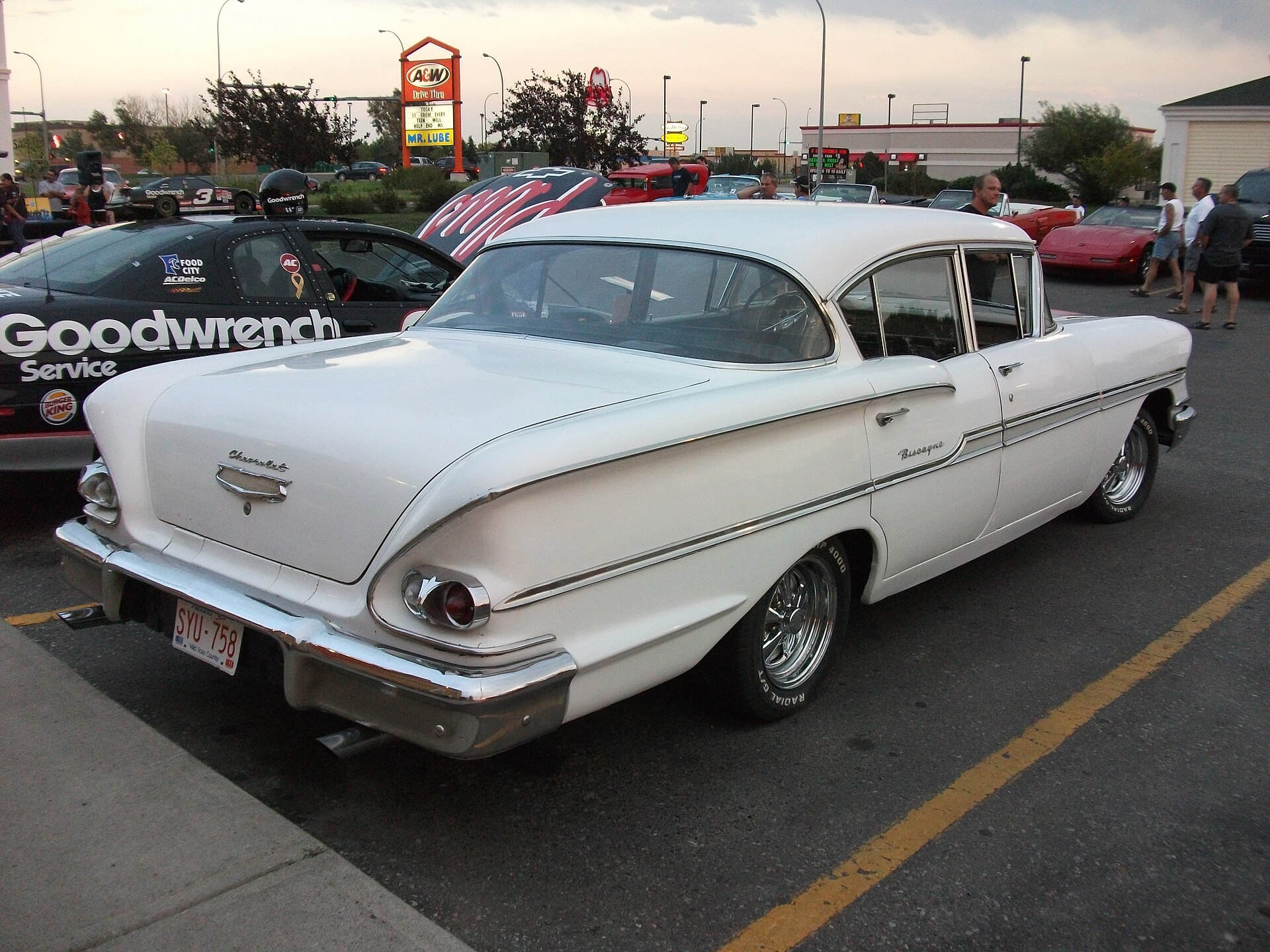
1958
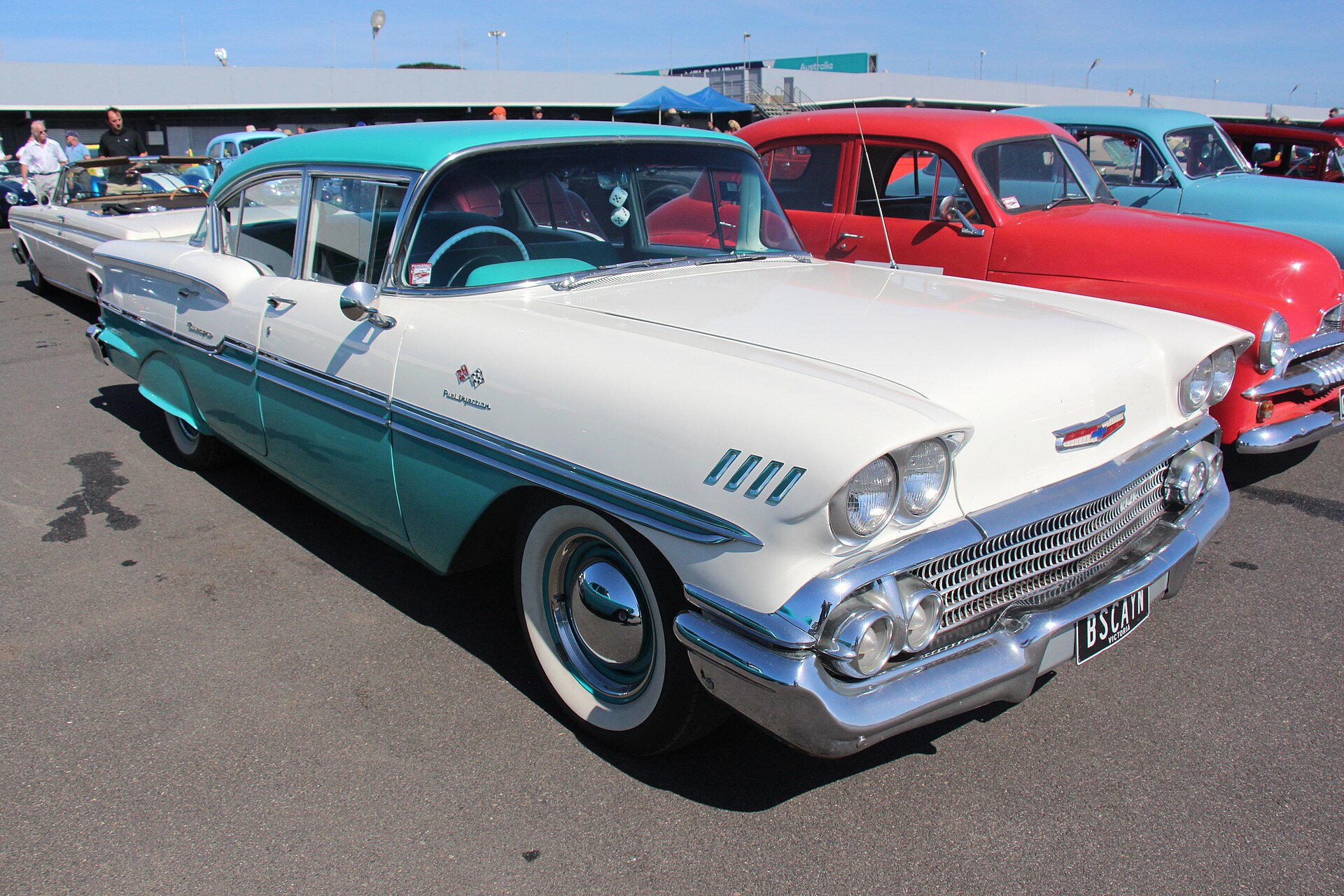


All generations by year: Biscayne V (1971–1975) · Biscayne IV (1965–1970) · Biscayne III (1961–1964) · Biscayne II (1959–1960) · Biscayne I (1958)
Which one is mine?
Pick the year of first registration to see which generation it is.
- Biscayne V 1971–1975
- Biscayne IV 1965–1970
- Biscayne III 1961–1964
- Biscayne II 1959–1960
- Biscayne I 1958
Which Biscayne to choose
Our verdict · Sarah Whitmore
- For a period-correct classic: a 1958 sedan with the Blue Flame six or 283 V8, simple and honest.
- For collectors: a 1961–1964 car with a factory 409 or a 1966–1969 car with the 427; check the documentation carefully, because so few were built.
- For space: a 1962–1970 wagon with the Glide-away tailgate.
Other cars of the same years are collected in our 1950s classics guide and 1960s classics guide. A later sister model is covered in our Chevrolet Impala guide, and all models are listed in the Chevrolet catalogue.
The Chevrolet Biscayne was the most basic full-size Chevrolet from 1958 to 1972, and in Canada until 1975. It sat below the Bel Air and Impala, was bought mainly by fleet operators and by private buyers who wanted a large car for little money. Because Chevrolet let customers order its biggest engines in this light, plain body, some Biscaynes were ordered for drag racing.
In short
- Five generations on GM's full-size B-body: 1958, 1959–1960, 1961–1964, 1965–1970 and 1971–1972 (Canada to 1975).
- Named after a 1955 Motorama show car and Biscayne Bay near Miami; it replaced the 210.
- Engines from a 3.9-litre six with 108 kW (145 hp) to the 409 and 427 V8s rated at 317 kW (425 hp gross).
- Dropped in the United States after 1972 without a direct successor.
Specs by version
Engines
| Version | Engine | Power | Drive | Production years |
|---|---|---|---|---|
| Biscayne I · 235 Blue Flame I6 | 3.9 l · 6 cyl · Petrol 3,858 cc | 108 kW 147 PS145 hp | Rear-wheel drive | 1958 |
| Biscayne I · 283 Turbo-Fire V8 | 4.6 l · 8 cyl · Petrol 4,638 cc | 138 kW 188 PS185 hp | Rear-wheel drive | 1958 |
| Biscayne I · 348 Turbo-Thrust V8 | 5.7 l · 8 cyl · Petrol 5,700 cc | 235 kW 320 PS315 hp | Rear-wheel drive | 1958 |
| Biscayne III · 409 V8 (dual four-barrel) | 6.7 l · 8 cyl · Petrol 6,702 cc | 317 kW 431 PS425 hp | Rear-wheel drive | 1963–1964 |
| Biscayne IV · 250 Turbo-Thrift I6 | 4.1 l · 6 cyl · Petrol 4,097 cc | 116 kW 158 PS156 hp | Rear-wheel drive | 1965 |
| Biscayne IV · 350 V8 | 5.7 l · 8 cyl · Petrol 5,735 cc | 186 kW 253 PS249 hp | Rear-wheel drive | 1970 |
| Biscayne IV · 427 V8 (L72) | 7.0 l · 8 cyl · Petrol 6,997 cc | 317 kW 431 PS425 hp | Rear-wheel drive | 1966 |
| Biscayne V · 454 V8 (SAE net) | 7.4 l · 8 cyl · Petrol 7,440 cc | 201 kW 273 PS270 hp | Rear-wheel drive | 1972 |
Dimensions and weight
Show all 3 versions
| Version | Wheelbase |
|---|---|
| Biscayne I · 235 Blue Flame I6 | 2,985 mm117.5 in |
| Biscayne I · 283 Turbo-Fire V8 | 2,985 mm117.5 in |
| Biscayne I · 348 Turbo-Thrust V8 | 2,985 mm117.5 in |
Verified Manufacturer and type-approval data from our catalog · Sources and methodology
Chevrolet Biscayne at a glance
| Parameter | Metric | Imperial / note |
|---|---|---|
| Production | 1958–1972 (USA), 1958–1975 (Canada) | model years |
| Platform | GM B-body, front engine, rear-wheel drive | X-frame in 1958 |
| Bodies | two- and four-door sedan, wagon (from 1962), utility sedan | four-door only from 1970 |
| Engines | 3.8–4.1 l I6, 4.6–7.4 l V8 | 230 to 454 cu in |
| Power | 108–317 kW | 145–425 hp |
| Wheelbase (1958) | 2,985 mm | 117.5 in |
| Price | US$2,236 (1958 two-door six) to US$2,897 (1970) | base prices |
| Predecessor | Chevrolet 210 | successor: none |
Biscayne timeline
| Model year | Event |
|---|---|
| 1958 | launch as the middle Chevrolet between Delray and Bel Air; X-frame |
| 1959 | redesign, wheelbase about 1.5 in longer; two-door utility sedan |
| 1960 | stripped Fleetmaster for fleets (to 1961) |
| 1961 | full redesign; 409 V8 offered, only 142 built that year |
| 1962 | four-door wagon replaces the Brookwood |
| 1965 | all-new, larger body; new 250 six |
| 1966 | 427 big-block with 317 kW (425 hp) |
| 1970 | two-door dropped; power steering and brakes standard |
| 1972 | last US model year |
| 1975 | last Canadian Biscayne |
First generation (1958): the new middle Chevrolet
The 1958 Chevrolet range was all new, and the Biscayne replaced the mid-level 210. With the 1958-only Delray below it, the Biscayne was not yet the cheapest Chevrolet. It used a 2,985 mm (117.5 in) wheelbase and an X-shaped frame, and was offered as a two-door and four-door pillared sedan.
German Wikipedia lists the 1958 two-door at US$2,236 (1958) with the six and US$2,343 with the base V8; in 1958 a Powerglide automatic added US$188 and the three-speed Turboglide US$231. Hagerty counts about 377,000 Biscaynes sold in the first year, against about 532,000 Bel Airs, in the year Chevrolet's redesigned range took back first place in sales from Ford.
| Engine (1958, gross) | Displacement | Power |
|---|---|---|
| 235 Blue Flame six | 3,858 cc | 108 kW (145 hp) |
| 283 Turbo-Fire V8 | 4,638 cc | 138 kW (185 hp) |
| 283 V8 with fuel injection | 4,638 cc | 216 kW (290 hp) |
| 348 Turbo-Thrust V8 | about 5.7 l | 186–235 kW (250–315 hp) |

Second generation (1959–1960): the price leader
The 1959 redesign brought a new body and a wheelbase about 1.5 inches longer. With the Delray gone, the Biscayne became the entry-level full-size Chevrolet: it cost US$2,365 in 1959 against US$2,772 for an Impala. A two-door utility sedan without a rear seat was offered for delivery work.
The Fleetmaster of 1960–1961 was aimed squarely at fleet buyers. It had lower-grade upholstery, fewer convenience items and many parts painted instead of chromed, and fewer than 5,000 were built.
Third generation (1961–1964): the 409 years
The fully redesigned 1961 car was the first Biscayne available with the 409 V8, but only 142 of these engines were built that year, and some went into Fleetmasters meant for drag racing. In 1962 a four-door station wagon replaced the Brookwood. The 327 V8 was added for 1962, and the new 230 six of 1963 joined the older 235.
German Wikipedia rates the 6.7-litre 409 at 305 kW (409 hp gross) in 1962 and 317 kW (425 hp) in 1963.
Fourth generation (1965–1970): 427 and the street racers
For 1965 the full-size Chevrolets grew again. The Biscayne got a new 250-cubic-inch six with 116 kW (155 hp), while the V8 list ran from the 283 through the 327 and 396 to the 427 big-block. With solid lifters, the 427 of 1966 produced 317 kW (425 hp); it came back for 1968. A 1967 two-door with the 427 and a three-speed manual reached 0–60 mph in 6.1 seconds and covered the quarter mile in 14.6 seconds.
Dealers took the idea further. Baldwin Chevrolet on Long Island sold a 1968 coupé with a dealer-fitted 427 and heavy-duty suspension as the "Street Racer Special". Such cars, with floor-mounted four-speeds and Hurst shifters, were built in very small numbers and are now sought after by collectors.
Wagons used the "clamshell" Glide-away tailgate, in which the rear glass rose into the roof and the lower tailgate slid below the floor. The two-door was dropped after 1969, and for 1970 power steering and power brakes became standard, when the base car cost US$2,897 against US$3,150 for an Impala.


Fifth generation (1971–1975): the last Biscaynes
From 1971 the American Biscayne was a four-door sedan only, with 350, 400 and 454 V8s; the Turbo Hydra-Matic became standard on V8 cars during 1971. In 1972 the 454 was rated at 201 kW (270 hp net). Production in 1970–1972 totalled about 76,800 V8 and 16,700 six-cylinder cars, with V8s taking a growing share.
Three reasons ended the Biscayne in the United States after 1972. It could not meet the government's demands for better fuel economy, and it overlapped with more profitable GM models such as the Bel Air and the Pontiac Catalina. Chevrolet was also moving its effort to small cars like the Vega to fight imports. Canada kept the Biscayne until 1975, adding a four-door wagon in 1973, a standard 350 V8 and automatic in 1974 and a new dashboard in 1975.

Trim and equipment: what a Biscayne left out
The Biscayne was defined by what it lacked. It had two tail lights per side instead of the Impala's three, little exterior brightwork, and no access to many luxury options such as power windows. The Bel Air sat one step above it with more trim. That plainness made the Biscayne a fleet favourite, and it is also why enthusiasts value the rare cars ordered with big engines.

Price gap to the Impala
The Biscayne's appeal was its price, and the gap to the top model narrowed after 1959 and then held steady. English Wikipedia lists these base prices for the cheapest two-door or four-door Biscayne against the Impala of the same year:
| Model year | Biscayne | Impala | Difference |
|---|---|---|---|
| 1959 | US$2,365 | US$2,772 | US$407 |
| 1965 | US$2,472 | US$2,728 | US$256 |
| 1970 | US$2,897 | US$3,150 | US$253 |
A buyer who skipped the chrome, the third pair of tail lights and the power options saved between about 8 and 15 percent of the Impala's price. Fleet buyers, the Biscayne's main customers, valued exactly that.
Specifications by generation
| Parameter | 1958 | 1962 | 1966 | 1972 |
|---|---|---|---|---|
| Bodies | 2- and 4-door sedan | sedans, wagon | sedans, wagon | 4-door sedan |
| Base engine | 235 six, 108 kW | 235 six | 250 six, 116 kW | 350 V8 |
| Top engine | 348 V8, 235 kW | 409 V8 | 427 V8, 317 kW | 454 V8, 201 kW net |
| Base price | US$2,236 (two-door six) | — | US$2,472 (1965 two-door) | — |
Photo gallery

Chevrolet Biscayne evolution in numbers
Did you know?
- The Chevrolet Biscayne ran for 17 years, from 1958 to 1975, over 5 generations in our catalog.
- The longest-running generation is the Biscayne IV (1965–1970): 5 years.
- The biggest jump in power came with the Biscayne III: up to 317 kW (431 PS), 82 kW more than the Biscayne I.
- The most powerful Chevrolet Biscayne is not the newest: the Biscayne III (1961–1964) offered up to 317 kW (431 PS), the Biscayne V up to 201 kW (273 PS).
Most powerful version, kW
Figures from the 1cars catalog: power is the strongest version of each generation; generations without the figure are left out.
Chevrolet Biscayne: first vs latest generation
| Spec | Biscayne I | Biscayne V | Change |
|---|---|---|---|
| Years | 1958 | 1971–1975 | 13 years apart |
| Most powerful version | 235 kW (320 PS) | 201 kW (273 PS) | −34 kW (−14%) |
Oldest and newest generation in the 1cars catalog. Power is the strongest version of each; other rows are shown only when both generations have the figure.
Image credits · Photos from Wikimedia Commons under free licences
- Chevrolet Biscayne II · Photo: Charles01 / Wikimedia Commons, CC BY-SA 3.0
- Chevrolet Biscayne III · Photo: Greg Gjerdingen from Willmar, USA / Wikimedia Commons, CC BY 2.0
Chevrolet Biscayne in our rankings
- No. 2 of 131 · Biggest engines: sedans (7,440 cc)
- No. 5 of 94 · Most powerful cars of the 1960s (317 kW)
- No. 18 of 557 · Biggest engines: cars (7,440 cc · top 4%)
- No. 34 of 149 · Most powerful sedans (317 kW · top 25%)
- No. 205 of 912 · Longest-running car nameplates (17 years · top 25%)
- No. 53 of 345 · Cars with the most generations (5 generations · top 25%)
Bigger engine than 97% of ranked sedans in the 1CARS catalog (No. 2 of 131).
FAQ
What years was the Chevrolet Biscayne made?
From the 1958 to the 1972 model year in the United States and until 1975 in Canada.
What is the difference between the Biscayne, Bel Air and Impala?
They shared the same full-size body. The Biscayne was the basic version with two tail lights per side and few options, the Bel Air added trim, and the Impala and Caprice were the top models with three tail lights per side.
What was the most powerful Biscayne?
The 409 of 1963 and the 427 of 1966 and 1968 were both rated at 317 kW (425 hp gross).
Why was the Chevrolet Biscayne discontinued?
It could not meet new fuel-economy demands, overlapped with more profitable GM models, and Chevrolet shifted its effort to small cars.
Where does the name Biscayne come from?
From a 1955 Motorama show car and from Biscayne Bay near Miami.
Data sources
Data checked by an editor against the sources below.
- Wikipedia — Chevrolet Biscayne
- Hagerty — 1958 Chevrolet Biscayne