Best classic cars of the 1960s: seven icons of the decade
The 1960s changed the car for ever. In America, young buyers and cheap fuel created the pony car and the muscle car; in Europe and the Soviet Union, compact saloons gained modern overhead-camshaft engines, disc brakes and better safety. Many of these cars are now among the most collected classics.
For this list we only considered cars whose model or generation was launched between 1960 and 1969, that have a published model page on 1cars, and whose production years and engine outputs could be checked against our researched fact sheets or independent sources such as Wikipedia. That rule left out several cars whose pages cover a different decade or generation.
Our catalogue is strongest on American performance cars of the period, and the list reflects that, but it also includes the Moskvich-412, a Soviet saloon with a remarkably modern aluminium engine. The seven cars appear in order of launch. For each one we explain why it earns its place, who it suits and the drawback to weigh up before buying.
-
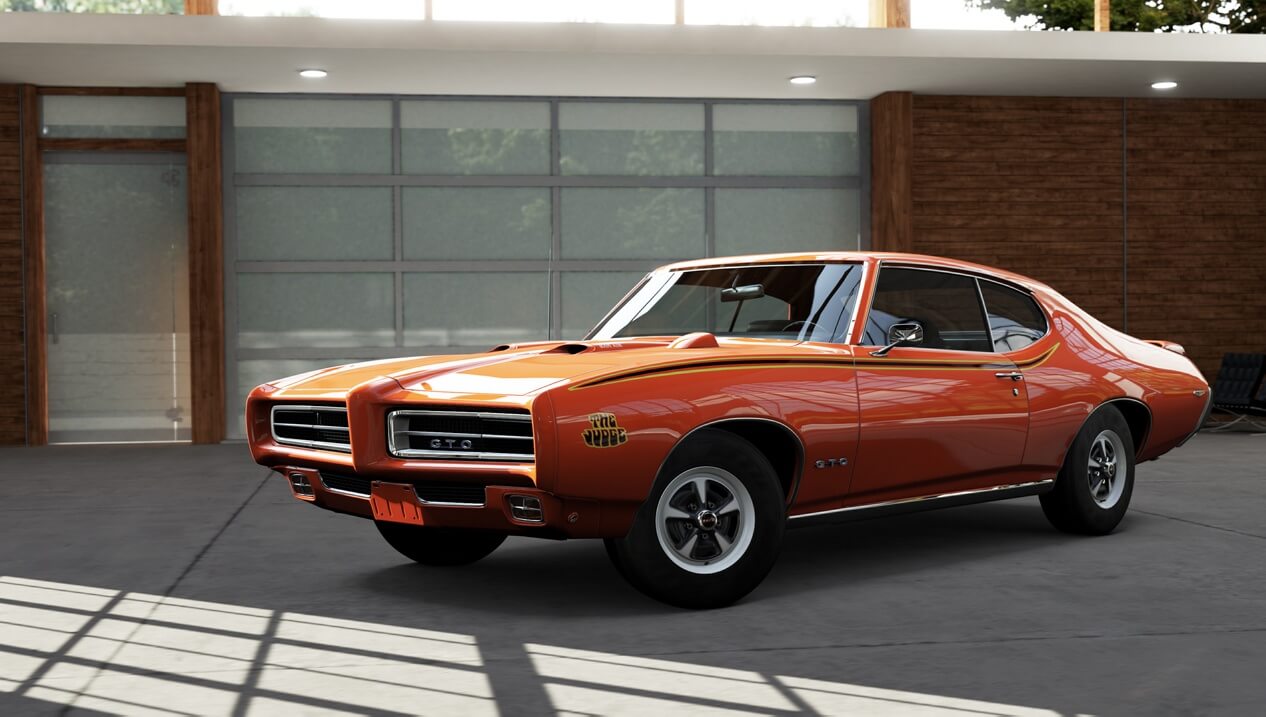
1. Pontiac GTO
The first muscle car
- Production years
- 1964–2006
- Body type
- Coupe, Convertible, Hatchback
- Fuel
- Petrol
- Power output
- 149–298 kW (203–405 PS)
The GTO went into production in September 1963 as an option package on the 1964 Pontiac Tempest LeMans, created by John DeLorean, Bill Collins and Russ Gee. Its 389 cu in (6.4-litre) V8 was rated at 242 kW (325 hp), or 348 hp with Tri-Power carburettors, and 32,450 were sold in the first year. It became a separate model in 1966, when sales peaked at 96,946, and it is credited with popularising the muscle car. It suits collectors who want the car that started the trend. The drawback: big-block power on a 1960s chassis demands a careful, unhurried driving style.
Full review: Pontiac GTOPros
- Credited with popularising the muscle car
- 242 kW (325 hp) 389 V8 as standard
- 96,946 built in its best year, 1966
Cons
- 1960s chassis technology
-
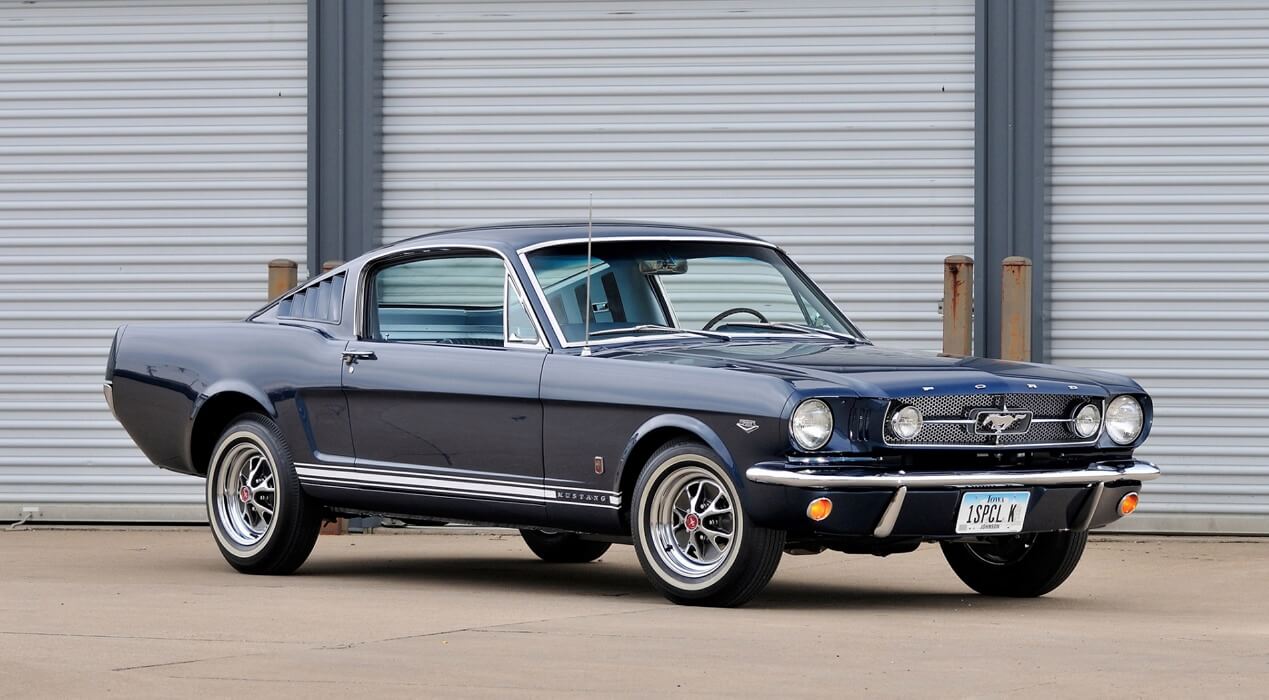
2. Ford Mustang Fastback
The original pony car
- Production years
- 1964
- Body type
- Coupe
- Fuel
- Petrol
- Power output
- 202 kW (275 PS)
Ford unveiled the Mustang at the World's Fair in New York on 17 April 1964, took 22,000 orders on the first day and created a new class: the pony car. The fastback followed in August 1964. Built on Falcon underpinnings, it offered engines from a six-cylinder to the 289 cu in 'K-code' V8 with 202 kW (271 hp). Production reached 559,451 in calendar 1965 and 607,568 in 1966. It suits first-time classic buyers, because so many were built and so much is known about them. The drawback: such huge production means originality varies widely, so documentation matters.
Full review: Ford Mustang FastbackPros
- Created the pony-car class
- Wide choice of engines
- Very large production
Cons
- Originality varies – check the documentation
-
3. Chevrolet Chevelle SS
The versatile muscle car
- Production years
- 1964–1973
- Body type
- Coupe, Convertible, Station wagon
- Fuel
- Petrol
- Power output
- 164–336 kW (223–457 PS)
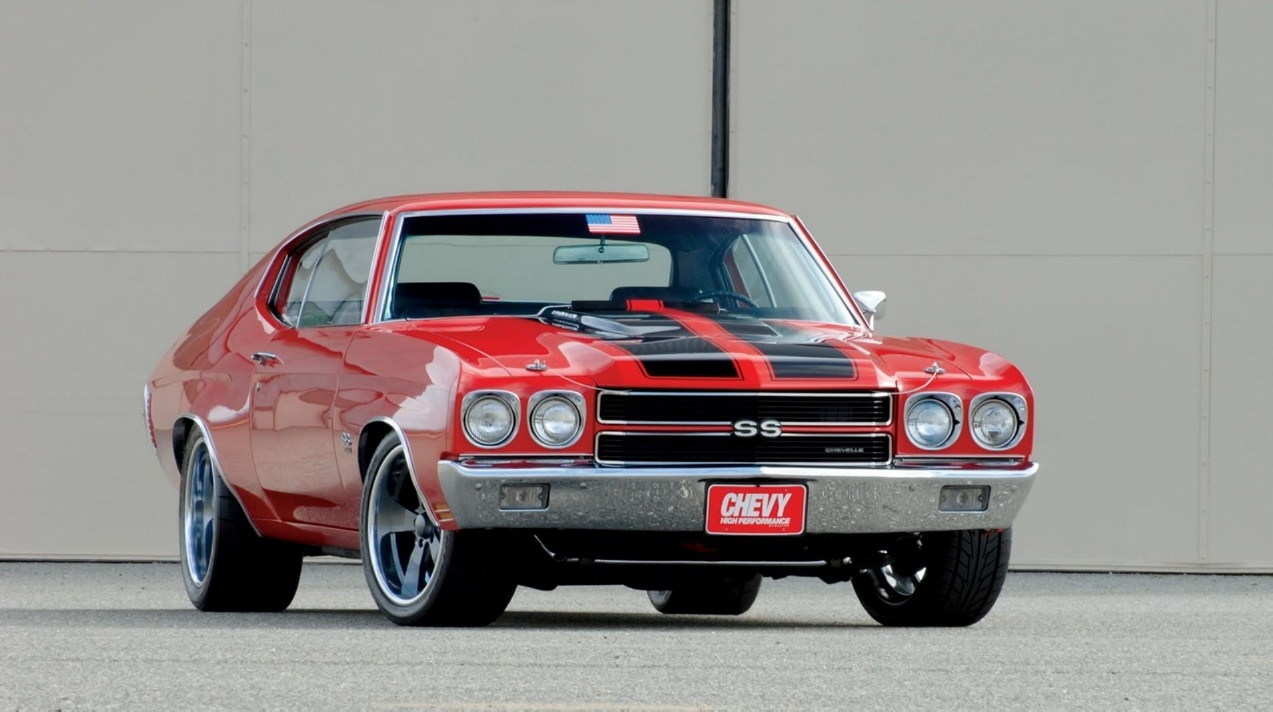
Chevrolet's mid-size Chevelle arrived for 1964 with a Malibu SS version, and 76,860 of the 294,160 first-year cars were SS models. In 1965 a limited run of 201 Malibu SS 396 'Z-16' cars introduced the big-block engine, and the SS 396 became its own series in 1966. Our card covers the SS from 1964 to 1977, including the 1970 LS6 454 rated at 336 kW (450 hp). It suits buyers who want a muscle car with a range from mild to wild. The drawback: the most famous version, the LS6, is a 1970 car, and only 4,475 were built.
Full review: Chevrolet Chevelle SSPros
- Malibu SS from 1964
- SS 396 series from 1966
- LS6 454: 336 kW (450 hp)
Cons
- The top LS6 version is rare and from 1970
-
4. Chevrolet Camaro I
Chevrolet's answer
- Production years
- 1966–1969
- Body type
- Coupe, Convertible
- Fuel
- Petrol
- Power output
- 104–321 kW (141–436 PS)
Chevrolet presented the Camaro on 28 June 1966 and put it on sale that September as a 1967 model, a direct rival to the Mustang. The first generation (1967–1969) offered six-cylinder engines from 104 kW (140 hp), a 350 SS and big-block 396s, while the Z/28, created for SCCA Trans-Am racing with a 302 cu in V8 rated at 216 kW (290 hp), grew from 602 cars in 1967 to more than 20,000 in 1969. A 1967 Camaro convertible paced the Indianapolis 500. It suits buyers who want a 1960s pony car with racing pedigree. The drawback: genuine Z/28s are scarce compared with standard cars, so check their history carefully.
Full review: Chevrolet Camaro IPros
- Z/28 with Trans-Am pedigree
- Wide engine range
- Coupé and convertible
Cons
- Genuine Z/28s are scarce
-
5. Ford Mustang GT500
The big-block Shelby
- Production years
- 1967–1970
- Body type
- Coupe
- Fuel
- Petrol
- Power output
- 265 kW (360 PS)
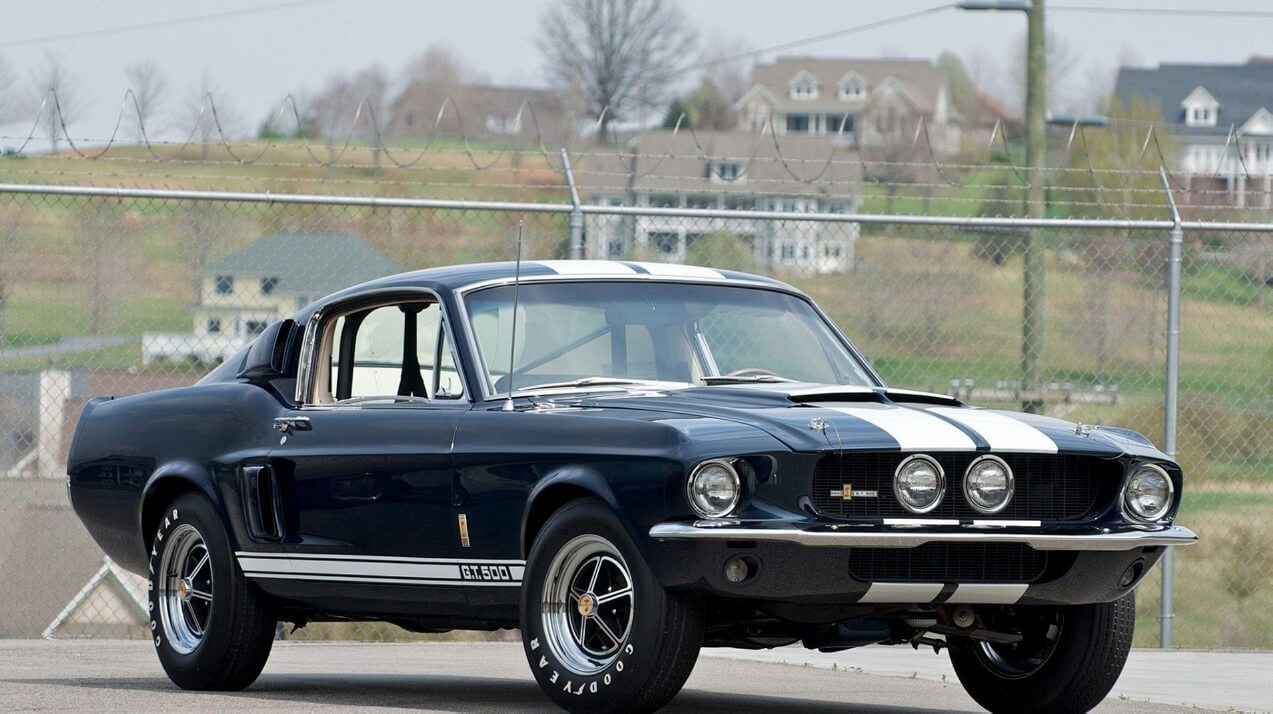
The 1967 Shelby GT500 was the first of its line: Shelby American fitted the Mustang with the 428 cu in Police Interceptor V8, rated at 265 kW (355 hp), with two four-barrel Holley carburettors. Only 2,048 were built that year, alongside the smaller-engined GT350 with the 289 K-code V8. Shelby American modified the cars in California until Ford ended that arrangement, and from 1969 the design was handled in-house by Ford. It suits collectors who want the most potent Mustang-based car of the decade. The drawback: with only 2,048 built in 1967, good original examples are scarce.
Full review: Ford Mustang GT500Pros
- 428 cu in V8: 265 kW (355 hp)
- Built by Shelby American
- Twin four-barrel carburettors
Cons
- Only 2,048 built in 1967
-
6. Moskvich-412
The European engineering choice
- Production years
- 1967–1975
- Body type
- Sedan
- Fuel
- Petrol
- Power output
- 55 kW (75 PS)
The Moskvich-412 of 1967 shows how modern a Soviet saloon could be: Igor Okunev's 1,478 cc engine has an aluminium block and head, an overhead camshaft, hemispherical combustion chambers and 55 kW (75 PS), with the block tilted at 20 degrees. A sports version developed about 100 hp for competition cars. An estate, the 427, joined in 1969, and the car was built by both AZLK and IZh. It suits buyers who want a practical 1960s European-style saloon rather than a muscle car. The drawback: front disc brakes only arrived in 1970, so early cars rely on drums all round.
Pros
- Aluminium OHC engine, 55 kW (75 PS)
- Estate 427 from 1969
- Practical four-door saloon
Cons
- Drum brakes on early cars
Spec sheet: Moskvich-412 1.5 l 55 kW (75 PS)
Full review: Moskvich-412 -
7. Plymouth Road Runner
Best budget muscle car
- Production years
- 1968–1980
- Body type
- Coupe
- Fuel
- Petrol
- Power output
- 108–317 kW (147–431 PS)
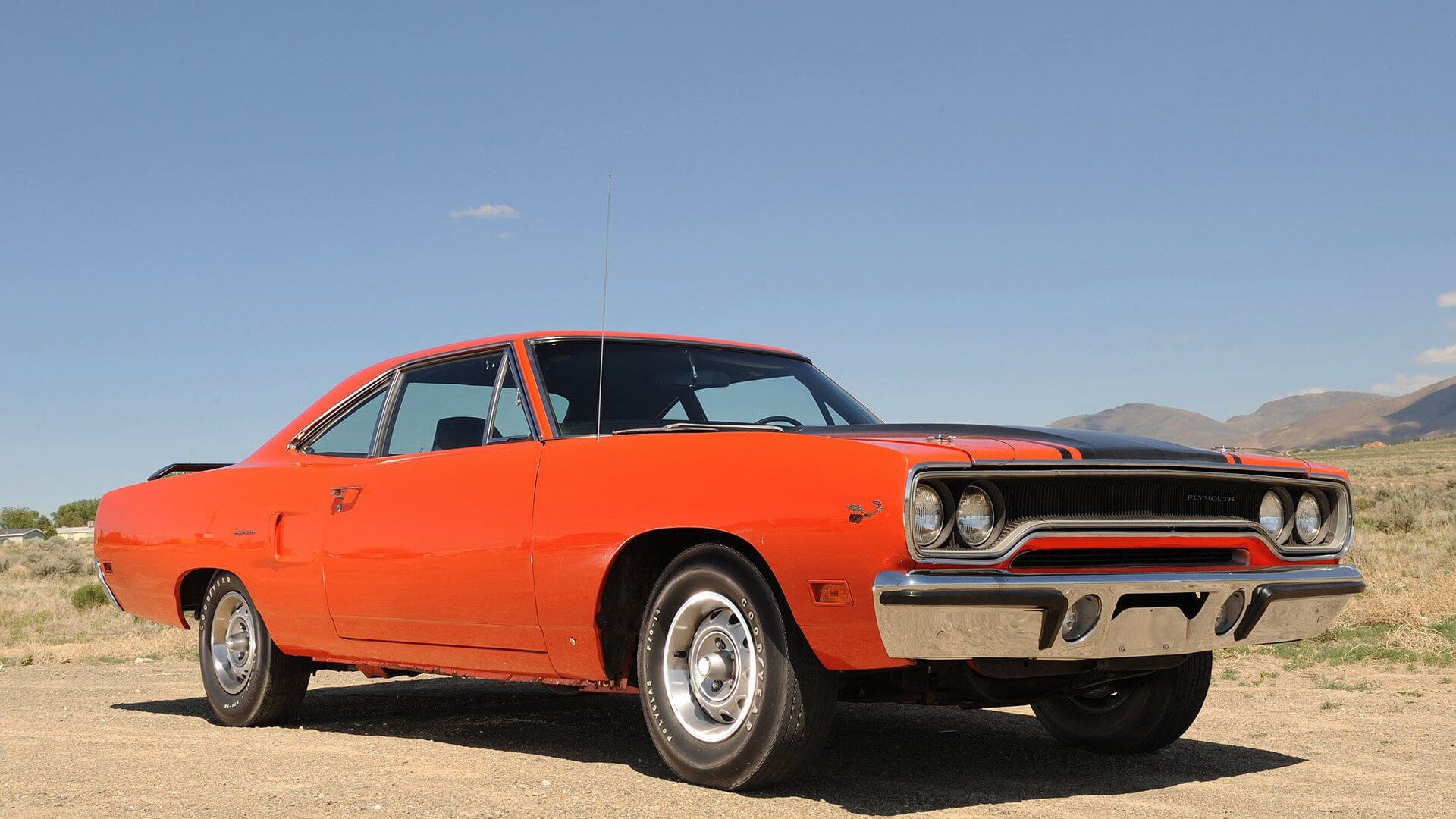
Plymouth's Road Runner of 1968 was a muscle car on a budget: a Belvedere-based body, spartan trim and a 383 cu in V8 rated at 250 kW (335 bhp), with the 426 Hemi at 317 kW (425 bhp) as an option. Plymouth paid Warner Bros. for the cartoon name and developed a 'beep, beep' horn. Expecting about 20,000 sales, it sold around 45,000 in 1968, and Motor Trend named it Car of the Year for 1969. It suits buyers who want straightforward performance without frills. The drawback: the spartan trim that kept it affordable also means a basic interior.
Full review: Plymouth Road RunnerPros
- 383 V8: 250 kW (335 bhp)
- Optional 426 Hemi: 317 kW (425 bhp)
- Motor Trend Car of the Year 1969
Cons
- Basic, spartan interior


Data ranking: Most powerful cars of the 1960s — all 94 models in our catalog with a figure, ranked by the numbers.
Catalog: All 1960s models in the catalog — every model with specs, not only our picks.
How we chose
Selection. The list covers passenger cars launched from 1960 to 1969, oldest first. We left out the GAZ-23 (only 603 built for special services), the Moskvich-403 and Moskvich-408 (transitional models we could not document well enough), and the Audi 80 (the name first appeared on the F103 range in 1966, but the model page covers mainly the B1–B4 generations built from 1972), and replaced the whole-model Chevrolet Camaro entry with its first generation (1966–1969). We added the Plymouth Road Runner. Every car listed has a published model page on 1cars.
Data sources. Card facts come from the 1cars catalogue; the power of the Mustang Fastback and the 1967 Shelby GT500 was corrected from Wikipedia before publication, and the Camaro and Moskvich-412 entries were already verified. Text facts come from our researched fact sheets for the Camaro and Moskvich-412 and from English-language Wikipedia for the other cars. American engine outputs are the gross horsepower ratings of the period, given as kW followed by hp; European figures are given as kW followed by PS.
Ranking. The cars are listed in order of launch; the selection is editorial. Prices are deliberately not given.
Frequently asked questions
What is the difference between a pony car and a muscle car?
A pony car, a class created by the Ford Mustang in 1964, is a compact, sporty coupé with long-bonnet styling and many options. A muscle car, popularised by the 1964 Pontiac GTO, puts a large V8 into a mid-size car. Some cars, such as the Shelby GT500, combine both ideas.
Why are 1960s American power figures so high?
They are gross ratings, measured on an engine without all its accessories. From the early 1970s American makers switched to net ratings, which are noticeably lower for the same engine.
Is a 1960s classic usable every day?
Most can be driven regularly, but brakes, tyres and safety equipment are of their time. Many owners use them for weekends and events rather than daily commuting.
Why are there no prices in this list?
Prices depend on the country, age, mileage and condition of each car and change quickly. We only publish facts that can be checked, so compare current local listings and a full service history before you buy.