
 Plymouth Road Runner
All generations, specs and history
Updated Published Sources (2) Report an error
By Sarah Whitmore, Senior Automotive Writer Reviewed by Oleksandr Hnatiuk

- Built
- 1968–1980
- Generations
- 4
- Top power
- 317 kW (431 PS)
Timeline
Road Runner generations
Click a generation for its own page
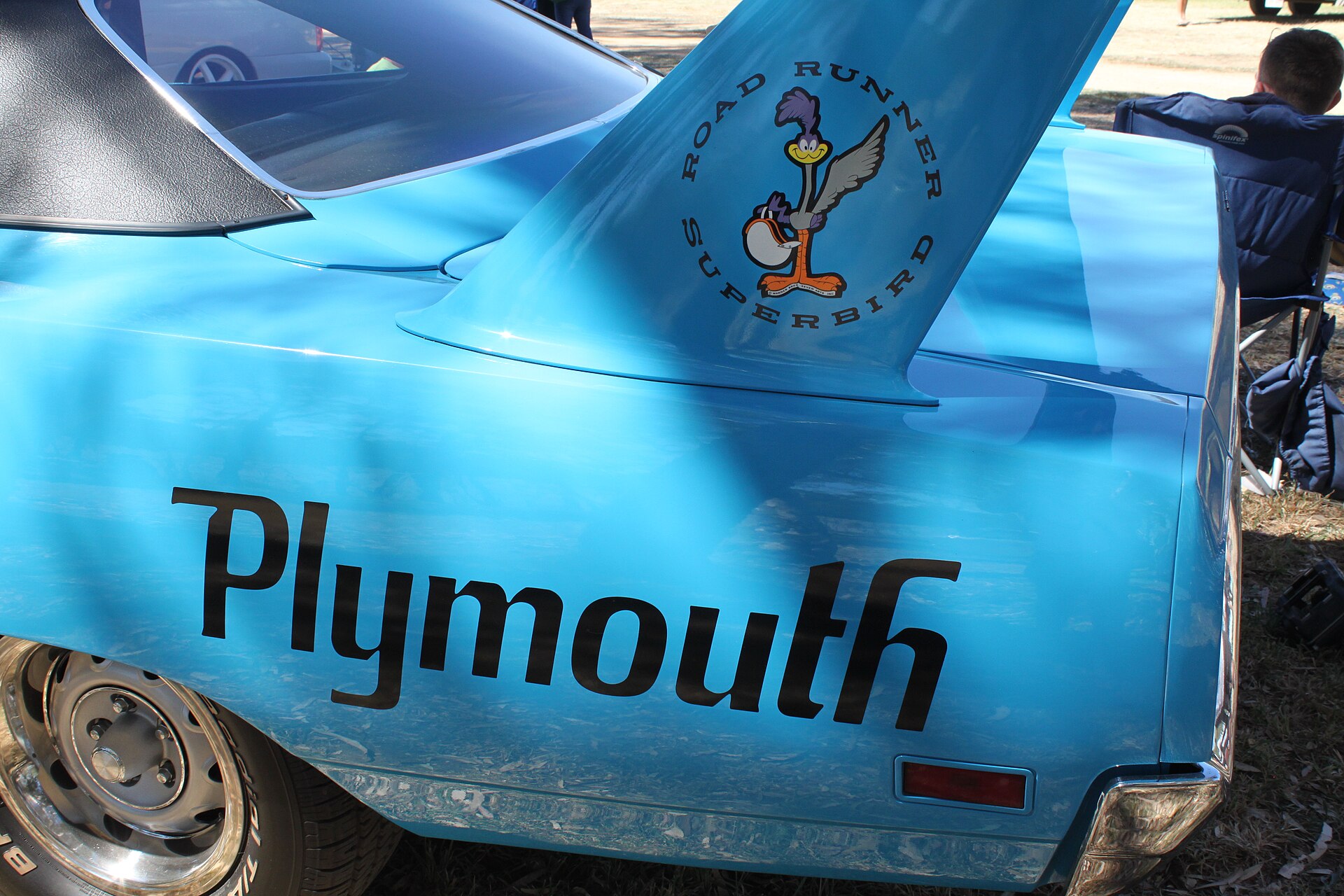
- Road Runner I 1968–1970 · Coupe · 250–317 kW (340–431 PS)
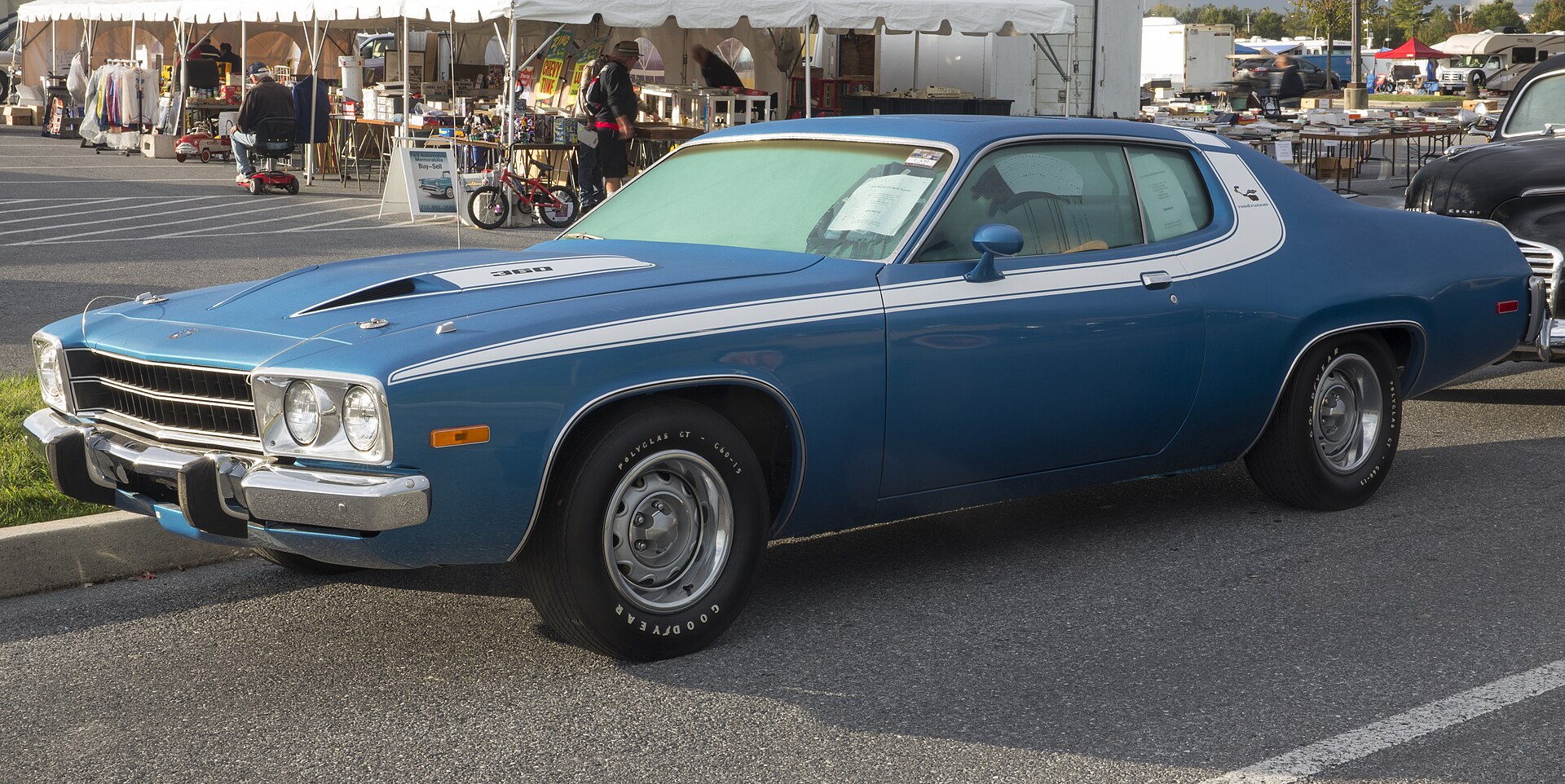
- Road Runner II 1971–1974 · Coupe · 127–224 kW (173–305 PS)
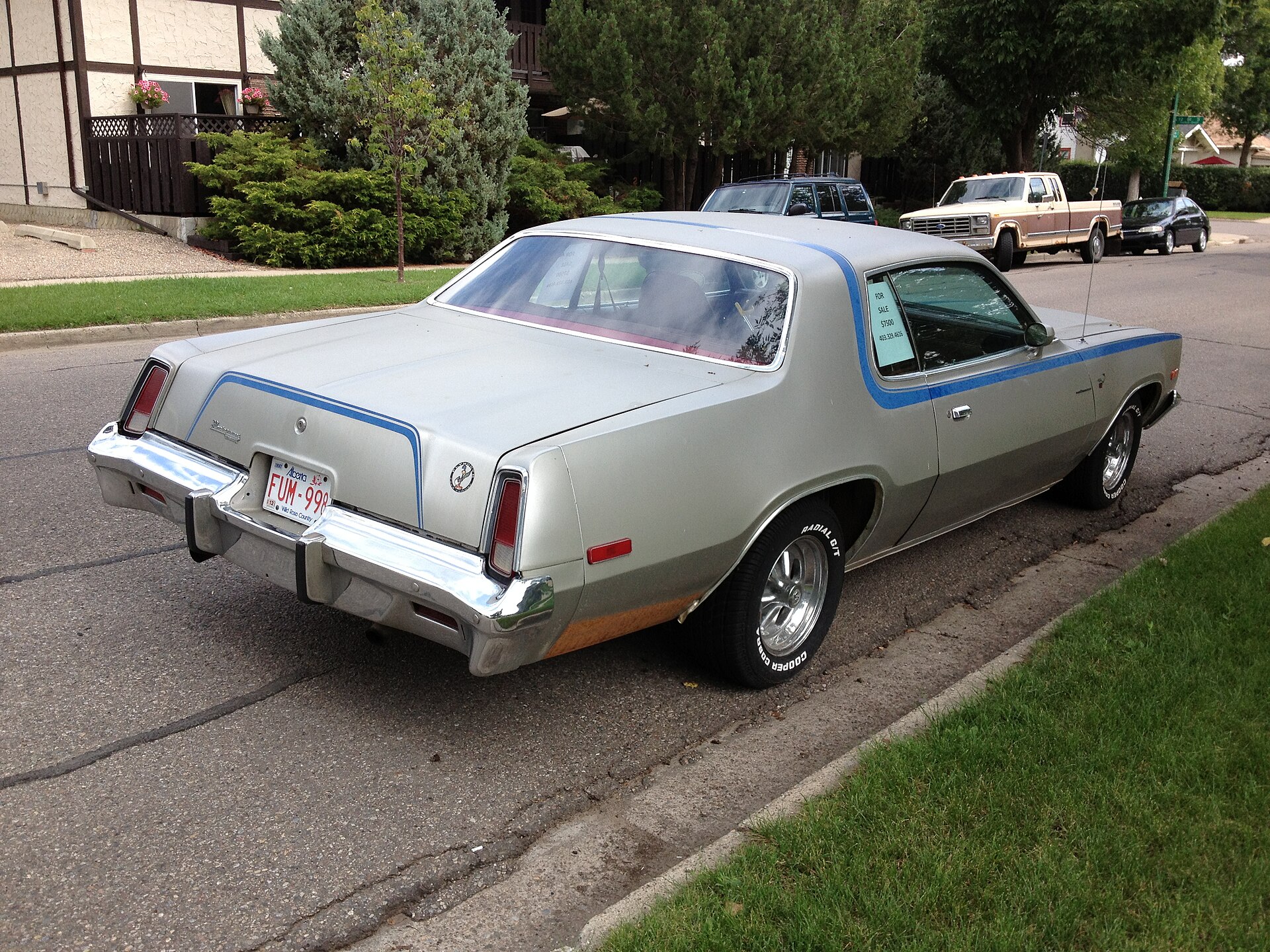
- Road Runner III 1975 · Coupe · 108–190 kW (147–258 PS)
- Road Runner IV 1976–1980 · Coupe
Newest first · 4 generations since 1968
- 1976 IV 1976–1980 · Coupe
-
1975
-
1971
-
1968


All generations by year: Road Runner IV (1976–1980) · Road Runner III (1975) · Road Runner II (1971–1974) · Road Runner I (1968–1970)
Which one is mine?
Pick the year of first registration to see which generation it is.
- Road Runner IV 1976–1980
- Road Runner III 1975
- Road Runner II 1971–1974
- Road Runner I 1968–1970
The Plymouth Road Runner is an American muscle car built by Chrysler's Plymouth division from the 1968 to the 1980 model year. It began as a stripped-out, low-priced Belvedere two-door with a 383 cubic-inch V8, a cartoon licence from Warner Bros. and a "beep, beep" horn. It sold about 45,000 cars in its first year, more than twice the plan, and was Motor Trend's Car of the Year for 1969.
In short
- 1968–1970: Belvedere-based B-body with a 383 V8 of about 250 kW (335 hp gross), optional 426 Hemi of about 317 kW (425 hp) and, from 1969, the 440 Six Barrel.
- Peak: 81,125 cars built in 1969, including 2,128 convertibles.
- 1970 Superbird: winged NASCAR homologation special, 1,935 built for the US market.
- From 1976 to 1980 the name was a trim package on the compact Volaré.

Specs by version
Engines
Performance
Show all 1 versions
| Version | 0–100 km/h |
|---|---|
| Road Runner I · 313 kW (426 PS) Coupe | 5.0 s 0–62 mph |
Verified Manufacturer and type-approval data from our catalog · Sources and methodology
A muscle car built down to a price
By 1967 muscle cars had become expensive, with options and trim pushing prices up. Plymouth's idea was the opposite: take its mid-size two-door, remove most of the comfort items, fit a big V8 and heavy-duty parts, and sell it for less than a Pontiac GTO or Plymouth's own GTX. Plymouth paid Warner Bros.-Seven Arts a licence fee for the Road Runner cartoon character and spent extra money developing a horn that went "beep, beep"; the horn cost Plymouth one fifth of the licence fee.

| Fact | Value |
|---|---|
| Maker | Plymouth (Chrysler Corporation), USA |
| Model years | 1968–1980 |
| Base | Belvedere/Satellite B-body (1968–1974), Fury (1975), Volaré (1976–1980) |
| Bodies | two-door coupé, hardtop, convertible (1969–1970) |
| Best year | 1969, 81,125 cars |
| Award | Motor Trend Car of the Year 1969 |
Plymouth's other famous muscle car of the period is covered on the Plymouth Barracuda page.
From 45,000 sales to a Volaré trim package
Plymouth expected to sell about 20,000 Road Runners in 1968 and sold about 45,000. A hardtop was added during the first year, and for 1969 a convertible followed, of which 2,128 were built, only ten with the Hemi. 1969 was the high point: 81,125 cars for the home market and the Motor Trend award. By our calculation that is 80% more than the first year's 45,000.

In 1970 sales fell by more than half, to about 41,000, as insurance companies added surcharges to muscle cars and the cheaper Duster 340 took buyers. The convertible ended that year after 834 cars. The 1971 car had a new, rounded "fuselage" body. Emission rules then cut power year by year: in 1972 ratings switched to SAE net figures and the Hemi was dropped, and in 1973 a 318 V8 of about 127 kW (170 hp net) became the base engine, although sales rose by about 40% that year.
In 1975 the Road Runner moved to the larger Fury body, selling only 7,183 cars, and from 1976 it became a trim and graphics package on the compact Volaré coupé. The last ones were built for the 1980 model year.
| Year | Event |
|---|---|
| 1968 | Launch on the Belvedere; about 45,000 sold |
| 1969 | Convertible added, 440 Six Barrel, Car of the Year, 81,125 built |
| 1970 | Superbird; sales about 41,000; last convertible |
| 1971 | New "fuselage" body; last year of the Hemi and 440+6 |
| 1972 | SAE net ratings, 400 V8 standard |
| 1973 | Square new styling, 318 V8 base engine |
| 1975 | Fury-based, 7,183 built |
| 1976–1980 | Volaré-based trim package; ends after 1980 |
Plain body, heavy-duty hardware
The first Road Runner kept the plain Belvedere body with a bench seat, rubber floor mats and a column-mounted gear selector on automatic cars. Spending went where it mattered for speed: heavy-duty suspension, bigger brakes and a strong rear axle. The 1968–1970 cars used Chrysler's unibody B platform with torsion-bar front suspension and leaf springs at the rear. Wide steel wheels and twin exhausts were standard, and a functional "Air Grabber" bonnet scoop became an option in 1969.

From 1971 the redesigned body was wider and smoother, with a narrower glass area. The 1973–1974 cars had squarer panels and heavier bumpers, as US crash rules required.
383, 440 Six Barrel and the 426 Hemi
The standard 1968 engine was a 383 cubic-inch (6.3-litre) V8 rated at about 250 kW (335 hp gross), with a four-speed manual as standard and the three-speed TorqueFlite automatic as an option. The 426 Hemi was an expensive option, rated at about 317 kW (425 hp gross). For 1969 Plymouth added the 440 cubic-inch (7.2-litre) "Six Barrel" with three two-barrel carburettors and about 291 kW (390 hp gross); about 1,432 were built that year.

In 1970 a heavy-duty three-speed manual replaced the four-speed as standard. The 1971 cars kept the Hemi and the 440+6 for the last time and added a 340, while the 383 was detuned to about 224 kW (300 hp). From 1972 the base engine was a 400, and the 440 was rated at about 209 kW (280 hp net).
Road Runner engine and performance data
| Parameter | Metric | Imperial |
|---|---|---|
| 383 V8 (1968) | 6.3 l, about 250 kW | 383 cu in, 335 hp gross |
| 426 Hemi | 7.0 l, about 317 kW | 426 cu in, 425 hp gross |
| 440 Six Barrel | 7.2 l, about 291 kW | 440 cu in, 390 hp gross |
| 440 (1972, net) | 7.2 l, about 209 kW | 440 cu in, 280 hp net |
| 318 V8 (1973, net) | 5.2 l, about 127 kW | 318 cu in, 170 hp net |
| Superbird Hemi 0–60 mph | 5.5 s | – |
| Superbird Hemi quarter-mile | 14.3 s at 167 km/h | 14.3 s at 104 mph |
| 1975 Road Runner top speed | 195 km/h | 121 mph |
Gross ratings (before 1972) measure an engine without accessories and are higher than the net figures that replaced them, so the drop in the table overstates the real loss. Compare these outputs with modern cars in the most powerful coupés ranking.

Convertible, Superbird and the later Road Runners
| Variant | Years | Body / purpose | Engine | Notes |
|---|---|---|---|---|
| Road Runner coupé and hardtop | 1968–1974 | two-door B-body | 383, 440, 426 Hemi; later 340, 400, 318 | main series |
| Road Runner convertible | 1969–1970 | open two-door | 383, 440, Hemi | 2,128 + 834 built |
| Road Runner Superbird | 1970 | NASCAR homologation | 440 Super Commando, 440+6, Hemi | 1,935 built for the US |
| GTX | 1967–1971 | upmarket sister model | 440, Hemi | better trimmed |
| Fury-based Road Runner | 1975 | larger B-body | 318 to 440 | 7,183 built |
| Volaré Road Runner | 1976–1980 | compact coupé trim | 225 six, 318, 360 | appearance package |
The Superbird was Plymouth's answer to the Dodge Charger Daytona. It had a pointed nose cone and a rear wing about 60 cm (two feet) tall, built so that Richard Petty would return to Plymouth for the 1970 NASCAR season. Of the 1,935 cars, 135 had the Hemi. NASCAR then changed its rules for 1971 to limit the engines of such aerodynamic cars, and the Superbird was built for one year only.
Collecting a Plymouth Road Runner today
The Road Runner showed that a muscle car could be cheap, and rivals followed with budget models of their own. It also became a film car: Dominic Toretto drives a 1970 Road Runner in the closing scenes of The Fast and the Furious: Tokyo Drift. Today the 1968–1971 cars, especially the Hemi, the 440 Six Barrel and the Superbird, are the collectible ones; the 1975–1980 cars are much cheaper and much slower.

A buyer should check:
- Authenticity: fender tags and VINs confirm the original engine and options; many Hemi and Superbird "clones" exist.
- Rust: rear quarter panels, the boot floor, the floor pans and the vinyl-roof edges.
- Drivetrain: the Dana 60 rear axle on four-speed Hemi and 440+6 cars, and the condition of the TorqueFlite.
- Parts: reproduction panels and trim are widely available for the B-body cars.
Other muscle cars of the period, such as the Pontiac GTO, are listed among the best classic cars of the 1960s.
Plymouth Road Runner evolution in numbers
Did you know?
- The Plymouth Road Runner ran for 12 years, from 1968 to 1980, over 4 generations in our catalog.
- The longest-running generation is the Road Runner IV (1976–1980): 4 years.
- The most powerful Plymouth Road Runner is not the newest: the Road Runner I (1968–1970) offered up to 317 kW (431 PS), the Road Runner III up to 190 kW (258 PS).
Most powerful version, kW
Figures from the 1cars catalog: power is the strongest version of each generation; generations without the figure are left out.
Image credits · Photos from Wikimedia Commons under free licences
- Plymouth Road Runner I · Photo: Jeremy from Sydney, Australia / Wikimedia Commons, CC BY 2.0
- Plymouth Road Runner II · Photo: Mr.choppers / Wikimedia Commons, CC BY-SA 3.0
- Plymouth Road Runner III · Photo: dave_7 from Lethbridge, Canada / Wikimedia Commons, CC BY 2.0
Rivals
Compare with…
Compare Plymouth Road Runner with
- Dodge Charger Daytona quick spec comparison
- Ford Gran Torino quick spec comparison
-
Classic
- Years
- 1969
- Body
- Coupe
- Power
- 177–276 kW (241–375 PS)
-
Classic
- Years
- 1972–1976
- Body
- Coupe
- Fuel
- Petrol
- Power
- 182 kW (247 PS)


Plymouth Road Runner in our rankings
- No. 6 of 26 · Quickest American cars, 0–100 (5.0 s)
- No. 39 of 730 · Biggest engines: cars (7,200 cc · top 6%)
- No. 17 of 144 · Most powerful cars of the 1960s (313 kW · top 12%)
- No. 31 of 229 · Biggest engines: coupes (7,200 cc · top 14%)
- No. 308 of 1112 · Most powerful cars (317 kW · top 28%)
- No. 111 of 384 · Quickest cars, 0–100 (5.0 s · top 30%)
Bigger engine than 94% of ranked cars in the 1CARS catalog (No. 39 of 730).
Plymouth Road Runner photos 16


Plymouth Road Runner videos 2

Plymouth Road Runner video 1

Video overview
FAQ
When was the Plymouth Road Runner produced?
Plymouth built the Road Runner from the 1968 to the 1980 model year. It started on the Belvedere B-body, moved to the Fury body for 1975 and ended as a trim package on the Volaré from 1976 to 1980.
How many Plymouth Road Runners were built?
About 45,000 were sold in 1968 and 81,125 built in 1969, the record year. Sales fell to about 41,000 in 1970, and 7,183 were built in 1975. The 1970 Superbird was built in 1,935 US examples.
What engine does the Plymouth Road Runner have?
The standard 1968 engine was a 383 V8 with about 250 kW (335 hp gross). Options were the 426 Hemi with about 317 kW (425 hp) and, from 1969, the 440 Six Barrel with about 291 kW (390 hp). Later cars used 340, 400, 318 and 360 V8s.
Why is it called the Road Runner?
Plymouth licensed the name and image of the Warner Bros. cartoon bird and developed a special horn that imitated its "beep, beep" call. The cartoon appeared on the badges and decals.
Is the Plymouth Road Runner collectable, and what should buyers check?
Yes, especially 1968–1971 cars with the Hemi or 440 Six Barrel and the 1970 Superbird. Check the fender tag and VIN for the original engine, look for rust in the rear quarters and floors, and inspect the rear axle and gearbox.
Data sources
Data checked by an editor against the sources below.
- The text of this article (1cars archive)
- Wikipedia - Plymouth Road Runner


