 Chevrolet Camaro VI (2016–2024)
Specs, engines, safety and known problems
Published Sources (7) Report an error
By Sarah Whitmore, Senior Automotive Writer Reviewed by Oleksandr Hnatiuk
- Power
- 205–485 kW (279–659 PS)
- New price
- from about €40,400 (2016)
- Boot
- 258 l
- Generation
- 6 of 6
Model timeline
Where the VI sits in the Camaro story
Predecessor Camaro V (2009–2015)
Newest first · 6 generations since 1966
-
2016
-
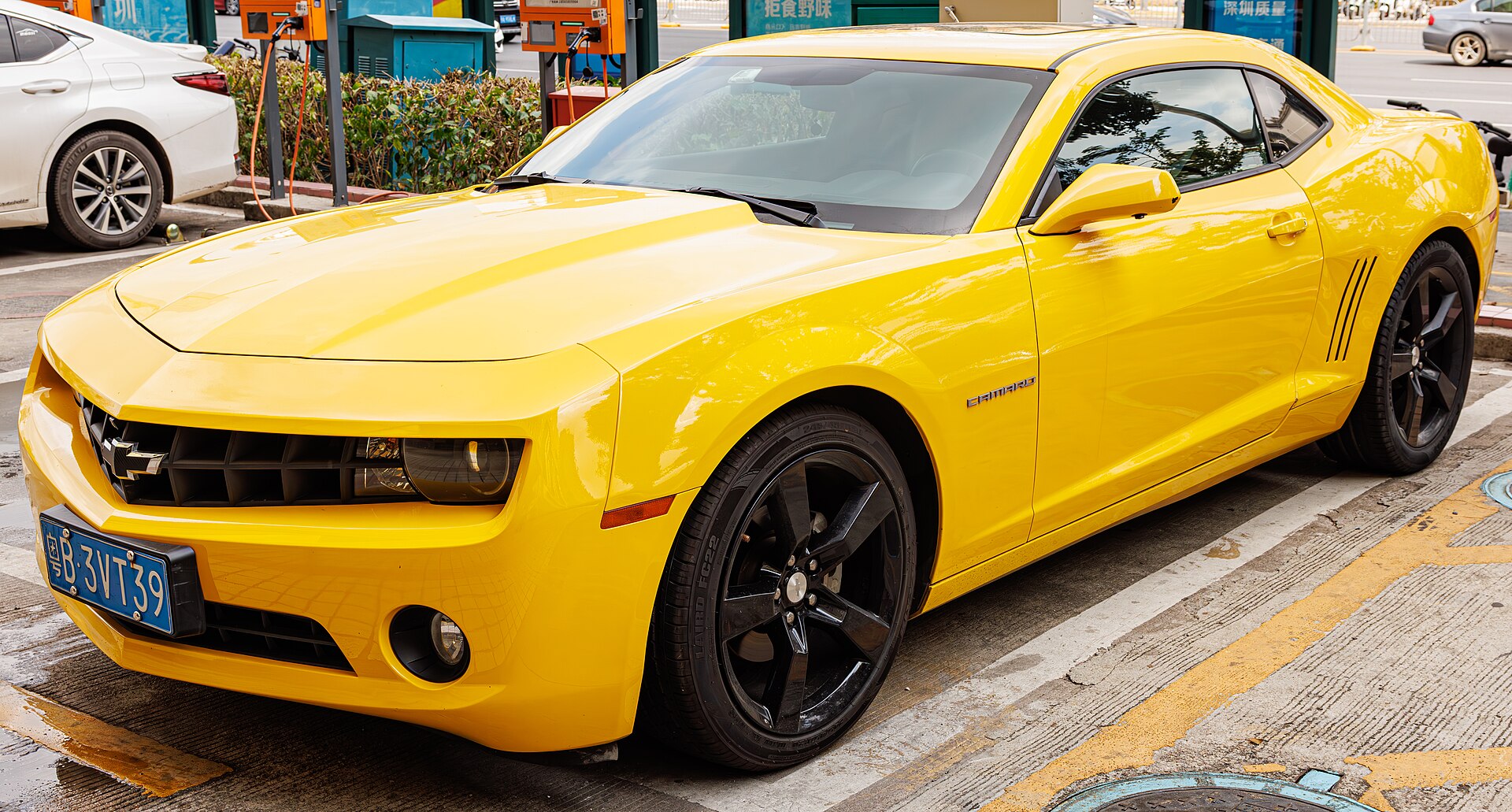
2009
-
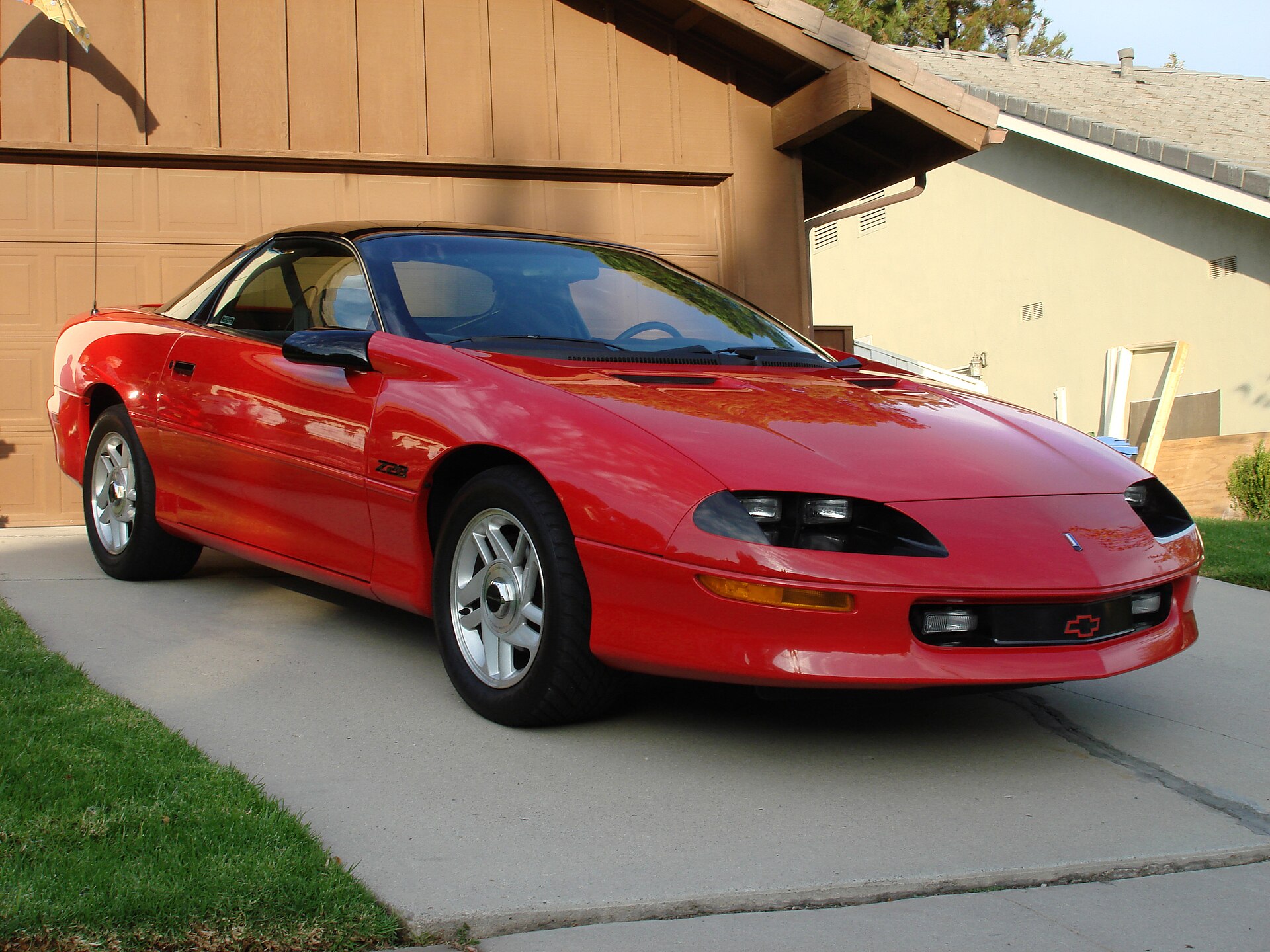
1993
-
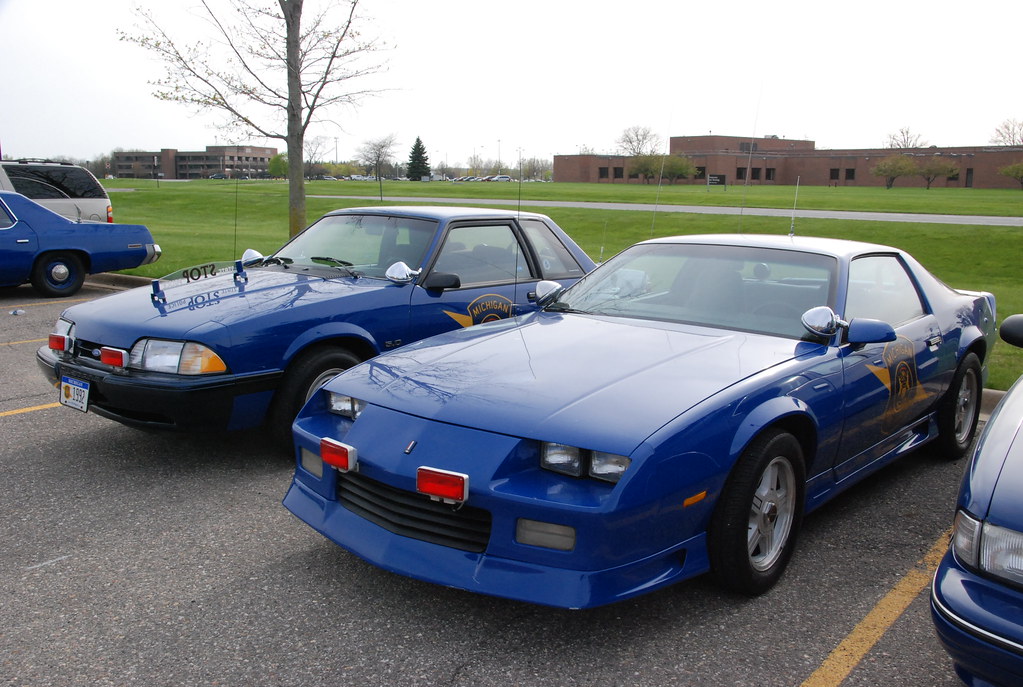
1982
-
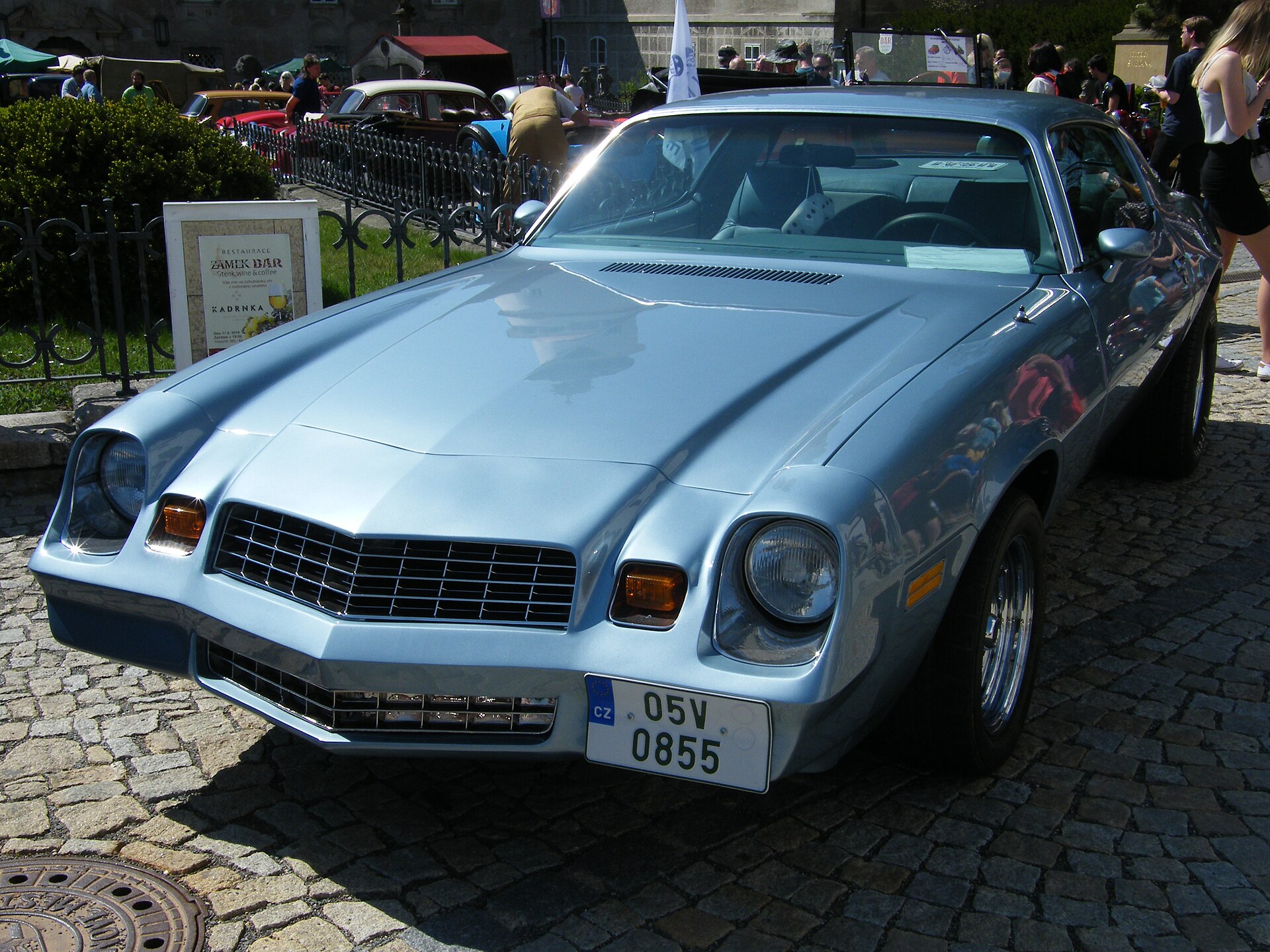
1970
-
1966
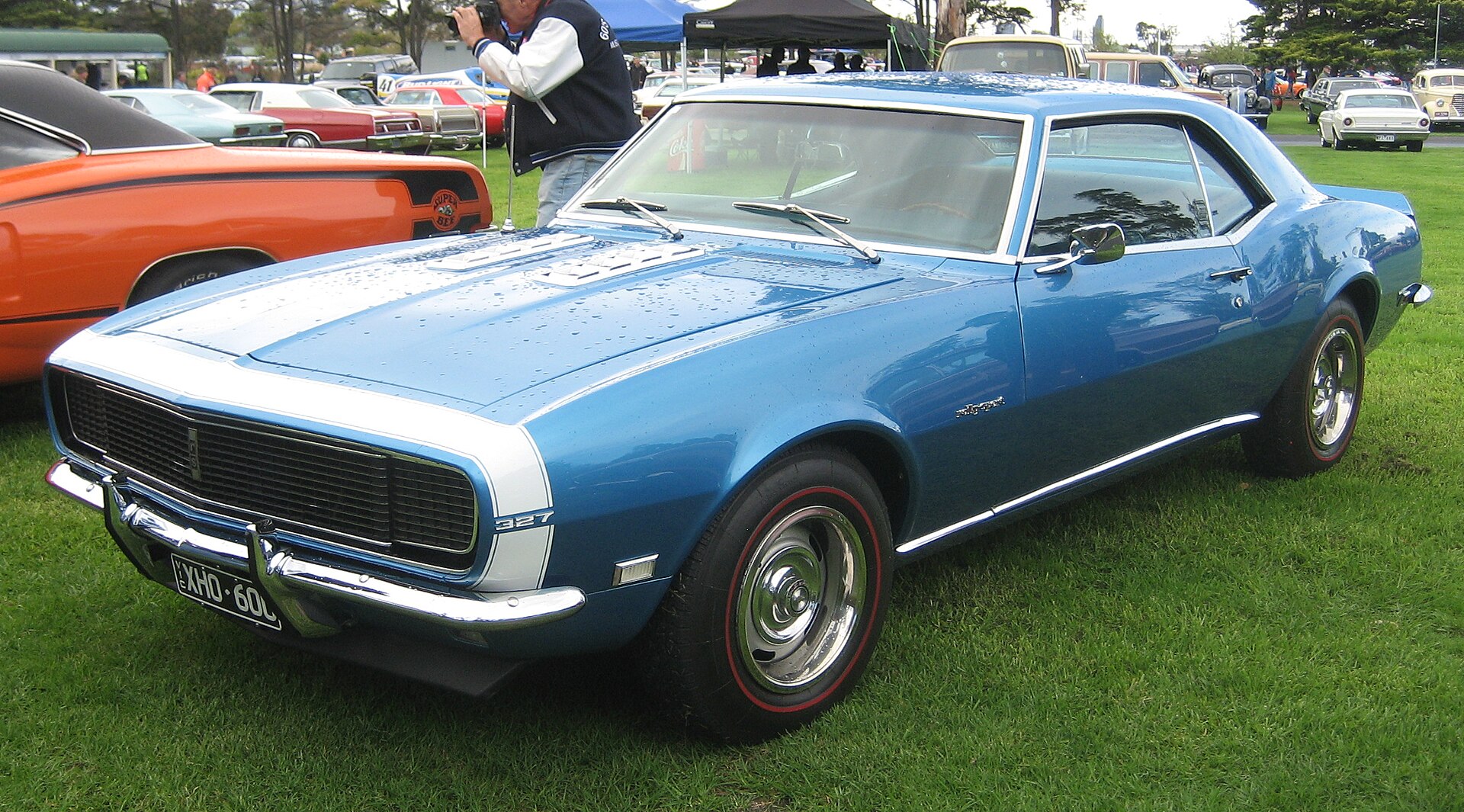


All generations by year: Camaro VI (2016–2024) · Camaro V (2009–2015) · Camaro IV (1993–2002) · Camaro III (1982–1992) · Camaro II (1970–1981) · Camaro I (1966–1969)
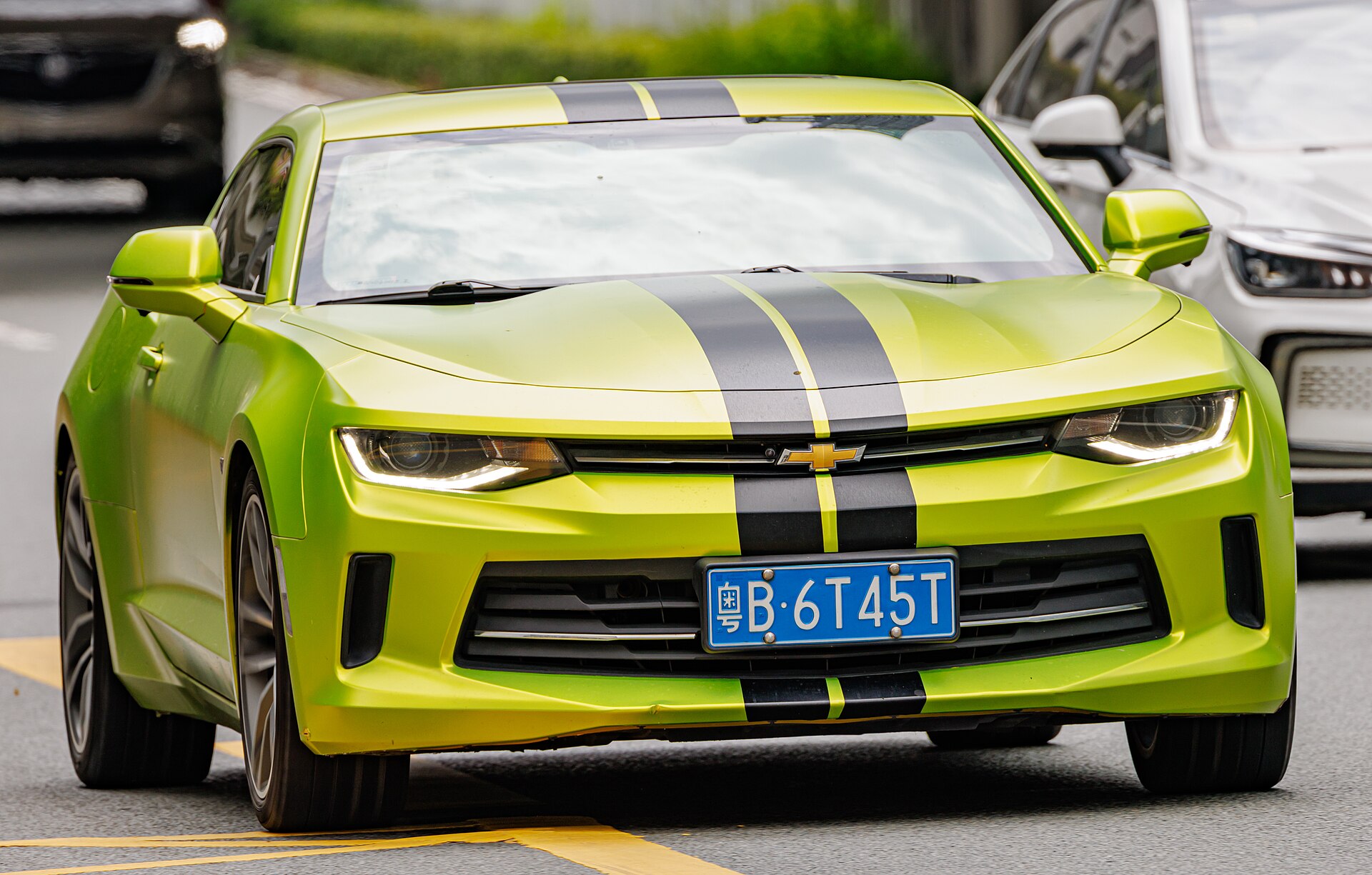
The sixth-generation Chevrolet Camaro was revealed on 16 May 2015 and built at Lansing Grand River Assembly in Michigan from October 2015 until 14 December 2023, covering the 2016 to 2024 model years. Moving to GM's Alpha platform made it smaller and lighter than the car it replaced, and the range ran from a 2.0-litre turbo four to the supercharged ZL1.
In short
- Model years 2016–2024; coupé and convertible, rear-wheel drive only, built in Lansing, Michigan.
- Four engines: 2.0 turbo four, 3.6 V6, 6.2 V8 (SS) and supercharged 6.2 V8 (ZL1) with 485 kW (650 hp).
- More than 91 kg (200 lb) lighter than the fifth generation with comparable equipment and engine.
- IIHS: Good in the driver-side small overlap test for 2016–23; NHTSA: five stars overall for the 2017–22 coupé.
Size at a glance
Chevrolet Camaro V
The Chevrolet Camaro VI is 53 mm shorter, 21 mm narrower and 28 mm lower than the Chevrolet Camaro V.
| Dimensions | Chevrolet Camaro VI | Chevrolet Camaro V | Difference |
|---|---|---|---|
| Length | 4,783 mm188.3 in | 4,836 mm190.4 in | −53 mm−2.1 in |
| Width | 1,897 mm74.7 in | 1,918 mm75.5 in | −21 mm−0.8 in |
| Height | 1,349 mm53.1 in | 1,377 mm54.2 in | −28 mm−1.1 in |
| Wheelbase | 2,812 mm110.7 in | 2,852 mm112.3 in | −40 mm−1.6 in |
| Boot | 258 L9.1 cu ft | — | — |
Camaro VI specs by version
Engines
| Version | Engine | Gearbox | Drive | Production years |
|---|---|---|---|---|
| 2 L 4 cyl Automatic (S8) · 2023 (EPA) | 2.0 l · 4 cyl 2,000 cc | 8-sp Automatic | Rear-wheel drive | 2023 |
| 2 L 4 cyl Manual 6-spd · 2023 (EPA) | 2.0 l · 4 cyl 2,000 cc | 6-sp Manual | Rear-wheel drive | 2023 |
| 2 L 4 cyl Automatic (S8) · 2022 (EPA) | 2.0 l · 4 cyl 2,000 cc | 8-sp Automatic | Rear-wheel drive | 2022 |
| 2 L 4 cyl Manual 6-spd · 2022 (EPA) | 2.0 l · 4 cyl 2,000 cc | 6-sp Manual | Rear-wheel drive | 2022 |
| 2 L 4 cyl Automatic (S8) · 2021 (EPA) | 2.0 l · 4 cyl 2,000 cc | 8-sp Automatic | Rear-wheel drive | 2021 |
| 2 L 4 cyl Manual 6-spd · 2021 (EPA) | 2.0 l · 4 cyl 2,000 cc | 6-sp Manual | Rear-wheel drive | 2021 |
| 2 L 4 cyl Automatic (S8) · 2020 (EPA) | 2.0 l · 4 cyl 2,000 cc | 8-sp Automatic | Rear-wheel drive | 2020 |
| 2 L 4 cyl Manual 6-spd · 2020 (EPA) | 2.0 l · 4 cyl 2,000 cc | 6-sp Manual | Rear-wheel drive | 2020 |
| 2 L 4 cyl Automatic (S8) · 2019 (EPA) | 2.0 l · 4 cyl 2,000 cc | 8-sp Automatic | Rear-wheel drive | 2019 |
| 2 L 4 cyl Manual 6-spd · 2019 (EPA) | 2.0 l · 4 cyl 2,000 cc | 6-sp Manual | Rear-wheel drive | 2019 |
| 2 L 4 cyl Automatic (S8) · 2018 (EPA) | 2.0 l · 4 cyl 2,000 cc | 8-sp Automatic | Rear-wheel drive | 2018 |
| 2 L 4 cyl Manual 6-spd · 2018 (EPA) | 2.0 l · 4 cyl 2,000 cc | 6-sp Manual | Rear-wheel drive | 2018 |
| 2 L 4 cyl Automatic (S8) · 2017 (EPA) | 2.0 l · 4 cyl 2,000 cc | 8-sp Automatic | Rear-wheel drive | 2017 |
| 2 L 4 cyl Manual 6-spd · 2017 (EPA) | 2.0 l · 4 cyl 2,000 cc | 6-sp Manual | Rear-wheel drive | 2017 |
| 3.6 L 6 cyl Automatic (S10) · 2024 (EPA) | 3.6 l · 6 cyl 3,600 cc | 10-sp Automatic | Rear-wheel drive | 2024 |
| 3.6 L 6 cyl Manual 6-spd · 2024 (EPA) | 3.6 l · 6 cyl 3,600 cc | 6-sp Manual | Rear-wheel drive | 2024 |
| 3.6 L 6 cyl Automatic (S10) · 2023 (EPA) | 3.6 l · 6 cyl 3,600 cc | 10-sp Automatic | Rear-wheel drive | 2023 |
| 3.6 L 6 cyl Manual 6-spd · 2023 (EPA) | 3.6 l · 6 cyl 3,600 cc | 6-sp Manual | Rear-wheel drive | 2023 |
| 3.6 L 6 cyl Automatic (S10) · 2022 (EPA) | 3.6 l · 6 cyl 3,600 cc | 10-sp Automatic | Rear-wheel drive | 2022 |
| 3.6 L 6 cyl Manual 6-spd · 2022 (EPA) | 3.6 l · 6 cyl 3,600 cc | 6-sp Manual | Rear-wheel drive | 2022 |
| 3.6 L 6 cyl Automatic (S10) · 2021 (EPA) | 3.6 l · 6 cyl 3,600 cc | 10-sp Automatic | Rear-wheel drive | 2021 |
| 3.6 L 6 cyl Manual 6-spd · 2021 (EPA) | 3.6 l · 6 cyl 3,600 cc | 6-sp Manual | Rear-wheel drive | 2021 |
| 3.6 L 6 cyl Automatic (S10) · 2020 (EPA) | 3.6 l · 6 cyl 3,600 cc | 10-sp Automatic | Rear-wheel drive | 2020 |
| 3.6 L 6 cyl Manual 6-spd · 2020 (EPA) | 3.6 l · 6 cyl 3,600 cc | 6-sp Manual | Rear-wheel drive | 2020 |
| 3.6 L 6 cyl Automatic (S8) · 2019 (EPA) | 3.6 l · 6 cyl 3,600 cc | 8-sp Automatic | Rear-wheel drive | 2019 |
| 3.6 L 6 cyl Manual 6-spd · 2019 (EPA) | 3.6 l · 6 cyl 3,600 cc | 6-sp Manual | Rear-wheel drive | 2019 |
| 3.6 L 6 cyl Automatic (S8) · 2018 (EPA) | 3.6 l · 6 cyl 3,600 cc | 8-sp Automatic | Rear-wheel drive | 2018 |
| 3.6 L 6 cyl Manual 6-spd · 2018 (EPA) | 3.6 l · 6 cyl 3,600 cc | 6-sp Manual | Rear-wheel drive | 2018 |
| 3.6 L 6 cyl Automatic (S8) · 2017 (EPA) | 3.6 l · 6 cyl 3,600 cc | 8-sp Automatic | Rear-wheel drive | 2017 |
| 3.6 L 6 cyl Manual 6-spd · 2017 (EPA) | 3.6 l · 6 cyl 3,600 cc | 6-sp Manual | Rear-wheel drive | 2017 |
| 6.2 L 8 cyl Automatic (S10) · 2024 (EPA) | 6.2 l · 8 cyl 6,200 cc | 10-sp Automatic | Rear-wheel drive | 2024 |
| 6.2 L 8 cyl Automatic (S10) · 2024 (EPA) | 6.2 l · 8 cyl 6,200 cc | 10-sp Automatic | Rear-wheel drive | 2024 |
| 6.2 L 8 cyl Manual 6-spd · 2024 (EPA) | 6.2 l · 8 cyl 6,200 cc | 6-sp Manual | Rear-wheel drive | 2024 |
| 6.2 L 8 cyl Manual 6-spd · 2024 (EPA) | 6.2 l · 8 cyl 6,200 cc | 6-sp Manual | Rear-wheel drive | 2024 |
| 6.2 L 8 cyl Automatic (S10) · 2023 (EPA) | 6.2 l · 8 cyl 6,200 cc | 10-sp Automatic | Rear-wheel drive | 2023 |
| 6.2 L 8 cyl Automatic (S10) · 2023 (EPA) | 6.2 l · 8 cyl 6,200 cc | 10-sp Automatic | Rear-wheel drive | 2023 |
| 6.2 L 8 cyl Manual 6-spd · 2023 (EPA) | 6.2 l · 8 cyl 6,200 cc | 6-sp Manual | Rear-wheel drive | 2023 |
| 6.2 L 8 cyl Manual 6-spd · 2023 (EPA) | 6.2 l · 8 cyl 6,200 cc | 6-sp Manual | Rear-wheel drive | 2023 |
| 6.2 L 8 cyl Automatic (S10) · 2022 (EPA) | 6.2 l · 8 cyl 6,200 cc | 10-sp Automatic | Rear-wheel drive | 2022 |
| 6.2 L 8 cyl Automatic (S10) · 2022 (EPA) | 6.2 l · 8 cyl 6,200 cc | 10-sp Automatic | Rear-wheel drive | 2022 |
| 6.2 L 8 cyl Manual 6-spd · 2022 (EPA) | 6.2 l · 8 cyl 6,200 cc | 6-sp Manual | Rear-wheel drive | 2022 |
| 6.2 L 8 cyl Manual 6-spd · 2022 (EPA) | 6.2 l · 8 cyl 6,200 cc | 6-sp Manual | Rear-wheel drive | 2022 |
| 6.2 L 8 cyl Automatic (S10) · 2021 (EPA) | 6.2 l · 8 cyl 6,200 cc | 10-sp Automatic | Rear-wheel drive | 2021 |
| 6.2 L 8 cyl Automatic (S10) · 2021 (EPA) | 6.2 l · 8 cyl 6,200 cc | 10-sp Automatic | Rear-wheel drive | 2021 |
| 6.2 L 8 cyl Manual 6-spd · 2021 (EPA) | 6.2 l · 8 cyl 6,200 cc | 6-sp Manual | Rear-wheel drive | 2021 |
| 6.2 L 8 cyl Manual 6-spd · 2021 (EPA) | 6.2 l · 8 cyl 6,200 cc | 6-sp Manual | Rear-wheel drive | 2021 |
| 6.2 L 8 cyl Automatic (S10) · 2020 (EPA) | 6.2 l · 8 cyl 6,200 cc | 10-sp Automatic | Rear-wheel drive | 2020 |
| 6.2 L 8 cyl Automatic (S10) · 2020 (EPA) | 6.2 l · 8 cyl 6,200 cc | 10-sp Automatic | Rear-wheel drive | 2020 |
| 6.2 L 8 cyl Manual 6-spd · 2020 (EPA) | 6.2 l · 8 cyl 6,200 cc | 6-sp Manual | Rear-wheel drive | 2020 |
| 6.2 L 8 cyl Manual 6-spd · 2020 (EPA) | 6.2 l · 8 cyl 6,200 cc | 6-sp Manual | Rear-wheel drive | 2020 |
| 6.2 L 8 cyl Automatic (S10) · 2019 (EPA) | 6.2 l · 8 cyl 6,200 cc | 10-sp Automatic | Rear-wheel drive | 2019 |
| 6.2 L 8 cyl Automatic (S10) · 2019 (EPA) | 6.2 l · 8 cyl 6,200 cc | 10-sp Automatic | Rear-wheel drive | 2019 |
| 6.2 L 8 cyl Manual 6-spd · 2019 (EPA) | 6.2 l · 8 cyl 6,200 cc | 6-sp Manual | Rear-wheel drive | 2019 |
| 6.2 L 8 cyl Manual 6-spd · 2019 (EPA) | 6.2 l · 8 cyl 6,200 cc | 6-sp Manual | Rear-wheel drive | 2019 |
| 6.2 L 8 cyl Automatic (S10) · 2018 (EPA) | 6.2 l · 8 cyl 6,200 cc | 10-sp Automatic | Rear-wheel drive | 2018 |
| 6.2 L 8 cyl Automatic (S8) · 2018 (EPA) | 6.2 l · 8 cyl 6,200 cc | 8-sp Automatic | Rear-wheel drive | 2018 |
| 6.2 L 8 cyl Manual 6-spd · 2018 (EPA) | 6.2 l · 8 cyl 6,200 cc | 6-sp Manual | Rear-wheel drive | 2018 |
| 6.2 L 8 cyl Manual 6-spd · 2018 (EPA) | 6.2 l · 8 cyl 6,200 cc | 6-sp Manual | Rear-wheel drive | 2018 |
| 6.2 L 8 cyl Automatic (S10) · 2017 (EPA) | 6.2 l · 8 cyl 6,200 cc | 10-sp Automatic | Rear-wheel drive | 2017 |
| 6.2 L 8 cyl Automatic (S8) · 2017 (EPA) | 6.2 l · 8 cyl 6,200 cc | 8-sp Automatic | Rear-wheel drive | 2017 |
| 6.2 L 8 cyl Manual 6-spd · 2017 (EPA) | 6.2 l · 8 cyl 6,200 cc | 6-sp Manual | Rear-wheel drive | 2017 |
| 6.2 L 8 cyl Manual 6-spd · 2017 (EPA) | 6.2 l · 8 cyl 6,200 cc | 6-sp Manual | Rear-wheel drive | 2017 |
| 2.0 turbo I4 | — | — | Rear-wheel drive | — |
| 3.6 V6 | — | — | Rear-wheel drive | — |
| 6.2 V8 (SS, LT1) | 8 cyl | 10-sp Automatic | Rear-wheel drive | — |
| 6.2 supercharged V8 (ZL1) | — | — | Rear-wheel drive | — |
Performance
Show all 62 versions
| Version | Fuel consumption |
|---|---|
| 2 L 4 cyl Automatic (S8) · 2023 (EPA) | 9.4 l/100 km25.0 mpg US · 30.1 mpg UK |
| 2 L 4 cyl Manual 6-spd · 2023 (EPA) | 10.7 l/100 km22.0 mpg US · 26.4 mpg UK |
| 2 L 4 cyl Automatic (S8) · 2022 (EPA) | 9.4 l/100 km25.0 mpg US · 30.1 mpg UK |
| 2 L 4 cyl Manual 6-spd · 2022 (EPA) | 10.7 l/100 km22.0 mpg US · 26.4 mpg UK |
| 2 L 4 cyl Automatic (S8) · 2021 (EPA) | 9.4 l/100 km25.0 mpg US · 30.1 mpg UK |
| 2 L 4 cyl Manual 6-spd · 2021 (EPA) | 10.7 l/100 km22.0 mpg US · 26.4 mpg UK |
| 2 L 4 cyl Automatic (S8) · 2020 (EPA) | 9.4 l/100 km25.0 mpg US · 30.1 mpg UK |
| 2 L 4 cyl Manual 6-spd · 2020 (EPA) | 10.2 l/100 km23.1 mpg US · 27.7 mpg UK |
| 2 L 4 cyl Automatic (S8) · 2019 (EPA) | 9.4 l/100 km25.0 mpg US · 30.1 mpg UK |
| 2 L 4 cyl Manual 6-spd · 2019 (EPA) | 10.2 l/100 km23.1 mpg US · 27.7 mpg UK |
| 2 L 4 cyl Automatic (S8) · 2018 (EPA) | 9.4 l/100 km25.0 mpg US · 30.1 mpg UK |
| 2 L 4 cyl Manual 6-spd · 2018 (EPA) | 10.2 l/100 km23.1 mpg US · 27.7 mpg UK |
| 2 L 4 cyl Automatic (S8) · 2017 (EPA) | 9.4 l/100 km25.0 mpg US · 30.1 mpg UK |
| 2 L 4 cyl Manual 6-spd · 2017 (EPA) | 10.2 l/100 km23.1 mpg US · 27.7 mpg UK |
| 3.6 L 6 cyl Automatic (S10) · 2024 (EPA) | 10.7 l/100 km22.0 mpg US · 26.4 mpg UK |
| 3.6 L 6 cyl Manual 6-spd · 2024 (EPA) | 11.8 l/100 km19.9 mpg US · 23.9 mpg UK |
| 3.6 L 6 cyl Automatic (S10) · 2023 (EPA) | 10.7 l/100 km22.0 mpg US · 26.4 mpg UK |
| 3.6 L 6 cyl Manual 6-spd · 2023 (EPA) | 11.8 l/100 km19.9 mpg US · 23.9 mpg UK |
| 3.6 L 6 cyl Automatic (S10) · 2022 (EPA) | 10.7 l/100 km22.0 mpg US · 26.4 mpg UK |
| 3.6 L 6 cyl Manual 6-spd · 2022 (EPA) | 11.8 l/100 km19.9 mpg US · 23.9 mpg UK |
| 3.6 L 6 cyl Automatic (S10) · 2021 (EPA) | 10.7 l/100 km22.0 mpg US · 26.4 mpg UK |
| 3.6 L 6 cyl Manual 6-spd · 2021 (EPA) | 11.8 l/100 km19.9 mpg US · 23.9 mpg UK |
| 3.6 L 6 cyl Automatic (S10) · 2020 (EPA) | 10.7 l/100 km22.0 mpg US · 26.4 mpg UK |
| 3.6 L 6 cyl Manual 6-spd · 2020 (EPA) | 11.8 l/100 km19.9 mpg US · 23.9 mpg UK |
| 3.6 L 6 cyl Automatic (S8) · 2019 (EPA) | 10.7 l/100 km22.0 mpg US · 26.4 mpg UK |
| 3.6 L 6 cyl Manual 6-spd · 2019 (EPA) | 11.8 l/100 km19.9 mpg US · 23.9 mpg UK |
| 3.6 L 6 cyl Automatic (S8) · 2018 (EPA) | 10.2 l/100 km23.1 mpg US · 27.7 mpg UK |
| 3.6 L 6 cyl Manual 6-spd · 2018 (EPA) | 11.8 l/100 km19.9 mpg US · 23.9 mpg UK |
| 3.6 L 6 cyl Automatic (S8) · 2017 (EPA) | 10.7 l/100 km22.0 mpg US · 26.4 mpg UK |
| 3.6 L 6 cyl Manual 6-spd · 2017 (EPA) | 11.8 l/100 km19.9 mpg US · 23.9 mpg UK |
| 6.2 L 8 cyl Automatic (S10) · 2024 (EPA) | 14.7 l/100 km16.0 mpg US · 19.2 mpg UK |
| 6.2 L 8 cyl Automatic (S10) · 2024 (EPA) | 11.8 l/100 km19.9 mpg US · 23.9 mpg UK |
| 6.2 L 8 cyl Manual 6-spd · 2024 (EPA) | 14.7 l/100 km16.0 mpg US · 19.2 mpg UK |
| 6.2 L 8 cyl Manual 6-spd · 2024 (EPA) | 12.4 l/100 km19.0 mpg US · 22.8 mpg UK |
| 6.2 L 8 cyl Automatic (S10) · 2023 (EPA) | 14.7 l/100 km16.0 mpg US · 19.2 mpg UK |
| 6.2 L 8 cyl Automatic (S10) · 2023 (EPA) | 11.8 l/100 km19.9 mpg US · 23.9 mpg UK |
| 6.2 L 8 cyl Manual 6-spd · 2023 (EPA) | 14.7 l/100 km16.0 mpg US · 19.2 mpg UK |
| 6.2 L 8 cyl Manual 6-spd · 2023 (EPA) | 12.4 l/100 km19.0 mpg US · 22.8 mpg UK |
| 6.2 L 8 cyl Automatic (S10) · 2022 (EPA) | 14.7 l/100 km16.0 mpg US · 19.2 mpg UK |
| 6.2 L 8 cyl Automatic (S10) · 2022 (EPA) | 11.8 l/100 km19.9 mpg US · 23.9 mpg UK |
| 6.2 L 8 cyl Manual 6-spd · 2022 (EPA) | 14.7 l/100 km16.0 mpg US · 19.2 mpg UK |
| 6.2 L 8 cyl Manual 6-spd · 2022 (EPA) | 12.4 l/100 km19.0 mpg US · 22.8 mpg UK |
| 6.2 L 8 cyl Automatic (S10) · 2021 (EPA) | 14.7 l/100 km16.0 mpg US · 19.2 mpg UK |
| 6.2 L 8 cyl Automatic (S10) · 2021 (EPA) | 11.8 l/100 km19.9 mpg US · 23.9 mpg UK |
| 6.2 L 8 cyl Manual 6-spd · 2021 (EPA) | 14.7 l/100 km16.0 mpg US · 19.2 mpg UK |
| 6.2 L 8 cyl Manual 6-spd · 2021 (EPA) | 12.4 l/100 km19.0 mpg US · 22.8 mpg UK |
| 6.2 L 8 cyl Automatic (S10) · 2020 (EPA) | 14.7 l/100 km16.0 mpg US · 19.2 mpg UK |
| 6.2 L 8 cyl Automatic (S10) · 2020 (EPA) | 11.8 l/100 km19.9 mpg US · 23.9 mpg UK |
| 6.2 L 8 cyl Manual 6-spd · 2020 (EPA) | 14.7 l/100 km16.0 mpg US · 19.2 mpg UK |
| 6.2 L 8 cyl Manual 6-spd · 2020 (EPA) | 12.4 l/100 km19.0 mpg US · 22.8 mpg UK |
| 6.2 L 8 cyl Automatic (S10) · 2019 (EPA) | 14.7 l/100 km16.0 mpg US · 19.2 mpg UK |
| 6.2 L 8 cyl Automatic (S10) · 2019 (EPA) | 11.8 l/100 km19.9 mpg US · 23.9 mpg UK |
| 6.2 L 8 cyl Manual 6-spd · 2019 (EPA) | 12.4 l/100 km19.0 mpg US · 22.8 mpg UK |
| 6.2 L 8 cyl Manual 6-spd · 2019 (EPA) | 14.7 l/100 km16.0 mpg US · 19.2 mpg UK |
| 6.2 L 8 cyl Automatic (S10) · 2018 (EPA) | 15.7 l/100 km15.0 mpg US · 18.0 mpg UK |
| 6.2 L 8 cyl Automatic (S8) · 2018 (EPA) | 11.8 l/100 km19.9 mpg US · 23.9 mpg UK |
| 6.2 L 8 cyl Manual 6-spd · 2018 (EPA) | 14.7 l/100 km16.0 mpg US · 19.2 mpg UK |
| 6.2 L 8 cyl Manual 6-spd · 2018 (EPA) | 12.4 l/100 km19.0 mpg US · 22.8 mpg UK |
| 6.2 L 8 cyl Automatic (S10) · 2017 (EPA) | 15.7 l/100 km15.0 mpg US · 18.0 mpg UK |
| 6.2 L 8 cyl Automatic (S8) · 2017 (EPA) | 11.8 l/100 km19.9 mpg US · 23.9 mpg UK |
| 6.2 L 8 cyl Manual 6-spd · 2017 (EPA) | 12.4 l/100 km19.0 mpg US · 22.8 mpg UK |
| 6.2 L 8 cyl Manual 6-spd · 2017 (EPA) | 14.7 l/100 km16.0 mpg US · 19.2 mpg UK |
Dimensions and weight
Verified Manufacturer and type-approval data from our catalog · Sources and methodology
Safety
-
NHTSA 2022
US NCAP (NHTSA)
Stars from different years and organisations are not directly comparable: test protocols change every few years.
From Zeta to Alpha: what changed against the fifth generation
The fifth-generation Camaro sat on the large Zeta platform developed with Holden. For 2016 Chevrolet moved the car to Alpha, the rear-drive architecture of the Cadillac ATS and CTS, although GM said about 70 per cent of the Camaro's architectural parts were unique to it.
The new car kept the long-bonnet shape but shrank in every direction. Against the 2015 model it is about 57 mm shorter, 23 mm narrower and 31 mm lower, and the wheelbase dropped from 2,852 mm to 2,812 mm. The front suspension changed from a multi-link design to MacPherson struts.
The engine line-up changed too. A turbocharged 2.0-litre four-cylinder became the entry engine, the V6 moved to the newer LGX, and the SS took the LT1 V8 from the Corvette family in place of the LS3 and L99. The full story of the earlier cars is in the overview of all Camaro generations.
Trims, interior and the 2019 facelift
Launch trims were LT (1LT and 2LT) and SS (1SS and 2SS), with a cheaper 1LS added for 2017. All versions had automatic air conditioning, cruise control, Apple CarPlay and seven airbags. The 2SS added heated and ventilated leather seats, blind-spot monitoring, Bose audio and wireless charging.
The car's history splits into three phases:
- 2016–2018: original styling. The 1LE track package returned for 2017 on V6 and V8 coupés, the ZL1 and ZL1 1LE arrived, and a 50th Anniversary edition in Nightfall Gray marked half a century of the nameplate.
- 2019–2020: a mid-cycle update brought new infotainment, a 10-speed automatic for the SS and a 1LE option for the four-cylinder. Critics disliked the 2019 SS nose, so for 2020 Chevrolet gave it a body-coloured bumper and moved the bowtie to the upper grille. An LT1 trim, using the same V8 as the SS, and a 3LT arrived the same year, while the 2LT lost some equipment.
- 2021–2024: the 1LE was dropped from four- and six-cylinder cars for 2022. The 2.0 and 1LS disappeared for 2024, the final year, which brought a Collector's Edition and a 56-car ZL1 Garage 56 Edition.
The sixth generation was the 2016 Indianapolis 500 pace car and the MotorTrend Car of the Year for 2016.
Sixth-generation Camaro engines, gearboxes and the ZL1
All four engines drive the rear wheels. Figures are SAE net, with kW first.
| Engine | Code | Power | Torque | Gearboxes |
|---|---|---|---|---|
| 2.0 turbo I4 | LTG | 205 kW (275 hp) at 5,600 rpm | 400 Nm (295 lb-ft) at 3,000 rpm | 6-speed manual, 8-speed auto |
| 3.6 V6 | LGX | 250 kW (335 hp) at 6,800 rpm | 385 Nm (284 lb-ft) at 5,300 rpm | 6-speed manual, 8-speed auto, 10-speed auto from 2020 |
| 6.2 V8 (SS, LT1) | LT1 | 339 kW (455 hp) at 6,000 rpm | 617 Nm (455 lb-ft) at 4,400 rpm | 6-speed manual, 8-speed auto to 2018, 10-speed auto from 2019 |
| 6.2 supercharged V8 (ZL1) | LT4 | 485 kW (650 hp) at 6,400 rpm | 881 Nm (650 lb-ft) at 3,600 rpm | 6-speed manual, 10-speed auto |
The Camaro ZL1 went on sale for 2017. Beyond the LT4, it brought Magnetic Ride suspension, Recaro seats, Brembo brakes with 390 mm (15.35 in) front discs and 11 heat exchangers to keep engine, gearbox and differential cool. Chevrolet claimed 0–60 mph in 3.5 seconds, a quarter mile in 11.4 seconds at 204 km/h (127 mph) and a top speed of 319 km/h (198 mph).
The ZL1 1LE is the track version. It is about 27 kg (60 lb) lighter than the standard ZL1 and uses Multimatic spool-valve dampers, adjustable top mounts and springs about three times stiffer. Its aerodynamics generate about 136 kg (300 lb) of downforce at 241 km/h (150 mph). Chevrolet's own Nürburgring Nordschleife lap of 7:16.04 was 13.6 seconds quicker than the regular ZL1; both are manufacturer claims.
On lesser cars the 1LE package added Brembo brakes, a limited-slip differential and stiffer suspension: the FE3 set-up from the SS on the V6, and FE4 Magnetic Ride Control on the SS.
Size and weight of the sixth-generation Camaro
The table shows a US-market SS coupé. The ZL1 1LE sits lower, at 1,321 mm (52.0 in).
| Parameter | Metric | Imperial |
|---|---|---|
| Length | 4,783 mm | 188.3 in |
| Width | 1,897 mm | 74.7 in |
| Height | 1,349 mm | 53.1 in |
| Wheelbase | 2,812 mm | 110.7 in |
| Kerb weight, 2.0 LT | 1,515 kg | 3,339 lb |
| Kerb weight, 3.6 LT | 1,558 kg | 3,435 lb |
| Kerb weight, SS manual | 1,671 kg | 3,685 lb |
| Kerb weight, SS automatic | 1,706 kg | 3,760 lb |
| Kerb weight, ZL1 | 1,760 kg | 3,880 lb |
Crash tests of the 2016–2024 Camaro
The IIHS tested a 2016 Camaro SS coupé and applies the results to 2016–23 models. It rated the car Good in the driver-side small overlap, moderate overlap (original test) and side (original test) evaluations, Good for head restraints and seats, and Acceptable for roof strength. LATCH child-seat anchors were rated Marginal. For 2021–23 the optional forward collision alert earned a Basic front crash prevention rating, as it has no automatic braking. No Top Safety Pick award was found.
The US government programme gives a slightly different picture. NHTSA's database shows these results for the coupé:
| NHTSA (coupé) | 2016 | 2017–2022 |
|---|---|---|
| Overall | not rated | 5 stars |
| Frontal crash | not rated | 4 stars |
| Side crash | not rated | 5 stars |
| Rollover | not rated | 5 stars (8.3% risk) |
NHTSA lists no 2023 or 2024 rating. There is no Euro NCAP test.
Reliability notes and which one to buy
No large independent reliability survey ranking the sixth generation was found. J.D. Power named it the most dependable midsize sporty car for 2016, 2017 and 2021, which is an award rather than failure data.
- V8 for less: a 2020-on LT1 trim car, which uses the SS's 339 kW (455 hp) V8; for lower running costs, a 2020-on V6 with the 10-speed automatic.
- Most complete SS: a 2020-on 2SS, with the revised nose and the 10-speed automatic if you want two pedals.
- Track days: an SS 1LE with FE4 dampers, or a ZL1 1LE if the budget allows; check tyre and brake wear.
- Collectors: a 2024 Collector's Edition, especially one of the 350 ZL1s.
For alternatives, compare the Ford Mustang, browse sports cars and other American cars, or see the Chevrolet range.
Did you know?
- The Camaro VI is generation 6 of 6 of the Chevrolet Camaro in our catalog.
- The Camaro VI offers up to 485 kW (659 PS) — 52 kW more than the Camaro V (2009–2015) (+12%).
- At up to 4,783 mm long, it is 53 mm shorter than the Camaro V (2009–2015).
Image credits · Photos from Wikimedia Commons under free licences
- Chevrolet Camaro I · Photo: Sicnag / Wikimedia Commons, CC BY 2.0
- Chevrolet Camaro II · Photo: Addvisor / Wikimedia Commons, CC BY-SA 4.0
- Chevrolet Camaro III · Photo: Corvair Owner / Flickr, CC BY-SA 2.0
- Chevrolet Camaro IV · Photo: Rich Niewiroski Jr. / Wikimedia Commons, CC BY 2.5
- Chevrolet Camaro V · Photo: Dinkun Chen / Wikimedia Commons, CC BY-SA 4.0
- Chevrolet Camaro VI · Photo: Dinkun Chen / Wikimedia Commons, CC BY-SA 4.0
Rivals
Compare with…
Compare Chevrolet Camaro with
- Ford Mustang Fastback quick spec comparison
- Ford Mustang GT500 quick spec comparison
- Dodge Challenger SRT Demon quick spec comparison
-
Classic
- Years
- 1964
- Body
- Coupe
- Fuel
- Petrol
- Power
- 202 kW (275 PS)
-
Classic
- Years
- 1967–1970
- Body
- Coupe
- Fuel
- Petrol
- Power
- 265 kW (360 PS)
-
Ended 2023
- Years
- 2018–2023
- Body
- Coupe
- Fuel
- Petrol
- Power
- 603–764 kW (820–1,039 PS)
2 generations
- LC
- 170
-
Classic
- Years
- 1964–1974
- Body
- Coupe, Convertible
- Fuel
- Petrol
- Power
- 75–317 kW (102–431 PS)
3 generations
- I
- II
- III


FAQ
What years is the sixth-generation Camaro?
It covers the 2016 to 2024 model years. Production started at Lansing Grand River in October 2015 and ended on 14 December 2023.
How much power does the sixth-generation ZL1 have?
The supercharged 6.2-litre LT4 V8 produces 485 kW (650 hp) at 6,400 rpm and 881 Nm (650 lb-ft) at 3,600 rpm. It was offered with a 6-speed manual or a 10-speed automatic.
Is the 2016–2024 Camaro safe?
The IIHS rated the 2016–23 coupé Good in the small overlap, moderate overlap and side tests, with Acceptable roof strength. NHTSA gave the 2017–22 coupé five stars overall and four stars for frontal crash protection.
Which automatic gearbox does the Camaro SS have?
The SS used an 8-speed automatic until the 2018 model year and a 10-speed automatic from 2019. A 6-speed manual was offered throughout.
Was the four-cylinder Camaro sold until the end?
No. The 2.0-litre turbo and the 1LS trim were dropped for the final 2024 model year.
Data sources
Data checked by an editor against the sources below.
- The text of this article (1cars archive)
- Wikipedia — Chevrolet Camaro
- Wikipedia — Chevrolet Camaro (sixth generation)
- Carsized — Chevrolet Camaro 2015 Coupe
- US EPA fueleconomy.gov — 47043.shtml
- US EPA fueleconomy.gov — 47045.shtml
- NHTSA 5-Star Safety Ratings (US NCAP) — U.S. Government work, public domain