 Nissan Skyline S50 (1963–1968)
Specs, engines, safety and known problems
Published Sources (3) Report an error
By Sarah Whitmore, Senior Automotive Writer Reviewed by Felix Hartmann

- Power
- 51–92 kW (69–125 PS)
- Generation
- 2 of 13
Model timeline
Where the S50 sits in the Skyline story
Predecessor Skyline ALSI (1957–1963) Successor Skyline C10 (1968–1972)
Newest first · 13 generations since 1957
-
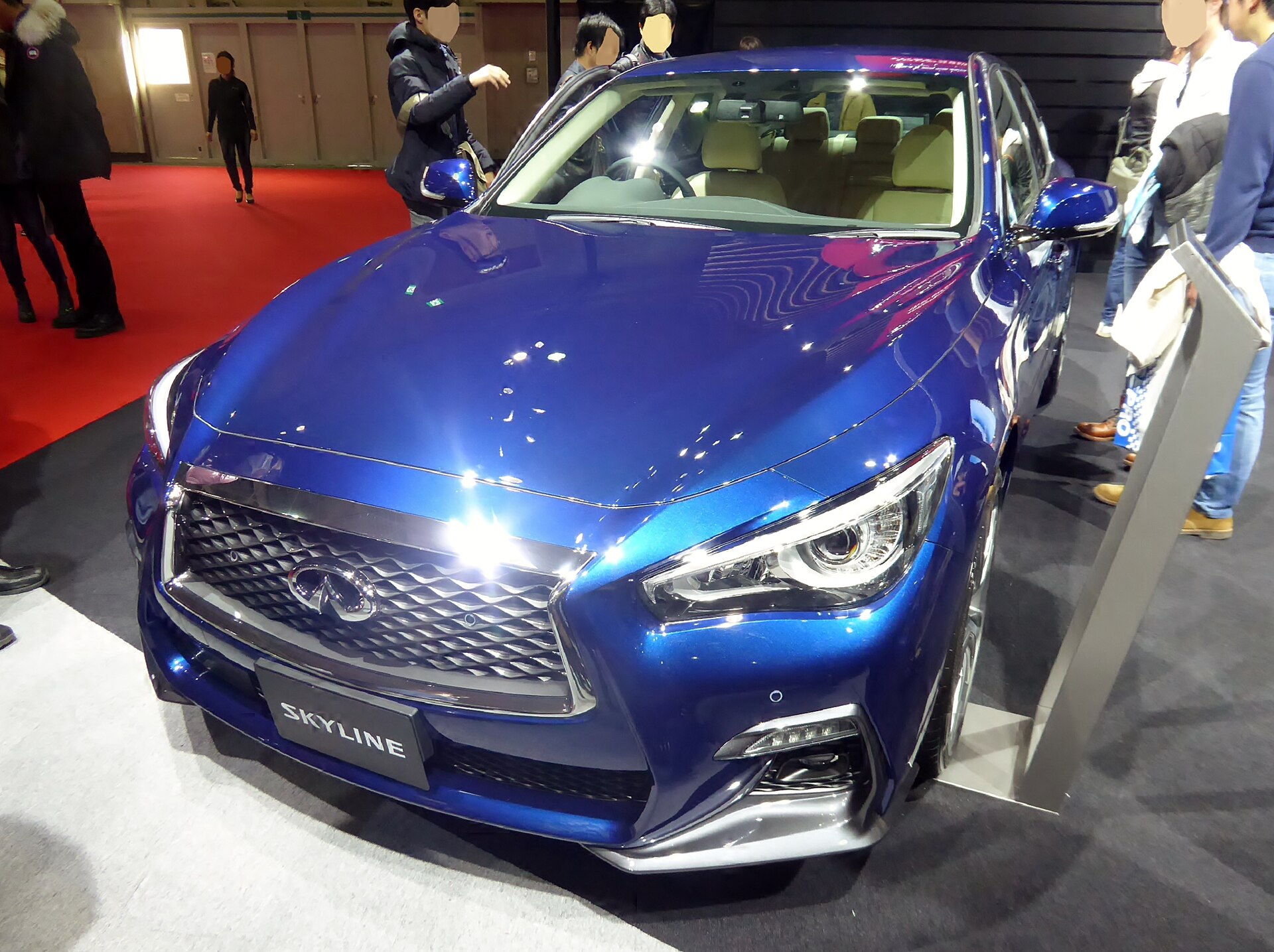
2014
-
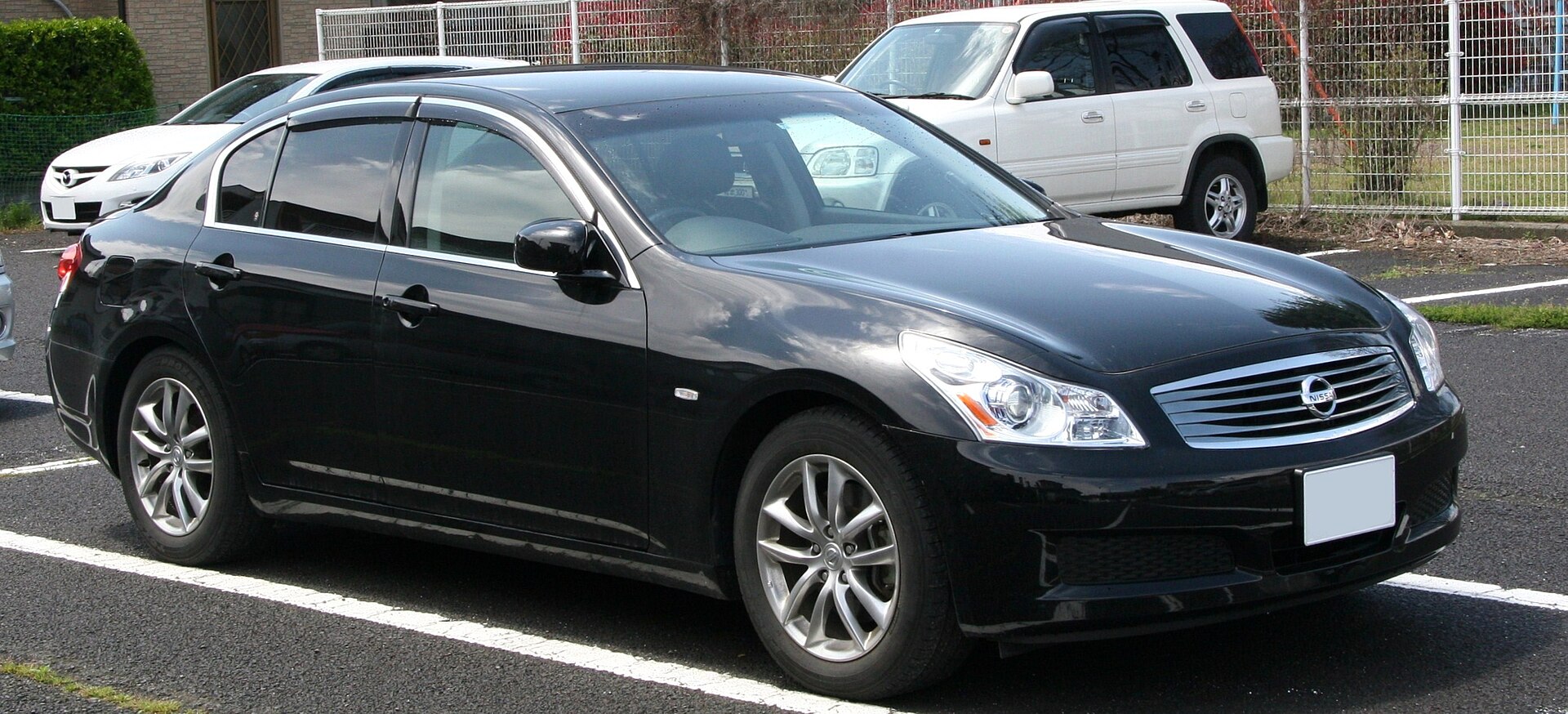
2006
-
2001
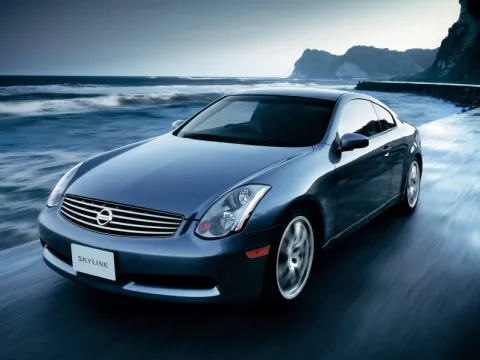 V35 2001–2006 · Sedan, Coupe · 158–206 kW (215–280 PS)
-
1998
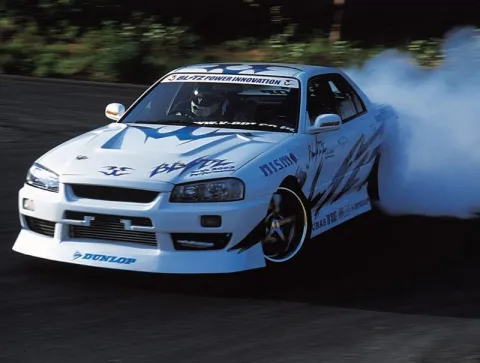 R34 1998–2001 · 114–206 kW (155–280 PS)
-
1993
-
1989
-
1985
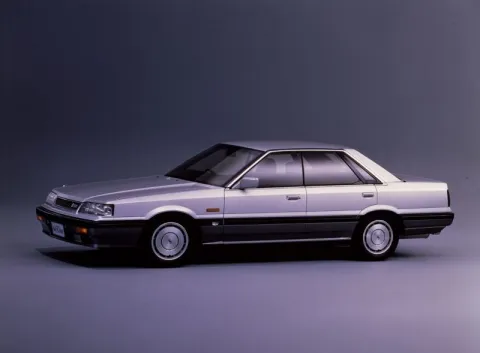 R31 1985–1989 · Sedan, Station wagon · 66–154 kW (90–209 PS)
-
1981
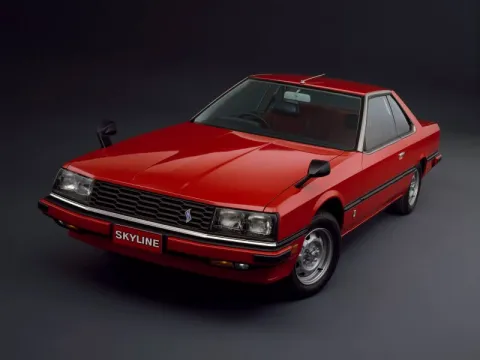 R30 1981–1985 · Sedan, Liftback · 77–151 kW (105–205 PS)
-
1977
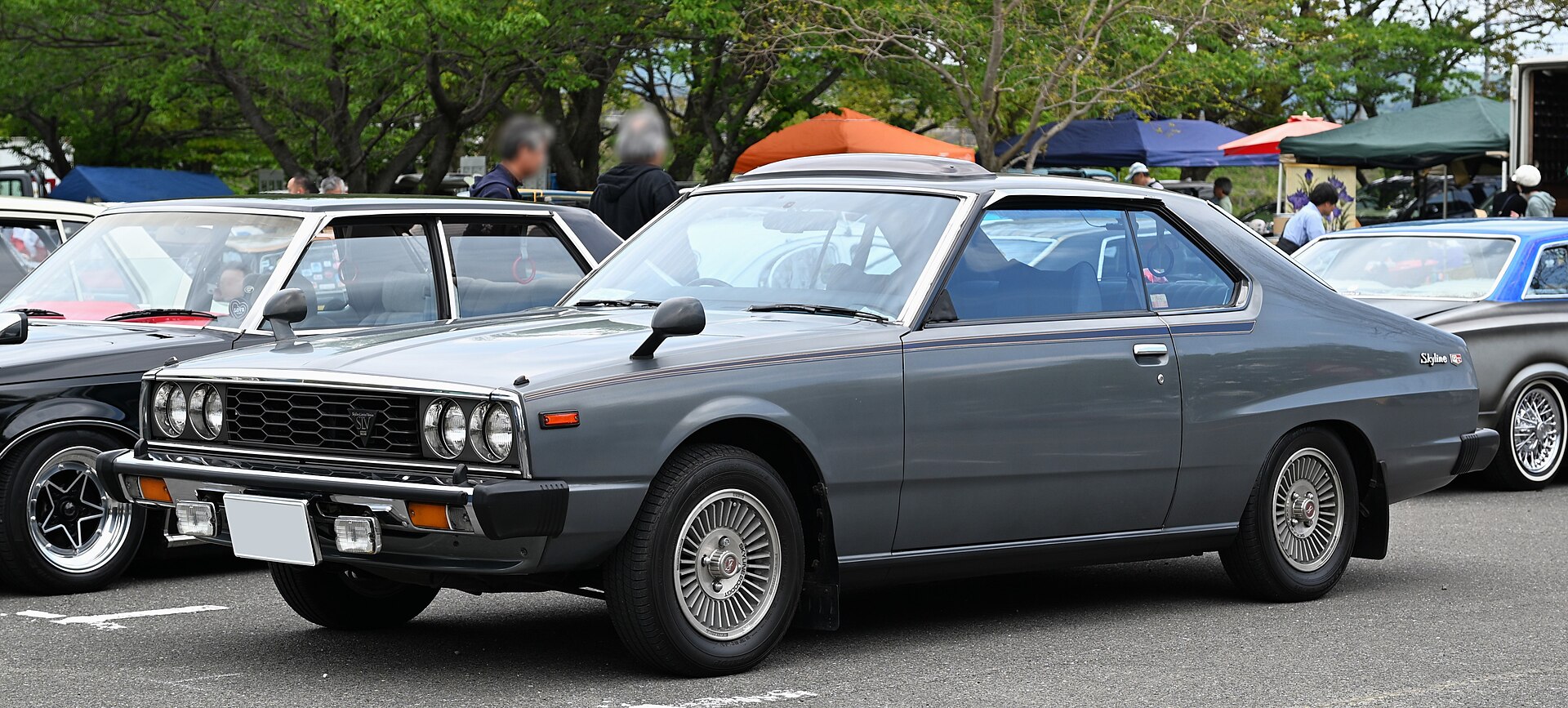
-
1972
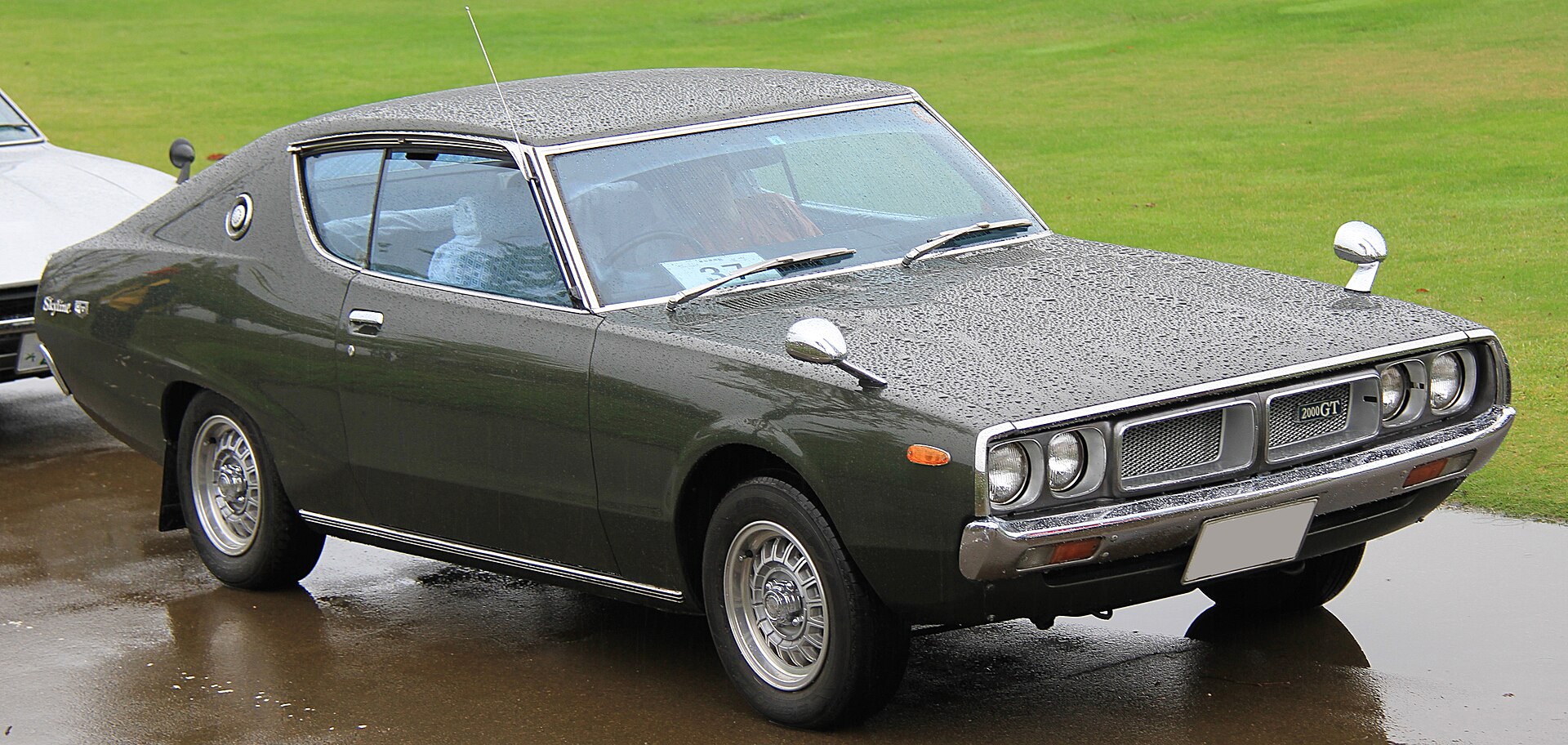
-
1968
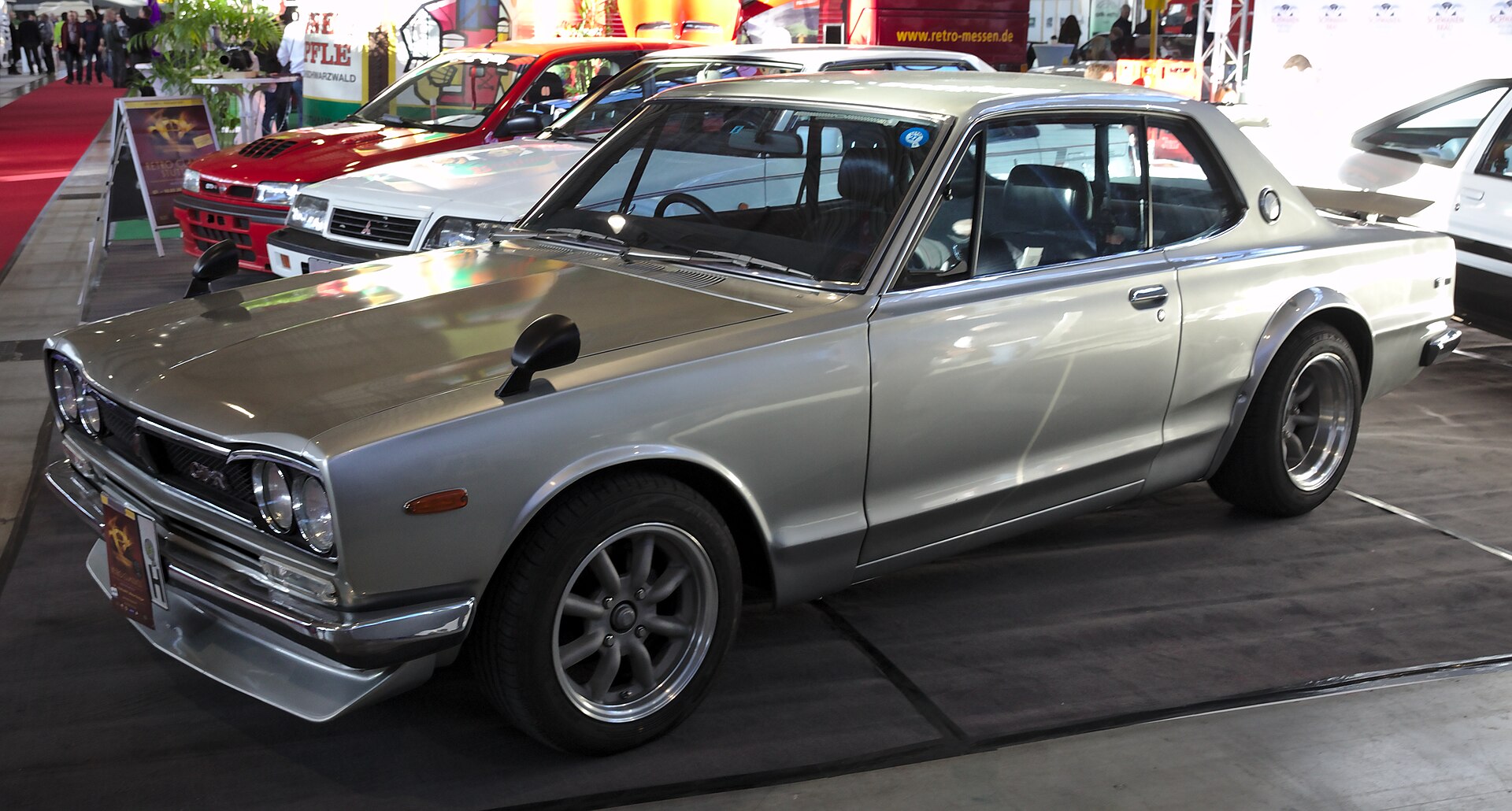
-
1963
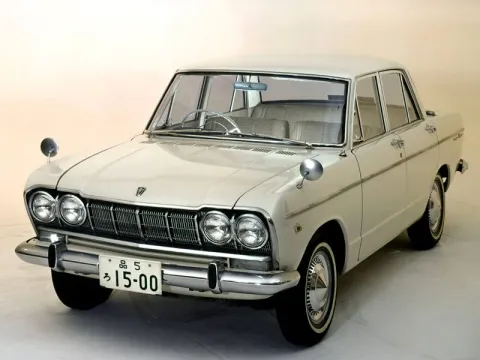 S50 You are here 1963–1968 · Sedan, Station wagon · 51–92 kW (69–125 PS)
-
1957


All generations by year: Skyline V37 (2014–now) · Skyline V36 (2006–2014) · Skyline V35 (2001–2006) · Skyline R34 (1998–2001) · Skyline R33 (1993–1998) · Skyline R32 (1989–1993) · Skyline R31 (1985–1989) · Skyline R30 (1981–1985) · Skyline C210 (1977–1981) · Skyline C110 (1972–1977) · Skyline C10 (1968–1972) · Skyline S50 (1963–1968) · Skyline ALSI (1957–1963)
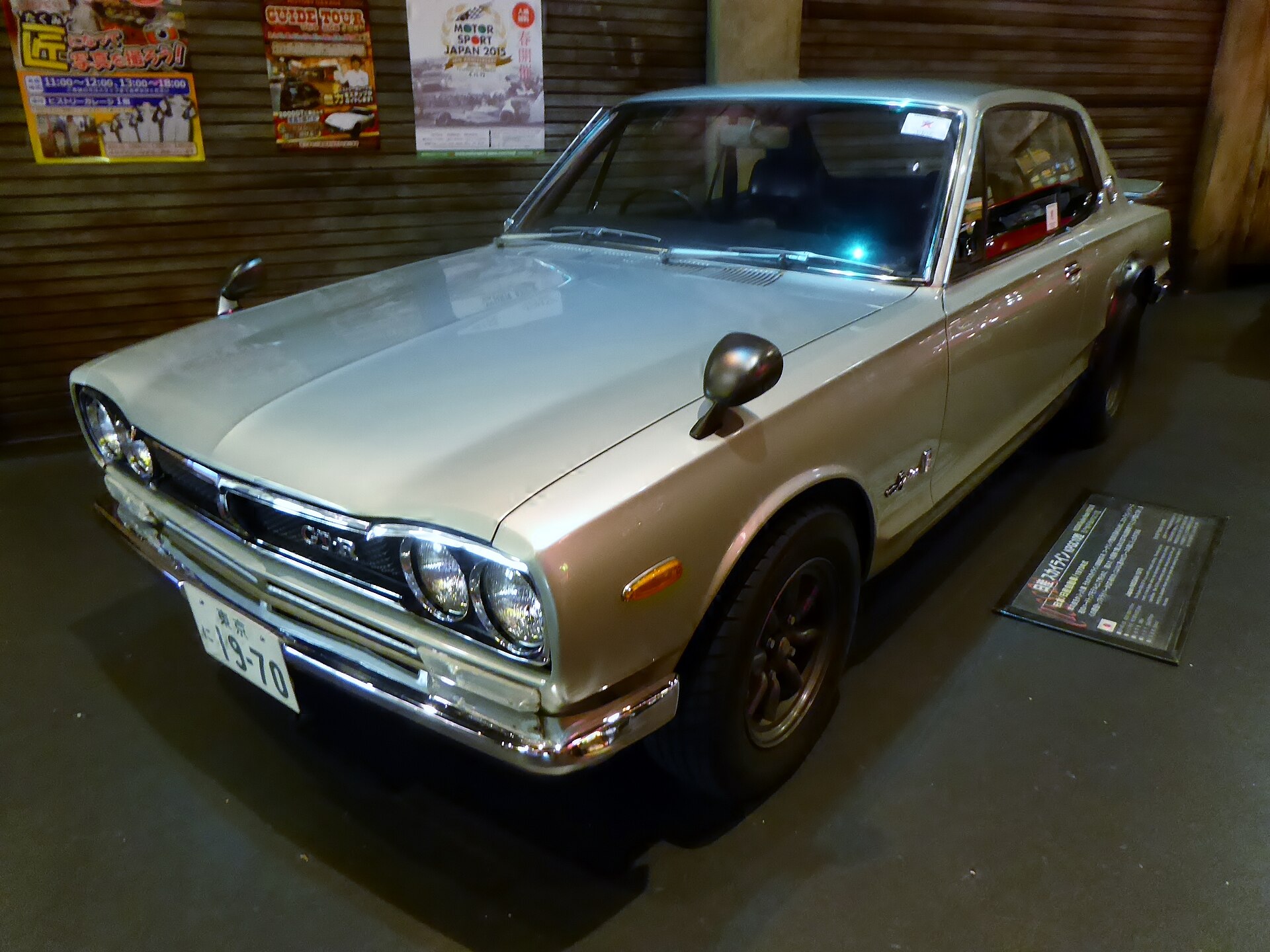
The Prince Skyline covers the first two Skyline generations, built before and just after Prince Motor Company joined Nissan in 1966. This page concentrates on the second generation, the S50 of 1963–1968, and its six-cylinder S54 2000GT, which turned a compact family saloon into a race car. It also explains where the story began, with the ALSI of 1957.
In short
- The S50 was built from September 1963 to August 1968, with 114,238 cars produced; the ALSI before it reached 33,759.
- The S50 used a monocoque body and a 1.5-litre four with 51 kW (70 PS); the S54 2000GT added a 2.0-litre G7 six with up to 92 kW (125 PS).
- At the Japan Grand Prix in May 1964, Skyline GTs finished second to sixth in their class behind a Porsche 904.
- After the August 1966 merger the car was badged Nissan Prince Skyline, and the C10 of 1968 replaced it.
Skyline S50 specs by version
Engines
| Version | Engine | Power | Torque |
|---|---|---|---|
| G1 four, OHV | 1.5 l · 4 cyl G1 | 51 kW 69 PS68 hp | 113 Nm83 lb-ft |
| G15 four, OHC | 1.5 l · 4 cyl 1,483 cc | 65 kW 88 PS87 hp | — |
| G7 77 kW (105 PS) | Petrol G7 | 77 kW 105 PS103 hp | — |
| G7 six, OHC, single carburettor | 2.0 l 1,988 cc | 79 kW 107 PS106 hp | 157 Nm116 lb-ft |
| S54 2000GT-B | 2.0 l · 6 cyl · Petrol 2,000 cc | 92 kW 125 PS123 hp | — |
Dimensions and weight
Show all 4 versions
| Version | Kerb weight | Fuel tank |
|---|---|---|
| G1 four, OHV | 1,310 kg2,888 lb | 99 l26.2 gal US |
| G15 four, OHC | 1,310 kg2,888 lb | 99 l26.2 gal US |
| G7 77 kW (105 PS) | 1,310 kg2,888 lb | 99 l26.2 gal US |
| G7 six, OHC, single carburettor | 1,310 kg2,888 lb | 99 l26.2 gal US |
Verified Manufacturer and type-approval data from our catalog · Sources and methodology
Where it started: the ALSI of 1957
The first Skyline was presented on 24 April 1957 at the Takarazuka Theatre in Hibiya, Tokyo, by Fuji Precision Industries, the company that later took the Prince name. Nissan's heritage collection describes it as the successor to the Prince Sedan, with an American-influenced body, chrome side mouldings and small tail fins.
Its engineering was more ambitious than its styling. The ALSI used a De Dion rear axle and two-speed wipers, and Nissan says its 1.5-litre engine gave it the highest top speed of any Japanese car of its day. The GA30 four produced 44 kW (60 PS) at 4,400 rpm and 105 Nm (77 lb-ft); the Deluxe saloon weighed 1,310 kg (2,888 lb). A 1.9-litre GB4 four, shared with the Prince Gloria, arrived in 1961, and quad headlamps were added from 1960.
The most glamorous version was the Skyline Sport, a coupé and convertible designed by Giovanni Michelotti and shown at the 1960 Turin motor show. Nissan calls it Japan's first domestic luxury sports coupé. It used the 1,862 cm³ (113.6 cu in) GB4 with 69 kW (94 PS) and reached 150 km/h (93 mph), but English Wikipedia says only a few hundred were made. The ALSI family, including estates and the Skyway pickups, ended in 1963 after 33,759 cars.
The catalogue lists the ALSI as a separate generation; it does not have its own page yet, so this section serves as its summary.
The S50: a smaller Skyline with a monocoque body
The second Skyline, launched in September 1963, was a different kind of car. Nissan's heritage notes say it moved the line from a full-size saloon to a compact family car, built around a monocoque body and designed to need little routine attention. Its "sealed" engine was guaranteed maintenance-free for up to 40,000 km (24,855 miles) or two years, the chassis needed no periodic greasing, and the dashboard used what Nissan describes as the world's first non-reflective instruments.
The first car was the S50D Deluxe. A cheaper Standard, aimed at taxi operators, followed in April 1964, and a five-door estate and a van completed the range. Gearboxes were a three-speed column-change manual, a four-speed floor change on the Deluxe from February 1965 and, from June 1966, a two-speed automatic.
English Wikipedia divides the S50 into three series. The S50-2 of October 1966 had a new grille and rectangular tail lamps, and the S50-3 of 1967 widened the lamps again. From August 1966, after Nissan took over Prince, the cars were sold as the Nissan Prince Skyline. In export markets, including Europe, the saloon was offered as the Prince Mikado A150, according to the same source.
For the generations that followed, from the Hakosuka to the V37, see the complete Nissan Skyline overview.
S54 and the 1964 Japan Grand Prix
The S54 began as a racing project. For the second Japan Grand Prix in May 1964, Prince fitted the 2.0-litre G7 straight-six from the Gloria Super 6 into the Skyline. To make room for it, the front was lengthened by 200 mm (7.9 in), taking the wheelbase from 2,390 mm (94.1 in) to 2,590 mm (102.0 in). One hundred homologation cars were built; English Wikipedia splits them into 92 road cars and 8 race cars, coded S54A-1.
In the GT-II race on 3 May 1964, a Porsche 904 won, and Skyline GTs took the next five places. The result gave the long-nosed Skyline a sporting reputation at home and set the pattern for every later Skyline GT: a family saloon body carrying a six-cylinder engine developed for racing.
2000GT-A and 2000GT-B
Road-going production followed. The S54B-2, sold as the Skyline 2000GT and later known as the 2000GT-B, arrived in February 1965 with three Weber 40DCOE carburettors, 92 kW (125 PS) at 5,600 rpm and 167 Nm (123 lb-ft) at 4,400 rpm. Nissan says it reached 180 km/h (112 mph), making it one of the fastest Japanese saloons of the time. The chassis was reinforced, front disc brakes and front and rear anti-roll bars were fitted, and the catalogue called it "a wolf in sheep's skin".
The cheaper S54A-2, or 2000GT-A, followed in September 1965 with a single carburettor, about 77–79 kW (105–107 PS), and without the GT-B's front discs, brake servo and Nardi steering wheel. German Wikipedia lists a four-speed gearbox for the GT-A and a five-speed for the GT-B.
S50 and S54 engines
The table lists the S50 and S54 engines. Outputs are rated figures in kW followed by the metric PS figure; German Wikipedia quotes slightly higher SAE gross values.
| Engine | Versions | Displacement | Power | Torque |
|---|---|---|---|---|
| G1 four, OHV | S50 1500 | 1,484 cm³ (90.6 cu in) | 51 kW (70 PS) at 4,800 rpm | 113 Nm (83 lb-ft) at 3,600 rpm |
| G15 four, OHC | S57 1500 (from 1967) | 1,483 cm³ (90.5 cu in) | 65 kW (88 PS) | — |
| G7 six, OHC, single carburettor | S54A 2000GT-A | 1,988 cm³ (121.3 cu in) | 77–79 kW (105–107 PS) | 157 Nm (116 lb-ft) |
| G7 six, OHC, three carburettors | S54B 2000GT-B | 1,988 cm³ (121.3 cu in) | 92 kW (125 PS) at 5,600 rpm | 167 Nm (123 lb-ft) at 4,400 rpm |
The G15 that replaced the G1 in the S57 was an overhead-camshaft four with 88 PS, which English Wikipedia describes as the most powerful engine in Japan's 1,500 cm³ class at the time. It later carried over into the C10.
Dimensions of the S50 and 2000GT
The table compares the 1965 Skyline 1500 Deluxe (S50) with the 1965 2000GT (S54B-2), both from the Nissan Heritage Collection.
| Parameter | Metric | Imperial |
|---|---|---|
| Length, 1500 Deluxe / 2000GT | 4,100 / 4,255 mm | 161.4 / 167.5 in |
| Width | 1,495 mm | 58.9 in |
| Height, 1500 Deluxe / 2000GT | 1,435 / 1,410 mm | 56.5 / 55.5 in |
| Wheelbase, 1500 / 2000GT | 2,390 / 2,590 mm | 94.1 / 102.0 in |
| Track, 2000GT front / rear | 1,265 / 1,255 mm | 49.8 / 49.4 in |
| Kerb weight, 1500 Deluxe / 2000GT | 960 / 1,070 kg | 2,116 / 2,359 lb |
| Top speed, 1500 / 2000GT | 135–140 / 180 km/h | 84–87 / 112 mph |
Brakes and running gear
These cars predate crash testing by decades, so the relevant safety facts concern hardware. The 2000GT-B had double-wishbone front suspension, leaf springs at the rear, front discs and rear drums, with anti-roll bars at both ends. The 2000GT-A went without the front discs and brake servo, which is the clearest mechanical difference to check when telling the two sixes apart.
Which Prince Skyline to look for
- S54B 2000GT-B: the triple-carburettor six with front discs, the version most closely tied to the 1964 race result.
- S54A 2000GT-A: the single-carburettor six, cheaper when new and simpler to keep running.
- S54A-1 Skyline GT (1964): one of only 100 homologation cars, so provenance is everything.
- S50 and S57 saloons: the four-cylinder family cars, with the 88 PS G15 of the S57 the livelier choice.
- ALSI Skyline Sport: the Michelotti coupé and convertible, built only in small numbers.
The history of Nissan Motor Company covers the Prince merger in more depth, and the classic cars of the 1950s collection and the Nissan catalogue put the ALSI in context with its contemporaries among Japanese cars.
Did you know?
- The Skyline S50 is generation 2 of 13 of the Nissan Skyline in our catalog.
- The Skyline S50 offers up to 92 kW (125 PS) — 23 kW more than the Skyline ALSI (1957–1963) (+33%).
- Its lightest version weighs 1,310 kg, 10 kg more than in the Skyline ALSI (1957–1963).
Image credits · Photos from Wikimedia Commons under free licences
- Nissan Skyline ALSI · Photo: TTTNIS / Wikimedia Commons, CC0
- Nissan Skyline S50 · Photo: TTTNIS / Wikimedia Commons, CC0
- Nissan Skyline C10 · Photo: Alexander Migl / Wikimedia Commons, CC BY-SA 4.0
- Nissan Skyline C110 · Photo: TTTNIS / Wikimedia Commons, CC0
- Nissan Skyline C210 · Photo: TTTNIS / Wikimedia Commons, CC0
- Nissan Skyline R30 · Photo: 先従隗始 / Wikimedia Commons, CC0
- Nissan Skyline R31 · Photo: V-Hantarex / Wikimedia Commons, CC BY 4.0
- Nissan Skyline R32 · Photo: FotoSleuth / Wikimedia Commons, CC BY 2.0
- Nissan Skyline R33 · Photo: OSX / Wikimedia Commons, Public domain
- Nissan Skyline R34 · Photo: Timmie Ahl / Unsplash
- Nissan Skyline V35 · Photo: Guillaume Vachey from Chalon sur Saone, France / Wikimedia Commons, CC0
- Nissan Skyline V36 · Photo: TTTNIS / Wikimedia Commons, Public domain
- Nissan Skyline V37 · Photo: Tokumeigakarinoaoshima / Wikimedia Commons, CC BY-SA 4.0
S50 rivals
-
Ended 2026
- Years
- 1978–2026
- Body
- Liftback, Coupe
- Fuel
- Petrol
- Power
- 82–320 kW (111–435 PS)
5 generations
- A40/A50
- A60
- A70
- A80
- A90
-
Ended 2002
- Years
- 1978–2002
- Body
- Coupe, Convertible
- Fuel
- Petrol
- Power
- 75–206 kW (102–280 PS)
3 generations
- FB
- FC
- FD


Popular comparisons
FAQ
What is the Prince Skyline?
It is the name for the first two Skyline generations, the ALSI of 1957–1963 and the S50 of 1963–1968, developed by Prince before it merged with Nissan in August 1966.
What is the difference between the S50 and the S54?
The S50 is the four-cylinder saloon and estate. The S54 is the 2000GT, with a 2.0-litre G7 six and a front end lengthened by 200 mm (7.9 in) to fit it.
How fast was the Skyline 2000GT-B?
Nissan quotes a top speed of 180 km/h (112 mph) for the 1965 S54B-2, whose triple-carburettor six produced 92 kW (125 PS).
How did the Skyline do at the 1964 Japan Grand Prix?
In the GT-II race on 3 May 1964, Skyline GTs finished second to sixth behind the winning Porsche 904.
How many Prince Skylines were built?
English and German Wikipedia give 33,759 cars for the ALSI generation and 114,238 for the S50 and S54.
Data sources
Data checked by an editor against the sources below.
- 1cars archive: Nissan Skyline: Generations, Specs and History
- The text of this article (1cars archive)
- Wikipedia — Nissan Skyline