 Nissan Skyline C10 (1968–1972)
Specs, engines, safety and known problems
Published Sources (4) Report an error
By Sarah Whitmore, Senior Automotive Writer Reviewed by Felix Hartmann
- Power
- 65–118 kW (88–160 PS)
- Generation
- 3 of 13
Model timeline
Where the C10 sits in the Skyline story
Predecessor Skyline S50 (1963–1968) Successor Skyline C110 (1972–1977)
Newest first · 13 generations since 1957
-
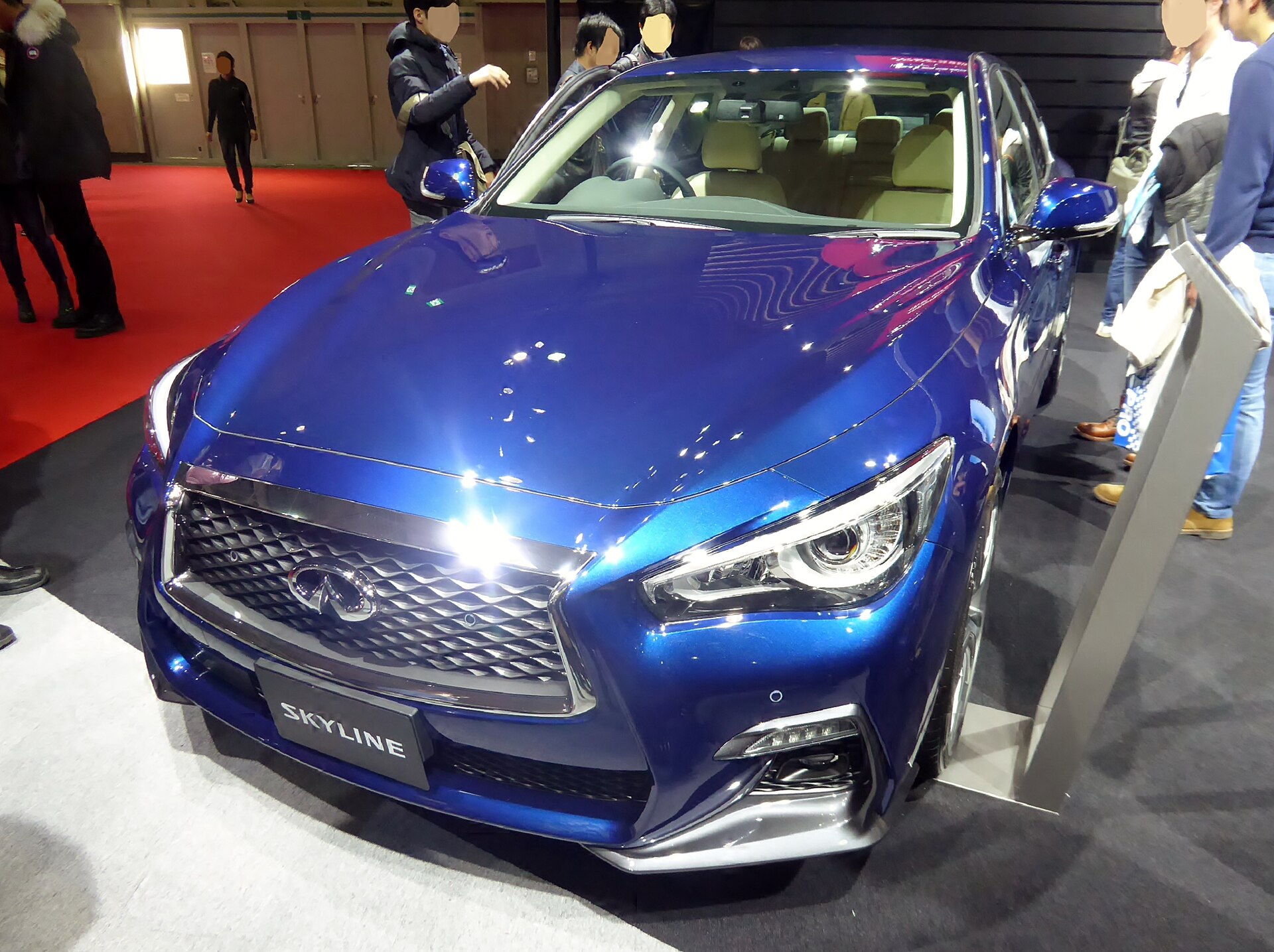
2014
-
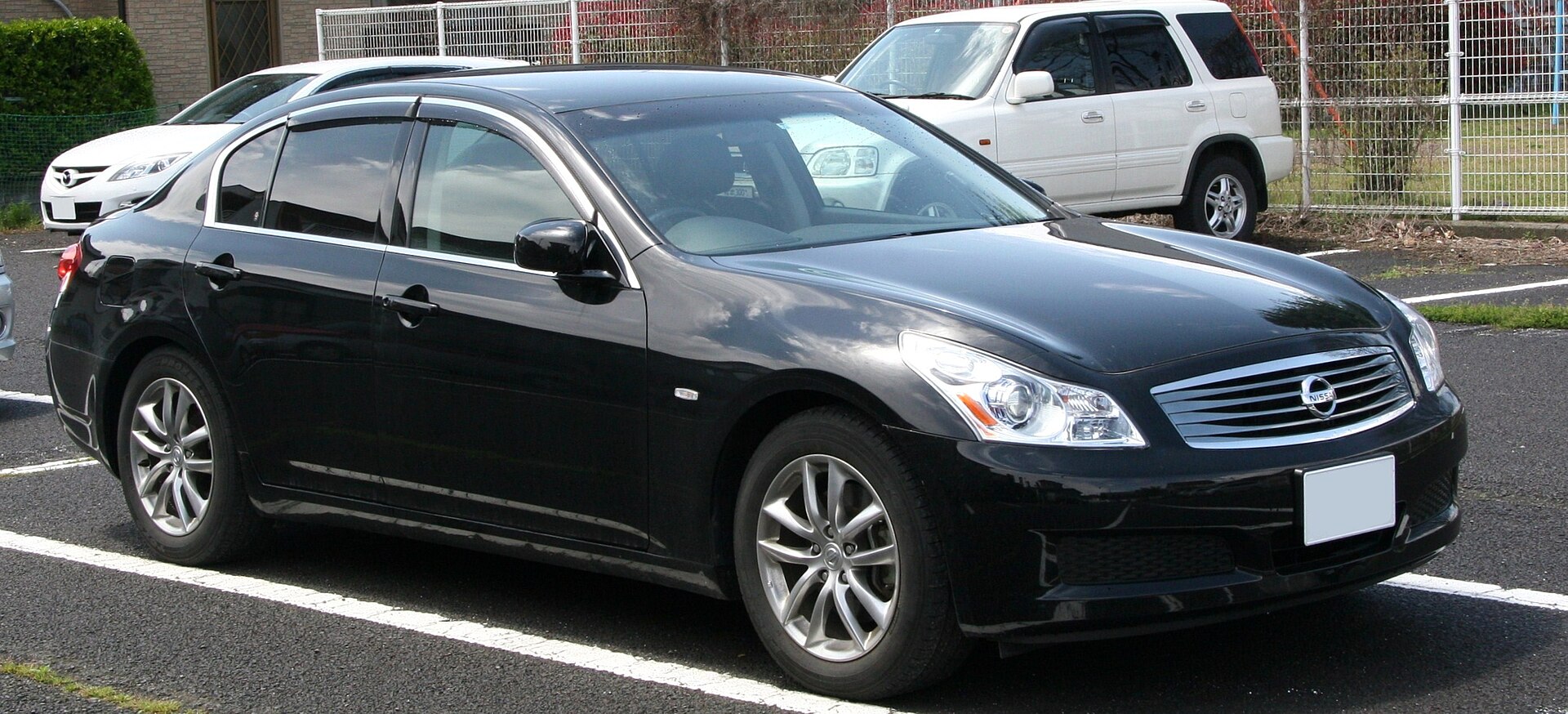
2006
-
2001
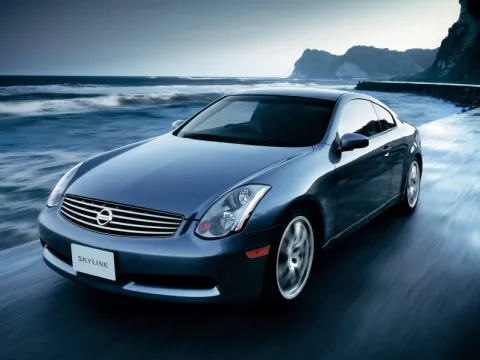 V35 2001–2006 · Sedan, Coupe · 158–206 kW (215–280 PS)
-
1998
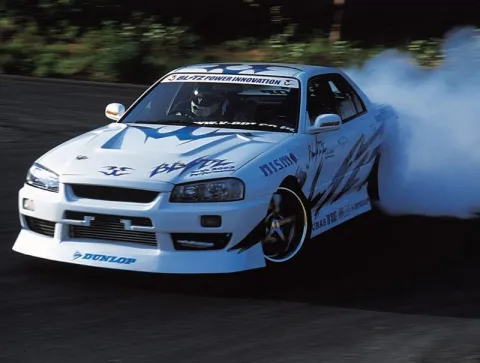 R34 1998–2001 · 114–206 kW (155–280 PS)
-
1993
-
1989
-
1985
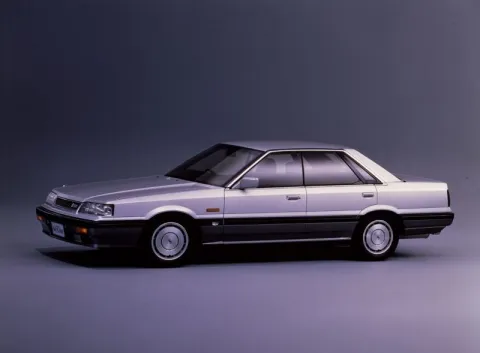 R31 1985–1989 · Sedan, Station wagon · 66–154 kW (90–209 PS)
-
1981
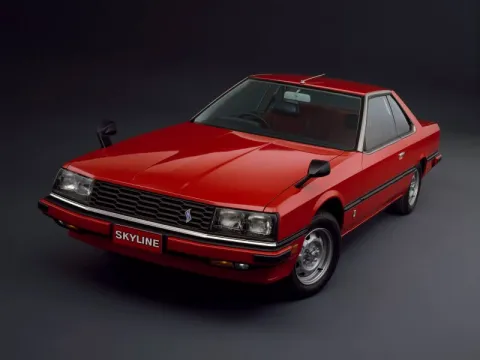 R30 1981–1985 · Sedan, Liftback · 77–151 kW (105–205 PS)
-
1977
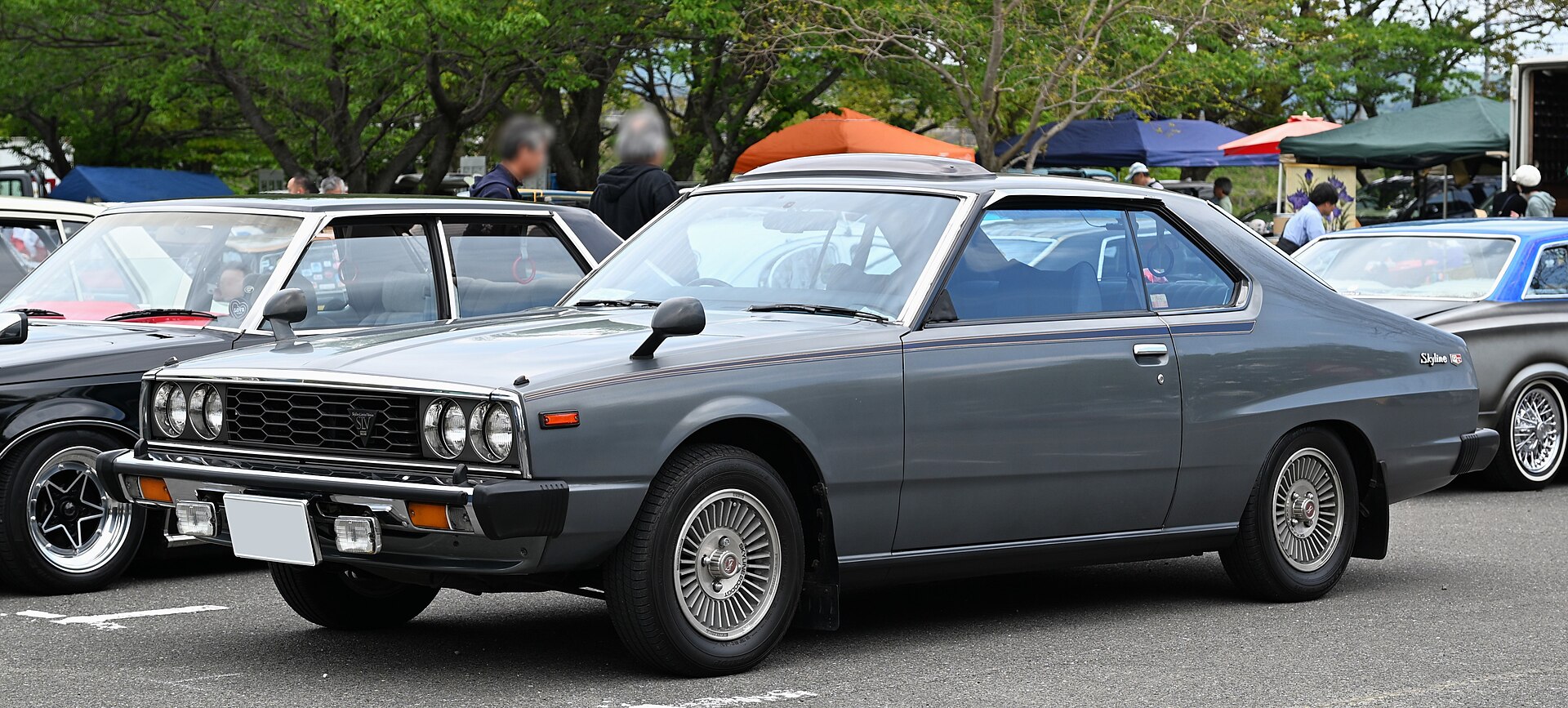
-
1972
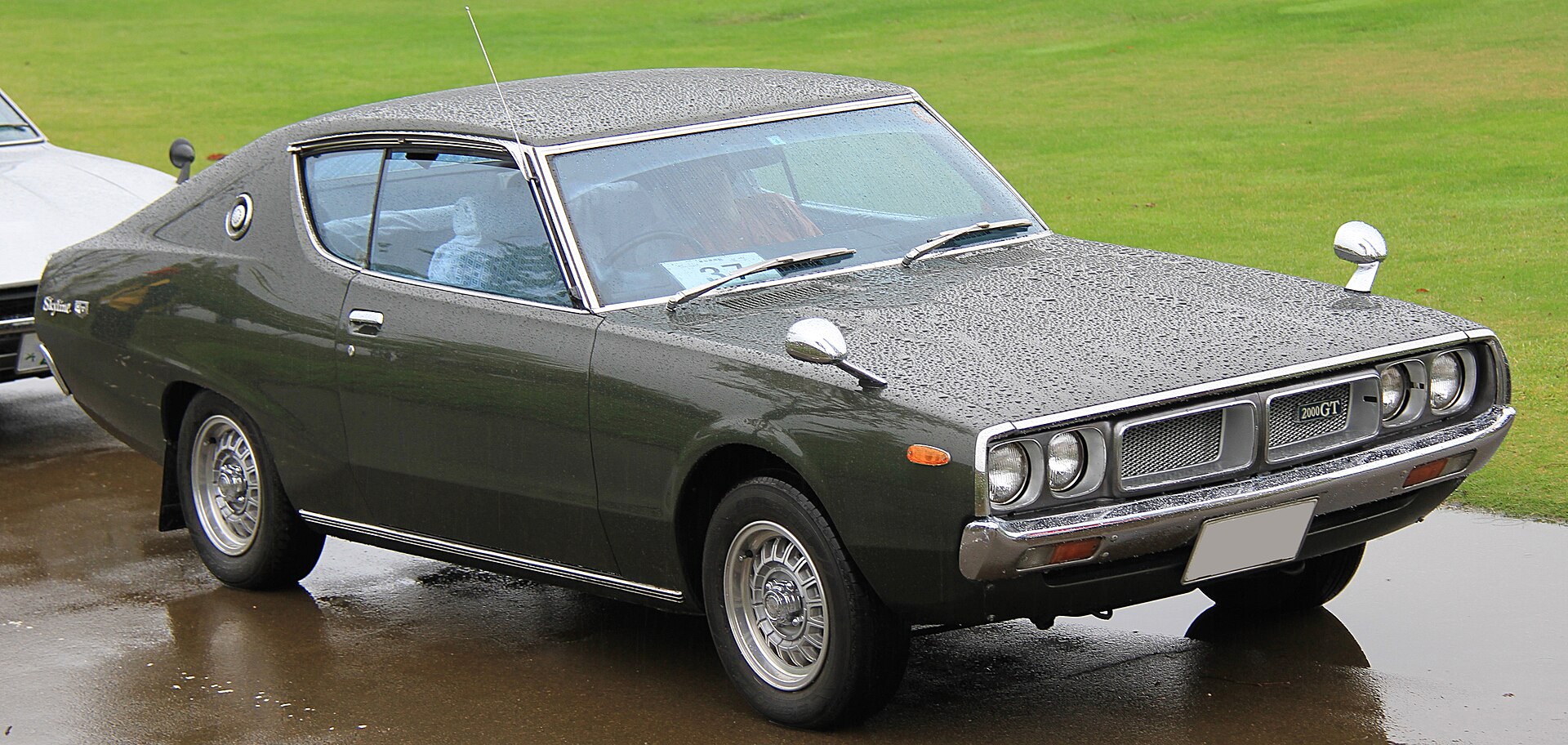
-
1968
-
1963
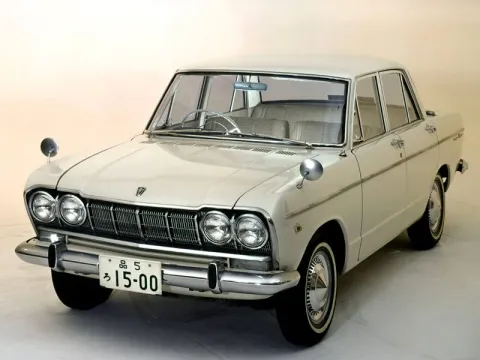 S50 1963–1968 · Sedan, Station wagon · 51–92 kW (69–125 PS)
-
1957


All generations by year: Skyline V37 (2014–now) · Skyline V36 (2006–2014) · Skyline V35 (2001–2006) · Skyline R34 (1998–2001) · Skyline R33 (1993–1998) · Skyline R32 (1989–1993) · Skyline R31 (1985–1989) · Skyline R30 (1981–1985) · Skyline C210 (1977–1981) · Skyline C110 (1972–1977) · Skyline C10 (1968–1972) · Skyline S50 (1963–1968) · Skyline ALSI (1957–1963)
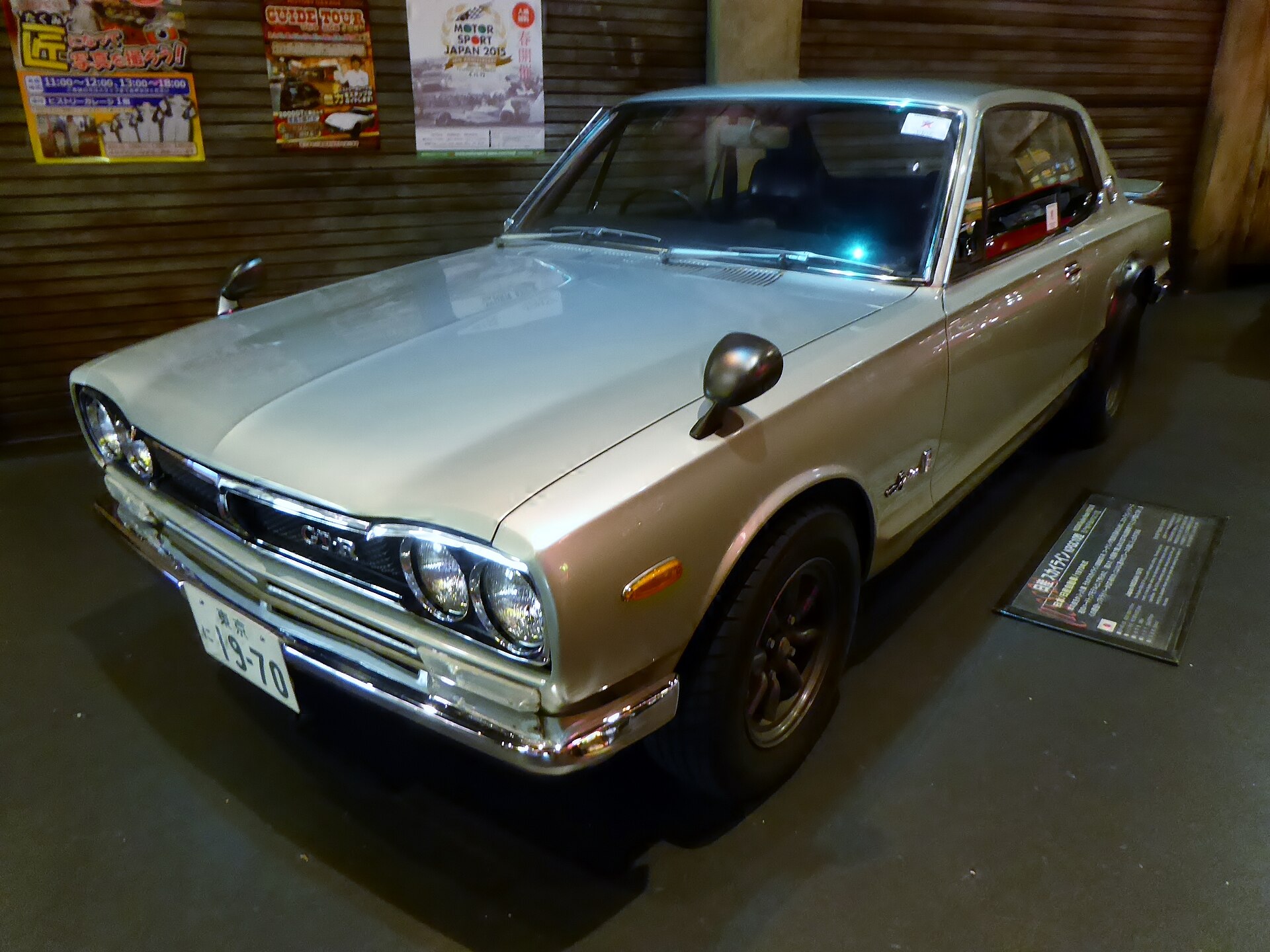
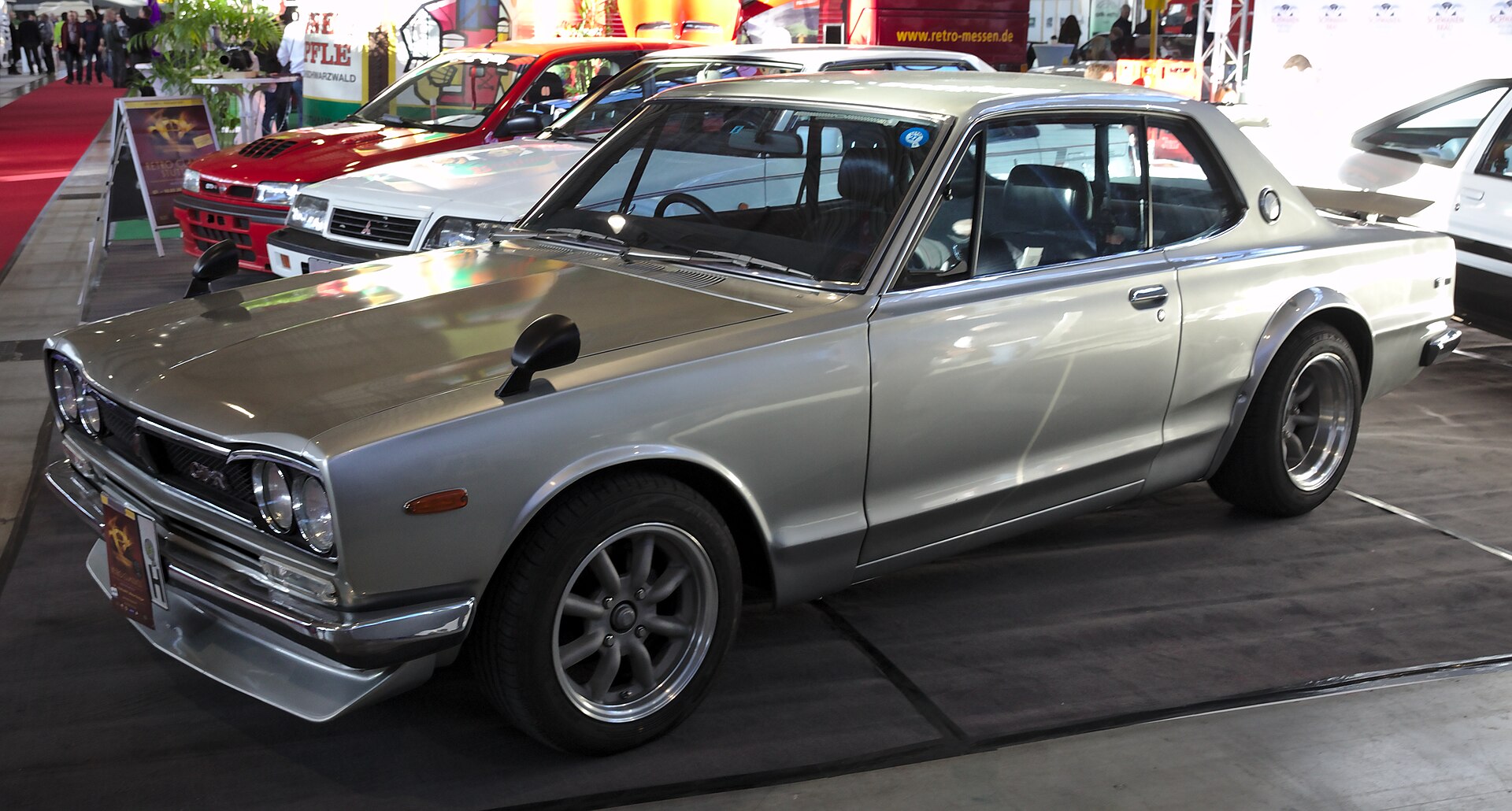
The C10 is the third-generation Skyline, built in Japan from August 1968 to September 1972 and nicknamed Hakosuka, the "boxy Skyline". It was the first Skyline launched after Prince became part of Nissan, and it came as a saloon, an estate and, from 1970, a two-door hardtop. The C10 is remembered above all for the original 2000GT-R and its twin-cam S20 six.
In short
- Produced from August 1968 to September 1972; English and German Wikipedia both give 310,447 cars.
- Engines ran from the 1.5-litre G15 four with 65 kW (88 PS) to the 2.0-litre S20 twin-cam six with 118 kW (160 PS) in the GT-R.
- The GT-R arrived as the PGC10 saloon in February 1969 and as the shorter KPGC10 hardtop in October 1970; about 2,000 were built.
- Nissan credits the GT-R with 50 domestic touring-car wins by March 1972 and 52 by the time its works team stopped racing that October.
Skyline C10 specs by version
| Version | Engine | Power | Torque |
|---|---|---|---|
| G15 four, OHC | 1.5 l 1,483 cc | 65 kW 88 PS87 hp | 120 Nm89 lb-ft |
| 2.0 77 kW (105 PS) | 2.0 l 1,998 cc | 77 kW 105 PS103 hp | — |
| G18 four, OHC | 1.8 l 1,815 cc | 78 kW 106 PS105 hp | 147 Nm108 lb-ft |
| L20 six, OHC, single carburettor | 2.0 l 1,998 cc | 88 kW 120 PS118 hp | 167 Nm123 lb-ft |
| L20 six, OHC, twin carburettors | 2.0 l · Petrol 1,998 cc | 96 kW 131 PS129 hp | 172 Nm127 lb-ft |
| 2000GT-R (S20) | 2.0 l · 6 cyl · Petrol 2,000 cc | 118 kW 160 PS158 hp | — |
Verified Manufacturer and type-approval data from our catalog · Sources and methodology
A Prince design under a Nissan badge
The C10 was engineered by the former Prince team at the Ogikubo technical centre, but it reached showrooms in August 1968 wearing a Nissan badge. It was still sold through the Prince sales channel of Nissan dealers, which kept the Skyline's sporting image apart from the more mainstream Bluebird.
Compared with the S50 it replaced, the C10 was wider, lower and much more angular. Nissan's own heritage notes describe the crease running along the rear wing as the "Surfin' Line", a styling cue that later Skylines kept for years. Square headlamps in pairs replaced the round units of the Prince cars. Underneath, the C10 shared its platform with the new Laurel, which used a longer wheelbase.
The range started with a 1.5-litre saloon and estate. In October 1968 the 2000GT added a straight-six with an overhead camshaft and a front end stretched to make room for it. A 1.8-litre four and the "Ai no Skyline" ("Skyline of love") advertising campaign followed in 1969. The two-door hardtop, on a wheelbase 70 mm (2.8 in) shorter than the saloon, joined in October 1970.
The complete Nissan Skyline overview places the C10 in the 13-generation line, between the Prince-built S50 and the C110.
Body styles and chassis layout
Three bodies were offered: a four-door saloon, a five-door estate and van (previously sold under the Prince Skyway name) and the two-door hardtop coupé. Gearboxes were three-, four- or five-speed manuals and, from 1970, a three-speed automatic on the 2000GT.
Front suspension used MacPherson struts. At the rear, the six-cylinder GT models had independent semi-trailing arms; German Wikipedia states that the basic four-cylinder cars kept a rigid axle. Nissan's specification sheets for the 2000GT, GT-X and GT-R list front discs and rear drums.
Engines from G15 to the S20 twin-cam
The C10 combined a Prince-designed four-cylinder family with Nissan's L-series six. The table shows the main Japanese-market engines; outputs are the rated figures in kW, followed by the metric PS figure used in Japan.
| Engine | Versions | Displacement | Power | Torque |
|---|---|---|---|---|
| G15 four, OHC | 1500 | 1,483 cm³ (90.5 cu in) | 65 kW (88 PS) | 120–128 Nm (89–94 lb-ft) |
| G18 four, OHC | 1800 (from 1969) | 1,815 cm³ (110.8 cu in) | 74–78 kW (100–105 PS), sources differ | 147–150 Nm (108–111 lb-ft) |
| L20 six, OHC, single carburettor | 2000GT (GC10, KGC10) | 1,998 cm³ (121.9 cu in) | 88 kW (120 PS) at 6,000 rpm | 167 Nm (123 lb-ft) at 4,000 rpm |
| L20 six, OHC, twin carburettors | 2000GT-X (from September 1971) | 1,998 cm³ (121.9 cu in) | 96 kW (130 PS) at 6,000 rpm | 172 Nm (127 lb-ft) at 4,400 rpm |
| S20 six, DOHC 24-valve | 2000GT-R (PGC10, KPGC10) | 1,989 cm³ (121.4 cu in) | 118 kW (160 PS) at 7,000 rpm | 176–177 Nm (130–131 lb-ft) at 5,600 rpm |
Wikipedia also lists a 2.4-litre L24 2400GT for left-hand-drive export markets, sold as a four-door only.
The S20 is the heart of the C10 legend. Prince engineers derived it from the GR8 engine of the R380 sports-prototype racer, keeping the 82 mm bore and shortening the stroke slightly to 62.8 mm so that the capacity stayed under 2.0 litres. It has four valves per cylinder, two chain-driven camshafts and three twin-choke Mikuni-Solex carburettors. It is described as the first mass-produced Japanese engine with more than two valves per cylinder. The same unit went into the Fairlady Z432, the rare twin-cam version of the Nissan Fairlady Z.
PGC10 and KPGC10: two bodies of the 2000GT-R
The GT-R was first shown at the October 1968 Tokyo Motor Show and went on sale as the four-door PGC10 on 4 February 1969. Nissan's heritage description calls it a car that put racing know-how from the R380 into an ordinary-looking saloon. It had a five-speed manual gearbox and a limited-slip differential, and the interior was stripped of comfort items in favour of bucket seats.
In October 1970 the GT-R moved to the hardtop body as the KPGC10. Nissan says the shorter car was more than 20 kg (44 lb) lighter than the saloon and carried a 100-litre (26.4 US gal) fuel tank and non-reclining bucket seats. Black glass-fibre extensions over the rear wheel arches made room for wider tyres on the race cars and became the hardtop's visual signature.
Production figures do not agree. The English Wikipedia S20 article gives 832 PGC10 and 1,197 KPGC10 cars, a total of 2,029, while German Wikipedia states 1,945. "About 2,000" is the safe figure.
The racing record
The GT-R won on its debut at the JAF Grand Prix at Fuji Speedway on 3 May 1969, three months after launch. Wikipedia credits the PGC10 with 33 wins in under two years and the GT-R with 49 consecutive victories on Japanese circuits. That streak ended on 10 October 1971, when a Mazda Savanna RX-3 beat it. The 50th win came on 20 March 1972, and Nissan puts the final tally at 52 when the works team withdrew in October 1972. Wikipedia names the Toyota 1600GT, Isuzu Bellett GT-R and Mazda's rotary Capella among its other domestic rivals.
C10 dimensions in numbers
The table compares the two GT-R bodies with a six-cylinder 2000GT saloon, using Nissan Heritage Collection data.
| Parameter | Metric | Imperial |
|---|---|---|
| Length, PGC10 GT-R saloon | 4,395 mm | 173.0 in |
| Length, KPGC10 GT-R hardtop | 4,330 mm | 170.5 in |
| Length, GC10 2000GT saloon | 4,430 mm | 174.4 in |
| Width, PGC10 / KPGC10 | 1,610 / 1,665 mm | 63.4 / 65.6 in |
| Height, PGC10 / KPGC10 | 1,385 / 1,370 mm | 54.5 / 53.9 in |
| Wheelbase, saloon / hardtop | 2,640 / 2,570 mm | 103.9 / 101.2 in |
| Track, GT-R front / rear | 1,370 / 1,365 mm | 53.9 / 53.7 in |
| Kerb weight, PGC10 / KPGC10 | 1,120 / 1,100 kg | 2,469 / 2,425 lb |
| Kerb weight, GC10 2000GT | 1,095 kg | 2,414 lb |
| S20 bore × stroke | 82 × 62.8 mm | 3.23 × 2.47 in |
Brakes, belts and period safety
The C10 was designed long before formal crash testing, so there is no crash-test score to quote for it. Its safety story is the hardware of the day. Six-cylinder versions had front disc brakes and independent rear suspension, a real advance over the leaf-sprung Prince cars, and the GT-R used the same disc-and-drum layout as the 2000GT. Anyone using a C10 on modern roads should budget for brake and steering components to be checked and, where the car allows, for proper seat belts.
Which C10 to look for today
Values follow the chassis code more than the badge, so the first job is to read the plate.
- 2000GT-R (PGC10, KPGC10): the collector's car. Because a GC10 or KGC10 2000GT shares the body, check that the chassis plate reads PGC10 or KPGC10 and that the engine is a genuine S20.
- 2000GT-X (KGC10, from 1971): the twin-carburettor L20 hardtop with 96 kW (130 PS), the strongest non-GT-R C10.
- 2000GT (GC10, KGC10): the core six-cylinder model and the most common base for period-style restorations.
- 1500 and 1800: lighter four-cylinder cars, simpler to run, but worth less and, according to German Wikipedia, mostly without the independent rear end.
For the wider context of Japanese cars and the Prince merger, see the history of Nissan Motor Company and the Nissan catalogue.
Did you know?
- The Skyline C10 is generation 3 of 13 of the Nissan Skyline in our catalog.
- The Skyline C10 offers up to 118 kW (160 PS) — 26 kW more than the Skyline S50 (1963–1968) (+28%).
Image credits · Photos from Wikimedia Commons under free licences
- Nissan Skyline ALSI · Photo: TTTNIS / Wikimedia Commons, CC0
- Nissan Skyline S50 · Photo: TTTNIS / Wikimedia Commons, CC0
- Nissan Skyline C10 · Photo: Alexander Migl / Wikimedia Commons, CC BY-SA 4.0
- Nissan Skyline C110 · Photo: TTTNIS / Wikimedia Commons, CC0
- Nissan Skyline C210 · Photo: TTTNIS / Wikimedia Commons, CC0
- Nissan Skyline R30 · Photo: 先従隗始 / Wikimedia Commons, CC0
- Nissan Skyline R31 · Photo: V-Hantarex / Wikimedia Commons, CC BY 4.0
- Nissan Skyline R32 · Photo: FotoSleuth / Wikimedia Commons, CC BY 2.0
- Nissan Skyline R33 · Photo: OSX / Wikimedia Commons, Public domain
- Nissan Skyline R34 · Photo: Timmie Ahl / Unsplash
- Nissan Skyline V35 · Photo: Guillaume Vachey from Chalon sur Saone, France / Wikimedia Commons, CC0
- Nissan Skyline V36 · Photo: TTTNIS / Wikimedia Commons, Public domain
- Nissan Skyline V37 · Photo: Tokumeigakarinoaoshima / Wikimedia Commons, CC BY-SA 4.0
C10 rivals
-
Ended 2026
- Years
- 1978–2026
- Body
- Liftback, Coupe
- Fuel
- Petrol
- Power
- 82–320 kW (111–435 PS)
5 generations
- A40/A50
- A60
- A70
- A80
- A90
-
Ended 2002
- Years
- 1978–2002
- Body
- Coupe, Convertible
- Fuel
- Petrol
- Power
- 75–206 kW (102–280 PS)
3 generations
- FB
- FC
- FD


Popular comparisons
FAQ
Why is the C10 Skyline called Hakosuka?
The name joins "hako", the Japanese word for box, with "suka", short for Skyline. It refers to the angular body of the 1968–1972 car.
How much power does the Hakosuka GT-R have?
The S20 twin-cam six is rated at 118 kW (160 PS) at 7,000 rpm, with 176–177 Nm (130–131 lb-ft) at 5,600 rpm. Wikipedia lists the conversion as 119 kW (162 PS).
How many C10 GT-Rs were made?
About 2,000. English Wikipedia gives 832 PGC10 saloons and 1,197 KPGC10 hardtops, while German Wikipedia quotes 1,945 in total.
What is the difference between PGC10 and KPGC10?
PGC10 is the four-door saloon GT-R of 1969–1970. KPGC10 is the two-door hardtop of 1970–1972, with a 70 mm (2.8 in) shorter wheelbase and a slightly lower weight.
How many races did the original GT-R win?
Nissan says it reached 50 domestic touring-car wins in March 1972 and finished with 52 when the works team withdrew in October 1972. Its run of 49 straight wins ended in October 1971.
Data sources
Data checked by an editor against the sources below.
- 1cars archive: Nissan Skyline: Generations, Specs and History
- The text of this article (1cars archive)
- Wikipedia — Nissan Skyline
- Wikipedia — Nissan Skyline GT R