 Nissan Skyline V37 (2014–present)
Specs, engines, safety and known problems
Published Sources (3) Report an error
By Sarah Whitmore, Senior Automotive Writer Reviewed by Felix Hartmann
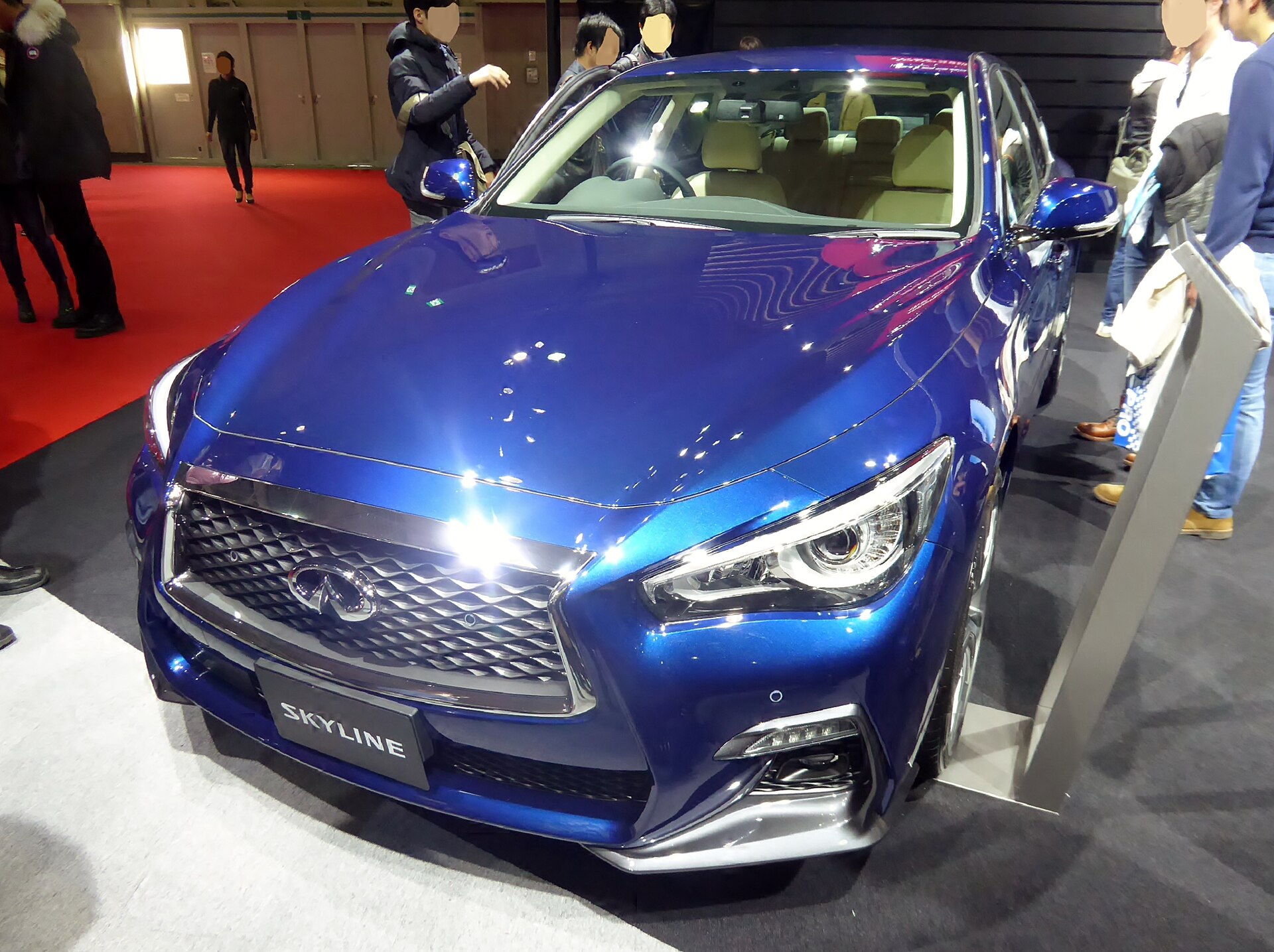
- Power
- 155–309 kW (211–420 PS)
- Boot
- 500 l
- Generation
- 13 of 13
Model timeline
Where the V37 sits in the Skyline story
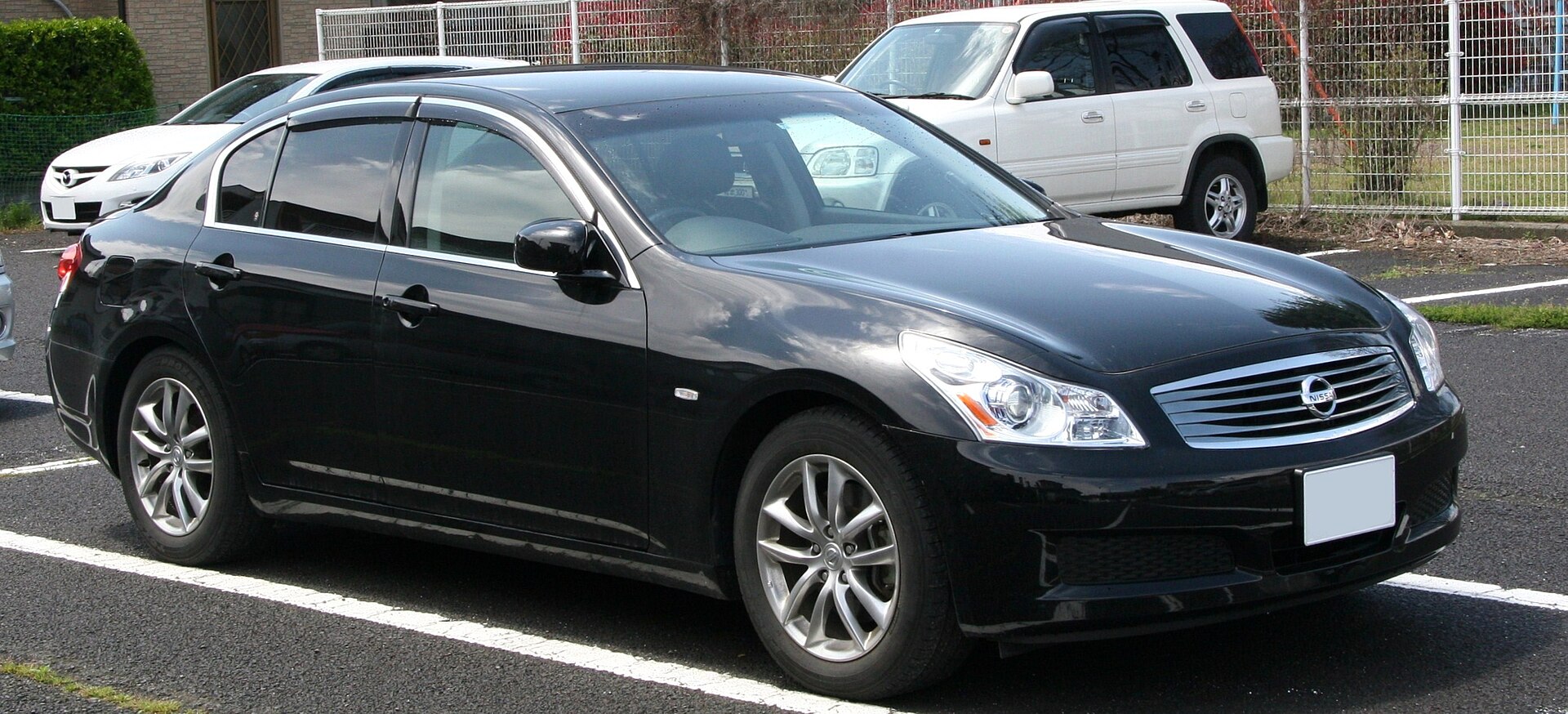
Predecessor Skyline V36 (2006–2014)
Newest first · 13 generations since 1957
-
2014
-
2006
-
2001
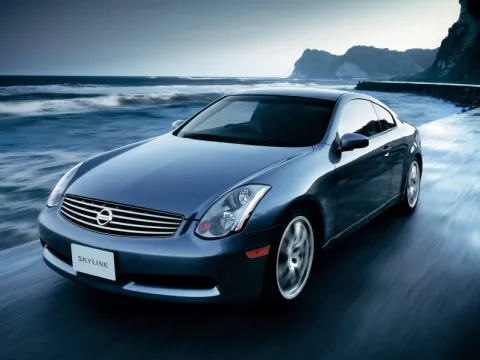 V35 2001–2006 · Sedan, Coupe · 158–206 kW (215–280 PS)
-
1998
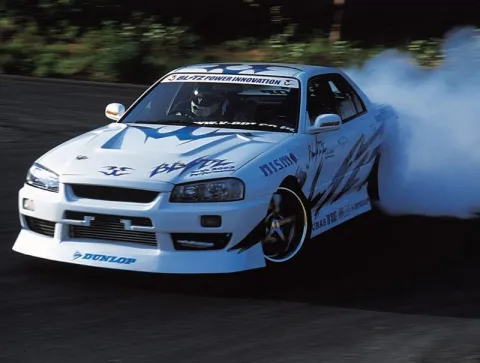 R34 1998–2001 · 114–206 kW (155–280 PS)
-
1993
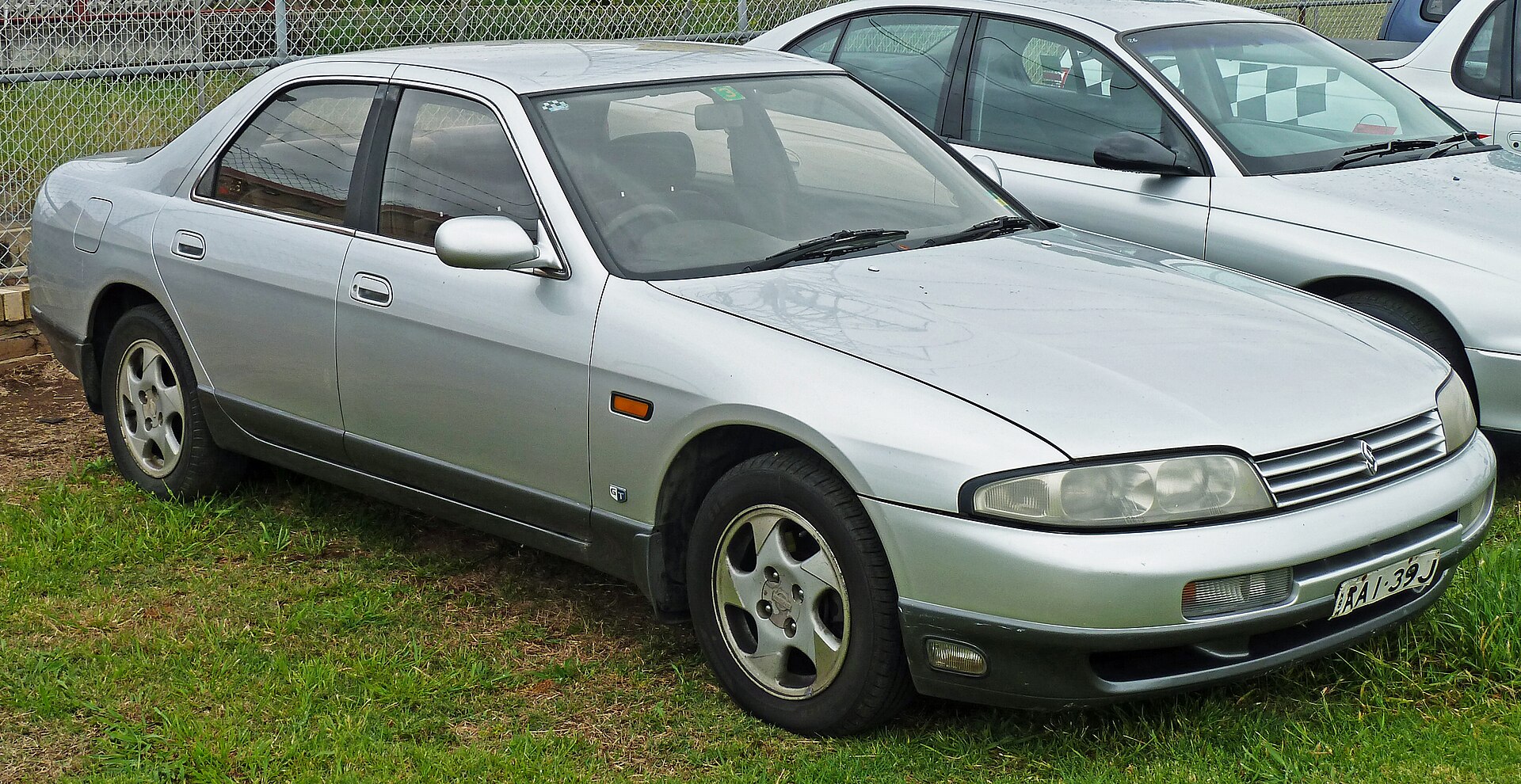
-
1989
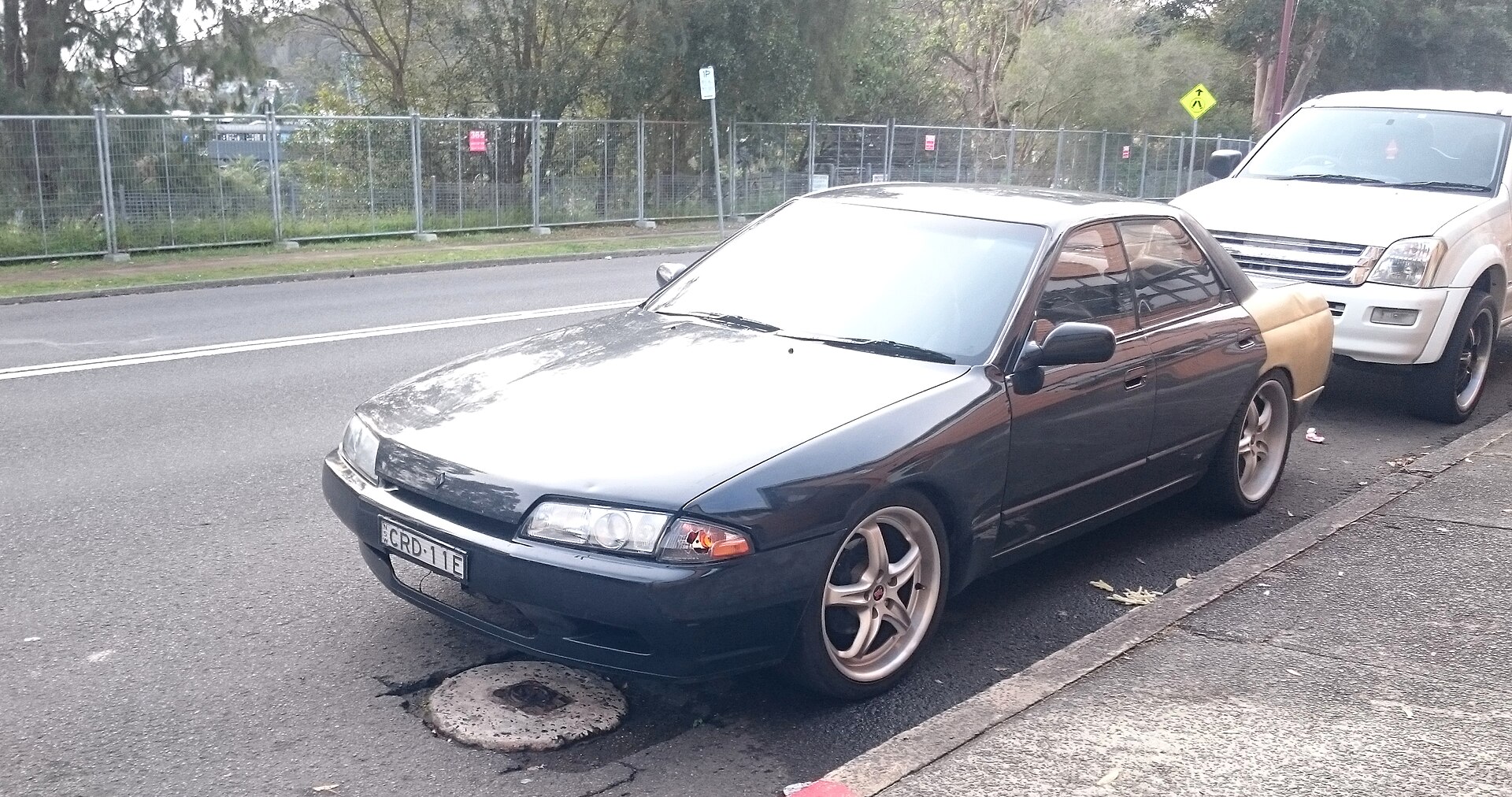
-
1985
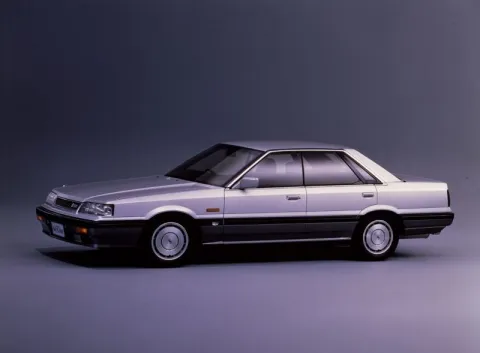 R31 1985–1989 · Sedan, Station wagon · 66–154 kW (90–209 PS)
-
1981
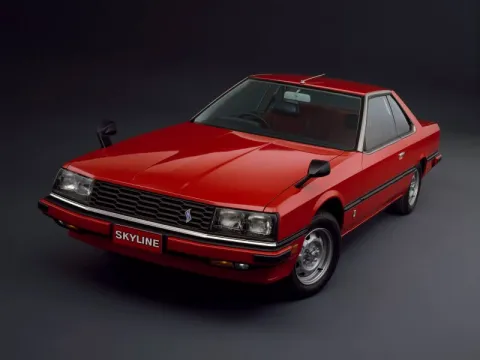 R30 1981–1985 · Sedan, Liftback · 77–151 kW (105–205 PS)
-
1977
-
1972
-
1968
-
1963
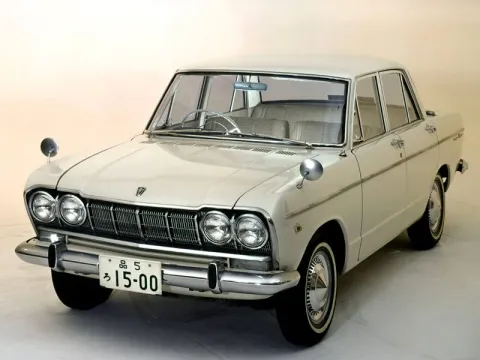 S50 1963–1968 · Sedan, Station wagon · 51–92 kW (69–125 PS)
-
1957


All generations by year: Skyline V37 (2014–now) · Skyline V36 (2006–2014) · Skyline V35 (2001–2006) · Skyline R34 (1998–2001) · Skyline R33 (1993–1998) · Skyline R32 (1989–1993) · Skyline R31 (1985–1989) · Skyline R30 (1981–1985) · Skyline C210 (1977–1981) · Skyline C110 (1972–1977) · Skyline C10 (1968–1972) · Skyline S50 (1963–1968) · Skyline ALSI (1957–1963)
The Skyline V37 is the 13th Skyline, announced by Nissan on 11 November 2013 and on sale in Japan from late February 2014. It is the Japanese version of the Infiniti Q50, built at Tochigi on the FM platform. It launched as a hybrid only, gained a 2.0 turbo in June 2014, and switched its petrol versions to a 3.0 twin-turbo V6 in 2019.
In short
- Japanese sales began in late February 2014 with the 350GT HYBRID, rated at 268 kW (364 PS) of system output.
- It was the first car with Direct Adaptive Steering, a steer-by-wire system that Nissan described as a world first.
- The 2019 update brought ProPILOT 2.0, the Nissan badge and the 298 kW (405 PS) Skyline 400R.
- Its export twin, the Infiniti Q50, was an IIHS Top Safety Pick+ in 2014 and 2015 with optional front crash prevention.
Skyline V37 specs by version
Engines
| Version | Engine | Power | Torque | Drive |
|---|---|---|---|---|
| 200GT-t | 2.0 l 2,000 cc | 155 kW 211 PS208 hp | 350 Nm258 lb-ft | Rear-wheel drive |
| GT (3.0 petrol) | 3.0 l · 6 cyl · Hybrid 3,000 cc | 224 kW 305 PS300 hp | 400 Nm295 lb-ft | Rear-wheel drive |
| 350GT HYBRID | 3.5 l · 6 cyl · Hybrid 3,500 cc | 268 kW 364 PS359 hp | 546 Nm403 lb-ft | All-wheel drive |
| 400R | 3.0 l · 6 cyl VR30DDTT | 298 kW 405 PS400 hp | 475 Nm350 lb-ft | Rear-wheel drive |
| NISMO | 3.0 l · 6 cyl 3,000 cc | 309 kW 420 PS414 hp | 550 Nm406 lb-ft | Rear-wheel drive |
Dimensions and weight
Show all 5 versions
| Version | Boot |
|---|---|
| 200GT-t | 500 l17.7 cu ft |
| GT (3.0 petrol) | 500 l17.7 cu ft |
| 350GT HYBRID | 500 l17.7 cu ft |
| 400R | 500 l17.7 cu ft |
| NISMO | 500 l17.7 cu ft |
Verified Manufacturer and type-approval data from our catalog · Sources and methodology
From V36 to V37: what the 13th Skyline changed
The V37 moved the Skyline from naturally aspirated V6 power to a hybrid and, later, to turbocharging. The V36 had used only VQ-series V6 engines without electric assistance. Its successor arrived in Japan with a single powertrain, the 3.5 hybrid, while the outgoing 250GT stayed in showrooms alongside it for a time.
The body grew wider and lower. Nissan's launch release gives the change against the V36 as 50 mm more width and 10 mm less height, with about 20 mm more rear knee room and a drag coefficient of 0.26.
At launch the Japanese car even wore the Infiniti emblem rather than a Nissan one. For the full lineage from the 1957 Prince original onwards, see the Nissan Skyline overview of all generations.
Q50 twin, Tochigi build and steer-by-wire
The V37 and the Q50 are the same car under two names. Infiniti revealed the Q50 at the 2013 Detroit motor show, and production at Nissan's Tochigi plant, which the company calls its mother plant for luxury vehicles, began on 14 May 2013. The Skyline came from the same line.
Direct Adaptive Steering was the headline technology. It converts steering-wheel inputs into an electrical signal that controls the front wheels, while still passing road-surface feedback back to the driver. On the hybrid it was standard in every grade, together with Active Lane Control, which uses a camera to detect lane markings at 70 km/h (43 mph) and above and fine-tunes the steering angle. The system won the RJC Technology of the Year award for 2014–2015 in Japan.
V37 powertrains: hybrid, Mercedes turbo and VR30 V6
Three engine families have powered the Japanese V37. The hybrid pairs the 3.5-litre VQ35HR V6 with a 50 kW electric motor in Nissan's one-motor, two-clutch parallel system. The 2.0 turbo is a Mercedes-Benz M274 unit, and the 3.0 twin-turbo is Nissan's own VR30DDTT.
| Version | Engine | Years (Japan) | Power | Torque | Drive |
|---|---|---|---|---|---|
| 350GT HYBRID | 3.5 L VQ35HR V6 + HM34 motor | 2014– | 268 kW (364 PS) system | 546 Nm (403 lb-ft) system | RWD or AWD |
| 200GT-t | 2.0 L turbo four (Mercedes M274) | 2014–2019 | 155 kW (211 PS) | 350 Nm (258 lb-ft) | RWD |
| GT (3.0 petrol) | 3.0 L VR30DDTT twin-turbo V6 | 2019– | 224 kW (304 PS) | 400 Nm (295 lb-ft) | RWD |
| 400R | 3.0 L VR30DDTT twin-turbo V6 | 2019– | 298 kW (405 PS) | 475 Nm (350 lb-ft) | RWD |
| NISMO | 3.0 L VR30DDTT twin-turbo V6 | 2023– | 309 kW (420 PS) | 550 Nm (406 lb-ft) | RWD |
On its own, the V6 in the hybrid produces 225 kW (306 PS), and the motor adds 50 kW (68 PS) and 290 Nm (214 lb-ft). The four-wheel-drive 350GT FOUR HYBRID used ATTESA E-TS, and Nissan called it its first hybrid with four-wheel drive. On Japan's JC08 cycle the rear-drive hybrid was rated at 18.4 km/L, about 5.4 L/100 km.
The 200GT-t went on sale on 5 June 2014. Nissan rated it at 13.6 km/L on the JC08 cycle and said it matched a non-turbo 2.5 in performance; boot space was 500 L (17.7 cu ft), against 400 L (14.1 cu ft) in the hybrid. Unlike the European Q50, the Skyline was never offered with the Mercedes 2.2 diesel.
The 2019 update: ProPILOT 2.0 and the 400R
The biggest mid-life change came in 2019. Nissan unveiled the revised Skyline in Yokohama on 16 July 2019, with Japanese sales from that autumn. German sources date an earlier, smaller facelift to December 2017.
ProPILOT 2.0, standard on all hybrid grades, was described by Nissan as the world's first driver-assistance system to combine navigated motorway driving with hands-off driving in a single lane. Once a destination is set, it can help with overtaking, lane changes and leaving at the chosen exit. A cabin camera checks that the driver is watching the road, and hands-off mode is unavailable in tunnels, on winding or two-way roads and where lanes merge. The system won the Best Innovation Award in the 2019–2020 Japan Car of the Year.
Petrol versions switched to the VR30DDTT, with the 400R as the top model: quilted bucket seats, aluminium trim, red stitching and Intelligent Dynamic Suspension, which adapts damping to the driving situation. Outside, the V-Motion grille brought back a Nissan badge, and four round rear lamps returned in full-LED form.
Skyline NISMO and NISMO Limited (2023–2024)
Announced on 8 August 2023 and limited to 1,000 cars, it went on sale in early September 2023 with rear-wheel drive and a seven-speed automatic.
NISMO tuning lifted the VR30DDTT from 298 kW (405 PS) to 309 kW (420 PS) and from 475 to 550 Nm (406 lb-ft). Changes included 20 mm wider rear tyres on 19-inch Enkei wheels, retuned suspension, stabilisers and ABS, fade-resistant brake pads, black Recaro front seats and windscreen adhesive taken from the Nissan GT-R NISMO to stiffen the body.
The NISMO Limited, 100 cars planned for summer 2024, marks 60 years since the S54A-1 Skyline GT. Each engine is assembled by hand at the Yokohama plant and carries a label naming its builder.
V37 dimensions (Q50 Hybrid, European specification)
Nissan's Japanese releases give no full dimensions, so the table uses ADAC data for the closely related Infiniti Q50 Hybrid, a rear-wheel-drive car built from October 2013 to January 2015.
| Parameter | Metric | Imperial |
|---|---|---|
| Length | 4,800 mm | 189.0 in |
| Width (without mirrors) | 1,820 mm | 71.7 in |
| Height | 1,430 mm | 56.3 in |
| Wheelbase | 2,850 mm | 112.2 in |
| Kerb weight (EU) | 1,825 kg | 4,023 lb |
| Boot | 400 L | 14.1 cu ft |
| Fuel tank | 70 L | 15.4 UK gal |
| Braked towing | 1,500 kg | 3,307 lb |
| 0–100 km/h | 5.1 s | — |
| Top speed | 250 km/h | 155 mph |
| Fuel use, NEDC combined | 6.2 L/100 km | 45.6 mpg UK |
In Europe ADAC lists the Q50 Hybrid from 51,356 EUR for the rear-drive automatic built from October 2013 to January 2015.
IIHS crash tests of the Infiniti Q50, year by year
No Euro NCAP rating exists for a car sold as the Skyline, so the crash data below is for the Infiniti Q50 in the United States, the export version of the V37.
| IIHS test | Rating | Model years covered |
|---|---|---|
| Small overlap front, driver side | Acceptable | 2014–2015 |
| Moderate overlap front (original) | Good | 2014–2015, 2016–2017, 2018–2024 |
| Side (original) | Good | 2014–2024 |
| Roof strength | Good | 2014–2023 |
| Head restraints and seats | Good | all years checked |
| Front crash prevention, vehicle-to-vehicle | Superior (optional FEB) | 2014–2016, 2017–2018 |
| Front crash prevention, vehicle-to-vehicle | Superior | 2019–2023 |
| Headlights, with technology or ProACTIVE pack | Acceptable | 2015–2021 |
| Headlights, base trims | Marginal | 2015–2024 |
The 2014 and 2015 cars earned Top Safety Pick+ when fitted with the optional Forward Emergency Braking. In the 2014 small overlap test, the structure was rated Acceptable and lower leg and foot protection Marginal. The IIHS pages checked for later model years show no award.
Choosing a V37 Skyline or Q50
The right V37 depends on use.
- Hybrid: the most economical version, and from 2019 the grade with ProPILOT 2.0 as standard; look for the four-wheel-drive 350GT FOUR HYBRID if you need traction.
- 400R: the enthusiast's choice from 2019, with 298 kW (405 PS) and adaptive dampers.
- NISMO: a limited collector's car of 1,000 units, plus 100 NISMO Limited cars.
- Q50 in Europe: the same body sold new through Infiniti, including diesel versions the Skyline never had.
Hybrid cars sit among other hybrid cars in our catalogue, and the wider choice of Japanese cars and the Nissan range are a click away.
Did you know?
- The Skyline V37 is generation 13 of 13 of the Nissan Skyline in our catalog.
- The Skyline V37 offers up to 309 kW (420 PS) — 64 kW more than the Skyline V36 (2006–2014) (+26%).
Image credits · Photos from Wikimedia Commons under free licences
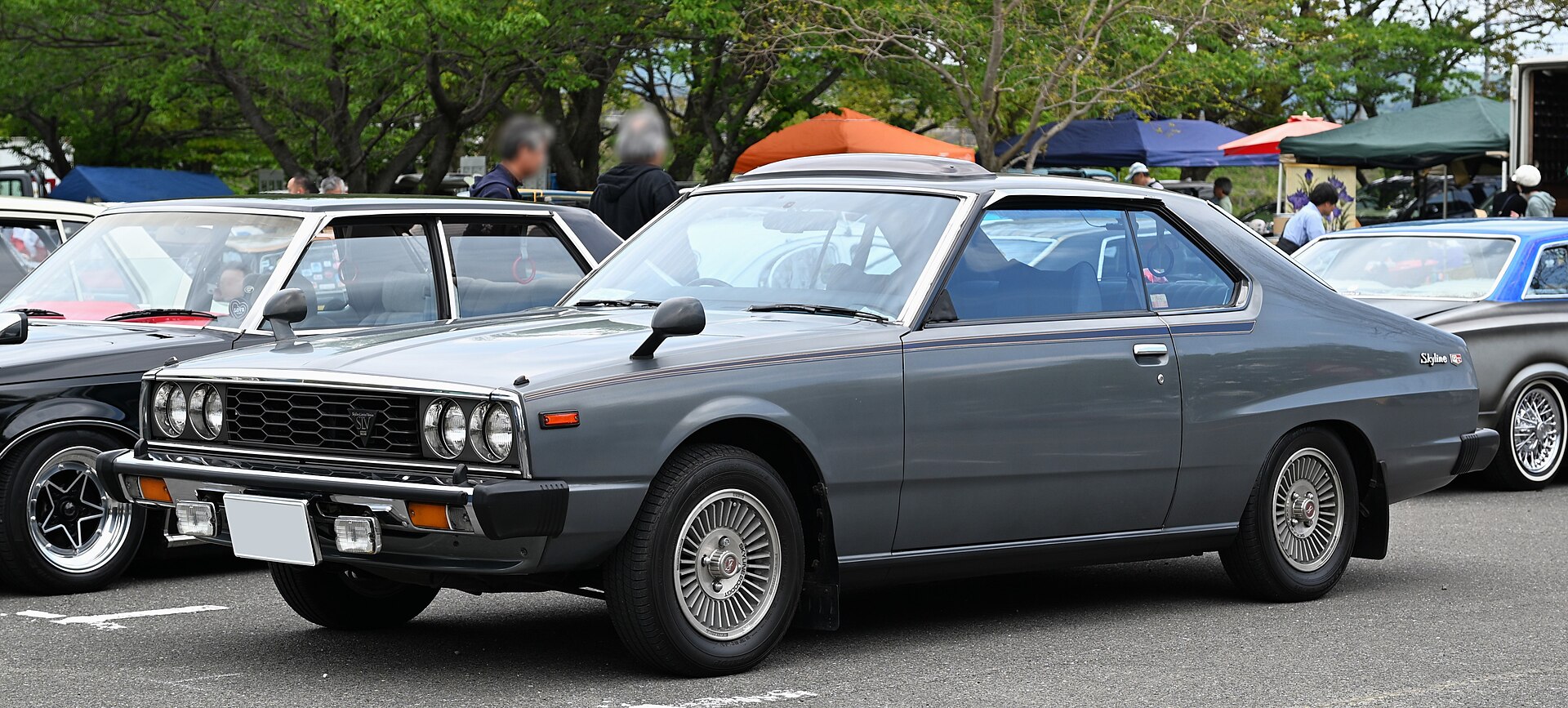
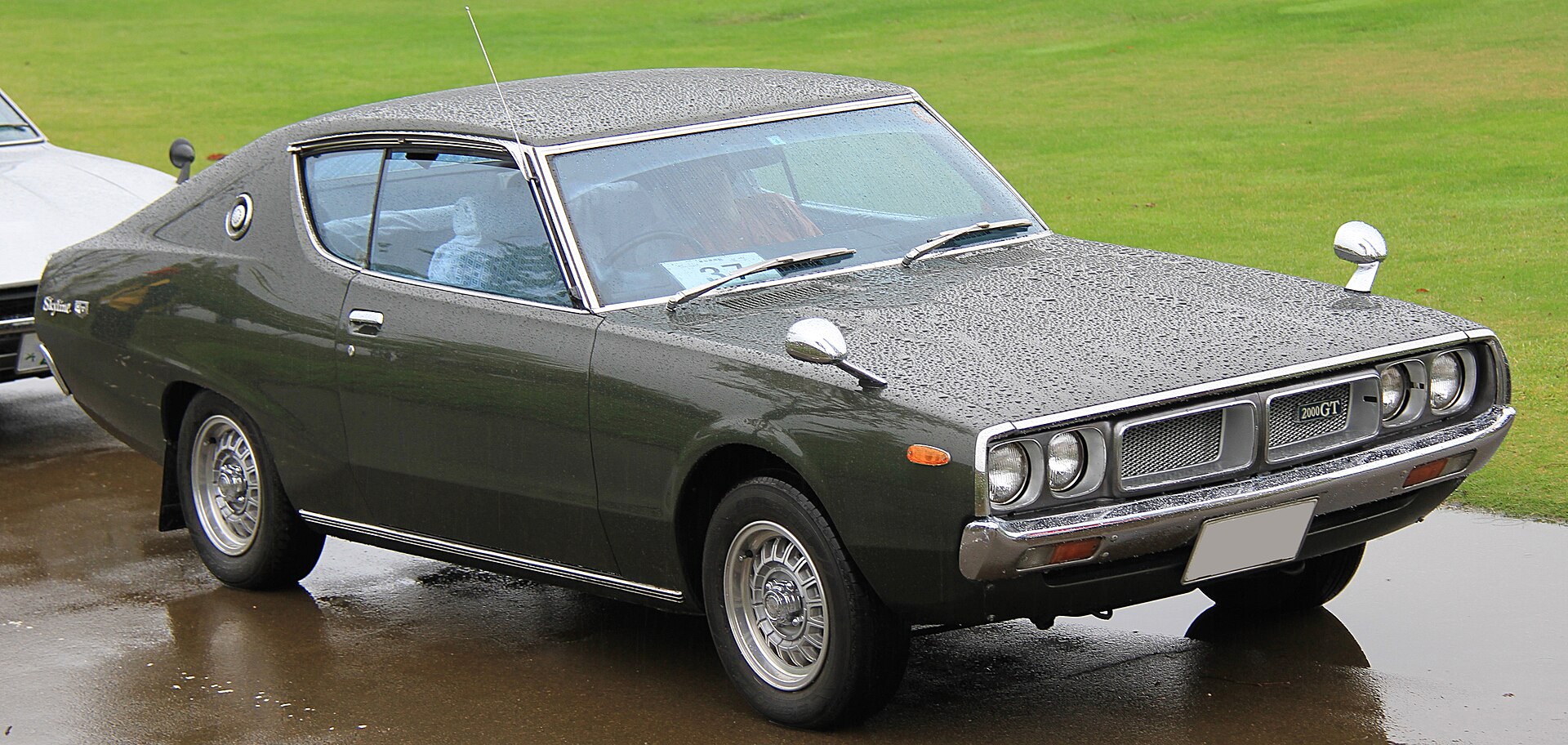
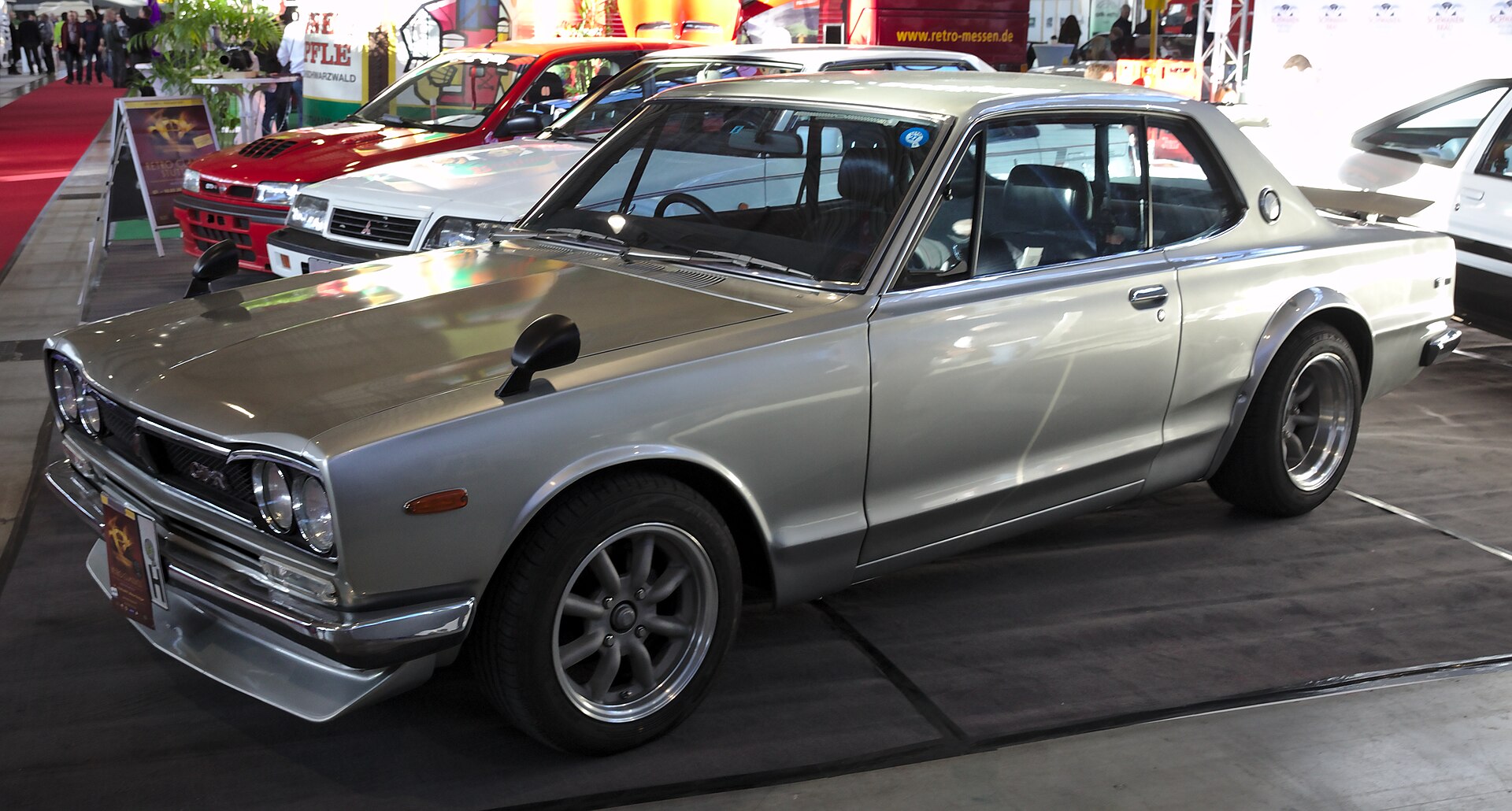
- Nissan Skyline ALSI · Photo: TTTNIS / Wikimedia Commons, CC0
- Nissan Skyline S50 · Photo: TTTNIS / Wikimedia Commons, CC0
- Nissan Skyline C10 · Photo: Alexander Migl / Wikimedia Commons, CC BY-SA 4.0
- Nissan Skyline C110 · Photo: TTTNIS / Wikimedia Commons, CC0
- Nissan Skyline C210 · Photo: TTTNIS / Wikimedia Commons, CC0
- Nissan Skyline R30 · Photo: 先従隗始 / Wikimedia Commons, CC0
- Nissan Skyline R31 · Photo: V-Hantarex / Wikimedia Commons, CC BY 4.0
- Nissan Skyline R32 · Photo: FotoSleuth / Wikimedia Commons, CC BY 2.0
- Nissan Skyline R33 · Photo: OSX / Wikimedia Commons, Public domain
- Nissan Skyline R34 · Photo: Timmie Ahl / Unsplash
- Nissan Skyline V35 · Photo: Guillaume Vachey from Chalon sur Saone, France / Wikimedia Commons, CC0
- Nissan Skyline V36 · Photo: TTTNIS / Wikimedia Commons, Public domain
- Nissan Skyline V37 · Photo: Tokumeigakarinoaoshima / Wikimedia Commons, CC BY-SA 4.0
V37 rivals
-
Ended 2026
- Years
- 1978–2026
- Body
- Liftback, Coupe
- Fuel
- Petrol
- Power
- 82–320 kW (111–435 PS)
5 generations
- A40/A50
- A60
- A70
- A80
- A90
-
Ended 2002
- Years
- 1978–2002
- Body
- Coupe, Convertible
- Fuel
- Petrol
- Power
- 75–206 kW (102–280 PS)
3 generations
- FB
- FC
- FD


Popular comparisons
FAQ
Is the Nissan Skyline V37 the same as the Infiniti Q50?
Yes, in body and engineering. The V37 is the Japanese version of the Q50, built at Tochigi. It wore Infiniti badges until the 2019 update and never had the Q50's 2.2 diesel.
What engines does the Skyline V37 have?
A 3.5 hybrid with 268 kW (364 PS) of system output, a Mercedes-sourced 2.0 turbo with 155 kW (211 PS) from 2014 to 2019, and from 2019 the 3.0 VR30DDTT twin-turbo V6 with 224 kW (304 PS), or 298 kW (405 PS) in the 400R.
What is ProPILOT 2.0 on the Skyline?
It is a driver-assistance system introduced with the 2019 update. It combines navigated motorway driving with hands-off driving in a single lane, provided a cabin camera confirms the driver is watching the road.
How powerful is the Skyline NISMO?
The 2023 Skyline NISMO produces 309 kW (420 PS) and 550 Nm (406 lb-ft). It is limited to 1,000 cars, with a further 100 NISMO Limited cars planned for 2024.
How safe is the Skyline V37?
The Skyline has no Euro NCAP rating. Its US twin, the Infiniti Q50, was an IIHS Top Safety Pick+ for 2014 and 2015 with optional front crash prevention.
Data sources
Data checked by an editor against the sources below.
- The text of this article (1cars archive)
- Wikipedia — Nissan Skyline
- Wikipedia — Infiniti Q50