
 Nissan Note
All generations, specs and history
Published Sources (2) Report an error
By Felix Hartmann, Automotive Technology & EV Contributor
- Built
- 2005–present
- Generations
- 3 · E11 to E13
- Top power
- 100 kW (136 PS)
Timeline
Note generations
Click a generation for its own page


E11 and E12 overlapped in 2012–2013, so E12 sits on a second lane
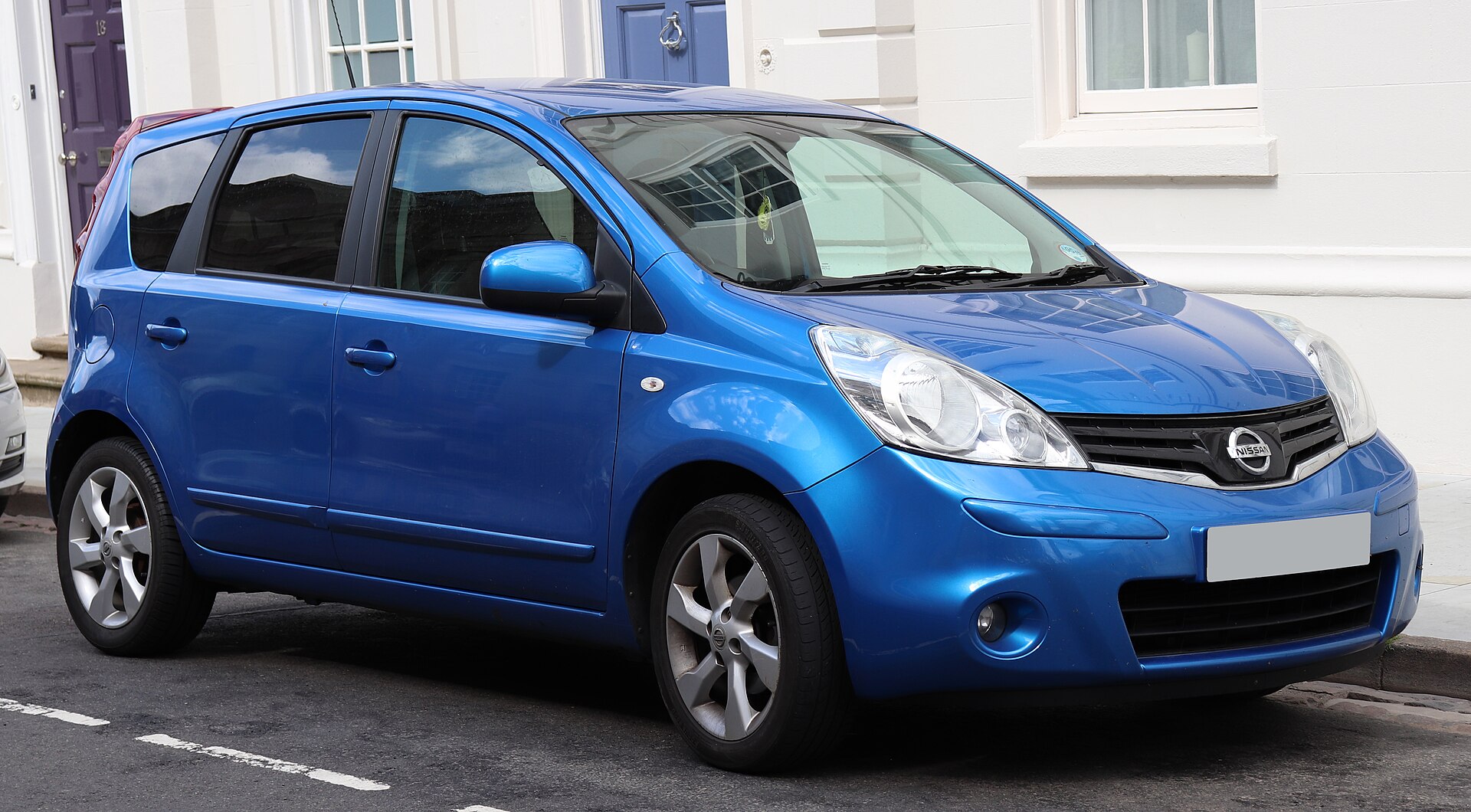
- Note E11 2005–2013 · Minivan / MPV · 50–81 kW (68–110 PS)
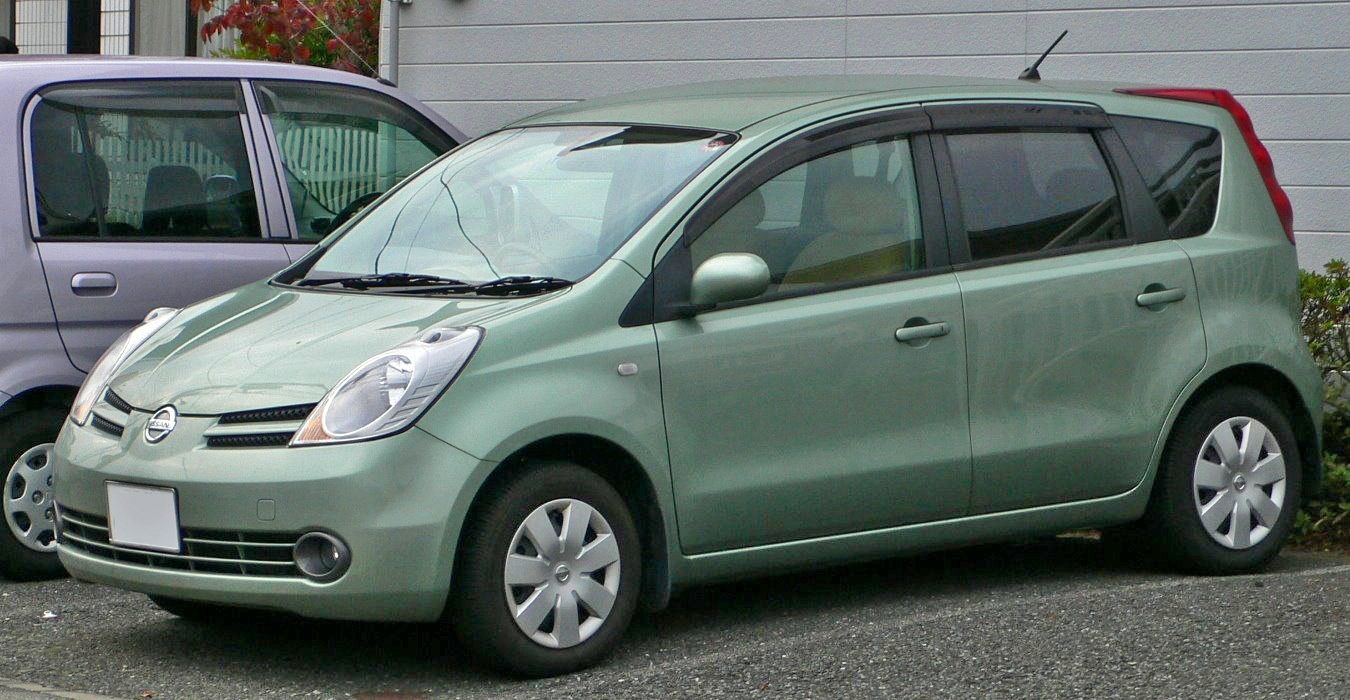
- Note E12 2012–2020 · Hatchback · 58–80 kW (79–109 PS)
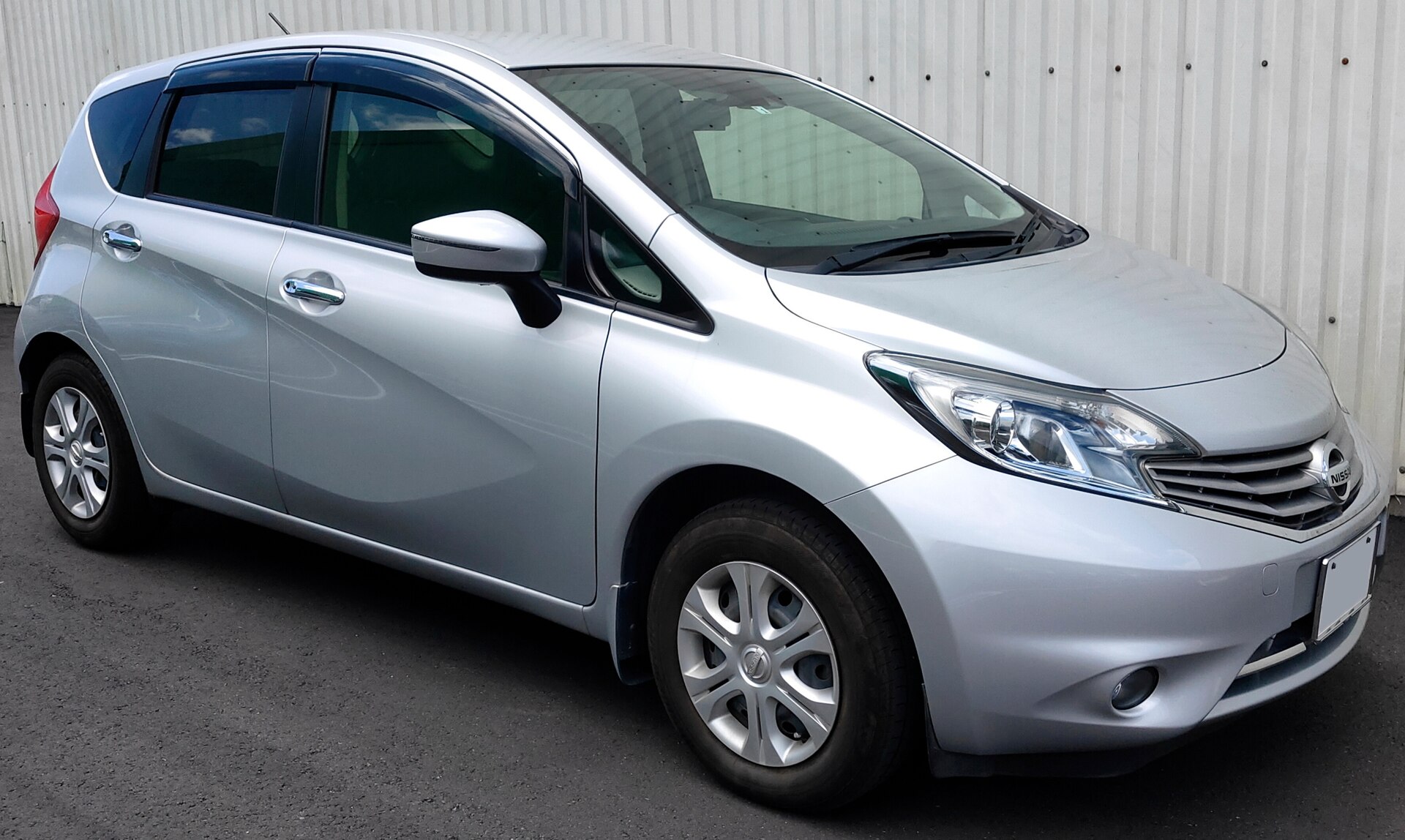
- Note E13 Current 2020–now · Hatchback · 85–100 kW (116–136 PS)
Newest first · 3 generations since 2005
-
2020
-
2012
-
2005
All generations by year: Note E13 (2020–now) · Note E12 (2012–2020) · Note E11 (2005–2013)
Which one is mine?
Pick the year of first registration to see which generation it is.
Check by VINWhich Nissan Note to buy
Our verdict · Felix Hartmann
- Lowest running costs: an E12 1.5 dCi with 66 kW (90 PS) and 3.6 l/100 km on the NEDC cycle.
- Best petrol all-rounder: the E12 1.2 DIG-S with 72 kW (98 PS), the only E12 available with the CVT automatic.
- Most space for the money: an E11 with the sliding rear bench, now among the cheapest used mini-MPVs.
- Hybrid curiosity: the e-Power models are Japanese-market cars and only reach Europe as private imports.
The Nissan Note is a tall five-door hatchback that Nissan has sold since January 2005. Europe received the first two generations, the E11 (2006-2013) and the E12 (2013-2017), both built at Nissan's plant in Sunderland, UK. Since December 2020 the third-generation E13 has been a Japan-focused car sold only with the e-Power series-hybrid drive, and it won Japan Car of the Year 2021-2022.
In short
- Three generations: E11 (Japan 2005, Europe 2006-2013), E12 (2012-2020 in Japan, 2013-2017 in Europe) and the e-Power-only E13 (since 2020).
- European engines: 1.4 and 1.6 petrol, 1.2 three-cylinder petrol (with or without supercharger) and the 1.5 dCi diesel, from 50 kW (68 PS) to 81 kW (110 PS).
- The E12 for Europe offered 325 litres of boot space and started at EUR 13,990 in Germany (2013).
- Euro NCAP gave both European generations four stars (2006 and 2013); in Europe the fifth-generation Micra replaced the Note in 2017.
Specs by version
Verified Manufacturer and type-approval data from our catalog · Sources and methodology
Nissan Note at a glance
| Specification | Note E11 (Europe) | Note E12 (Europe) | Note E13 (Japan) |
|---|---|---|---|
| Segment | B-segment mini-MPV | B-segment hatchback / mini-MPV | B-segment hatchback |
| Built | Sunderland, UK | Sunderland, UK | Japan |
| Platform | Renault-Nissan B platform (shared with Renault Modus) | Nissan V platform | CMF-B |
| Length / wheelbase | 4,083 / 2,600 mm | 4,100 / 2,600 mm | 55 mm shorter than E12 |
| Power | 50-81 kW (68-110 PS) | 59-72 kW (80-98 PS) | 85-100 kW (116-136 PS), electric motor |
| Boot | 280-1,332 l | 325-1,495 l | not published for Europe |
| Euro NCAP | 4 stars (2006) | 4 stars (2013) | not tested |
All Nissan models, including the Micra that replaced the Note in Europe, are listed in our Nissan catalogue. The European Note was assembled in Sunderland for the whole European market, and its upright body put it between a supermini and a compact MPV.
Generations of the Nissan Note
| Generation | Code | Years | Body styles | Engines | Power (kW / hp) |
|---|---|---|---|---|---|
| First generation | E11 | 2005-2013 (Europe 2006-2013) | 5-door mini-MPV | 1.4, 1.6 petrol; 1.5 dCi diesel | 50-81 kW (67-109 hp) in Europe |
| Second generation | E12 | 2012-2020 (Europe 2013-2017) | 5-door hatchback | 1.2, 1.2 DIG-S petrol; 1.5 dCi diesel; e-Power (Japan) | 58-80 kW (78-107 hp) |
| Third generation | E13 | since 2020 (Japan) | 5-door hatchback, Autech Crossover | e-Power series hybrid | 85-100 kW (114-134 hp) |
First generation (E11, 2005-2013)
Nissan previewed the Note with the Tone concept at the 2004 Paris Motor Show and launched the production car in Japan on 20 January 2005. The European version followed at the Frankfurt show in 2005; Sunderland started building it in January 2006 and UK sales began on 1 March 2006. Under the skin it shares its architecture with the Renault Modus, but the Note is the longer car, with a 2,600 mm wheelbase and a sliding rear bench that helped it compete with taller MPVs.
A facelift appeared at the 2008 Paris Motor Show and reached German showrooms in January 2009, followed by a further update for the 2011 model year. The E11 sold 71,659 cars in Europe in its first full year (2006), and Nissan counted 940,000 Notes worldwide by July 2012. Production ended in 2013.
Second generation (E12, 2012-2020)
The E12 was based on the Nissan Invitation concept shown at Geneva in 2012 and moved to the cheaper V platform also used by the Micra K13. It went on sale in Japan on 3 September 2012 and in Europe in the autumn of 2013, again built in Sunderland. Its drag coefficient is 0.298. In the United States the same body was sold as the Versa Note from mid-2013.
Nissan stopped building the Note for Europe in March 2017 to free capacity in Sunderland for the Qashqai, and the Micra K14 took its place in the range. Japan kept the E12 until December 2020 and added the Note e-Power in November 2016: a 1.2-litre petrol engine drives only a generator, while an 80 kW (109 PS) electric motor borrowed from the Leaf turns the front wheels; the battery holds only 1.5 kWh and cannot be plugged in. It became Japan's best-selling compact car in 2018.
Third generation (E13, since 2020)
The E13 was revealed on 24 November 2020 and went on sale in Japan on 23 December 2020. It uses the CMF-B platform shared with the Renault Clio V and is sold only as an e-Power hybrid. The upmarket Note Aura (2021) is 40 mm wider and has a 100 kW (136 PS) front motor; an Autech Crossover with 25 mm more ground clearance and a sporty Aura Nismo complete the range. The E13 has not been offered in Europe.


Engines, transmissions and performance
These are the main European engines with ADAC data. All drive the front wheels.
| Engine | Generation | Power | Torque | 0-100 km/h | Top speed |
|---|---|---|---|---|---|
| 1.4 (CR14) | E11 | 65 kW (88 PS) | 128 Nm | 13.1 s | 165 km/h |
| 1.6 | E11 | 81 kW (110 PS) | - | - | - |
| 1.5 dCi 70 / 85 / 90 / 103 | E11 | 50-76 kW (68-103 PS) | - | - | - |
| 1.2 (HR12, 3-cyl.) | E12 | 59 kW (80 PS) | 110 Nm | 13.7 s | 170 km/h |
| 1.2 DIG-S (supercharged, 3-cyl.) | E12 | 72 kW (98 PS) | 147 Nm | 11.7 s | 181 km/h |
| 1.5 dCi (K9K) | E12 | 66 kW (90 PS) | 200 Nm | 11.9 s | 179 km/h |
| e-Power (Japan) | E13 | 85 kW (116 PS) | 280 Nm | - | - |
The E11 used five-speed manuals and a four-speed automatic for the 1.6. In the E12 the supercharged 1.2 DIG-S could be paired with the Xtronic CVT, while the 59 kW (80 PS) 1.2 and the diesel came only with five-speed manuals. In the Japanese E13 the 1.2-litre HR12DE engine (60 kW) only charges the battery; the four-wheel-drive version adds a 50 kW (68 PS) rear motor.

Dimensions, space and boot
| Parameter | Metric | Imperial |
|---|---|---|
| Length (E11 / E12) | 4,083 / 4,100 mm | 160.7 / 161.4 in |
| Width (E11 / E12) | 1,690 / 1,695 mm | 66.5 / 66.7 in |
| Height (E11 / E12) | 1,550 / 1,535 mm | 61.0 / 60.4 in |
| Wheelbase | 2,600 mm | 102.4 in |
| Boot (E11) | 280-1,332 l | 9.9-47.0 cu ft |
| Boot (E12) | 325-1,495 l | 11.5-52.8 cu ft |
| Kerb weight (E12) | 1,080-1,165 kg | 2,381-2,568 lb |
| Fuel tank (E11 / E12) | 46 / 41 l | 12.2 / 10.8 US gal |
The 2,600 mm wheelbase is long for a car barely over four metres, and it is the same in both European generations. The E12 gained 45 litres of boot space over the E11 despite a 15 mm lower roof, and its folded load volume grew by 163 litres.

Fuel economy and running costs
On the old NEDC cycle the E11 1.4 used 6.3 l/100 km (about 37 mpg US) and emitted 150 g/km of CO2. The E12 was far more frugal: 4.7 l/100 km for the 59 kW (80 PS) 1.2, 4.3 l/100 km (99 g/km) for the supercharged DIG-S and 3.6 l/100 km (93 g/km) for the 1.5 dCi. Our fuel cost calculator turns any of these figures into a yearly fuel bill.
Trims, equipment and prices
In Germany the E11 started at EUR 14,140 for the 1.4 Visia in 2006, with Acenta and Tekna above it; the facelifted car opened at EUR 13,490 (2009). Later special editions were called i-way and i-way+. The E12 was sold as Visia, Acenta, Acenta+, N-TEC, Tekna and Black Edition, priced from EUR 13,990 (1.2 Visia, 2013) to EUR 22,030 for the 1.2 DIG-S Tekna Xtronic (2015).
Safety
Euro NCAP tested a 1.4 Acenta in July 2006 and awarded four stars, with 84% for adult occupants, 65% for children and 42% for pedestrians. The E12 also earned four stars in November 2013 (86% adult occupant, 82% child occupant, 58% vulnerable road users, 70% safety assist). The E13 has not been tested by Euro NCAP. See our safety ratings for newer small cars.

Reliability and known issues
We found no systematic, well-documented fault pattern for the Note in our sources, so we do not list any here. Like any used car, check the service history; the E12 diesel shares its 1.5 dCi (K9K) with many Renault and Dacia models, so parts are widely available.
Rivals
| Model | Engines | Power (hp) | Boot (l) | Price from (EUR) |
|---|---|---|---|---|
| Nissan Note E12 | 1.2 petrol, 1.5 diesel | 79-97 | 325 | 13,990 (Germany, 2013) |
| Nissan Note E11 | 1.4, 1.6 petrol, 1.5 diesel | 67-109 | 280 | 14,140 (Germany, 2006) |
| Nissan Micra K14 (successor) | 0.9, 1.0 petrol, 1.5 diesel | 70-115 | 300 | 13,990 (Germany, 2020) |
| Honda Jazz (GK, 2015-2017) | 1.3 i-VTEC petrol | 101 | 354 | 16,640 (Germany, 2015) |
The Honda Jazz was the Note's closest match in concept: a tall supermini with a flexible rear seat, 354 litres of boot and a CVT option, but a higher starting price in Germany. The comparison tool lets you set the Note against other small cars.
Photo gallery

Nissan Note evolution in numbers
Did you know?
- The Nissan Note has been around for 21 years: 3 generations in our catalog since 2005.
- The biggest jump in power came with the Note E13: up to 100 kW (136 PS), 20 kW more than the Note E12.
Most powerful version, kW
Figures from the 1cars catalog: power is the strongest version of each generation; generations without the figure are left out.
Nissan Note: first vs latest generation
| Spec | Note E11 | Note E13 | Change |
|---|---|---|---|
| Years | 2005–2013 | 2020–present | 15 years apart |
| Most powerful version | 81 kW (110 PS) | 100 kW (136 PS) | +19 kW (+23%) |
Oldest and newest generation in the 1cars catalog. Power is the strongest version of each; other rows are shown only when both generations have the figure.
Nissan Note in our rankings
- No. 180 of 1082 · Longest-running car nameplates (21 years · top 17%)
- No. 112 of 379 · Oldest car models still on sale (21 years · top 30%)
- No. 37 of 91 · Most torque: hatchbacks (280 Nm · top 41%)
- No. 80 of 141 · Most powerful hatchbacks (100 kW · top 58%)
- No. 219 of 411 · Cars with the most generations (3 generations · top 64%)
- No. 345 of 485 · Most torque: cars (280 Nm · top 72%)
In production longer than 83% of ranked nameplates in the 1CARS catalog (No. 180 of 1082).
FAQ
How many generations of the Nissan Note are there?
Three: the E11 (2005-2013), the E12 (2012-2020, in Europe 2013-2017) and the E13 (since 2020). Only the first two were sold new in Europe.
Where was the European Nissan Note built?
Both European generations were built at Nissan's plant in Sunderland, UK. Production for Europe ended in March 2017.
Is the Nissan Note a hybrid?
In Europe it never was. In Japan the Note e-Power (2016) is a series hybrid: the petrol engine only generates electricity and an electric motor drives the wheels. The current E13 is sold only in that form.
What replaced the Nissan Note in Europe?
The fifth-generation Micra (K14), launched in 2017, took over the Note's place in Nissan's European range.
How big is the boot of the Nissan Note?
The E12 offers 325 litres with the rear seats up and 1,495 litres with them folded; the E11 offers 280 to 1,332 litres.
Data sources
Data checked by an editor against the sources below.


