 Peugeot 208
All generations, specs and history
Published Sources (4) Report an error
By Felix Hartmann, Automotive Technology & EV Contributor
- Built
- 2012–present
- Generations
- 2
- Top power
- 115 kW (156 PS)
Timeline
208 generations
Click a generation for its own page


Newest first · 2 generations since 2012
All generations by year: 208 II (2019–now) · 208 I (2012–2019)
Which one is mine?
Pick the year of first registration to see which generation it is.
- 208 II 2019–present
- 208 I 2012–2019
Verdict
Our verdict · Felix Hartmann
The new 208 is ready to take on its rivals. It has an emotional, sporty exterior, an impressive interior and well-judged road manners, plus a wide choice of engines and gearboxes and a fully electric version. Peugeot clearly tried to please, if not everyone, then a great many drivers, and with this equipment, performance and build quality, its chances are good.
The Peugeot 208 is a front-wheel-drive supermini built by the French manufacturer Peugeot since 2012. It replaced the Peugeot 207 and sits below the 308. The first generation, offered with three or five doors, was unveiled at the Geneva motor show in March 2012 and later spawned the hot 208 GTi. The second generation was unveiled at the same show in March 2019 with a more aggressive design, a futuristic interior and new equipment — including a fully electric version, the e-208.
In short
- First generation 2012–2019 (three or five doors, facelift 2015); second generation since 2019, five-door only, facelifted in 2023.
- Second generation on the CMP platform, about 30 kg lighter than its predecessor.
- PureTech 1.2 petrol engines with 55–96 kW (75–130 PS), a 1.5 BlueHDi diesel with 75 kW (100 PS) and the e-208 with 100 kW (136 PS).
- i-Cockpit with a raised digital instrument display (3D on higher trims) and a 311-litre boot.
Size at a glance
| Dimensions | Peugeot 208 II |
|---|---|
| Length | 4,055 mm159.6 in |
| Width | 1,745 mm68.7 in |
| Height | 1,430 mm56.3 in |
| Wheelbase | 2,540 mm100.0 in |
| Boot | 309 L10.9 cu ft |
Running cost
Fuel · 208 PureTech 75
about 1,100 EUR fuel a year at 15,000 km
4.1 l/100 km · petrol at 1.75 EUR/l · change mileage, fuel price or version
Specs by version
Engines
| Version | Engine | Power | Torque | Gearbox | Drive | Production years |
|---|---|---|---|---|---|---|
| Electric · 2 versions | ||||||
| 208 II · e-208 | Electric | 100 kW 136 PS134 hp | 260 Nm192 lb-ft | Single-speed | Front-wheel drive | 2020–2023 |
| 208 II · e-208 (2023 update) | Electric | 115 kW 156 PS154 hp | — | Single-speed | Front-wheel drive | 2023 |
| Diesel · 1 version | ||||||
| 208 II · BlueHDi 100 | Diesel | 75 kW 102 PS101 hp | 250 Nm184 lb-ft | Manual | Front-wheel drive | 2019 |
| Petrol · 3 versions | ||||||
| 208 II · PureTech 75 | Petrol | 55 kW 75 PS74 hp | 118 Nm87 lb-ft | Manual | Front-wheel drive | 2019 |
| 208 II · PureTech 100 | Petrol | 74 kW 101 PS99 hp | 205 Nm151 lb-ft | Manual | Front-wheel drive | 2019 |
| 208 II · PureTech 130 EAT8 | Petrol | 96 kW 131 PS129 hp | 230 Nm170 lb-ft | Automatic | Front-wheel drive | 2019 |
Performance
Show all 6 versions
| Version | 0–100 km/h | Top speed | Fuel consumption | Range | CO₂ |
|---|---|---|---|---|---|
| Electric · 2 versions | |||||
| 208 II · e-208 | — | — | 15.4 kWh/100 km24.8 kWh/100 mi | 340 km211 mi | — |
| 208 II · e-208 (2023 update) | — | — | 14.2 kWh/100 km22.9 kWh/100 mi | 400 km249 mi | — |
| Diesel · 1 version | |||||
| 208 II · BlueHDi 100 | 10.2 s 0–62 mph | 188 km/h117 mph | 3.2 l/100 km73.5 mpg US · 88.3 mpg UK | — | 85 g/km |
| Petrol · 3 versions | |||||
| 208 II · PureTech 75 | 13.2 s 0–62 mph | 170 km/h106 mph | 4.1 l/100 km57.4 mpg US · 68.9 mpg UK | — | 94 g/km |
| 208 II · PureTech 100 | 9.9 s 0–62 mph | 188 km/h117 mph | 4.2 l/100 km56.0 mpg US · 67.3 mpg UK | — | 97 g/km |
| 208 II · PureTech 130 EAT8 | 8.7 s 0–62 mph | 208 km/h129 mph | 4.4 l/100 km53.5 mpg US · 64.2 mpg UK | — | 103 g/km |
Dimensions and weight
Show all 6 versions
| Version | Length | Width | Height | Wheelbase | Kerb weight | Boot | Fuel tank | Battery |
|---|---|---|---|---|---|---|---|---|
| Electric · 2 versions | ||||||||
| 208 II · e-208 | 4,055 mm159.6 in | 1,745 mm68.7 in | — | 2,540 mm100.0 in | 1,530 kg3,373 lb | — | — | 50 kWh |
| 208 II · e-208 (2023 update) | — | — | — | — | 1,530 kg3,373 lb | — | — | 51 kWh |
| Diesel · 1 version | ||||||||
| 208 II · BlueHDi 100 | 4,055 mm159.6 in | 1,745 mm68.7 in | 1,430 mm56.3 in | 2,540 mm100.0 in | 1,165 kg2,568 lb | 299 l10.6 cu ft | 41 l10.8 gal US | — |
| Petrol · 3 versions | ||||||||
| 208 II · PureTech 75 | 4,055 mm159.6 in | 1,745 mm68.7 in | 1,430 mm56.3 in | 2,540 mm100.0 in | 1,055 kg2,326 lb | 309 l10.9 cu ft | 44 l11.6 gal US | — |
| 208 II · PureTech 100 | 4,055 mm159.6 in | 1,745 mm68.7 in | 1,430 mm56.3 in | 2,540 mm100.0 in | 1,165 kg2,568 lb | 309 l10.9 cu ft | 44 l11.6 gal US | — |
| 208 II · PureTech 130 EAT8 | 4,055 mm159.6 in | 1,745 mm68.7 in | 1,430 mm56.3 in | 2,540 mm100.0 in | 1,233 kg2,718 lb | 309 l10.9 cu ft | 44 l11.6 gal US | — |
Verified Manufacturer and type-approval data from our catalog · Sources and methodology
Peugeot 208 at a glance
The second-generation 208 shares its Common Modular Platform (CMP) with the Peugeot 2008, DS 3 Crossback and Opel Corsa. More Peugeot models are listed in our Peugeot catalogue, and the company's story is told in our history of Peugeot.
| Generation | Years | Platform | Bodies | Notes |
|---|---|---|---|---|
| First | 2012–2019 (Europe) | PF1 | 3 or 5 doors | Facelift 2015; 208 GTi; three-door dropped in 2018 |
| Second | 2019 onwards | CMP | 5 doors | Electric e-208; facelift 2023 |
History
The first 208 was revealed in production form at the Geneva motor show in March 2012. It was about 110 kg lighter on average than the 207 yet roomier inside. A three-door 208 GTi with a sporty look followed. As rivals launched new or updated superminis, Peugeot began work on a successor, and the second-generation 208 appeared at the Geneva motor show in March 2019, going on sale in Europe that summer. This article focuses on the second generation.
Exterior
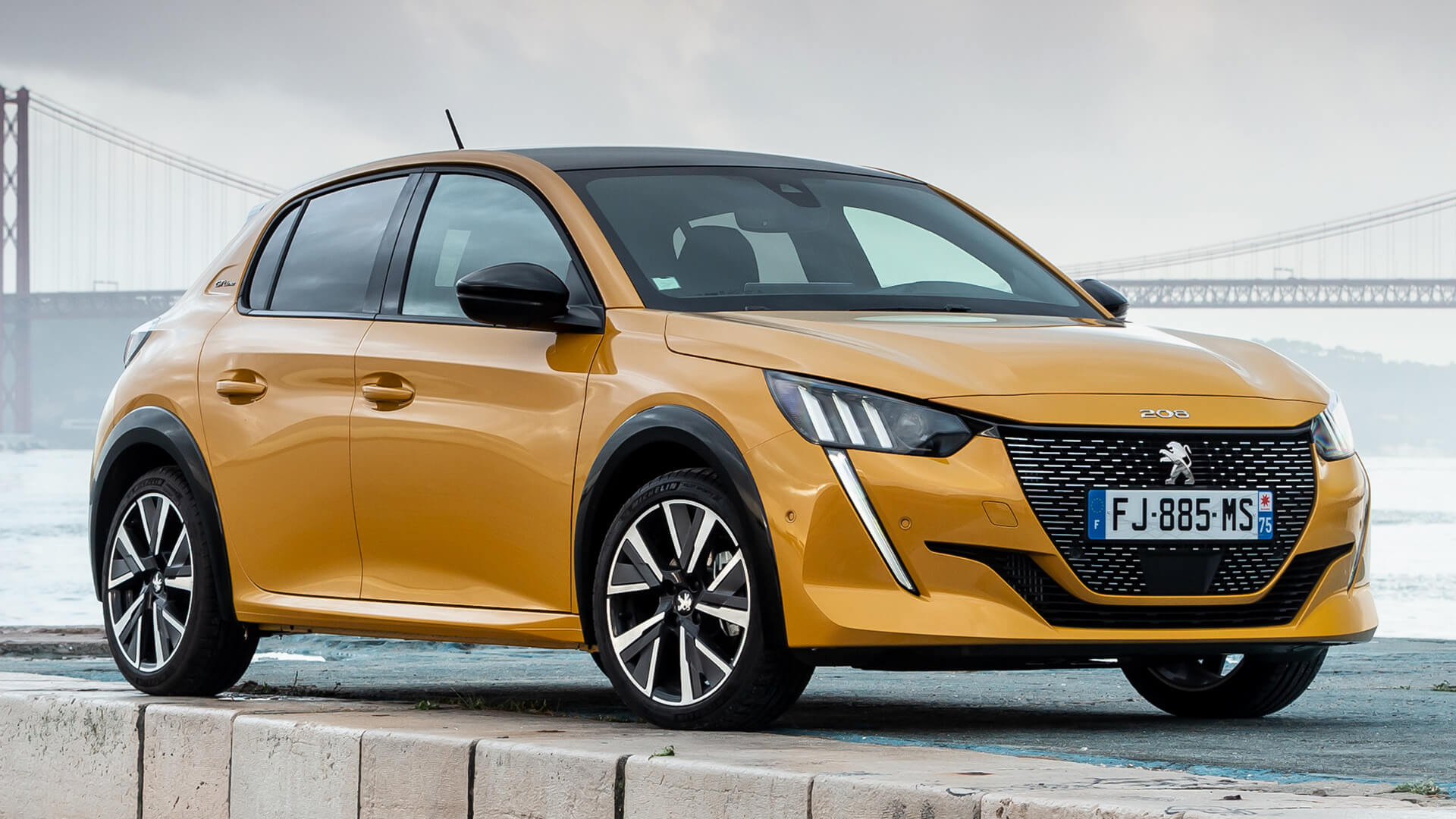
The new 208 looks completely different. Although it is a small car, its designers gave it a sporty, slightly fierce character, and the front is especially energetic and eye-catching. Vertical LED daytime running lights look like "fangs" or claw marks. Each headlight has three vertical LED strips and a lens for the main beam. In the centre is a large, open grille with the lion badge and a panel for the sensors. The electric version is unusual: its grille is partly painted in the body colour, and the badge changes colour from chrome to bright green depending on the viewing angle. A small V-shaped lower grille in the bumper adds aggression, and the leading edge of the bonnet carries the "208" lettering. Less noticeable details include the sculpted bonnet and a heated windscreen. Improved aerodynamics benefit both fuel economy and performance.
The side looks very attractive compared with the previous generation. Whatever the version or engine, the 208 has a sporty, toned stance and its own character, underlined by stylish wheel arches with black plastic trims that stand out especially on bright paint colours. A spoiler at the top of the rear window adds to the sporty look; in profile the car almost looks ready for a rally. Black window surrounds, black B-pillars and black mirror housings complete the side. The mirrors stay in the corner of the windows rather than moving onto the doors, and even the base version has heated, electrically adjustable and folding mirrors with LED indicators. Stylish 17-inch alloy wheels are available, with 18-inch wheels as an option, and ground clearance is an average 160 mm.
Depending on the version, the roof is plain or has a panoramic glass section; roof rails are optional. At the rear, a black strip stretches across the full width and merges into the tail lights. The tailgate leans forward more steeply, and the rear end looks bigger. The bumper has a diffuser, reflectors and two fog lamps, and Peugeot offers various colours and appearance packs.
Interior
The 208 is noticeably more comfortable and convenient inside than before. Materials include leatherette, better plastics, metal and fabric, and the infotainment system is something the previous generation could only dream of. The driver has a comfortable, original two-spoke steering wheel, flattened at the top and bottom, which gives a sports-car feel.
The door panel carries comfort controls. Behind the small wheel sits an attractive "floating" digital instrument panel placed at the same focal distance as the central screen, with rich graphics and smooth animations. Higher versions get the 3D i-Cockpit, which displays information as holograms at different distances from the driver's eyes depending on its importance. The front seats have a more comfortable shape, height adjustment, heating and side support.
Depending on the version, the 208 has a rear camera, wireless phone charging, four USB ports, climate control and an electric parking brake. The touchscreen on the centre console measures 7 inches on most launch versions and 10 inches on higher trims; it supports MirrorLink, Android Auto and Apple CarPlay and TomTom navigation, and is angled towards the driver. Below it are two air vents and a small row of aircraft-style toggle switches. Most of the tunnel is given over to storage compartments of different shapes, with the gear selector, a few buttons and a small but comfortable armrest.
Two passengers sit comfortably in the rear; three can fit if necessary. The boot has grown slightly to 311 litres, measured to the parcel shelf, and the rear seats fold 60:40.
Engines and transmissions
| Version | Engine | Power (kW / PS) | Torque | Gearbox |
|---|---|---|---|---|
| PureTech 75 | 1.2 three-cylinder petrol, naturally aspirated | 55 kW / 75 PS | 118 Nm | 5-speed manual |
| PureTech 100 | 1.2 three-cylinder turbo petrol | 74 kW / 100 PS | 205 Nm | 6-speed manual or EAT8 |
| PureTech 130 | 1.2 three-cylinder turbo petrol | 96 kW / 130 PS | 230 Nm | EAT8 |
| BlueHDi 100 | 1.5 four-cylinder turbodiesel | 75 kW / 100 PS | 250 Nm | 6-speed manual |
| e-208 | Electric motor, 50 kWh battery | 100 kW / 136 PS | 260 Nm | Single speed |
The PureTech petrol engines are 12-valve three-cylinders; the turbocharged versions use direct injection. They use 4.1–4.4 l/100 km on the combined cycle, reach 100 km/h in 8.7–13.2 seconds and have top speeds of 170–204 km/h. The 16-valve BlueHDi diesel uses about 3.2 l/100 km, reaches 100 km/h in about 10.2 seconds and has a top speed of 188 km/h. All versions are front-wheel drive.
The electric e-208
The e-208's 50 kWh battery sits under the floor, so it does not take away cabin space. The motor is more powerful than the combustion engines, with 100 kW (136 PS), and takes the car to 100 km/h in 8.1 seconds. The WLTP range is 340 km. A full charge from a household socket takes about 16 hours, a 7.4 kW wallbox cuts this to about 8 hours, and a 100 kW fast charger restores 80% in around half an hour. Three driving modes — Eco, Normal and Sport — change energy consumption and regenerative braking. With the 2023 update the battery grew to 51 kWh, power to 115 kW (156 PS) and the WLTP range to 400 km.
Chassis
The CMP platform saved about 30 kg compared with the previous generation, and Peugeot says the car has better noise, vibration and heat insulation. The suspension layout is unchanged: MacPherson struts at the front and a semi-independent torsion beam at the rear. All four wheels have disc brakes.
Safety and equipment
Besides its striking design, the 208 offers many assistance and safety systems: an electric parking brake, adaptive cruise control with Stop & Go on automatic versions, lane keeping assist, a parking assistant, pedestrian and cyclist detection, driver attention monitoring, automatic high beam, traffic-sign recognition, blind-spot monitoring, a full set of airbags, automatic emergency braking and TomTom navigation with 3D maps. In Europe the 208 was offered in Access, Active, Allure, GT Line and GT trim levels.
What owners say
Owner feedback below refers to the first 208, as the second generation was still new when it was gathered. Owners like its looks, size and fuel economy; it is lively and agile, and the automatic gearbox works well. Despite its small size it is reasonably roomy, and the cabin is modern and stylish. On the downside, they mention noise insulation, a boot that is sometimes too small, low ground clearance, paint quality and the simple torsion-beam rear axle. For the money, however, it offers good value, and the new generation fixes many of these shortcomings.
Rivals
The 208 competes with the Renault Clio, Volkswagen Polo, Opel Corsa, Toyota Yaris, Skoda Fabia, SEAT Ibiza and, until 2023, the Ford Fiesta.
Image credits · Photos from Wikimedia Commons under free licences
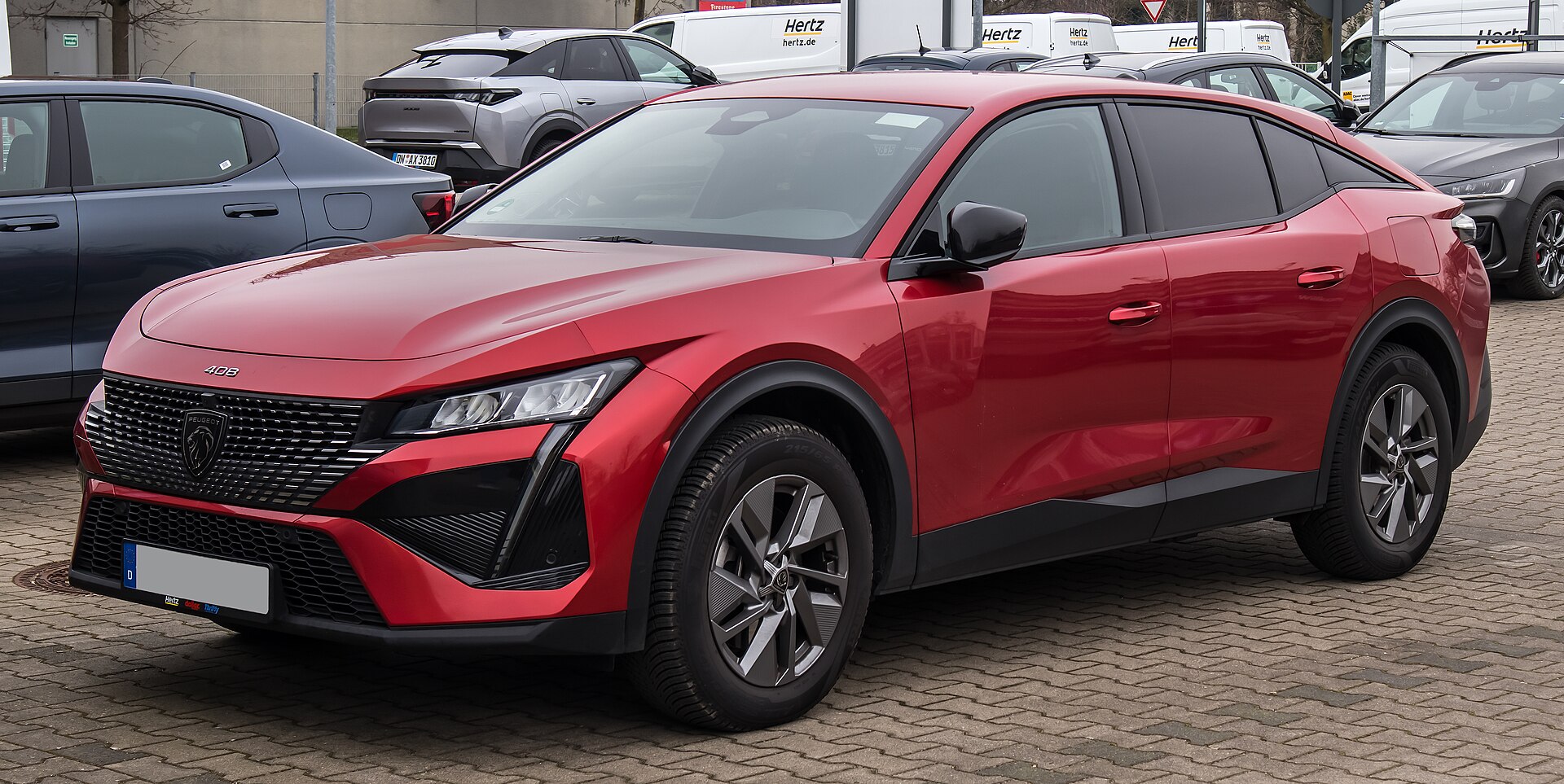
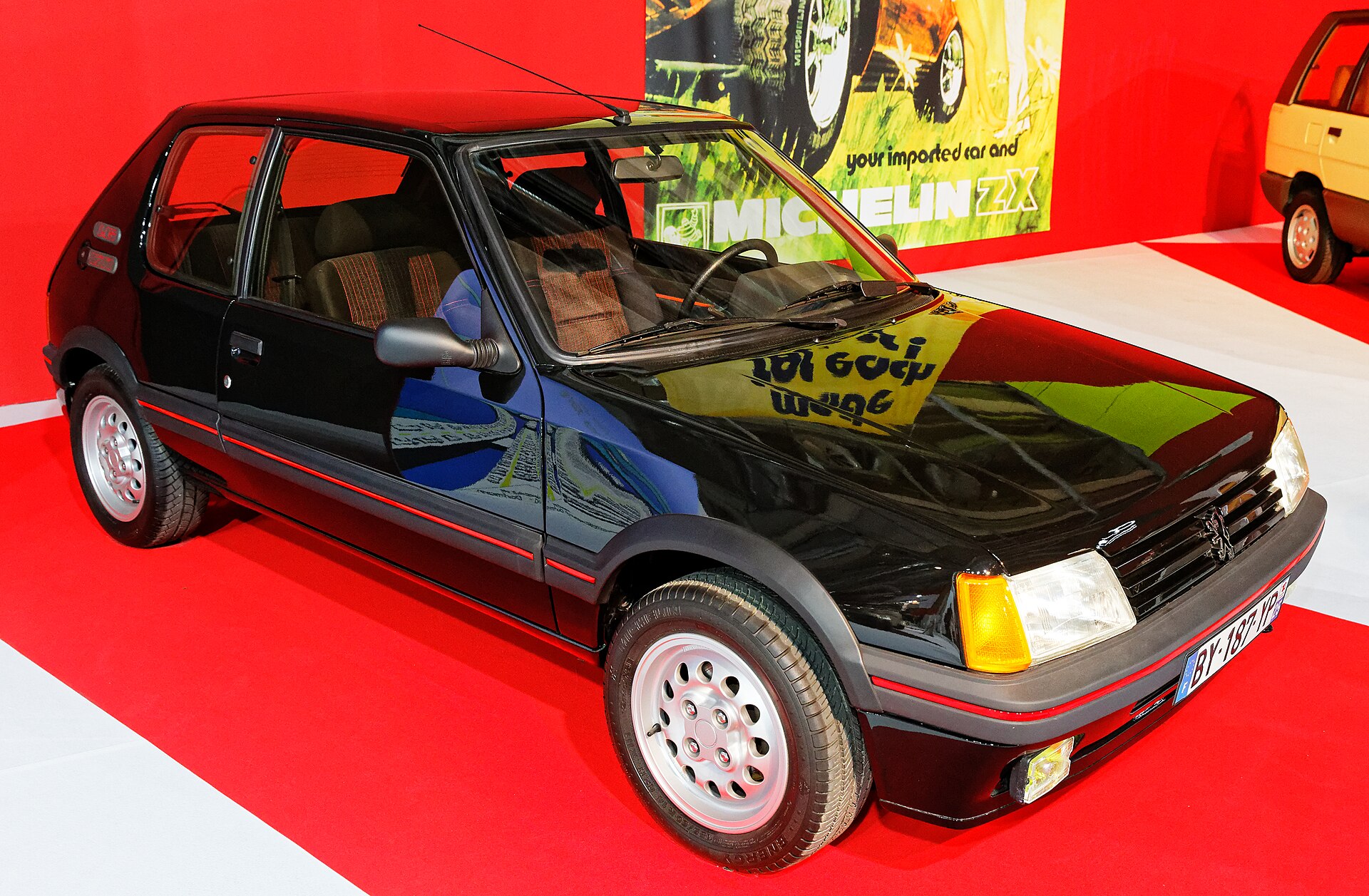
- Peugeot 208 I · Photo: M 93 / Wikimedia Commons, CC BY-SA 3.0 de
- Peugeot 208 II · Photo: Alexander-93 / Wikimedia Commons, CC BY-SA 4.0
Popular comparisons
Peugeot 208 in our rankings
- No. 1 of 42 · Most economical hatchbacks (3.2 l/100 km)
- No. 1 of 256 · Most economical cars (3.2 l/100 km)
- No. 9 of 53 · Lightest hatchbacks (1,055 kg)
- No. 29 of 304 · Lightest cars (1,055 kg · top 10%)
- No. 51 of 420 · Smallest cars (4,055 mm · top 13%)
- No. 269 of 912 · Longest-running car nameplates (14 years · top 30%)
More economical than 99% of ranked cars in the 1CARS catalog (No. 1 of 256).
FAQ
When did the second-generation Peugeot 208 appear?
It was unveiled at the Geneva motor show in March 2019 and went on sale in Europe that summer.
Is there an electric Peugeot 208?
Yes, the e-208, with a 100 kW (136 PS) motor, a 50 kWh battery and a WLTP range of 340 km; from 2023 it has a 51 kWh battery and up to 400 km.
Is the new Peugeot 208 available as a three-door?
No. The second generation is five-door only; the three-door body was dropped with the first generation in 2018.
How big is the Peugeot 208 boot?
311 litres, with a 60:40 split-folding rear seat.
Data sources
Data checked by an editor against the sources below.
- Wikipedia — Peugeot 208
- Euro NCAP — 06fbc20b 7298 4106 Ba0a 0c20a67fb8a7
- Mobile — Peugeot 208 Und Renault Clio 2019 Vergleichstest 16510
- EEA CO₂ monitoring (European Environment Agency, CC BY 4.0)