 Peugeot 205
Specs, engines and history
Published Sources (1) Report an error
By Oleksandr Hnatiuk, Automotive Editor & Used Car Specialist
- Built
- 1983–1998
- Top power
- 94 kW (128 PS)
Which 205 to choose
Our verdict · Oleksandr Hnatiuk
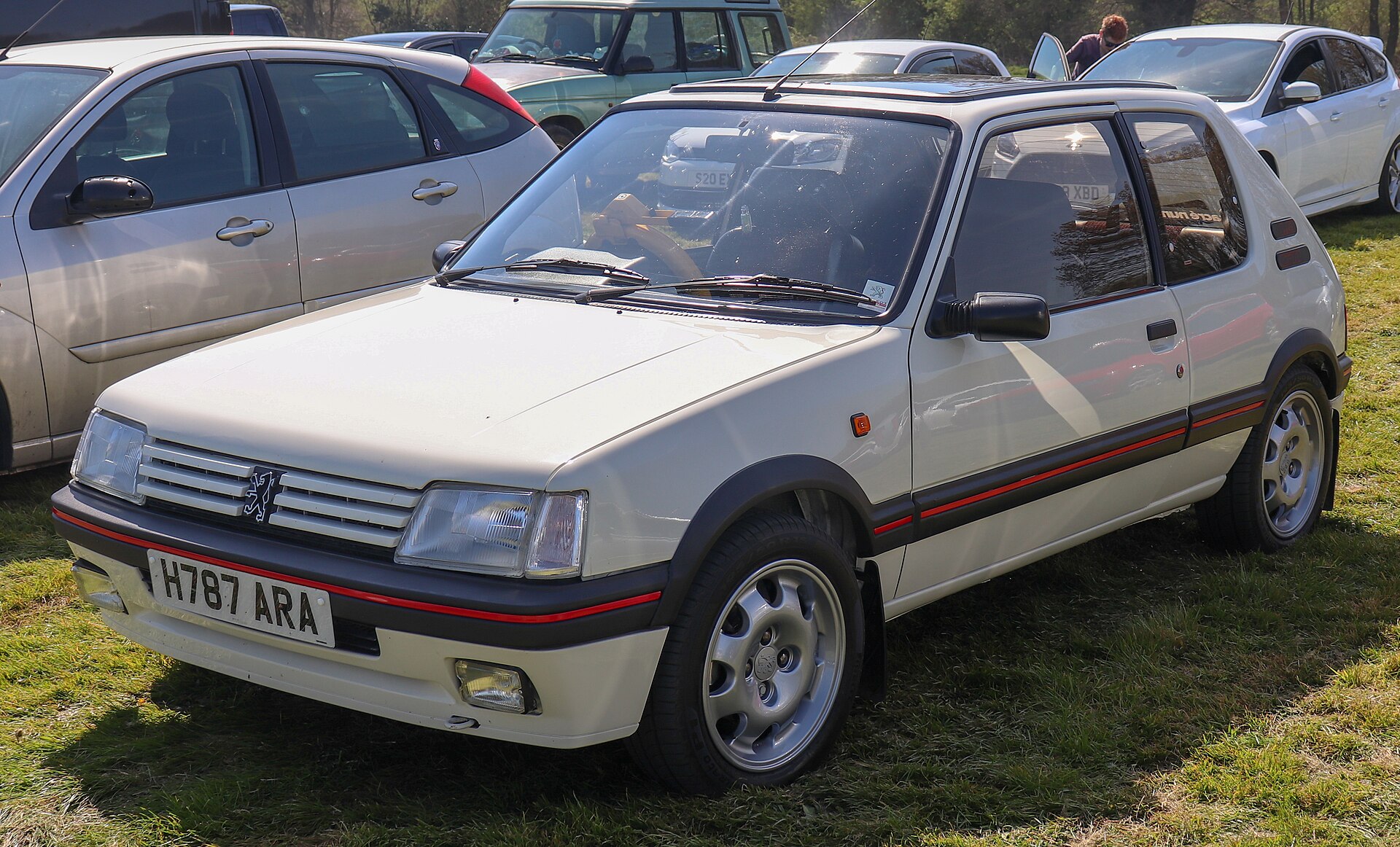
- For the classic hot hatch: a GTI 1.6 or GTI 1.9; the 1.9 has 94 kW (128 PS) without a catalyst.
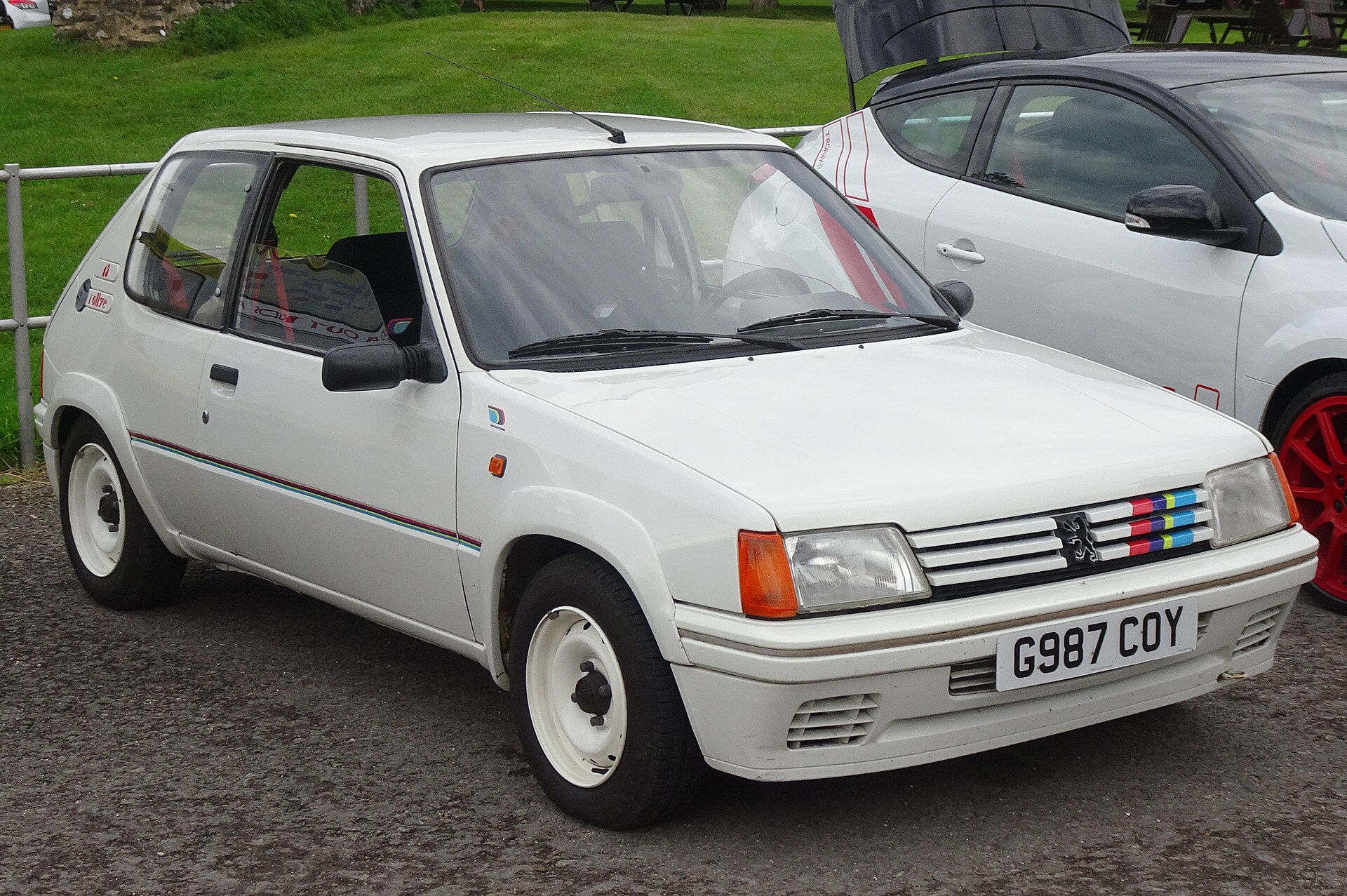
- For a light sporting car: a Rallye 1.3 with 76 kW (103 PS) and no more than 794 kg.
- For economy: an XUD diesel, such as the 1,905 cc XUD9.
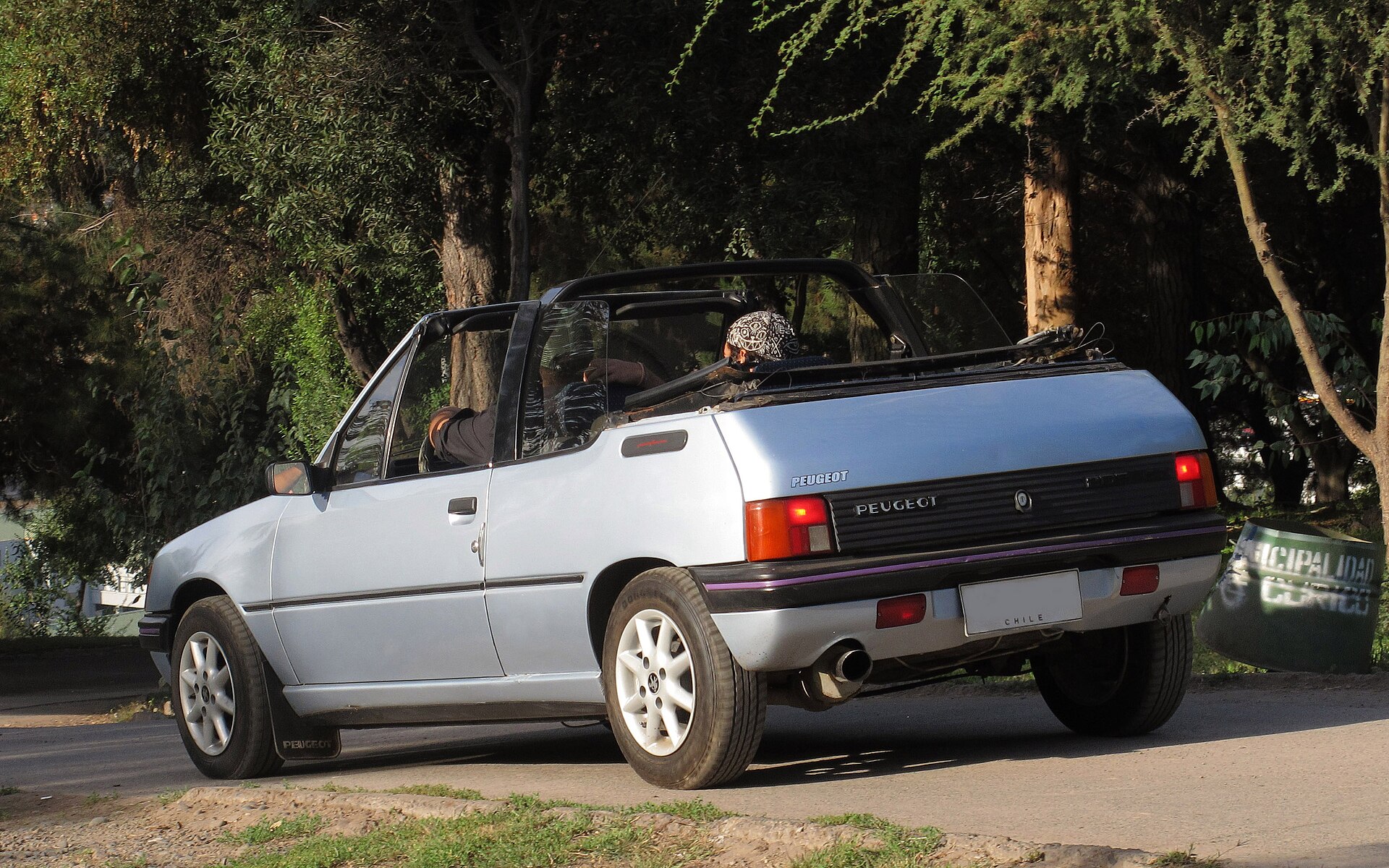
- For open-air driving: a Pininfarina cabriolet (CJ, CT or CTI).
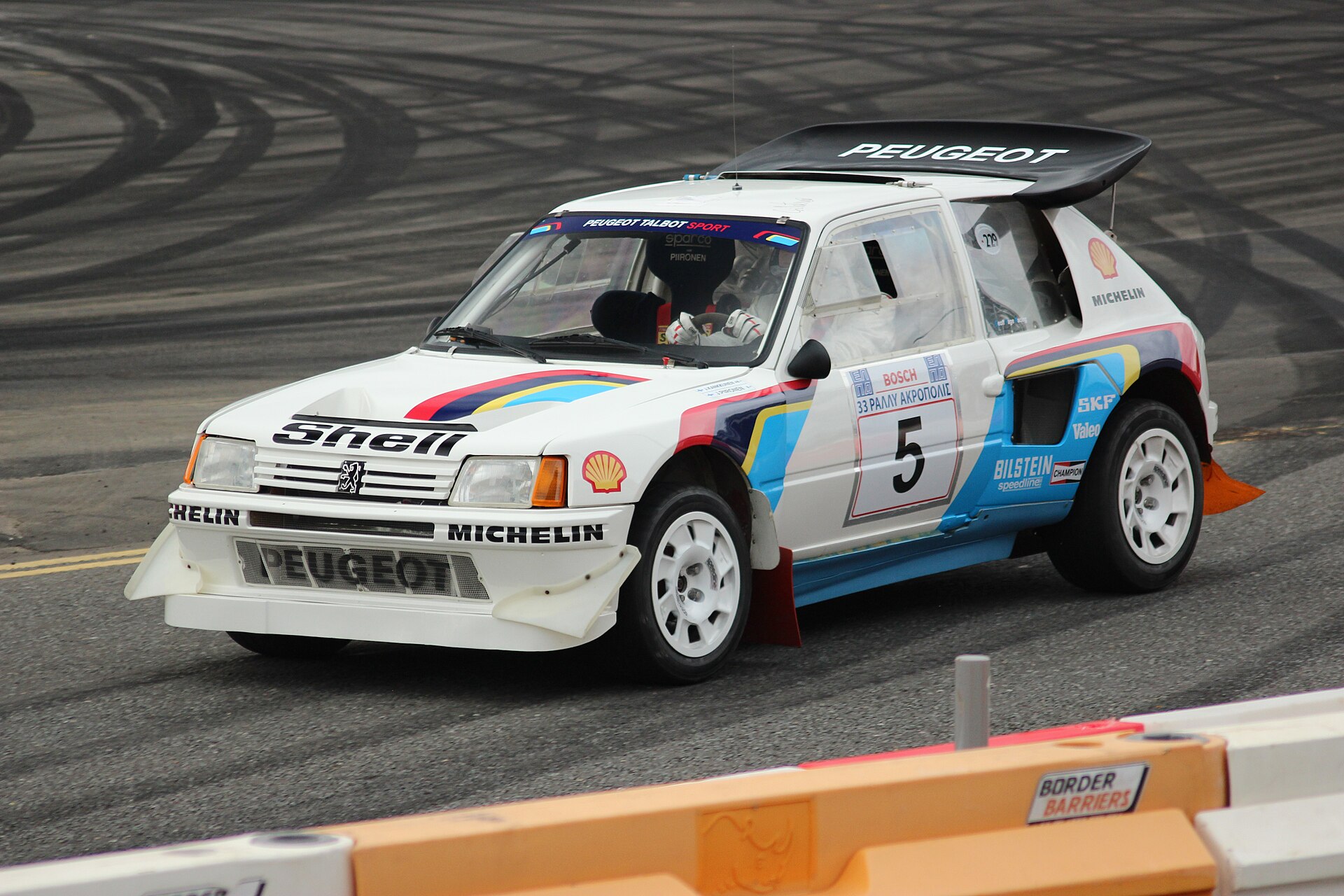
- For collectors: one of the 200 Turbo 16 road cars.
The company's history is told in our history of Peugeot. Today's Peugeot models are in the Peugeot catalogue, and other cars of the decade are under 1980s classics.
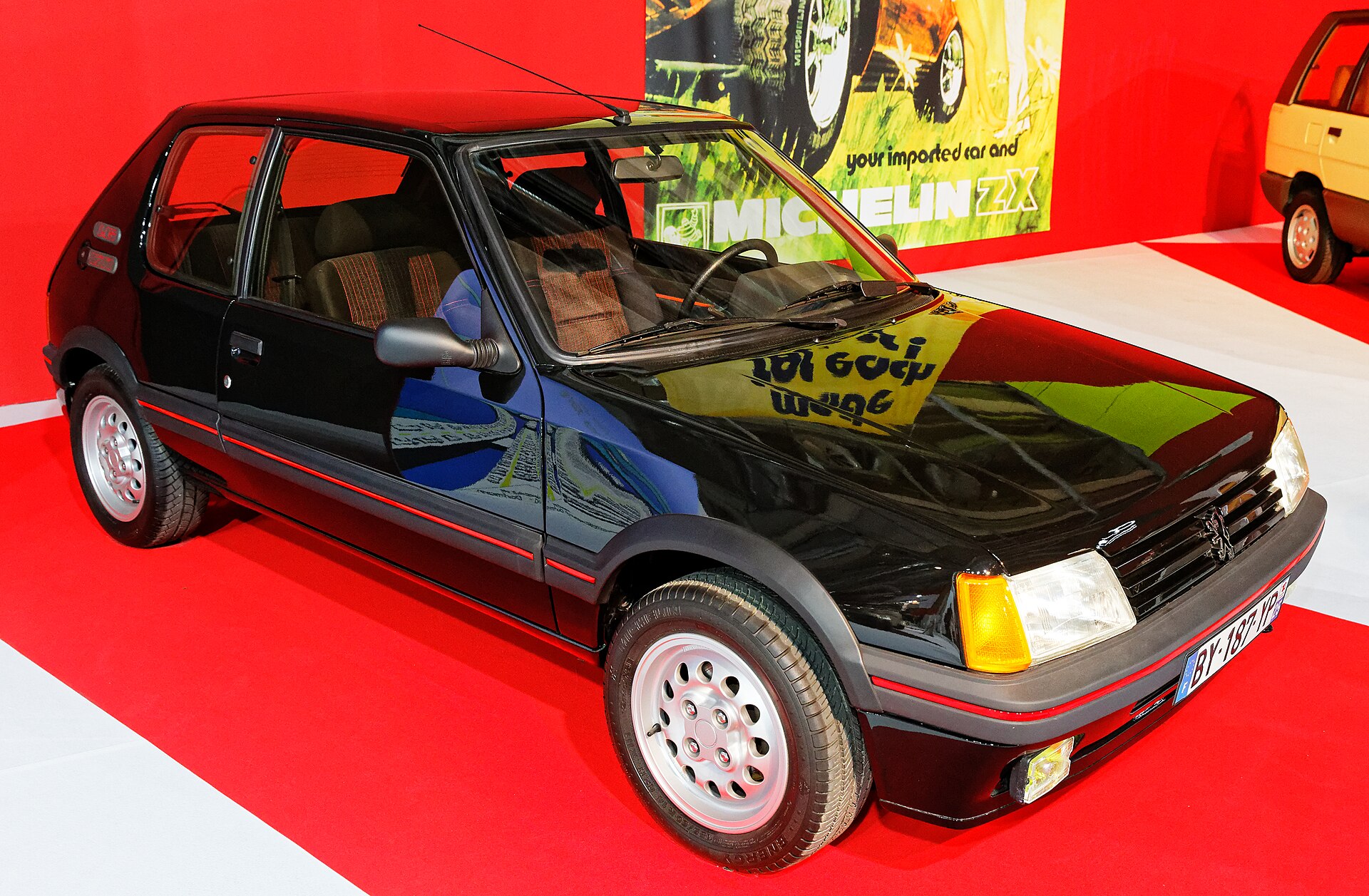
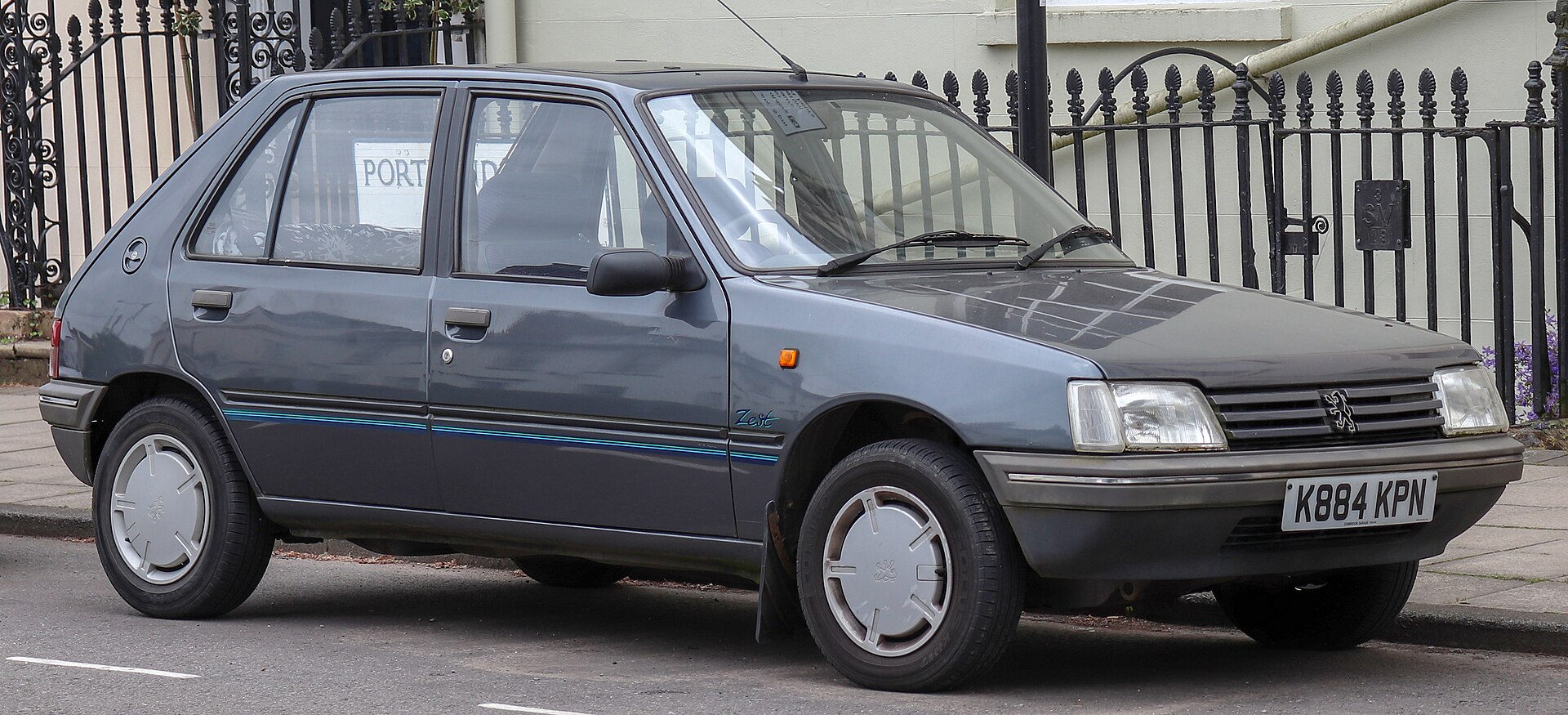
The Peugeot 205 is the supermini that Peugeot launched on 25 February 1983 and built until 1998, with sales of 5,278,050 cars. It came in three- and five-door hatchback, van and Pininfarina-built cabriolet form, with petrol and diesel engines, including the sporting GTI and Rallye versions. Its rally relative, the mid-engined four-wheel-drive 205 Turbo 16, won the World Rally Championship for Peugeot in 1985 and 1986.
In short
- Launched 25 February 1983; right-hand-drive UK sales from September 1983; replaced by the 206 in 1998.
- Petrol engines from 954 cc to 1,905 cc and XUD diesels of 1,769 and 1,905 cc.
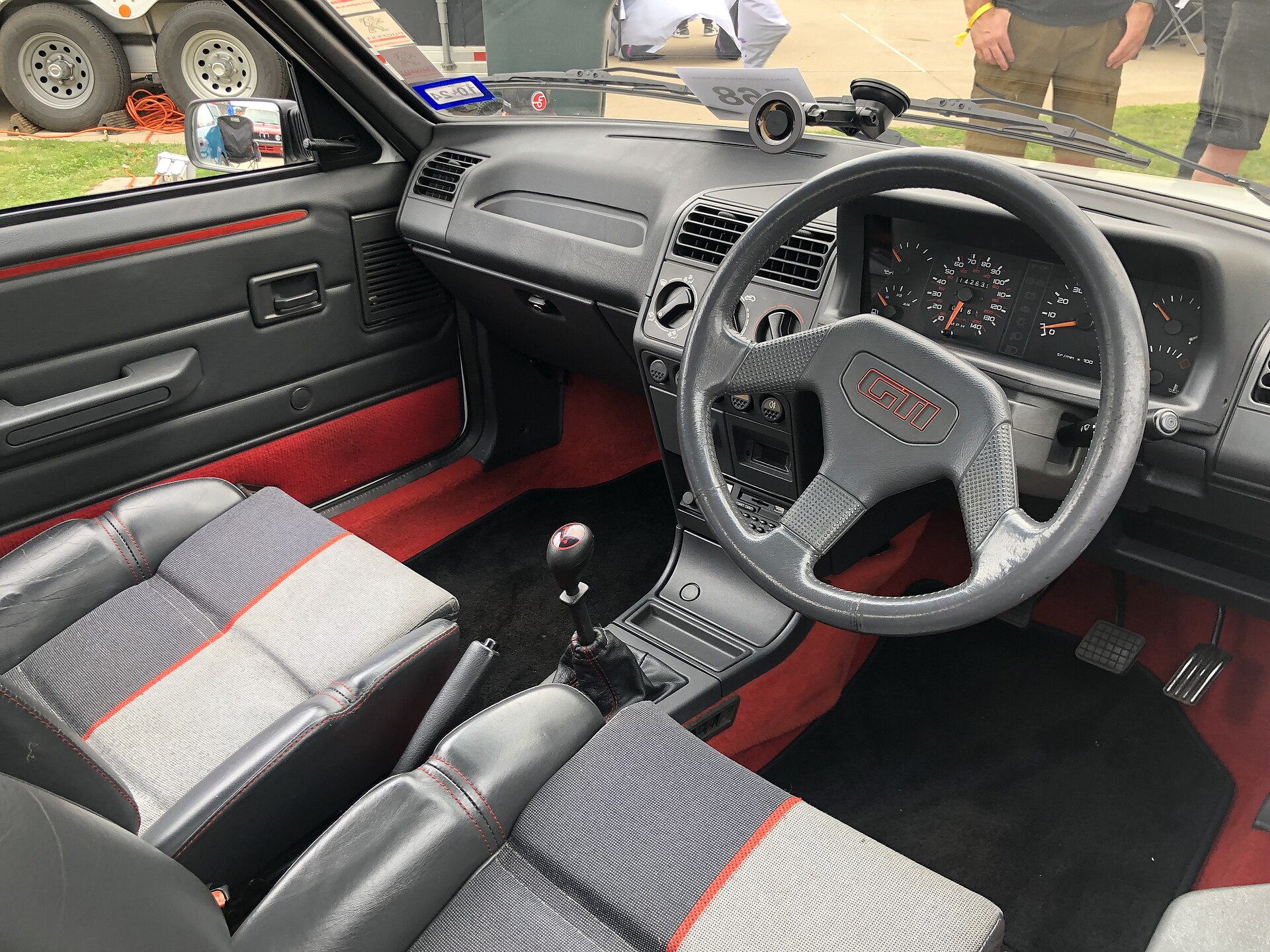
- GTI 1.6 with 77 kW (105 PS) and later 86 kW (117 PS); GTI 1.9 with 94 kW (128 PS), or 90 kW (122 PS) with catalytic converter.
- What Car? Car of the Year 1984 and CAR magazine's "car of the decade" in 1990.
Specs by version
Engines
| Version | Engine | Power | Drive |
|---|---|---|---|
| Diesel · 2 versions | |||
| 1.8 D (XUD7) | 1.8 l · 4 cyl · Diesel XUD7 | - | Front-wheel drive |
| 1.9 D (XUD9) | 1.9 l · 4 cyl · Diesel XUD9 | - | Front-wheel drive |
| Petrol · 4 versions | |||
| Turbo 16 | 1.8 l · 4 cyl · Petrol 1,775 cc | - | All-wheel drive |
| Rallye 1.3 (TU24) | 4 cyl · Petrol TU24 | 76 kW 103 PS102 hp | Front-wheel drive |
| GTI 1.6 (XU5J) | 4 cyl · Petrol XU5J | 77 kW 105 PS103 hp | Front-wheel drive |
| GTI 1.9 (XU9JA) | 1.9 l · 4 cyl · Petrol XU9JA | 94 kW 128 PS126 hp | Front-wheel drive |
Dimensions and weight
Show all 6 versions
| Version | Length | Wheelbase |
|---|---|---|
| Diesel · 2 versions | ||
| 1.8 D (XUD7) | 3,705 mm145.9 in | 2,420 mm95.3 in |
| 1.9 D (XUD9) | 3,705 mm145.9 in | 2,420 mm95.3 in |
| Petrol · 4 versions | ||
| Turbo 16 | 3,820 mm150.4 in | 2,540 mm100.0 in |
| Rallye 1.3 (TU24) | 3,705 mm145.9 in | 2,420 mm95.3 in |
| GTI 1.6 (XU5J) | 3,705 mm145.9 in | 2,420 mm95.3 in |
| GTI 1.9 (XU9JA) | 3,705 mm145.9 in | 2,420 mm95.3 in |
Verified Manufacturer and type-approval data from our catalog · Sources and methodology
Peugeot 205 at a glance
| Parameter | Value |
|---|---|
| Maker | Peugeot (PSA) |
| Production | 1983–1998 (infobox: to 1999) |
| Sold | 5,278,050 |
| Plants | Mulhouse (France), Madrid (Spain), Los Andes (Chile), Changhua (Taiwan), Tehran (Iran), Casablanca (Morocco), Montevideo (Uruguay); Heuliez, Cerizay (Turbo 16) |
| Body styles | three- and five-door hatchback, cabriolet, van |
| Engines | 954–1,905 cc petrol; 1,769 and 1,905 cc diesel; 1,775 cc turbo (T16) |
| Gearboxes | 4- or 5-speed manual; 4-speed ZF 4HP14 automatic |
| Design | in-house (Gérard Welter); cabriolet by Pininfarina |
| Successor | 106 (smaller, from 1991) and 206 (1998) |
Development and production history
The 205 is often said to have been styled by Pininfarina, but Gérard Welter of Peugeot has stated that the design was produced in-house; Pininfarina styled only the cabriolet. The car was presented on 25 February 1983, and the right-hand-drive version for the UK followed in September 1983. It narrowly missed the European Car of the Year title, which went to the Fiat Uno. But it won What Car? Car of the Year for 1984, and in 1990 CAR magazine declared it the "car of the decade".
The engine range changed in 1987–1988, when the early X-series petrol engines were replaced by the XU and TU families. Diesels were an important part of the range from the start, with the XUD7 of 1,769 cc, a turbodiesel version and the XUD9 of 1,905 cc. The 106 of September 1991 took over as Peugeot's smallest front-engined model, and the 206 of 1998 replaced the 205 directly.
| Year | Event |
|---|---|
| 25 February 1983 | Launch |
| September 1983 | Right-hand-drive UK version |
| 1984 | What Car? Car of the Year |
| 1985 | WRC titles with Timo Salonen and the Turbo 16 |
| 1986 | WRC titles with Juha Kankkunen |
| 1987–1988 | XU and TU engines replace the X series |
| 1990 | CAR magazine "car of the decade" |
| September 1991 | 106 introduced below the 205 |
| 1998 | Replaced by the 206 |
Design and engineering
The 205 is a compact front-wheel-drive hatchback 3,705 mm long on a 2,420 mm wheelbase, 1,562–1,572 mm wide (1,589 mm for the GTI and CTI) and 1,350–1,376 mm high. Kerb weight ranges from 740 to 935 kg. The cabriolet, called CJ, CT or CTI depending on the version, was designed and partly assembled by Pininfarina.
The Turbo 16 is a different car under a similar shape. Its 1,775 cc turbocharged engine is mid-mounted and drives all four wheels; the road car is 3,820 mm long on a 2,540 mm wheelbase and 1,700 mm wide. Heuliez built the bodies at Cerizay.

Engines and drivetrain
| Version | Engine | Displacement | Power | Notes |
|---|---|---|---|---|
| Petrol | X series, from 1987–1988 XU and TU | 954, 1,124, 1,204, 1,294, 1,360, 1,442, 1,580, 1,592 and 1,905 cc | - | most versions |
| Rallye 1.3 | TU24 | 1.3 l | 76 kW (103 PS) at 6,800 rpm | no more than 794 kg; about 30,111 built |
| UK Rallye | TU3 | 1,360 cc | 56 kW (75 bhp) | 107 mph, 0–60 mph in 11.7 s |
| GTI 1.6 | XU5J / XU5JA | 1.6 l | 77 kW (105 PS); later 86 kW (117 PS) | - |
| GTI 1.9 | XU9JA | 1.9 l | 94 kW (128 PS); 90 kW (122 PS) with catalyst | - |
| Diesel | XUD7 | 1,769 cc | - | also as turbodiesel |
| Diesel | XUD9 | 1,905 cc | - | - |
| Turbo 16 | turbo four | 1,775 cc | about 147 kW (200 PS), 255 N·m | 200 road cars, P1–P200 |
Most 205s had a four- or five-speed manual gearbox; a four-speed ZF 4HP14 automatic was available. English Wikipedia gives a top speed of 174 km/h (108 mph) and 0–100 km/h in 12.2 seconds for the 205 STDT turbodiesel. Our fuel cost calculator shows what petrol and diesel versions of such a light car cost to run today.


Peugeot 205 specifications
| Parameter | Metric | Imperial |
|---|---|---|
| Length | 3,705 mm (T16: 3,820 mm) | 145.9 in |
| Width | 1,562–1,572 mm; GTI/CTI 1,589 mm; T16 1,700 mm | 61.5–62.6 in |
| Height | 1,350–1,376 mm; GTI 1,354 mm; cabriolet 1,381 mm | 53.1–54.2 in |
| Wheelbase | 2,420 mm (T16: 2,540 mm) | 95.3 in |
| Kerb weight | 740–935 kg (excluding T16) | 1,631–2,061 lb |
| Engines | 954–1,905 cc petrol; 1,769 / 1,905 cc diesel | - |
| Gearboxes | 4/5-speed manual; 4-speed automatic | - |
Turbo 16 and the World Rally Championship
To compete in Group B, Peugeot had to build 200 road-going examples of the 205 Turbo 16, numbered P1 to P200. The rally car won the World Rally Championship constructors' and drivers' titles in 1985 with Timo Salonen and in 1986 with Juha Kankkunen. Another four-wheel-drive rally car of the early 1980s, the Audi Quattro, is covered in our Audi Quattro article.

Variants and derivatives
| Variant | Body / purpose | Engine | Notes |
|---|---|---|---|
| 205 three- and five-door | hatchback | petrol and diesel | most of the 5.3 million |
| 205 GTI | sporting hatchback | 1.6 XU5J/XU5JA, 1.9 XU9JA | 1,589 mm wide, 1,354 mm high |
| 205 Rallye | lightweight sporting hatchback | 1.3 TU24; 1,360 cc TU3 (UK) | about 30,111 of the 1.3 |
| 205 CJ / CT / CTI | cabriolet | petrol | designed and partly built by Pininfarina |
| 205 STDT | hatchback | turbodiesel | 174 km/h, 0–100 km/h in 12.2 s |
| 205 van | light commercial | - | - |
| 205 Turbo 16 | Group B homologation car | 1,775 cc turbo, mid-engine, four-wheel drive | 200 road cars (P1–P200), bodies by Heuliez |
The range shows how widely one basic car could be stretched: from a small petrol hatchback weighing about 740 kg to a diesel hatchback that could reach 174 km/h, an open Pininfarina cabriolet and a mid-engined rally car with four-wheel drive. The diesels used the XUD engines of 1,769 and 1,905 cc, the smaller one also with a turbocharger.

The 205 in numbers
More than five million cars over sixteen years means an average of about 330,000 205s a year. The Rallye 1.3, with 76 kW (103 PS) and no more than 794 kg, had about 10.4 kg per kilowatt; about 30,111 were built. The Turbo 16 road car produced about 147 kW from 1,775 cc, or about 83 kW per litre, roughly twice the specific output of the GTI 1.9.
The step from GTI 1.6 to GTI 1.9 added about 22% more power (from 77 to 94 kW), and even with a catalytic converter the 1.9 kept 90 kW. When the 106 arrived in September 1991, the 205 still had seven years of production ahead of it, a long overlap between the two models. Our power-to-weight calculator compares such ratios with modern hot hatchbacks.

Photo gallery

Peugeot 205 in our rankings
- No. 1 of 53 · Lightest hatchbacks (794 kg)
- No. 6 of 304 · Lightest cars (794 kg)
- No. 16 of 420 · Smallest cars (3,705 mm · top 5%)
- No. 14 of 67 · Smallest hatchbacks (3,705 mm · top 21%)
- No. 242 of 912 · Longest-running car nameplates (15 years · top 28%)
- No. 23 of 53 · Power-to-weight: hatchbacks (96 kW/t · top 44%)
Lighter than 98% of ranked hatchbacks in the 1CARS catalog (No. 1 of 53).
Peugeot 205 photos 6
FAQ
When was the Peugeot 205 produced?
From its launch on 25 February 1983 until 1998, when the 206 replaced it; the infobox of English Wikipedia gives production to 1999.
How many Peugeot 205 were sold?
5,278,050.
What engines does the Peugeot 205 have?
Petrol engines from 954 cc to 1,905 cc, XUD diesels of 1,769 and 1,905 cc, and a 1,775 cc turbocharged engine in the Turbo 16.
How powerful is the Peugeot 205 GTI?
The GTI 1.6 has 77 kW (105 PS), later 86 kW (117 PS); the GTI 1.9 has 94 kW (128 PS), or 90 kW (122 PS) with a catalytic converter.
What did the 205 win in rallying?
The Turbo 16 won the World Rally Championship constructors' and drivers' titles in 1985 (Timo Salonen) and 1986 (Juha Kankkunen).
Data sources
Data checked by an editor against the sources below.