 Peugeot 206
Specs, engines and history
Published Report an error
By Felix Hartmann, Automotive Technology & EV Contributor
Which Peugeot 206 to buy
Our verdict · Felix Hartmann
- For a cheap town car: a 1.4 petrol or the 1.4 HDi diesel hatchback; both are simple and economical.
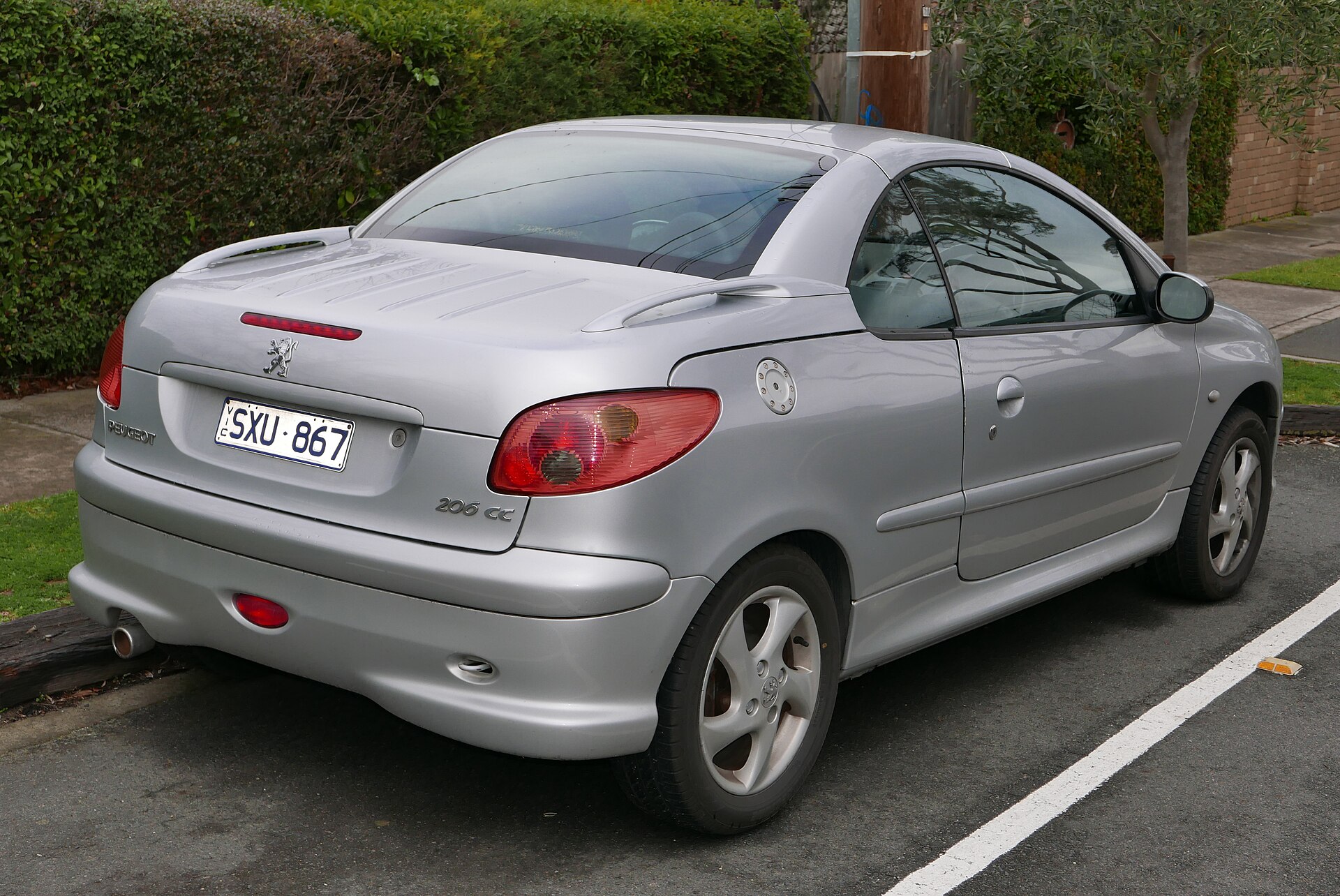
- For open-air driving: a 206 CC, but check that the electric roof folds smoothly and that the boot and seals are dry.
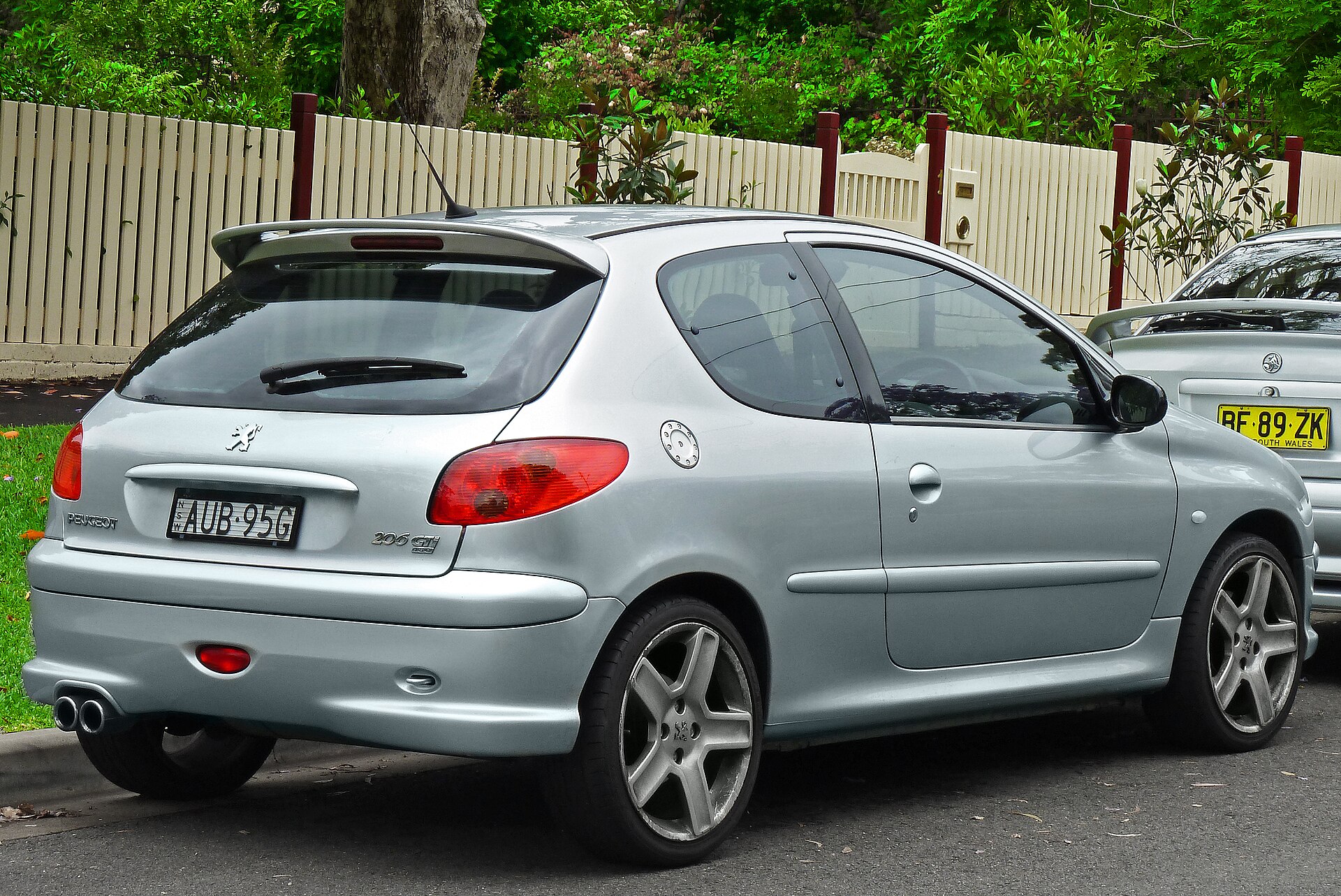
- For enthusiasts: the GTi 180 / 206 RC, the most powerful factory version, or a rare 206 GT homologation car.
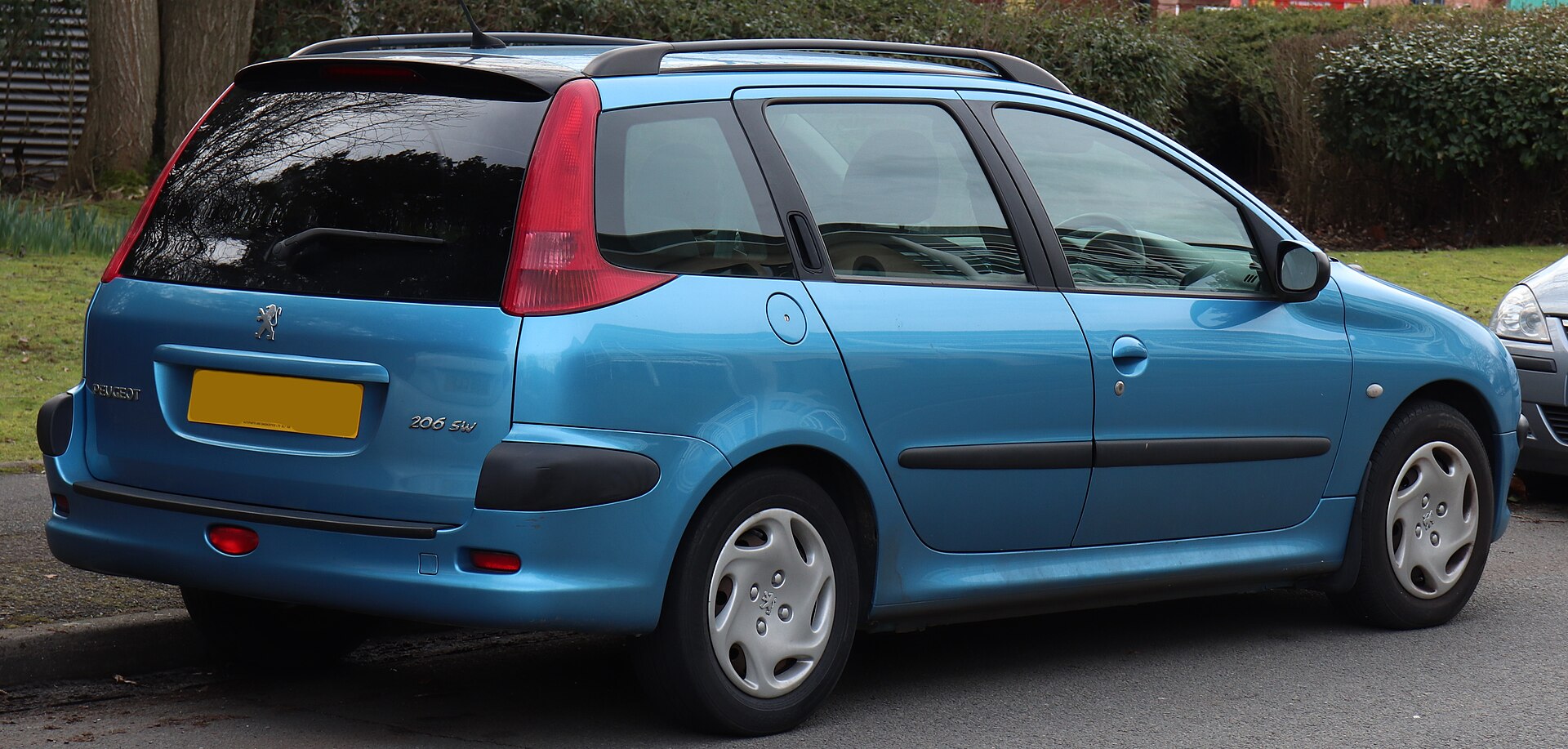
- For space: the 206 SW estate, built from 2002 and later at Poissy.
Rivals in its day were the Renault Clio II, Ford Fiesta, Volkswagen Polo and Opel Corsa C; our comparison tool helps to set it against them.
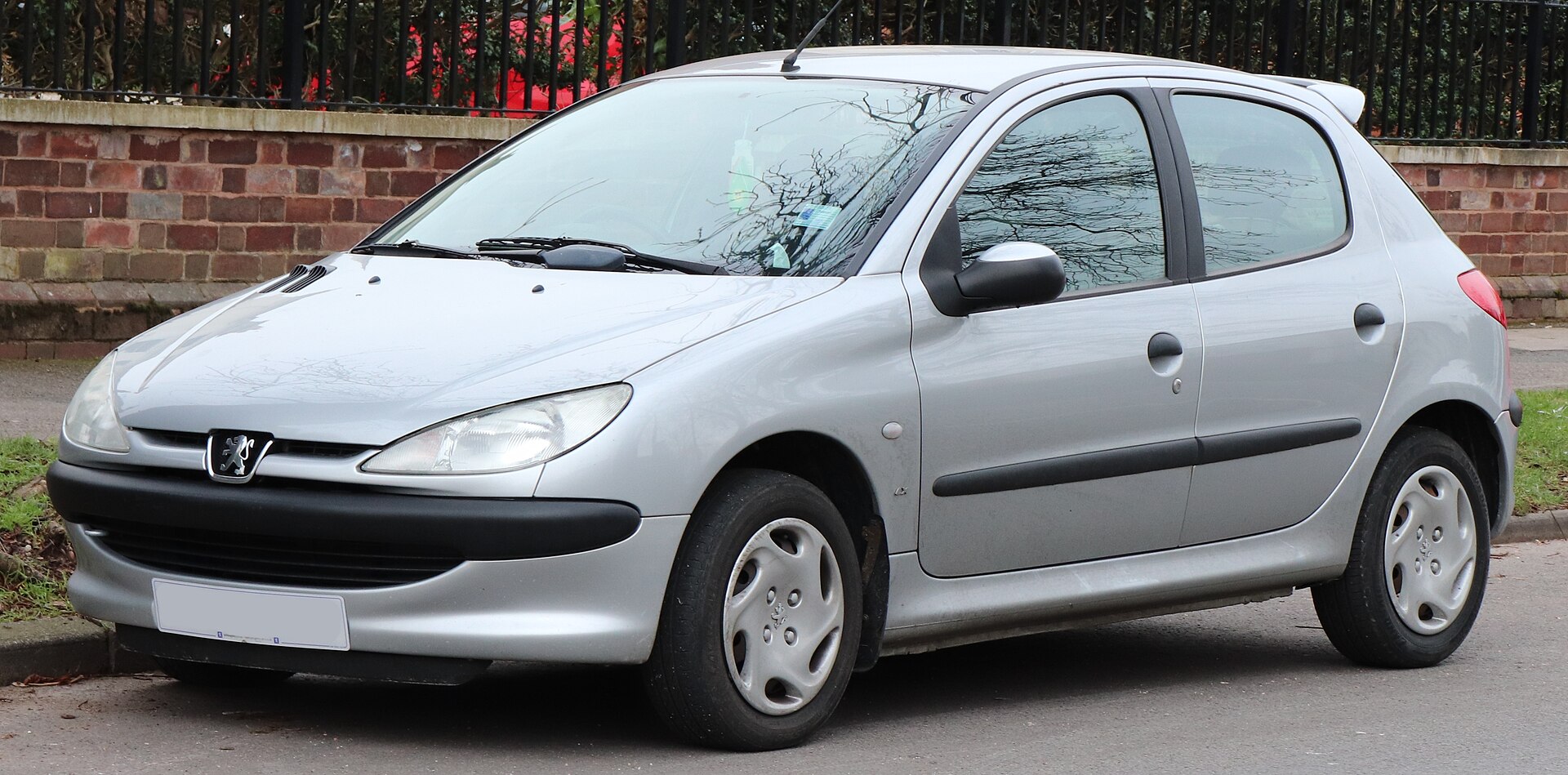
The Peugeot 206 is the B-segment supermini that Peugeot launched in September 1998 as the successor to the 205. It was built as a three- and five-door hatchback, the 206 CC coupé cabriolet, the 206 SW estate and, for some markets, a saloon. With 8,358,217 cars made by December 2012 it is the best-selling Peugeot of all time, and versions of it stayed in production in Iran until March 2024.
In short
- Launched in September 1998; built in France until 18 December 2012 and in more than ten countries in total.
- 8,358,217 built by December 2012; Europe's best-selling car in 2001, 2002 and 2003.
- Engines from the 44 kW (60 PS) 1.1 to the 130 kW (177 PS) 2.0 16V of the GTi 180 / 206 RC.
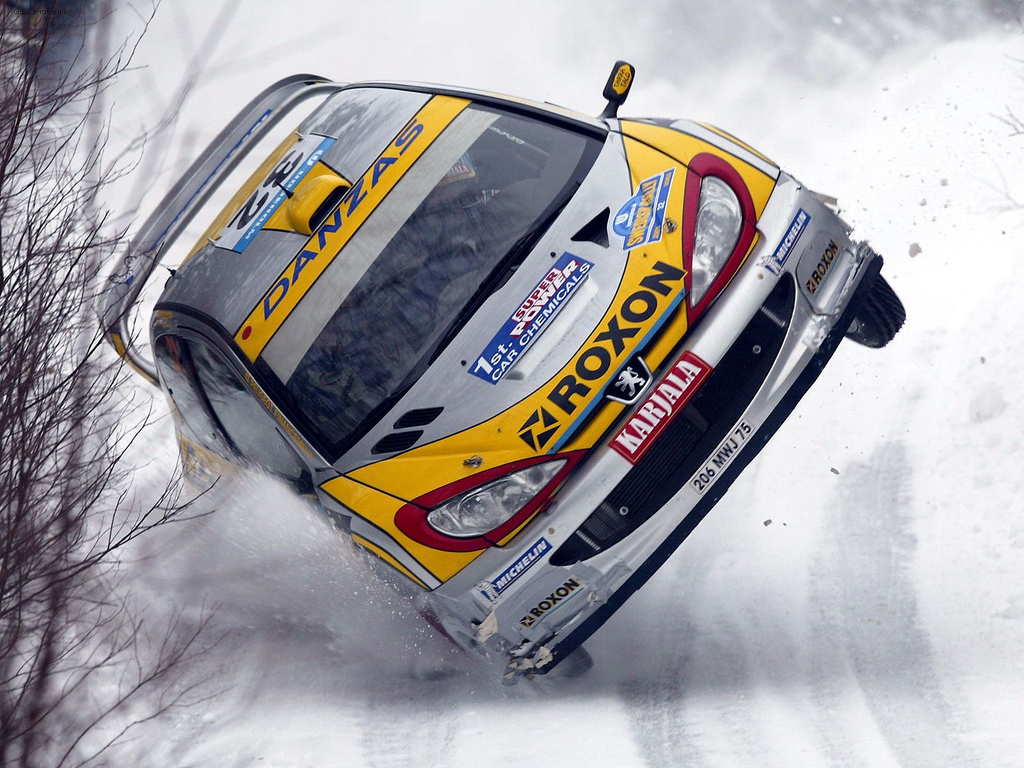
- The 206 WRC won the World Rally Championship manufacturers' title three times in a row (2000–2002).
Peugeot 206 at a glance
| Specification | Peugeot 206 |
|---|---|
| Segment | supermini (B-segment), front engine, front-wheel drive |
| Production | May 1998 – December 2012 (France); Iran April 2001 – March 2024 |
| Platform | PSA PF1, project code T1 |
| Body styles | 3/5-door hatchback, 206 CC, 206 SW, saloon (206 SD), van |
| Engines | 1.1–2.0 litre petrol, 1.4–2.0 litre diesel |
| Power range | 44–130 kW (60–177 PS) |
| Gearboxes | 5-speed manual, 4-speed AL4 automatic |
| Wheelbase | 2,442 mm (96.1 in) |
| Built | 8,358,217 by December 2012 |
| Predecessor / successor | Peugeot 205 / Peugeot 207 (Europe, April 2006) |
The 206 sits in our Peugeot catalogue between the 205 and the later 207 and 208. For the company background, read the history of Peugeot.
From project T1 to the 1998 launch
Peugeot's chairman Jacques Calvet approved project T1 on 7 April 1994 with a launch planned for 1997. The design was frozen six months later, and it took 34 months from design freeze to the start of production. Development cost 6.3 billion French francs. The in-house team was led by Murat Günak, with Gérard Welter also credited for the shape.
The hatchback went on sale in September 1998 (10 September is given as the commercial launch). The French festival Festival Automobile International named it the most beautiful car of 1998. Production started at Mulhouse; from July 1999 the British plant at Ryton near Coventry also built the car, until the plant closed in December 2006.
Sales grew fast. Peugeot had built 500,000 cars by September 1999, two million by August 2001 and five million by 26 May 2005. European registrations peaked at 627,370 in 2001.
Body styles: hatchback, CC, SW and saloon
| Version | Launched | Length | Height | Notes |
|---|---|---|---|---|
| 3/5-door hatchback | September 1998 | 3,835 mm | 1,428 mm | built at Mulhouse and Ryton |
| 206 CC | September 2000 | 4,000 mm | 1,373 mm | folding steel roof, bodies by Heuliez |
| 206 SW | September 2001 (shown), on sale March 2002 | 4,028 mm | 1,460 mm | estate; about 366,000 built |
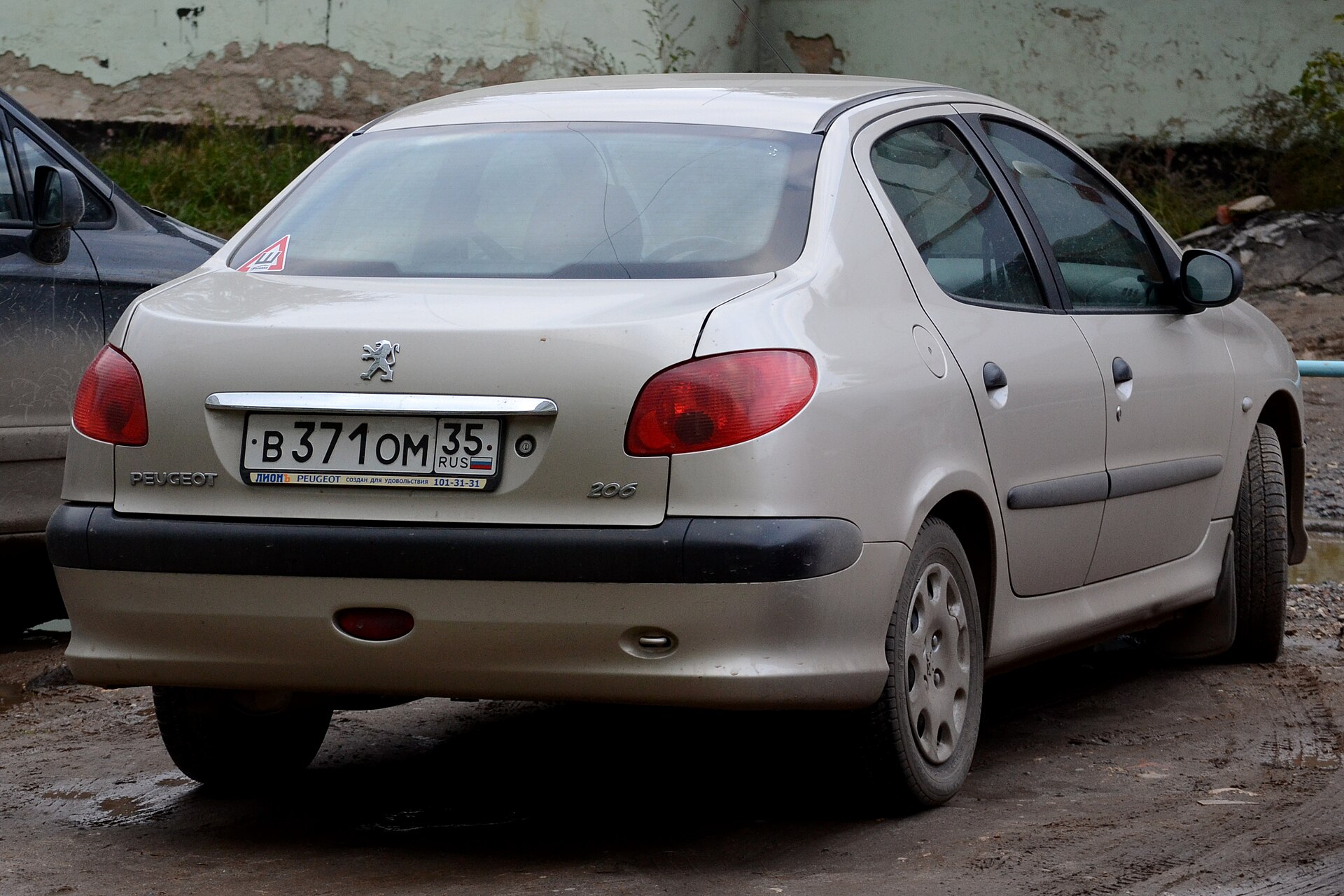
| 206 SD saloon | late 2005 | 4,188 mm (Europe) | 1,456 mm | developed for Iran |
| 206+ | February 2009 | 3,872 mm | - | restyled hatch, left-hand drive only |
The 206 CC, shown at the Paris Motor Show in September 2000, made the folding steel roof affordable. It grew out of the 20Cœur concept of 1998, and its roof mechanism followed the Georges Paulin system of the 1935 Peugeot 402 Éclipse. What Car? named it Best Convertible in 2001; production stopped in early 2008.
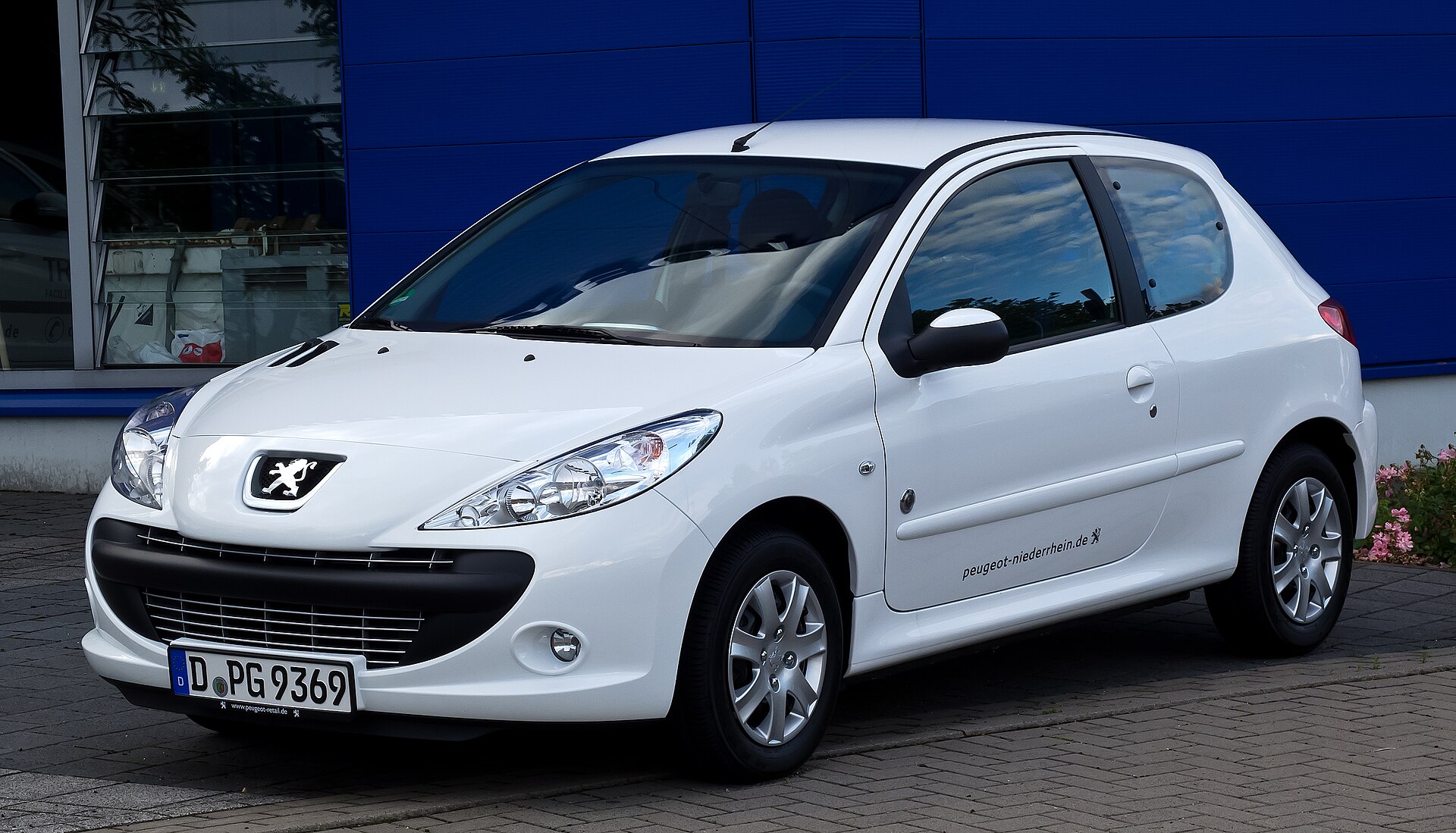
The 206+ of February 2009 was a late facelift with the nose of the 207. It was built at Mulhouse in left-hand drive only and was sold alongside the 207 as a cheaper model until May 2013.

Engines, gearboxes and performance
| Engine | Capacity | Power | Torque | 0–100 km/h | Top speed |
|---|---|---|---|---|---|
| 1.1 TU1JP | 1,124 cc | 44 kW (60 PS) | 94 Nm | 15.4 s | 158 km/h |
| 1.4 TU3JP | 1,360 cc | 55 kW (75 PS) | 133 Nm | 11.9 s | 187 km/h |
| 1.4 16V ET3J4 | 1,360 cc | 66 kW (90 PS) | 120 Nm | 10.1 s | 193 km/h |
| 1.6 16V TU5JP4 | 1,587 cc | 81 kW (110 PS) | 147 Nm | 10.2 s | 185 km/h |
| 2.0 16V EW10J4 (GTi) | 1,997 cc | 101 kW (137 PS) | 190 Nm | 8.3 s | 210 km/h |
| 2.0 16V EW10J4S (GTi 180 / RC) | 1,997 cc | 130 kW (177 PS) | 202 Nm | 7.4 s | 217 km/h |
| 1.9 D DW8 | 1,868 cc | 51 kW (70 PS) | 125 Nm | 15.2 s | 161 km/h |
| 1.4 HDi DV4TD | 1,398 cc | 50 kW (68 PS) | 160 Nm | 13.1 s | 168 km/h |
| 2.0 HDi DW10TD | 1,997 cc | 66 kW (90 PS) | 205 Nm | 11.7 s | 180 km/h |
| 1.6 HDi DV6TED4 | 1,560 cc | 80 kW (109 PS) | 240 Nm | 9.9 s | 186 km/h |
Most cars had a five-speed manual gearbox; the four-speed AL4 automatic was the alternative. The 1.4 HDi was the frugal choice, rated at 112 g/km of CO2.
The GTi joined the range in 1999 with the 101 kW 2.0-litre engine. In 2003 it was replaced by the GTi 180, sold as the 206 RC in some markets. Its 130 kW engine, wider track (1,673 mm overall width) and stiffer set-up brought 0–100 km/h in 7.4 seconds. Wikipedia's text gives 220 km/h as the top speed, its data table 217 km/h.


Dimensions and weight
| Parameter | Metric | Imperial |
|---|---|---|
| Length (hatchback) | 3,835 mm | 151.0 in |
| Width (hatchback) | 1,652 mm | 65.0 in |
| Height (hatchback) | 1,428 mm | 56.2 in |
| Wheelbase | 2,442 mm | 96.1 in |
| Kerb weight | 950–1,145 kg | 2,094–2,524 lb |
The short 3.8-metre body is the 206's strength in town and its limit for families: rear legroom is modest, which is one reason the SW and the saloon were added later.
Safety ratings
Euro NCAP tested a European-specification 206 in 2000 and gave it four stars for adult occupant protection and two stars for pedestrian protection. That was a good result for a supermini of its time, but it is well below what a current small car achieves.
South American cars were simpler. Latin NCAP tested the Brazilian 207 Compact, a facelifted 206, in 2010: the version without airbags received one star for adult occupants, and the car with two airbags did only slightly better.
The 206 WRC and the GT homologation car
To compete in the World Rally Championship Peugeot needed a road car at least four metres long, so it built 4,000 examples of the 206 GT with longer bumpers; 600 of them went to the UK in right-hand drive. The 206 WRC made its debut in 1999, when Gilles Panizzi narrowly lost the Sanremo rally to Tommi Mäkinen.
From 2000 the car dominated. Marcus Grönholm won the drivers' title in 2000 and again in 2002, and Peugeot took the manufacturers' championship in 2000, 2001 and 2002. Autosport named the 206 WRC its Rally Car of the Year in 2002. It was retired after the 2003 season and replaced by the 307 WRC.

The 206 outside Europe
When the 207 arrived in Europe in April 2006, the 206 simply moved to other markets:
- Iran: Iran Khodro built the 206 from April 2001, added the saloon in 2006 and launched the 207i in 2010. Production paused in late 2011 because of sanctions, restarted in 2016 and ended in March 2024.
- Brazil and Argentina: Porto Real built the 206 from 2001 and later the 207 Compact / 207 Brasil, a 206 with a new nose, until January 2015; Argentina continued until December 2016. Brazilian cars used 1.0, 1.4 and 1.6 engines, the last two flex-fuel.
- China: Dongfeng Peugeot-Citroën built the 206 in Wuhan from 2006 to 2013, plus nearly 80,000 Citroën C2s on the same base.
- Malaysia: Naza assembled the 206 Bestari saloon from 2006.
Autocar listed the 206 in 2020 among the longest-lived single-generation cars.
Photo gallery


Peugeot 206 photos 6
FAQ
How many Peugeot 206 were built?
Peugeot reported 8,358,217 by December 2012, which makes the 206 the best-selling Peugeot ever. Production in Iran continued until 2024.
What is the most powerful Peugeot 206?
The road-going GTi 180, also sold as the 206 RC, with a 2.0-litre 16-valve engine of 130 kW (177 PS) and 202 Nm.
When did the Peugeot 206 end production?
In Europe the 207 replaced it in April 2006, but the 206+ was sold until May 2013. The last French-built car left Mulhouse on 18 December 2012, and Iran Khodro ended production in March 2024.
Did the Peugeot 206 win the World Rally Championship?
Yes. The 206 WRC won three manufacturers' titles (2000, 2001 and 2002), and Marcus Grönholm won the drivers' title in 2000 and 2002.
Is the Peugeot 206 a safe car?
For its era it was reasonable: Euro NCAP gave it four stars for adult protection in 2000. By today's standards its crash protection is basic.