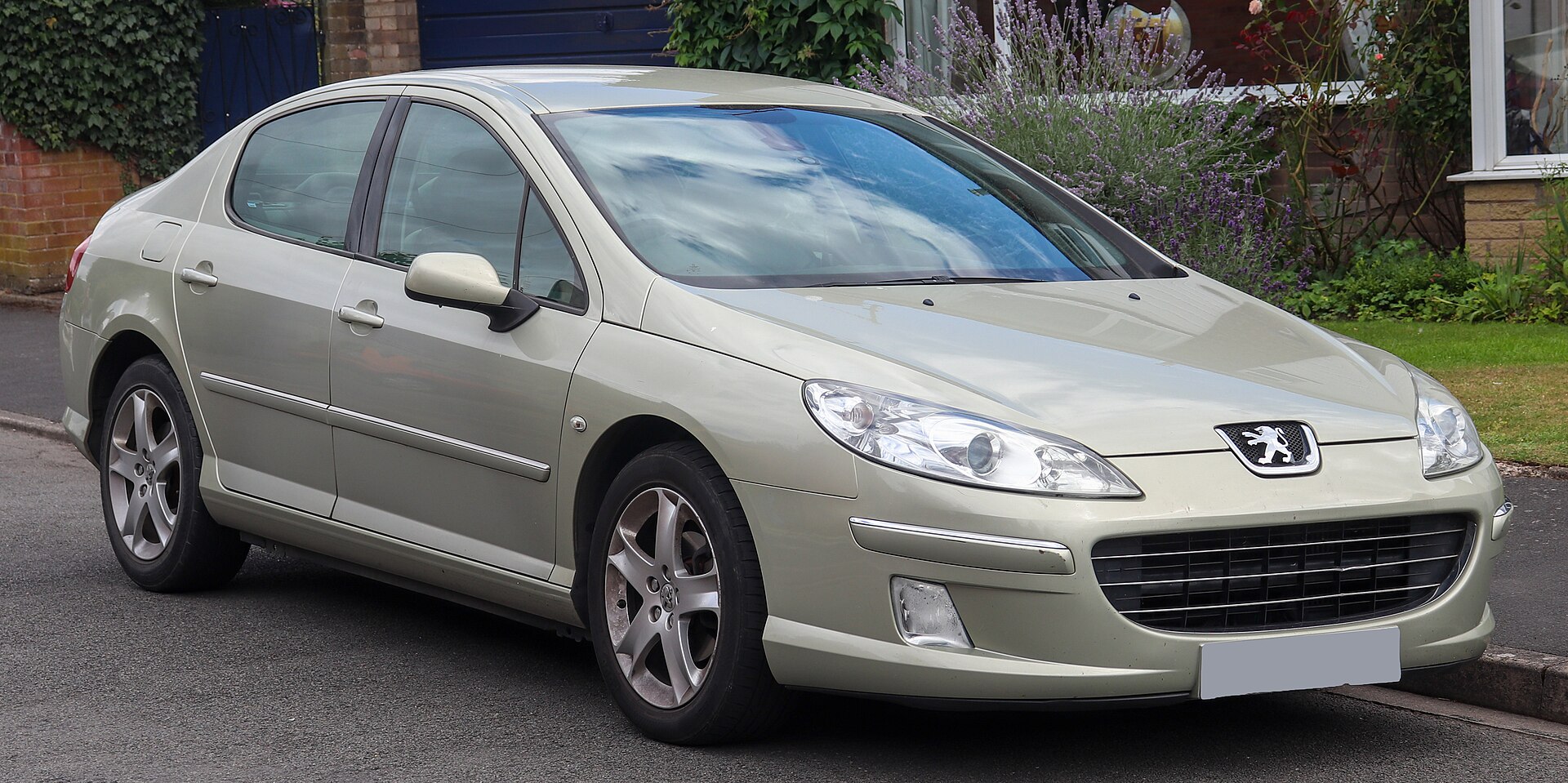
 Peugeot 207
Specs, engines and history
Published Sources (3) Report an error
By Felix Hartmann, Automotive Technology & EV Contributor
- Built
- 2006–2014
- Top power
- 137 kW (186 PS)
- Euro NCAP
- 5 stars · 2006
Which Peugeot 207 to buy: verdict
Our verdict · Felix Hartmann
- Cheapest to run: a 1.6 HDi 90 or 110, with the lowest fuel consumption in the range.
- Best all-rounder: a post-2007 1.4 VTi or 1.6 VTi five-door, simpler than the turbo engines and quicker than the old TU units.
- For fun: the 207 GTi (RC), with 130 kW (175 hp) or 137 kW (184 hp) after the 2009 facelift and a manual gearbox.
- For families: the 207 SW, 13 cm longer than the hatchback.
- For sunny weekends: the 207 CC, the best-reviewed version of the range.
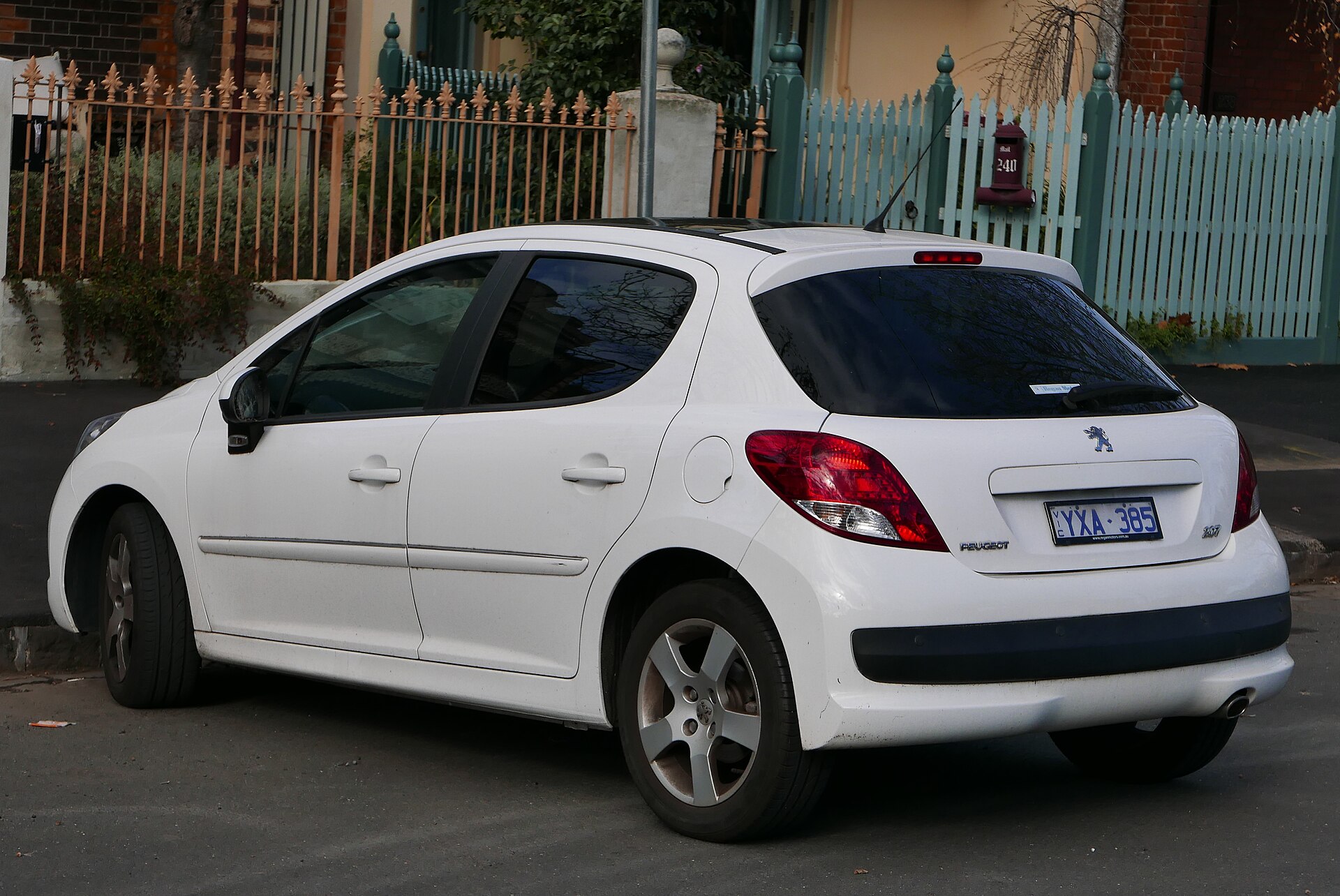
The Peugeot 207 is the supermini Peugeot built from 2006 to 2014 as the successor to the hugely successful 206. It was sold as a three- and five-door hatchback, a 207 SW estate and a 207 CC coupé-cabriolet with a folding steel roof, and it was replaced by the 208 in 2012, although the 207 carried on in some markets for two more years. Its petrol engines came partly from a joint PSA and BMW Group project and ranged from 54 kW (73 PS) to 137 kW (184 hp) in the facelifted GTi.
In short
- B-segment supermini built in Poissy (France), Madrid (Spain) and Trnava (Slovakia), on sale from April 2006.
- Body styles: three-door and five-door hatchback, 207 SW estate, 207 CC coupé-cabriolet and a van version.
- Petrol engines from 1.4 to 1.6 litres, including the turbocharged 1.6 THP; diesels were the 1.4 and 1.6 HDi.
- Facelift in July 2009; around 2.5 million built by the end of 2012, according to Peugeot production data quoted by Wikipedia.
Size at a glance
| Dimensions | Peugeot 207 A7 |
|---|---|
| Length | 4,030 mm158.7 in |
| Width | 1,748 mm68.8 in |
| Height | 1,472 mm58.0 in |
| Wheelbase | 2,540 mm100.0 in |
| Boot | 270 L9.5 cu ft |
Specs by version
Engines
| Version | Engine | Power | Torque | Gearbox | Drive | Production years |
|---|---|---|---|---|---|---|
| Diesel · 1 version | ||||||
| 1.6 HDi 90 | Diesel | 66 kW 90 PS89 hp | - | Manual | Front-wheel drive | 2007–2009 |
| Petrol · 2 versions | ||||||
| 1.4 VTi 95 | 1.4 l · 4 cyl · Petrol 1,397 cc | 70 kW 95 PS94 hp | 136 Nm100 lb-ft | 5-sp Manual | Front-wheel drive | 2007–2009 |
| 1.6 THP 150 | 1.6 l · 4 cyl · Petrol 1,598 cc | 110 kW 150 PS148 hp | 240 Nm177 lb-ft | Manual | Front-wheel drive | 2006–2009 |
Performance
Show all 1 versions
| Version | 0–100 km/h | Top speed |
|---|---|---|
| 1.4 VTi 95 | 11.5 s 0–62 mph | 185 km/h115 mph |
Dimensions and weight
Show all 1 versions
| Version | Length | Width | Height | Wheelbase | Kerb weight | Boot |
|---|---|---|---|---|---|---|
| 1.4 VTi 95 | 4,030 mm158.7 in | 1,748 mm68.8 in | 1,472 mm58.0 in | 2,540 mm100.0 in | 1,245 kg2,745 lb | 270 l9.5 cu ft |
Verified Manufacturer and type-approval data from our catalog · Sources and methodology
Safety
-
Euro NCAP 2006
Older protocol · Full Euro NCAP result
Stars from different years and organisations are not directly comparable: test protocols change every few years.
Peugeot 207 at a glance
| Specification | Peugeot 207 |
|---|---|
| Segment | B-segment supermini |
| Production | 2006-2014 (some sources give 2015) |
| Plants | Poissy (France), Madrid (Spain), Trnava (Slovakia) |
| Platform | PSA PF1, front engine, front-wheel drive |
| Body styles | 3-door and 5-door hatchback, SW estate, CC coupé-cabriolet |
| Length | 4,030-4,045 mm (hatchback), 4,164 mm (SW), 4,037 mm (CC) |
| Power range | 50 kW (68 hp) diesel to 137 kW (184 hp) GTi |
| Predecessor / successor | Peugeot 206 / Peugeot 208 (hatchback), Peugeot 2008 (SW) |
The 207 sits in our Peugeot catalogue between the 107 city car and the 308 compact.
Generations and model history
The 207 had a single generation. Peugeot showed it at the Geneva Motor Show in March 2006, production began in April and the car went on sale in France, Spain and Italy the same month. British buyers received it on 8 June 2006. The coupé-cabriolet followed in December 2006, previewed by the hydrogen-powered 207 Epure concept at the Paris show that autumn, and the SW estate completed the range.
| Generation | Code | Years | Body styles | Engines | Power (kW / hp) |
|---|---|---|---|---|---|
| 207 (pre-facelift) | A7 | 2006-2009 | 3/5-door, SW, CC | 1.4, 1.6, 1.6 THP petrol; 1.4, 1.6 HDi | 50-130 kW (68-175 hp) |
| 207 (facelift) | A7 | 2009-2014 | 3/5-door, SW, CC | as above, GTi uprated | 50-137 kW (68-184 hp) |
The July 2009 facelift brought a slightly smaller grille, new front lights and fog lamp housings, LED rear lights and engine management changes that lifted the GTi from 130 kW (175 hp) to 137 kW (184 hp). When the 208 arrived in spring 2012, the 207 stayed on sale for a while as a lower-priced model.
Outside Europe the name was used for something different. Since November 2008 a facelifted 206 has been sold as the "207" in China, South America, Southeast Asia and Iran, including saloon versions such as the 207 Passion in South America. Those cars are not covered here.

Engines, transmissions and performance
The petrol range began with the long-serving 1.4 and 1.6 TU engines. From the end of 2006 Peugeot added the Prince family, a 1.4 and 1.6 VTi and the turbocharged 1.6 THP, developed together with the BMW Group and also used in the Mini Cooper S.
| Engine | Power | Torque | Notes |
|---|---|---|---|
| 1.4 8V (TU3) | 54 kW (73 PS) | 118 Nm | entry engine |
| 1.4 16V (ET3) | 65-67 kW (88-91 PS) | 133 Nm | replaced by the VTi |
| 1.4 VTi | 70 kW (95 PS) | 136 Nm | 0-100 km/h 11.5 s, 185 km/h |
| 1.6 16V (TU5) | 80-82 kW (109-112 PS) | 147 Nm | replaced by the VTi |
| 1.6 VTi | 88-89 kW (120-122 PS) | - | also with 4-speed automatic |
| 1.6 THP 150 | 110 kW (150 PS) | 240 Nm | GT, Platinum, Le Mans Series |
| 1.6 THP (GTi / RC) | 130 kW (175 hp), 137 kW (184 hp) from 2009 | - | manual only |
| 1.4 HDi | 50 kW (68 hp) | - | diesel |
| 1.6 HDi 90 / 110 | 66 kW (90 PS) / 80-82 kW (109-112 PS) | - | 110 with intercooler and particulate filter |
German figures from the ADAC catalogue sometimes differ by one or two kilowatts from Peugeot's international data; both are shown where they disagree. Gearboxes were a five-speed manual, a six-speed manual, a five-speed automated manual and a four-speed automatic. The GT and GTi came only with manual gearboxes. The 207 CC was offered only with the 1.6 VTi or 1.6 HDi in some markets, and the 207 RC name was used instead of GTi in several countries.
Dimensions, space and boot
| Parameter | Metric | Imperial |
|---|---|---|
| Length (hatchback) | 4,030 mm | 158.7 in |
| Length (SW / CC) | 4,164 mm / 4,037 mm | 163.9 in / 158.9 in |
| Width (without mirrors) | 1,748 mm | 68.8 in |
| Height | 1,472 mm | 58.0 in |
| Wheelbase | 2,540 mm | 100.0 in |
| Kerb weight (1.4 VTi, 5-door) | 1,245 kg | 2,745 lb |
| Boot (hatchback) | 270 l, 923 l with rear seat folded | 9.5 / 32.6 cu ft |
| Fuel tank | 50 l | 13.2 US gal |
At just over four metres, the 207 was about 20 cm longer and roughly 150 kg heavier than the 206 it replaced. The 270-litre boot is typical for the class rather than generous.

Fuel economy and running costs
ADAC lists the 1.4 VTi five-door at 5.9 l/100 km and 140 g/km of CO2 on the old NEDC cycle. The HDi diesels were the economical choice; in Germany they were sold as HDi FAP, with a diesel particulate filter. Real-world consumption will be higher than these laboratory figures; the fuel cost calculator gives a quick estimate for your annual mileage.

Trims, equipment and prices
German list prices (ADAC) for the first series started at EUR 12,400 for the three-door 75 Filou in 2006 and went up to EUR 21,250 for the five-door 150 THP Platinum. A 95 VTi Tendance five-door cost EUR 15,750 (2007). Common trim names in Germany were Filou, Tendance, Sport, Urban Move and Platinum, and the most expensive diesel, the five-door HDi FAP 110 Platinum, cost EUR 21,600 (2007).
The 207 Le Mans Series of 2008 was limited to 2,000 cars in Banquise White or Obsidian Black with 17-inch Pitlane wheels and a numbered steering wheel. A commercial version was sold as the 207 Van in the UK without rear side windows and as the 207 Affaire in France.

Safety
Euro NCAP tested the 207 in 2006 and awarded five stars for adult occupant protection with 35 points, according to the ADAC catalogue. In Australia, ANCAP scored the hatchback 14.77 out of 16 in the frontal offset test and 14.82 out of 16 in the side impact test, and the CC scored 13.01 and 16 out of 16. Electronic stability control was optional on many versions rather than standard. Euro NCAP ratings are explained on our safety page.
Reliability and known issues
Contemporary reviews praised the 207's value, safety and styling, but criticised the interior design, gearbox quality and handling, including on the GTi. Autocar wrote that the hatchback was "safely played and as such lacks charm, verve and difference". Reviewers also feared poor reliability, and one car insurer ranked the 207 as the fourth least reliable car in its data. The CC was better received: Top Gear called it "a decent new version of one of the originals". On any used example, a complete service history is the best protection.
Motorsport
The 207 S2000 rally car, previewed as the 207 RCup concept at Geneva in 2006 with a 2.0-litre petrol engine of 209 kW (280 hp), was one of the most successful cars of the Super 2000 era. Drivers won the Intercontinental Rally Challenge in 2007, 2008 and 2009 and the European Rally Championship in 2008 with it.
Rivals
| Model | Engines | Power (hp) | Boot (l) | Price from (EUR) |
|---|---|---|---|---|
| Peugeot 207 (2006-2014) | 1.4-1.6 petrol, 1.4-1.6 diesel | 68-184 | 270 | 12,400 (Germany, 2006) |
| Renault Clio III (2005-2012) | 1.2-2.0 petrol, 1.5 diesel | - | - | - |
| Opel Corsa D (2006-2014) | 1.0-1.6 petrol, 1.3-1.7 diesel | - | - | - |
| Volkswagen Polo IV (2001-2009) | 1.2-1.8 petrol, 1.4-1.9 diesel | - | - | - |
Rival figures are approximate ranges for orientation only. Use our comparison tool for model-by-model data.
Photo gallery

Peugeot 207 in our rankings
- No. 58 of 531 · Smallest cars (4,030 mm · top 11%)
- No. 91 of 391 · Lightest cars (1,245 kg · top 24%)
- No. 25 of 70 · Most powerful French cars (137 kW · top 38%)
- No. 37 of 93 · Smallest hatchbacks (4,030 mm · top 40%)
- No. 36 of 76 · Lightest hatchbacks (1,245 kg · top 48%)
- No. 69 of 141 · Most powerful hatchbacks (110 kW · top 51%)
Shorter than 89% of ranked cars in the 1CARS catalog (No. 58 of 531).
FAQ
How many generations of the Peugeot 207 are there?
One. The 207 was built from 2006 to 2014 with a facelift in July 2009. The "207" sold in China, South America and Iran from 2008 is a renamed, facelifted 206.
Which engines did the Peugeot 207 have?
Petrol engines of 1.4 and 1.6 litres, including the 1.4 and 1.6 VTi and the turbocharged 1.6 THP shared with the Mini, plus 1.4 and 1.6 HDi diesels. Power ranged from 50 kW (68 hp) to 137 kW (184 hp).
How big is the boot of the Peugeot 207?
The hatchback holds 270 litres, or 923 litres with the rear seat folded and loaded to the roof, according to ADAC.
Is the Peugeot 207 safe?
Euro NCAP gave it five stars for adult occupant protection in 2006, with 35 points.
What replaced the Peugeot 207?
The Peugeot 208 replaced the hatchback in 2012, and the Peugeot 2008 took over from the 207 SW.
Data sources
Data checked by an editor against the sources below.
- Wikipedia - Peugeot 207
- ADAC
- ADAC - 1generation