
Peugeot 208 vs Renault Clio: the French supermini duel
Updated Report an error By Sarah Whitmore
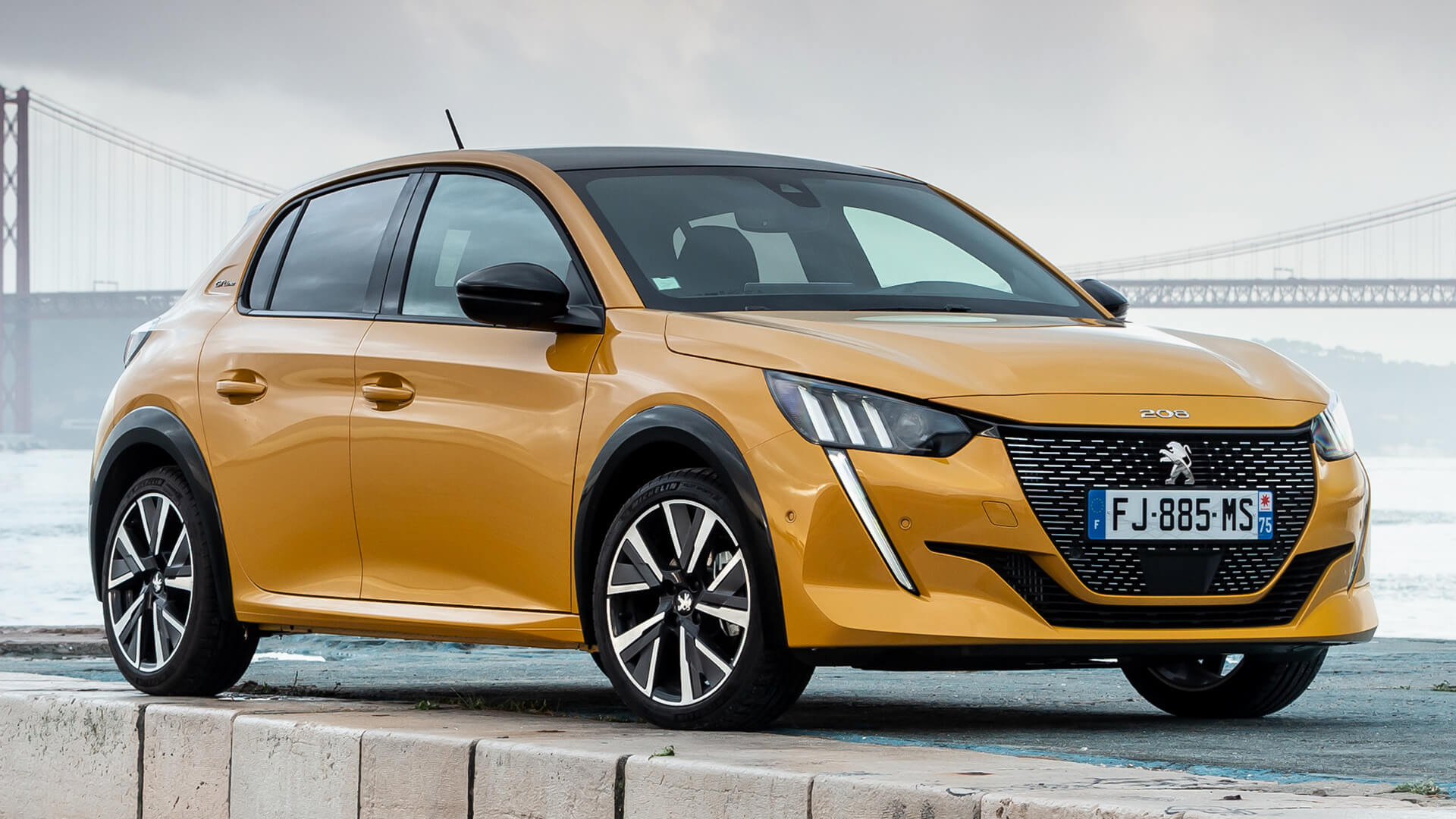
Peugeot · 2019–present
208 II
- Power
- 74 kW101 PS
- 0–100 km/h
- 9.9 s
- Top speed
- 188 km/h
- Kerb mass
- 1,165 kg
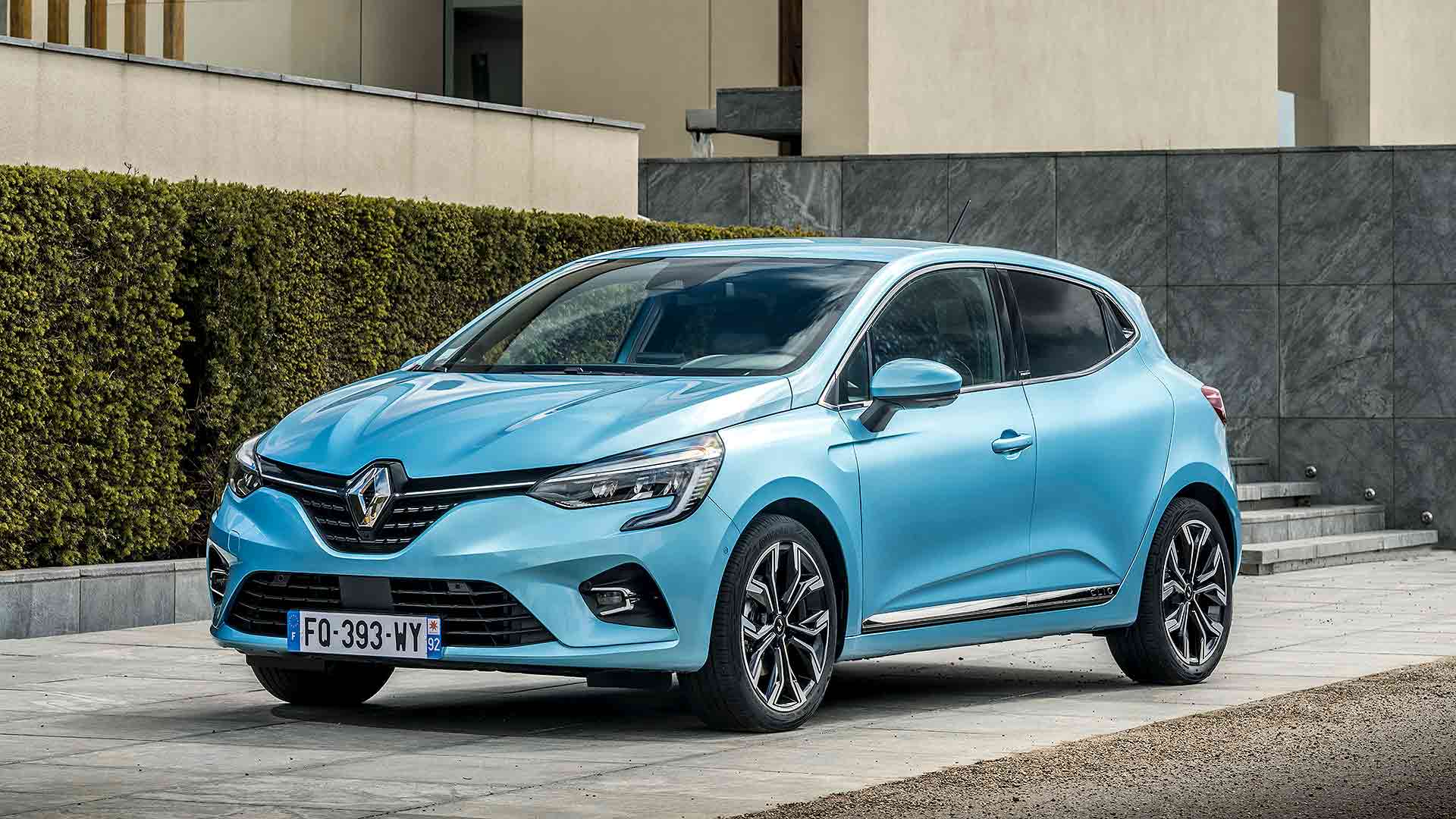
Renault · 2019–2025
Clio V
- Power
- 74 kW101 PS
- 0–100 km/h
- 11.8 s
- Top speed
- 187 km/h
- Kerb mass
- 1,165 kg
At a glance
Who suits what, worked out from the catalog figures of the versions above.
Categories won: 208 II 4 Clio V 1
- Family Clio V Boot: 340 l vs 309 l
- City 208 II Width: 1,745 mm vs 1,798 mm; Consumption: 4.2 l/100 km vs 4.4 l/100 km
- Long trips 208 II Range: 1,048 km vs 955 km (estimated)
- Performance 208 II 0–100 km/h: 9.9 s vs 11.8 s
- Running costs 208 II Fuel per year: €1,100 vs €1,160 (estimated)
Verdict Opinion
The Clio is the more rational small car. It is cheaper to buy, has the bigger boot and offers a genuine full hybrid that suits town driving without a charging cable.
The 208 is the more modern-feeling one. Its turbo engine pulls harder, its cabin is the more distinctive, and the e-208 gives buyers a fully electric option that Renault did not offer in the Clio.
— Sarah Whitmore
Both cars were revealed at the same Geneva show in March 2019, and they have been direct rivals in the European small-car class ever since. The second Peugeot 208 went on sale in June 2019; the fifth Renault Clio reached customers from 21 September 2019.
Each answered the same question differently. Peugeot added a battery-electric e-208 and a striking cabin; Renault kept the shape conservative and developed a full hybrid of its own, the E-Tech. Both won European Car of the Year with this badge: the Clio in 1991 and 2006, the 208 in 2020.
Peugeot 208 vs Renault Clio: size, space, engines and prices
Platforms and dimensions
The 208 sits on Stellantis's CMP platform, the Clio on the Renault–Nissan CMF-B, which it was the first to use. In the figures published by mobile.de the cars are almost the same length: 4,055 mm for the Peugeot, 4,050 mm for the Renault. The Clio is wider at 1,798 mm against 1,745 mm and has a 2,583 mm wheelbase, 43 mm more than the 208's 2,540 mm.
Boot and cabin
The Renault has the clear advantage in luggage space: 391 litres against 265 litres for the Peugeot under the same VDA standard, though the folded figures are close at 1,096 and 1,106 litres. Inside, the Peugeot uses its i-Cockpit layout, with a small steering wheel and the instrument display placed above it, in 3D on higher trims. The Clio has a more conventional dashboard with a portrait touchscreen of up to 9.3 inches.
Petrol engines on test
In a 2020 mobile.de twin test the 208 PureTech 100 with 74 kW (101 PS) and 205 Nm reached 100 km/h in 9.9 seconds. The Clio TCe 100 with 74 kW (100 PS) and 160 Nm took 11.8 seconds. Quoted consumption was 4.2 and 4.4 l/100 km; the fuel cost comparison turns such a gap into euros for your own mileage. The testers found the Peugeot stronger and quieter and the Renault cheaper and slightly sportier.
Hybrid against electric
Renault's E-Tech hybrid pairs a 1.6 petrol engine with two electric motors, a 1.2 kWh battery and a clutchless multi-mode gearbox, for up to 105 kW (143 PS). It charges itself while driving and is meant to cut fuel use in town. Peugeot went further: the e-208 of 2020 drew on 50 kWh to feed a 100 kW (136 PS) motor, good for 340 km WLTP. The 2023 update raised that to 115 kW (156 PS) and 400 km. No battery-electric Clio was offered in this generation.
German prices in 2019 and 2020
In Germany the Clio started at €12,990 with the 48 kW SCe 65 in July 2019; mobile.de gave €15,490 as the 208 entry price with 55 kW in August 2020. With the comparable 74 kW petrol engines the Clio Experience cost €16,440 and the 208 Active €17,950 in August 2020.
Race Stats side by side
Each figure is a 0–100 score from the catalog numbers, the same as on the 1CARS Race cards. PI is the overall performance index (100–999) and its class D–S.
| Stat | 208 II | Clio V |
|---|---|---|
| PI | C · 490 | C · 466 |
| Power | 36 | 36 |
| Grip | 40 | 40 |
| Handling | 77 | 72 |
| Top speed | 34 | 33 |
| Launch | 33 | 24 |
Grip and handling are estimates from drive type, weight, height and body (hover a figure to see where it comes from). 1CARS Race
Who wins a race?
Quarter-mile (402 m) drag from a standing start, dry road, no reaction time — the 1CARS Race physics on the catalog figures of these versions.
- 1 208 IIPureTech 100 · petrol · 74 kW (101 PS) 16.98 sat 128 km/h
- 2 Clio VTCe 100 · petrol · 74 kW (101 PS) 17.91 sat 122 km/h · +0.93 s
Size and weight
Side view to scale, all cars from the front bumper.
| 208 II | Clio V | |
|---|---|---|
| Length | 4,055 mm159.6 in | 4,050 mm159.4 in −5 mm −0.2 in −0.1% |
| Width | 1,745 mm68.7 in | 1,798 mm70.8 in +53 mm +2.1 in +3.0% |
| Height | 1,430 mm56.3 in | 1,440 mm56.7 in +10 mm +0.4 in +0.7% |
| Wheelbase | 2,540 mm100.0 in | 2,583 mm101.7 in +43 mm +1.7 in +1.7% |
| Kerb weight | 1,165 kg2,568 lb | 1,165 kg2,568 lb |
| Boot | 309 l10.9 cu ft | 340 l12.0 cu ft +31 l +1.1 cu ft +10.0% |
| Fuel tank | 44 l11.6 gal US | 42 l11.1 gal US −2 l −0.5 gal US −4.5% |
| Fits a standard garage? | Yes | Yes |
Difference vs 208 II (±). Garage check: a standard single garage takes a car up to about 5.0 m (16 ft 5 in) long and 1.9 m (6 ft 3 in) wide (width as listed in the catalog; some makers include the mirrors). Leave about 0.6 m (2 ft) to open the doors.
Full specifications
| Peugeot 208 | Renault Clio | |
|---|---|---|
| General | ||
| Version | PureTech 100 · petrol · 74 kW (101 PS) | TCe 100 · petrol · 74 kW (101 PS) |
| Production years | 2019–present | 2019–2025 |
| Body | Hatchback | Hatchback |
| Country | France | France |
| Performance | ||
| Power Why it matters: More power means stronger acceleration and easier overtaking, especially with a full load. | 74 kW (101 PS) 99 hp | 74 kW (101 PS) 99 hp |
| Power, all versions | 55–115 kW (75–156 PS) 74–154 hp | 48–103 kW (65–140 PS) 64–138 hp |
| Torque Why it matters: Torque is the pulling force you feel when accelerating from low revs, towing or climbing hills. | 205 Nm 151 lb-ft Better | 160 Nm 118 lb-ft |
| 0–100 km/h Why it matters: A shorter 0–100 km/h time means quicker getaways and safer merging onto fast roads. | 9.9 s Better | 11.8 s |
| Top speed Why it matters: Top speed hints at how relaxed the car is at motorway speeds, even if you never reach it. | 188 km/h 117 mph | 187 km/h 116 mph |
| Power per tonne | 64 kW/t 77 hp/ton calculated | 64 kW/t 77 hp/ton calculated |
| Engine and transmission | ||
| Fuel | Petrol | Petrol |
| Gearbox | manual | manual |
| Drive | Front-wheel drive | Front-wheel drive |
| Dimensions and weight | ||
| Length | 4,055 mm 159.6 in | 4,050 mm 159.4 in |
| Width | 1,745 mm 68.7 in | 1,798 mm 70.8 in |
| Height | 1,430 mm 56.3 in | 1,440 mm 56.7 in |
| Wheelbase | 2,540 mm 100.0 in | 2,583 mm 101.7 in |
| Kerb weight Why it matters: A lighter car is usually more agile and uses less energy. | 1,165 kg 2,568 lb | 1,165 kg 2,568 lb |
| Boot Why it matters: A bigger boot fits more luggage, shopping or a pram. | 309 l 10.9 cu ft | 340 l 12.0 cu ft Better |
| Fuel tank Why it matters: A larger tank means more distance between fuel stops. | 44 l 11.6 gal US Better | 42 l 11.1 gal US |
| Economy and running costs | ||
| Fuel consumption Why it matters: Lower consumption cuts running costs and CO₂ emissions on every trip. | 4.2 l/100 km 56.0 mpg US Better | 4.4 l/100 km 53.5 mpg US |
| CO₂ | 97 g/km Better | 116 g/km |
| Fuel cost per year | €1,100/year estimated Better | €1,160/year estimated |
| Range on a full tank | 1,048 km 651 mi estimated Better | 955 km 593 mi estimated |
| Safety | ||
| Euro NCAP | ★★★★☆ (2019) | No data |
These cars do not differ in the data we have.
Equal rows hidden (8): Body, Country, Power, Power per tonne, Fuel, Gearbox, Drive, Kerb weight.
Better marks the stronger figure — only for measurable specs (power, torque, 0–100 km/h, consumption, boot, weight).
Estimated at 15,000 km a year with fuel at €1.75/l petrol.
In plain words
Peugeot 208 is quicker: 0–100 km/h in 9.9 s against 11.8 s for Renault Clio. Peugeot 208 is 5 mm longer than Renault Clio (4,055 mm vs 4,050 mm). Renault Clio has the bigger boot: 340 l against 309 l. At 15,000 km a year, fuel would cost about €1,100 (Peugeot 208), €1,160 (Renault Clio) (estimated). Renault Clio is the older design (from 1990); Peugeot 208 arrived in 2012. On the catalog figures, the Renault Clio is the pick for family; the Peugeot 208 is the pick for city, long trips, performance and running costs.
Which one to choose
Choose the Clio if you want the lowest price, the largest boot in this pair or a hybrid that needs no plug.
Choose the 208 if you prefer a quieter, punchier petrol engine, like the i-Cockpit layout or want to go fully electric.
Before buying try the Peugeot's driving position: the i-Cockpit with its small wheel and raised display suits some drivers better than others.
Frequently asked questions
Which is bigger, the Peugeot 208 or the Renault Clio?
Length is a near tie at roughly 4.05 m. The Clio is 53 mm wider, has a 43 mm longer wheelbase and a boot of 391 litres against 265 litres.
Is there an electric Clio or 208?
Peugeot offers the e-208 with 100 kW from 2020 and 115 kW from 2023. The Clio V was offered with the E-Tech full hybrid but not as a battery-electric car.
Which one is cheaper?
The Clio. In Germany it started at €12,990 in July 2019, and with 74 kW the Clio Experience cost €16,440 against €17,950 for the 208 Active in 2020.
Has either won European Car of the Year?
Both. The Clio won in 1991 and 2006, the second-generation 208 in 2020.