
McLaren 720S vs Porsche 911 Turbo S: 530 kW against 478 kW
Updated Report an error By Sarah Whitmore

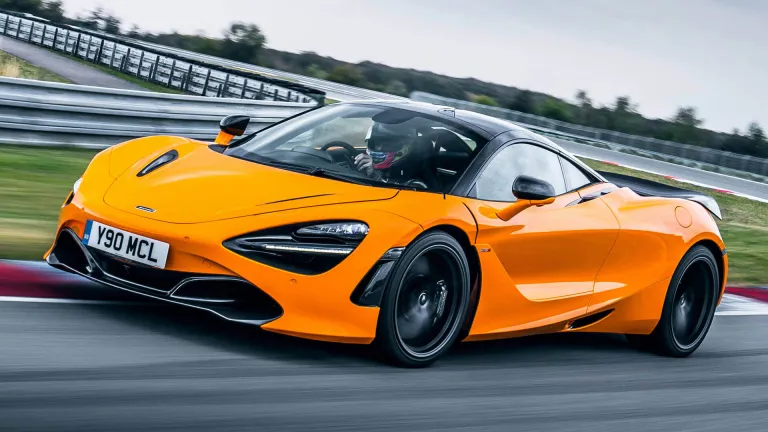
McLaren · 2017–2023
720S
Price from €237,946 (2017)
- Power
- 530 kW721 PS
- 0–100 km/h
- 2.9 s
- Top speed
- 341 km/h
- Kerb mass
- 1,419 kg
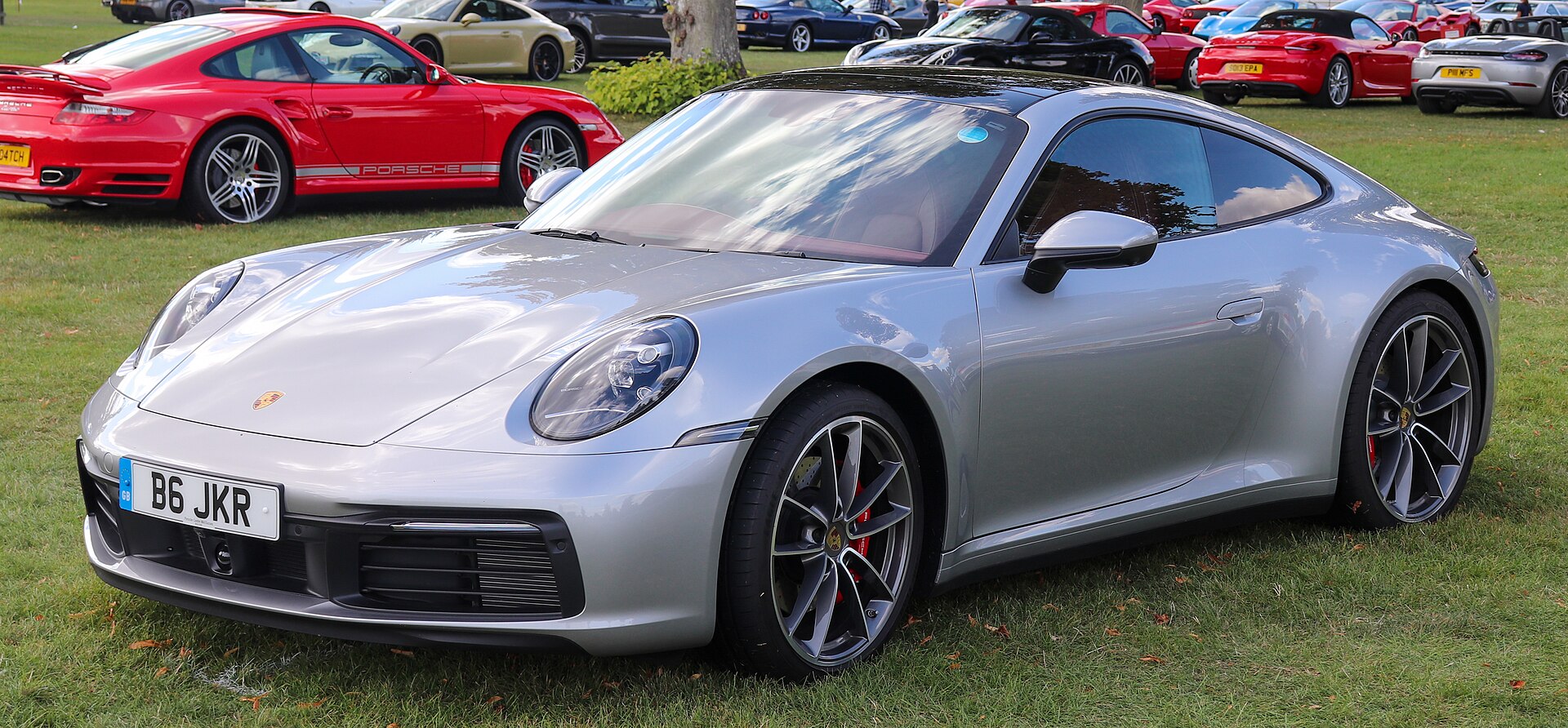
Porsche · 2019–present
911 992
- Power
- 478 kW650 PS
- 0–100 km/h
- 2.7 s
- Top speed
- 330 km/h
- Kerb mass
- 1,715 kg
At a glance
Who suits what, worked out from the catalog figures of the versions above.
Categories won: 720S 0 911 992 1
- City Too close to call Length: 4,544 mm vs 4,519 mm
- Performance Too close to call Power per tonne: 374 kW/t vs 279 kW/t
- Running costs Too close to call Fuel per year: €3,200 vs €3,230 (estimated)
- Off-road 911 992 Drive and body: All-wheel drive · Coupe vs Rear-wheel drive · Coupe
Verdict Opinion
The McLaren 720S is the purer supercar. It has 530 kW in a car that weighs about 1,420 kg, a carbon-fibre structure and a 341 km/h top speed, and it is a dedicated two-seat supercar rather than a version of a wider range.
The Porsche 911 Turbo S is the better all-rounder. All-wheel drive, rear-wheel steering, 800 Nm and occasional rear seats make it quicker away from the lights and far easier to use in rain, in town and on long trips. For a single car to drive all year, the Porsche makes more sense; as a weekend car, the McLaren is the more exciting choice.
- Sarah Whitmore
The McLaren 720S and the Porsche 911 Turbo S reach similar performance with two very different ideas. McLaren unveiled the 720S at the Geneva Motor Show on 7 March 2017 as a carbon-fibre, mid-engined supercar with rear-wheel drive. Porsche introduced the 992-generation 911 Turbo S in March 2020: a rear-engined, all-wheel-drive coupé that can also be used every day. Drag races between the two became a staple of motoring media as soon as the Porsche arrived.
In short: the 720S has more power, less weight and a higher top speed. The 911 Turbo S has all-wheel drive, 800 Nm, two rear seats and a quicker official 0–100 km/h time. Both cars are in our catalogue: McLaren 720S and Porsche 911.
McLaren 720S vs 911 Turbo S: power, weight and traction
Twin-turbo V8 against twin-turbo flat-six
The 720S uses McLaren's 4.0-litre M840T twin-turbo V8, mounted behind the cabin. It produces 530 kW (720 PS) at 7,500 rpm and 770 Nm at 5,500 rpm. The 992.1 Turbo S uses a 3.7-litre twin-turbo flat-six behind the rear axle, rated at 478 kW (650 PS) and 800 Nm. The McLaren has 52 kW more power; the Porsche has 30 Nm more torque.
- McLaren 720S: 530 kW, 770 Nm, rear-wheel drive, 7-speed dual-clutch
- Porsche 911 Turbo S (992.1): 478 kW, 800 Nm, all-wheel drive, 8-speed PDK
- Kerb weight: 1,419 kg against 1,640 kg (DIN)
Chassis and weight
McLaren builds the 720S around the MonoCage II carbon-fibre tub, 18 kg lighter than the tub of its predecessor, and uses Proactive Chassis Control II active suspension. The coupé has butterfly doors. Its kerb weight is 1,419 kg. The Turbo S has rear-wheel steering as standard and weighs 1,640 kg to DIN, about 220 kg more than the McLaren.
Acceleration and top speed
McLaren claims 2.9 seconds to 97 km/h (60 mph), 7.8 seconds to 200 km/h and a top speed of 341 km/h. Porsche claims 2.7 seconds from 0 to 100 km/h for the Turbo S coupé and 330 km/h. All-wheel drive gives the 911 an advantage from a standstill; the lighter, more powerful McLaren pulls harder at higher speeds and has the higher maximum.
Everyday use
The 911 is a 2+2 with a front luggage compartment, a 2,450 mm wheelbase and a length of 4,519–4,535 mm across the 992 range. The 720S is a strict two-seater; our catalogue lists 150 litres of luggage space, a length of 4,544 mm and a 2,670 mm wheelbase. Both are offered as open cars: the 720S Spider from December 2018 and the 911 Turbo S Cabriolet.
Successors
McLaren replaced the 720S with the 750S in 2023, with 552 kW (750 PS) and 30 kg less weight. Porsche followed with the 992.2 Turbo S in 2025, a T-Hybrid with 523 kW (711 PS) and 800 Nm, 2.5 seconds to 100 km/h and a Nordschleife lap of 7:03.92.
Race Stats side by side
Each figure is a 0–100 score from the catalog numbers, the same as on the 1CARS Race cards. PI is the overall performance index (100–999) and its class D–S.
| Stat | 720S | 911 992 |
|---|---|---|
| PI | S · 858 | S · 803 |
| Power | 91 | 82 |
| Grip | 68 | 61 |
| Handling | 77 | 76 |
| Top speed | 93 | 88 |
| Launch | 89 | 83 |
Grip and handling are estimates from drive type, weight, height and body (hover a figure to see where it comes from). 1CARS Race
Who wins a race?
Quarter-mile (402 m) drag from a standing start, dry road, no reaction time - the 1CARS Race physics on the catalog figures of these versions.
- 1 720S720S · petrol · 530 kW (721 PS) 9.42 sat 294 km/h
- 2 911 992Turbo S (992.1) · petrol · 478 kW (650 PS) 10.01 sat 271 km/h · +0.59 s
Size and weight
Side view to scale, all cars from the front bumper.
| 720S | 911 992 | |
|---|---|---|
| Length | 4,544 mm178.9 in | 4,519 mm177.9 in † −25 mm −1.0 in −0.6% |
| Height | 1,196 mm47.1 in | 1,289 mm50.7 in † +93 mm +3.7 in +7.8% |
| Wheelbase | 2,670 mm105.1 in | 2,450 mm96.5 in −220 mm −8.7 in −8.2% |
| Kerb weight | 1,419 kg3,128 lb | 1,715 kg3,781 lb +296 kg +653 lb +20.9% |
| Fits a standard garage? | No data | Tight |
Difference vs 720S (±). Garage check: a standard single garage takes a car up to about 5.0 m (16 ft 5 in) long and 1.9 m (6 ft 3 in) wide (width as listed in the catalog; some makers include the mirrors). Leave about 0.6 m (2 ft) to open the doors. † from another version of this generation.
Full specifications
| McLaren 720S | Porsche 911 | |
|---|---|---|
| General | ||
| Version | 720S · petrol · 530 kW (721 PS) | Turbo S (992.1) · petrol · 478 kW (650 PS) |
| Production years | 2017–2023 | 2019–present |
| Body | Coupe | Coupe |
| Class | No data | Sports car |
| Country | United Kingdom | Germany |
| Performance | ||
| Power Why it matters: More power means stronger acceleration and easier overtaking, especially with a full load. | 530 kW (721 PS) 711 hp Better | 478 kW (650 PS) 641 hp |
| Power, all versions | 530 kW (721 PS) 711 hp | 96–523 kW (131–711 PS) 129–701 hp |
| Torque Why it matters: Torque is the pulling force you feel when accelerating from low revs, towing or climbing hills. | 770 Nm 568 lb-ft | 800 Nm 590 lb-ft Better |
| 0–100 km/h Why it matters: A shorter 0–100 km/h time means quicker getaways and safer merging onto fast roads. | 2.9 s | 2.7 s Better |
| Top speed Why it matters: Top speed hints at how relaxed the car is at motorway speeds, even if you never reach it. | 341 km/h 212 mph Better | 330 km/h 205 mph |
| Power per tonne | 374 kW/t 454 hp/ton calculated Better | 279 kW/t 339 hp/ton calculated |
| Engine and transmission | ||
| Fuel | Petrol | Petrol |
| Engine | 3,994 cc · 8 cyl 4.0 l | No data |
| Gearbox | 7-speed dual-clutch | No data |
| Drive | Rear-wheel drive | All-wheel drive |
| Dimensions and weight | ||
| Length | 4,544 mm 178.9 in | 4,519 mm 177.9 in † |
| Width | No data | 1,852 mm 72.9 in † |
| Height | 1,196 mm 47.1 in | 1,289 mm 50.7 in † |
| Wheelbase | 2,670 mm 105.1 in | 2,450 mm 96.5 in |
| Kerb weight Why it matters: A lighter car is usually more agile and uses less energy. | 1,419 kg 3,128 lb Better | 1,715 kg 3,781 lb |
| Boot Why it matters: A bigger boot fits more luggage, shopping or a pram. | 150 l 5.3 cu ft | No data |
| Economy and running costs | ||
| Fuel consumption Why it matters: Lower consumption cuts running costs and CO₂ emissions on every trip. | 12.2 l/100 km 19.3 mpg US | 12.3 l/100 km 19.1 mpg US |
| CO₂ | 276 g/km | 278 g/km |
| Fuel cost per year | €3,200/year estimated | €3,230/year estimated |
| Price | ||
| Price | from €237,946 (2017) | No data |
These cars do not differ in the data we have.
Equal rows hidden (2): Body, Fuel.
Better marks the stronger figure - only for measurable specs (power, torque, 0–100 km/h, consumption, boot, weight).
Estimated at 15,000 km a year with fuel at €1.75/l petrol. † from another version of this generation.
In plain words
Porsche 911 is quicker: 0–100 km/h in 2.7 s against 2.9 s for McLaren 720S. McLaren 720S is 25 mm longer than Porsche 911 (4,544 mm vs 4,519 mm). McLaren 720S is lighter by 296 kg (1,419 kg vs 1,715 kg). At 15,000 km a year, fuel would cost about €3,200 (McLaren 720S), €3,230 (Porsche 911) (estimated). Porsche 911 is the older design (from 1964); McLaren 720S arrived in 2017. Porsche 911 is still in production; McLaren 720S is not. On the catalog figures, the Porsche 911 is the pick for off-road.
Which one to choose
Choose the McLaren 720S if you want a mid-engined carbon-fibre supercar with the higher top speed, the lower weight and the more dramatic doors and design.
Choose the Porsche 911 Turbo S if you need all-wheel-drive traction, a little extra space for bags or children, and the quicker official 0–100 km/h figure in a car you can use daily.
The 720S also faces Ferrari in Ferrari 488 vs McLaren 720S, and the 911 meets Japan's GT-R in Nissan GT-R vs Porsche 911.
Frequently asked questions
Is the McLaren 720S faster than the Porsche 911 Turbo S?
It depends on the measure. Porsche quotes 2.7 seconds to 100 km/h; McLaren quotes 2.9 seconds to 97 km/h. The 720S has the higher top speed, 341 km/h against 330 km/h.
Which has more power?
The 720S, with 530 kW (720 PS) from a 4.0-litre twin-turbo V8. The 992.1 Turbo S produces 478 kW (650 PS) but 800 Nm of torque against 770 Nm.
How much heavier is the 911 Turbo S?
About 220 kg. The 720S coupé has a kerb weight of 1,419 kg; the 911 Turbo S is listed at 1,640 kg to DIN.
Does the McLaren have all-wheel drive?
No. The 720S is rear-wheel drive with a seven-speed dual-clutch gearbox. The 911 Turbo S has all-wheel drive and an eight-speed PDK.
What replaced them?
The McLaren 750S in 2023 and the 992.2 911 Turbo S with T-Hybrid technology in 2025, rated at 552 kW and 523 kW respectively.