
Nissan GT-R vs Porsche 911: Godzilla against Stuttgart
Updated Report an error By Felix Hartmann
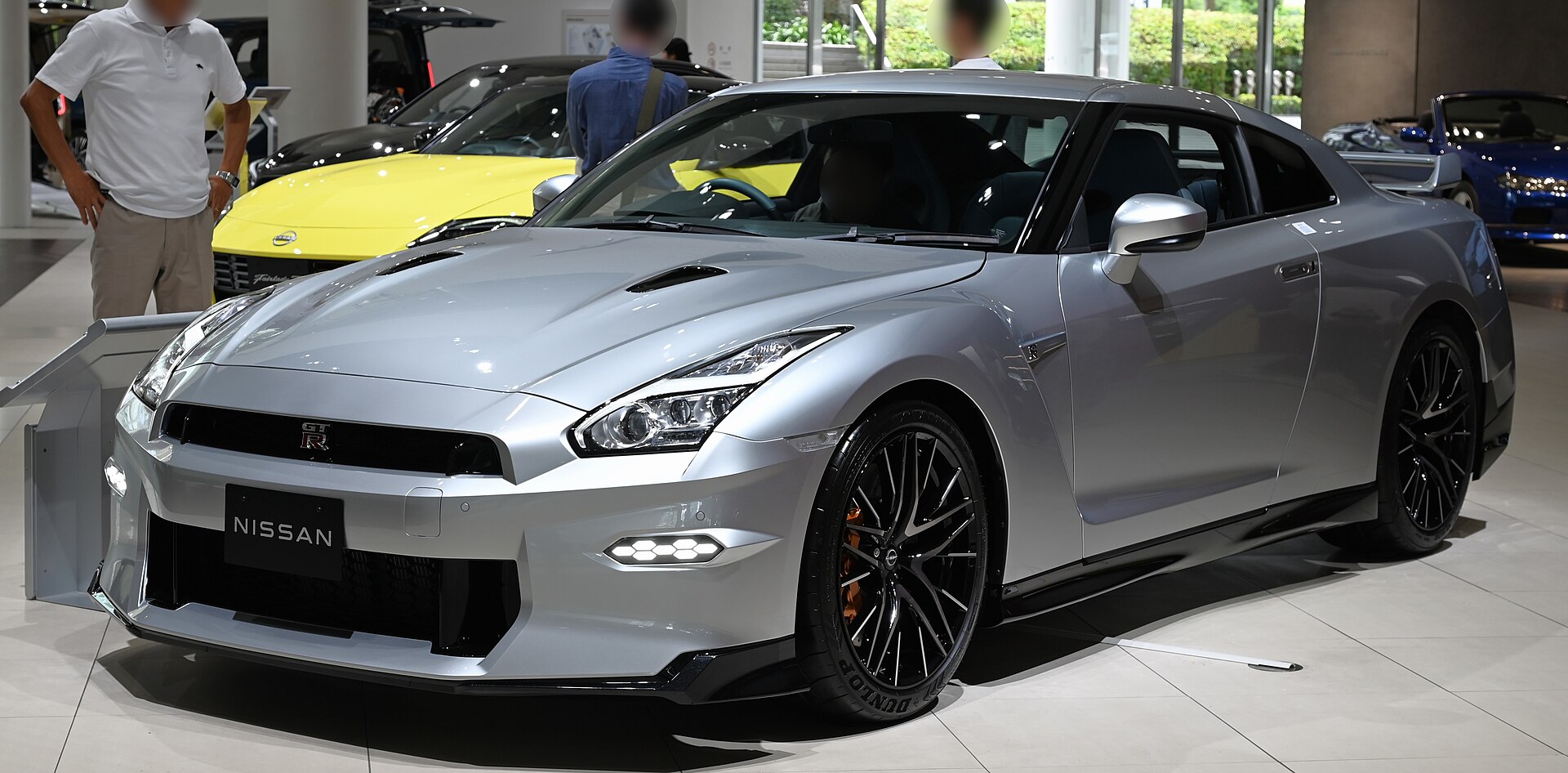
Nissan · 2007–2025
GT-R (R35)
- Power
- 419 kW570 PS
- 0–100 km/h
- —
- Top speed
- 328 km/h
- Kerb mass
- 1,785 kg
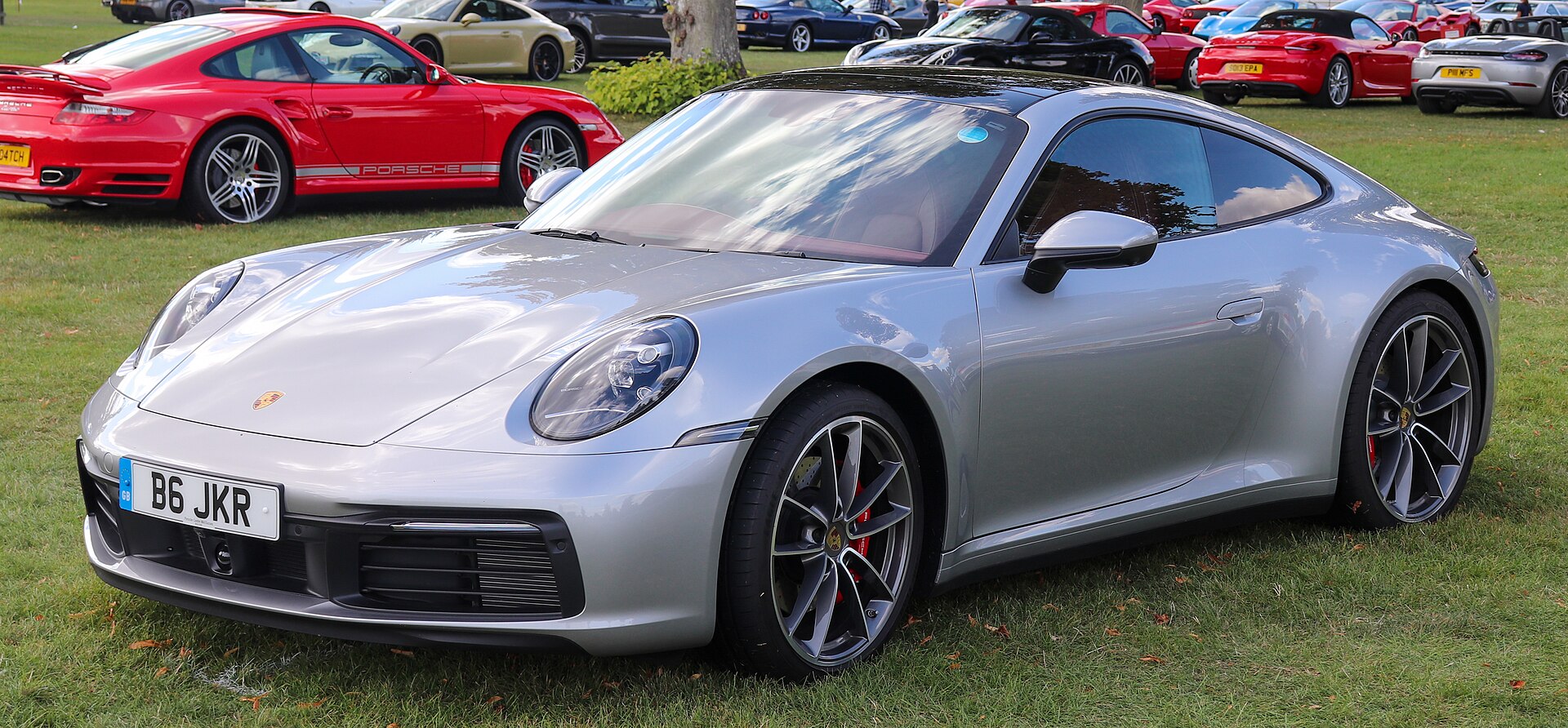
Porsche · 2019–present
911 992
- Power
- 478 kW650 PS
- 0–100 km/h
- 2.7 s
- Top speed
- 330 km/h
- Kerb mass
- 1,715 kg
At a glance
Who suits what, worked out from the catalog figures of the versions above.
Categories won: GT-R (R35) 0 911 992 3
- City 911 992 Length: 4,519 mm vs 4,690 mm; Width: 1,852 mm vs 1,895 mm
- Performance 911 992 Power per tonne: 279 kW/t vs 235 kW/t
- Running costs 911 992 Fuel per year: €3,230 vs €3,680 (estimated)
Verdict Opinion
As a used performance bargain the GT-R remains hard to ignore: four seats, all-wheel drive and more than 400 kW from about 2012 onwards. In Germany a new one cost €99,900 for the 2017 model year, and Nissan's Japanese launch price in 2007 was ¥7,770,000 (about €48,000). Its weaknesses are weight and the end of production.
The 911 is the more rounded and more modern car. It offers everything from the 290 kW Carrera to the GT3 and the hybrid Turbo S, it is lighter, and it is still in production.
— Felix Hartmann
When the R35 Nissan GT-R reached Japanese customers in December 2007, it was quickly measured against the Porsche 911 Turbo: four seats, all-wheel drive and supercar acceleration. Porsche even timed a customer GT-R on the Nürburgring and reported a lap of 7:54, well behind Nissan's own claims.
The two cars come from opposite philosophies. The GT-R was a clean-sheet design that stayed in production for almost 18 years with steady updates; the last one left Tochigi on 26 August 2025. The 911 has been built since 1964, is now in its eighth generation (the 992) and is still on sale, since 2024 also as a hybrid. Comparing them today means comparing a used Japanese icon with a German car you can still order new.
Nissan GT-R vs Porsche 911: the key differences
Engine layout
The GT-R carries its hand-built VR38DETT, a 3,799 cc V6 with two IHI turbochargers, in front of the cabin. The six-speed dual-clutch gearbox sits at the rear axle, which gives a 54:46 weight split. The 911 keeps its flat-six behind the rear axle, as it has since 1964. In the 992.1 Turbo S that is a 3.7-litre twin-turbo unit delivering 478 kW and 800 Nm; with an added electric motor the 992.2 Turbo S reaches 523 kW (711 PS) combined.
Power over time
Nissan raised the GT-R from 353 kW (480 PS) at launch to 419 kW (570 PS) for model year 2017, about 19 percent more, and the Nismo reached 441 kW (600 PS). Even that peak is 37 kW below the 992.1 Turbo S and 82 kW below the hybrid Turbo S. The cheapest current 911, the Carrera, has 290 kW (394 PS), while the naturally aspirated GT3 delivers 375 kW (510 PS).
Weight and traction
Both cars use all-wheel drive in their turbo versions, but they carry very different mass. A 2016–2025 GT-R weighs 1,785 kg, which means 4.26 kg per kW at 419 kW. A 992.2 Carrera coupé weighs 1,516 kg, or 5.23 kg per kW, by our calculation. In acceleration the gap disappears at the top: German Wikipedia gives 2.7 seconds to 100 km/h for the 405 kW GT-R, the same time Porsche quotes for the first 992 Turbo S.
Nürburgring
The GT-R's best official lap was 7:08.679 by the Nismo in 2013. Current 911s go much quicker: Wikipedia lists 7:03.92 for the 992.2 Turbo S and 6:44.848 for the 992.1 GT3 RS.
Practical details
The Nissan has four seats and a 315-litre boot; the 911 is a 2+2. Nissan ended European GT-R sales in March 2022 when tighter noise rules came in, so a GT-R bought in Europe today is always a used car.
Race Stats side by side
Each figure is a 0–100 score from the catalog numbers, the same as on the 1CARS Race cards. PI is the overall performance index (100–999) and its class D–S.
| Stat | GT-R (R35) | 911 992 |
|---|---|---|
| PI | S · 804 | S · 803 |
| Power | 77 | 82 |
| Grip | 77 | 61 |
| Handling | 69 | 76 |
| Top speed | 88 | 88 |
| Launch | 83 | 83 |
Grip and handling are estimates from drive type, weight, height and body (hover a figure to see where it comes from). 1CARS Race
Who wins a race?
Quarter-mile (402 m) drag from a standing start, dry road, no reaction time — the 1CARS Race physics on the catalog figures of these versions.
- 1 911 992Turbo S (992.1) · petrol · 478 kW (650 PS) 10.01 sat 271 km/h
- 2 GT-R (R35)(570 PS) · petrol · 419 kW (570 PS) 11.18 sat 207 km/h · +1.17 s
Size and weight
Side view to scale, all cars from the front bumper.
| GT-R (R35) | 911 992 | |
|---|---|---|
| Length | 4,690 mm184.6 in | 4,519 mm177.9 in † −171 mm −6.7 in −3.6% |
| Width | 1,895 mm74.6 in | 1,852 mm72.9 in † −43 mm −1.7 in −2.3% |
| Height | 1,372 mm54.0 in | 1,289 mm50.7 in † −83 mm −3.3 in −6.0% |
| Wheelbase | 2,780 mm109.4 in | 2,450 mm96.5 in −330 mm −13.0 in −11.9% |
| Kerb weight | 1,785 kg3,935 lb | 1,715 kg3,781 lb −70 kg −154 lb −3.9% |
| Fits a standard garage? | Tight | Tight |
Difference vs GT-R (R35) (±). Garage check: a standard single garage takes a car up to about 5.0 m (16 ft 5 in) long and 1.9 m (6 ft 3 in) wide (width as listed in the catalog; some makers include the mirrors). Leave about 0.6 m (2 ft) to open the doors. † from another version of this generation.
Full specifications
| Nissan GT-R | Porsche 911 | |
|---|---|---|
| General | ||
| Version | (570 PS) · petrol · 419 kW (570 PS) | Turbo S (992.1) · petrol · 478 kW (650 PS) |
| Production years | 2007–2025 | 2019–present |
| Body | Coupe | Coupe |
| Class | No data | Sports car |
| Country | Japan | Germany |
| Performance | ||
| Power Why it matters: More power means stronger acceleration and easier overtaking, especially with a full load. | 419 kW (570 PS) 562 hp | 478 kW (650 PS) 641 hp Better |
| Power, all versions | 353–441 kW (480–600 PS) 473–591 hp | 96–523 kW (131–711 PS) 129–701 hp |
| Torque Why it matters: Torque is the pulling force you feel when accelerating from low revs, towing or climbing hills. | 633 Nm 467 lb-ft | 800 Nm 590 lb-ft Better |
| 0–100 km/h Why it matters: A shorter 0–100 km/h time means quicker getaways and safer merging onto fast roads. | No data | 2.7 s |
| Top speed Why it matters: Top speed hints at how relaxed the car is at motorway speeds, even if you never reach it. | 328 km/h 204 mph | 330 km/h 205 mph |
| Power per tonne | 235 kW/t 286 hp/ton calculated | 279 kW/t 339 hp/ton calculated Better |
| Engine and transmission | ||
| Fuel | Petrol | Petrol |
| Engine | 3,799 cc · 6 cyl 3.8 l | No data |
| Engine code | VR38DETT | No data |
| Gearbox | 6-speed dual-clutch | No data |
| Drive | All-wheel drive | All-wheel drive |
| Dimensions and weight | ||
| Length | 4,690 mm 184.6 in | 4,519 mm 177.9 in † |
| Width | 1,895 mm 74.6 in | 1,852 mm 72.9 in † |
| Height | 1,372 mm 54.0 in | 1,289 mm 50.7 in † |
| Wheelbase | 2,780 mm 109.4 in | 2,450 mm 96.5 in |
| Kerb weight Why it matters: A lighter car is usually more agile and uses less energy. | 1,785 kg 3,935 lb | 1,715 kg 3,781 lb Better |
| Boot Why it matters: A bigger boot fits more luggage, shopping or a pram. | 315 l 11.1 cu ft † | No data |
| Fuel tank Why it matters: A larger tank means more distance between fuel stops. | 71 l 18.8 gal US † | No data |
| Economy and running costs | ||
| Fuel consumption Why it matters: Lower consumption cuts running costs and CO₂ emissions on every trip. | 14.0 l/100 km 16.8 mpg US | 12.3 l/100 km 19.1 mpg US Better |
| CO₂ | 316 g/km | 278 g/km Better |
| Fuel cost per year | €3,680/year estimated | €3,230/year estimated Better |
| Range on a full tank | 507 km 315 mi estimated | No data |
These cars do not differ in the data we have.
Equal rows hidden (3): Body, Fuel, Drive.
Better marks the stronger figure — only for measurable specs (power, torque, 0–100 km/h, consumption, boot, weight).
Estimated at 15,000 km a year with fuel at €1.75/l petrol. † from another version of this generation.
In plain words
Porsche 911 has more power: 478 kW (650 PS) against 419 kW (570 PS) for Nissan GT-R. Nissan GT-R is 171 mm longer than Porsche 911 (4,690 mm vs 4,519 mm). Porsche 911 is lighter by 70 kg (1,715 kg vs 1,785 kg). At 15,000 km a year, fuel would cost about €3,680 (Nissan GT-R), €3,230 (Porsche 911) (estimated). Porsche 911 is the older design (from 1964); Nissan GT-R arrived in 2007. Porsche 911 is still in production; Nissan GT-R is not. On the catalog figures, the Porsche 911 is the pick for city, performance and running costs. Our catalog has no 0–100 km/h for the Nissan GT-R yet, so some checks above leave it out.
Which one to choose
Choose the Nissan GT-R if you want the most performance per euro on the used market, need four real seats or like the idea of an engine hand-assembled by Nissan's Takumi craftsmen.
Choose the Porsche 911 if you want a new car with a warranty, a lighter body, a wider choice of versions or the fastest lap times of this pair.
More rivals of both are collected in our supercars section, and the story of the German brand is in the history of Porsche.
Frequently asked questions
Is the Nissan GT-R faster than a Porsche 911?
Against a Carrera, yes: the GT-R has 419 kW against 290 kW. Against the Turbo S, no: the 992.1 Turbo S has 478 kW and matches the GT-R's 2.7 seconds to 100 km/h, and the 992.2 Turbo S has 523 kW.
Is the Nissan GT-R still made?
No. Production of the R35 ended on 26 August 2025 at Tochigi, Japan, after about 48,000 cars. European sales had already ended in March 2022.
Which has more seats?
The GT-R has four seats and a 315-litre boot. The 911 is a 2+2 whose rear seats suit children or luggage.
Does the Porsche 911 have all-wheel drive?
Some do. All-wheel drive arrived with the 964 Carrera 4 in 1989, the 993 Turbo had it as standard, and the current 911 Dakar drives all four wheels. Rear-wheel-drive versions remain part of the range.