
Tesla Model 3 vs Volkswagen ID.3: saloon or hatchback EV
Updated Report an error By Felix Hartmann

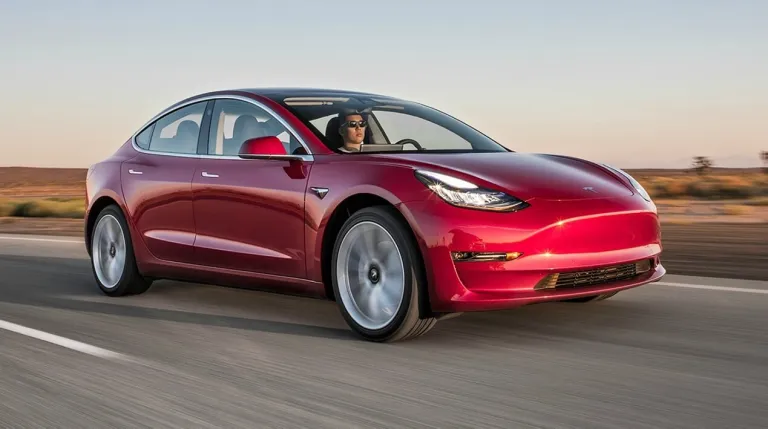
Tesla · 2016–present
Model 3
- Power
- 208 kW283 PS
- 0–100 km/h
- 6.1 s
- Top speed
- 201 km/h
- Kerb mass
- 1,765 kg
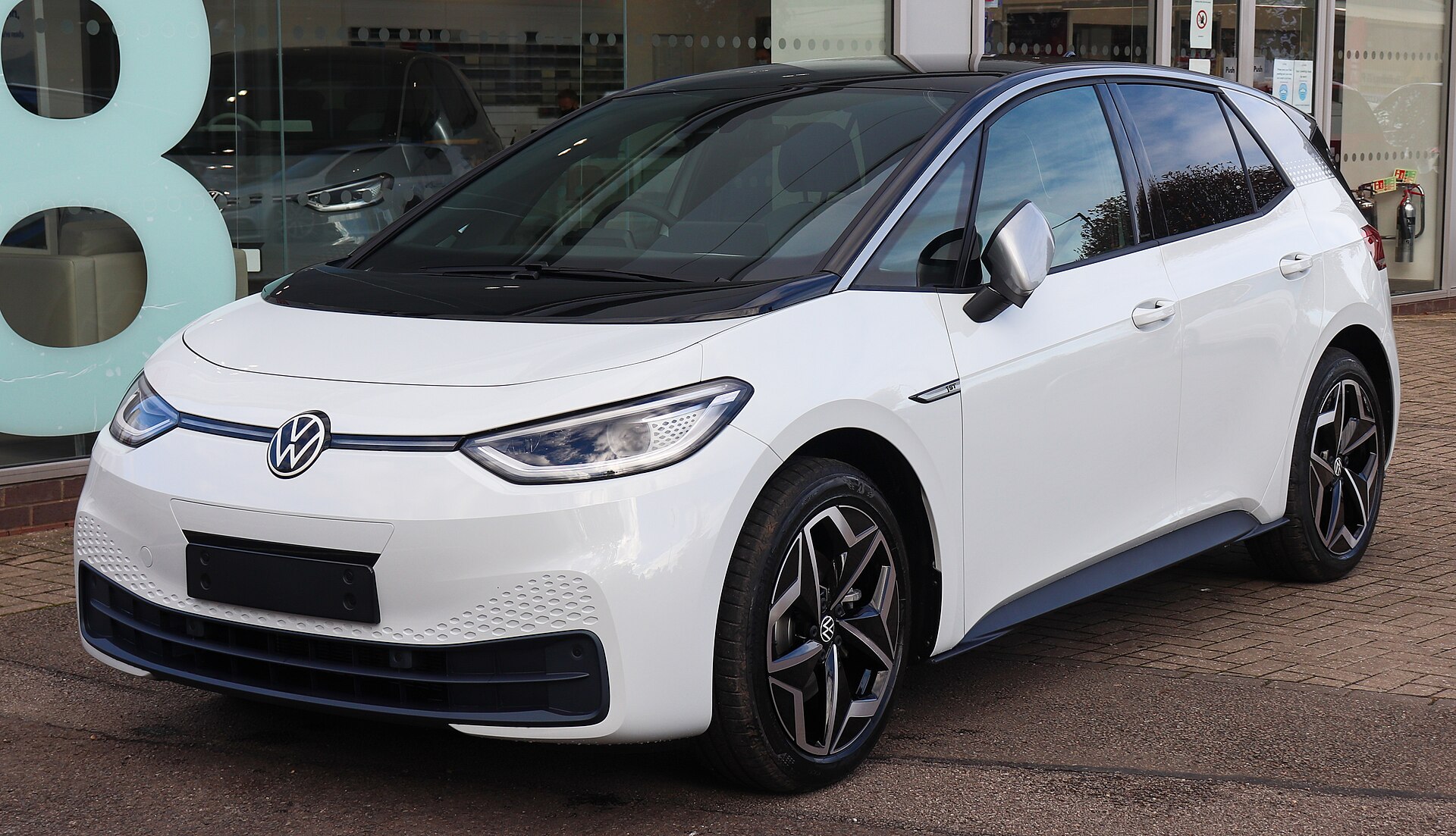
Volkswagen · 2019–present
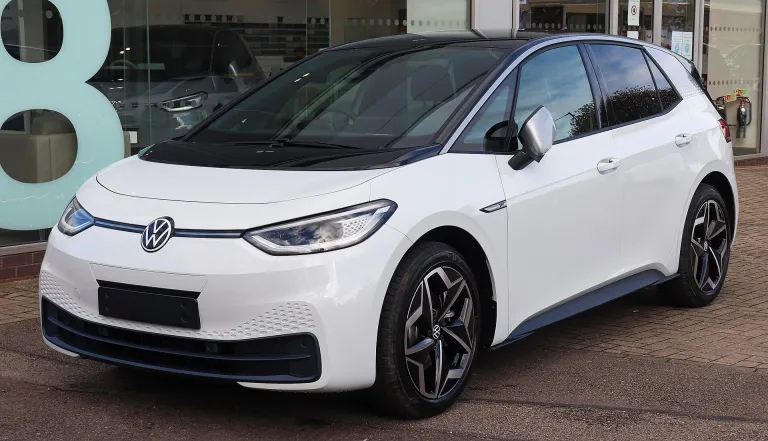
ID.3 I
- Power
- 150 kW204 PS
- 0–100 km/h
- 7.9 s
- Top speed
- 180 km/h
- Kerb mass
- 1,928 kg
At a glance
Who suits what, worked out from the catalog figures of the versions above.
Categories won: Model 3 2 ID.3 I 1
- City ID.3 I Length: 4,262 mm vs 4,720 mm; Width: 1,809 mm vs 1,849 mm
- Long trips Model 3 Wheelbase (ride comfort proxy): 2,875 mm vs 2,770 mm
- Performance Model 3 Power per tonne: 118 kW/t vs 78 kW/t; 0–100 km/h: 6.1 s vs 7.9 s
- Off-road Too close to call Drive and body: Rear-wheel drive · Sedan vs Rear-wheel drive · Hatchback
Verdict Opinion
The Model 3 is the stronger all-round electric car. It is bigger, offers a 2.9-second Performance version, charges at up to 250 kW and has the higher adult-occupant and safety-assist scores at Euro NCAP. The Premium RWD's 750 km WLTP rating is far beyond any ID.3.
The ID.3 is the more sensible choice for town and suburban driving. It is 458 mm shorter, easier to park, has a hatchback body, and the Pro S with 77 kWh matches the entry Model 3 on range at 548 km against 534 km. It also scored higher for child occupants.
— Felix Hartmann
The Tesla Model 3 and the Volkswagen ID.3 are among the most common electric cars in Europe, and many buyers consider both even though they are different shapes. The Model 3 is a mid-size saloon; limited production began at Fremont in July 2017, Gigafactory Shanghai has built it since December 2019, and Tesla announced the refreshed "Highland" version on 1 September 2023. The ID.3 is a compact hatchback, unveiled at the Frankfurt Motor Show on 9 September 2019 as the first car on Volkswagen's MEB platform and built in Zwickau.
In short: the Model 3 is longer, faster and charges at higher power. The ID.3 is shorter and easier to park, offers a range of battery sizes and, as the Pro S, matches the entry Model 3 on WLTP range. Both are in our catalogue: Tesla Model 3 and Volkswagen ID.3.
Model 3 vs ID.3: range, performance, size and safety
Range and batteries
The refreshed Model 3 RWD is rated at 534 km WLTP. The Premium RWD reaches 750 km, the Premium AWD 629 km and the Performance 571 km. Wikipedia gives battery sizes of 64 kWh for the RWD and 78.1 kWh for the Premium RWD and Performance. The ID.3 comes with 45, 58, 77 or 79 kWh of usable capacity. Its WLTP ranges in the same table are 348 km for the Pure, 425 km for the Pro, 548 km for the Pro S and 600 km for the GTX.
- Model 3 RWD: 534 km WLTP, up to 170 kW DC
- ID.3 Pro S: 77 kWh usable, 548 km WLTP, up to 125 kW DC
- Euro NCAP: five stars for both (2019 and 2020)
Charging
Tesla quotes up to 170 kW DC for the Model 3 RWD and up to 250 kW for the Premium RWD. Volkswagen quotes up to 110 kW for the entry ID.3 (50 kW as standard), 120 kW for the Pro, 125 kW for the Pro S and 175 kW for the GTX.
Performance
The ID.3 uses one rear motor and rear-wheel drive in every version, with 110 kW in the Pure, 150 kW in the Pro S and 240 kW in the GTX Performance. The Model 3 RWD reaches 100 km/h in 6.1 seconds. Tesla's Premium AWD and Performance have two motors; the Performance reaches 60 mph in 2.9 seconds and 163 mph (262 km/h).
Size and shape
The Model 3 is 4,720 mm long on a 2,875 mm wheelbase, and its drag coefficient after the refresh is 0.219. The ID.3 is 4,262 mm long on a 2,770 mm wheelbase. That is 458 mm shorter overall but only 105 mm shorter between the axles, so the ID.3 has very short overhangs. The Tesla is a saloon with a boot lid; the ID.3 is a five-door hatchback.
Updates and launch history
The ID.3's start in 2020 was delayed by software errors; Volkswagen shipped basic cars in September 2020 and connected cars at the end of that year. A facelift in March 2023 brought a new front bumper and better interior materials, and in April 2026 Volkswagen presented the substantially revised ID.3 Neo. The Model 3 refresh brought a lower drag coefficient and new versions, and North American orders opened on 10 January 2024.
Euro NCAP
The Model 3 received five stars in 2019, with 96% for adult occupants, 86% for children, 74% for vulnerable road users and 94% for safety assist. The ID.3 Pro received five stars in 2020, with 87%, 89%, 71% and 88%.
Race Stats side by side
Each figure is a 0–100 score from the catalog numbers, the same as on the 1CARS Race cards. PI is the overall performance index (100–999) and its class D–S.
| Stat | Model 3 | ID.3 I |
|---|---|---|
| PI | B · 572 | C · 477 |
| Power | 55 | 42 |
| Grip | 45 | 35 |
| Handling | 63 | 56 |
| Top speed | 39 | 31 |
| Launch | 55 | 43 |
Grip and handling are estimates from drive type, weight, height and body (hover a figure to see where it comes from). 1CARS Race
Who wins a race?
Quarter-mile (402 m) drag from a standing start, dry road, no reaction time — the 1CARS Race physics on the catalog figures of these versions.
- 1 Model 3RWD (2023 refresh) · electric · 208 kW (283 PS) 14.45 sat 155 km/h
- 2 ID.3 IPro S 77 kWh · electric · 150 kW (204 PS) 15.80 sat 139 km/h · +1.35 s
Size and weight
Side view to scale, all cars from the front bumper.
| Model 3 | ID.3 I | |
|---|---|---|
| Length | 4,720 mm185.8 in | 4,262 mm167.8 in −458 mm −18.0 in −9.7% |
| Width | 1,849 mm72.8 in | 1,809 mm71.2 in −40 mm −1.6 in −2.2% |
| Height | 1,441 mm56.7 in | 1,552 mm61.1 in +111 mm +4.4 in +7.7% |
| Wheelbase | 2,875 mm113.2 in | 2,770 mm109.1 in −105 mm −4.1 in −3.7% |
| Kerb weight | 1,765 kg3,891 lb | 1,928 kg4,251 lb +163 kg +359 lb +9.2% |
| Fits a standard garage? | Yes | Yes |
Difference vs Model 3 (±). Garage check: a standard single garage takes a car up to about 5.0 m (16 ft 5 in) long and 1.9 m (6 ft 3 in) wide (width as listed in the catalog; some makers include the mirrors). Leave about 0.6 m (2 ft) to open the doors.
Full specifications
| Tesla Model 3 | Volkswagen ID.3 | |
|---|---|---|
| General | ||
| Version | RWD (2023 refresh) · electric · 208 kW (283 PS) | Pro S 77 kWh · electric · 150 kW (204 PS) |
| Production years | 2016–present | 2019–present |
| Body | Sedan | Hatchback |
| Country | United States | Germany |
| Performance | ||
| Power Why it matters: More power means stronger acceleration and easier overtaking, especially with a full load. | 208 kW (283 PS) 279 hp Better | 150 kW (204 PS) 201 hp |
| Power, all versions | 170–393 kW (231–534 PS) 228–527 hp | 110–240 kW (150–326 PS) 148–322 hp |
| Torque Why it matters: Torque is the pulling force you feel when accelerating from low revs, towing or climbing hills. | No data | 310 Nm 229 lb-ft |
| 0–100 km/h Why it matters: A shorter 0–100 km/h time means quicker getaways and safer merging onto fast roads. | 6.1 s Better | 7.9 s |
| Top speed Why it matters: Top speed hints at how relaxed the car is at motorway speeds, even if you never reach it. | 201 km/h 125 mph Better | 180 km/h 112 mph |
| Power per tonne | 118 kW/t 143 hp/ton calculated Better | 78 kW/t 95 hp/ton calculated |
| Engine and transmission | ||
| Fuel | Electric | Electric |
| Gearbox | single-speed | 1-speed single-speed |
| Drive | Rear-wheel drive | Rear-wheel drive |
| Dimensions and weight | ||
| Length | 4,720 mm 185.8 in | 4,262 mm 167.8 in |
| Width | 1,849 mm 72.8 in | 1,809 mm 71.2 in |
| Height | 1,441 mm 56.7 in | 1,552 mm 61.1 in |
| Wheelbase | 2,875 mm 113.2 in | 2,770 mm 109.1 in |
| Kerb weight Why it matters: A lighter car is usually more agile and uses less energy. | 1,765 kg 3,891 lb Better | 1,928 kg 4,251 lb |
| Boot Why it matters: A bigger boot fits more luggage, shopping or a pram. | No data | 385 l 13.6 cu ft |
| Economy and running costs | ||
| Fuel cost per year | No data | €690/year estimated |
| Electric | ||
| Battery Why it matters: A bigger battery usually gives more range, but takes longer to charge fully. | No data | 77 kWh |
| Electric range Why it matters: A longer range means fewer charging stops on long journeys. | 534 km 332 mi | 548 km 341 mi |
| Energy use | No data | 15.4 kWh/100 km |
| Safety | ||
| Euro NCAP | ★★★★★ (2025) | ★★★★★ (2020) |
These cars do not differ in the data we have.
Equal rows hidden (2): Fuel, Drive.
Better marks the stronger figure — only for measurable specs (power, torque, 0–100 km/h, consumption, boot, weight).
Estimated at 15,000 km a year with fuel at €0.30/kWh electricity.
In plain words
Tesla Model 3 is quicker: 0–100 km/h in 6.1 s against 7.9 s for Volkswagen ID.3. Tesla Model 3 is 458 mm longer than Volkswagen ID.3 (4,720 mm vs 4,262 mm). Tesla Model 3 is lighter by 163 kg (1,765 kg vs 1,928 kg). Tesla Model 3 is the older design (from 2016); Volkswagen ID.3 arrived in 2019. On the catalog figures, the Volkswagen ID.3 is the pick for city; the Tesla Model 3 is the pick for long trips and performance.
Which one to choose
Choose the Tesla Model 3 if you drive long distances, want the fastest DC charging and the longest range, or are tempted by the Performance version.
Choose the Volkswagen ID.3 if you need a compact car for town, prefer a hatchback, or want a battery size matched to your budget, from 45 kWh to the 79 kWh GTX.
The Model 3 also meets its SUV sibling in Tesla Model 3 vs Tesla Model Y and a petrol rival in BMW 3 Series vs Tesla Model 3.
Frequently asked questions
Which has more range, the Model 3 or the ID.3?
It depends on the version. The Model 3 RWD is rated at 534 km WLTP and the Premium RWD at 750 km. The ID.3 Pro S is rated at 548 km and the GTX at 600 km.
Which one is bigger?
The Model 3, at 4,720 mm long on a 2,875 mm wheelbase. The ID.3 is 4,262 mm long on a 2,770 mm wheelbase.
Which charges faster?
The Model 3: up to 170 kW DC for the RWD and up to 250 kW for the Premium RWD. The ID.3 charges at up to 125 kW as the Pro S and up to 175 kW as the GTX.
Is the ID.3 rear-wheel drive?
Yes. Every ID.3 uses a single rear motor and rear-wheel drive. The Model 3 is available with rear-wheel drive or with two motors and all-wheel drive.
How safe are they?
Both have five Euro NCAP stars. The Model 3 scored 96% for adult occupants in 2019; the ID.3 scored 87% for adults and 89% for children in 2020.