
BYD Dolphin vs Volkswagen ID.3: electric hatchbacks
Updated Report an error By Oleksandr Hnatiuk
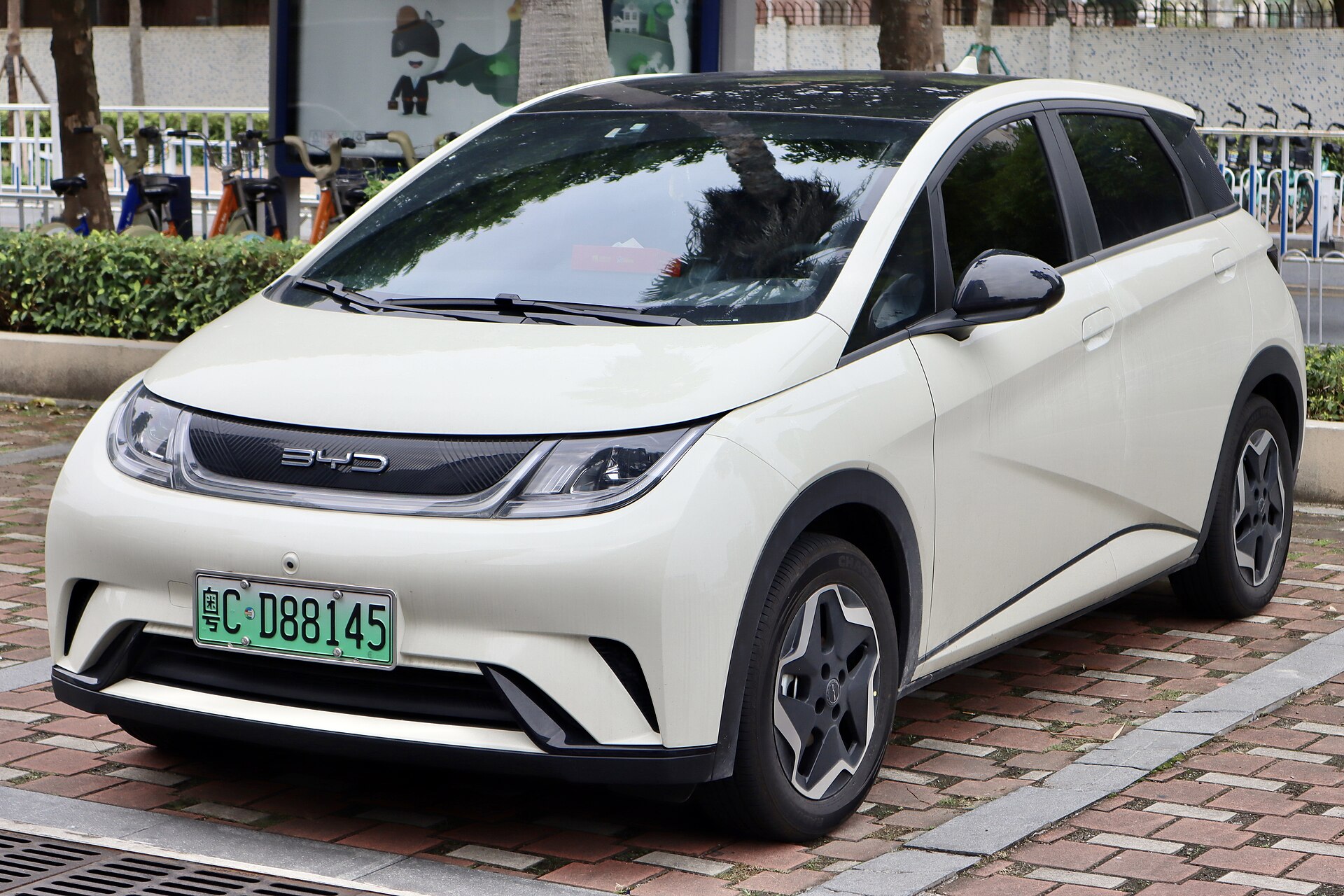
BYD · 2021–present
Dolphin EA1
- Power
- 150 kW204 PS
- 0–100 km/h
- 7.0 s
- Top speed
- —
- Kerb mass
- 1,733 kg
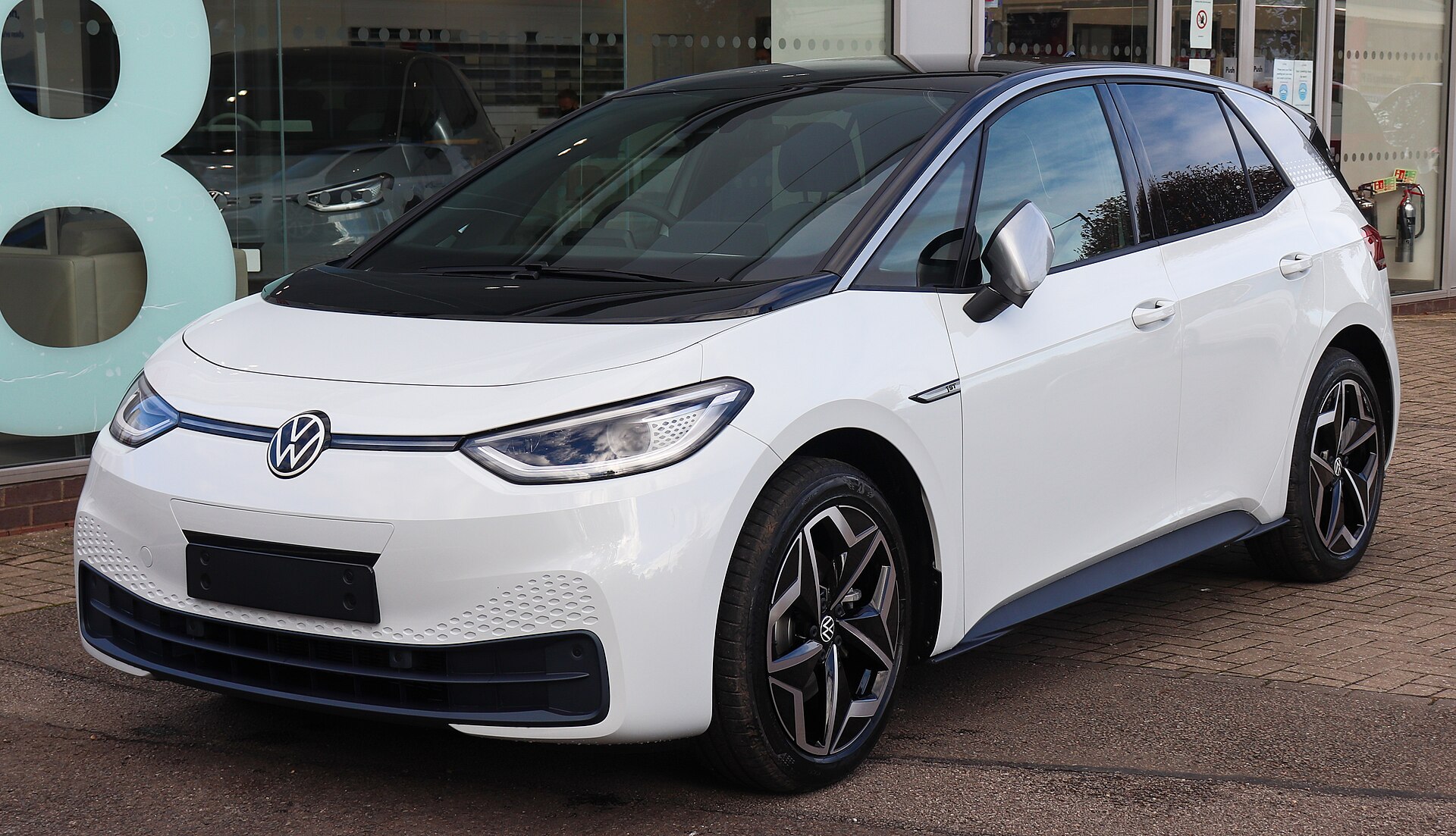
Volkswagen · 2019–present
ID.3 I
- Power
- 150 kW204 PS
- 0–100 km/h
- 7.3 s
- Top speed
- 160 km/h
- Kerb mass
- 1,812 kg
At a glance
Who suits what, worked out from the catalog figures of the versions above.
Categories won: Dolphin EA1 3 ID.3 I 2
- City Dolphin EA1 Width: 1,770 mm vs 1,809 mm
- Long trips ID.3 I Wheelbase (ride comfort proxy): 2,770 mm vs 2,700 mm
- Performance Dolphin EA1 Power per tonne: 87 kW/t vs 83 kW/t; 0–100 km/h: 7.0 s vs 7.3 s
- Running costs ID.3 I Fuel per year: €690 vs €720 (estimated)
- Off-road Dolphin EA1 Drive and body: Front-wheel drive · Hatchback vs Rear-wheel drive · Hatchback
Verdict Opinion
The Dolphin shows how far Chinese electric cars have come. It matches the ID.3's mid-range version on power and range, beats it on pedestrian protection in Euro NCAP, and every version uses BYD's own LFP Blade cells.
The ID.3 is the more developed product. Its batteries run to 79 kWh and its WLTP range to 548 km. It charges at up to 175 kW in the GTX, and the Neo update brought a clear price list in Germany from €33,995.
— Oleksandr Hnatiuk
The Dolphin and the ID.3 are the clearest example of Chinese and European thinking in the electric compact class. Volkswagen built the ID.3 as its first car on the MEB platform. It was unveiled at the Frankfurt IAA on 9 September 2019, and deliveries in Germany began in September 2020. After a facelift in March 2023 it was relaunched as the ID.3 Neo in April 2026. The BYD Dolphin went on sale in China in August 2021 on the e-Platform 3.0. Its European version was introduced in April 2023, lengthened by about 20 cm for a new front crash structure.
In short: in their most popular forms the two are remarkably close, with 150 kW and around 425 km of WLTP range each. The Dolphin uses front-wheel drive and an LFP Blade battery; the ID.3 drives the rear wheels, offers larger batteries and a 240 kW GTX. Both are described in our catalogue: BYD Dolphin and Volkswagen ID.3.
BYD Dolphin vs Volkswagen ID.3: key differences
Almost identical on paper
The European Dolphin with the 60.48 kWh battery has a 150 kW motor and a claimed 427 km of WLTP range. The ID.3 Pro Performance combines a 58 kWh battery with the same 150 kW and is rated at 425 km. Our catalogue lists 7.0 seconds to 100 km/h for the Dolphin and 7.3 seconds for the ID.3 Pro Performance. A smaller Dolphin with 44.9 kWh and 70 or 130 kW covers 340 km; the entry ID.3 Pure Performance has 45 kWh, 110 kW and 348 km.
Front against rear drive
The Dolphin drives its front wheels. The ID.3 has its motor at the back and drives the rear wheels through a single-speed transmission.
Battery chemistry and choice
BYD uses its own lithium iron phosphate Blade cells in every Dolphin, in capacities from 30.72 to 60.48 kWh depending on the market. Volkswagen offers more steps: 45, 58, 77 and 79 kWh, with up to 548 km of WLTP range for the 77 kWh Pro S. The GTX models use the 79 kWh battery with 201 or 240 kW.
Charging
The ID.3 charges at up to 120 kW DC as a Pro Performance, 125 kW as a Pro S and 175 kW as a GTX. The 45 kWh version has 50 kW as standard and 110 kW as an option.
Size
The two are almost the same length: 4,290 mm for the European Dolphin and 4,262 mm for the ID.3. The Volkswagen has the longer wheelbase, 2,770 mm against 2,700 mm. The ID.3 is 1,809 mm wide and 1,552 mm tall and weighs 1,772–1,935 kg.
Euro NCAP
Both earned five stars. The Dolphin, tested in 2023, scored 89% for adult occupants, 87% for children, 85% for vulnerable road users and 79% for safety assist. The ID.3 scored 87%, 89%, 71% and 88% in 2020.
Prices in Germany
The ID.3 Neo started in April 2026 at €33,995 for the Trend with 50 kWh and 125 kW. The Life with 58 kWh and 140 kW costs €39,195, and the Style with 79 kWh and 210 kW €47,595. Before the Neo, the ID.3 started at €33,330.
Race Stats side by side
Each figure is a 0–100 score from the catalog numbers, the same as on the 1CARS Race cards. PI is the overall performance index (100–999) and its class D–S.
| Stat | Dolphin EA1 | ID.3 I |
|---|---|---|
| PI | B · 524 | C · 486 |
| Power | 46 | 44 |
| Grip | 34 | 37 |
| Handling | 59 | 58 |
| Top speed | 49 | 23 |
| Launch | 49 | 47 |
Grip and handling are estimates from drive type, weight, height and body (hover a figure to see where it comes from). 1CARS Race
Who wins a race?
Quarter-mile (402 m) drag from a standing start, dry road, no reaction time — the 1CARS Race physics on the catalog figures of these versions.
- 1 Dolphin EA160.48 kWh (Comfort, Design) · electric · 150 kW (204 PS) 15.22 sat 148 km/h
- 2 ID.3 IPro Performance 58 kWh · electric · 150 kW (204 PS) 15.40 sat 143 km/h · +0.18 s
Size and weight
Side view to scale, all cars from the front bumper.
| Dolphin EA1 | ID.3 I | |
|---|---|---|
| Length | 4,290 mm168.9 in | 4,262 mm167.8 in −28 mm −1.1 in −0.7% |
| Width | 1,770 mm69.7 in | 1,809 mm71.2 in +39 mm +1.5 in +2.2% |
| Height | 1,570 mm61.8 in | 1,552 mm61.1 in −18 mm −0.7 in −1.1% |
| Wheelbase | 2,700 mm106.3 in | 2,770 mm109.1 in +70 mm +2.8 in +2.6% |
| Kerb weight | 1,733 kg3,821 lb | 1,812 kg3,995 lb +79 kg +174 lb +4.6% |
| Fits a standard garage? | Yes | Yes |
Difference vs Dolphin EA1 (±). Garage check: a standard single garage takes a car up to about 5.0 m (16 ft 5 in) long and 1.9 m (6 ft 3 in) wide (width as listed in the catalog; some makers include the mirrors). Leave about 0.6 m (2 ft) to open the doors.
Full specifications
| BYD Dolphin | Volkswagen ID.3 | |
|---|---|---|
| General | ||
| Version | 60.48 kWh (Comfort, Design) · electric · 150 kW (204 PS) | Pro Performance 58 kWh · electric · 150 kW (204 PS) |
| Production years | 2021–present | 2019–present |
| Body | Hatchback | Hatchback |
| Country | China | Germany |
| Performance | ||
| Power Why it matters: More power means stronger acceleration and easier overtaking, especially with a full load. | 150 kW (204 PS) 201 hp | 150 kW (204 PS) 201 hp |
| Power, all versions | 70–150 kW (95–204 PS) 94–201 hp | 110–240 kW (150–326 PS) 148–322 hp |
| Torque Why it matters: Torque is the pulling force you feel when accelerating from low revs, towing or climbing hills. | 310 Nm 229 lb-ft | No data |
| 0–100 km/h Why it matters: A shorter 0–100 km/h time means quicker getaways and safer merging onto fast roads. | 7.0 s Better | 7.3 s |
| Top speed Why it matters: Top speed hints at how relaxed the car is at motorway speeds, even if you never reach it. | No data | 160 km/h 99 mph |
| Power per tonne | 87 kW/t 105 hp/ton calculated Better | 83 kW/t 101 hp/ton calculated |
| Engine and transmission | ||
| Fuel | Electric | Electric |
| Gearbox | 1-speed single-speed | 1-speed single-speed |
| Drive | Front-wheel drive | Rear-wheel drive |
| Dimensions and weight | ||
| Length | 4,290 mm 168.9 in | 4,262 mm 167.8 in |
| Width | 1,770 mm 69.7 in | 1,809 mm 71.2 in |
| Height | 1,570 mm 61.8 in | 1,552 mm 61.1 in |
| Wheelbase | 2,700 mm 106.3 in | 2,770 mm 109.1 in |
| Kerb weight Why it matters: A lighter car is usually more agile and uses less energy. | 1,733 kg 3,821 lb Better | 1,812 kg 3,995 lb |
| Boot Why it matters: A bigger boot fits more luggage, shopping or a pram. | No data | 385 l 13.6 cu ft |
| Economy and running costs | ||
| Fuel cost per year | €720/year estimated | €690/year estimated Better |
| Electric | ||
| Battery Why it matters: A bigger battery usually gives more range, but takes longer to charge fully. | 60 kWh Better | 58 kWh |
| Electric range Why it matters: A longer range means fewer charging stops on long journeys. | 427 km 265 mi | 426 km 265 mi |
| Energy use | 15.9 kWh/100 km | 15.4 kWh/100 km Better |
| Safety | ||
| Euro NCAP | ★★★★★ (2023) | ★★★★★ (2020) |
These cars do not differ in the data we have.
Equal rows hidden (4): Body, Power, Fuel, Gearbox.
Better marks the stronger figure — only for measurable specs (power, torque, 0–100 km/h, consumption, boot, weight).
Estimated at 15,000 km a year with fuel at €0.30/kWh electricity.
In plain words
BYD Dolphin is quicker: 0–100 km/h in 7.0 s against 7.3 s for Volkswagen ID.3. BYD Dolphin is 28 mm longer than Volkswagen ID.3 (4,290 mm vs 4,262 mm). BYD Dolphin is lighter by 79 kg (1,733 kg vs 1,812 kg). At 15,000 km a year, fuel would cost about €720 (BYD Dolphin), €690 (Volkswagen ID.3) (estimated). Volkswagen ID.3 is the older design (from 2019); BYD Dolphin arrived in 2021. On the catalog figures, the BYD Dolphin is the pick for city, performance and off-road; the Volkswagen ID.3 is the pick for long trips and running costs.
Which one to choose
Choose the BYD Dolphin if you want an electric hatchback with a 60 kWh LFP battery, front-wheel drive and the higher pedestrian-protection score.
Choose the Volkswagen ID.3 if you need a battery larger than 60 kWh, fast DC charging, rear-wheel drive or the 240 kW GTX, or prefer a model built in Germany.
For more electric cars, see our Tesla Model 3 vs Tesla Model Y comparison and the fuel cost comparison tool.
Frequently asked questions
Which has the longer range, the Dolphin or the ID.3?
In comparable versions they are level: 427 km (WLTP) for the 60.48 kWh Dolphin and 425 km for the 58 kWh ID.3 Pro Performance. With its 77 kWh battery, the ID.3 Pro S reaches 548 km.
Is the Dolphin front- or rear-wheel drive?
Front-wheel drive. The ID.3 has a rear-mounted motor and drives the rear wheels.
Which is bigger?
The Dolphin is slightly longer, 4,290 mm against 4,262 mm, but the ID.3 has the longer wheelbase, 2,770 mm against 2,700 mm.
How much does the ID.3 cost?
In Germany the ID.3 Neo started in April 2026 at €33,995 (Trend, 50 kWh, 125 kW); the 79 kWh Style costs €47,595.