 Volkswagen ID.3
Specs, engines and history
Published Sources (3) Report an error
By Felix Hartmann, Automotive Technology & EV Contributor
- Built
- 2019–present
- Top power
- 240 kW (326 PS)
Which ID.3 to choose
Our verdict · Felix Hartmann
- For short urban trips on a budget: the 45 kWh Pure Performance used, or the 50 kWh ID.3 Neo Trend new.
- For long trips: a car with the 77 or 79 kWh battery, which also charges fastest.
- For performance: the GTX Performance with 240 kW.
- For a used buy: a car built from 2023, with the better cabin and the mature software; earlier cars should have all updates installed.
Among electric cars, the Tesla Model 3 is a common alternative, though it is a saloon rather than a hatchback. The history of Volkswagen explains where the ID. family fits in. All versions are listed in the Volkswagen catalogue, and our electric cars section covers other models.
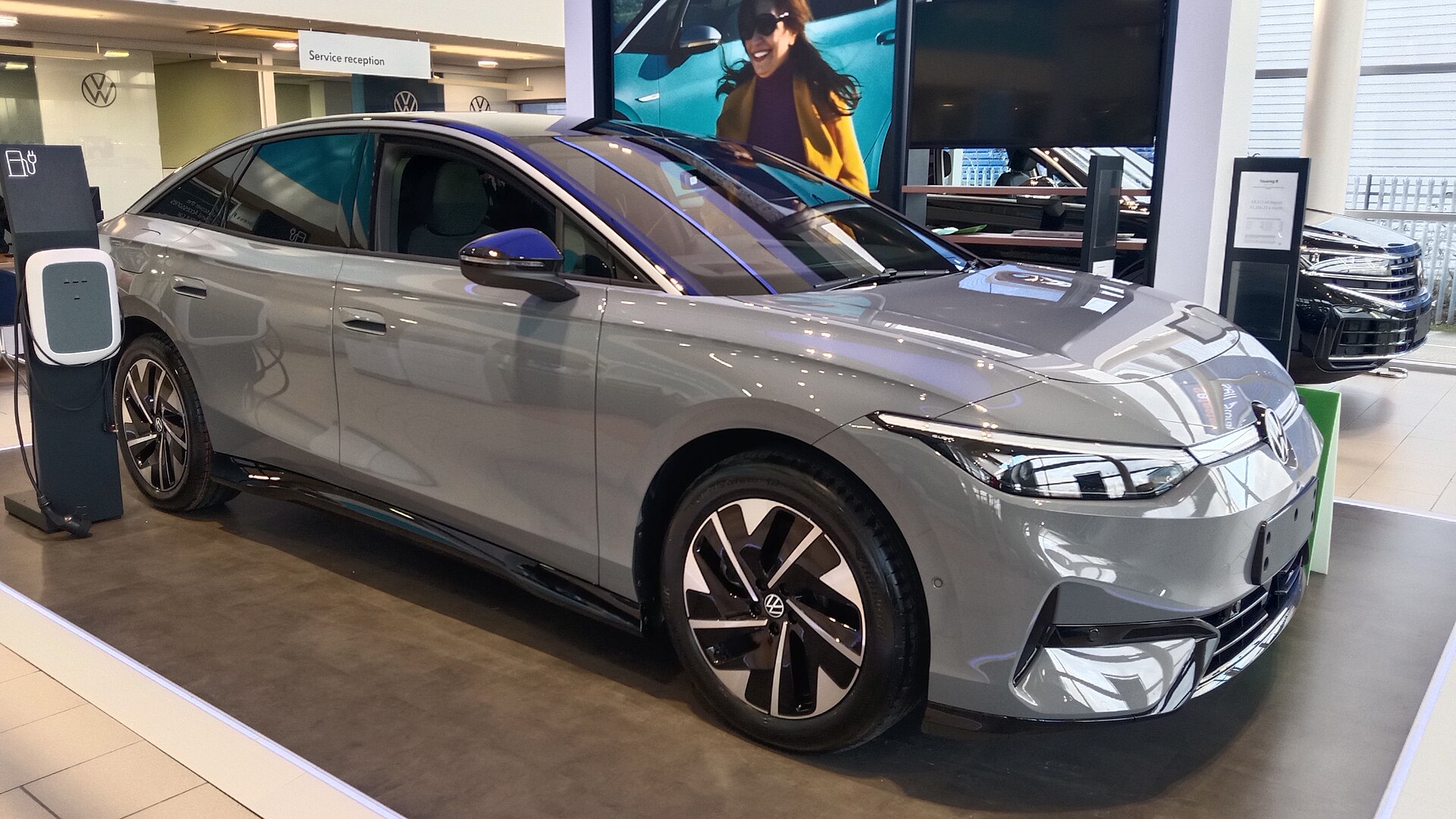
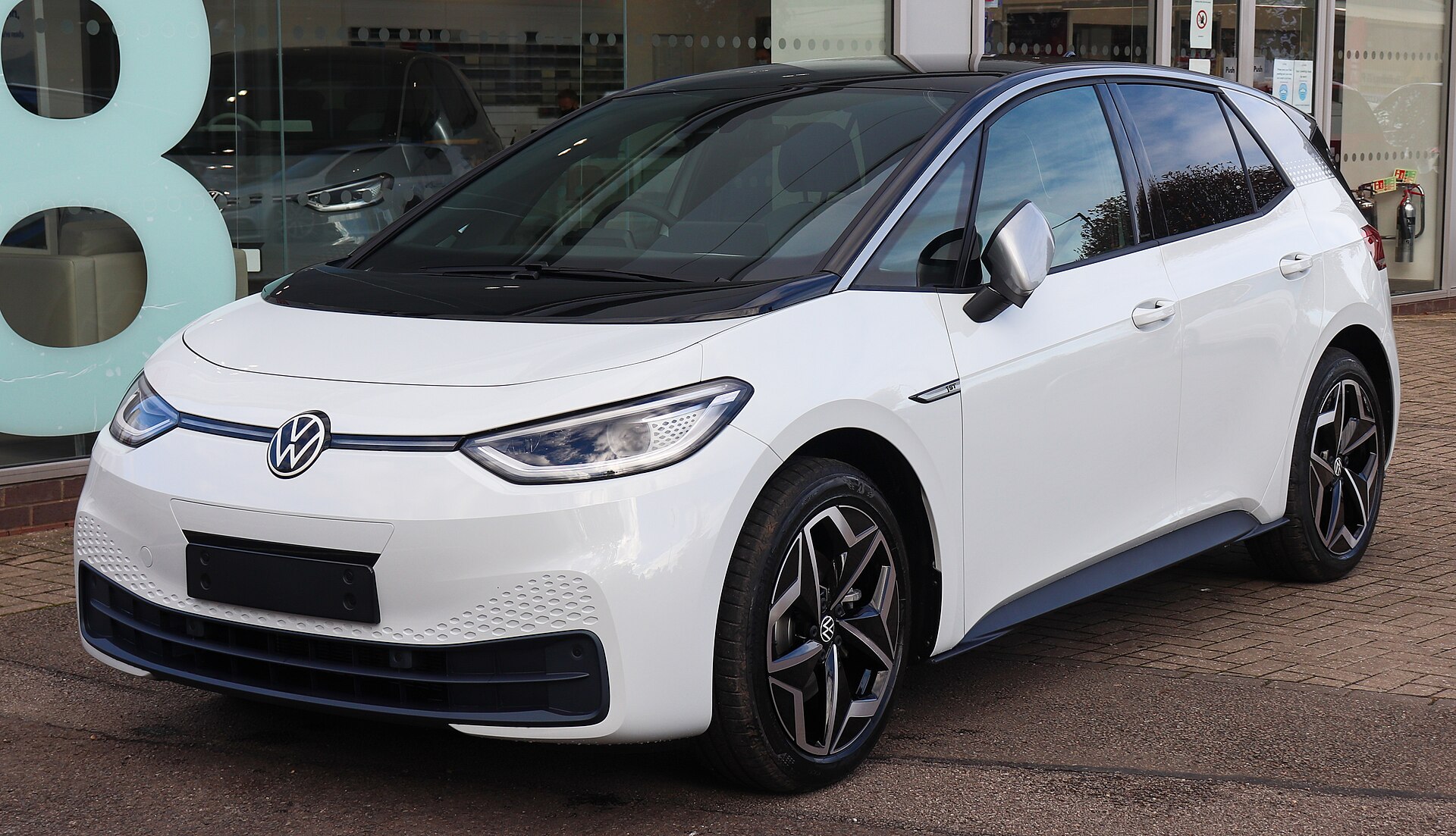
The Volkswagen ID.3 is a five-door electric hatchback in the Golf class, presented at the IAA in Frankfurt on 9 September 2019. It was the first production car on Volkswagen's MEB platform for electric cars, and it took over from the e-Golf. Rear-wheel drive versions have 110 to 240 kW and usable batteries of 45 to 79 kWh. A facelift came in 2023, and in April 2026 the car was renamed ID.3 Neo.
In short
- Built in Zwickau since November 2019, in Dresden from 2021 to 2025 and in Anting, China, for the local market.
- Power from 110 kW (150 PS) in the Pure Performance to 240 kW (326 PS) in the GTX Performance.
- WLTP range from 348 km (45 kWh) to 548 km (77 kWh) at launch; up to 630 km for the 2026 ID.3 Neo.
- In Germany the 1st Edition cost €39,995 in June 2020; the ID.3 Neo starts at €33,995 (April 2026).
Size at a glance
| Dimensions | Volkswagen ID.3 I |
|---|---|
| Length | 4,262 mm167.8 in |
| Width | 1,809 mm71.2 in |
| Height | 1,552 mm61.1 in |
| Wheelbase | 2,770 mm109.1 in |
| Boot | 385 L13.6 cu ft |
Specs by version
Engines
| Version | Engine | Power | Gearbox | Drive | Production years |
|---|---|---|---|---|---|
| Pure Performance 45 kWh | Electric | 110 kW 150 PS148 hp | 1-sp Single-speed | Rear-wheel drive | — |
| ID.3 Neo 50 kWh | Electric | 125 kW 170 PS168 hp | 1-sp Single-speed | Rear-wheel drive | 2026 |
| ID.3 Neo 58 kWh | Electric | 140 kW 190 PS188 hp | 1-sp Single-speed | Rear-wheel drive | 2026 |
| Pro Performance 58 kWh | Electric | 150 kW 204 PS201 hp | 1-sp Single-speed | Rear-wheel drive | — |
| Pro S 77 kWh | Electric | 150 kW 204 PS201 hp | 1-sp Single-speed | Rear-wheel drive | — |
| ID.3 Neo 79 kWh | Electric | 210 kW 286 PS282 hp | 1-sp Single-speed | Rear-wheel drive | 2026 |
| GTX Performance 79 kWh | Electric | 240 kW 326 PS322 hp | 1-sp Single-speed | Rear-wheel drive | 2024 |
Performance
Show all 5 versions
| Version | 0–100 km/h | Top speed | Fuel consumption | Range |
|---|---|---|---|---|
| Pure Performance 45 kWh | 8.9 s 0–62 mph | 160 km/h99 mph | 14.9 kWh/100 km24.0 kWh/100 mi | 348 km216 mi |
| Pro Performance 58 kWh | 7.3 s 0–62 mph | 160 km/h99 mph | 15.4 kWh/100 km24.8 kWh/100 mi | 426 km265 mi |
| Pro S 77 kWh | 7.9 s 0–62 mph | 180 km/h112 mph | 15.4 kWh/100 km24.8 kWh/100 mi | 548 km341 mi |
| ID.3 Neo 79 kWh | — | — | — | 630 km391 mi |
| GTX Performance 79 kWh | 5.6 s 0–62 mph | — | 15.4 kWh/100 km24.8 kWh/100 mi | — |
Dimensions and weight
Show all 7 versions
| Version | Length | Width | Height | Wheelbase | Kerb weight | Boot | Battery |
|---|---|---|---|---|---|---|---|
| Pure Performance 45 kWh | 4,262 mm167.8 in | 1,809 mm71.2 in | 1,552 mm61.1 in | 2,770 mm109.1 in | 1,772 kg3,907 lb | 385 l13.6 cu ft | 45 kWh |
| ID.3 Neo 50 kWh | — | — | — | — | — | — | 50 kWh |
| ID.3 Neo 58 kWh | — | — | — | — | — | — | 58 kWh |
| Pro Performance 58 kWh | 4,262 mm167.8 in | 1,809 mm71.2 in | 1,552 mm61.1 in | 2,770 mm109.1 in | 1,812 kg3,995 lb | 385 l13.6 cu ft | 58 kWh |
| Pro S 77 kWh | 4,262 mm167.8 in | 1,809 mm71.2 in | 1,552 mm61.1 in | 2,770 mm109.1 in | 1,928 kg4,251 lb | 385 l13.6 cu ft | 77 kWh |
| ID.3 Neo 79 kWh | — | — | — | — | — | — | 79 kWh |
| GTX Performance 79 kWh | 4,262 mm167.8 in | 1,809 mm71.2 in | 1,552 mm61.1 in | 2,770 mm109.1 in | 1,994 kg4,396 lb | — | 79 kWh |
Verified Manufacturer and type-approval data from our catalog · Sources and methodology
Volkswagen ID.3 at a glance
| Parameter | Value |
|---|---|
| Production | since November 2019 |
| Platform | MEB (MEB+ for the ID.3 Neo) |
| Body | five-door hatchback, five seats |
| Length / width / height | 4,262 / 1,809 / 1,552 mm |
| Wheelbase | 2,770 mm |
| Kerb weight | 1,772 to 1,935 kg |
| Drag coefficient | Cd 0.267 |
| Drive | rear-wheel drive, one electric motor |
| Power | 110 to 240 kW (150 to 326 PS) |
| Battery (usable) | 45, 58, 77 or 79 kWh; 50, 58 or 79 kWh in the Neo |
| Predecessor | Volkswagen e-Golf |
| Plants | Zwickau; Dresden (2021–2025); Anting, China |
From the I.D. concept to the first deliveries
Volkswagen first showed the idea as the I.D. concept at the Paris motor show in 2016. The production car followed three years later at the IAA. Pre-booking had opened on 8 May 2019 with a refundable deposit of €1,000, and more than 30,000 reservations came in before the show. Series production in Zwickau started on 4 November 2019. The Transparent Factory in Dresden added a second line in January 2021.
The start was not smooth. Unfinished software delayed deliveries in 2020, so the first cars reached customers in September 2020 with some functions missing. The cloud-connected functions followed at the end of that year. The first handover took place at the Autostadt in Wolfsburg on 11 September 2020. In Germany, the launch series called 1st Edition was ordered from 17 June 2020 at €39,995, €45,995 or €49,995, depending on trim.
Versions, batteries and performance
The first ID.3 was sold in three battery sizes. Volkswagen gave each version a name tied to its battery and motor. All of them drive the rear wheels.
| Version | Power | Battery (usable) | WLTP range | 0–100 km/h | Top speed |
|---|---|---|---|---|---|
| Pure Performance | 110 kW (150 PS) | 45 kWh | 348 km | 8.9 s | 160 km/h |
| Pro Performance | 150 kW (204 PS) | 58 kWh | — | 7.3 s | — |
| Pro S | 150 kW (204 PS), 310 Nm | 77 kWh | 548 km | 7.9 s | 180 km/h |
| GTX Performance | 240 kW (326 PS), 545 Nm | 79 kWh | — | 5.6 s | — |
| ID.3 Neo | 125 kW | 50 kWh | — | — | — |
| ID.3 Neo | 140 kW | 58 kWh | — | — | — |
| ID.3 Neo | 210 kW | 79 kWh | up to 630 km | — | — |
The Wikipedia infobox gives slightly different WLTP ranges for the first car (330, 420 and 550 km). The table above uses the per-version figures. Top speed is electronically limited to between 160 and 200 km/h, depending on version. The Pro S with the large battery weighs up to 1,935 kg, about 160 kg more than the Pure.
Driving, charging and running costs
Every ID.3 accepts 11 kW from an AC wallbox, except the small battery, which is limited to 7.2 kW. Fast-charging power on direct current grew over the years through hardware and software updates:
- 45 kWh: 50 kW as standard, 100 kW optional, 110 kW from May 2021;
- 58 kWh: 100 kW at launch, then 120 kW, and 135 kW with software 2.3;
- 77 kWh: 135 kW at first and 170 kW from the 2023 facelift.
Volkswagen guarantees the battery for eight years or 160,000 km, with at least 70 percent of usable capacity. Our fuel cost calculator helps compare home charging with the running costs of a petrol hatchback. The turning circle is 10.2 m.
ADAC breakdown statistics show the effect of the early software trouble. Cars registered in 2020 had 3.5 breakdowns per 1,000 vehicles. The figure fell to 1.9 for 2021 cars, 1.3 for 2022 cars and 0.7 for 2023 cars.

Facelift 2023 and the GTX models
Volkswagen showed the updated ID.3 to the press in December 2022 and gave it a public debut on 1 March 2023. The front bumper and air intakes were redrawn, but most of the work went into the cabin. The quality of the interior materials was improved. Deliveries of the revised car began in the fourth quarter of 2023. Later, the Pro S gained a 79 kWh battery, and from 2024 the car could supply power to a house (V2H).
The GTX arrived on 13 March 2024 as the sporty top model. It used the 79 kWh battery and came in two power levels. The stronger GTX Performance has 240 kW (326 PS) and 545 Nm and needs 5.6 seconds from 0 to 100 km/h. The ID.3 GTX stays rear-wheel drive, unlike the GTX versions of the larger ID. models. That makes it a different kind of quick car from the Volkswagen Golf GTI, which drives its front wheels.

ID.3 Neo (2026): MEB+ and new names
The second update was presented on 15 April 2026 and renamed the car ID.3 Neo. Pre-sale opened the next day, and Zwickau started series production in May 2026. The car moved to the MEB+ platform. Volkswagen dropped the old names Pure, Pro, Pro S and GTX. Buyers now pick a trim (Trend, Life or Style) and, separately, one of three drives:
- 50 kWh with 125 kW;
- 58 kWh with 140 kW;
- 79 kWh with 210 kW, for up to 630 km on the WLTP cycle.
The front end follows the new design language, and the cockpit was redesigned with physical buttons. One-pedal driving, which can bring the car to a stop by regenerative braking, is standard. An optional assistant can stop the car at red traffic lights. With an adapter, the car can power external devices at up to 3.6 kW.
German list prices on 17 April 2026 were:
| Trim | 50 kWh / 125 kW | 58 kWh / 140 kW | 79 kWh / 210 kW |
|---|---|---|---|
| Trend | €33,995 | — | — |
| Life | €36,225 | €39,195 | €44,995 |
| Style | €38,895 | €41,875 | €47,595 |
The entry price was €665 above the last pre-Neo base price of €33,330. In April 2026 a heat pump cost €1,090 extra in every trim.

Safety, sales and awards
Euro NCAP tested the ID.3 Pro in autumn 2020 and gave it five stars. It achieved 87 percent in adult protection, 89 in child protection, 71 for pedestrians and 88 for the assistance systems. A test of 2025, under the stricter protocol, gave 86, 87, 78 and 76 percent. Green NCAP awarded five stars for environmental performance in February 2021.
| Year | Global production |
|---|---|
| 2020 | 64,259 |
| 2021 | 73,738 |
| 2022 | 83,432 |
| 2023 | 142,216 |
| 2024 | 149,100 |
| 2025 | 117,700 |
Germany registered 106,843 new ID.3s from launch to December 2024; 2021 was the best year, with 26,693. In China, sales rose to 92,928 in 2024. In 2021 the ID.3 won its class (premium up to €50,000) in the German Car of the Year awards. What Car? named it Small Electric Car of the Year. In the European Car of the Year vote it finished fourth.
Photo gallery


Popular comparisons
Volkswagen ID.3 in our rankings
- No. 6 of 53 · Heaviest hatchbacks (1,994 kg)
- No. 7 of 65 · Most torque: hatchbacks (545 Nm)
- No. 10 of 59 · Longest-range electric cars (630 km)
- No. 10 of 53 · Power-to-weight: hatchbacks (120 kW/t)
- No. 12 of 106 · Most powerful hatchbacks (240 kW · top 12%)
- No. 14 of 66 · Widest hatchbacks (1,809 mm · top 22%)
More torque than 89% of ranked hatchbacks in the 1CARS catalog (No. 7 of 65).
FAQ
What is the range of the Volkswagen ID.3?
From 348 km WLTP with the 45 kWh battery to 548 km with the 77 kWh battery; the 2026 ID.3 Neo reaches up to 630 km with 79 kWh.
How fast does the ID.3 charge?
Up to 11 kW on AC and, depending on battery and year, 50 to 170 kW on DC; the 77 kWh battery reaches 170 kW from the 2023 facelift.
Is the ID.3 front- or rear-wheel drive?
Every ID.3, including the GTX, drives the rear wheels with one electric motor.
How much does the ID.3 cost?
In Germany, list prices for the 2026 ID.3 Neo begin at €33,995; at launch in June 2020 the 1st Edition was €39,995.
What is the ID.3 Neo?
The 2026 update of the ID.3: MEB+ platform, new design and cockpit, Trend, Life and Style trims and three drives of 125, 140 and 210 kW.
Data sources
Data checked by an editor against the sources below.
- Wikipedia — Volkswagen ID.3
- Electrive — Vw Id 3 Neo Ab 33 995 Euro Verfuegbar
- EEA CO₂ monitoring (European Environment Agency, CC BY 4.0)