 Tesla Model 3
Specs, engines and history
Updated Published Sources (4) Report an error
By Felix Hartmann, Automotive Technology & EV Contributor Reviewed by Oleksandr Hnatiuk

- Built
- 2016–present
- Top power
- 393 kW (534 PS)
- Euro NCAP
- 5 stars · 2025
Which Model 3 to buy
Our verdict · Felix Hartmann
A facelifted car from late 2023 onwards is the best buy: it is quieter, rides better and has more range. The Long Range all-wheel-drive version suits drivers who cover long distances or live in cold climates; the rear-wheel-drive version with an LFP battery is the sensible choice for commuters who can charge at home. Among used cars, a 2021–2023 Long Range with the heat pump offers good value, while early 2018–2019 cars need the most careful inspection.
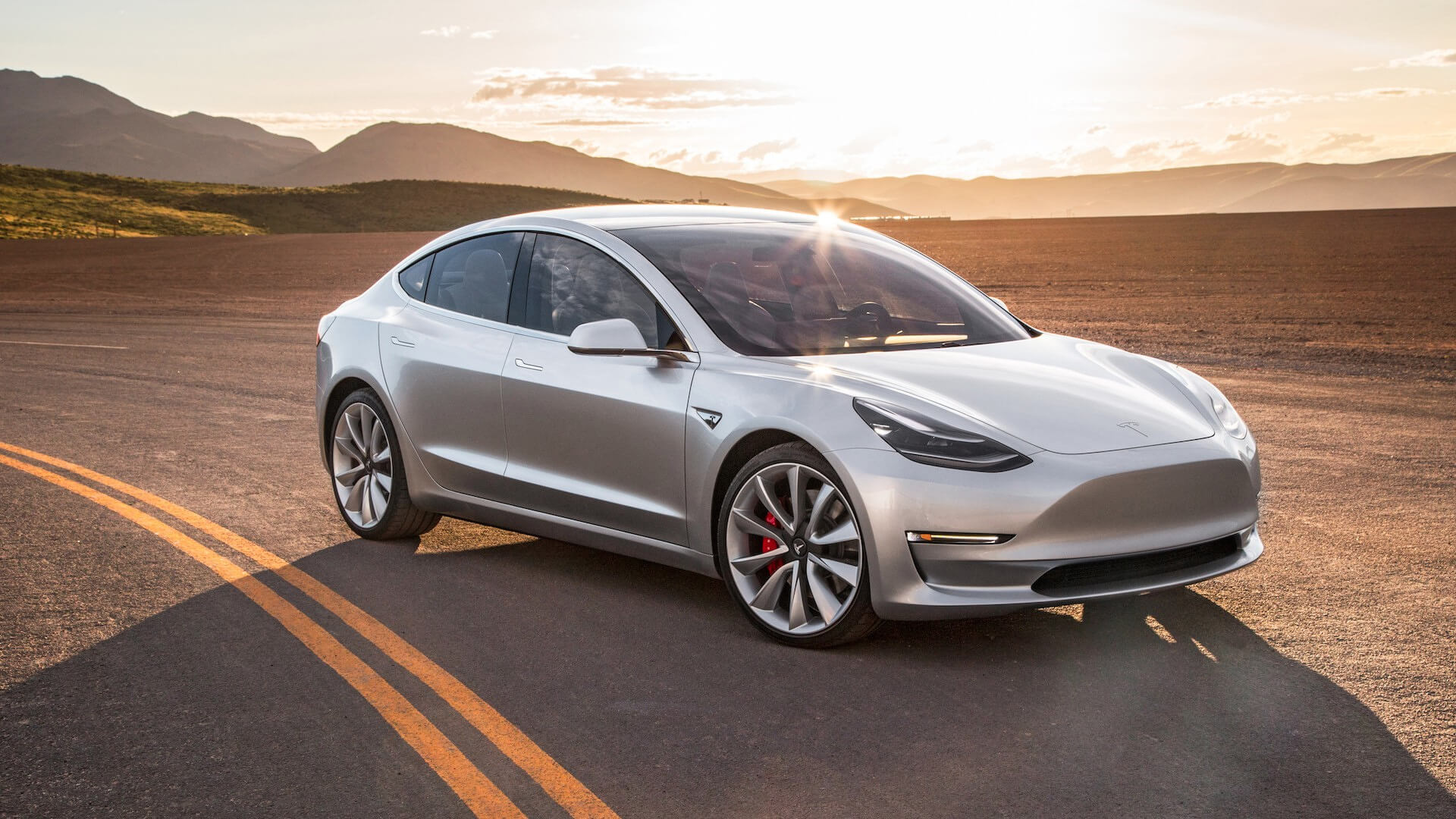
The Tesla Model 3 is a five-seat electric saloon, unveiled on 31 March 2016 and built since July 2017 in Fremont, California, and since December 2019 in Shanghai. It was the world's best-selling plug-in car in 2018, 2019 and 2020 and passed two million sales by September 2023, the month its major facelift was announced.
In short
- Versions: rear-wheel drive, Long Range all-wheel drive and Performance; power from about 190 kW to about 390 kW.
- WLTP range: from 409 km (2019 Standard Range) to 629 km (Long Range after the 2023 facelift).
- Luggage space: 594 litres at the rear plus an 88-litre front boot, 682 litres in total.
- Euro NCAP 2019: five stars, with 96% for adult occupants and 94% for safety assist.

Size at a glance
| Dimensions | Tesla Model 3 |
|---|---|
| Length | 4,720 mm185.8 in |
| Width | 1,849 mm72.8 in |
| Height | 1,441 mm56.7 in |
| Wheelbase | 2,875 mm113.2 in |
Specs by version
Engines
| Version | Engine | Power | Torque | Gearbox | Drive | Production years |
|---|---|---|---|---|---|---|
| 173 kW (235 PS) Sedan | Electric | 173 kW 235 PS232 hp | 430 Nm317 lb-ft | - | - | - |
| RWD (2023 refresh) | Electric | 208 kW 283 PS279 hp | - | Single-speed | Rear-wheel drive | 2023 |
Performance
Show all 2 versions
| Version | 0–100 km/h | Top speed | Range |
|---|---|---|---|
| 173 kW (235 PS) Sedan | - | - | 354 km220 mi |
| RWD (2023 refresh) | 6.1 s 0–62 mph | 201 km/h125 mph | 534 km332 mi |
Dimensions and weight
Show all 2 versions
| Version | Length | Width | Height | Wheelbase | Kerb weight | Battery |
|---|---|---|---|---|---|---|
| 173 kW (235 PS) Sedan | - | - | - | - | - | 60 kWh |
| RWD (2023 refresh) | 4,720 mm185.8 in | 1,849 mm72.8 in | 1,441 mm56.7 in | 2,875 mm113.2 in | 1,765 kg3,891 lb | - |
Verified Manufacturer and type-approval data from our catalog · Sources and methodology
Safety
-
Euro NCAP 2025
-
NHTSA 2023
US NCAP (NHTSA)
Stars from different years and organisations are not directly comparable: test protocols change every few years.
Tesla Model 3 at a glance
Tesla planned a smaller, cheaper car from its early business plan of 2006–2007, after the Roadster and the Model S. The Model 3 was meant to compete with the Audi A4, BMW 3 Series and Mercedes-Benz C-Class at a much lower price than a Model S. More than 325,000 reservations arrived in the first week after the reveal, and about 455,000 were outstanding by August 2017. The car was first meant to be called Model E, a name Ford objected to.

| Phase | Years | Plants | Main versions | Power (kW) |
|---|---|---|---|---|
| Launch | 2017–2020 | Fremont, Shanghai (from Dec 2019) | Standard Range (Plus), Long Range, Performance | about 190–390 |
| First update | Oct 2020–2023 | Fremont, Shanghai | heat pump, double glazing, new trim | about 190–390 |
| Facelift | Sept 2023– | Shanghai (Oct 2023), Fremont (Jan 2024) | RWD, Long Range, Performance (from Apr 2024) | about 190–390 |
The company behind it is covered in the history of Tesla.
Motors, batteries and performance
The rear-wheel-drive versions use one permanent-magnet motor at the rear; Long Range and Performance add a second motor at the front. Batteries changed many times: the first Standard Range had about 50 kWh, Long Range packs about 74–82 kWh, and Shanghai-built standard cars switched to lithium iron phosphate (LFP) cells from CATL. LFP cells hold less energy for their weight but are cheaper and can be charged to 100% regularly.

| Version | WLTP range | Notes |
|---|---|---|
| Standard Range (2019) | 409 km | first European version |
| Standard Range Plus (2021) | 448 km | after the April 2021 update |
| Long Range (2021) | 614 km | dual motor |
| Performance (2021) | 567 km | dual motor, quickest version |
| RWD (facelift, 2023) | 513–554 km | 18- or 19-inch wheels |
| Long Range (facelift, 2023) | 629 km | 19-inch wheels |
| Performance (2024) | 528 km | returned in April 2024 |
In the US the facelifted rear-drive car reaches 60 mph in 5.8 seconds and the Performance in 2.9 seconds. After the 2023 facelift Tesla limited the top speed of the standard car to 201 km/h, partly to suit its low-rolling-resistance tyres. Long Range cars charge at up to 250 kW on a Supercharger. Fuel costs are replaced by electricity costs; you can compare them with a petrol or diesel saloon in the fuel cost comparison.
Dimensions and luggage space
| Parameter | Metric | Imperial |
|---|---|---|
| Length (facelift) | 4,720 mm | 185.8 in |
| Width (without mirrors) | 1,849 mm | 72.8 in |
| Height (facelift) | 1,440 mm | 56.7 in |
| Wheelbase | 2,875 mm | 113.2 in |
| Kerb weight | 1,611–1,836 kg | 3,552–4,048 lb |
| Front boot | 88 l | 3.1 cu ft |
| Rear boot | 594 l | 21.0 cu ft |
| Drag coefficient | Cd 0.219 (facelift) | – |
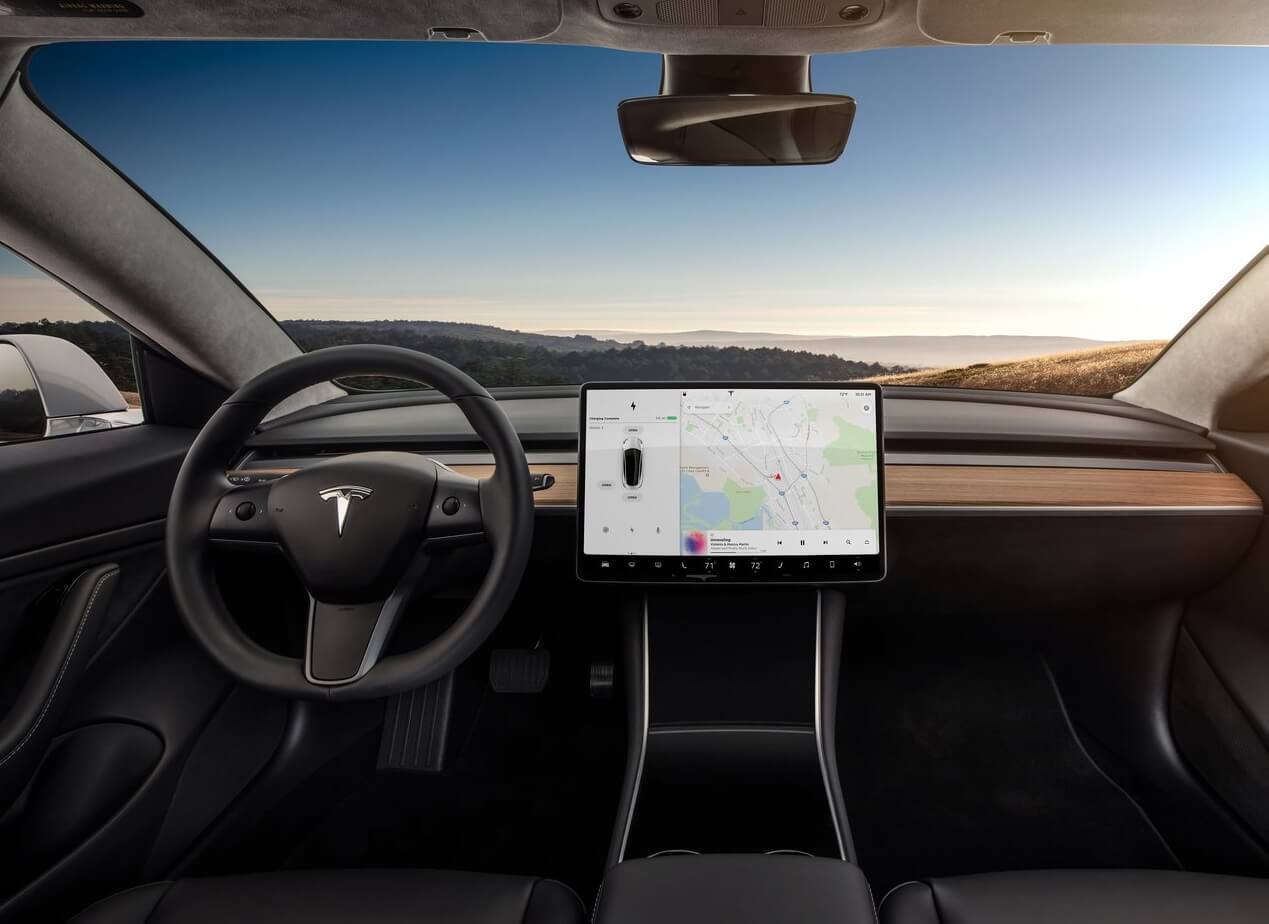
The 2023 facelift made the car about 3 cm longer and cut the drag coefficient from 0.225 to 0.219, which together with other changes added about 10% to the range. The cabin is dominated by a horizontal 15-inch touchscreen; the facelift removed the stalks for indicators and gears, added ventilated front seats on some versions and an 8-inch rear screen. At 4.72 metres, the Model 3 is about 1 cm longer than a BMW 3 Series G20, but its two boots hold more luggage than the BMW's 480 litres.

Running costs and charging
Tesla's battery warranty runs for eight years with 160,000 km for the standard versions and 192,000 km for Long Range and Performance, with at least 70% capacity retained. A heat pump arrived in late 2020 and noticeably reduced winter range losses. Servicing is less frequent than on a petrol car, but tyres wear quickly on the heavy dual-motor versions. Prices have changed often: in April 2024 Tesla cut the price of the rear-wheel-drive version in Germany from 42,990 to 40,990 euros.

Equipment and Autopilot
All versions have a glass roof, heated front seats, a premium audio system, keyless entry through a phone app or key card, and Autopilot, Tesla's lane-centring and adaptive cruise control. Enhanced Autopilot and "Full Self-Driving" are paid software options whose availability and legal use differ by country. Over-the-air updates add features and fixes during the car's life.

Euro NCAP and safety
Euro NCAP tested the Model 3 in 2019 and gave it five stars: 96% for adult occupants, 86% for children, 74% for vulnerable road users and 94% for safety assist. In the US, the IIHS rated it Good in most crash tests and Superior for front crash prevention.
Reliability and what to check
- Build quality of early cars: panel gaps, paint flaws and water leaks were common on 2018–2019 cars; inspect seals and the boot.
- Suspension: front control arms on early cars could creak or wear; listen over bumps.
- Battery health: check the displayed range at 100% charge against the original figure.
- Tyres and brakes: heavy wear on Performance cars; brake discs can rust because regenerative braking does most of the work.
- Software: confirm which paid features, such as Enhanced Autopilot, transfer with the car.
Rivals: how the Model 3 compares
| Model | Drive | Battery (approx.) | Body |
|---|---|---|---|
| Tesla Model 3 | RWD or AWD | 50–82 kWh | saloon |
| Polestar 2 | FWD/RWD or AWD | 69–82 kWh | fastback |
| BMW i4 | RWD or AWD | 70–84 kWh | five-door coupé |
| Hyundai Ioniq 6 | RWD or AWD | 53–77 kWh | saloon |
The Model 3 combines long range, a dense fast-charging network and a low price for its class, while rivals offer more physical controls and, in the BMW's case, better ride and finish. Its larger relatives, the Tesla Model S and the Model X, cost much more. Compare sizes with any rival in the 1cars comparison tool.


Popular comparisons
Tesla Model 3 in our rankings
- No. 10 of 25 · Quickest American cars, 0–100 (6.1 s)
- No. 24 of 174 · Most powerful sedans (393 kW · top 14%)
- No. 27 of 168 · Most powerful American cars (393 kW · top 17%)
- No. 194 of 1011 · Most powerful cars (393 kW · top 20%)
- No. 18 of 80 · Fastest electric cars (201 km/h · top 24%)
- No. 33 of 132 · Most powerful electric cars (393 kW · top 25%)
More powerful than 86% of ranked sedans in the 1CARS catalog (No. 24 of 174).
Tesla Model 3 photos 23




Tesla Model 3 videos 4

Tesla Model 3 video 1

Tesla Model 3 video 2
Test drive

Video overview
FAQ
How many versions of the Tesla Model 3 are there?
There have been three main phases: the launch car of 2017, the update of October 2020 with a heat pump and new trim, and the facelift of September 2023. In each, Tesla offered rear-wheel-drive, Long Range and Performance versions under changing names.
What is the range of the Tesla Model 3?
WLTP ranges run from 409 km for the 2019 Standard Range to 629 km for the facelifted Long Range on 19-inch wheels. The facelifted rear-wheel-drive version reaches 513–554 km, depending on the wheels.
Is the Tesla Model 3 available with all-wheel drive?
Yes. Long Range and Performance versions have two motors and all-wheel drive, while the entry version drives the rear wheels only. All versions are fully electric; there is no hybrid.
How big is the boot of the Tesla Model 3?
The rear boot holds 594 litres and the front boot 88 litres, 682 litres in total. The rear seats fold to carry longer items, and the boot opening of the saloon is smaller than that of a hatchback.
What are the main rivals of the Tesla Model 3?
The closest rivals are the Polestar 2, BMW i4, Hyundai Ioniq 6, BYD Seal and Volkswagen ID.7. Petrol and diesel alternatives include the BMW 3 Series, Audi A4 and Mercedes-Benz C-Class.
Data sources
Data checked by an editor against the sources below.
- The text of this article (1cars archive)
- Wikipedia - Tesla Model 3
- Euro NCAP
- NHTSA 5-Star Safety Ratings (US NCAP) — U.S. Government work, public domain