 Tesla Model S
Specs, engines and history
Updated Published Sources (7) Report an error
By Felix Hartmann, Automotive Technology & EV Contributor Reviewed by Oleksandr Hnatiuk

- Built
- 2012–2026
- Top power
- 760 kW (1,033 PS)
The Tesla Model S is a large electric five-door liftback that made long-range electric cars credible. Unveiled as a prototype on 26 March 2009 and built in Fremont, California, from June 2012 until May 2026, it was offered with batteries from 60 to 100 kWh and in versions from the rear-wheel-drive 60 to the three-motor Plaid with 760 kW (1,020 hp) and 0–60 mph in 1.98 seconds.
In short
- Designed under Franz von Holzhausen; code name "Whitestar"; drag coefficient 0.24 at launch, 0.208 after 2021.
- 2015: world's best-selling plug-in electric car, with 50,366 deliveries.
- Motor Trend Car of the Year 2013 and World Green Car of the Year 2013.
- Boot of 750 litres plus a 150-litre front trunk; five-star Euro NCAP rating.

Size at a glance
| Dimensions | Tesla Model S |
|---|---|
| Length | 4,980 mm196.1 in |
| Width | 1,960 mm77.2 in |
| Height | 1,440 mm56.7 in |
| Wheelbase | 2,960 mm116.5 in |
| Boot | 745 L26.3 cu ft |
Specs by version
Engines
| Version | Engine | Power | Torque | Gearbox | Drive | Production years |
|---|---|---|---|---|---|---|
| Automatic (A1) · 2026 (EPA) | Electric | - | - | 1-sp Automatic | All-wheel drive | 2026 |
| Automatic (A1) · 2025 (EPA) | Electric | - | - | 1-sp Automatic | All-wheel drive | 2025 |
| Automatic (A1) · 2024 (EPA) | Electric | - | - | 1-sp Automatic | All-wheel drive | 2024 |
| Automatic (A1) · 2023 (EPA) | Electric | - | - | 1-sp Automatic | All-wheel drive | 2023 |
| Automatic (A1) · 2022 (EPA) | Electric | - | - | 1-sp Automatic | All-wheel drive | 2022 |
| 60 | Electric | 225 kW 306 PS302 hp | 430 Nm317 lb-ft | - | Rear-wheel drive | 2013–2017 |
| 60D | Electric | 242 kW 329 PS325 hp | 430 Nm317 lb-ft | - | All-wheel drive | 2016 |
| 75D | Electric | 245 kW 333 PS329 hp | 525 Nm387 lb-ft | - | All-wheel drive | 2017–2019 |
| 90D | Electric | 311 kW 423 PS417 hp | 658 Nm485 lb-ft | - | All-wheel drive | 2015–2017 |
| 100D | Electric | 360 kW 489 PS483 hp | 660 Nm487 lb-ft | - | All-wheel drive | 2017–2019 |
| P90D | Electric | 568 kW 772 PS762 hp | 967 Nm713 lb-ft | - | All-wheel drive | 2015–2016 |
Performance
Show all 11 versions
| Version | Fuel consumption | Range |
|---|---|---|
| Automatic (A1) · 2026 (EPA) | 16.9 kWh/100 km27.2 kWh/100 mi | 660 km410 mi |
| Automatic (A1) · 2025 (EPA) | 16.9 kWh/100 km27.2 kWh/100 mi | 660 km410 mi |
| Automatic (A1) · 2024 (EPA) | 17.2 kWh/100 km27.7 kWh/100 mi | 647 km402 mi |
| Automatic (A1) · 2023 (EPA) | 17.5 kWh/100 km28.2 kWh/100 mi | 652 km405 mi |
| Automatic (A1) · 2022 (EPA) | 17.5 kWh/100 km28.2 kWh/100 mi | 652 km405 mi |
| 60 | 17.1 kWh/100 km27.5 kWh/100 mi | - |
| 60D | 16.9 kWh/100 km27.2 kWh/100 mi | - |
| 75D | 16.9 kWh/100 km27.2 kWh/100 mi | - |
| 90D | 18.4 kWh/100 km29.6 kWh/100 mi | - |
| 100D | 18.5 kWh/100 km29.8 kWh/100 mi | - |
| P90D | 20.0 kWh/100 km32.2 kWh/100 mi | - |
Dimensions and weight
Show all 6 versions
| Version | Kerb weight | Boot |
|---|---|---|
| 60 | 2,175 kg4,795 lb | 745 l26.3 cu ft |
| 60D | 2,169 kg4,782 lb | 745 l26.3 cu ft |
| 75D | 2,169 kg4,782 lb | 745 l26.3 cu ft |
| 90D | 2,267 kg4,998 lb | 745 l26.3 cu ft |
| 100D | 2,311 kg5,095 lb | 745 l26.3 cu ft |
| P90D | 2,108 kg4,647 lb | 900 l31.8 cu ft |
Verified Manufacturer and type-approval data from our catalog · Sources and methodology
Tesla Model S at a glance
The Model S was Tesla's second production car after the Tesla Roadster and the first designed from the ground up as a Tesla. It showed that an electric car could offer the range, space and performance of a premium petrol saloon, and it was launched together with Tesla's own Supercharger fast-charging network. The company's story is told in the history of Tesla, and the range, including the Tesla Model X SUV that shares its platform, is in the Tesla catalogue.

| Fact | Value |
|---|---|
| Prototype | 26 March 2009, Hawthorne, California |
| Production | June 2012 – May 2026, Fremont, California |
| European final assembly | Tilburg, Netherlands (August 2013 – early 2021) |
| Body | 5-door liftback, 5 seats (+2 rear-facing child seats optional) |
| Batteries | 60, 70, 75, 85, 90, 100 kWh (95 kWh Plaid) |
| Drag coefficient | 0.24 (0.208 from 2021) |
| Fastest version | Plaid, 760 kW (1,020 hp), 0–60 mph in 1.98 s |
Development and launch
The Model S was styled by Franz von Holzhausen, who had previously worked at Mazda North American Operations, and was developed under the code name "Whitestar". An early idea of a range-extending petrol engine was dropped. After plans for plants in New Mexico and San Jose were abandoned, series production began at Tesla's plant in Fremont, California, in June 2012. Output rose from 15–20 cars a week in August 2012 to about 400 a week in December, and 2,650 cars were delivered in 2012. European cars received final assembly at Tilburg in the Netherlands from August 2013.

Design, interior and practicality
The Model S has a smooth, low body with flush door handles, and its aerodynamic efficiency was the best of any production car at its launch. The 2016 facelift replaced the black nose panel with a solid front fascia and added full-LED adaptive headlights. Inside, a 17-inch vertical touchscreen controlled almost all functions; the 2021 refresh brought a horizontal screen and, on many cars, a yoke-style steering wheel. Front seats have good side support and wide electric adjustment, while the rear bench has a flatter cushion. Because there is no engine, there is a 150-litre front trunk as well as a 750-litre rear boot, which grows to 1,650 litres with the rear seats folded. An optional pair of rear-facing child seats in the boot made the Model S one of very few hatchbacks with a third row.

Battery, motors and charging
The original 85 kWh battery contains 7,104 lithium-ion cells with nickel-cobalt-aluminium cathodes from Panasonic, arranged in 16 modules under the floor. This low position lowers the centre of gravity and gives a weight distribution of about 46:54 front to rear. Early cars had a single rear motor; from 2014 dual-motor all-wheel-drive versions arrived, and in 2021 the Plaid added a third motor. The onboard charger accepts 10 kW, or 20 kW with an optional upgrade, and Tesla's Superchargers, initially rated at 120 kW, can add several hundred kilometres of range in about an hour.

Versions and performance
| Version | Year | Power | Range (manufacturer data) | 0–100 km/h |
|---|---|---|---|---|
| 60 | 2013 | – | 335 km (208 mi) | – |
| 75 | 2016 | about 235 kW (320 PS) | – | 5.5 s |
| P85D | 2014 | 515 kW (691 hp) | 443 km (275 mi) | – |
| P90D | 2015 | 568 kW (762 hp) | 431 km (268 mi) | – |
| P100D | 2016 | 510 kW (680 hp) | 507 km (315 mi) | – |
| 100D | 2017 | 360 kW (483 hp) | 539 km (335 mi) | – |
| Long Range | 2019 | 350 kW (469 hp) | 604 km (375 mi) | – |
| Long Range Plus | 2020 | 311 kW (417 hp) | 644 km (400 mi) | – |
| Long Range | 2021 | 500 kW (670 hp) | 652 km (405 mi) | – |
| Plaid | 2021 | 760 kW (1,020 hp) | 628 km (390 mi) | 0–60 mph 1.98 s |
In 2023 a Standard Range version offered about 595 km (370 mi), and the 2025 update raised the Long Range to about 660 km (410 mi). Power figures for the dual-motor cars are system outputs as quoted by Tesla; top speed of the regular versions is about 250 km/h.

Chassis and safety
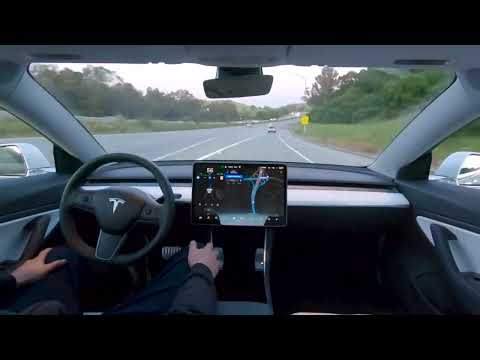
Air suspension with adjustable ride height was available, and the car weighs between 1,961 and 2,250 kg depending on version. In Euro NCAP testing the Model S received five stars, with 94% for adult occupants, 91% for children, 85% for pedestrians and 98% for safety assist. The US NHTSA also gave it five stars in 2015; Tesla's claim of a "5.4-star" rating was rejected by NHTSA. Autopilot driver assistance has been developed continuously through software updates.

Dimensions

| Parameter | Metric | Imperial |
|---|---|---|
| Length | 4,981–5,021 mm | 196.1–197.7 in |
| Width | 1,963 mm | 77.3 in |
| Height | 1,435 mm | 56.5 in |
| Wheelbase | 2,960 mm | 116.5 in |
| Kerb weight | 1,961–2,250 kg | 4,323–4,960 lb |
| Boot (front / rear) | 150 L / 750–1,650 L | 5.3 / 26.6–58.1 cu ft |
Awards and sales
The Model S was named Motor Trend Car of the Year 2013 and World Green Car of the Year 2013; Motor Trend also named it its Ultimate Car of the Year in 2019. In 2015 it was the world's best-selling plug-in electric car, with 50,366 deliveries. Production in Fremont ended in May 2026, when Tesla converted the line, together with that of the Model X.

Rivals: how the Model S compares
The Model S competed with large premium saloons such as the Mercedes-Benz E-Class, BMW 5 Series and Porsche Panamera, and later with electric rivals such as the Porsche Taycan, Mercedes EQS and Lucid Air. Its strengths are range, acceleration, the Supercharger network and software updates; its weaknesses are interior quality below the German rivals and a high purchase price.

Popular comparisons
Tesla Model S in our rankings
- No. 1 of 67 · Biggest boot: sedans (745 l)
- No. 1 of 321 · Biggest boot: cars (745 l)
- No. 3 of 174 · Most powerful sedans (760 kW)
- No. 3 of 60 · Power-to-weight: sedans (269 kW/t)
- No. 4 of 85 · Most torque: sedans (967 Nm)
- No. 5 of 94 · Widest sedans (1,960 mm)
Bigger boot than 99% of ranked cars in the 1CARS catalog (No. 1 of 321).
Tesla Model S photos 24


Tesla Model S videos 7

Tesla Model S video 1

Tesla Model S video 2

Tesla Model S video 3
Tesla Model S video 4

Tesla Model S video 5

Tesla Model S video 6

Tesla Model S video 7
FAQ
When did the Tesla Model S come out?
The prototype was shown on 26 March 2009, and series production began in Fremont in June 2012. The Model S was built until May 2026, with major updates in 2016 and 2021.
What is the range of the Tesla Model S?
Range depends on the version: from 335 km for the 2013 60 kWh car to about 652 km for the 2021 Long Range, rising to about 660 km after the 2025 update. The Plaid offers about 628 km.
How fast is the Tesla Model S Plaid?
The Plaid has three motors with 760 kW (1,020 hp) and reaches 60 mph in 1.98 seconds, which made it one of the fastest-accelerating production cars ever built.
How big is the Tesla Model S boot?
The rear boot holds 750 litres, or 1,650 litres with the rear seats folded, and there is an additional 150-litre front trunk under the bonnet.
Is the Tesla Model S safe?
Yes. It received five stars from Euro NCAP, with 94% for adult occupants and 98% for safety assist, and five stars from the US NHTSA. Its floor-mounted battery gives it a very low centre of gravity.
Data sources
Data checked by an editor against the sources below.
- The text of this article (1cars archive)
- Wikipedia - Tesla Model S
- ADAC
- US EPA fueleconomy.gov - 49741.shtml
- US EPA fueleconomy.gov - 49124.shtml
- US EPA fueleconomy.gov - 47910.shtml
- EEA CO₂ monitoring (European Environment Agency, CC BY 4.0)