The History of Tesla: From Start-up to Mass-Market Electric Cars
Tesla is an American maker of electric cars, batteries and solar products, founded in July 2003 by Martin Eberhard and Marc Tarpenning and led by Elon Musk since 2008. It began with the low-volume Roadster, grew with the Model S, X, 3 and Y, and delivered about 1.8 million vehicles a year at its 2023 peak. Its headquarters are in Austin, Texas.

Key takeaways
- Founded in 2003 in San Carlos, California; Musk led the first funding round in 2004 and became CEO in October 2008.
- Models: Roadster (2008), Model S (2012), Model X (2015), Model 3 (2017), Model Y (2020), Semi (2022) and Cybertruck (2023).
- Factories in Fremont, Nevada, Shanghai, Berlin-Brandenburg and Austin; renamed Tesla, Inc. in 2017.
- Deliveries rose from 2,970 in 2012 to 1.81 million in 2023, then fell to 1.79 million in 2024 and 1.64 million in 2025.

Tesla at a glance

| Fact | Value |
|---|---|
| Founded | 1 July 2003, San Carlos, California |
| Founders | Martin Eberhard and Marc Tarpenning |
| CEO | Elon Musk (since October 2008) |
| Name | Tesla Motors until February 2017, then Tesla, Inc. |
| Headquarters | Austin, Texas (since December 2021) |
| Main factories | Fremont, Gigafactory Nevada, Shanghai, Berlin-Brandenburg, Texas |
| Products | Electric cars, Semi truck, batteries and energy storage, solar |
| Named after | The engineer Nikola Tesla |
Founding and the first funding (2003–2008)
Eberhard and Tarpenning incorporated Tesla Motors on 1 July 2003, naming it after the inventor Nikola Tesla, whose work on alternating current underpins modern electric motors. In February 2004 Elon Musk led the company's first funding round and became chairman and its largest shareholder. J. B. Straubel joined as chief technical officer in May 2004.

Musk set out the strategy in his 2006 "Secret Tesla Motors Master Plan". The company would start with an expensive sports car in small numbers. It would then use the money to build a cheaper saloon and, finally, affordable mass-market cars. The early years were turbulent. Eberhard was asked to step down as chief executive in August 2007, Ze'ev Drori ran the company from December 2007, and Musk took over as CEO in October 2008.
The Roadster (2008–2012)
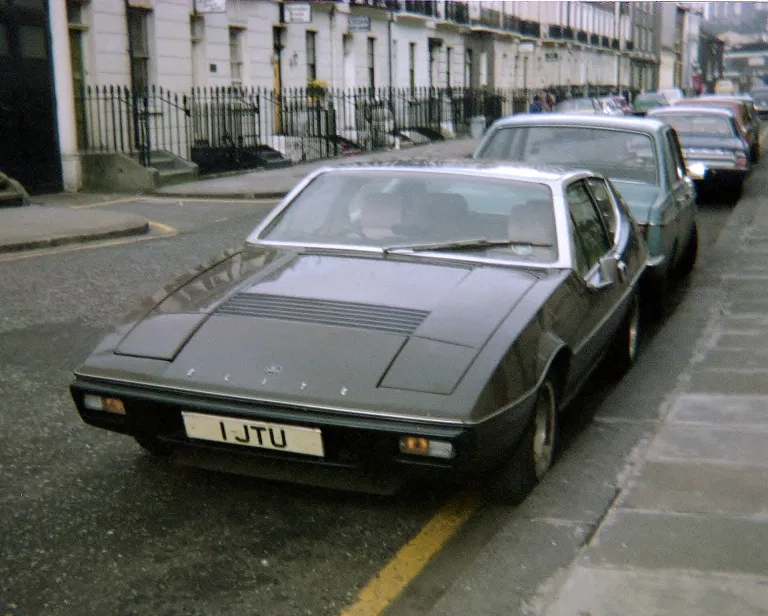
The Tesla Roadster proved that an electric sports car could be fast and practical. It used a lithium-ion battery made from thousands of laptop-type cells and could travel more than 320 km on a charge. Tesla bought rolling chassis, without powertrains, from Lotus under a contract signed in July 2005, so the car is closely related to the Lotus Elise. Deliveries began in February 2008, and production continued until the end of 2011. By the end of 2012 Tesla had sold about 2,450 Roadsters.
Partnerships, loans and the IPO (2009–2010)
The young company needed partners and money to build its second car. In May 2009 Daimler bought a stake of just under 10%, and in return it supplied battery packs and electric drive components for the Smart Fortwo electric drive. In June 2009 the US Department of Energy approved a loan for the Model S programme, which Tesla repaid in May 2013, years ahead of schedule.

In May 2010 the company bought the former NUMMI plant in Fremont, California, from Toyota, which also took a stake in the company. The two firms developed the second-generation Toyota RAV4 EV together. On 29 June 2010 Tesla listed its shares on the NASDAQ exchange.
Model S and Model X (2012–2026)
The Model S saloon, designed by Franz von Holzhausen, reached its first customers in June 2012. With its large touchscreen, over-the-air updates and a range far beyond other electric cars of the time, it set a new benchmark for the class. European deliveries started in August 2013. In September 2012 Tesla opened its first Supercharger stations, six of them in California; by November 2025 the network had about 7,900 stations with more than 75,000 connectors worldwide.

In October 2014 the carmaker added dual-motor all-wheel-drive versions of the Model S and new driver-assistance hardware, the start of its Autopilot system. The Model X SUV, with its rear "falcon-wing" doors, was shown in February 2012 but did not reach customers until September 2015 after several delays. In January 2026 Musk said that both cars would be discontinued in the second quarter of 2026, as Tesla shifted resources to its Optimus robot programme.
Model 3, Model Y and mass production (2016–2020)
Tesla unveiled the Model 3 in March 2016 and collected about 325,000 reservations within a week. It was the third step of the master plan: a smaller, cheaper saloon for the mass market. Deliveries began in July 2017, but production problems with battery manufacturing and automation slowed the ramp-up. In 2018 Tesla raised its weekly output target to 6,000 cars and sold about 140,000 Model 3s worldwide that year.

The Model Y crossover, which shares much of the Model 3's hardware, was introduced in March 2019 and reached customers in March 2020. Between July 2019 and June 2020 the company recorded four profitable quarters in a row for the first time, and in December 2020 it joined the S&P 500 index. In July 2020 Tesla became the world's most valuable carmaker by stock-market value.
Gigafactories around the world
| Factory | Location | Opened | Main products |
|---|---|---|---|
| Fremont | California, USA | 2010 (bought from Toyota) | Model S, X, 3, Y |
| Gigafactory Nevada | Nevada, USA | 2016 | Batteries, drive units, Semi |
| Gigafactory Shanghai | China | 2019 (first Model 3 in October) | Model 3, Model Y |
| Gigafactory Berlin-Brandenburg | Grünheide, Germany | March 2022 | Model Y |
| Gigafactory Texas | Austin, USA | April 2022 | Model Y, Cybertruck |
The company raised the money for its first Gigafactory, the Nevada battery plant, through a bond issue in 2014. The Berlin-Brandenburg site near Grünheide is Tesla's only European car factory. Before it opened, Tesla used a plant in Tilburg, the Netherlands, to assemble cars for Europe.

Semi, Cybertruck and new projects (2022–2026)
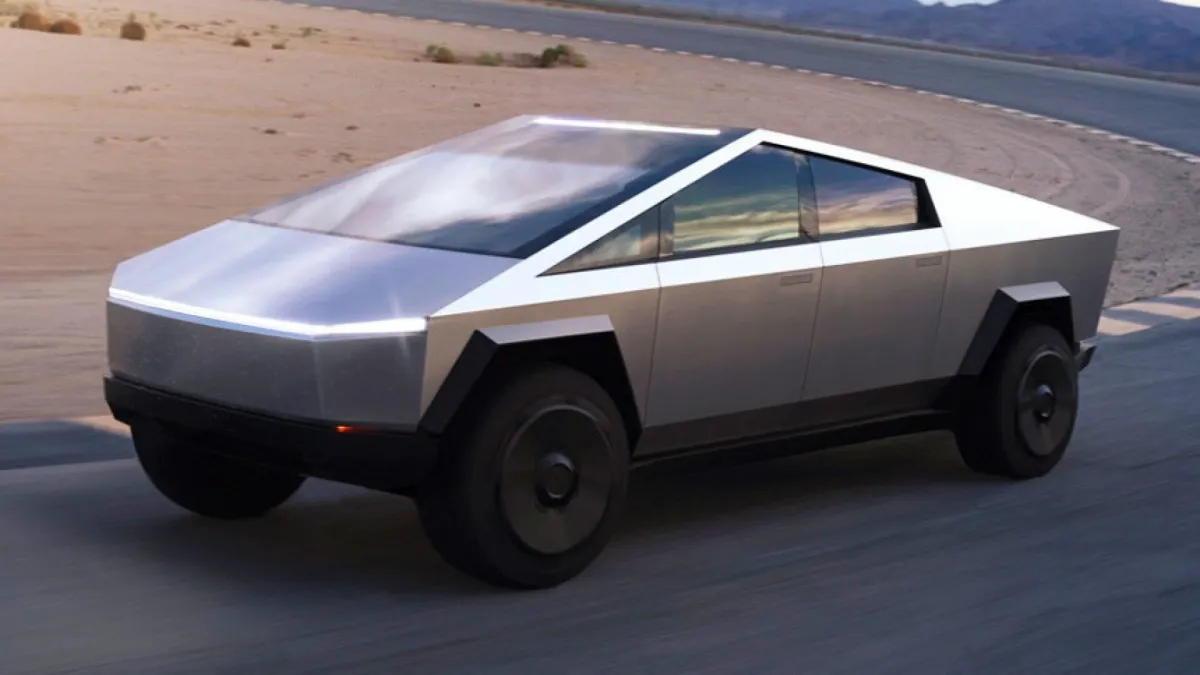
The first units of the Tesla Semi electric truck were delivered to PepsiCo on 1 December 2022; high-volume production started in April 2026. The angular, stainless-steel Cybertruck pick-up followed on 30 November 2023 after pilot production in July 2023. In October 2024 Tesla showed the Cybercab robotaxi and Robovan concepts. Cybercab production began in February 2026.

Beyond cars, the group bought the solar-panel company SolarCity in November 2016 and builds stationary batteries under its Tesla Energy division. In June 2024 the company moved its legal incorporation from Delaware to Texas.
Tesla in numbers
| Year | Vehicle deliveries |
|---|---|
| 2012 | 2,970 |
| 2014 | 31,655 |
| 2016 | 76,297 |
| 2017 | 103,181 |
| 2018 | about 245,000 |
| 2019 | about 367,000 |
| 2020 | 499,647 |
| 2021 | 936,222 |
| 2022 | 1,313,851 |
| 2023 | 1,808,581 |
| 2024 | 1,789,226 |
| 2025 | 1,636,129 |
Growth was fastest between 2018 and 2023, when the Model 3 and Model Y reached full production in three countries. Compared with the 2023 record, deliveries in 2025 were about 9.5% lower. In 2025 Tesla built about 1.66 million vehicles. It was the world's second-largest maker of battery-electric cars that year, behind BYD with about 2.26 million.
Tesla timeline, 2003–2026
| Year | Event |
|---|---|
| 2003 | Tesla Motors founded in San Carlos, California |
| 2004 | Elon Musk leads the first funding round and becomes chairman |
| 2008 | Roadster deliveries begin; Musk becomes CEO |
| 2010 | NASDAQ listing; Fremont plant bought |
| 2012 | Model S deliveries; first Superchargers |
| 2015 | Model X deliveries |
| 2016 | Model 3 unveiled; SolarCity bought; Gigafactory Nevada opens |
| 2017 | Renamed Tesla, Inc.; Model 3 deliveries |
| 2019 | Shanghai factory starts production |
| 2020 | Model Y deliveries; Tesla joins the S&P 500 |
| 2021 | Headquarters move to Austin, Texas |
| 2022 | Berlin-Brandenburg and Texas factories open; first Semi delivered |
| 2023 | Cybertruck deliveries begin; record 1.81 million deliveries |
| 2026 | Model S and Model X discontinued; Cybercab production begins |
Our view: what Tesla changed
The company's main contribution was to show that electric cars could sell in large numbers if they were quick, long-legged and easy to charge. Its own fast-charging network, software updates over the air and direct online sales were copied by many established carmakers. Chinese makers such as BYD and NIO grew in a market it helped to create. Today the company faces stronger competition, and its passenger-car range has narrowed to the Model 3, Model Y and Cybertruck. More electric models are listed in the overview of electric cars, and any two of them can be set side by side in the comparison tool.

FAQ
Who founded Tesla?
Martin Eberhard and Marc Tarpenning founded Tesla Motors on 1 July 2003 in San Carlos, California. Elon Musk led the first funding round in February 2004, became chairman and took over as CEO in October 2008.
What was Tesla's first car?
The Tesla Roadster, a two-seat electric sports car based on a Lotus Elise rolling chassis. Deliveries began in February 2008, production ended in 2011, and about 2,450 had been sold by the end of 2012.
Why is the company called Tesla?
It is named after Nikola Tesla, the engineer and inventor whose work on alternating current and induction motors is the basis of many electric drive systems. The founders chose the name when they set up the company in 2003.
How many cars does Tesla sell a year?
The company delivered 1,808,581 vehicles in 2023, its record year, then 1,789,226 in 2024 and 1,636,129 in 2025. In 2012, its first year with the Model S, it delivered 2,970 cars.
Does Tesla still make the Model S and Model X?
No. In January 2026 Elon Musk announced that the Model S and Model X would be discontinued in the second quarter of 2026. Its range now centres on the Model 3, Model Y and Cybertruck.