 Skoda Rapid Typ 743 / 747 (1984–1990)
Specs, engines, safety and known problems
Published Sources (4) Report an error
By Sarah Whitmore, Senior Automotive Writer Reviewed by Oleksandr Hnatiuk

- Power
- 40–46 kW (54–63 PS)
- Generation
- 2 of 3
Model timeline
Where the Typ 743 / 747 sits in the Rapid story
Predecessor Rapid Typ 901 / 914 / 922 (1935–1947) Successor Rapid NH (2012–2019)
Newest first · 3 generations since 1935
-
2012
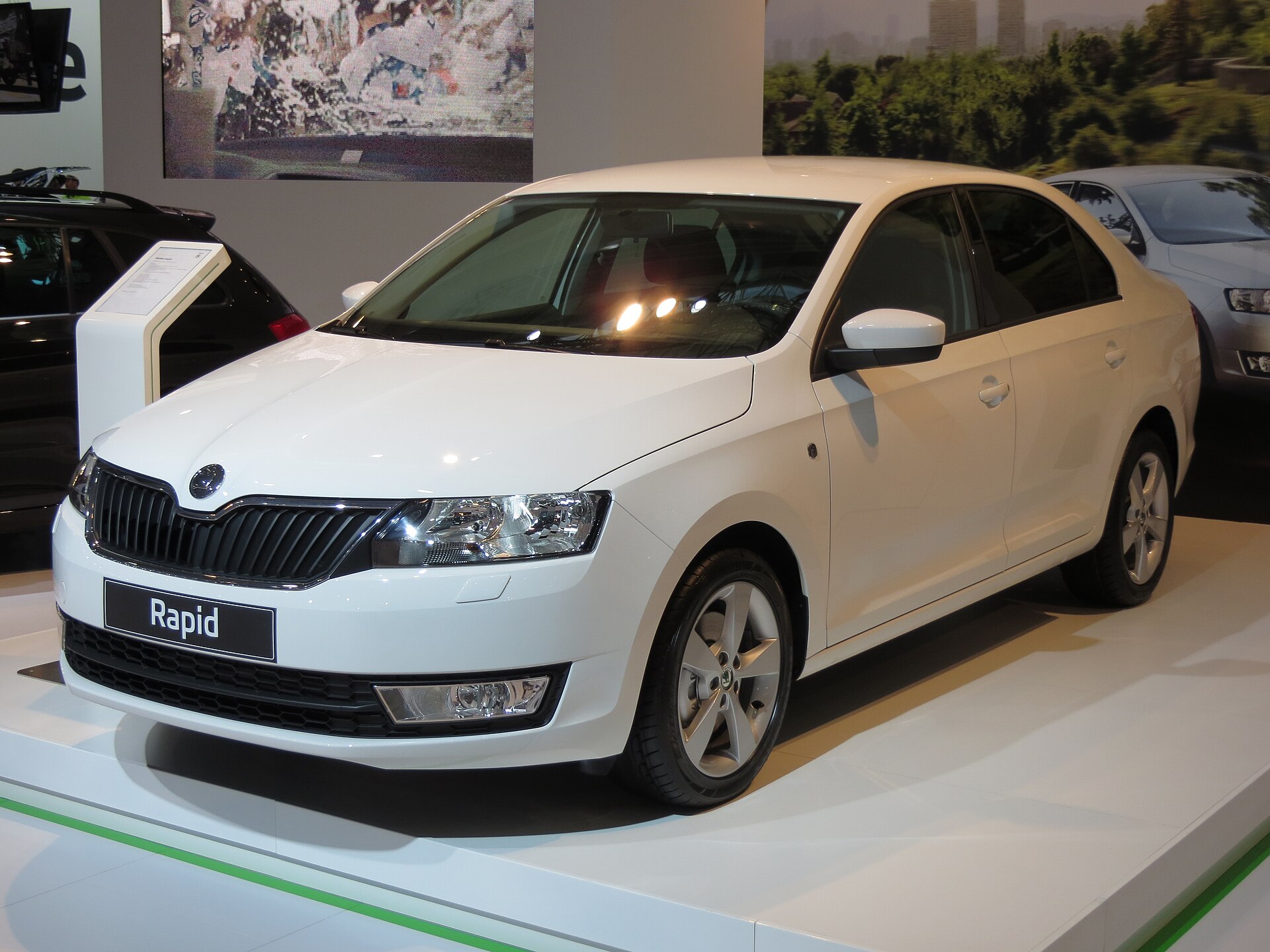
-
1984
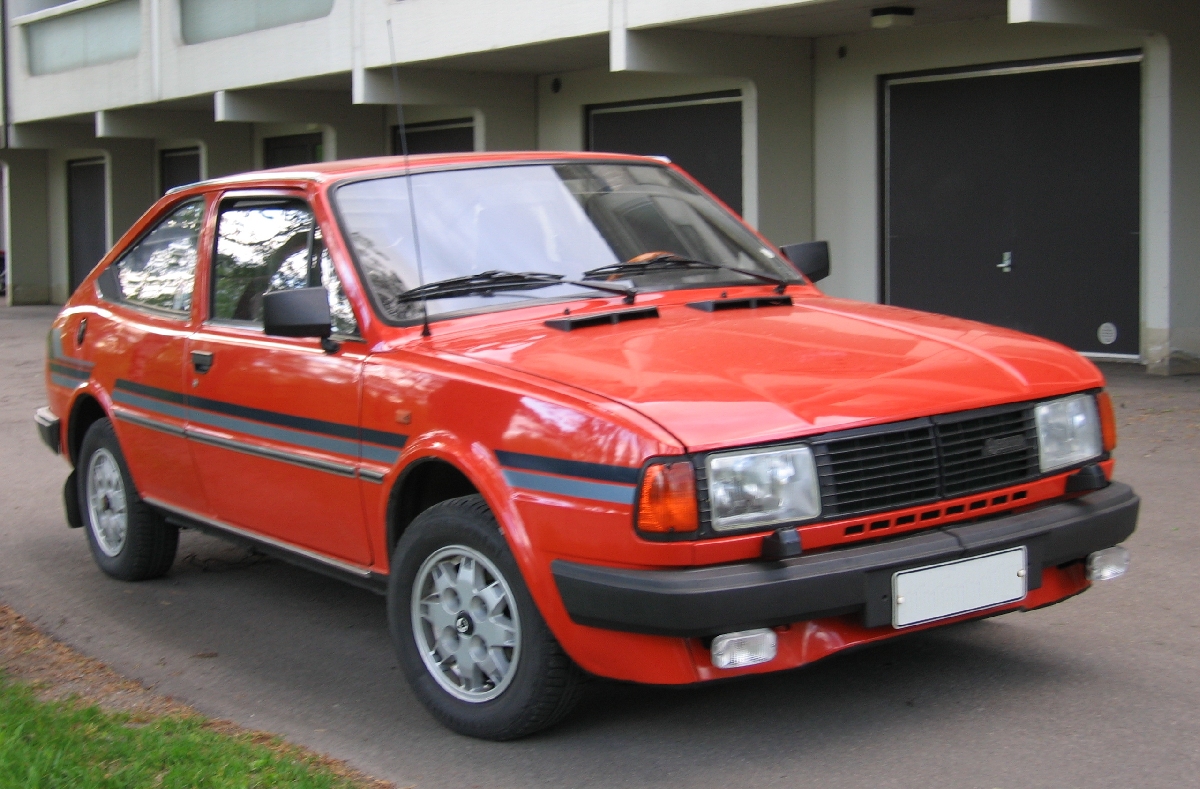
-
1935
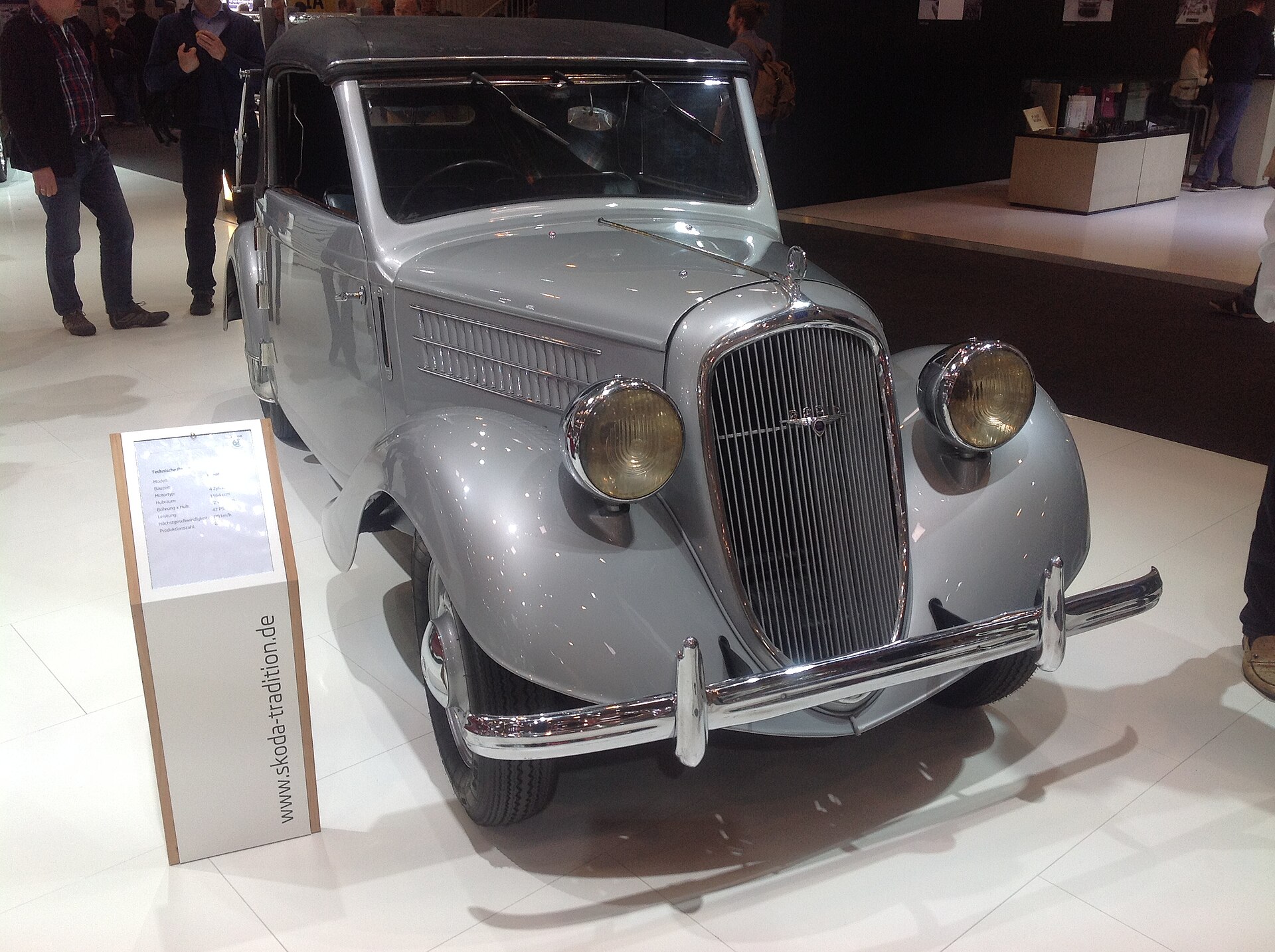


All generations by year: Rapid NH (2012–2019) · Rapid Typ 743 / 747 (1984–1990) · Rapid Typ 901 / 914 / 922 (1935–1947)
The Skoda Rapid coupe was a two-door fastback with its engine behind the rear axle, built by AZNP at Kvasiny in Czechoslovakia from August 1984 to 1990. A modernised version of the Garde, it used the running gear of the Skoda 120 and later 130 and 136 saloons. British magazines nicknamed it "the poor man's Porsche".
In short
- Five versions: Rapid 120, 130, 135, 136 and the fuel-injected 135 RiC, with 40.5–46 kW (55–63 PS).
- Czech production records give 33,455 modernised coupes built between 1984 and 1990.
- The later 135 and 136 used an all-aluminium engine related to the Favorit unit.
- Semi-trailing-arm rear suspension gave it far safer handling than older rear-engined Skodas.
Size at a glance
Kia Rio UB
The Skoda Rapid Typ 743 / 747 is 166 mm shorter, 110 mm narrower and 75 mm lower than the Kia Rio UB.
| Dimensions | Skoda Rapid Typ 743 / 747 | Kia Rio UB | Difference |
|---|---|---|---|
| Length | 4,200 mm165.4 in | 4,366 mm171.9 in | −166 mm−6.5 in |
| Width | 1,610 mm63.4 in | 1,720 mm67.7 in | −110 mm−4.3 in |
| Height | 1,380 mm54.3 in | 1,455 mm57.3 in | −75 mm−3.0 in |
| Wheelbase | 2,400 mm94.5 in | 2,570 mm101.2 in | −170 mm−6.7 in |
| Boot | — | 500 L17.7 cu ft | — |
Hyundai Solaris RB
The Skoda Rapid Typ 743 / 747 is 170 mm shorter and 320 mm lower than the Hyundai Solaris RB.
| Dimensions | Skoda Rapid Typ 743 / 747 | Hyundai Solaris RB | Difference |
|---|---|---|---|
| Length | 4,200 mm165.4 in | 4,370 mm172.0 in | −170 mm−6.7 in |
| Width | 1,610 mm63.4 in | — | — |
| Height | 1,380 mm54.3 in | 1,700 mm66.9 in | −320 mm−12.6 in |
| Wheelbase | 2,400 mm94.5 in | 2,570 mm101.2 in | −170 mm−6.7 in |
Rapid Typ 743 / 747 specs by version
Engines
| Version | Engine | Power | Torque | Gearbox | Drive |
|---|---|---|---|---|---|
| Rapid 135 RiC | 1.3 l 1,289 cc | — | — | 5-sp Manual | Rear-wheel drive |
| Rapid 120 | 1.2 l · 4 cyl 1,200 cc | 40 kW 54 PS54 hp | — | 4-sp Manual | Rear-wheel drive |
| Rapid 130 | 1.3 l · 4 cyl 1,289 cc | 43 kW 58 PS58 hp | 98 Nm72 lb-ft | 5-sp Manual | Rear-wheel drive |
| Rapid 136 | 1.3 l · 4 cyl 1,289 cc | 46 kW 63 PS62 hp | 100 Nm74 lb-ft | 5-sp Manual | Rear-wheel drive |
Dimensions and weight
Show all 4 versions
Verified Manufacturer and type-approval data from our catalog · Sources and methodology
From the Garde to the Rapid
Skoda's first modern coupe was the Garde of 1981, a two-door built on the floorpan of the 105/120 saloons (Typ 742). In the United Kingdom it was already sold under the Rapid name. The coupe shown at the Brno trade fair in September 1984 took that name everywhere and carried a broad set of changes.
Automobil Revue, the Czech motoring magazine, lists them in detail. The front track grew by 70 mm to 1,390 mm and the rear by 60 mm to 1,350 mm. The nose was facelifted to match the facelifted LS and GLS saloons, with headlights following the grille outline, and the bumpers became two-piece units with a steel core and polypropylene covers. The length rose slightly to 4,200 mm, while width and height stayed unchanged.
Internally the early cars were Typ 743, the later aluminium-engined versions Typ 747. For the wider story of the company in the state-run era, see our history of Skoda.
Engine behind the axle, Porsche-style handling
Like every Skoda saloon of the period, the Rapid has a water-cooled, overhead-valve four-cylinder engine mounted lengthways behind the rear axle, tilted to the right and driving the rear wheels through a transaxle. The body is a steel monocoque.
The key engineering change over earlier rear-engined Skodas was the rear suspension. Semi-trailing arms with coil springs replaced the swing axle used on older models. At the front there are double wishbones and coil springs. Brakes are discs with four-piston calipers at the front and drums at the rear, and the standard tyres were 165 SR 13 Barum radials.
British magazines Autocar and Motor called it "the poor man's Porsche" and "a beginners' course to the 911", a nod to the shared rear-engine layout. English Wikipedia notes that the Rapid was an exception to the poor reputation of Skodas in Western Europe at the time.
The five Rapid versions
The model changed engines several times. Outputs are in kW first with the metric horsepower (PS) of Czech sources.
| Version | Years | Engine | Power | Torque | Gearbox |
|---|---|---|---|---|---|
| Rapid 120 | 1984–1985 | 1,174 cm³ | 40.5 kW (55 PS) | not confirmed | 4-speed manual |
| Rapid 130 | 1984–1988 | 1,289 cm³ | 43 kW (58 PS) at 5,000 rpm | 98 Nm (72 lb-ft) | 5-speed manual |
| Rapid 135 | 1988–1990 | 1,289 cm³, aluminium | 43 kW (58 PS), 8.8:1 compression | not confirmed | 5-speed manual |
| Rapid 136 | 1988–1990 | 1,289 cm³, aluminium | 46 kW (62–63 PS) at 5,000 rpm, 9.7:1 | 100 Nm (74 lb-ft) | 5-speed manual |
| Rapid 135 RiC | from 1988 | 1,289 cm³, injection | not confirmed | not confirmed | 5-speed manual |
The 120 was a short-lived carry-over: the last one was shipped to the Netherlands in January 1985. The 130 became the main version, with a top speed of about 153 km/h (95 mph) and 0 to 100 km/h in 15 seconds according to factory data.
The 135 and 136 were introduced in September 1987, but only about thirty were built that year and series production began in spring 1988. Their reworked all-aluminium engine, with an eight-port cylinder head, was closely related to the unit of the front-engined Favorit. The 135 was set up for unleaded petrol, the 136 for leaded super, and the 136 reached 100 km/h in about 14 seconds. Production of the 130 ended in July 1988.
The 135 RiC of September 1988 was built to the US 1983 federal emissions standard, with Bendix single-point fuel injection, a lambda sensor and a three-way catalytic converter. Only a few hundred were made, for selected Western markets.
Rapid coupe dimensions and weight
| Parameter | Metric | Imperial |
|---|---|---|
| Length | 4,200 mm | 165.4 in |
| Width | 1,610 mm | 63.4 in |
| Height | 1,380 mm | 54.3 in |
| Wheelbase | 2,400 mm | 94.5 in |
| Front / rear track | 1,390 / 1,350 mm | 54.7 / 53.1 in |
| Kerb weight | 855–915 kg | 1,885–2,017 lb |
| Payload (Rapid 130) | 350 kg | 772 lb |
| Top speed (Rapid 130) | about 153 km/h | 95 mph |
Automobil Revue gives 890 kg for a Rapid 130. Factory fuel figures for the same car were 5.8 L/100 km at a steady 90 km/h, 8.2 L/100 km at 120 km/h and 8.9 L/100 km in town.
Production figures and export markets
Unit totals once looked contradictory, but the sources agree when read together. Automobil Revue counts 33,455 modernised coupes from 1984 to 1990, including 1,272 Rapid 135 and 9,708 Rapid 136; German Wikipedia adds 22,475 Rapid 130. Skoda's 2025 Classic Days press kit quotes 10,980 cars, which matches the combined total of the 135 and 136.
Exports began in late 1984 to France, the United Kingdom, Denmark and Belgium, with Canada from December 1984. Most of the final 135 and 136 cars went abroad, mainly to Britain, where Skoda's importer also sold a convertible conversion through its dealers.
The end date differs by source. Automobil Revue reports that the last three white Rapid 136s were assembled on 31 January 1990, while Skoda's press kit gives August 1990. Either way, the Rapid was the last two-door coupe and the last rear-engined model in Skoda's range before the Favorit took over.
Safety and what to check today
The coupe was designed long before modern crash testing, and no Euro NCAP or similar rating exists for it.
The Rapid is now a collector's car. A count by the "How Many Left" website, quoted by English Wikipedia, found about 50 still on British roads in 2011, and the Garde and convertible versions are the most sought after. Points to consider:
- Version: the 135 and 136 have the lighter aluminium engine and the final rear-suspension updates; a 130 is the most common.
- Fuel: the 136 was designed for leaded super, so check how the engine copes with today's petrol.
- RiC cars: rare, and worth confirming by their injection and catalyst hardware.
- Paperwork: the Typ 743 or 747 code helps identify early and late cars.
For other cars that share its period, browse the classic cars section, see the sportier Octavia RS for a later performance Skoda, and see all Skoda models for the modern range. The complete Skoda Rapid guide compares the coupe with the pre-war saloon and the 2012 liftback.
Did you know?
- The Rapid Typ 743 / 747 is generation 2 of 3 of the Skoda Rapid in our catalog.
- The Rapid Typ 743 / 747 offers up to 46 kW (63 PS) — 15 kW more than the Rapid Typ 901 / 914 / 922 (1935–1947) (+48%).
- Built for only 6 years (1984–1990), it is the shortest-lived of the 3 generations in our catalog.
Image credits · Photos from Wikimedia Commons under free licences
- Skoda Rapid Typ 901 / 914 / 922 · Photo: Andrew Bone from Weymouth, England / Wikimedia Commons, CC BY 2.0
- Skoda Rapid Typ 743 / 747 · Photo: Akosone / Wikimedia Commons, Public domain
- Skoda Rapid NH · Photo: OSX / Wikimedia Commons, Public domain
Typ 743 / 747 rivals
-
Ended 2017
- Years
- 2011–2017
- Body
- Sedan, Hatchback
- Fuel
- Petrol
- Power
- 79–90 kW (107–122 PS)
-
In production
- Years
- 1975–present
- Body
- Sedan, Hatchback
- Fuel
- Petrol, Diesel, LPG / CNG
- Power
- 29–110 kW (39–150 PS)
6 generations
- 86
- 86C
- 6N
- 9N
- 6R
- VI
-
In production
- Years
- 2015–present
- Body
- Sedan, Station wagon
- Fuel
- Petrol
- Power
- 78–107 kW (106–145 PS)


FAQ
What years was the Skoda Rapid coupe made?
Production started at Kvasiny in August 1984 and ended in 1990, in January according to Czech records or August according to Skoda.
What is the difference between the Rapid 130, 135 and 136?
The 130 used the older 1,289 cc engine with 43 kW (58 PS). The 135 and 136 had a reworked all-aluminium engine: the 135 with 43 kW (58 PS) for unleaded fuel, the 136 with 46 kW (about 62 PS) for leaded super.
Why was the Skoda Rapid called the poor man's Porsche?
Because, like the Porsche 911, it has a rear-mounted engine driving the rear wheels. Autocar and Motor used the phrase in the 1980s.
How many Skoda Rapid coupes were built?
Czech records give 33,455 modernised coupes from 1984 to 1990, including 22,475 Rapid 130, 1,272 Rapid 135 and 9,708 Rapid 136.
What was the Skoda Rapid 135 RiC?
A version with Bendix single-point fuel injection, a lambda sensor and a catalytic converter, built from 1988 in small numbers for Western markets.
Data sources
Data checked by an editor against the sources below.
- 1cars archive: Skoda Rapid: Generations, Specs and History
- The text of this article (1cars archive)
- Wikipedia — Škoda Rapid (1984)
- ADAC — Skoda Rapid 314