The History of Škoda: Laurin & Klement, the Winged Arrow and VW
Škoda Auto is a Czech carmaker based in Mladá Boleslav and owned by the Volkswagen Group since 2000. It began in December 1895, when Václav Laurin and Václav Klement opened a bicycle workshop, built its first car in 1905 and took the Škoda name after a 1925 merger. In 2024 it delivered 926,567 cars.

Key takeaways
- 1895–1925: Laurin & Klement grows from bicycles and motorcycles to become the largest car maker in Austria-Hungary.
- 1925–1945: the Plzeň engineering group Škoda Works takes over; the Popular, Rapid, Favorit and Superb make Škoda the Czechoslovak market leader.
- 1945–1991: state ownership, rear-engined cars such as the 1000 MB, and the front-wheel-drive Favorit of 1987.
- Since 1991: Volkswagen partnership, the Octavia, Fabia, Superb and Kodiaq, and electric cars from the Enyaq onwards.

Škoda at a glance
| Fact | Value |
|---|---|
| Founded | December 1895 (Laurin & Klement), Mladá Boleslav |
| Founders | Václav Laurin and Václav Klement |
| First car | Voiturette A, 1905 |
| Škoda name | from 1925, after the merger with Škoda Works |
| Owner | Volkswagen Group (30 % from 1991, 100 % since 30 May 2000) |
| Main plants | Mladá Boleslav, Kvasiny, Vrchlabí (Czech Republic), plus India |
| Deliveries 2024 | 926,567 |
| Revenue 2024 | 25.5 billion EUR |
| Employees 2024 | 37,551 |
Laurin & Klement: bicycles, motorcycles and the first car (1895–1924)
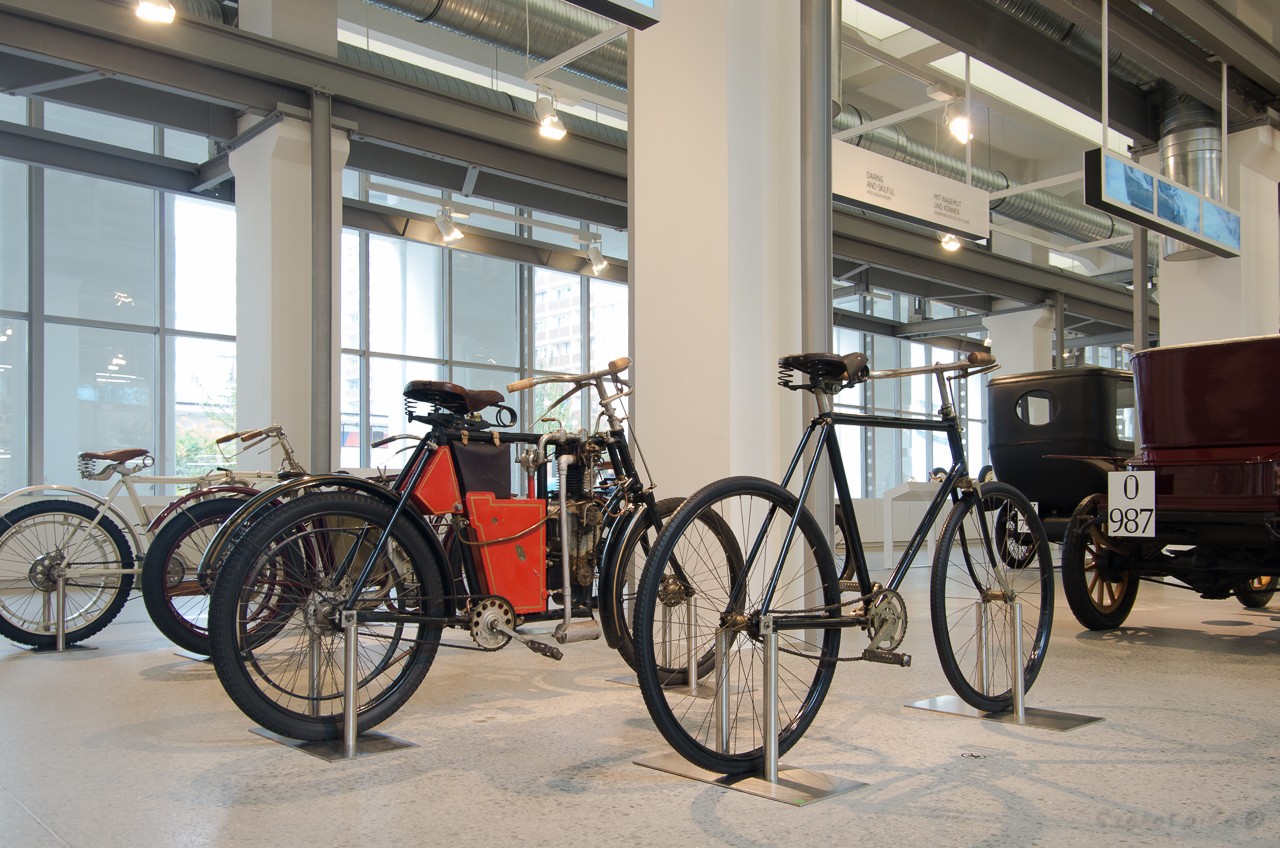
The story starts with a complaint. In 1894 Václav Klement, a 26-year-old bookseller in Mladá Boleslav, asked a German bicycle maker to repair his bicycle and, according to the company's own history, received a dismissive reply. He decided to build better bicycles himself and teamed up with Václav Laurin, a mechanic who had already made bicycles in nearby Turnov. Shortly before Christmas 1895 they opened a repair and production workshop with three employees. About a year later 21 people were building five models under the Slavia name.

On 18 November 1899 the partners showed their first motorcycles, the Slavia A and B. In 1900 they shipped 150 machines to London, and positive reviews in the British press made the firm known abroad. In 1901 Narcis Podsedníček won the Paris–Berlin race on one of their motorcycles.
The first car, the Voiturette A, appeared in December 1905. It had a one-litre two-cylinder engine and reached up to 40 km/h. Within a year two- and four-cylinder models followed, and in 1907 the Type FF became the first eight-cylinder car built in Europe. Laurin & Klement was the second-oldest car maker in the Czech lands after Tatra, whose own story is told in the Tatra history. Before the First World War it was the largest car producer in Austria-Hungary and exported to dozens of countries.
The Škoda Works merger and the winged arrow (1925–1945)
After the war the company struggled, and a fire made matters worse. In 1925 Laurin & Klement merged with the Plzeň engineering and arms group Škoda Works, founded in 1859 by Emil von Škoda, and its cars took the Škoda name. The winged-arrow badge, registered in 1923, is still the basis of the brand's logo.

Assembly-line production began in 1930, when the car business became a separate company with about 4,250 staff in Mladá Boleslav. In 1933 the 420 Standard introduced a backbone-tube chassis with independent suspension. It became the basis of the Popular, Rapid, Favorit and Superb, and by 1936 Škoda was the leading car maker in Czechoslovakia, with a 39 % share in 1938. The 1930s Škoda Rapid was one of its best-known cars.
During the Second World War the factory was forced to produce military goods for Germany. Vehicle output fell from 7,052 in 1939 to 683 in 1944, and bombing raids badly damaged the plant in April 1945.
State ownership: Octavia, 1000 MB and Favorit (1945–1990)
The Mladá Boleslav plant was rebuilt, and production restarted in 1945 with the 1101, a development of the pre-war Popular. In 1948 the car company became state-owned and separate from the Plzeň works. The 440 Spartak, the first Octavia of 1959 and the Felicia convertible followed, and from 1957 Octavias and Felicias were even exported to the United States for a short time.

A new factory site in Mladá Boleslav opened in March 1964 for the rear-engined 1000 MB saloon. The 100, 105 and 120 continued the rear-engined layout into the 1980s. The 110 R coupé of 1970 and the 130 RS racing car of 1975, nicknamed the "Porsche of the East", gave the brand a sporting image. By the late 1980s, however, the designs had fallen far behind Western cars, and Škoda became a target of jokes. Its low prices still kept the cars on British and other Western European roads.
The front-wheel-drive Favorit of 1987, styled by Bertone, closed much of the technical gap. It sold well in Czechoslovakia and its neighbours and found buyers in the United Kingdom and Denmark thanks to its low price and solid reputation.
Volkswagen takes over (1991–2000)
After the Velvet Revolution the Czechoslovak government looked for a strong foreign partner. Volkswagen won the privatisation tender on 9 December 1990, signed the joint-venture agreement on 28 March 1991 and on 16 April 1991 took a 30 % stake, making Škoda the group's fourth brand. It raised the stake to 70 % in 1995 and bought the rest on 30 May 2000.

The 1994 Felicia was a thorough redesign of the Favorit with better quality and equipment, and buyers saw it as good value for money. The Octavia of 1996 was the first Škoda on a Volkswagen Group platform, sharing its basis with the Golf of the time. The Fabia followed at the end of 1999 and was the first car on the platform later used by the Volkswagen Polo and SEAT Ibiza. The story of the owner is in the history of Volkswagen.
| Year | Milestone |
|---|---|
| 1895 | Laurin & Klement founded in Mladá Boleslav |
| 1905 | Voiturette A, the first car |
| 1925 | Merger with Škoda Works, Škoda name |
| 1959 | First Octavia and Felicia convertible |
| 1964 | 1000 MB, new Mladá Boleslav plant |
| 1987 | Favorit with front-wheel drive |
| 1991 | Volkswagen takes a 30 % stake |
| 1996 | Octavia on a Volkswagen Group platform |
| 2000 | Volkswagen owns 100 % |
| 2016 | Kodiaq, the first large SUV |
| 2020 | Enyaq iV, the first electric SUV |
Growth in the 2000s and 2010s
The Superb returned as a large saloon in 2001, and the Roomster and Yeti widened the range. At the 2010 Paris show Škoda presented the all-electric Octavia Green E Line, a test fleet for later electric cars. In 2012 the company celebrated 14 million cars built since 1905, three million Fabias and 500,000 Superbs from the Kvasiny plant. The third-generation Octavia and the Rapid Spaceback compact hatchback followed in 2013.

The SUV era began with the Škoda Kodiaq in 2016, followed by the Karoq in 2017 and the Kamiq in 2019, while the Scala replaced the Rapid. Deliveries reached a record of 1,253,700 cars in 2018. Compared with the 172,000 cars built in 1991, the year Volkswagen arrived, that is about 7.3 times as many. In September 2017 total production passed 20 million vehicles. On the sporting side, Škoda won the WRC-2 title four times from 2015 to 2018 with the Fabia R5, and performance versions such as the Octavia RS became a brand pillar.
Škoda today: electric cars and a new identity
The emissions scandal of 2015 affected about 1.2 million Škoda cars and pushed the brand towards electrification. The Superb iV plug-in hybrid and the small Citigo e iV arrived in 2019, and the Enyaq iV electric SUV went on sale in September 2020. A new brand identity followed in 2022, and a new wordmark logo in 2023, the year the second Kodiaq and fourth Superb were launched. The electric Elroq compact SUV followed in 2025.
In 2024 Škoda delivered 926,567 cars, earned 25.5 billion EUR in revenue and employed 37,551 people. Its chief executive is Klaus Zellmer. Deliveries had dipped to 731,262 in 2022 before recovering.
Which Škoda to choose today
The brand's long-standing strengths are space and value. Families who need room should look at the Octavia estate, the Superb and the Kodiaq, which offer some of the largest boots in their classes; the biggest-boot rankings show how they compare. Drivers who want lower running costs and can charge at home are best served by the Enyaq or Elroq. The Fabia and Scala suit city drivers on a budget, and the RS versions suit those who want more performance without a premium badge.

Used buyers benefit from shared Volkswagen Group parts, which keep repairs affordable. Any Škoda can be set against its Volkswagen, SEAT or Hyundai rival in the comparison tool.

FAQ
Who founded Škoda?
Škoda began as Laurin & Klement, founded in December 1895 by mechanic Václav Laurin and bookseller Václav Klement in Mladá Boleslav. The Škoda name came in 1925 from Emil von Škoda's engineering group in Plzeň.
When did Volkswagen buy Škoda?
Volkswagen took a 30 % stake on 16 April 1991, raised it to 70 % in 1995 and bought the remaining shares on 30 May 2000. Since then Škoda has been a wholly owned brand of the Volkswagen Group.
What was the first Škoda car?
The first car of the company was the Laurin & Klement Voiturette A of 1905, with a one-litre two-cylinder engine and a top speed of 40 km/h. The first cars sold as Škodas appeared after the 1925 merger.
What does the Škoda logo mean?
The winged arrow was registered as a trademark in 1923 and has formed the logo ever since. The ŠKODA wordmark was added to it in 1936, and a new wordmark-led identity arrived in 2023.
Where are Škoda cars made?
Most Škodas are built in the Czech Republic at Mladá Boleslav and Kvasiny, with gearboxes from Vrchlabí. Further production takes place in India and, for some models, at other Volkswagen Group plants such as Bratislava.
Photos (7)