 Skoda Karoq
Specs, engines and history
Published Sources (2) Report an error
By Felix Hartmann, Automotive Technology & EV Contributor
- Built
- 2017–present
- Top power
- 140 kW (190 PS)
Which Karoq to buy
Our verdict · Felix Hartmann
- Best all-rounder: the 1.5 TSI with 110 kW (150 PS). It is barely thirstier than the 1.0 TSI on paper and much more relaxed with a full car.
- For high mileage or towing: the 2.0 TDI with 110 kW (150 PS), available with 4x4 and DSG.
- For performance: the 2.0 TSI Sportline 4x4, the only petrol Karoq with four-wheel drive in Europe after the facelift.
- Used: a 2019-2021 1.5 TSI offers most of the facelift's practicality for less; check that the DSG has been serviced.
The Karoq is not the newest design in its class, but its boot, simple controls and wide engine choice still make it one of the most sensible family SUVs of its size. Other Škoda models are in our Škoda catalogue.
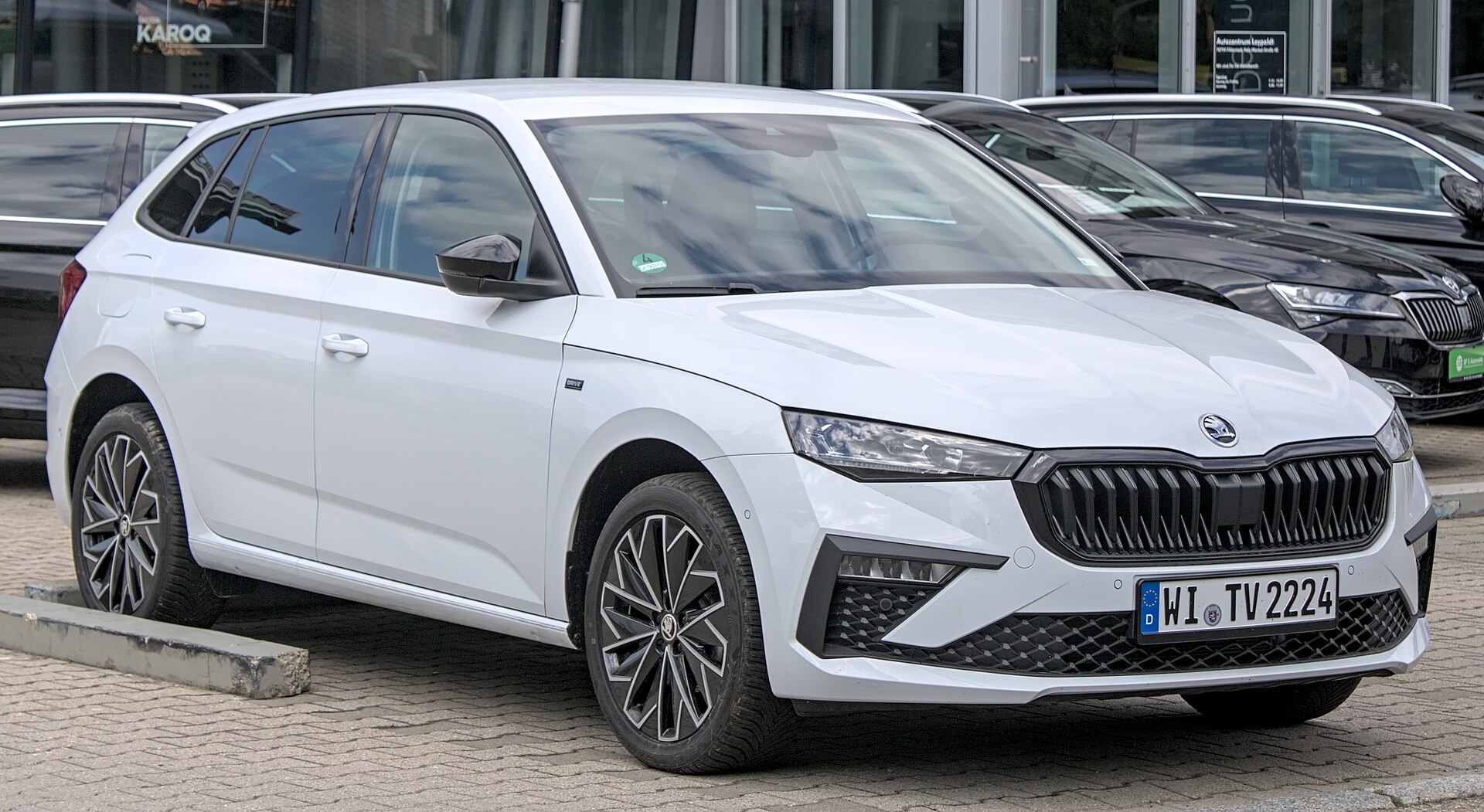
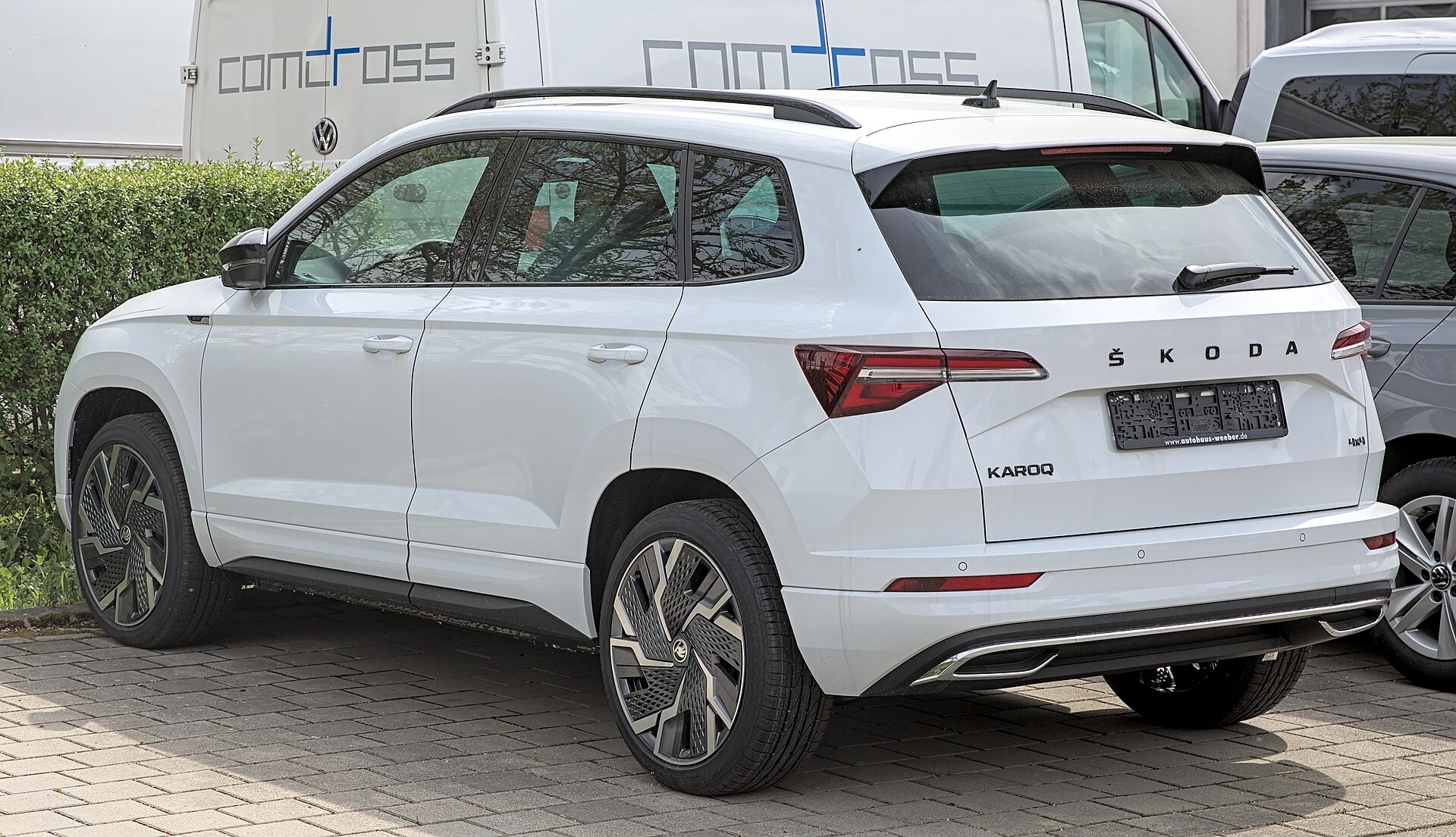
The Škoda Karoq is a five-door compact SUV that Škoda has built since 2017 as the successor to the Yeti. It sits between the smaller Kamiq and the larger Kodiaq, uses the Volkswagen Group MQB A1 platform and shares its chassis, roof pressing and side doors with the SEAT Ateca. There has been one generation so far, facelifted at the end of 2021, with turbo petrol and diesel engines from 81 kW (110 PS) to 140 kW (190 PS).
In short
- One generation (internal code NU7) since 2017, facelifted in December 2021; front-wheel drive as standard, 4x4 on the stronger engines.
- European engines: 1.0 TSI, 1.5 TSI and 2.0 TSI petrol, 1.6 and 2.0 TDI diesel, from 81 kW (110 PS) to 140 kW (190 PS).
- 4,390 mm long with a 521-litre boot that grows to 1,630 litres with the rear seats folded (ADAC, 2025 model).
- Five-star Euro NCAP rating from 2017; in Germany prices start at EUR 33,930 for the 1.0 TSI Selection (ADAC, 2025).
Size at a glance
| Dimensions | Skoda Karoq NU7 |
|---|---|
| Length | 4,390 mm172.8 in |
| Width | 1,841 mm72.5 in |
| Height | 1,624 mm63.9 in |
| Wheelbase | 2,638 mm103.9 in |
Specs by version
Engines
| Version | Engine | Power | Torque | Gearbox | Drive | Production years |
|---|---|---|---|---|---|---|
| Diesel · 1 version | ||||||
| 2.0 TDI 4x4 DSG | 2.0 l · 4 cyl · Diesel 1,968 cc | 110 kW 150 PS148 hp | 360 Nm266 lb-ft | 7-sp Dual-clutch | All-wheel drive | 2022 |
| Petrol · 3 versions | ||||||
| 1.0 TSI | 1.0 l · 3 cyl · Petrol 999 cc | 85 kW 116 PS114 hp | 200 Nm148 lb-ft | 6-sp Manual | Front-wheel drive | 2025 |
| 1.5 TSI DSG | 1.5 l · 4 cyl · Petrol 1,498 cc | 110 kW 150 PS148 hp | 250 Nm184 lb-ft | 7-sp Dual-clutch | Front-wheel drive | 2022 |
| 2.0 TSI 4x4 DSG | 2.0 l · 4 cyl · Petrol 1,984 cc | 140 kW 190 PS188 hp | 320 Nm236 lb-ft | 7-sp Dual-clutch | All-wheel drive | 2022 |
Performance
Dimensions and weight
Verified Manufacturer and type-approval data from our catalog · Sources and methodology
Škoda Karoq at a glance
The Karoq is a C-segment SUV with a transverse front engine. Škoda revealed it in Stockholm on 18 May 2017, started production at Kvasiny in the Czech Republic at the turn of June and July 2017 and opened sales in the autumn. Demand outran Kvasiny: in 2018 and 2019 extra cars came from Mladá Boleslav and from Volkswagen's Osnabrück plant in Germany, and between October 2020 and December 2023 the Volkswagen plant in Bratislava, Slovakia, also built the Karoq. For China, SAIC Volkswagen assembled a long-wheelbase version in Ningbo from 2018.
The name comes from the language of the Aleut people of Alaska and combines their words for "car" and "arrow", a reference to the Škoda logo. It was the second Škoda named that way, after the Kodiaq. Dalibor Pantůček led the exterior design.
| Parameter | Metric | Imperial |
|---|---|---|
| Length | 4,390 mm | 172.8 in |
| Width (without mirrors) | 1,841 mm | 72.5 in |
| Height | 1,624 mm | 63.9 in |
| Wheelbase | 2,638 mm | 103.9 in |
| Boot (seats up / folded) | 521 / 1,630 l | 18.4 / 57.6 cu ft |
| Kerb weight (1.0 TSI) | 1,380 kg | 3,042 lb |
| Fuel tank | 50 l | 11 imp gal |
| Towing, braked (1.0 TSI) | 1,200 kg | 2,646 lb |
Figures for the facelifted 1.0 TSI Selection from the ADAC catalogue. Compared with the Yeti it replaced, the Karoq is 160 mm longer, 35 mm wider and 40 mm lower, with a 60 mm longer wheelbase.
Generations
| Generation | Code | Years | Body styles | Engines | Power (kW / hp) |
|---|---|---|---|---|---|
| Karoq I | NU7 | 2017-2021 | 5-door SUV | 1.0 TSI, 1.5 TSI, 2.0 TSI, 1.6 TDI, 2.0 TDI | 81-140 kW (110-190 PS) |
| Karoq I facelift | NU7 | since 2021 | 5-door SUV | 1.0 TSI, 1.5 TSI, 2.0 TSI, 2.0 TDI | 81-140 kW (110-190 PS) |
Karoq (2017-2021)
The original car launched with a 1.0 TSI three-cylinder and a 1.5 TSI four-cylinder with cylinder deactivation, plus 1.6 TDI and 2.0 TDI diesels. The 2.0 TSI and a 140 kW (190 PS) 2.0 TDI, both with four-wheel drive and a seven-speed DSG, sat at the top. Rear suspension was a four-link design; the optional Dynamic Chassis Control offered Comfort, Standard and Sport modes on the 1.5 TSI and 2.0 TDI, and 4x4 cars could have an Off-Road mode that adjusts traction control and the electronic differential lock.
The Karoq sold quickly. European registrations rose from 5,981 in 2017 to 78,842 in 2018 and 105,041 in 2019, and Škoda says the model was its best-selling car in 2019, with more than 137,700 deliveries in the first eleven months. Cumulative production passed 250,000 in mid-September 2019, and in 2018 some customers waited up to ten months. In 2020 the 1.6 TDI was replaced by a 2.0 TDI with 85 kW (115 PS), and the 1.0 TSI dropped from 85 kW (115 PS) to 81 kW (110 PS).
Karoq facelift (since 2021)
The update was shown in December 2021, with deliveries from spring 2022. It brought a reshaped front and rear, a 10.25-inch digital instrument panel, three-zone climate control and an electric sliding panoramic roof on higher trims. The engine range was rationalised to Evo versions of the 1.0 TSI, 1.5 TSI and 2.0 TDI, with the 2.0 TSI 4x4 reserved for the Sportline. Since 2024 the German range has been reorganised several times; from October 2025 ADAC lists Selection, Balance and Sportline trims, and the 1.0 TSI is back at 85 kW (115 PS).

Engines and performance
| Engine (facelift, Europe) | Power | Torque | Gearbox | Drive |
|---|---|---|---|---|
| 1.0 TSI (3 cyl.) | 81-85 kW (110-115 PS) | 200 Nm | 6-speed manual | FWD |
| 1.5 TSI ACT (4 cyl.) | 110 kW (150 PS) | 250 Nm | 6-speed manual or 7-speed DSG | FWD |
| 2.0 TSI | 140 kW (190 PS) | 320 Nm | 7-speed DSG | 4x4 |
| 2.0 TDI | 85 kW (115 PS) | 300 Nm (manual) | 6-speed manual or 7-speed DSG | FWD |
| 2.0 TDI | 110 kW (150 PS) | 340-360 Nm | 6-speed manual or 7-speed DSG | FWD or 4x4 |
The 1.0 TSI with the manual gearbox reaches 100 km/h in 10.3 seconds and 193 km/h (ADAC). The 1.5 TSI is listed at 210-211 km/h and the 2.0 TSI at 221 km/h. Outside Europe the Karoq used other engines: a 1.2 TSI and 1.4 TSI in China, and in Australia a 1.4 TSI with an eight-speed Aisin automatic.

Space and practicality
The 521-litre boot is large for a car of 4.4 metres, and the rear seats fold to 1,630 litres, measured to the roof. The upright roofline and 2,638 mm wheelbase leave the cabin square and easy to load. If you are checking a tight garage, try our garage fit tool with the 4,390 mm length and 2,025 mm width including mirrors.

Fuel economy and running costs
WLTP combined figures for the facelift, as listed on Wikipedia and ADAC:
- 1.0 TSI manual: 5.8-6.2 l/100 km, 132 g/km CO2 (ADAC, 2025 model)
- 1.5 TSI: 6.5 l/100 km
- 2.0 TSI 4x4 DSG: 7.8 l/100 km
- 2.0 TDI 85 kW: 5.0-5.1 l/100 km
- 2.0 TDI 110 kW 4x4 DSG: 5.9 l/100 km
Green NCAP tested a 1.5 TSI with DSG in 2024 and gave it three stars out of five; its consumption ranged from 5.0 l/100 km on the road drive to 7.8 l/100 km in the motorway test. In Germany Škoda gives a two-year vehicle warranty and 12 years against rust perforation (ADAC).
Trims, equipment and prices
German list prices from ADAC for the cars built from May and October 2025:
| Version | Power | Price (Germany, 2025) |
|---|---|---|
| 1.0 TSI Selection | 85 kW (115 PS) | EUR 33,930 |
| 1.5 TSI Selection | 110 kW (150 PS) | EUR 36,190 |
| 1.5 TSI Sportline DSG | 110 kW (150 PS) | EUR 42,910 |
| 2.0 TSI Sportline 4x4 DSG | 140 kW (190 PS) | EUR 46,390 |
| 2.0 TDI Selection | 85 kW (115 PS) | EUR 37,270 |
| 2.0 TDI Sportline 4x4 DSG | 110 kW (150 PS) | EUR 48,670 |
For comparison, the cheapest facelifted Karoq in December 2021 was the 1.0 TSI Active at EUR 26,320, so the entry price has risen by about EUR 7,600 in four years, partly because the bare Active trim was dropped in 2023.

Safety
Euro NCAP tested the Karoq in 2017 and awarded five stars, with 93% for adult occupant protection, 79% for child occupants, 73% for vulnerable road users and 58% for safety assist. The rating covered the 1.0 TSI, 1.5 TSI, 1.6 TDI and 2.0 TDI versions. Euro NCAP marks results older than six years as expired, and the Karoq's rating lapsed on 1 January 2024, so it should not be compared directly with newer tests. ANCAP in Australia used the same results. More results are in our safety ratings section.
Reliability and known issues
We did not find manufacturer recalls or reliability surveys specific to the Karoq in the sources used for this guide, so we do not list known faults. The engines and gearboxes are shared with many other Volkswagen Group models, which keeps parts widely available. As with any car using a dual-clutch gearbox, a full service history is worth checking on a used example.
Rivals
| Model | Engines | Power (hp) | Boot (l) | Price from (EUR) |
|---|---|---|---|---|
| Škoda Karoq | 1.0/1.5/2.0 TSI, 2.0 TDI | 85-140 kW (115-190 PS) | 521 | 33,930 (DE, 2025) |
| SEAT Ateca | 1.0/1.5/2.0 TSI, 2.0 TDI | 81-140 kW (110-190 PS) | - | - |
| Volkswagen Tiguan (2024) | 1.5 eTSI, 2.0 TSI, 2.0 TDI, eHybrid | 96-200 kW (130-272 PS) | - | - |
The SEAT Ateca is the closest relative, with the same platform, doors and roof but its own styling; the latest Volkswagen Tiguan is larger and adds hybrid options. Other natural rivals are the Kia Sportage and Hyundai Tucson. What Car? named the Karoq its Best Family SUV for practicality in 2021. You can line the cars up yourself in our compare tool.
Photo gallery

Skoda Karoq in our rankings
- No. 29 of 130 · Fastest SUVs and crossovers (221 km/h · top 23%)
- No. 35 of 144 · Lightest SUVs and crossovers (1,380 kg · top 25%)
- No. 58 of 198 · Smallest SUVs and crossovers (4,390 mm · top 30%)
- No. 52 of 165 · Fastest cars of the 2020s (221 km/h · top 32%)
- No. 197 of 531 · Smallest cars (4,390 mm · top 38%)
- No. 151 of 391 · Lightest cars (1,380 kg · top 39%)
Faster than 77% of ranked SUVs and crossovers in the 1CARS catalog (No. 29 of 130).
FAQ
How many generations of the Škoda Karoq are there?
One. The Karoq has been built since 2017 and received a facelift in December 2021; deliveries of the updated car began in spring 2022.
How big is the Karoq's boot?
521 litres with the rear seats up and 1,630 litres with them folded, according to ADAC data for the 2025 model.
Is the Karoq the same as the SEAT Ateca?
They share the MQB A1 platform, engines, roof pressing and side doors, but the styling and interiors differ.
Does the Škoda Karoq have four-wheel drive?
Yes, on selected versions. After the facelift, 4x4 is offered with the 2.0 TSI and the 110 kW (150 PS) 2.0 TDI, always with the seven-speed DSG.
How safe is the Karoq?
It earned five stars from Euro NCAP in 2017, with 93% for adult occupant protection. That rating expired at the start of 2024.
Data sources
Data checked by an editor against the sources below.