 Audi 80 B1 (1972–1978)
Specs, engines, safety and known problems
Published Sources (4) Report an error
By Oleksandr Hnatiuk, Automotive Editor & Used Car Specialist Reviewed by Felix Hartmann

- Power
- 40–81 kW (54–110 PS)
- Generation
- 2 of 5
Model timeline
Where the B1 sits in the 80 story
Predecessor 80 (F103) (1966–1968) Successor 80 B2 (1978–1986)
Newest first · 5 generations since 1966
-
1991
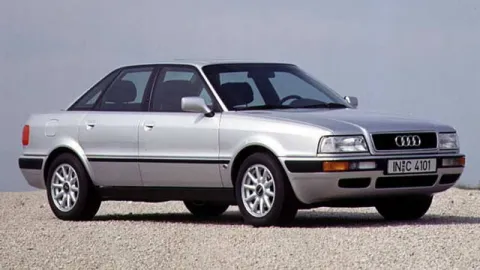 B4 1991–1995 · Sedan, Station wagon · 52–128 kW (71–174 PS)
-
1986
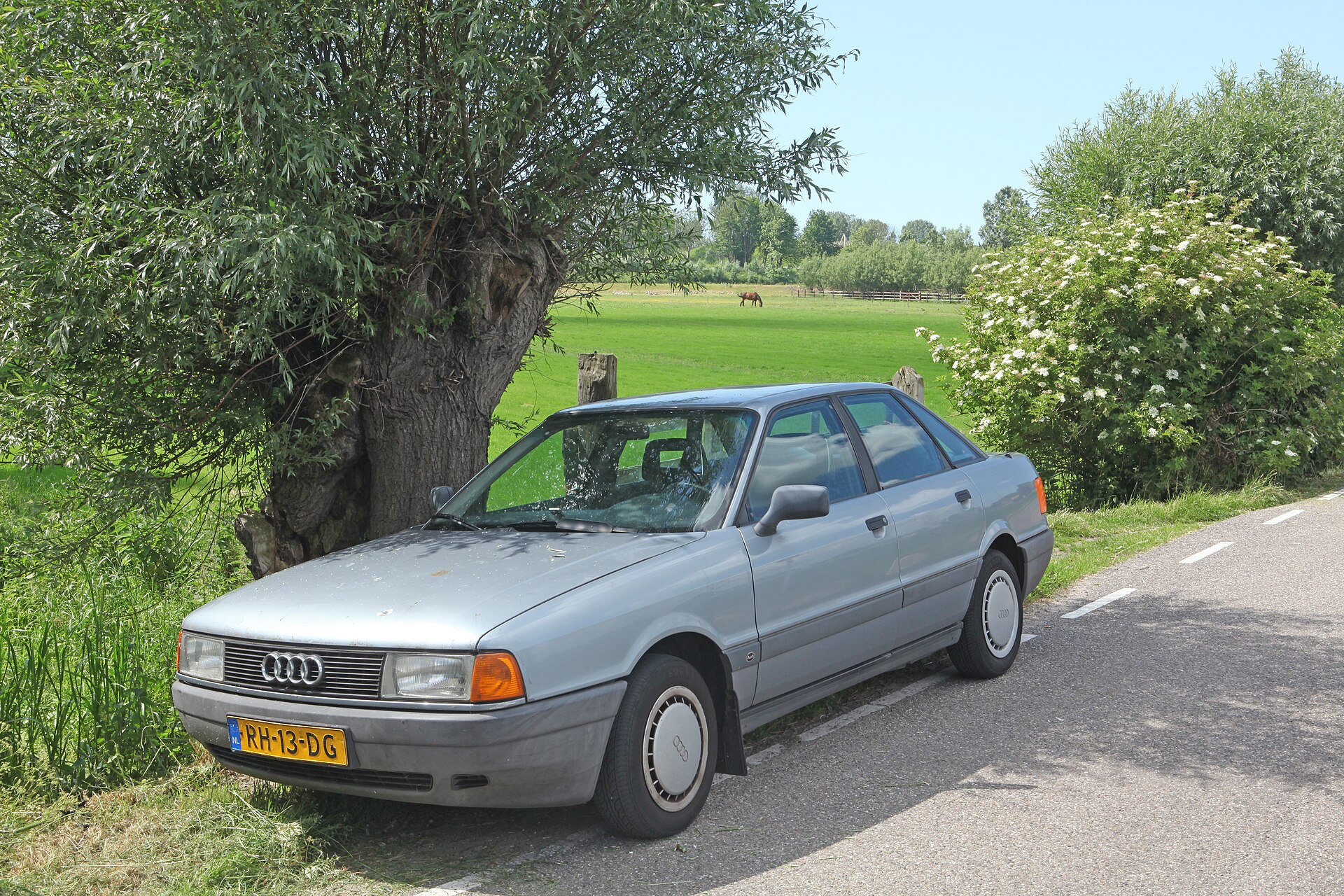
-
1978
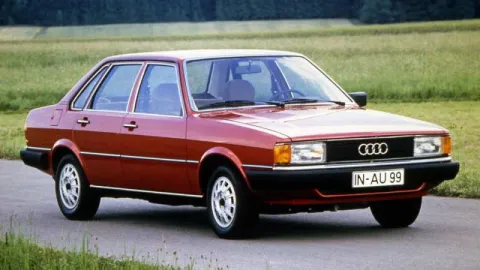 B2 1978–1986 · Sedan · 40–100 kW (54–136 PS)
-
1972
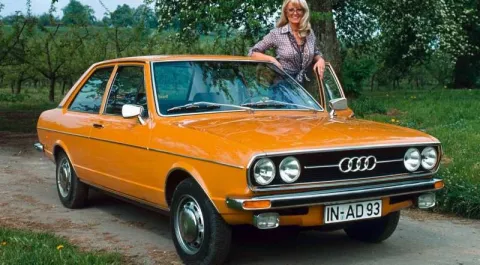 B1 You are here 1972–1978 · Sedan, Station wagon · 40–81 kW (54–110 PS)
-
1966


All generations by year: 80 B4 (1991–1995) · 80 B3 (1986–1991) · 80 B2 (1978–1986) · 80 B1 (1972–1978) · 80 (F103) (1966–1968)
The Audi 80 B1 is the first B-series Audi 80, on sale from June 1972 until August 1978 and coded Typ 80, then Typ 82 after the 1976 facelift. It replaced the F103 range with an all-new light saloon whose platform also carried the first Volkswagen Passat. North American buyers knew it as the Audi Fox, offered from late 1973 until model year 1979.
In short
- Built from June 1972 to August 1978 in Ingolstadt, with extra assembly at Wolfsburg; German sources count 1,103,766 cars.
- It introduced the overhead-camshaft EA827 four-cylinder family, from 40 kW (55 PS) to 81 kW (110 PS) in the fuel-injected GTE.
- The VW Passat of spring 1973 shared its platform and was almost identical up to the B-pillar.
- The August 1976 facelift (Typ 82) brought square headlamps in the style of the Audi 100 C2.
80 B1 specs by version
Engines
| Version | Engine | Power |
|---|---|---|
| 1.3 (ZA) | 1.3 l · 4 cyl 1,297 cc | 40 kW 54 PS54 hp |
| 1.5 40 kW (54 PS) | 1.5 l · Petrol 1,500 cc | 40 kW 54 PS54 hp |
| 1.3 (ZF) | 1.3 l 1,297 cc | 44 kW 60 PS59 hp |
| 1.5 (ZB), later 1.6 | 1.5 l 1,471 cc | 55 kW 75 PS74 hp |
| 1.5 (ZC), later 1.6 | 1.5 l 1,471 cc | 63 kW 86 PS84 hp |
| 1.6 63 kW (86 PS) | 1.6 l 1,600 cc | 63 kW 86 PS84 hp |
| 80 GT (1.6, carburettor, two-door) | 1.6 l · Petrol 1,600 cc | 74 kW 101 PS99 hp |
| 80 GTE (1.6, fuel injection) | 1.6 l · 4 cyl 1,600 cc | 81 kW 110 PS109 hp |
Performance
Show all 1 versions
| Version | 0–100 km/h | Top speed |
|---|---|---|
| 1.5 (ZB), later 1.6 | 13.4 s 0–62 mph | 160 km/h99 mph |
Dimensions and weight
Show all 7 versions
| Version | Length | Kerb weight |
|---|---|---|
| 1.3 (ZA) | 4,180 mm164.6 in | 900 kg1,984 lb |
| 1.3 (ZF) | 4,180 mm164.6 in | 900 kg1,984 lb |
| 1.5 (ZB), later 1.6 | 4,180 mm164.6 in | 900 kg1,984 lb |
| 1.5 (ZC), later 1.6 | 4,180 mm164.6 in | 900 kg1,984 lb |
| 1.6 63 kW (86 PS) | 4,180 mm164.6 in | 900 kg1,984 lb |
| 80 GT (1.6, carburettor, two-door) | 4,180 mm164.6 in | 900 kg1,984 lb |
| 80 GTE (1.6, fuel injection) | 4,180 mm164.6 in | 900 kg1,984 lb |
Verified Manufacturer and type-approval data from our catalog · Sources and methodology
Why the B1 replaced the F103
The B1 was a clean-sheet design rather than an update of the F103. German references date the project, coded EA838, to January 1968 under chief engineer Ludwig Kraus, three years after the F103 range had appeared on the old DKW base.
At about 4.18 m long, the new car was roughly 20 cm shorter than the F103. Sales began in June 1972, the press drove it at the Salzburgring in July, and dealers saw it in Ingolstadt that September. After its Geneva Motor Show appearance in March 1973, German sources credit it with the Car of the Year title for 1973.
English-language sources call the B1 the second modern Audi developed entirely under Volkswagen ownership. Its rivals in Europe included the Opel Ascona, the Ford Taunus (Cortina in the UK), the Alfa Romeo Alfetta and the Triumph Dolomite. For the generations before and after, see the Audi 80 overview of all generations.
One platform, two brands: the B1 and the first Passat
The B1 platform became the foundation of the Volkswagen Group's mid-size cars. The VW Passat B1 of spring 1973 used it almost unchanged up to the B-pillar, with its own hatchback and estate bodies, rectangular headlamps and a slightly revised rear suspension.
German sources add that Giugiaro had drawn a separate Passat (project EA 272), which was dropped for cost reasons in favour of the Audi base. The Audi engines spread too: the same units went into the VW Scirocco and Golf from spring 1974. That shared heritage is part of the wider history of Audi under Volkswagen.
Body and chassis of the Typ 80
The Audi 80 itself stayed a notchback saloon with two or four doors. The styling was simple and angular, with a low beltline, large glass areas, round single headlamps (twin lamps on GL and GT) and a black full-width grille with a chrome surround.
The chassis used MacPherson struts at the front and, at the rear, a torsion crank axle with a Panhard rod, coil springs and telescopic dampers. Steering was rack and pinion, and the front suspension geometry gave a negative steering roll radius, which helps keep the car straight when braking on surfaces with uneven grip. Brakes combined discs and drums.
An estate also existed. From mid-1975 a five-door Audi 80 estate, essentially a Passat with Audi front panels, was sold in the United States as the Fox Station Wagon and in markets such as the UK and South Africa.
EA827 engines: from the 1.3 to the GTE
All B1 engines are lengthways-mounted, overhead-camshaft four-cylinder petrol units from the EA827 family, with an intermediate shaft driving the distributor and oil pump. A four-speed manual was standard; a three-speed automatic was offered on the mid-range engines.
| Version | Displacement | Power | Years |
|---|---|---|---|
| 1.3 (ZA) | 1,297 cm³ (79.1 cu in) | 40 kW (55 PS) | 1972–1978 |
| 1.3 (ZF) | 1,297 cm³ (79.1 cu in) | 44 kW (60 PS) | from 1972 |
| 1.5 (ZB), later 1.6 | 1,471 cm³ (89.8 cu in) | 55 kW (75 PS) | 1972–1978 |
| 1.5 (ZC), later 1.6 | 1,471 cm³ (89.8 cu in) | 63 kW (85 PS) | 1972–1978 |
| 80 GT (1.6, carburettor, two-door) | 1.6 L | 74 kW (100 PS) | 1973–1975 |
| 80 GTE (1.6, fuel injection) | 1.6 L | 81 kW (110 PS) | 1975–1978 |
The GT arrived in September 1973 as a two-door sports saloon and weighed about 900 kg (1,984 lb). The GTE replaced it with fuel injection, and from 1976 it was also available with four doors. Around the 1976 facelift the 75 PS and 85 PS engines grew from 1.5 to 1.6 litres; German sources link the change to US emissions rules.
Spec databases give the 1.5 75 PS saloon 114 Nm (84 lb-ft) at 3,500 rpm, a top speed of 160 km/h (99 mph) and 13.4 seconds from 0 to 100 km/h.
The Audi Fox in North America
The B1 reached the United States and Canada in 1973 as the Audi Fox, sold through the Porsche+Audi sales channel, and was offered there until model year 1979, a year longer than in Europe. It also went to Australia.
The first Fox had a 1.5-litre engine of 41 kW (55 hp) with a four-speed manual. A 1.6-litre with 62 kW (83 hp) followed, and by 1978 emissions equipment had cut that to 58 kW (78 hp). A three-speed automatic was available in all three body styles: two-door, four-door and wagon. The European GTE inspired the sportier Fox GTI.
North American cars needed larger bumpers, and from model year 1977 they had a black grille with double round headlamps instead of the European front.
Typ 82: the 1976 facelift
The August 1976 update, known internally as Typ 82, aligned the front and rear with the Audi 100 C2, most visibly through square headlamps. Power outputs stayed between about 40 and 81 kW, while trim levels were reshuffled into S, LS and GLS, with the GTE at the top. Spec databases list the facelifted saloon at 4,245 mm (167.1 in), against 4,175 mm (164.4 in) before.
B1 dimensions and weights
The table combines German references with spec-database values for a pre-facelift 1.5 75 PS saloon.
| Parameter | Metric | Imperial |
|---|---|---|
| Length (Typ 80) | 4,175 mm (about 4.18 m) | 164.4 in |
| Width | 1,600 mm | 63.0 in |
| Height | 1,362 mm | 53.6 in |
| Wheelbase | 2,470 mm | 97.2 in |
| Kerb weight (1.5 75 PS / GT 100 PS) | 850 kg / 900 kg | 1,874 lb / 1,984 lb |
| Boot | 450 L | 15.9 cu ft |
| Fuel tank | 45 L | 9.9 UK gal |
| Turning circle | 10.3 m | 33.8 ft |
Safety in the 1970s context
No crash-test rating exists for the B1: Euro NCAP was founded in 1997, two decades after production ended. Its safety relied on the basics of the time, such as the negative steering roll radius and a disc-and-drum brake system. It has neither airbags nor the Procon-ten system, which arrived on much later Audi 80s.
What to check on a surviving B1
There is no buying guide focused on the B1 among the sources used here, so treat this as a starting point.
- Body corrosion: like the B2, which Octane's buying guide flags for rust, the B1 predates Audi's galvanised bodies, so the sills, wheel arches, floor and suspension mounts deserve the closest look.
- Originality: check that a GT or GTE has its correct engine and trim, as these are the versions collectors look for.
- Mechanical parts: the EA827 engine family was used across many Volkswagen and Audi models, which helps with service items, while B1-specific body and trim parts are much scarcer.
- North American cars: a Fox may have US bumpers, lighting and emissions equipment that differ from European cars.
The B1 belongs among Audi's classic cars and the German cars of the 1970s; for the current range, see all Audi models.
Did you know?
- The 80 B1 is generation 2 of 5 of the Audi 80 in our catalog.
- The 80 B1 offers up to 81 kW (110 PS) — 22 kW more than the 80 (F103) (1966–1968) (+37%).
Image credits · Photos from Wikimedia Commons under free licences
- Audi 80 (F103) · Photo: Hilarmont / Wikimedia Commons, CC BY-SA 3.0 de
- Audi 80 B1 · Photo: Niels de Wit from Lunteren, The Netherlands / Wikimedia Commons, CC BY 2.0
- Audi 80 B2 · Photo: Rutger van der Maar / Wikimedia Commons, CC BY 2.0
- Audi 80 B3 · Photo: free photos & art / Wikimedia Commons, CC BY 2.0
- Audi 80 B4 · Photo: Trop86 / Wikimedia Commons, CC0
B1 rivals
-
In production
- Years
- 1975–present
- Body
- Sedan, Station wagon
- Fuel
- Petrol, Diesel, Plug-in hybrid
- Power
- 85–317 kW (116–431 PS)
7 generations
- E30
- E36
- E46
- E90
- F30
- G20
- +1 earlier
-
In production
- Years
- 1993–present
- Body
- Sedan, Station wagon
- Fuel
- Petrol, Diesel
- Power
- 55–270 kW (75–367 PS)
5 generations
- W202
- W203
- W204
- W205
- W206


FAQ
What years was the Audi 80 B1 made?
The B1 was sold from June 1972 and production ended in August 1978, when the B2 replaced it. In North America the Audi Fox was offered until model year 1979.
What is the difference between the Audi 80 Typ 80 and Typ 82?
Typ 80 is the original 1972 car. Typ 82 is the facelifted version from August 1976, with square headlamps in the style of the Audi 100 C2, revised trim levels and 1.6-litre engines in place of the 1.5.
Is the Audi Fox the same as the Audi 80?
Yes. The Audi Fox is the North American name of the B1 Audi 80, sold from 1973 to model year 1979 as a two-door, four-door and wagon, with 1.5 and later 1.6 engines.
What is the most powerful Audi 80 B1?
The 80 GTE, with a fuel-injected 1.6-litre four-cylinder of 81 kW (110 PS), offered from 1975 to 1978. Before it, the carburettor 80 GT produced 74 kW (100 PS).
Is the Audi 80 B1 related to the VW Passat?
Yes. The first Passat of spring 1973 used the B1 platform and was almost identical up to the B-pillar, but had hatchback and estate bodies where the Audi 80 was a notchback saloon.
Data sources
Data checked by an editor against the sources below.
- 1cars archive: Audi 80: History, Generations and Legacy
- The text of this article (1cars archive)
- Wikipedia — Audi 80
- Wikipedia — Audi 80 B1