 Audi A4
All generations, specs and history
Published Sources (6) Report an error
By Felix Hartmann, Automotive Technology & EV Contributor
- Built
- 1994–2025
- Generations
- 5 · B5 to B9
- Top power
- 331 kW (450 PS)
Timeline
A4 generations
Click a generation for its own page


B5 and B6 overlapped in 2000–2001, so B6 sits on a second lane
- A4 B5 1994–2001 · Sedan, Station wagon
- A4 B6 2000–2006 · Sedan, Station wagon
- A4 B7 2004–2008 · Sedan, Station wagon · 85–309 kW (116–420 PS)
- A4 B8 2007–2015 · Sedan, Station wagon
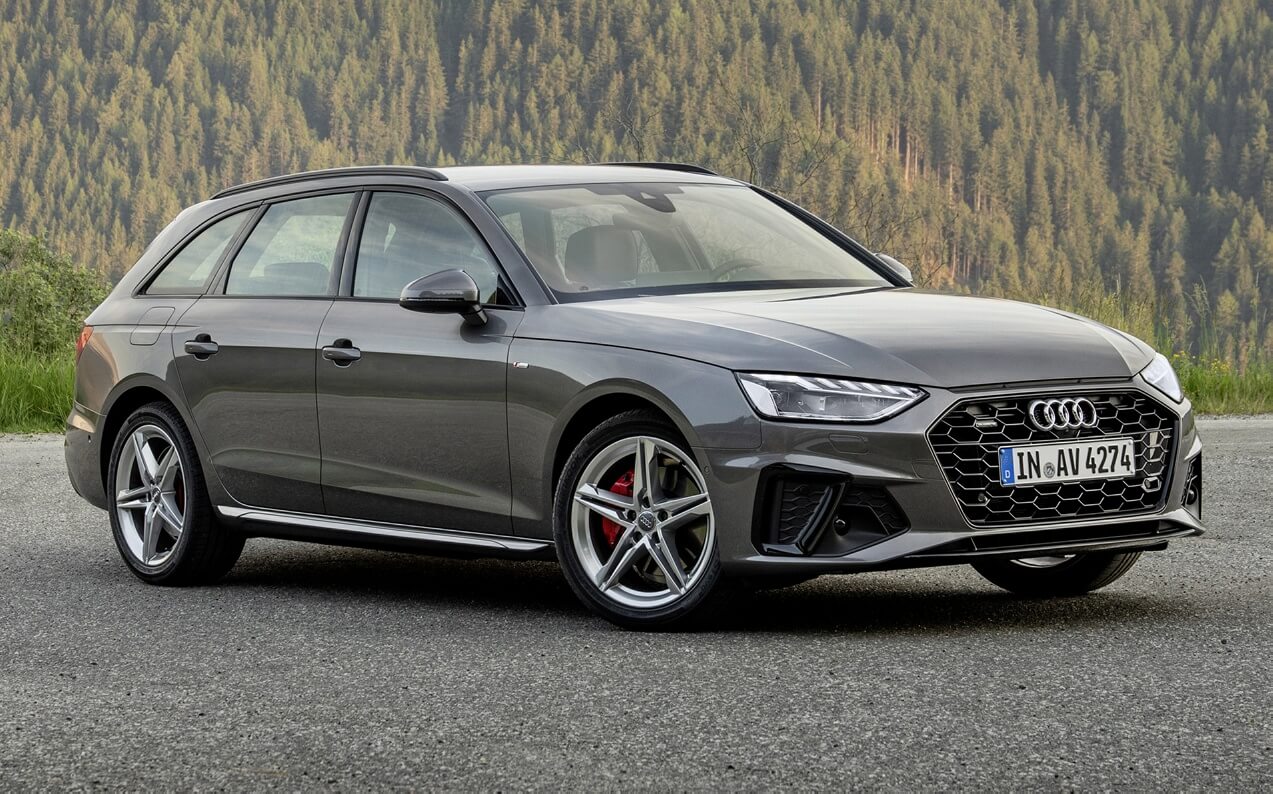
- A4 B9 2015–2024 · Sedan, Station wagon · 90–331 kW (122–450 PS)
Newest first · 5 generations since 1994
-
2015
-
2007
- 2004 B7 2004–2008 · Sedan, Station wagon · 85–309 kW (116–420 PS)
-
2000
-
1994
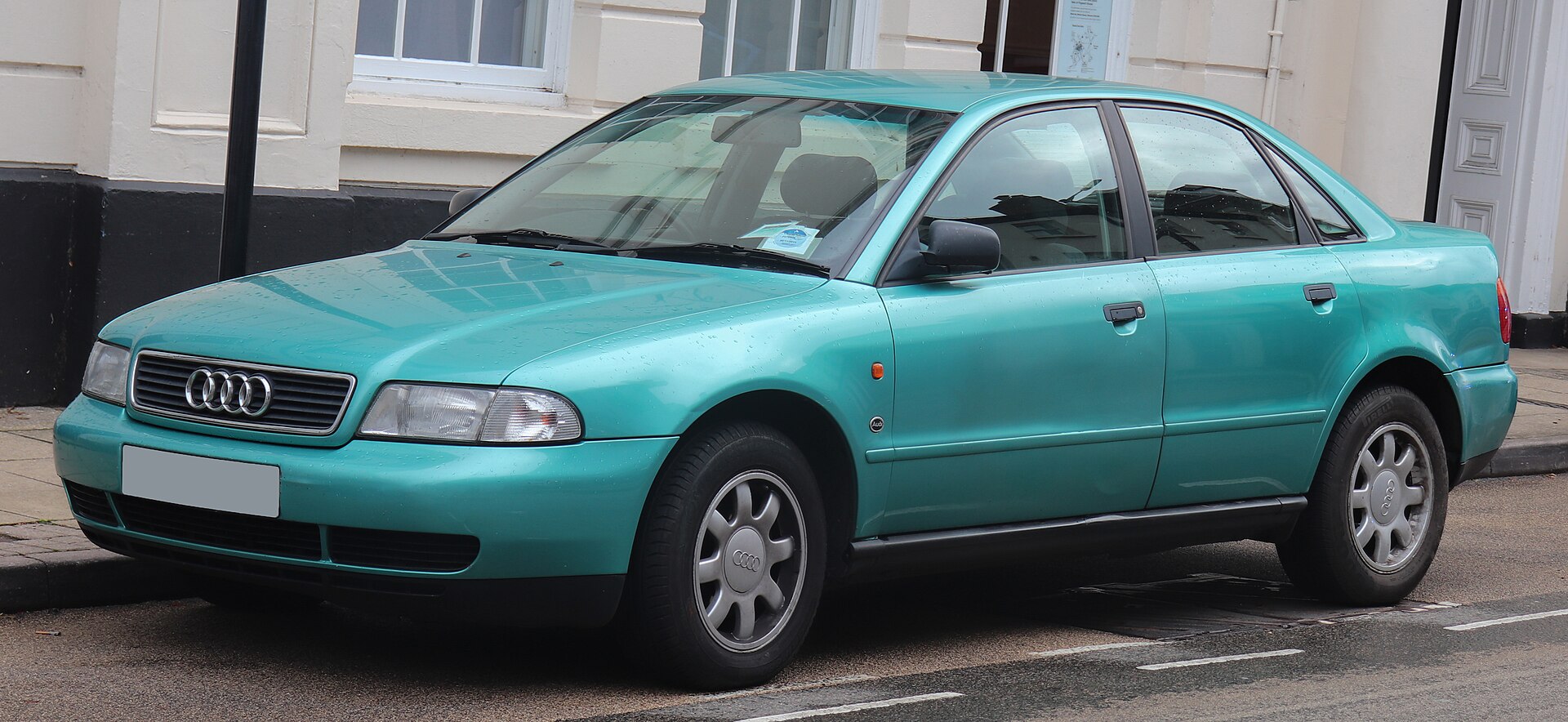
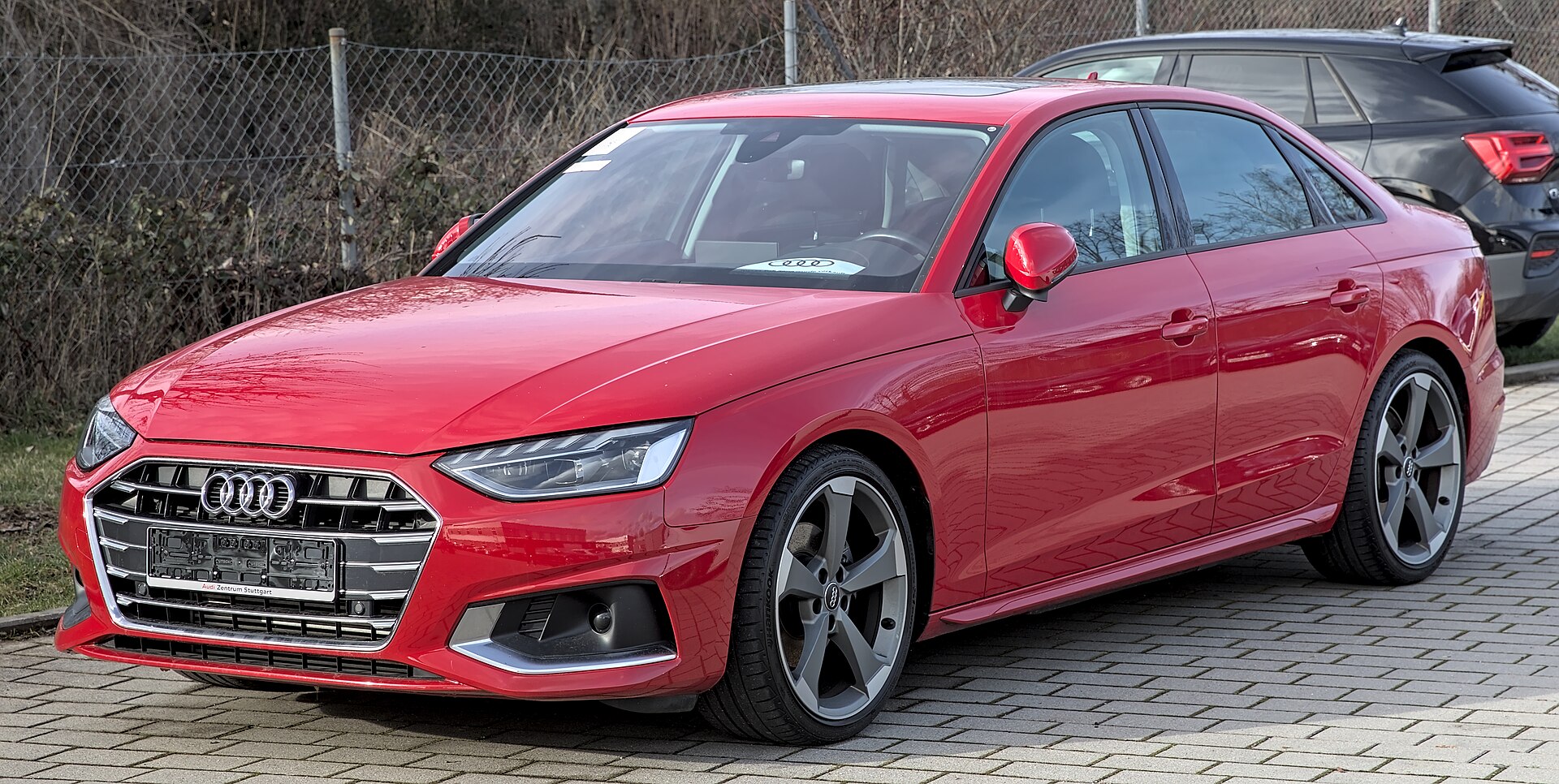
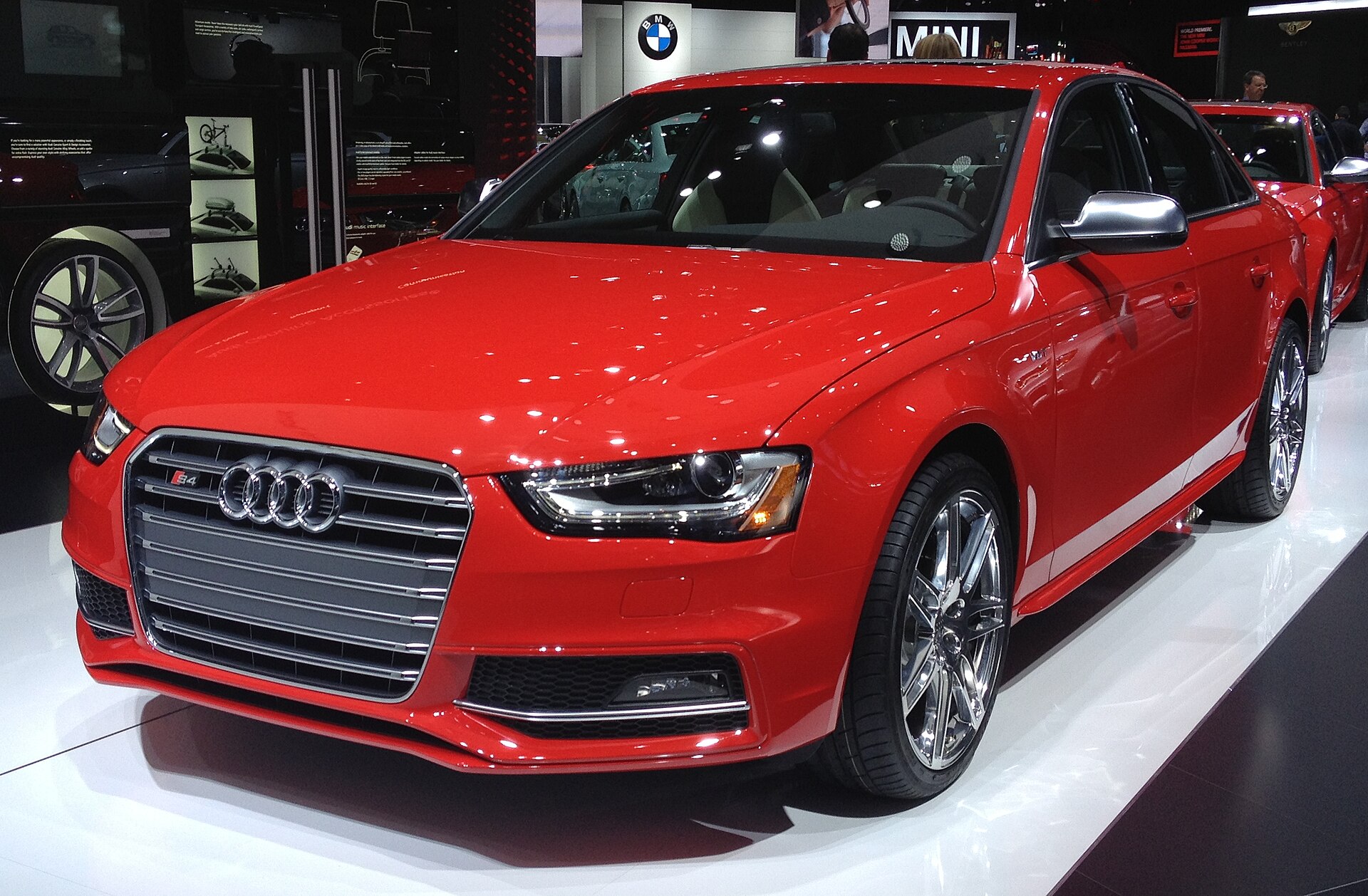
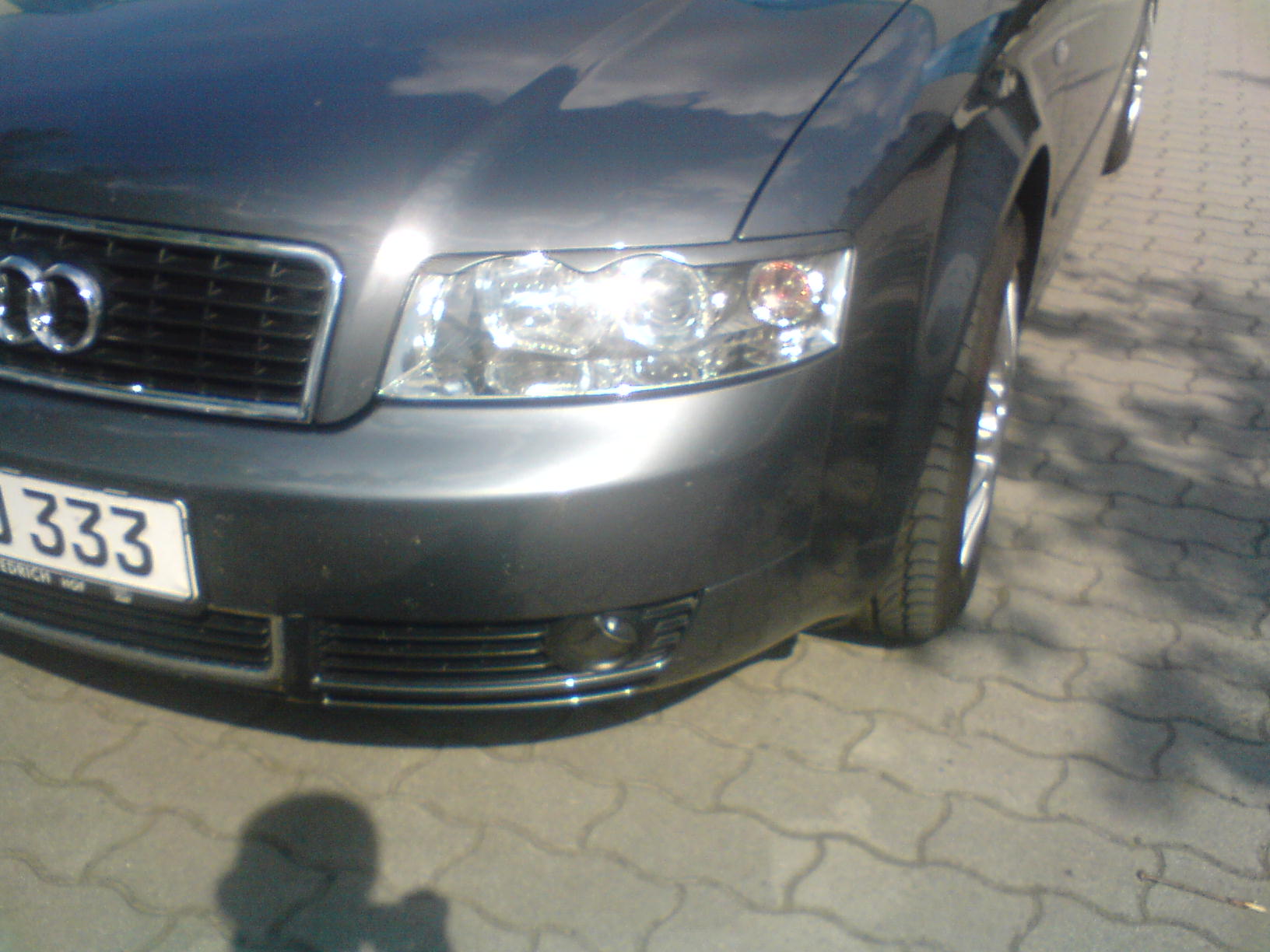
All generations by year: A4 B9 (2015–2024) · A4 B8 (2007–2015) · A4 B7 (2004–2008) · A4 B6 (2000–2006) · A4 B5 (1994–2001)
Which one is mine?
Pick the year of first registration to see which generation it is.
Check by VINThe Audi A4 is a family of front- or all-wheel-drive premium compact executive cars — the D segment in European terms — offered as a saloon and as the five-door Avant estate, with cabriolet and allroad versions in some generations. It was created for buyers who wanted an upmarket look, a high-quality and roomy cabin, rich equipment and good driving manners. Audi built five generations under the A4 name, from 1994 to 2025.
In short
- The A4 replaced the Audi 80 in 1994; its generations are known by their internal codes: B5, B6, B7, B8 and B9.
- The B5 introduced the first Volkswagen Group engine with five valves per cylinder, a 1.8 four-cylinder.
- The B9 (2015–2025) is about 120 kg lighter than its predecessor, has a drag coefficient of just 0.23 as a saloon and offers TFSI and TDI engines from 110 kW (150 PS).
- From the 2025 model year Audi replaced the A4 name with the new A5.
Size at a glance
Audi A4 B8
The Audi A4 B9 is 23 mm longer and 16 mm wider than the Audi A4 B8.
| Dimensions | Audi A4 B9 | Audi A4 B8 | Difference |
|---|---|---|---|
| Length | 4,726 mm186.1 in | 4,703 mm185.2 in | +23 mm+0.9 in |
| Width | 1,842 mm72.5 in | 1,826 mm71.9 in | +16 mm+0.6 in |
| Height | 1,427 mm56.2 in | 1,427 mm56.2 in | Same |
| Wheelbase | 2,820 mm111.0 in | 2,808 mm110.6 in | +12 mm+0.5 in |
| Boot | 460 L16.2 cu ft | 480 L17.0 cu ft | −20 L−0.7 cu ft |
Running cost
Fuel · A4 B9 40 TDI
about 1,300 EUR fuel a year at 15,000 km
5.2 l/100 km · diesel at 1.65 EUR/l · change mileage, fuel price or version
Specs by version
Engines
| Version | Engine | Power | Torque | Drive | Production years |
|---|---|---|---|---|---|
| Diesel · 7 versions | |||||
| B5 · 1.9 TDI | 1.9 l · Diesel 1,900 cc | 66 kW 90 PS89 hp | 202 Nm149 lb-ft | — | — |
| B5 · 2.5 V6 TDI | 2.5 l · 6 cyl · Diesel 2,500 cc | 110 kW 150 PS148 hp | 310 Nm229 lb-ft | — | — |
| B7 · 2.0 TDI | 2.0 l · Diesel 2,000 cc | 103 kW 140 PS138 hp | — | — | — |
| B7 · 3.0 TDI | 3.0 l · Diesel 3,000 cc | 171 kW 232 PS229 hp | — | — | 2006 |
| B8 · 3.0 TDI quattro | 3.0 l · Diesel 3,000 cc | 180 kW 245 PS241 hp | 500 Nm369 lb-ft | All-wheel drive | — |
| B9 · 40 TDI | 2.0 l · Diesel 2,000 cc | 140 kW 190 PS188 hp | 400 Nm295 lb-ft | — | — |
| B9 · S4 TDI | 3.0 l · 6 cyl · Diesel 3,000 cc | 255 kW 347 PS342 hp | 700 Nm516 lb-ft | All-wheel drive | 2019–2024 |
| Petrol · 16 versions | |||||
| B5 · 1.8T | 1.8 l · Petrol 1,800 cc | 110 kW 150 PS148 hp | 210 Nm155 lb-ft | — | — |
| B5 · S4 2.7 biturbo | 2.7 l · 6 cyl · Petrol 2,700 cc | 195 kW 265 PS261 hp | 400 Nm295 lb-ft | All-wheel drive | 1997–2001 |
| B5 · RS4 Avant | 2.7 l · 6 cyl · Petrol 2,700 cc | 279 kW 379 PS374 hp | 440 Nm325 lb-ft | All-wheel drive | 1999–2001 |
| B6 · 2.0 FSI | 2.0 l · Petrol 2,000 cc | 110 kW 150 PS148 hp | — | — | — |
| B6 · 3.0 V6 | 3.0 l · 6 cyl · Petrol 3,000 cc | 162 kW 220 PS217 hp | 300 Nm221 lb-ft | — | — |
| B6 · S4 4.2 V8 | 4.2 l · 8 cyl · Petrol 4,200 cc | 253 kW 344 PS339 hp | — | All-wheel drive | — |
| B7 · 2.0 TFSI | 2.0 l · Petrol 2,000 cc | 147 kW 200 PS197 hp | — | — | — |
| B7 · 3.2 FSI | 3.2 l · 6 cyl · Petrol 3,200 cc | 188 kW 256 PS252 hp | — | — | — |
| B7 · RS4 4.2 V8 | 4.2 l · 8 cyl · Petrol 4,200 cc | 309 kW 420 PS414 hp | — | All-wheel drive | — |
| B8 · 1.8 TFSI | 1.8 l · Petrol 1,800 cc | 125 kW 170 PS168 hp | 320 Nm236 lb-ft | — | 2011–2015 |
| B8 · 2.0 TFSI | 2.0 l · Petrol 2,000 cc | 155 kW 211 PS208 hp | 350 Nm258 lb-ft | — | — |
| B8 · S4 3.0 TFSI | 3.0 l · 6 cyl · Petrol 3,000 cc | 245 kW 333 PS329 hp | 440 Nm325 lb-ft | All-wheel drive | 2008–2015 |
| B8 · RS4 Avant 4.2 FSI | 4.2 l · 8 cyl · Petrol 4,200 cc | 331 kW 450 PS444 hp | 430 Nm317 lb-ft | All-wheel drive | 2012–2015 |
| B9 · 35 TFSI | 2.0 l · Petrol 2,000 cc | 110 kW 150 PS148 hp | 250 Nm184 lb-ft | — | — |
| B9 · 45 TFSI quattro | 2.0 l · Petrol 2,000 cc | 185 kW 252 PS248 hp | 370 Nm273 lb-ft | All-wheel drive | — |
| B9 · RS4 Avant | 2.9 l · 6 cyl · Petrol 2,900 cc | 331 kW 450 PS444 hp | 600 Nm443 lb-ft | All-wheel drive | 2017–2024 |
| Other · 2 versions | |||||
| B9 · 2 L 4 cyl Automatic (AM-S7) · 2020 (EPA) | 2.0 l · 4 cyl 2,000 cc | — | — | Front-wheel drive | 2020 |
| B9 · 2 L 4 cyl Automatic (AM-S7) · 2019 (EPA) | 2.0 l · 4 cyl 2,000 cc | — | — | Front-wheel drive | 2019 |
Performance
Show all 8 versions
| Version | 0–100 km/h | Top speed | Fuel consumption | CO₂ |
|---|---|---|---|---|
| Diesel · 2 versions | ||||
| B8 · 3.0 TDI quattro | 6.1 s 0–62 mph | 250 km/h155 mph | 5.8 l/100 km40.6 mpg US · 48.7 mpg UK | 152 g/km |
| B9 · 40 TDI | 7.7 s 0–62 mph | 210 km/h130 mph | 5.2 l/100 km45.2 mpg US · 54.3 mpg UK | 135 g/km |
| Petrol · 4 versions | ||||
| B8 · 1.8 TFSI | 8.1 s 0–62 mph | 230 km/h143 mph | 5.7 l/100 km41.3 mpg US · 49.6 mpg UK | 134 g/km |
| B8 · 2.0 TFSI | 6.9 s 0–62 mph | 250 km/h155 mph | 6.3 l/100 km37.3 mpg US · 44.8 mpg UK | 144 g/km |
| B9 · 35 TFSI | 8.6 s 0–62 mph | 224 km/h139 mph | 6.5 l/100 km36.2 mpg US · 43.5 mpg UK | 147 g/km |
| B9 · 45 TFSI quattro | — | — | — | 180 g/km |
| Other · 2 versions | ||||
| B9 · 2 L 4 cyl Automatic (AM-S7) · 2020 (EPA) | — | — | 7.8 l/100 km30.2 mpg US · 36.2 mpg UK | — |
| B9 · 2 L 4 cyl Automatic (AM-S7) · 2019 (EPA) | — | — | 7.8 l/100 km30.2 mpg US · 36.2 mpg UK | — |
Dimensions and weight
Show all 8 versions
| Version | Length | Width | Height | Wheelbase | Kerb weight | Boot | Fuel tank |
|---|---|---|---|---|---|---|---|
| Diesel · 4 versions | |||||||
| B5 · 1.9 TDI | 4,479 mm176.3 in | 1,733 mm68.2 in | 1,415 mm55.7 in | 2,615 mm103.0 in | 1,200 kg2,646 lb | 440 l15.5 cu ft | — |
| B7 · 2.0 TDI | 4,586 mm180.6 in | 1,772 mm69.8 in | 1,427 mm56.2 in | 2,642 mm104.0 in | 1,375 kg3,031 lb | 460 l16.2 cu ft | — |
| B8 · 3.0 TDI quattro | — | — | — | — | 1,715 kg3,781 lb | 480 l17.0 cu ft | 61 l16.1 gal US |
| B9 · 40 TDI | — | — | — | — | 1,565 kg3,450 lb | 460 l16.2 cu ft | 40 l10.6 gal US |
| Petrol · 4 versions | |||||||
| B8 · 1.8 TFSI | 4,703 mm185.2 in | 1,826 mm71.9 in | 1,427 mm56.2 in | 2,808 mm110.6 in | 1,485 kg3,274 lb | 480 l17.0 cu ft | 63 l16.6 gal US |
| B8 · 2.0 TFSI | — | — | — | — | 1,525 kg3,362 lb | 480 l17.0 cu ft | 63 l16.6 gal US |
| B9 · 35 TFSI | 4,726 mm186.1 in | 1,842 mm72.5 in | 1,427 mm56.2 in | 2,820 mm111.0 in | 1,485 kg3,274 lb | 460 l16.2 cu ft | 54 l14.3 gal US |
| B9 · 45 TFSI quattro | — | — | — | — | 1,685 kg3,715 lb | — | — |
Verified Manufacturer and type-approval data from our catalog · Sources and methodology
Safety
-
B9 · NHTSA 2024
US NCAP (NHTSA)
-
B8 · NHTSA 2014
US NCAP (NHTSA)
Stars from different years and organisations are not directly comparable: test protocols change every few years.
Audi A4 at a glance
Audi's mid-size cars carry the internal B-series code. The earlier generations were sold as the Audi 80, and from the B5 of 1994 they became the A4. Why change? Audi wanted to compete head-on with more established German premium rivals. The B5 debuted in October 1994, the B6 in October 2000, the B7 in late 2004 as a major facelift of the B6, the B8 at the Frankfurt motor show in 2007 and the B9 in June 2015. The B9 was updated in 2019, and in 2024 Audi announced that its mid-size saloon and estate would continue under the A5 name. More models are in our Audi catalogue; a comparison with a rival is in Jaguar XF or Audi A6.
Generations
| Generation | Years | Platform | Notes |
|---|---|---|---|
| B5 | 1994–2001 | PL45 | First A4; 1.8 20-valve engine; 1,674,943 built |
| B6 | 2000–2005 | PL46 | Larger body; cabriolet from 2002 |
| B7 | 2004–2008 | PL46 | Heavy facelift of the B6 |
| B8 | 2007–2016 | MLB | Facelift 2012; allroad quattro |
| B9 | 2015–2025 | MLB evo | 120 kg lighter; facelift 2019 |
First generation: B5 (1994–2001)
The B5 was updated about three years after launch with small changes to the exterior and cabin and new engines. It used the Volkswagen Group B5 platform, an approach that cut production costs and improved safety. A galvanised body with reinforced pillars and a full set of airbags made occupants feel safe. Compared with the Audi 80, the A4 had smoother lines, a rounded roof and a higher-quality, cosier interior with wood trim on the doors and dashboard. Ground clearance was only 110 mm.
The driver had a three-spoke steering wheel and an instrument panel with two large dials for road and engine speed and two small gauges in between, while three rectangular vents sat in a row on the centre console above the audio and climate controls. Petrol engines included four-cylinders and naturally aspirated and turbocharged V6s from 1.6 to 2.8 litres, producing about 74 to 142 kW (101 to 193 PS) and 140 to 280 Nm. Turbodiesels of 1.9 to 2.5 litres produced about 55 to 110 kW (75 to 150 PS). Gearboxes were five- or six-speed manuals and four- or five-speed automatics, with front-wheel drive or quattro. The PL45 platform had fully independent suspension with a four-link front axle. The sporty S4 returned with the facelift, and in 1999 Audi added the RS4 Avant.
Second generation: B6 (2000–2005)
The B6 met the new safety and comfort standards of the new millennium. It was longer, wider and taller, and despite appearances the saloon's boot was large: 445 litres. The body was galvanised, so even small stone chips did not rust. The design echoed the B5, with similar lights but a sculpted bonnet, a chrome-framed grille, a large bumper with round fog lights, more pronounced wheel arches and chrome window trim. The cabin gained a leather four-spoke steering wheel with buttons — rare in 2001 — adjustable for height and reach, and chrome-ringed dials with a trip computer. The centre console could have a large radio or a small navigation display. Leather front seats with heating were available, and a cabriolet built by Karmann was added in 2002.
Petrol four-cylinders of 1.6 to 1.8 litres produced about 75 to 140 kW (102 to 190 PS), and naturally aspirated V6s were also offered; diesels produced about 96 to 132 kW (130 to 180 PS). The PL46 platform used a four-link front axle and aluminium trapezoidal links at the rear.
Third generation: B7 (2004–2008)
The B7, shown at the Paris motor show in 2004, was a heavy facelift of the B6 and was built for four years, offered as a saloon, Avant and cabriolet. It had projector headlights, Audi's large single-frame grille with chrome surround, round fog lights linked by a decorative strip and intakes to cool the front brakes. Ground clearance rose to 130 mm. Inside, a leather four-spoke steering wheel with audio buttons, a small navigation screen with button control and dual-zone climate control were offered, and the boot held 460 litres, or 833 litres with the rear seats folded.
Engines ranged from naturally aspirated and turbocharged four-cylinders of 1.6 to 2.0 litres, about 75 to 162 kW (102 to 220 PS), to V6s of 3.0 to 3.1 litres with 160 to 188 kW (218 to 255 PS). Diesels included four-cylinders of 85 to 125 kW (115 to 170 PS) and V6s of 120 to 171 kW (163 to 233 PS). They were paired with six-speed manuals, automatics or a CVT, with optional quattro. The B7 was later rebadged as the SEAT Exeo.
Fourth generation: B8 (2007–2016)
The B8 was unveiled at Frankfurt in September 2007 and facelifted in early 2012. It combined elegant styling, a luxurious cabin, modern technology and rich equipment, and was offered as a saloon, Avant, a long-wheelbase saloon for China and the raised A4 allroad quattro. The facelift brought slimmer headlights with LED elements, an octagonal grille, sculpted bumpers, LED tail lights and 16- to 18-inch wheels; ground clearance was 135 mm.
The cabin offered excellent ergonomics and materials: leather, wood and aluminium, a three-spoke steering wheel with media controls, large dials and a 7-inch high-resolution infotainment screen on a console angled towards the driver. The front seats had excellent support and many adjustments, including thigh extensions. The rear suits two adults best because of the high tunnel. The boot holds 480 litres in a neat rectangular shape, or 962 litres with the 40/60 rear seat folded.
| Engine (B8 facelift) | Power (kW / PS) | Torque | 0–100 km/h |
|---|---|---|---|
| 1.8 TFSI | 88 or 125 kW / 120 or 170 PS | 230 / 320 Nm | 10.5 / 7.9–8.3 s |
| 2.0 TFSI | 165 kW / 225 PS | 350 Nm | 6.4–6.9 s |
| 3.0 TFSI V6 quattro | 200 kW / 272 PS | 400 Nm | 5.4 s |
| 2.0 TDI | 110 or 130 kW / 150 or 177 PS | 320 / 380 Nm | 9.1 / 7.9 s |
| 3.0 TDI V6 quattro | 180 kW / 245 PS | 500 Nm | 5.9 s |
Gearboxes were a six-speed manual, the multitronic CVT and the seven-speed S tronic dual-clutch. The B8 used five-link front suspension and a trapezoidal-link rear axle.
Fifth generation: B9 (2015–2025)
The B9 was revealed online in June 2015 and launched at the Frankfurt motor show that September. On 15 May 2019 Audi presented the updated A4 saloon, Avant, allroad quattro, S4 and S4 Avant in Ingolstadt.
Exterior
The B9 uses the second generation of the MLB platform and, despite larger dimensions, is about 120 kg lighter than the B8 thanks to lighter seats and improvements to the gearbox, brakes and wiring. The styling follows the family look, with sharper edges, a new headlight signature with lightning-shaped running lights and a hexagonal grille. Xenon, LED or matrix LED headlights were offered. Audi says the B9 has the best aerodynamics of any car it had built at the time, with a drag coefficient of 0.23 for the saloon and 0.26 for the Avant. Ground clearance is 135 mm, and wheels range from 16 to 19 inches. Exhaust layouts vary from a single pipe to separate outlets on each side.
Interior
The dashboard is topped by a freestanding 8.3-inch infotainment screen, with a wide climate panel with its own display, two knobs and buttons below. Analogue dials are standard, and the 12.3-inch Audi virtual cockpit is optional. Soft plastics, real wood, aluminium and quality leather are used, and fit and finish are excellent. New seats are 9 kg lighter, better shaped and offer good side support, many electric adjustments, heating and optional ventilation. Rear knee room grew by 23 mm, though the rear seat suits two adults and a child best. The boot is among the largest in its class and expands to 1,510 litres with the seats folded.
Engines and drivetrain
| Engine (B9) | Power (kW / PS) | Torque | 0–100 km/h | Top speed |
|---|---|---|---|---|
| 1.4 TFSI | 110 kW / 150 PS | 250 Nm | 8.9 s | 210 km/h |
| 2.0 TFSI | 140 kW / 190 PS | 320 Nm | 7.3 s | 240 km/h |
| 2.0 TFSI | 185 kW / 252 PS | 370 Nm | 5.8 s | 250 km/h |
| 2.0 TDI | 110 or 140 kW / 150 or 190 PS | 320 / 400 Nm | 8.7 / 7.7 s | 219 / 237 km/h |
| 3.0 TDI V6 | 160–200 kW / 218–272 PS | 400–600 Nm | — | — |
The 2.0 TFSI uses Audi's efficient combustion process, while diesel versions use only 3.7–4.1 l/100 km. Many engines are paired with the seven-speed S tronic. Front-wheel drive is standard, and more powerful versions use quattro all-wheel drive with a self-locking centre differential that normally splits torque 40:60 front to rear, sending up to 70% to the front or 85% to the rear when needed. Suspension is five-link front and rear, with optional adjustable dampers that lower the car by 10 mm (23 mm with the sports set-up), and progressive steering is optional. Safety features include ABS, EBD and ESP, front and curtain airbags, hill-start assist, pre sense city automatic braking up to 40 km/h, driver-attention monitoring, surround-view cameras and blind-spot monitoring.
Strengths and weaknesses
Owners of the B9 praise its performance, audio system, attractive styling, many assistance systems, large boot and high-quality cabin with plenty of space. Criticisms include the high price, sensitivity to fuel quality, a firm ride on some versions, seats that some find less comfortable, a small glovebox and expensive servicing. The A4's main rivals are the BMW 3 Series, Mercedes-Benz C-Class and Infiniti Q50.
Audi A4 evolution in numbers
Did you know?
- The Audi A4 ran for 30 years, from 1994 to 2024, over 5 generations in our catalog.
- The longest-running generation is the A4 B9 (2015–2024): 9 years.
- The biggest jump in power came with the A4 B7: up to 309 kW (420 PS), 56 kW more than the A4 B6.
Most powerful version, kW
Length, mm
Figures from the 1cars catalog: power is the strongest version of each generation; generations without the figure are left out.
Audi A4: first vs latest generation
| Spec | A4 B5 | A4 B9 | Change |
|---|---|---|---|
| Years | 1994–2001 | 2015–2024 | 21 years apart |
| Most powerful version | 279 kW (379 PS) | 331 kW (450 PS) | +52 kW (+19%) |
| Length | 4,479 mm | 4,726 mm | +247 mm |
| Width | 1,733 mm | 1,842 mm | +109 mm |
| Wheelbase | 2,615 mm | 2,820 mm | +205 mm |
| Lightest kerb weight | 1,200 kg | 1,485 kg | +285 kg |
Oldest and newest generation in the 1cars catalog. Power is the strongest version of each; other rows are shown only when both generations have the figure.
Image credits · Photos from Wikimedia Commons under free licences
- Audi A4 B5 · Photo: Vauxford / Wikimedia Commons, CC BY-SA 4.0
- Audi A4 B6 · Photo: Domenic / Wikimedia Commons, Public domain
- Audi A4 B8 · Photo: Sarah Larson from Ann Arbor, MI, USA / Wikimedia Commons, CC BY 2.0
- Audi A4 B9 · Photo: Alexander-93 / Wikimedia Commons, CC BY-SA 4.0
Popular comparisons
Audi A4 in our rankings
- No. 2 of 16 · Biggest engines: station wagons (4,200 cc)
- No. 4 of 16 · Smallest station wagons (4,479 mm)
- No. 5 of 51 · Quickest diesel cars, 0–100 (6.1 s)
- No. 5 of 48 · Fastest sedans (250 km/h)
- No. 6 of 22 · Most powerful station wagons (331 kW)
- No. 7 of 81 · Most torque: diesel cars (700 Nm)
Quicker from 0 to 100 km/h than 88% of ranked diesel cars in the 1CARS catalog (No. 5 of 51).
FAQ
How many generations of the Audi A4 are there?
Five: B5 (1994), B6 (2000), B7 (2004), B8 (2007) and B9 (2015).
What replaced the Audi A4?
From the 2025 model year Audi's mid-size saloon and estate are sold under the A5 name.
What engine was special in the first Audi A4?
The B5 introduced a 1.8-litre four-cylinder with five valves per cylinder, the first such engine in the Volkswagen Group.
How big is the Audi A4 B9 boot?
It is one of the largest in its class and grows to 1,510 litres with the rear seats folded.
Is the Audi A4 all-wheel drive?
Front-wheel drive is standard, while more powerful versions use quattro all-wheel drive.
Data sources
Data checked by an editor against the sources below.
- Wikipedia — Audi A4
- Wikipedia — Audi A4 B9
- US EPA fueleconomy.gov — 42220.shtml
- US EPA fueleconomy.gov — 41136.shtml
- EEA CO₂ monitoring (European Environment Agency, CC BY 4.0)
- NHTSA 5-Star Safety Ratings (US NCAP) — U.S. Government work, public domain