 Audi 80 B2 (1978–1986)
Specs, engines, safety and known problems
Published Sources (3) Report an error
By Oleksandr Hnatiuk, Automotive Editor & Used Car Specialist Reviewed by Felix Hartmann

- Power
- 40–100 kW (54–136 PS)
- Generation
- 3 of 5
Model timeline
Where the B2 sits in the 80 story
Predecessor 80 B1 (1972–1978) Successor 80 B3 (1986–1991)
Newest first · 5 generations since 1966
-
1991
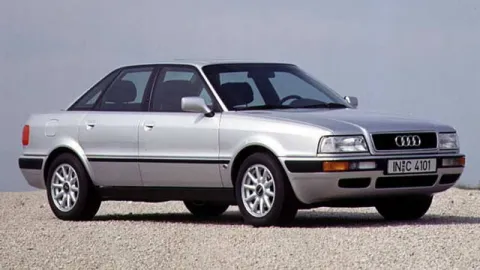 B4 1991–1995 · Sedan, Station wagon · 52–128 kW (71–174 PS)
-
1986
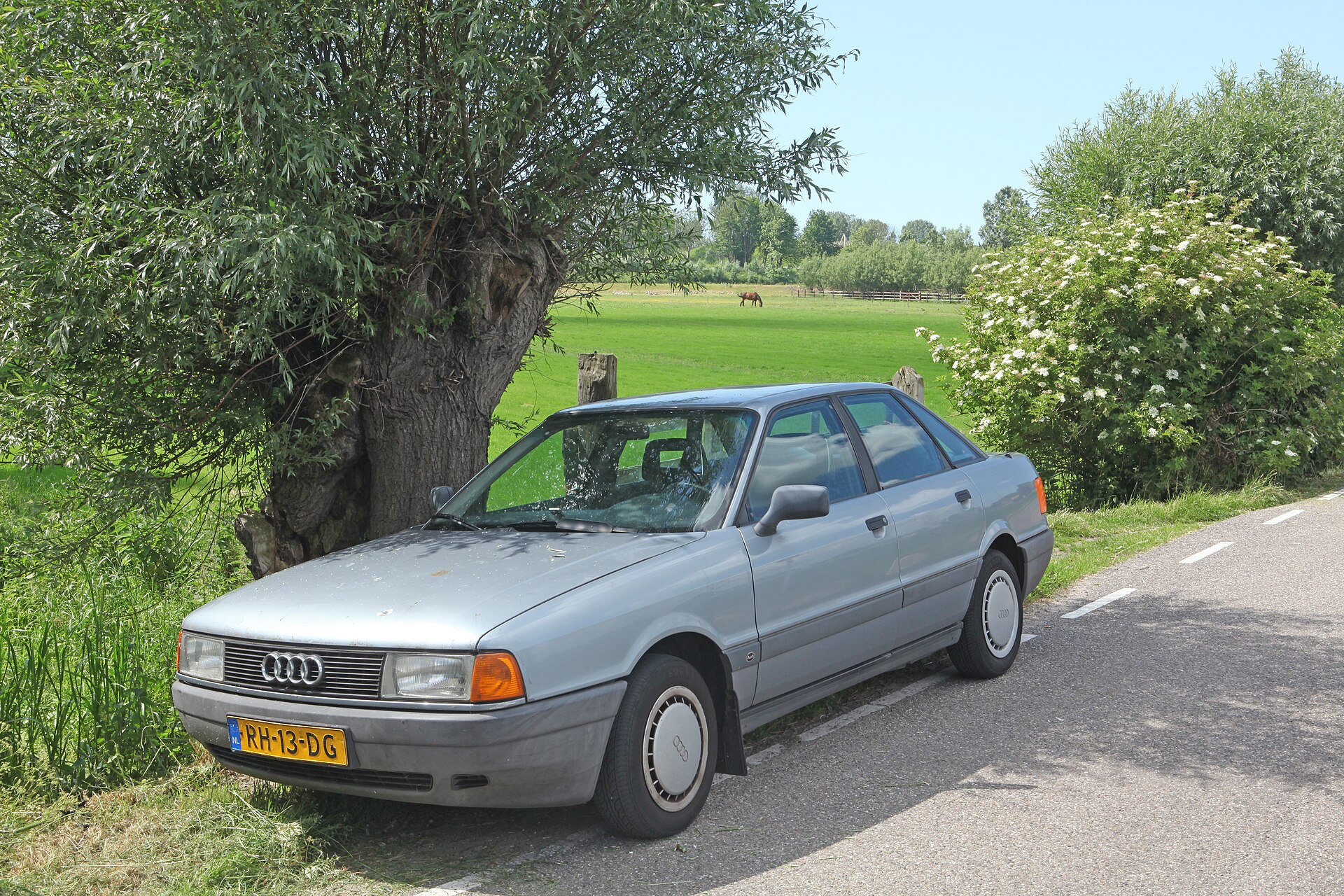
-
1978
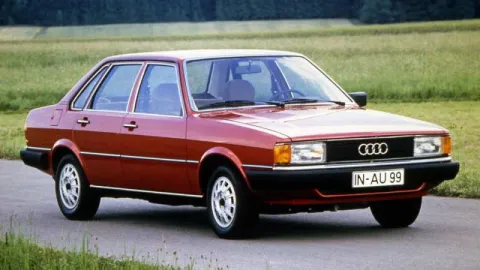 B2 You are here 1978–1986 · Sedan · 40–100 kW (54–136 PS)
-
1972
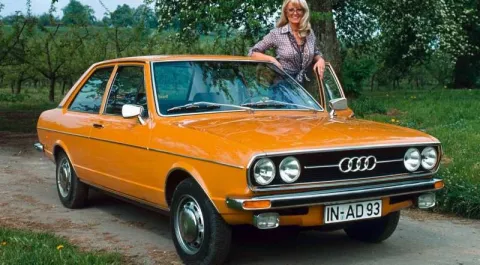 B1 1972–1978 · Sedan, Station wagon · 40–81 kW (54–110 PS)
-
1966


All generations by year: 80 B4 (1991–1995) · 80 B3 (1986–1991) · 80 B2 (1978–1986) · 80 B1 (1972–1978) · 80 (F103) (1966–1968)
The Audi 80 B2 is the second B-series Audi 80, presented in September 1978 and built until August 1986. Front-wheel-drive cars carry the type code 81 and the four-wheel-drive versions type 85. It moved the 80 upmarket with a larger notchback body, added five-cylinder and diesel engines and, from 1982, became the first Audi saloon with permanent quattro drive.
In short
- Presented in September 1978; the two-door followed in spring 1979, the 1984 facelift brought the Audi 90 sister model, and saloon production ended in August 1986.
- Engines ran from a 1.3-litre four to five-cylinder petrol units of 85 kW (115 PS), plus a 1.6 diesel and turbodiesel.
- The Audi 80 quattro used a 2,144 cc five-cylinder with 100 kW (136 PS) and 176 Nm (130 lb-ft), without a turbocharger.
- In North America the car was sold as the Audi 4000, including the 4000 5+5 and 4000 quattro.
80 B2 specs by version
| Version | Engine | Power | Torque |
|---|---|---|---|
| 1.6 D diesel | 1.6 l 1,588 cc | 40 kW 54 PS54 hp | 102 Nm75 lb-ft |
| 1.6 TD turbodiesel | 1.6 l 1,588 cc | 52 kW 71 PS70 hp | 130 Nm96 lb-ft |
| 1.7 55 kW (75 PS) Sedan | 1.7 l · Petrol 1,700 cc | 55 kW 75 PS74 hp | — |
| 63 kW (86 PS) Sedan | Petrol | 63 kW 86 PS84 hp | — |
| 2.1 74 kW (101 PS) Sedan | 2.1 l · 5 cyl 2,144 cc | 74 kW 101 PS99 hp | — |
| 1.6 GLE petrol (injection) | 1.6 l 1,588 cc | 81 kW 110 PS109 hp | — |
| 1.8 GTE petrol | 1.8 l 1,800 cc | 82 kW 111 PS110 hp | — |
| 1.3 85 kW (116 PS) Sedan | 1.3 l · 5 cyl · Petrol 1,300 cc | 85 kW 116 PS114 hp | — |
| 1.9 five-cylinder (80 CD) | 1.9 l 1,921 cc | 85 kW 116 PS114 hp | 154 Nm114 lb-ft |
| 2.0 five-cylinder | 2.0 l 1,994 cc | 85 kW 116 PS114 hp | 165 Nm122 lb-ft |
| 2.2 88 kW (120 PS) Sedan | 2.2 l 2,226 cc | 88 kW 120 PS118 hp | — |
| 2.1 five-cylinder (80 quattro) | 2.1 l · 5 cyl 2,144 cc | 100 kW 136 PS134 hp | 176 Nm130 lb-ft |
Verified Manufacturer and type-approval data from our catalog · Sources and methodology
From B1 to B2: a bigger, quieter notchback
The B2 kept the recipe of the first Audi 80, a lengthways engine driving the front wheels in a three-box saloon, but every dimension grew. Development began in Ingolstadt in the early 1970s with three aims: a larger, safer and more modern car.
German references credit the first drawings to Claus Luthe. When he left for BMW, Giorgetto Giugiaro reworked the shape, with Ferdinand Piëch setting the brief. The result had a long, gently sloping bonnet, large rectangular headlamps, plastic bumpers integrated into the body, a lower beltline and more glass than the B1.
Audi also looked at estate and hatchback versions, inspired by the Audi 100 Avant of 1976, but kept the notchback. The Volkswagen Passat covered the estate role, so the B2 never had an Avant. English-language sources position it against the BMW 3 Series.
For the wider story of the nameplate, see the Audi 80 overview of all generations.
B2 chassis: MacPherson struts and a torsion-beam rear
The B2 rides on MacPherson struts with wishbones on a front subframe and a torsion crank axle at the rear. Steering is rack and pinion, and the brakes use a diagonally split dual-circuit system, so one front and one rear wheel keep braking if a circuit fails.
The quattro versions added a driven rear axle and a centre differential to the same layout, which is why they carry their own type code, 85.
Four-cylinder, five-cylinder and diesel engines of the B2
The B2 started with carried-over four-cylinder petrol engines and gained a much wider range within five years. The 1.3 came from the discontinued Audi 50, and the 1.6 from the B1 was offered in three outputs: 75 PS with a single-barrel carburettor, 85 PS with a Solex twin-barrel unit and 110 PS with fuel injection in the GLE of January 1979.
| Engine | Displacement | Power | Torque | Introduced |
|---|---|---|---|---|
| 1.6 GLE petrol (injection) | 1,588 cm³ (96.9 cu in) | 81 kW (110 PS) | — | January 1979 |
| 1.6 D diesel | 1,588 cm³ (96.9 cu in) | 40 kW (54 PS) at 4,800 rpm | 102 Nm (75 lb-ft) | August 1980 |
| 1.6 TD turbodiesel | 1,588 cm³ (96.9 cu in) | 51.5 kW (70 PS) at 4,500 rpm | 130 Nm (96 lb-ft) | 1981–82 (sources differ) |
| 1.9 five-cylinder (80 CD) | 1,921 cm³ (117.2 cu in) | 85 kW (115 PS) at 5,900 rpm | 154 Nm (114 lb-ft) | August 1981 |
| 2.1 five-cylinder (80 quattro) | 2,144 cm³ (130.8 cu in) | 100 kW (136 PS) at 5,900 rpm | 176 Nm (130 lb-ft) | 1982 |
| 1.8 GTE petrol | about 1.8 L | 82 kW (112 PS) | — | February 1983 |
| 2.0 five-cylinder | 1,994 cm³ (121.7 cu in) | 85 kW (115 PS) at 5,400 rpm | 165 Nm (122 lb-ft) | October 1983 |
Gearboxes were four- and five-speed manuals, a three-speed automatic and the "4+E" layout, a four-speed box with a long economy fifth gear. That gear was the core of the Formel E version from February 1981, which also had an early start-stop system: the engine restarted when the driver pressed the clutch and the accelerator. It used about 1 L/100 km less than a standard car, but demand stayed below Audi's hopes.
The diesels arrived in August 1980, making the B2 the first Audi 80 that buyers could order with compression ignition. Modern counterparts are listed among diesel cars.
The 80 quattro: permanent four-wheel drive in a saloon
The Audi 80 quattro was presented in November 1982 as Audi's second permanent four-wheel-drive car and its first four-wheel-drive saloon; some sources date its introduction to August 1982. It was, in effect, the drivetrain of the Ur-quattro coupé of March 1980 without the turbocharger.
Twin headlamps, a front spoiler with fog lamps, a rubber rear spoiler and twin exhausts set it apart, and its smaller boot took only a space-saver spare. Spec databases quote 193 km/h (120 mph) and 9.1 seconds from 0 to 100 km/h, figures that should be treated as indicative.
Audi expected four-wheel drive to take 30 per cent of sales, a target the 80 quattro did not reach. After the 1984 facelift the quattro option spread to 1.8 four-cylinder versions as well.
The 1984 facelift and the Audi 90 spin-off
The August 1984 update gave the B2 wider bumpers and side mouldings, a more angular grille and headlamps, and larger two-part tail lamps in the style of the Audi 100 C3. The loading edge dropped to bumper height, and a new dashboard, fabrics and colours arrived inside.
The five-cylinder cars became a separate, better-equipped sister model, the Audi 90. European engines with catalytic converters were offered for the first time, and the 1.6 and 1.8 petrol units were renewed.
Audi 4000 and 5+5: the B2 outside Europe
Production of US-specification cars began in March 1979, and the B2 reached North America as the Audi 4000 for model year 1980. The first 1.6 with 76 hp was criticised as underpowered; a 1.7-litre long-stroke engine and a standard five-speed followed for 1981.
The 4000 5+5 of model year 1981 was a two-door with the 2,144 cc five-cylinder from the Audi 5000, rated at 100 hp, and a five-speed gearbox, an early form of the later Audi 90. The 4000 quattro followed with a five-speed manual as standard; German sources list the 4000S quattro engine as 2,226 cc with 88 kW (120 PS). Sources disagree on its start, giving spring 1983 or 1984. US cars had crash bumpers and quad sealed-beam headlamps.
B2 dimensions and weights
Original Audi figures were not available for this page, so the table uses spec-database values for a pre-facelift saloon. The quattro column shows how the four-wheel-drive car differs.
| Parameter | Metric | Imperial |
|---|---|---|
| Length | 4,383 mm | 172.6 in |
| Width | 1,682 mm | 66.2 in |
| Height | 1,365 mm | 53.7 in |
| Wheelbase (front drive / quattro) | 2,541 mm / 2,525 mm | 100.0 in / 99.4 in |
| Kerb weight (1.6 75 PS / 2.1 quattro) | 930 kg / 1,190 kg | 2,050 lb / 2,623 lb |
| Boot (front drive / quattro) | 500 L / 371 L | 17.7 cu ft / 13.1 cu ft |
| Fuel tank (front drive / quattro) | 68 L / 70 L | 15.0 UK gal / 15.4 UK gal |
Safety before crash ratings
No Euro NCAP or comparable independent crash rating exists for the B2, because Euro NCAP only began testing in 1997. Safety rested on the structure Audi designed to be safer than the B1, the dual-circuit diagonal brakes and, on quattro models, better traction on wet and snowy roads. Airbags and the Procon-ten restraint system belong to later generations.
Choosing a B2 today
Octane's buying guide calls quattro models the most desirable B2s, thanks to their rarity, everyday usability and link with Audi's rally success. Front-drive cars are pleasant and practical but less sought after.
- Rust first: the B2 has no galvanised shell, so inspect the sills, wheel arches, door bottoms, boot floor and front strut towers before anything else. German references add that cars from the Emden plant, about 210,000 of them, have a reputation for corrosion.
- Four-cylinder engines: Octane advises preventive oil-pump replacement every 100,000 miles (161,000 km), proof of a recent timing-belt change, and checks for smoke from worn valve guides on high-mileage 1.8s.
- Carburettor cars: temperamental automatic chokes cause jerky running, and many cars now wear an uprated Weber carburettor.
- Gearbox: listen for second-gear synchromesh wear, and check for oil leaks, which can damage fifth gear.
- Parts: service items are often shared with the Golf and Passat, while B2-specific trim and panels are hard to find.
The B2 sits among Audi's classic cars and other German cars of its period; for the brand's later saloons, browse all Audi models.
Did you know?
- The 80 B2 is generation 3 of 5 of the Audi 80 in our catalog.
- The 80 B2 offers up to 100 kW (136 PS) — 19 kW more than the 80 B1 (1972–1978) (+23%).
- Built for 8 years (1978–1986), it is the longest-running of the 5 generations in our catalog.
Image credits · Photos from Wikimedia Commons under free licences
- Audi 80 (F103) · Photo: Hilarmont / Wikimedia Commons, CC BY-SA 3.0 de
- Audi 80 B1 · Photo: Niels de Wit from Lunteren, The Netherlands / Wikimedia Commons, CC BY 2.0
- Audi 80 B2 · Photo: Rutger van der Maar / Wikimedia Commons, CC BY 2.0
- Audi 80 B3 · Photo: free photos & art / Wikimedia Commons, CC BY 2.0
- Audi 80 B4 · Photo: Trop86 / Wikimedia Commons, CC0
B2 rivals
-
In production
- Years
- 1975–present
- Body
- Sedan, Station wagon
- Fuel
- Petrol, Diesel, Plug-in hybrid
- Power
- 85–317 kW (116–431 PS)
7 generations
- E30
- E36
- E46
- E90
- F30
- G20
- +1 earlier
-
In production
- Years
- 1993–present
- Body
- Sedan, Station wagon
- Fuel
- Petrol, Diesel
- Power
- 55–270 kW (75–367 PS)
5 generations
- W202
- W203
- W204
- W205
- W206


FAQ
What years was the Audi 80 B2 made?
The B2 was presented in September 1978 and saloon production ended in August 1986, when the B3 took over. The Audi Coupé built on the B2 platform continued until 1988.
What does Typ 81 and Typ 85 mean on the Audi 80?
Typ 81 is Audi's internal code for the front-wheel-drive B2, and Typ 85 for the quattro versions. The same codes cover the B2-based Audi Coupé and its quattro sibling.
What engine does the Audi 80 quattro B2 have?
It uses a naturally aspirated 2,144 cc five-cylinder with 100 kW (136 PS) at 5,900 rpm and 176 Nm (130 lb-ft) at 4,500 rpm, driving all four wheels through a five-speed manual gearbox.
Is the Audi 4000 the same car as the Audi 80?
Yes. The Audi 4000 is the North American name of the B2, sold from model year 1980 with US bumpers, quad headlamps and different engines, including the five-cylinder 4000 5+5 and the 4000 quattro.
Was there an Audi 80 B2 estate?
No. Audi considered an estate but kept the B2 as a two- and four-door saloon, leaving that role to the Volkswagen Passat. The B1 had offered an estate in some export markets, and the Audi 80 Avant name returned with the B4 in 1992.
Data sources
Data checked by an editor against the sources below.
- The text of this article (1cars archive)
- Wikipedia — Audi 80
- Wikipedia — Audi 80 B2