 Audi 80 B3 (1986–1991)
Specs, engines, safety and known problems
Published Sources (3) Report an error
By Oleksandr Hnatiuk, Automotive Editor & Used Car Specialist Reviewed by Felix Hartmann
- Power
- 40–101 kW (54–137 PS)
- Generation
- 4 of 5
Model timeline
Where the B3 sits in the 80 story
Predecessor 80 B2 (1978–1986) Successor 80 B4 (1991–1995)
Newest first · 5 generations since 1966
-
1991
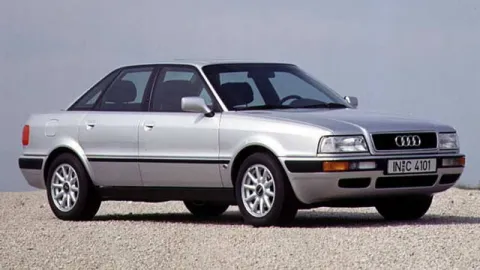 B4 1991–1995 · Sedan, Station wagon · 52–128 kW (71–174 PS)
-
1986
-
1978
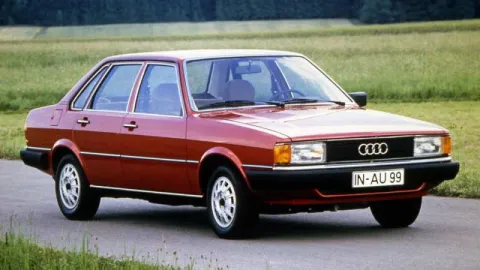 B2 1978–1986 · Sedan · 40–100 kW (54–136 PS)
-
1972
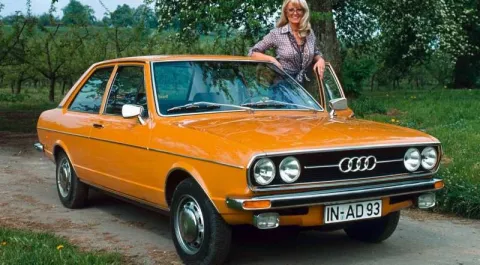 B1 1972–1978 · Sedan, Station wagon · 40–81 kW (54–110 PS)
-
1966


All generations by year: 80 B4 (1991–1995) · 80 B3 (1986–1991) · 80 B2 (1978–1986) · 80 B1 (1972–1978) · 80 (F103) (1966–1968)
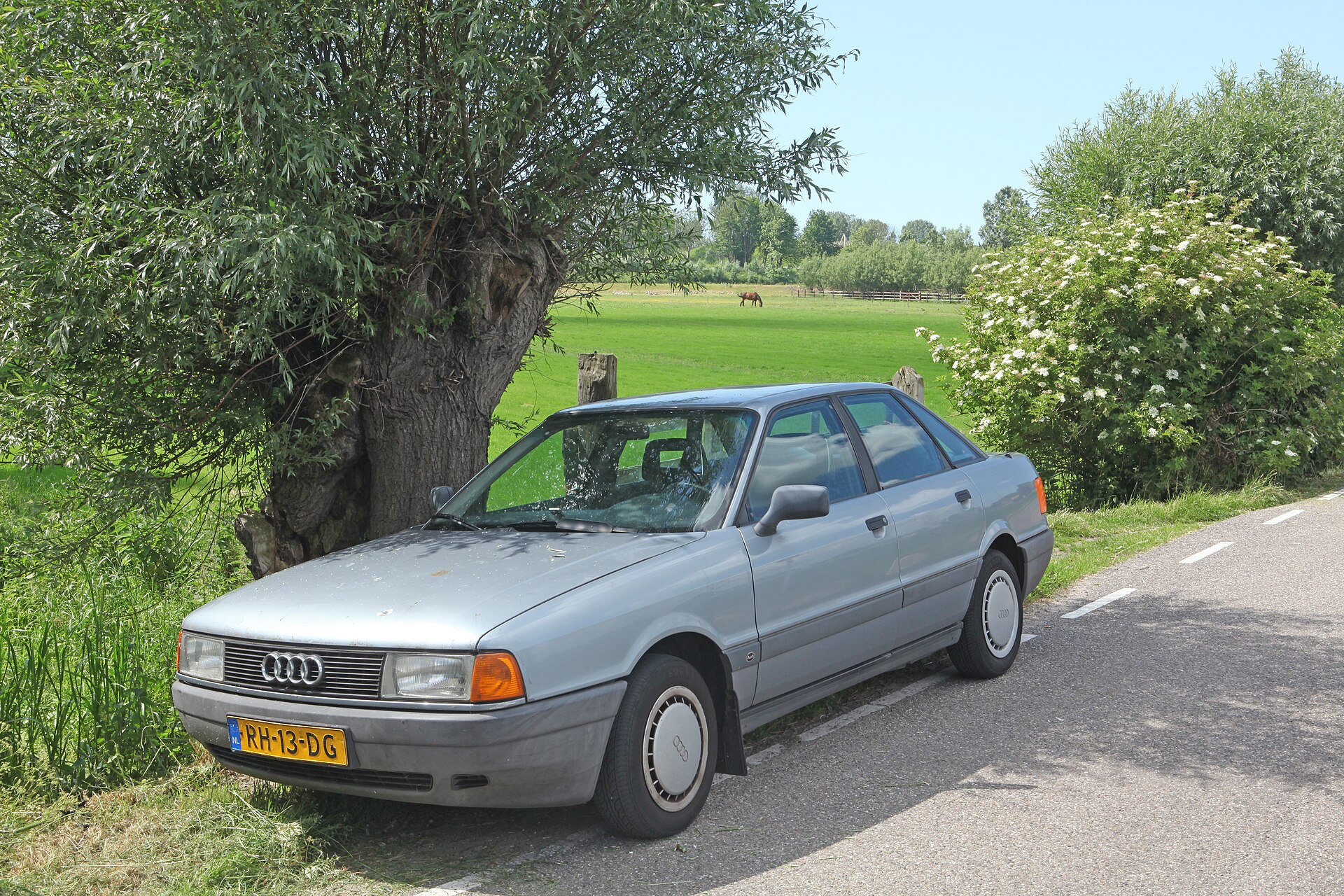
The Audi 80 B3 is the third generation of the Audi 80, sold from September 1986 and built at Ingolstadt until 1991. Internally it was the Typ 89, renamed Typ 8A in 1990. Its rounded, flush-glazed body had a drag coefficient of 0.29 and a fully galvanised structure, and it became the most exported Audi 80 of all, with 668,764 of the 1,297,801 cars built going abroad.
In short
- On sale from September 1986 as a four-door saloon only; export production continued to December 1991.
- Fully zinc-coated body, Cd 0.29 and flush glazing, styled by a team around J Mays and Hartmut Warkuss.
- Engines from the 40 kW (54 PS) 1.6 diesel to the 2.0 16V with 101 kW (137 PS), the first multi-valve Audi 80.
- Quattro on most petrol versions, never with a diesel; Procon-ten optional at first, standard from 1991.
80 B3 specs by version
| Version | Engine | Power | Torque |
|---|---|---|---|
| Diesel · 3 versions | |||
| 40 kW (54 PS) Sedan | Diesel | 40 kW 54 PS54 hp | — |
| 1.9 diesel | 1.9 l · Diesel 1,896 cc | 50 kW 68 PS67 hp | 127 Nm94 lb-ft |
| 1.6 turbodiesel | 1.6 l · Diesel 1,588 cc | 59 kW 80 PS79 hp | 155 Nm114 lb-ft |
| Petrol · 5 versions | |||
| 1.6 petrol | Petrol | 55 kW 75 PS74 hp | 118 Nm87 lb-ft |
| 1.8 66 kW (90 PS) | 1.8 l · Petrol 1,800 cc | 66 kW 90 PS89 hp | — |
| 1.8 E petrol | Petrol | 82 kW 111 PS110 hp | 160 Nm118 lb-ft |
| 2.0 E petrol | Petrol | 85 kW 116 PS114 hp | 168 Nm124 lb-ft |
| 2.0 16V petrol | Petrol | 101 kW 137 PS135 hp | 181 Nm133 lb-ft |
Verified Manufacturer and type-approval data from our catalog · Sources and methodology
A clean break from the B2
The B3 was the first Audi 80 developed separately from the Volkswagen Passat. The Passat moved to a transverse-engine platform, while the B3 kept Audi's lengthways engine and front-wheel drive. That ended the close twin relationship that had linked the two cars since 1973.
Work began in 1979, during the second oil crisis, with a target of at least 30 % lower fuel consumption than the B2. Audi built scale and full-size models that year and the first driving prototypes in 1983, testing them in the Sahara, the Kalahari, Death Valley, China and Lapland, according to German references.
The finished car weighed roughly 110 kg (243 lb) more than the B2, largely because of its stronger, galvanised body. Exterior size stayed close to its predecessor. The B3 went straight to the top of the German registration statistics after launch, and 443,000 were built in 1987 alone. To make room for that volume at Ingolstadt, Audi moved Audi 100 production to Neckarsulm and installed about 450 robots on the 80 line.
For the full lineage from the F103 to the B4, see the Audi 80 history and generations.
Aerodynamic design and galvanised body
Two features defined the B3: its shape and its rust protection. The drag coefficient of 0.29 was better than that of the contemporary Audi 100, which German references give as 0.30 to 0.32.
The aerodynamics came from detail work. The B3 had flush windows without drip rails, flush door handles, gently curved side glass, wrap-around headlights and bumpers, and high-mounted rear lights. Wikipedia's German article calls it the first car in which every surface was shaped in three dimensions, including doubly curved window glass.
The fully galvanised bodyshell mattered even more in the long run. Octane's buying guide flags corrosion on the B2 that came before it, so the zinc coating was a genuine step forward for owners. It also helped Audi's move towards premium positioning, a story told in our history of Audi.
The car was sold as a four-door saloon only; Audi planned no two-door version. Two derivatives shared its platform: the Typ 8B Coupé, launched in October 1988, and the Cabriolet of 1991. The more upmarket Audi 90, launched in May 1987, used the same body with mainly five-cylinder engines and more equipment.
Chassis and quattro
The front-drive B3 used MacPherson struts at the front and a torsion-beam rear axle with a Panhard rod. Front-drive cars had front discs and rear drums. Power steering was optional, even on the more expensive versions.
The quattro was different underneath. It had disc brakes on both axles and independent rear suspension with wishbones. Quattro was offered on all petrol engines except the 1.6 and the 75 PS 1.8, and never with a diesel. In 1990, along with the change of type code to 8A, Audi widened the rear track.
Gearboxes depended on drive. Front-drive cars came with a four-speed manual as standard, with a five-speed as an option; quattro versions always had the five-speed. A three-speed automatic was available on the 1.8 and 1.9 front-drive cars.
Audi 80 B3 engine line-up
B3 engines changed several times during production, mainly to add catalytic converters. By 1989 every petrol engine had a catalyst. Torque figures come from ADAC and Wikipedia; outputs vary slightly with market and catalyst.
| Engine | Years | Power | Torque | Notes |
|---|---|---|---|---|
| 1.6 petrol | 1986–1991 | 51–55 kW (70–75 PS) | 118–123 Nm (87–91 lb-ft) | 70 PS with catalyst |
| 1.8 S petrol | 1986–1991 | 66 kW (90 PS) | 142 Nm (105 lb-ft) | Carburettor; quattro available |
| 1.8 E petrol | 1986–1991 | 82 kW (112 PS) | 160 Nm (118 lb-ft) | K-Jetronic injection |
| 1.9 E petrol | 1986–1988 | 83 kW (113 PS) | 160 Nm (118 lb-ft) | Catalyst |
| 2.0 E petrol | 1988–1991 | 83–85 kW (113–115 PS) | 168–170 Nm (124–125 lb-ft) | 1,984 cm³; replaced the 1.9 E |
| 2.0 16V petrol | 1990–1991 | 101 kW (137 PS) at 6,000 rpm | 181 Nm (134 lb-ft) at 4,500 rpm | First multi-valve Audi 80 |
| 1.6 diesel | 1986–1989 | 40 kW (54 PS) | – | Indirect injection |
| 1.9 diesel | 1989–1991 | 50 kW (68 PS) | 127 Nm (94 lb-ft) | Replaced the 1.6 D in August 1989 |
| 1.6 turbodiesel | 1988–1991 | 59 kW (80 PS) at 4,500 rpm | 155 Nm (114 lb-ft) at 2,800 rpm | ADAC: from April 1988 |
The spread in performance is wide. ADAC lists the 2.0 16V at 208 km/h (129 mph) and 9.0 seconds from 0 to 100 km/h, with 8.9 L/100 km in the old one-third mix. The 1.6 turbodiesel needs 14.6 seconds and tops out at 174 km/h (108 mph), but it is rated at 5.3 L/100 km, which shows why it found buyers among high-mileage drivers of diesel cars.
Dimensions of the 1.8 S saloon
The table uses ADAC manufacturer data for the 1.8 S with catalyst and five-speed gearbox, one of the most common B3 versions.
| Parameter | Metric | Imperial |
|---|---|---|
| Length | 4,393 mm | 173.0 in |
| Width | 1,695 mm | 66.7 in |
| Height | 1,397 mm | 55.0 in |
| Wheelbase | 2,546 mm | 100.2 in |
| Kerb weight (EU) | 1,030 kg | 2,271 lb |
| Gross vehicle weight | 1,490 kg | 3,285 lb |
| Boot | 425 L | 15.0 cu ft |
| Fuel tank | 68 L | 15.0 UK gal |
| Top speed | 182 km/h | 113 mph |
| 0–100 km/h (0–62 mph) | 12.4 s | 12.4 s |
| Fuel consumption (one-third mix) | 7.6 L/100 km | 37.2 mpg UK |
The 425-litre boot looks generous on paper, but German references describe it as awkwardly shaped, and the car came with a space-saver spare. From mid-1987 Audi stood the spare wheel upright on the left of the boot to gain luggage height.
Procon-ten and passive safety
The B3 predates any European crash-test rating. Euro NCAP started in 1997, so there is no star result for this car, and later Audi scores should not be applied to it.
Its safety story is Procon-ten. The system first appeared in the Audi 80 and 90, at first as an option. Cables linked to the engine drew the steering column forward and pulled the front seatbelts tight when the engine was pushed back in a frontal impact. It became standard from 1991. Standard equipment otherwise included front head restraints, front and rear seatbelts and central locking.
Buying a B3 today
German references list the B3's strengths as build quality, finish and low fuel consumption, and its weaknesses as the boot shape, the space-saver spare and sparse base equipment. The galvanised body gives it a real advantage over older Audi 80s among classic cars.
- Simplest to run: the 1.8 S, sold for the whole production period and widely available with or without quattro.
- Best performance: the 2.0 16V from 1990, available with quattro.
- Lowest fuel use: the 1.6 turbodiesel or the later 1.9 diesel, both front-wheel drive.
- Most refined later cars: 1990–1991 Typ 8A cars with the wider rear track, catalysts and, from 1991, standard Procon-ten.
Check the body for damage where earlier repairs may have broken the zinc layer, and confirm whether Procon-ten is fitted on a pre-1991 car. For the rest of the brand, see the Audi model range and other German cars.
Did you know?
- The 80 B3 is generation 4 of 5 of the Audi 80 in our catalog.
- The 80 B3 offers up to 101 kW (137 PS) — 1 kW more than the 80 B2 (1978–1986) (+1%).
Image credits · Photos from Wikimedia Commons under free licences
- Audi 80 (F103) · Photo: Hilarmont / Wikimedia Commons, CC BY-SA 3.0 de
- Audi 80 B1 · Photo: Niels de Wit from Lunteren, The Netherlands / Wikimedia Commons, CC BY 2.0
- Audi 80 B2 · Photo: Rutger van der Maar / Wikimedia Commons, CC BY 2.0
- Audi 80 B3 · Photo: free photos & art / Wikimedia Commons, CC BY 2.0
- Audi 80 B4 · Photo: Trop86 / Wikimedia Commons, CC0
B3 rivals
-
In production
- Years
- 1975–present
- Body
- Sedan, Station wagon
- Fuel
- Petrol, Diesel, Plug-in hybrid
- Power
- 85–317 kW (116–431 PS)
7 generations
- E30
- E36
- E46
- E90
- F30
- G20
- +1 earlier
-
In production
- Years
- 1993–present
- Body
- Sedan, Station wagon
- Fuel
- Petrol, Diesel
- Power
- 55–270 kW (75–367 PS)
5 generations
- W202
- W203
- W204
- W205
- W206


FAQ
What years was the Audi 80 B3 built?
The B3 went on sale in September 1986. German sources date the end of main production to March 1991, with export versions built until December 1991.
Is the Audi 80 B3 galvanised?
Yes. The B3 was the first Audi 80 with a fully zinc-coated body structure, an advantage over the earlier B1 and B2, which were not galvanised.
What is the difference between Typ 89 and Typ 8A?
They are the same generation. The B3 was Typ 89 from launch and was renamed Typ 8A in 1990, when the rear track was also widened.
Did the Audi 80 B3 come with quattro?
Yes, quattro was offered on all petrol engines except the 1.6 and the 75 PS 1.8. It always came with a five-speed manual, and no B3 diesel had four-wheel drive.
Who designed the Audi 80 B3?
German references credit the design to a team around J Mays and Hartmut Warkuss, working on the project for about four years before the 1986 launch.
Data sources
Data checked by an editor against the sources below.
- 1cars archive: Audi 80: History, Generations and Legacy
- The text of this article (1cars archive)
- Wikipedia — Audi 80