 Audi 80 B4 (1991–1995)
Specs, engines, safety and known problems
Published Sources (2) Report an error
By Oleksandr Hnatiuk, Automotive Editor & Used Car Specialist Reviewed by Felix Hartmann

- Power
- 52–128 kW (71–174 PS)
- Fuel, 2.0
- ~1,250 EUR a year
- Generation
- 5 of 5
Model timeline
Where the B4 sits in the 80 story
Predecessor 80 B3 (1986–1991)
Newest first · 5 generations since 1966
-
1991
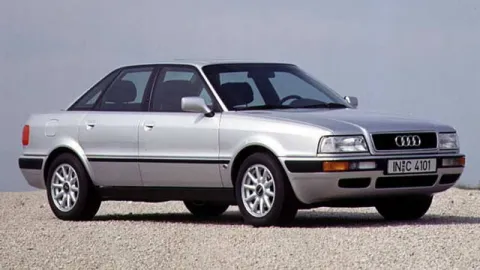 B4 You are here 1991–1995 · Sedan, Station wagon · 52–128 kW (71–174 PS)
-
1986
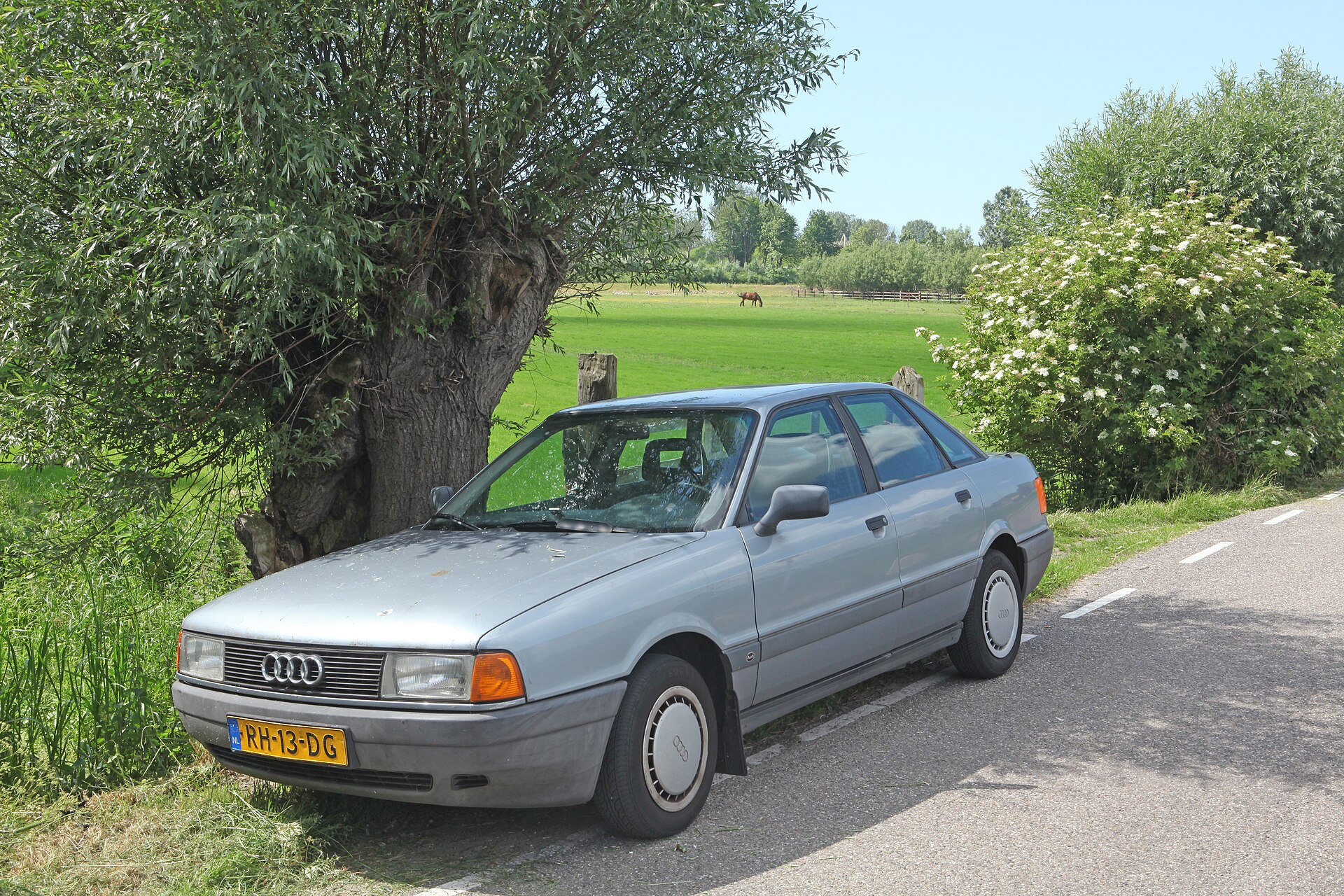
-
1978
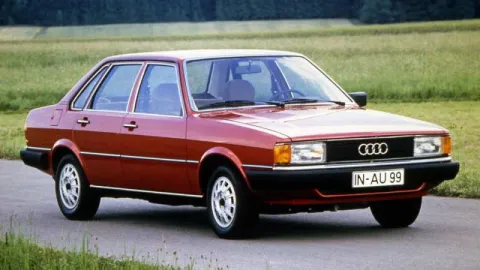 B2 1978–1986 · Sedan · 40–100 kW (54–136 PS)
-
1972
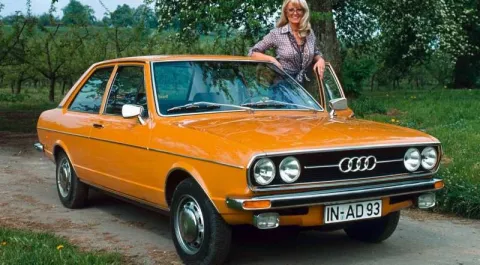 B1 1972–1978 · Sedan, Station wagon · 40–81 kW (54–110 PS)
-
1966
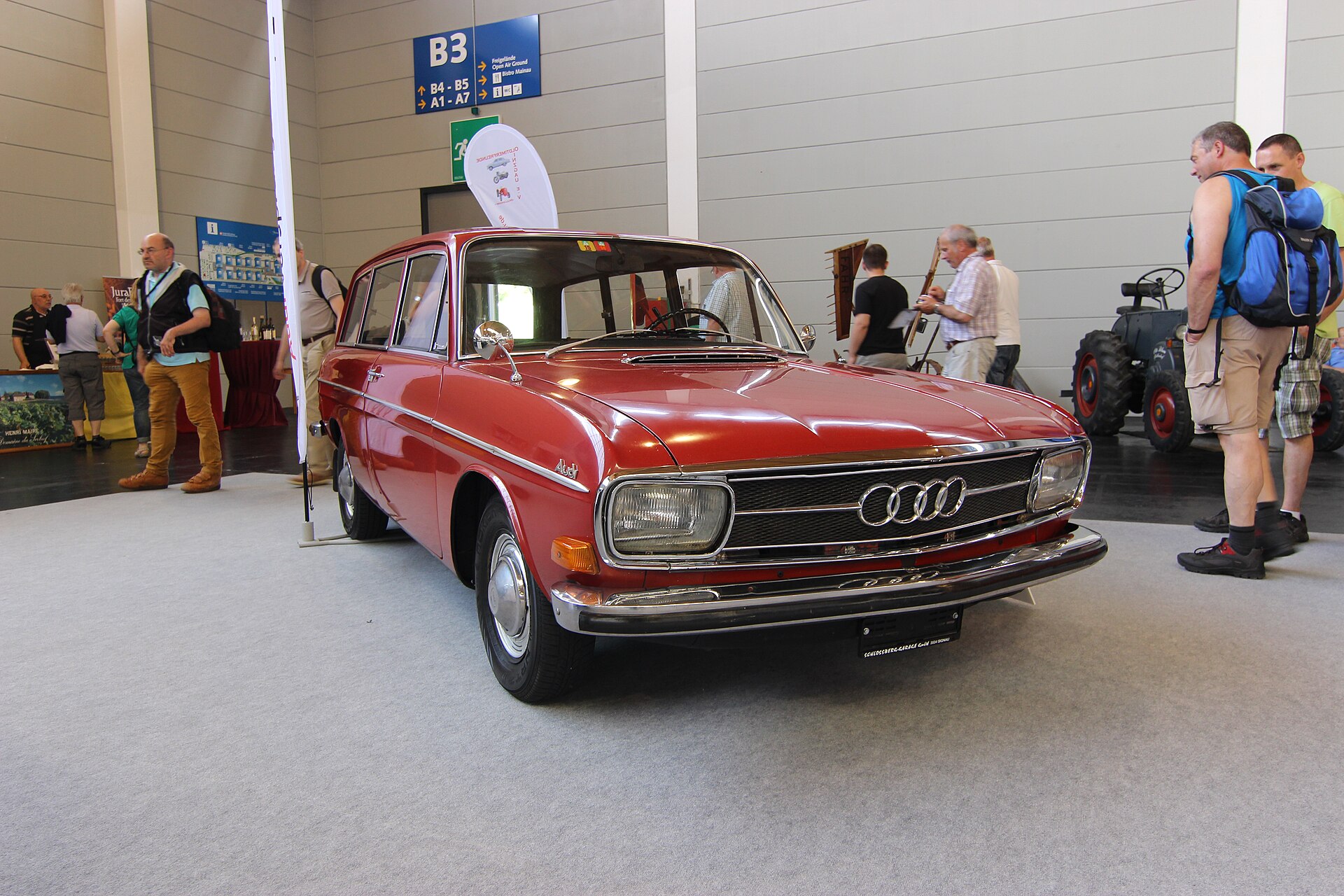


All generations by year: 80 B4 (1991–1995) · 80 B3 (1986–1991) · 80 B2 (1978–1986) · 80 B1 (1972–1978) · 80 (F103) (1966–1968)
The Audi 80 B4, internally Typ 8C, is the fourth and final generation of the Audi 80. Audi presented it in September 1991 as a thorough rework of the B3, with a longer wheelbase, a new rear axle and a flat boot floor. The saloon was built until December 1994 and the Avant estate until December 1995, when the A4 had fully taken over.
In short
- Presented in September 1991; saloon built to December 1994, Avant (from summer 1992) to December 1995.
- First Audi 80 with a six-cylinder engine: 2.6 and 2.8 V6 units of 110 kW (150 PS) and 128 kW (174 PS).
- The 1.9 TDI with 66 kW (90 PS) and 182 Nm is the economical choice, rated by ADAC at 5.1 L/100 km.
- Standard ABS arrived on most versions in January 1993, followed by a driver airbag for model year 1994.
Running cost
Fuel · 80 B4 2.0
about 1,250 EUR fuel a year at 15,000 km
5.1 l/100 km · diesel at 1.65 EUR/l · change mileage, fuel price or version
80 B4 specs by version
Engines
| Version | Engine | Power | Torque | Production years |
|---|---|---|---|---|
| Diesel · 2 versions | ||||
| 1.9 TD | 1.9 l · 4 cyl · Diesel AAZ | 55 kW 75 PS74 hp | 140 Nm103 lb-ft | 1991–1995 |
| 2.0 | 5 cyl · Diesel | 66 kW 90 PS89 hp | 148 Nm109 lb-ft | — |
| Petrol · 7 versions | ||||
| 1.6 | 1.6 l · 4 cyl · Petrol ABM | 52 kW 71 PS70 hp | 120 Nm89 lb-ft | 1992–1994 |
| 1.6 E | 1.6 l · 4 cyl · Petrol ADA | 74 kW 101 PS99 hp | 130 Nm96 lb-ft | 1993–1995 |
| 2.0 E | 2.0 l · 4 cyl · Petrol ABK | 85 kW 116 PS114 hp | 166 Nm122 lb-ft | 1991–1995 |
| 2.3 E | 2.3 l · 5 cyl · Petrol NG | 98 kW 133 PS131 hp | 186 Nm137 lb-ft | 1991–1994 |
| 2.0 ACE 103 kW (140 PS) | 2.0 l · 4 cyl · Petrol ACE | 103 kW 140 PS138 hp | 181 Nm133 lb-ft | 1992–1995 |
| 2.6 E | 2.6 l · 6 cyl · Petrol ABC | 110 kW 150 PS148 hp | 225 Nm166 lb-ft | 1992–1995 |
| 2.8 E | 2.8 l · 6 cyl · Petrol AAH | 128 kW 174 PS172 hp | 245 Nm181 lb-ft | 1991–1995 |
Performance
Show all 9 versions
| Version | 0–100 km/h | Top speed |
|---|---|---|
| Diesel · 2 versions | ||
| 1.9 TD | 17.5 s 0–62 mph | 162 km/h101 mph |
| 2.0 | — | — |
| Petrol · 7 versions | ||
| 1.6 | 15.4 s 0–62 mph | 162 km/h101 mph |
| 1.6 E | — | 189 km/h117 mph |
| 2.0 E | 11.8 s 0–62 mph | 190 km/h118 mph |
| 2.3 E | 9.8 s 0–62 mph | 200 km/h124 mph |
| 2.0 ACE 103 kW (140 PS) | 9.6 s 0–62 mph | 201 km/h125 mph |
| 2.6 E | 9.3 s 0–62 mph | 212 km/h132 mph |
| 2.8 E | 8.0 s 0–62 mph | 220 km/h137 mph |
Verified Manufacturer and type-approval data from our catalog · Sources and methodology
From B3 to B4: what Audi reworked
The B4 kept the B3's roof, windscreen and basic structure but changed almost everything around them. German references describe it as about 9 cm longer than the B3, with a wheelbase just under 8 cm longer. ADAC data confirms the step: 2,612 mm (102.8 in) for the B4 saloon against 2,546 mm (100.2 in) for a B3.
The rear suspension was the key change. The B3's torsion crank axle gave way to a compound trailing-arm axle with coil springs and telescopic dampers. Audi also redesigned the fuel tank and mounted it lying flat, which freed space for a deeper, flat boot floor and folding rear seatbacks. The B3 had been criticised for its oddly shaped boot, so this answered a real complaint.
Outside, the grille became part of a new bonnet, the wheel arches were widened for standard 15-inch wheels (195/65 R15 on the base car) and the bumpers were painted in body colour. Inside came better soundproofing, higher-grade materials and power-assisted rack-and-pinion steering as standard. Most versions had disc brakes on all four wheels.
The B4 also absorbed the separate Audi 90. Its five-cylinder engines moved into the 80 range, and from then on the 80 covered everything from a 66 kW (90 PS) four to a V6. The Audi 80 overview shows how this fits the 1966–1995 story of the nameplate.
Saloon, Avant and the fast relatives
The B4 was a four-door saloon from launch, joined in summer 1992 by the Avant estate. More than 177,000 Avants were built out of a total of over 826,000 B4 cars, according to German sources. Thanks to the Avant, the B4 also has a place among classic station wagons.
The Coupé and the Cabriolet sold alongside it were based on the earlier B3 structure, not the B4. The Coupé ended in 1996 and the Cabriolet in August 2000.
Two high-performance cars used the B4 body. The S2, with a 2.2-litre turbocharged five-cylinder of 169 kW (230 PS) and a six-speed manual, came as an Avant and, in 1993, as a saloon of which only 306 were made. The RS2 Avant, developed with Porsche and assembled at Neckarsulm, produced 232 kW (315 PS) and 410 Nm and was quoted at 262 km/h (163 mph). Both are usually catalogued as models of their own.
For touring-car homologation, Audi built 2,500 examples of the 80 quattro Competition in 1994. It used a 16-valve 2.0-litre with 103 kW (140 PS), permanent quattro, S2 bumpers and a rear spoiler.
B4 engines and gearboxes
The B4 range ran from a 1.6-litre four to the 2.8 V6, with two 1.9-litre diesels. Figures below are from the ADAC catalogue and Wikipedia; power is given in kW with the original PS value.
| Engine | Layout | Power | Torque | Notes |
|---|---|---|---|---|
| 1.6 | Petrol, 4-cyl | 52 kW (71 PS) | 120 Nm (89 lb-ft) | Base engine in some markets |
| 1.6 E | Petrol, 4-cyl | 74 kW (100 PS) | 130 Nm (96 lb-ft) | ADAC: saloon 1993–94 |
| 2.0 | Petrol, 4-cyl, single-point injection | 66 kW (90 PS) | 148 Nm (109 lb-ft) | Base four-cylinder |
| 2.0 E | Petrol, 4-cyl | 85 kW (115 PS) | 166 Nm (122 lb-ft) | Best seller: 456,861 built |
| 2.3 E | Petrol, 5-cyl | 98 kW (133 PS) | 186 Nm (137 lb-ft) | Five-cylinder from the Audi 90 |
| 2.6 E | Petrol, V6 | 110 kW (150 PS) at 5,750 rpm | 225 Nm (166 lb-ft) at 3,500 rpm | ADAC: from May 1992 |
| 2.8 E | Petrol, V6 | 128 kW (174 PS) | 245 Nm (181 lb-ft) | Also sold in North America |
| 1.9 TD | Diesel, 4-cyl, turbo | 55 kW (75 PS) | 140 Nm (103 lb-ft) | Indirect injection |
| 1.9 TDI | Diesel, 4-cyl, turbo, direct injection | 66 kW (90 PS) at 4,000 rpm | 182 Nm (134 lb-ft) at 2,300 rpm | 182,777 built |
A five-speed manual was standard and a four-speed automatic was optional. Quattro four-wheel drive could be ordered with most petrol engines, initially only with the five-speed manual; diesels stayed front-wheel drive. Quattro cars have a wheelbase about 1 cm shorter and a slightly wider rear track than the front-drive versions.
The two V6 versions show the gap in the range. ADAC lists the 2.6 E at 212 km/h (132 mph) and 9.3 seconds from 0 to 100 km/h, against 174 km/h (108 mph) and 14.1 seconds for the TDI. The diesel uses far less fuel, though: 5.1 L/100 km in the old one-third mix, compared with 9.2 L/100 km for the V6. Later diesel cars took the TDI idea much further.
Dimensions of the B4 saloon
Saloon dimensions are identical across the engine range; weights differ by engine. The table uses ADAC figures for the 1.9 TDI saloon, with the 2.6 E where noted.
| Parameter | Metric | Imperial |
|---|---|---|
| Length | 4,482 mm | 176.5 in |
| Width (without / with mirrors) | 1,695 / 1,930 mm | 66.7 / 76.0 in |
| Height | 1,406 mm | 55.4 in |
| Wheelbase | 2,612 mm | 102.8 in |
| Kerb weight, 1.9 TDI | 1,270 kg | 2,800 lb |
| Kerb weight, 2.6 E | 1,330 kg | 2,932 lb |
| Boot, rear seats up | 430 L | 15.2 cu ft |
| Boot, seat folded (window line) | 712 L | 25.1 cu ft |
| Fuel tank | 66 L | 14.5 UK gal |
| Braked towing, 1.9 TDI / 2.6 E | 1,200 / 1,450 kg | 2,646 / 3,197 lb |
| Unbraked towing | 640 kg | 1,411 lb |
ADAC does not give separate figures for the Avant in its listing, so they are not included here.
Safety equipment year by year
The B4 arrived before crash-test ratings existed in Europe. Euro NCAP began testing in 1997, so no B4 has a star rating, and results for later Audis do not apply to it.
What changed was the standard equipment. Early cars relied on Procon-ten, Audi's cable system that pulled the steering wheel away and tightened the front belts in a frontal crash. From January 1993 ABS was fitted as standard to nearly every version, the basic 2.0 being the exception. A driver airbag was fitted as standard from model year 1994, and the passenger airbag, an extra in 1994, became standard for model year 1995.
For a buyer this makes the build date important. A 1994 or 1995 car will usually have ABS and at least one airbag, while a 1991–1992 car may have neither.
Choosing a B4 today
The best B4 depends on what the car is for. These pointers follow from the specification data above:
- Daily use and economy: the 1.9 TDI, front-wheel drive only, with 182 Nm from 2,300 rpm.
- Balanced petrol: the 2.0 E with 85 kW (115 PS), the most common version and the easiest to find parts for.
- Smooth and quick: the 2.6 E or 2.8 E V6, available with quattro; ADAC quotes 212 km/h for the 2.6 E.
- Load space: an Avant, ideally a later car with airbags and ABS.
- Collector interest: the quattro Competition, S2 or RS2, which need specialist inspection.
A model-year 1994 "Europa" edition added alloy wheels, electric mirrors, an airbag steering wheel and rear head restraints, which makes it a well-equipped find. The B4's replacement, the Audi A4, arrived in November 1994. For other models of the brand, see the Audi catalogue and our wider list of German cars.
Did you know?
- The 80 B4 is generation 5 of 5 of the Audi 80 in our catalog.
- The 80 B4 offers up to 128 kW (174 PS) — 27 kW more than the 80 B3 (1986–1991) (+27%).
Image credits · Photos from Wikimedia Commons under free licences
- Audi 80 (F103) · Photo: Hilarmont / Wikimedia Commons, CC BY-SA 3.0 de
- Audi 80 B1 · Photo: Niels de Wit from Lunteren, The Netherlands / Wikimedia Commons, CC BY 2.0
- Audi 80 B2 · Photo: Rutger van der Maar / Wikimedia Commons, CC BY 2.0
- Audi 80 B3 · Photo: free photos & art / Wikimedia Commons, CC BY 2.0
- Audi 80 B4 · Photo: Trop86 / Wikimedia Commons, CC0
B4 rivals
-
In production
- Years
- 1975–present
- Body
- Sedan, Station wagon
- Fuel
- Petrol, Diesel, Plug-in hybrid
- Power
- 85–317 kW (116–431 PS)
7 generations
- E30
- E36
- E46
- E90
- F30
- G20
- +1 earlier
-
In production
- Years
- 1993–present
- Body
- Sedan, Station wagon
- Fuel
- Petrol, Diesel
- Power
- 55–270 kW (75–367 PS)
5 generations
- W202
- W203
- W204
- W205
- W206


FAQ
What years was the Audi 80 B4 made?
The B4 was presented in September 1991. Saloon production ended in December 1994, though some cars were first registered in early 1995, and the Avant was built until December 1995.
What is the difference between the Audi 80 B4 and the Audi 90?
In Europe the B4 replaced the separate Audi 90 and took over its five-cylinder engines. In the United States and Canada, however, the B4 saloon was sold under the Audi 90 name, with V6 engines and more standard equipment.
Did the Audi 80 B4 have a TDI?
Yes. The 1.9 TDI produced 66 kW (90 PS) and 182 Nm, and German sources count 182,777 built. A 1.9 TD with 55 kW (75 PS) was also offered.
Which Audi 80 B4 engines came with quattro?
ADAC lists quattro saloons with the 2.0 E, 2.3 E, 2.6 E and 2.8 E petrol engines, initially with a five-speed manual only. The 1.9 TD and 1.9 TDI diesels were front-wheel drive only.
Does the Audi 80 B4 have airbags?
A driver airbag became standard from model year 1994 and a passenger airbag from model year 1995. Earlier B4s used the Procon-ten belt and steering-column system instead.
Data sources
Data checked by an editor against the sources below.
- The text of this article (1cars archive)
- Wikipedia — Audi 80