 Ford Fiesta
All generations, specs and history
Published Sources (6) Report an error
By Sarah Whitmore, Senior Automotive Writer
- Built
- 1976–2023
- Generations
- 7
- Top power
- 147 kW (200 PS)
Timeline
Fiesta generations
Click a generation for its own page
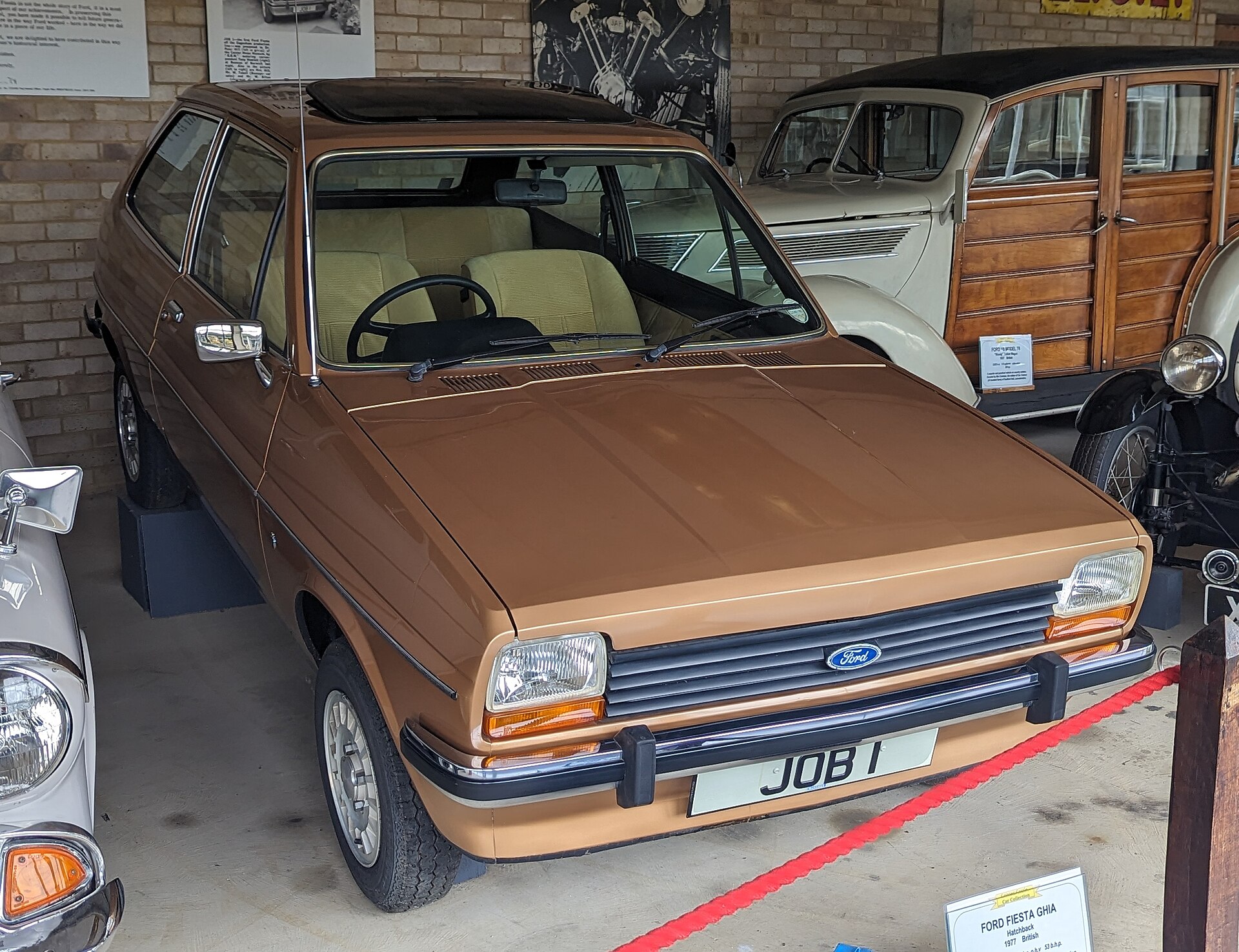
- Fiesta I 1976–1983 · Hatchback, Van · 30–62 kW (41–84 PS)
- Fiesta II 1983–1989 · Hatchback, Van
- Fiesta III 1989–1995
- Fiesta 1995–2002
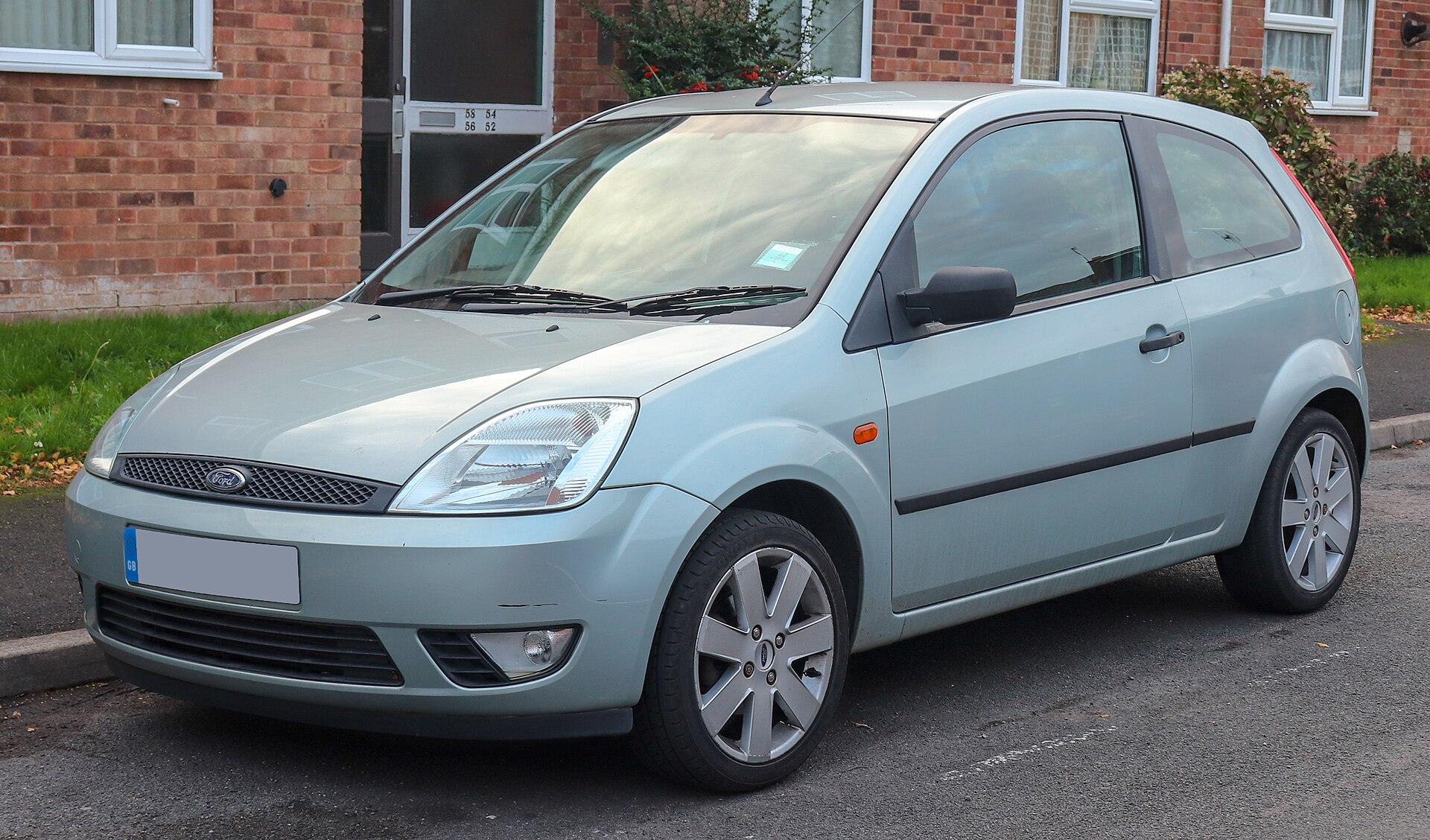
- Fiesta 2002–2008
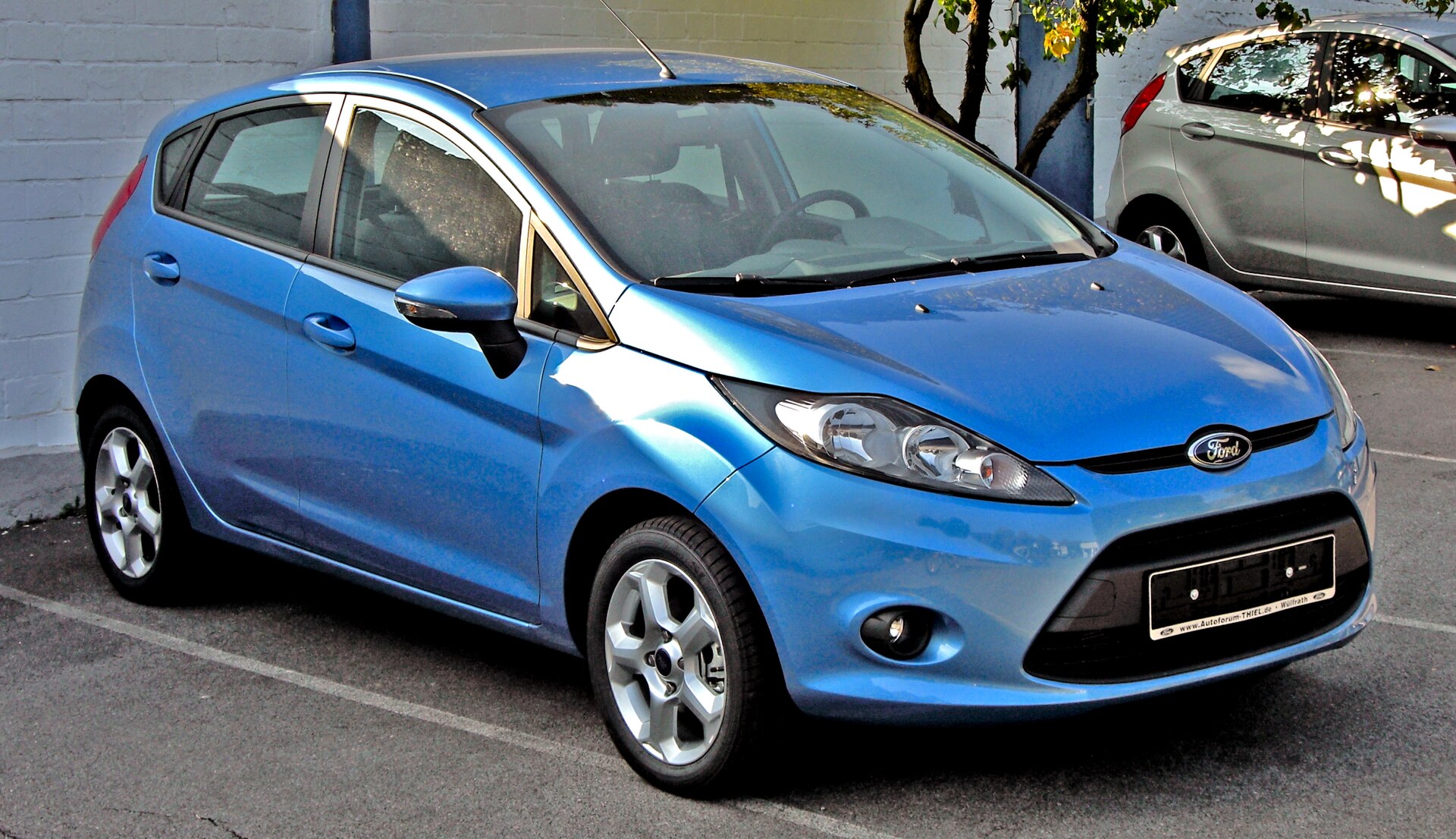
- Fiesta B299 2008–2017 · Sedan, Hatchback · 44–147 kW (60–200 PS)
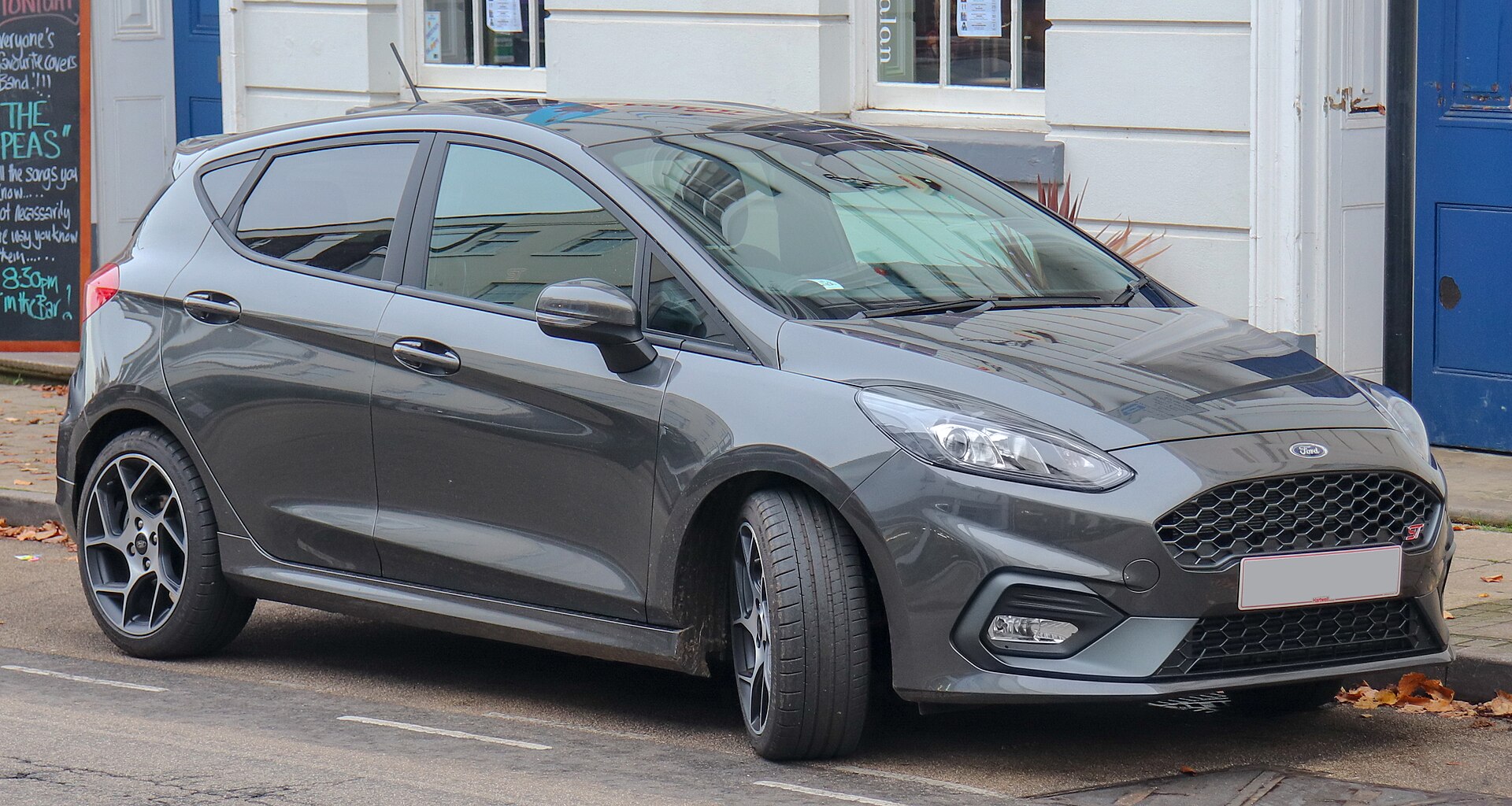
- Fiesta 2017–2023
Newest first · 7 generations since 1976
-
2017
-
2008
-
2002
-
1995
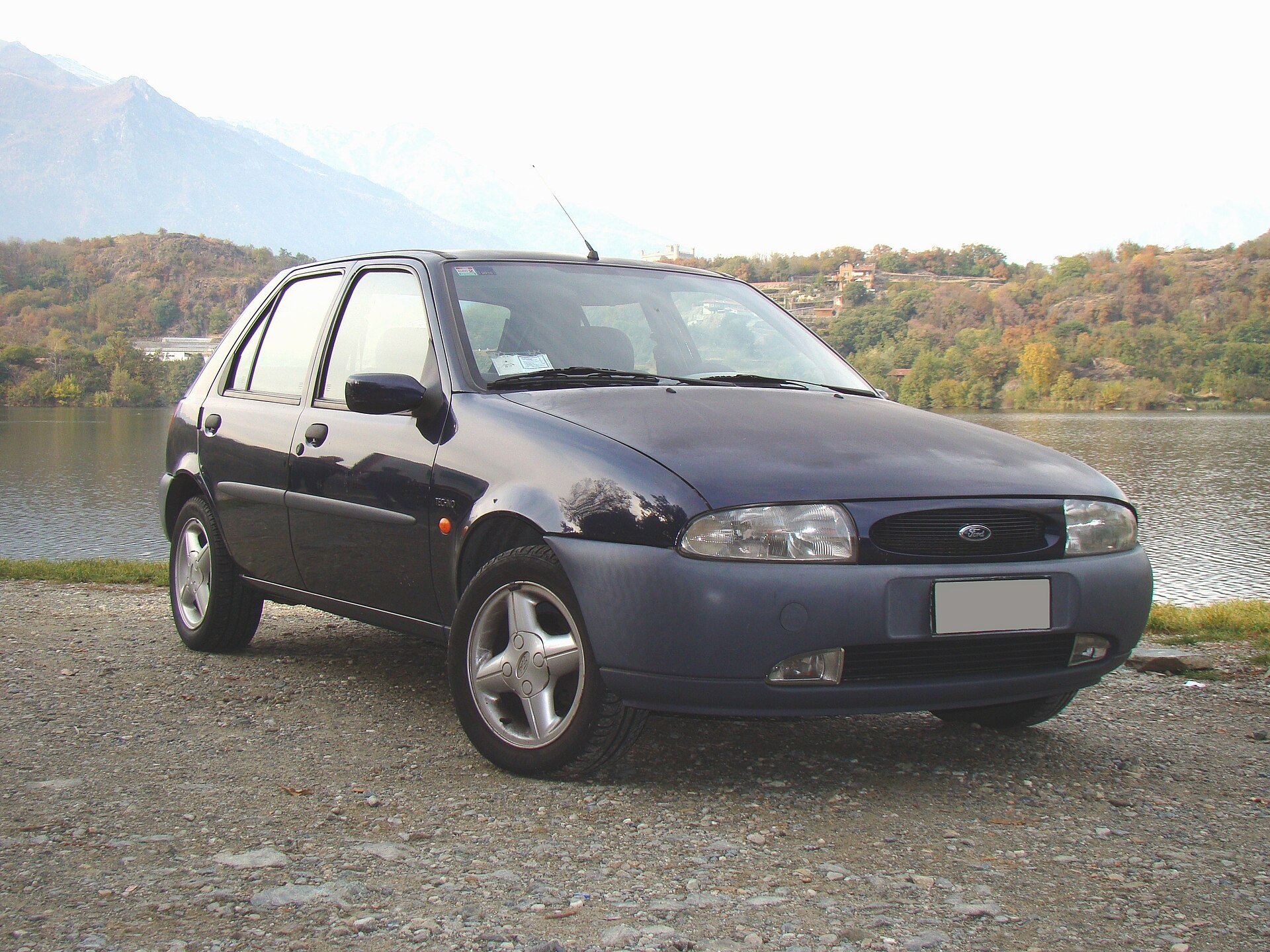
-
1989
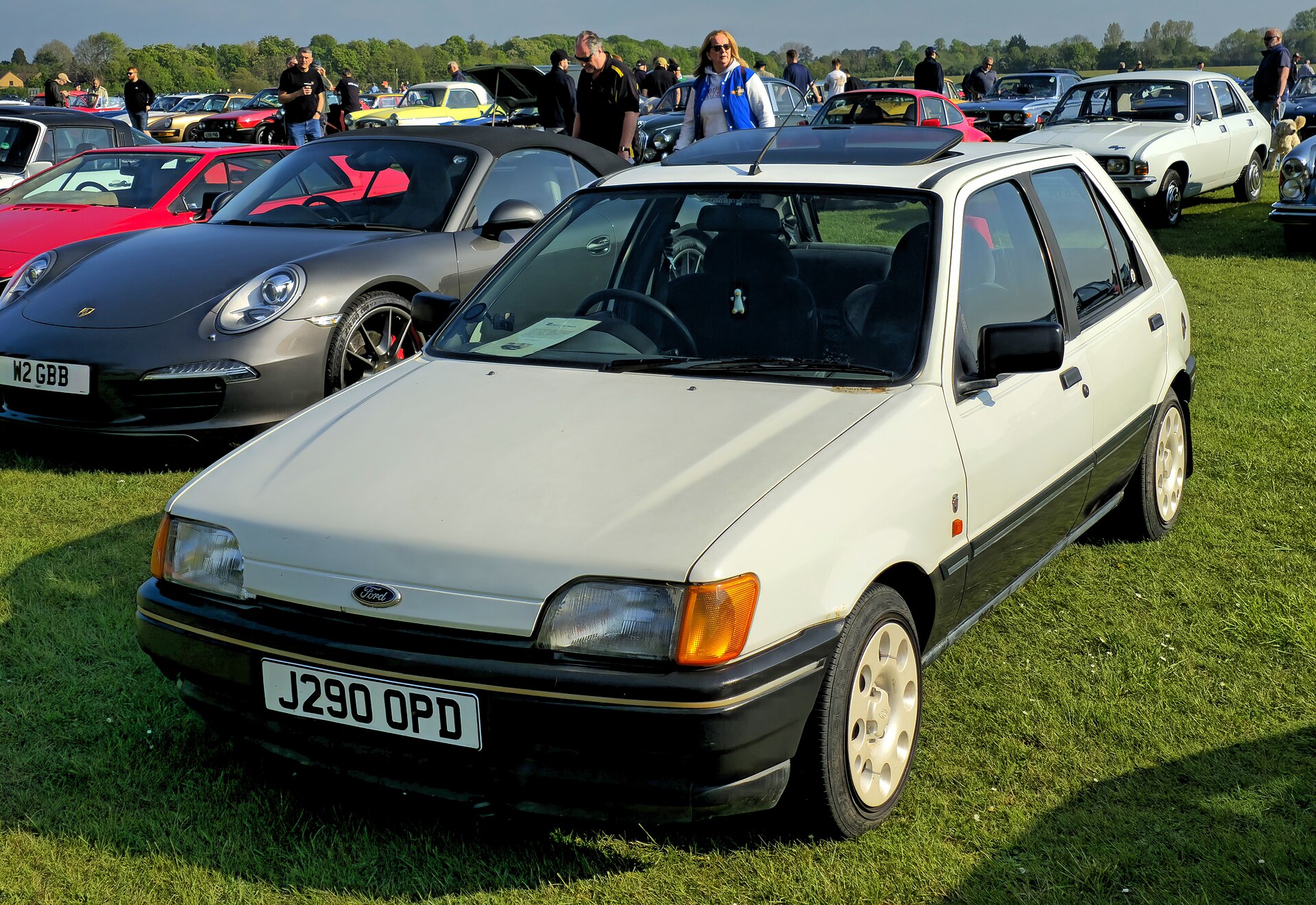
-
1983
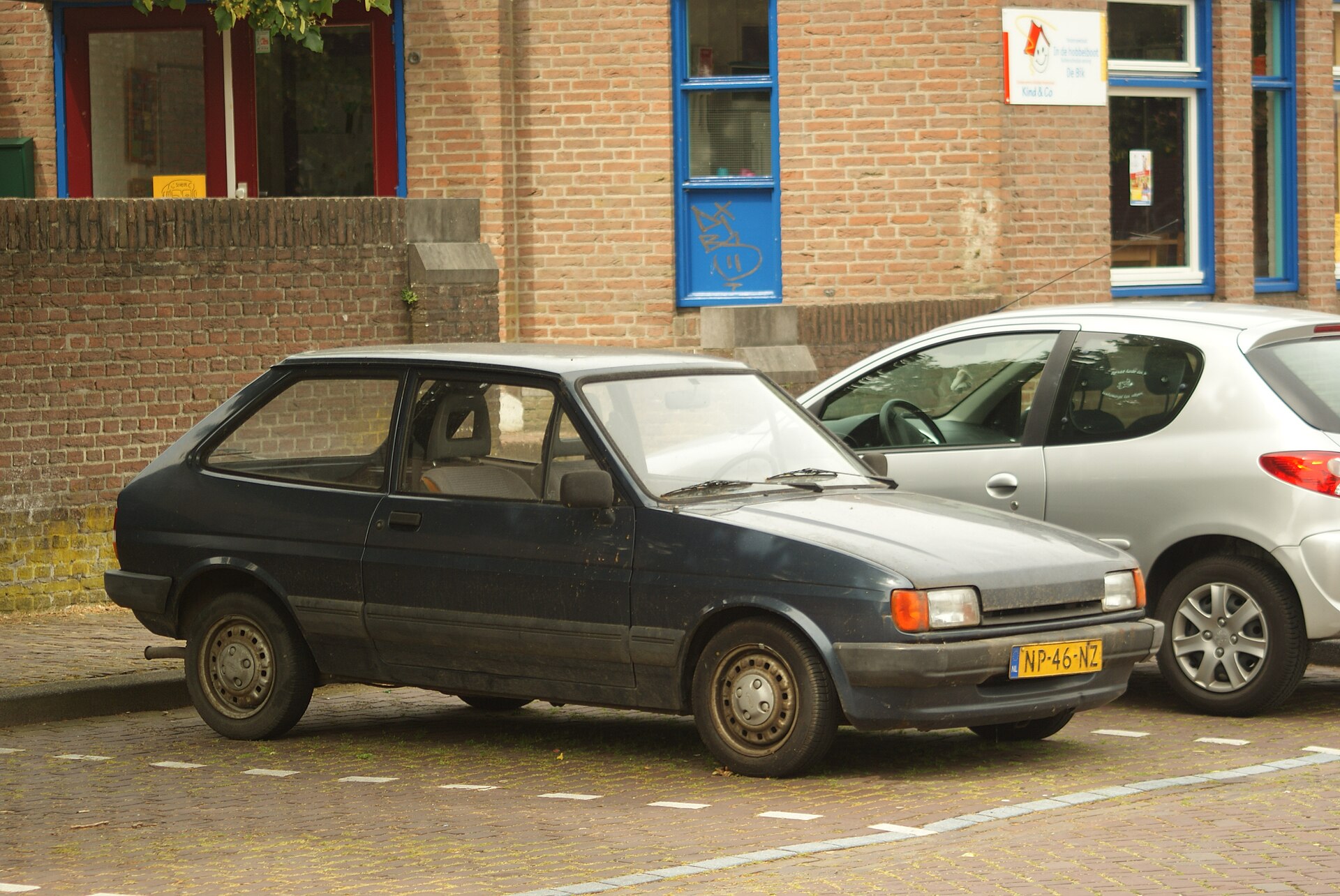
-
1976
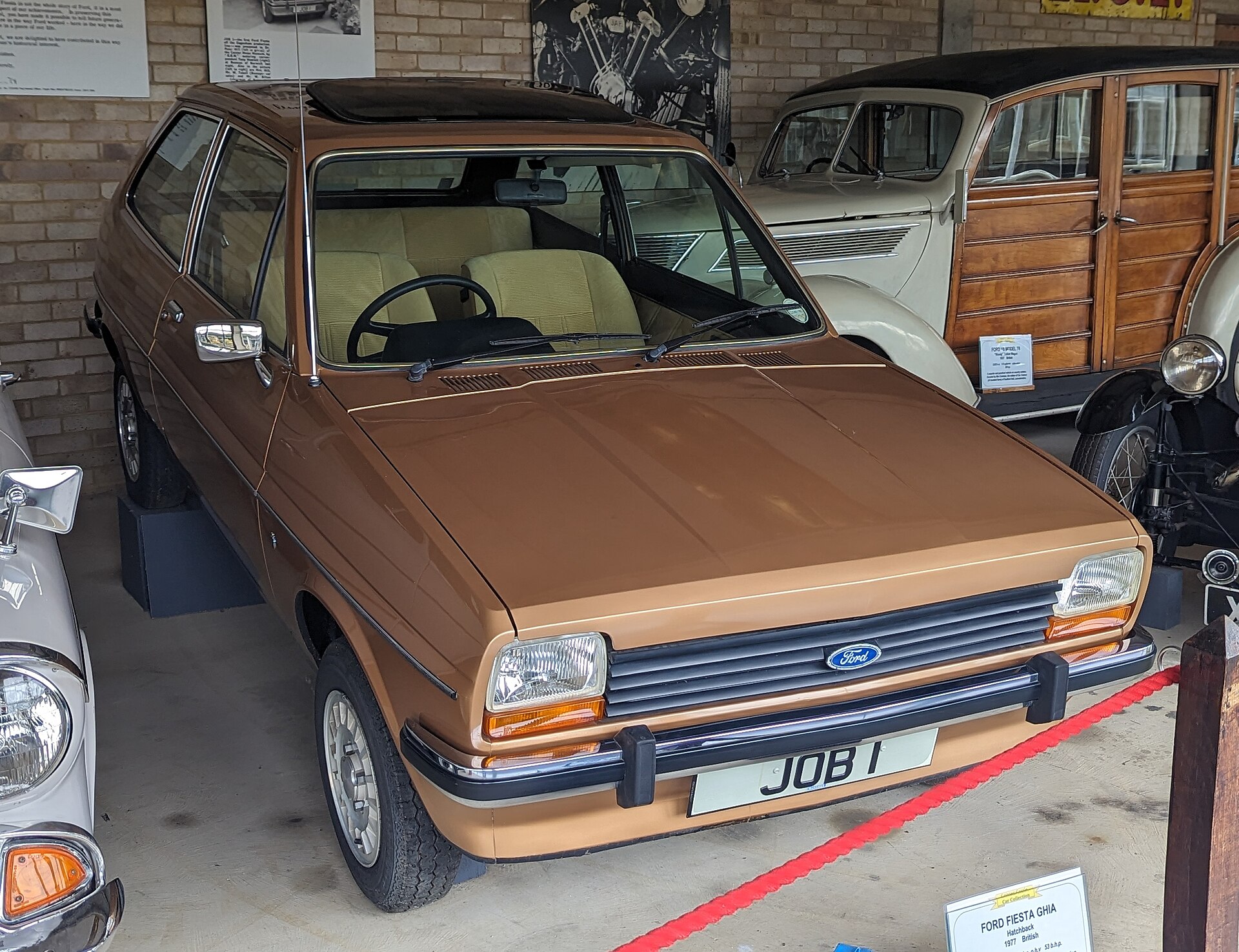


All generations by year: Fiesta (2017–2023) · Fiesta B299 (2008–2017) · Fiesta (2002–2008) · Fiesta (1995–2002) · Fiesta III (1989–1995) · Fiesta II (1983–1989) · Fiesta I (1976–1983)
Which one is mine?
Pick the year of first registration to see which generation it is.
Check by VINWhich Fiesta to choose
Our verdict · Sarah Whitmore
- Everyday small car: a Mk7 (2017–2023) with the 1.0 EcoBoost, the newest design with a five-star Euro NCAP rating from 2017 and, from 2020, mild-hybrid assistance.
- Driver's car: the 2018–2023 Fiesta ST with 147 kW, or the older Mk6 ST with 134 kW and the same six-speed manual layout.
- Classic: a Mk1 XR2 or a Mk3 RS Turbo, the two historic performance versions.
- Sedan buyers: the Mk6 sedan (B409), offered in North America from 2010 alongside the hatchback, with the sedan measuring 4,291–4,409 mm.
Other small Fords such as the Fiesta-based Ford EcoSport are covered on 1cars as well.
The Ford Fiesta was Ford's front-wheel-drive supermini, built in Europe from 1976 until 7 July 2023, when the last car left the Cologne plant. In 47 years it went through seven generations by Wikipedia's count, sold more than 20 million copies worldwide and became Britain's best-selling car of all time. Sporting versions from the XR2 to the three-cylinder Fiesta ST gave the small Ford a second reputation as an affordable hot hatch.
In short
- Production 1976–2023 in Valencia, Dagenham, Saarlouis and Cologne, later also in Mexico, Brazil, China, India and Thailand.
- Over 22 million sold according to Wikipedia EN (over 20 million built according to Wikipedia DE); about 9 million came from Cologne alone.
- UK best-seller in 1990, 1991, 1996–1998 and every year from 2009 to 2020; 4,115,000 sold in Britain by July 2014.
- The last Fiesta ST (2018–2023): 1.5 EcoBoost three-cylinder, 147 kW (200 PS), 0–100 km/h in 6.5 s.
Size at a glance
Ford Fiesta B299
The Ford Fiesta is 90 mm longer, 25 mm wider and 30 mm taller than the Ford Fiesta B299.
| Dimensions | Ford Fiesta | Ford Fiesta B299 | Difference |
|---|---|---|---|
| Length | 4,040 mm159.1 in | 3,950 mm155.5 in | +90 mm+3.5 in |
| Width | 1,734 mm68.3 in | 1,709 mm67.3 in | +25 mm+1.0 in |
| Height | 1,483 mm58.4 in | 1,453 mm57.2 in | +30 mm+1.2 in |
| Wheelbase | 2,493 mm98.1 in | 2,489 mm98.0 in | +4 mm+0.2 in |
| Boot | 292 L10.3 cu ft | 290 L10.2 cu ft | +2 L+0.1 cu ft |
Running cost
Fuel · Fiesta 1.0 EcoBoost
about 1,150 EUR fuel a year at 15,000 km
4.3 l/100 km · petrol at 1.75 EUR/l · change mileage, fuel price or version
Specs by version
Engines
| Version | Engine | Power | Torque | Gearbox | Drive | Production years |
|---|---|---|---|---|---|---|
| Diesel · 2 versions | ||||||
| Fiesta · 1.5 TDCi | 1.5 l · 4 cyl · Diesel 1,499 cc | 63 kW 86 PS84 hp | 215 Nm159 lb-ft | — | Front-wheel drive | — |
| Fiesta · 1.5 TDCi | 1.5 l · 4 cyl · Diesel 1,499 cc | 88 kW 120 PS118 hp | 270 Nm199 lb-ft | — | Front-wheel drive | — |
| Petrol · 19 versions | ||||||
| Fiesta I · 0.95 Valencia | 1.0 l · 4 cyl · Petrol 957 cc | 30 kW 41 PS40 hp | — | 4-sp Manual | Front-wheel drive | 1976–1983 |
| Fiesta I · 1.3 Supersport | 1.3 l · 4 cyl · Petrol 1,298 cc | 48 kW 65 PS64 hp | — | 4-sp Manual | Front-wheel drive | 1980 |
| Fiesta I · XR2 1.6 | 1.6 l · 4 cyl · Petrol 1,597 cc | 62 kW 84 PS83 hp | — | — | Front-wheel drive | 1981–1983 |
| Fiesta II · XR2 1.6 CVH | 1.6 l · 4 cyl · Petrol 1,597 cc | 71 kW 97 PS95 hp | — | — | Front-wheel drive | — |
| Fiesta III · XR2i 1.6 | 1.6 l · 4 cyl · Petrol 1,597 cc | 76 kW 103 PS102 hp | — | — | Front-wheel drive | 1989 |
| Fiesta III · RS Turbo 1.6 | 1.6 l · 4 cyl · Petrol 1,597 cc | 97 kW 132 PS130 hp | — | — | Front-wheel drive | 1991 |
| Fiesta · ST 2.0 Duratec | 2.0 l · 4 cyl · Petrol 1,999 cc | 110 kW 150 PS148 hp | — | — | Front-wheel drive | — |
| B299 · 1.25 Duratec | 1.2 l · 4 cyl · Petrol 1,242 cc | 44 kW 60 PS59 hp | — | — | Front-wheel drive | 2008–2017 |
| B299 · 1.4 Duratec | 1.4 l · 4 cyl · Petrol 1,388 cc | 71 kW 97 PS95 hp | — | — | Front-wheel drive | 2008–2013 |
| B299 · 1.0 EcoBoost | 1.0 l · 3 cyl · Petrol 999 cc | 74 kW 101 PS99 hp | — | — | Front-wheel drive | 2013–2017 |
| B299 · 1.0 EcoBoost | 1.0 l · 3 cyl · Petrol 999 cc | 92 kW 125 PS123 hp | — | — | Front-wheel drive | 2013–2017 |
| B299 · ST 1.6 EcoBoost | 1.6 l · 4 cyl · Petrol 1,596 cc | 134 kW 182 PS180 hp | 240 Nm177 lb-ft | 6-sp Manual | Front-wheel drive | 2013–2017 |
| B299 · ST200 1.6 EcoBoost | 1.6 l · 4 cyl · Petrol 1,596 cc | 147 kW 200 PS197 hp | 290 Nm214 lb-ft | 6-sp Manual | Front-wheel drive | 2016–2017 |
| Fiesta · 1.1 Ti-VCT | 1.1 l · 3 cyl · Petrol 1,084 cc | 51 kW 69 PS68 hp | 108 Nm80 lb-ft | 5-sp Manual | Front-wheel drive | — |
| Fiesta · 1.1 Ti-VCT | 1.1 l · 3 cyl · Petrol 1,084 cc | 63 kW 86 PS84 hp | 108 Nm80 lb-ft | 5-sp Manual | Front-wheel drive | — |
| Fiesta · 1.0 EcoBoost | 1.0 l · 3 cyl · Petrol 999 cc | 74 kW 101 PS99 hp | — | — | Front-wheel drive | — |
| Fiesta · 1.0 EcoBoost | 1.0 l · 3 cyl · Petrol 999 cc | 92 kW 125 PS123 hp | — | — | Front-wheel drive | — |
| Fiesta · 1.0 EcoBoost mHEV | 1.0 l · 3 cyl · Petrol 999 cc | 114 kW 155 PS153 hp | — | — | Front-wheel drive | 2020 |
| Fiesta · ST 1.5 EcoBoost | 1.5 l · 3 cyl · Petrol 1,497 cc | 147 kW 200 PS197 hp | 290 Nm214 lb-ft | 6-sp Manual | Front-wheel drive | 2018–2023 |
Performance
Show all 17 versions
| Version | 0–100 km/h | Top speed | Fuel consumption | CO₂ |
|---|---|---|---|---|
| Diesel · 2 versions | ||||
| Fiesta · 1.5 TDCi | 12.5 s 0–62 mph | 175 km/h109 mph | 3.5 l/100 km67.2 mpg US · 80.7 mpg UK | 90 g/km |
| Fiesta · 1.5 TDCi | 9.0 s 0–62 mph | 195 km/h121 mph | 3.5 l/100 km67.2 mpg US · 80.7 mpg UK | 89 g/km |
| Petrol · 15 versions | ||||
| Fiesta I · 0.95 Valencia | — | 130 km/h81 mph | — | — |
| Fiesta I · 1.3 Supersport | — | 158 km/h98 mph | — | — |
| Fiesta I · XR2 1.6 | 10.1 s 0–62 mph | — | — | — |
| Fiesta · ST 2.0 Duratec | — | 208 km/h129 mph | — | — |
| B299 · 1.25 Duratec | 16.9 s 0–62 mph | 152 km/h94 mph | 5.2 l/100 km45.2 mpg US · 54.3 mpg UK | 120 g/km |
| B299 · 1.4 Duratec | 12.2 s 0–62 mph | 175 km/h109 mph | 5.7 l/100 km41.3 mpg US · 49.6 mpg UK | 133 g/km |
| B299 · 1.0 EcoBoost | 11.2 s 0–62 mph | 180 km/h112 mph | 4.5 l/100 km52.3 mpg US · 62.8 mpg UK | 105 g/km |
| B299 · 1.0 EcoBoost | 9.4 s 0–62 mph | 196 km/h122 mph | 4.3 l/100 km54.7 mpg US · 65.7 mpg UK | 99 g/km |
| B299 · ST200 1.6 EcoBoost | 6.7 s 0–62 mph | — | — | — |
| Fiesta · 1.1 Ti-VCT | — | — | — | 135 g/km |
| Fiesta · 1.1 Ti-VCT | 14.0 s 0–62 mph | 170 km/h106 mph | 4.7 l/100 km50.0 mpg US · 60.1 mpg UK | 107 g/km |
| Fiesta · 1.0 EcoBoost | 10.5 s 0–62 mph | 183 km/h114 mph | 4.3 l/100 km54.7 mpg US · 65.7 mpg UK | 97 g/km |
| Fiesta · 1.0 EcoBoost | 9.9 s 0–62 mph | 195 km/h121 mph | 4.3 l/100 km54.7 mpg US · 65.7 mpg UK | 98 g/km |
| Fiesta · 1.0 EcoBoost mHEV | 8.9 s 0–62 mph | 219 km/h136 mph | 4.0 l/100 km58.8 mpg US · 70.6 mpg UK | 92 g/km |
| Fiesta · ST 1.5 EcoBoost | 6.5 s 0–62 mph | — | 6.7 l/100 km35.1 mpg US · 42.2 mpg UK | 153 g/km |
Dimensions and weight
Show all 18 versions
| Version | Length | Width | Height | Wheelbase | Kerb weight | Boot | Fuel tank |
|---|---|---|---|---|---|---|---|
| Diesel · 2 versions | |||||||
| Fiesta · 1.5 TDCi | 4,040 mm159.1 in | — | — | 2,493 mm98.1 in | 1,163 kg2,564 lb | 292 l10.3 cu ft | 42 l11.1 gal US |
| Fiesta · 1.5 TDCi | 4,040 mm159.1 in | — | — | 2,493 mm98.1 in | 1,188 kg2,619 lb | 292 l10.3 cu ft | 42 l11.1 gal US |
| Petrol · 16 versions | |||||||
| Fiesta I · 0.95 Valencia | 3,565 mm140.4 in | 1,567 mm61.7 in | 1,360 mm53.5 in | 2,286 mm90.0 in | — | — | — |
| Fiesta I · 1.3 Supersport | 3,565 mm140.4 in | 1,567 mm61.7 in | 1,360 mm53.5 in | 2,286 mm90.0 in | — | — | — |
| Fiesta I · XR2 1.6 | 3,565 mm140.4 in | 1,567 mm61.7 in | 1,360 mm53.5 in | 2,286 mm90.0 in | — | — | — |
| Fiesta · ST 2.0 Duratec | 3,916 mm154.2 in | 1,685 mm66.3 in | 1,463 mm57.6 in | 2,486 mm97.9 in | 1,123 kg2,476 lb | 284 l10.0 cu ft | — |
| B299 · 1.25 Duratec | 3,950 mm155.5 in | 1,709 mm67.3 in | 1,453 mm57.2 in | 2,489 mm98.0 in | 1,091 kg2,405 lb | 290 l10.2 cu ft | 42 l11.1 gal US |
| B299 · 1.4 Duratec | — | — | — | 2,489 mm98.0 in | 1,054 kg2,324 lb | 295 l10.4 cu ft | 45 l11.9 gal US |
| B299 · 1.0 EcoBoost | — | — | — | 2,489 mm98.0 in | 1,091 kg2,405 lb | 290 l10.2 cu ft | 42 l11.1 gal US |
| B299 · 1.0 EcoBoost | — | — | — | 2,489 mm98.0 in | 1,091 kg2,405 lb | 290 l10.2 cu ft | 42 l11.1 gal US |
| B299 · ST 1.6 EcoBoost | — | — | — | 2,489 mm98.0 in | — | — | — |
| B299 · ST200 1.6 EcoBoost | — | — | — | 2,489 mm98.0 in | — | — | — |
| Fiesta · 1.1 Ti-VCT | 4,040 mm159.1 in | 1,734 mm68.3 in | 1,483 mm58.4 in | 2,493 mm98.1 in | 1,131 kg2,493 lb | — | — |
| Fiesta · 1.1 Ti-VCT | 4,040 mm159.1 in | — | — | 2,493 mm98.1 in | 1,108 kg2,443 lb | 292 l10.3 cu ft | 42 l11.1 gal US |
| Fiesta · 1.0 EcoBoost | 4,040 mm159.1 in | — | — | 2,493 mm98.1 in | 1,144 kg2,522 lb | 292 l10.3 cu ft | 42 l11.1 gal US |
| Fiesta · 1.0 EcoBoost | 4,040 mm159.1 in | — | — | 2,493 mm98.1 in | 1,164 kg2,566 lb | 292 l10.3 cu ft | 42 l11.1 gal US |
| Fiesta · 1.0 EcoBoost mHEV | 4,040 mm159.1 in | — | — | 2,493 mm98.1 in | 1,201 kg2,648 lb | 292 l10.3 cu ft | 42 l11.1 gal US |
| Fiesta · ST 1.5 EcoBoost | 4,040 mm159.1 in | — | — | 2,493 mm98.1 in | 1,299 kg2,864 lb | — | — |
Verified Manufacturer and type-approval data from our catalog · Sources and methodology
Ford Fiesta at a glance
| Specification | Ford Fiesta |
|---|---|
| Class | B-segment supermini |
| Production | 1976 – 7 July 2023 |
| Generations | 7 (Wikipedia EN); 8 in ADAC and Wikipedia DE, which count the 1999 facelift separately |
| Body | three- and five-door hatchback, four-door sedan (from 1995 in some markets), van, crossover-style Active |
| Layout | front engine, front-wheel drive |
| Engines | 1.0–2.0 petrol (three- and four-cylinder), 1.4–1.8 diesel |
| Power range | 30 kW (41 PS) to 147 kW (200 PS) |
| Euro NCAP | 5 stars (2012 and 2017 tests) |
| Successor | none directly; the Puma crossover took its place in Ford's range |
The Fiesta sits in our Ford catalogue; the new Ford Fiesta sedan has its own page. Its classic rival, the Volkswagen Polo, can be set against it side by side in our Fiesta vs Polo comparison or in our comparison tool.
How many Fiesta generations are there
The answer depends on who counts. English Wikipedia uses Mk1 to Mk7: the 2017–2023 car is the seventh generation, although British buyers call it the Mk8. The ADAC catalogue and Wikipedia DE list eight generations, because they treat the 1999 facelift of the 1995 car as a generation of its own. This article follows the EN numbering.
| Generation | Years | Code | Body styles | Notable versions | Power range |
|---|---|---|---|---|---|
| Mk1 | 1976–1983 | Bobcat | 3-door, van | XR2 (1981), Supersport | 30–62 kW |
| Mk2 | 1983–1989 | — | 3-door, van | XR2 1.6 CVH, first diesel | up to 71 kW |
| Mk3 | 1989–1997 | BE-13 | 3- and 5-door, van | XR2i, RS Turbo, RS1800 | up to 97 kW |
| Mk4 | 1995–2002 | BE91 | 3- and 5-door, sedan, van | Zetec-SE engines, 1999 facelift | — |
| Mk5 | 2002–2008 | — | 3- and 5-door, sedan | ST 2.0 | up to 110 kW |
| Mk6 | 2008–2017 | B299 / B409 | 3- and 5-door, sedan | ST 1.6 EcoBoost, ST200 | 44–147 kW |
| Mk7 | 2017–2023 | — | 3- and 5-door, Active, van | ST 1.5 EcoBoost, Vignale | 51–147 kW |
Mk1 to Mk3: the small car that won Europe
The Fiesta started as project "Bobcat". Henry Ford II approved it in September 1972, production was signed off in December 1973, and the name was announced in December 1975. Pilot production began in Cologne in April 1976, and series production followed in October 1976 at the new Almussafes plant near Valencia and at Dagenham. In Britain the car went on sale on 2 February 1977, with the basic 950 cc model priced from £1,856 in 1977. The millionth Fiesta was built in 1979.
The first car was a 3,565 mm three-door hatchback on a 2,286 mm wheelbase with Valencia four-cylinder engines of 957 cc and 1,117 cc, the smallest giving 30 kW (41 PS). The 1.3 Supersport arrived for 1980, and the XR2 of 1981 used a 1.6 Crossflow engine with 62 kW (84 PS). In the United States Ford sold the Fiesta from 1978 to 1980 with the 1.6 engine and emissions equipment.
The 1983 Mk2 introduced CVH engines, a lean-burn 1.4, the first diesel Fiesta (1.6 litres) and, from 1987, the CTX continuously variable automatic. The XR2 moved to the 1.6 CVH with 71 kW (97 PS). The Mk3 of 1989 was new from the ground up: it finally offered five doors, a torsion-beam rear axle and a fuel-injected XR2i with 76 kW (103 PS) with a catalytic converter. The 1991 RS Turbo used a 1.6 CVH turbo with 97 kW (132 PS). What Car? named the Mk3 its Car of the Year in 1989, and Britain bought more Fiestas than any other car in 1990 and 1991.

Mk4 and Mk5: Zetec engines and the first ST
The 1995 Mk4 (code BE91) brought new styling and the 16-valve Zetec-SE 1.25 and 1.4 petrol engines, alongside the older Endura-E 1.3 and the Endura-DE diesel. Its design was shared with the Mazda 121, and a four-door sedan was added for some markets. The 1999 facelift is what German sources count as a separate fifth generation.
The Mk5 of 2002, unveiled on 1 April 2002, was the first Fiesta with ABS and a passenger airbag as standard and the first sold in Asia and Australasia; Brazil built it until 2014. Petrol engines were Duratec units from 1.25 to 2.0 litres; the diesels were Duratorq TDCi engines developed with PSA. Its Fiesta ST had a 2.0-litre Duratec with 110 kW (150 PS) and a top speed of 208 km/h. Wikipedia describes this generation as the best-selling Fiesta up to that time.
Mk6: a global car with EcoBoost
The sixth generation (B299 hatchback, B409 sedan) was previewed by the Verve concept of 2007 and went into production in August 2008. Under Ford's "One Ford" plan it became a global model built in Cologne, Valencia, Mexico, Brazil, China, Thailand and India; North America received it from 2010 as a sedan and hatchback. In its first two years more than 940,000 were sold, 86 % of them in Europe. What Car? and Auto Express named it Car of the Year in 2009, and Britain's best-seller list was headed by the Fiesta every year from 2009 to 2020.
The 2013 facelift brought the trapezoidal grille and the 1.0-litre EcoBoost three-cylinder with 74 kW (100 PS), 92 kW (125 PS) and later 103 kW (140 PS). Euro NCAP gave the car five stars in 2012.

Mk7: the last Fiesta, 2017–2023
The final generation was unveiled in Cologne on 29 November 2016, production started there on 16 May 2017 and sales began in July 2017. It was bigger and more upmarket: 4,040–4,068 mm long on a 2,493 mm wheelbase, with the Vignale luxury version, the raised Fiesta Active and an ST-Line trim. It received five Euro NCAP stars in its 2017 test. The 1.0 EcoBoost became a 48-volt mild hybrid with an 11.5 kW belt-driven starter-generator; output rose to 114 kW (155 PS) from 2020.
A facelift with matrix LED headlights and a digital instrument cluster followed in 2022, and the three-door and van were dropped that spring. In October 2022 Ford announced the end, and on 7 July 2023 the last Fiesta was built in Cologne, a plant that Ford converted for electric cars. Martin Sander, head of Ford Model E Europe, linked the decision to Ford's shift to electric cars. The Fiesta and Fusion together had 1,140,642 new registrations in Germany from 1999 to 2024, with the best year in 2009 (102,571).
Fiesta ST: the hot hatch line
| Version | Years | Engine | Power | Torque | 0–100 km/h |
|---|---|---|---|---|---|
| XR2 (Mk1) | from 1981 | 1.6 Crossflow | 62 kW (84 PS) | — | 10.1 s |
| XR2 (Mk2) | 1983–1989 | 1.6 CVH | 71 kW (97 PS) | — | — |
| XR2i (Mk3) | from 1989 | 1.6 CVH injection | 76 kW (103 PS) | — | — |
| RS Turbo (Mk3) | from 1991 | 1.6 CVH turbo | 97 kW (132 PS) | — | — |
| ST (Mk5) | 2002–2008 range | 2.0 Duratec | 110 kW (150 PS) | — | — |
| ST (Mk6) | 2013–2017 | 1.6 EcoBoost | 134 kW (182 PS) | 240 Nm | — |
| ST200 (Mk6) | 2016 | 1.6 EcoBoost | 147 kW (200 PS) | 290 Nm | 6.7 s |
| ST (Mk7) | 2018–2023 | 1.5 EcoBoost three-cylinder | 147 kW (200 PS) | 290 / 320 Nm | 6.5 s |
The Mk6 ST could overboost to 147 kW for up to 15 seconds in some markets, and Top Gear named the Fiesta ST its Car of the Year in 2013 and again in 2019. The last ST came only with a six-speed manual, with a limited-slip differential available from 2018, and its torque rose to 320 Nm for 2022–2023.


Engines and dimensions of the last two generations
| Parameter | Mk6 (2008–2017) | Mk7 (2017–2023) |
|---|---|---|
| Petrol engines | 1.0 Ti-VCT, 1.0 EcoBoost, 1.25, 1.4, 1.5, 1.6 | 1.1 Ti-VCT, 1.0 EcoBoost (mild hybrid from 2020) |
| Diesel engines | 1.4, 1.5, 1.6 TDCi | 1.5 TDCi |
| Power (non-ST) | 44–103 kW (60–140 PS) | 51–114 kW (70–155 PS) |
| Length | 3,950–4,067 mm (hatch) | 4,040–4,068 mm |
| Wheelbase | 2,489 mm | 2,493 mm |
| Width | 1,709–1,722 mm | 1,734–1,783 mm |
| Kerb weight | 966–1,244 kg | 1,113–1,207 kg |
| Gearboxes | 5/6-speed manual, PowerShift dual-clutch | 5/6-speed manual, 6-speed automatic, 7-speed dual-clutch |
Photo gallery

Ford Fiesta evolution in numbers
Did you know?
- The Ford Fiesta ran for 47 years, from 1976 to 2023, over 7 generations in our catalog.
- The longest-running generation is the Fiesta B299 (2008–2017): 9 years.
- The biggest jump in power came with the Fiesta B299: up to 147 kW (200 PS), 37 kW more than the Fiesta.
Most powerful version, kW
Length, mm
Figures from the 1cars catalog: power is the strongest version of each generation; generations without the figure are left out.
Ford Fiesta: first vs latest generation
| Spec | Fiesta I | Fiesta | Change |
|---|---|---|---|
| Years | 1976–1983 | 2017–2023 | 41 years apart |
| Most powerful version | 62 kW (84 PS) | 147 kW (200 PS) | +85 kW (+137%) |
| Length | 3,565 mm | 4,040 mm | +475 mm |
| Width | 1,567 mm | 1,734 mm | +167 mm |
| Wheelbase | 2,286 mm | 2,493 mm | +207 mm |
| Best 0–100 km/h | 10.1 s | 6.5 s | −3.6 s |
| Top speed | 158 km/h | 219 km/h | +61 km/h |
Oldest and newest generation in the 1cars catalog. Power is the strongest version of each; other rows are shown only when both generations have the figure.
Image credits · Photos from Wikimedia Commons under free licences
- Ford Fiesta I · Photo: Calreyn88 / Wikimedia Commons, CC BY-SA 4.0
- Ford Fiesta II · Photo: Niels de Wit from Lunteren, The Netherlands / Wikimedia Commons, CC BY 2.0
- Ford Fiesta III · Photo: Calreyn88 / Wikimedia Commons, CC BY-SA 4.0
- Ford Fiesta · Photo: Sim-V / Wikimedia Commons, CC BY-SA 3.0
- Ford Fiesta · Photo: Vauxford / Wikimedia Commons, CC BY-SA 4.0
- Ford Fiesta B299 · Photo: M 93 / Wikimedia Commons, CC BY-SA 3.0
- Ford Fiesta · Photo: Vauxford / Wikimedia Commons, CC BY-SA 4.0
Popular comparisons
Ford Fiesta in our rankings
- No. 4 of 67 · Smallest hatchbacks (3,565 mm)
- No. 4 of 42 · Most economical hatchbacks (3.5 l/100 km)
- No. 5 of 256 · Most economical cars (3.5 l/100 km)
- No. 6 of 420 · Smallest cars (3,565 mm)
- No. 8 of 53 · Lightest hatchbacks (1,054 kg)
- No. 10 of 18 · Quickest American cars, 0–100 (6.5 s)
More economical than 98% of ranked cars in the 1CARS catalog (No. 5 of 256).
FAQ
How many generations of the Ford Fiesta are there?
Seven by the usual English count (Mk1–Mk7, 1976–2023). German sources list eight because they treat the 1999 facelift as a separate generation, and UK buyers call the 2017 car the Mk8.
When did Ford stop making the Fiesta?
The last Fiesta was built in Cologne on 7 July 2023, after 47 years of production.
What is the most powerful Fiesta?
The Fiesta ST200 of 2016 and the 2018–2023 Fiesta ST, both with 147 kW (200 PS). The Mk6 ST200 could reach 158 kW (215 PS) on overboost for 20 seconds.
Is the Ford Fiesta safe?
The Mk6 received five Euro NCAP stars in 2012, the Mk7 five stars in 2017.
What replaced the Fiesta?
There is no direct successor; Ford points small-car buyers to the Puma crossover, and in December 2025 Ford and Renault agreed to build two electric cars on Renault's Ampere platform from 2028.
Data sources
Data checked by an editor against the sources below.
- Wikipedia — Ford Fiesta
- Wikipedia — Ford Fiesta (first generation)
- Wikipedia — Ford Fiesta (sixth generation)
- Co — Top Marks For Most In Euro Ncap Safety Test
- Euro NCAP — Occupant Protection A Side Issue For Some
- EEA CO₂ monitoring (European Environment Agency, CC BY 4.0)