 Ford EcoSport
All generations, specs and history
Published Sources (1) Report an error
By Sarah Whitmore, Senior Automotive Writer
- Built
- 2003–2023
- Generations
- 2 · BV226 to B515
Timeline
EcoSport generations
Click a generation for its own page


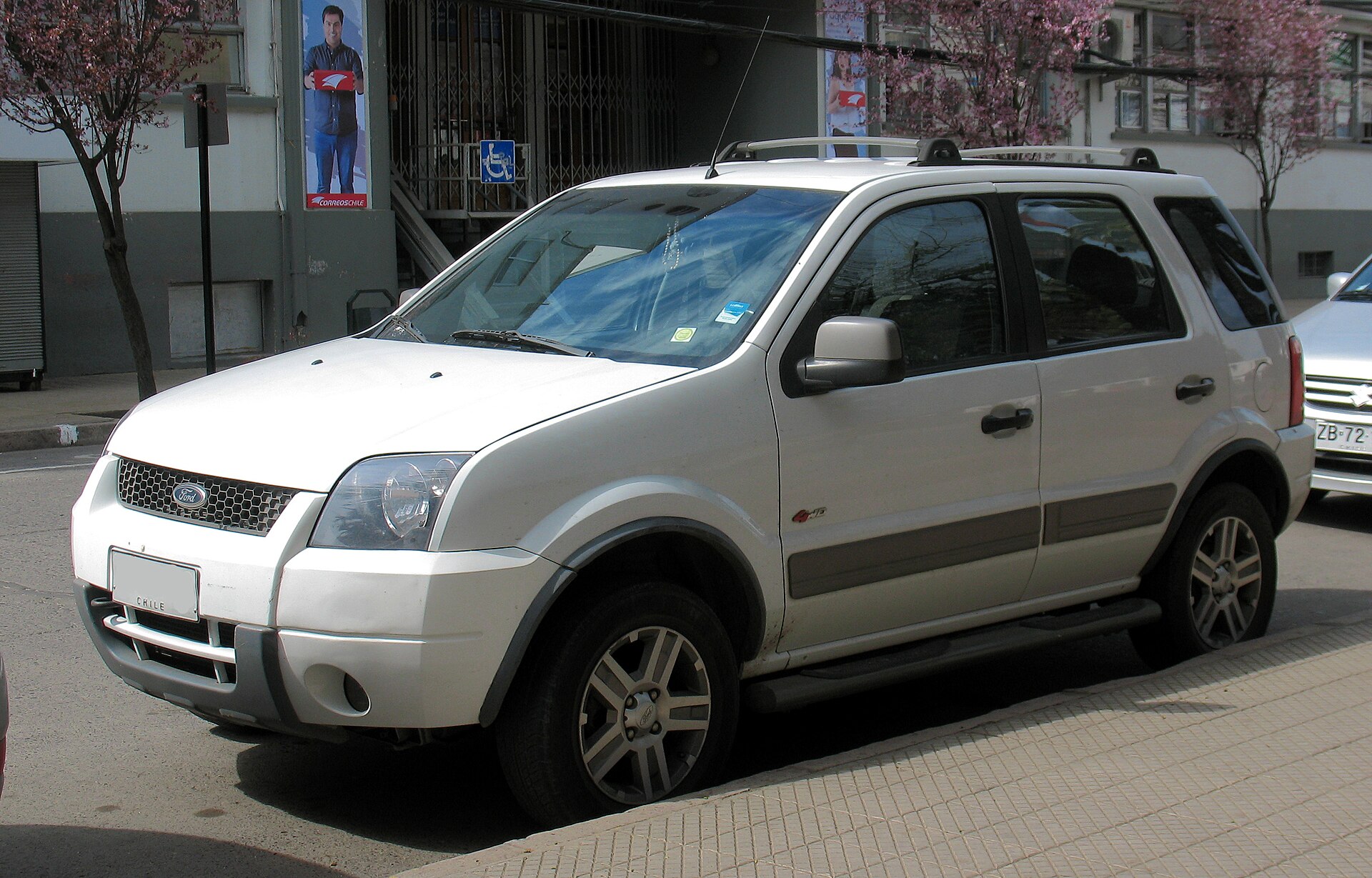
- EcoSport I (BV226) 2003–2012 · SUV
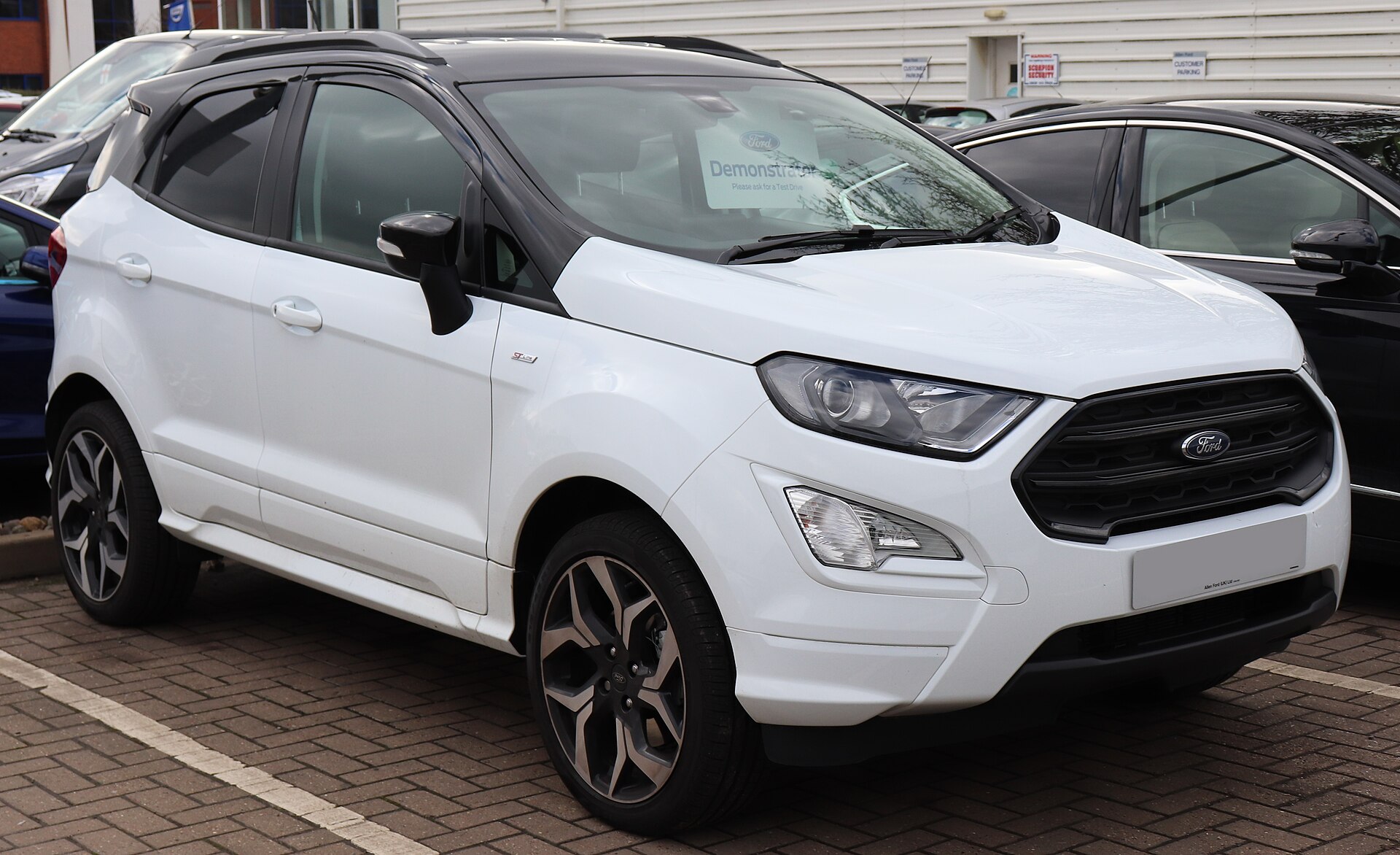
- EcoSport II (B515) 2012–2022 · SUV
Newest first · 2 generations since 2003
-
2012
-
2003
All generations by year: EcoSport II (B515) (2012–2022) · EcoSport I (BV226) (2003–2012)
Which one is mine?
Pick the year of first registration to see which generation it is.
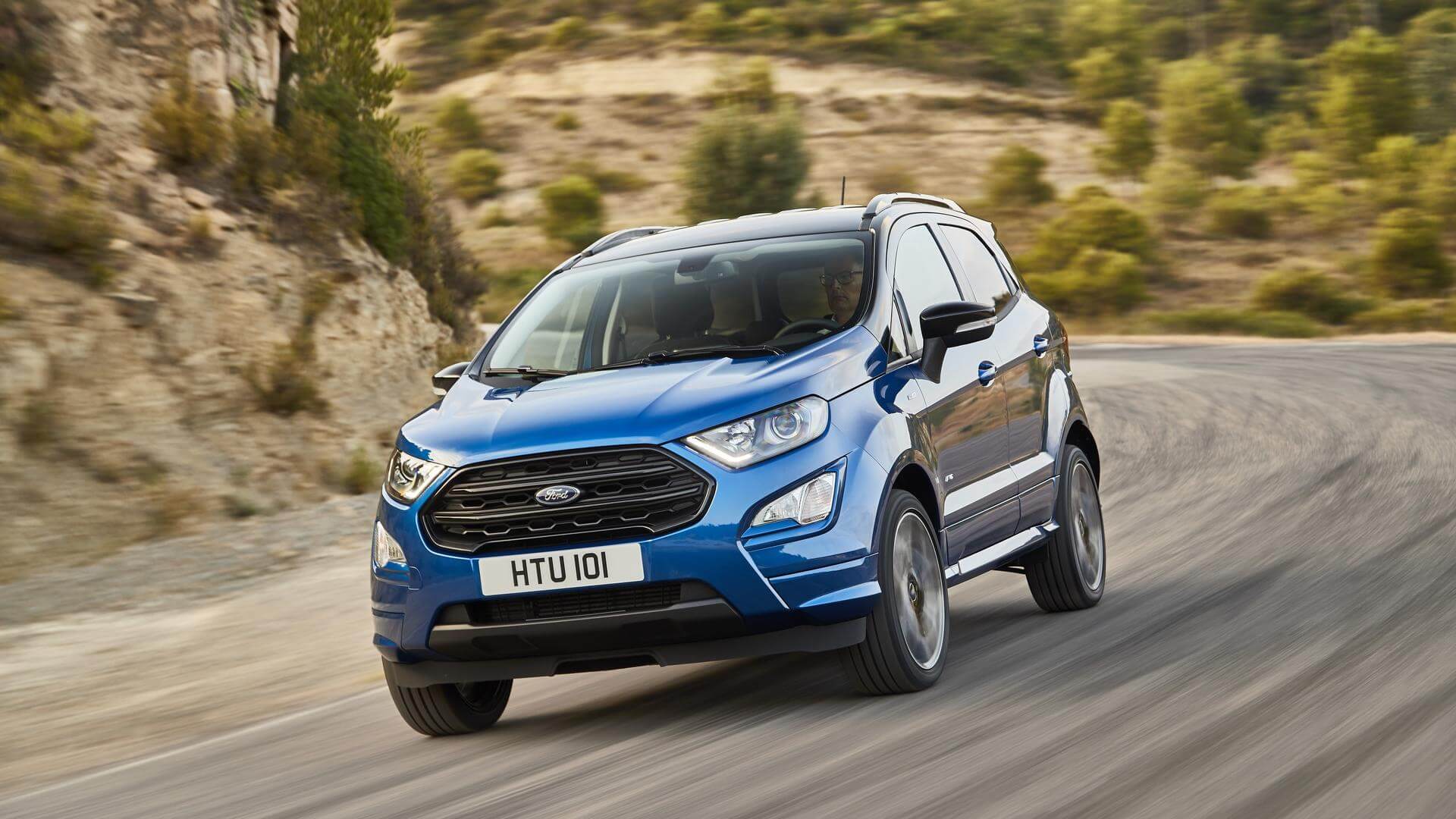
Check by VINThe Ford EcoSport is a subcompact crossover and one of the best-selling cars of its type worldwide. It was developed entirely by Ford's Brazilian division and became a truly global product, sold to demanding European buyers as well as to price-conscious customers in emerging markets. Two generations were produced: the first from 2003 and the second, unveiled in Beijing in 2012, facelifted at the Los Angeles motor show in November 2016 and phased out in the early 2020s.
In short
- First generation (2003–2012): built in Brazil for Latin America, based on the European Ford Fusion; about 700,000 sold by the end of 2011.
- Second generation (2012–early 2020s): a global model; European cars came from India and, from 2017, from Craiova, Romania.
- 200 mm of ground clearance in both generations, a tailgate-mounted spare wheel and optional all-wheel drive.
- Four stars in Euro NCAP for the second generation (adult occupant 93%).
Ford EcoSport at a glance
The EcoSport is a compact, high-riding five-door with a monocoque body and a side-hinged tailgate that carries the spare wheel. Front-wheel drive is standard, with all-wheel drive available on the most powerful versions. Other Ford models are listed in our Ford catalogue, and the larger Ford Escape sits above it in the SUV range.
Ford EcoSport generations
First generation (2003–2012)
Developed by Ford Brazil on the basis of the European Ford Fusion, the first EcoSport made its official debut in 2003 and quickly became popular: by the end of 2011 around 700,000 had been sold. It was built in Brazil and sold only in Latin American countries. A 2007 facelift brought larger headlights.
The front has a big bumper with integrated round fog lamps and a small grille; the sides carry step boards, plastic cladding all round and large wheel arches. Ground clearance is a generous 200 mm. The spare wheel hangs on the large tailgate. One impractical detail is the number-plate recess low in the rear bumper next to the exhaust, where it gets dirty quickly in bad weather.
The interior is simple, with a three-spoke steering wheel, a clear instrument panel and distinctive round air vents. The plastics are basic and the seats could be more comfortable.
| Engine (1st generation) | Fuel | Power (kW / PS) | Torque |
|---|---|---|---|
| 1.4 Duratorq TDCi | Diesel, turbo | 50 kW / 68 PS | 160 Nm |
| 1.0 supercharged | Petrol or petrol-ethanol blend | 70 kW / 95 PS | 126 Nm |
| 1.6 | Petrol | 72 kW / 98 PS | 141 Nm |
| 2.0 | Petrol | 105 kW / 143 PS | 189 Nm |
All versions had a five-speed manual and front-wheel drive. The 2.0 could be ordered with a four-speed automatic and Control Trac II all-wheel drive, which drives the front wheels permanently and engages the rear axle through an RBC multi-plate coupling. The car had anti-roll bars front and rear, front disc brakes and rear drums.
Second generation (2012 onwards)
The second EcoSport was officially unveiled at the Beijing motor show in April 2012 and updated in November 2016, when the facelift was shown in Los Angeles. European-market cars were first imported from India; from 2017 they were built in Craiova, Romania.
The front sits high, but the steeply raked windscreen and short bonnet keep visibility good. Large headlights (halogen or xenon) sit above triangular fog lamps, and the bumper is dominated by an oval grille with horizontal chrome bars and metal-and-plastic protection below. Large windows with chrome trim, mirrors with integrated indicators, slightly flared wheel arches and plastic sill cladding complete the profile. Base versions ride on 16-inch steel wheels; 17-inch alloys are optional. Ground clearance remains 200 mm. The exhaust is hidden under the body, and the spare wheel is again mounted on the tailgate.
The facelift transformed the cabin. It gained better fabrics, plastics and even leather, a leather steering wheel with plenty of buttons and, depending on trim, a 4.2-inch screen or a 6.5-inch SYNC 3 touchscreen. The front seats are heated and covered in hard-wearing synthetic leather with soft padding. In the back, the centre backrest folds down as an armrest, headroom is good and legroom suits average-height passengers, though three adults are a squeeze. ISOFIX mounts are fitted. With a fixed rear backrest, the boot grew by 30 litres to 354 litres, rising to 1,184 litres with the rear seats folded; there is a storage compartment under the floor.
Engines and transmissions (second generation)
In Europe the main engines were the 1.0 EcoBoost turbo petrol with 92 or 103 kW (125 or 140 PS) and the 1.5 TDCi diesel with 70–92 kW (95–125 PS). In several other markets the facelifted EcoSport was offered with two naturally aspirated petrol engines:
| Engine | Power (kW / PS) | Torque | Gearbox | Drive |
|---|---|---|---|---|
| 1.5 Dragon, three-cylinder, 12 valves, variable valve timing | 90 kW / 123 PS | 151 Nm | 5-speed manual or 6-speed automatic | Front |
| 2.0 Duratec, direct injection, 16 valves | 109 kW / 148 PS | 194 Nm | 6-speed automatic | Intelligent AWD |
Top speed is up to 185 km/h, 0–100 km/h takes 11–12.5 seconds and combined consumption ranges from 6.4 to 8.5 l/100 km. The Intelligent All-Wheel Drive system uses a Dana multi-plate clutch to send torque to the rear wheels.
The car rides on Ford's B2E platform with a high share of high-strength steel. Front suspension uses MacPherson struts; front-wheel-drive versions have a twist-beam rear axle, while all-wheel-drive versions get independent multi-link rear suspension. The rack-and-pinion steering has electric assistance, and the brakes are ventilated discs at the front and drums at the rear.
Key specifications
| Parameter | 1st generation | 2nd generation |
|---|---|---|
| Years | 2003–2012 | 2012–early 2020s |
| Built | Brazil | Brazil, India, Romania (Europe from 2017) |
| Power (kW / PS) | 50–105 kW / 68–143 PS | 90–109 kW / 123–148 PS (petrol, example market) |
| All-wheel drive | Control Trac II (2.0) | Intelligent AWD (2.0) |
| Ground clearance | 200 mm | 200 mm |
| Boot | — | 354 / 1,184 l |
Safety
The second generation has electronic stability control, ABS with brake-force distribution, emergency brake assist and hill-start assist (with the automatic). Front airbags are standard; side airbags, curtain airbags and a driver's knee airbag are available on higher trims. In Euro NCAP testing it received four stars, with 93% for adult occupant protection, 77% for child protection and 58% for pedestrian protection.
Strengths and weaknesses
Owners appreciate the EcoSport's styling, ground clearance and the option of all-wheel drive, together with lively performance, a reasonably roomy and attractive cabin, good reliability and safety. The tailgate-mounted spare adds to its off-roader feel. Most would like a bigger boot, and some complain about expensive dealer servicing. Rivals include the Renault Captur, Peugeot 2008, Opel Mokka, Nissan Juke and Hyundai Creta.
Image credits · Photos from Wikimedia Commons under free licences
- Ford EcoSport I (BV226) · Photo: RL GNZLZ from Chile / Wikimedia Commons, CC BY-SA 2.0
- Ford EcoSport II (B515) · Photo: Vauxford / Wikimedia Commons, CC BY-SA 4.0
Ford EcoSport in our rankings
- No. 175 of 912 · Longest-running car nameplates (19 years · top 21%)
- No. 269 of 345 · Cars with the most generations (2 generations)
In production longer than 79% of ranked nameplates in the 1CARS catalog (No. 175 of 912).
FAQ
Where was the Ford EcoSport developed?
Ford's Brazilian division developed the EcoSport; the first generation was based on the European Ford Fusion and built in Brazil.
Does the Ford EcoSport have all-wheel drive?
Yes, on the most powerful versions: Control Trac II in the first generation and Intelligent All-Wheel Drive with the 2.0 engine in the second.
What is the Ford EcoSport's ground clearance?
200 mm in both generations.
How safe is the Ford EcoSport?
The second generation scored four stars in Euro NCAP, with 93% for adult occupant protection.
How big is the Ford EcoSport boot?
The facelifted second generation offers 354 litres, or 1,184 litres with the rear seats folded.
Data sources
Data checked by an editor against the sources below.