 Ford Ranger
All generations, specs and history
Published Sources (6) Report an error
By Felix Hartmann, Automotive Technology & EV Contributor
- Built
- 2011–present
- Generations
- 2 · T6 to P703
- Top power
- 302 kW (411 PS)
Timeline
Ranger generations
Click a generation for its own page


- Ranger T6 2011–2022 · Pickup
- Ranger P703 Current 2022–now · Pickup · 125–302 kW (170–411 PS)
Newest first · 2 generations since 2011
All generations by year: Ranger P703 (2022–now) · Ranger T6 (2011–2022)
Which one is mine?
Pick the year of first registration to see which generation it is.
Check by VINWhich Ranger to choose
Our verdict · Felix Hartmann
- For heavy towing and long distances: the 3.0 V6 diesel. With 600 Nm it is the strongest European diesel, and it pulls the full 3.5 tonnes.
- For mixed use with short commutes: the PHEV. It keeps the 3.5-tonne rating and offers some 40 km of electric driving; firmenauto found the PHEV Wildtrak €2,500 cheaper than the 177 kW (240 PS) diesel in 2024.
- For a sensible work truck: the 2.0 EcoBlue with 125 or 151 kW in XL or XLT trim.
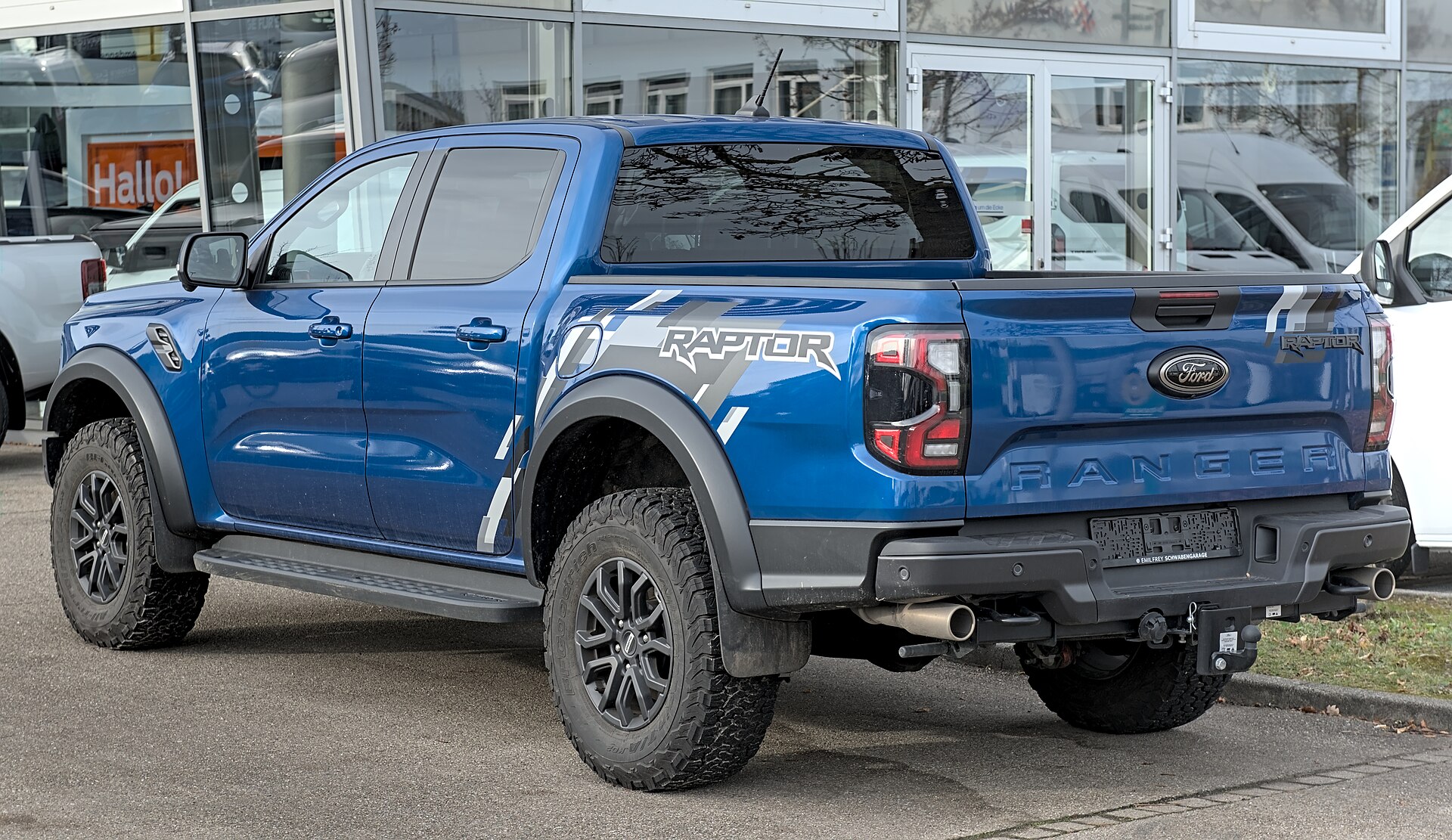
- For fast off-road driving: the wide-body Raptor with its twin-turbo V6 petrol engine, the most expensive Ranger in Germany.
- On the used market: a first T6 from the 2019 update has SYNC 3, the revised front suspension and the option of the 2.0 bi-turbo with the ten-speed automatic. Earlier trucks use the 2.2 or 3.2 TDCi.
Its natural rivals are the Toyota Hilux, Nissan Navara, Isuzu D-Max and its own sister, the Volkswagen Amarok. To put two trucks side by side, start from our car comparison hub; other Ford models are listed in the Ford catalogue.
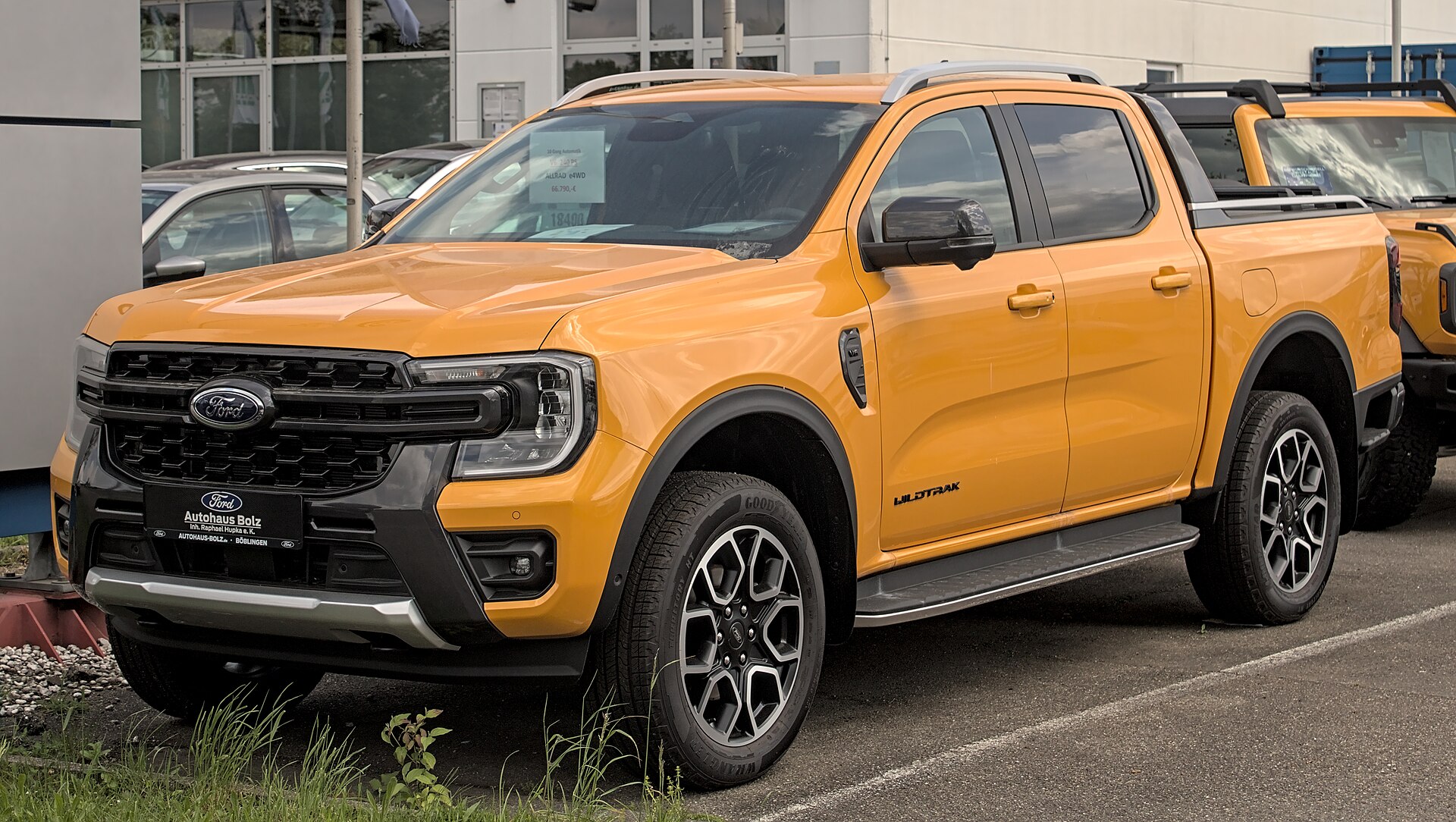
The Ford Ranger is Ford's mid-size pickup for almost every market outside the F-150's home ground, and since 2019 for North America as well. The current family started in 2011 with the T6 platform, engineered by Ford Australia, which replaced both the American compact Ranger and the Mazda-built Rangers sold elsewhere with one worldwide truck. The second T6-based generation, coded P703, has been built since 2022 and now spans diesel, petrol, plug-in hybrid and Raptor versions.
In short
- Two T6-based generations: P375 (2011–2022, called PX in Australia) and P703 (from 2022, called RA in Australia and Thailand).
- European engines today: 2.0 EcoBlue diesel with 125 or 151 kW, 3.0 V6 diesel with 177 kW and 600 Nm, and a plug-in hybrid with about 207 kW.
- Braked towing capacity of 3,500 kg for every European version, including the PHEV; the 2025 Super Duty raises it to 4,500 kg.
- Europe's best-selling pickup for ten years in a row; 60,400 were sold there in 2024, a 43.6% share of the segment.
Size at a glance
Ford Ranger T6
The Ford Ranger P703 is 88 mm longer, 69 mm wider and 84 mm taller than the Ford Ranger T6.
| Dimensions | Ford Ranger P703 | Ford Ranger T6 | Difference |
|---|---|---|---|
| Length | 5,370 mm211.4 in | 5,282 mm208.0 in | +88 mm+3.5 in |
| Width | 1,918 mm75.5 in | 1,849 mm72.8 in | +69 mm+2.7 in |
| Height | 1,884 mm74.2 in | 1,800 mm70.9 in | +84 mm+3.3 in |
| Wheelbase | 3,270 mm128.7 in | 3,220 mm126.8 in | +50 mm+2.0 in |
Specs by version
Engines
| Version | Engine | Power | Torque | Gearbox | Production years |
|---|---|---|---|---|---|
| Plug-in hybrid · 1 version | |||||
| P703 · 2.3 EcoBoost PHEV | 4 cyl · Plug-in hybrid | 207 kW 281 PS278 hp | 697 Nm514 lb-ft | 10-sp Automatic | 2025 |
| Diesel · 8 versions | |||||
| T6 · 2.2 TDCi diesel | 4 cyl · Diesel | 88 kW 120 PS118 hp | 285 Nm210 lb-ft | - | 2011 |
| T6 · 2.2 TDCi diesel | 4 cyl · Diesel | 110 kW 150 PS148 hp | 375 Nm277 lb-ft | - | 2011 |
| T6 · 2.0 EcoBlue diesel | 4 cyl · Diesel | 125 kW 170 PS168 hp | 420 Nm310 lb-ft | - | 2019 |
| T6 · 3.2 TDCi diesel | 5 cyl · Diesel | 147 kW 200 PS197 hp | 470 Nm347 lb-ft | - | 2011 |
| T6 · 2.0 EcoBlue bi-turbo diesel | 4 cyl · Diesel | 154 kW 209 PS207 hp | 500 Nm369 lb-ft | 10-sp Automatic | 2019 |
| P703 · 2.0 EcoBlue diesel | 4 cyl · Diesel | 125 kW 170 PS168 hp | 405 Nm299 lb-ft | - | 2022 |
| P703 · 2.0 EcoBlue bi-turbo diesel | 4 cyl · Diesel | 151 kW 205 PS202 hp | 500 Nm369 lb-ft | - | 2022 |
| P703 · 3.0 V6 diesel | 6 cyl · Diesel | 177 kW 241 PS237 hp | 600 Nm443 lb-ft | 10-sp Automatic | 2022 |
| Petrol · 6 versions | |||||
| T6 · 2.5 Duratec petrol | 4 cyl · Petrol | 122 kW 166 PS164 hp | 226 Nm167 lb-ft | 5-sp Manual | 2011 |
| T6 · 2.3 EcoBoost petrol (North America) | 4 cyl · Petrol | 201 kW 273 PS270 hp | 420 Nm310 lb-ft | 10-sp Automatic | 2019 |
| P703 · 2.3 EcoBoost petrol (North America) | 4 cyl · Petrol | 201 kW 273 PS270 hp | 420 Nm310 lb-ft | 10-sp Automatic | 2022 |
| P703 · Raptor 3.0 EcoBoost V6 (Europe) | 6 cyl · Petrol | 215 kW 292 PS288 hp | - | 10-sp Automatic | 2022 |
| P703 · 2.7 EcoBoost V6 petrol (North America) | 6 cyl · Petrol | 235 kW 320 PS315 hp | - | 10-sp Automatic | 2024 |
| P703 · Raptor 3.0 EcoBoost V6 (North America) | 6 cyl · Petrol | 302 kW 411 PS405 hp | - | 10-sp Automatic | 2023 |
Performance
Show all 1 versions
| Version | Range |
|---|---|
| P703 · 2022–present | |
| P703 · 2.3 EcoBoost PHEV | 43 km27 mi |
Dimensions and weight
Show all 2 versions
| Version | Length | Width | Height | Wheelbase | Kerb weight |
|---|---|---|---|---|---|
| T6 · 2011 | |||||
| T6 · 2.2 TDCi diesel | 5,282 mm208.0 in | 1,849 mm72.8 in | 1,800 mm70.9 in | 3,220 mm126.8 in | 2,092 kg4,612 lb |
| P703 · 2022–present | |||||
| P703 · 2.0 EcoBlue diesel | 5,370 mm211.4 in | 1,918 mm75.5 in | 1,884 mm74.2 in | 3,270 mm128.7 in | 2,314 kg5,101 lb |
Verified Manufacturer and type-approval data from our catalog · Sources and methodology
Safety
-
T6 · NHTSA 2011
US NCAP (NHTSA)
Stars from different years and organisations are not directly comparable: test protocols change every few years.
Ford Ranger at a glance
| Item | Ford Ranger (T6 family) |
|---|---|
| Production | from mid-2011 (first T6), current P703 from 2022 |
| Engineering | Ford Australia, T6 and T6.2 platforms |
| Main plants | Rayong (Thailand), Silverton (South Africa), General Pacheco (Argentina), Wayne (Michigan, USA), Nanchang (China, P703) |
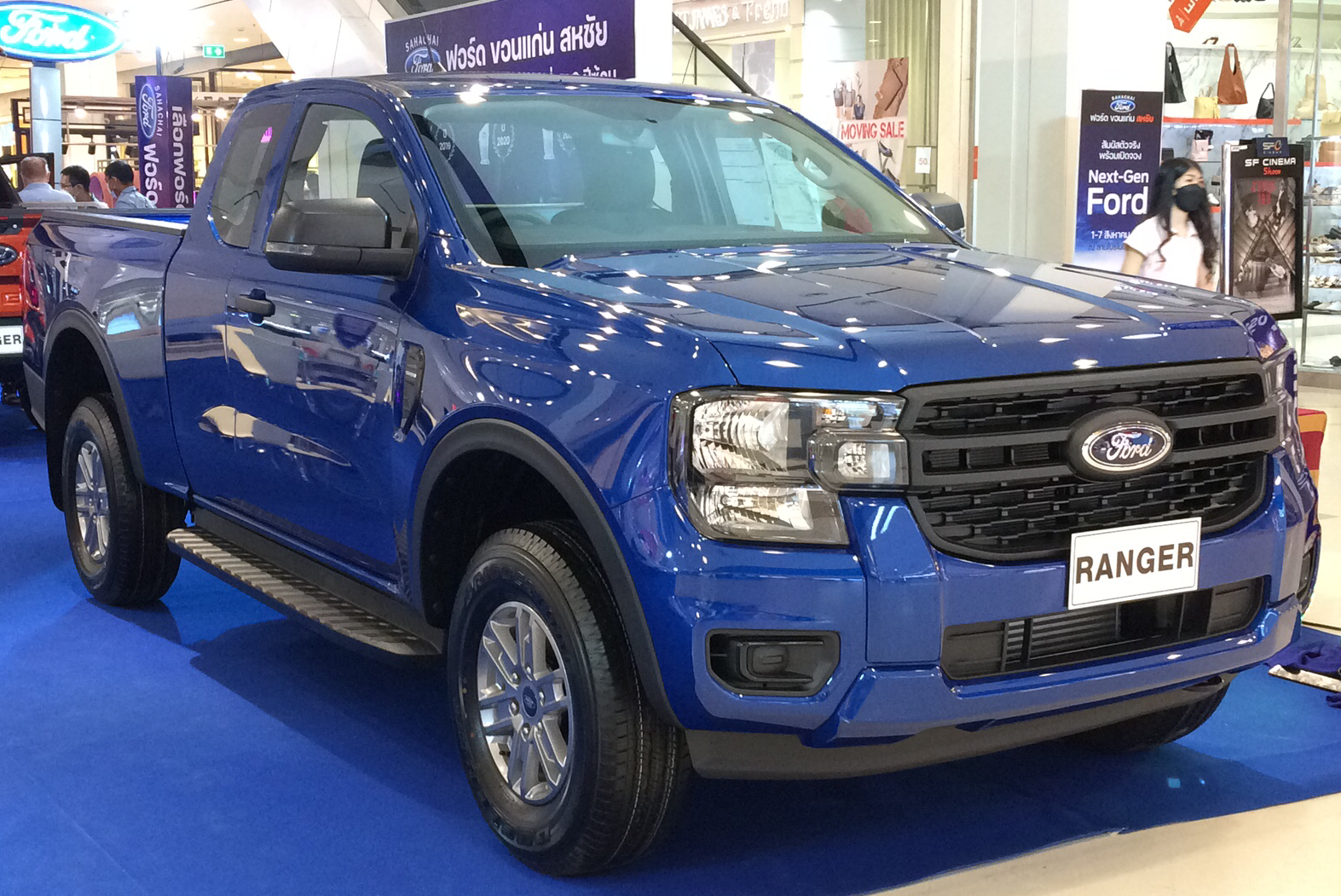
| Bodies | single cab, extended cab (Super Cab / Open Cab), double cab |
| Layout | body-on-frame, rear-wheel drive or four-wheel drive |
| Engines | 2.0 and 3.0 diesel, 2.3 petrol and PHEV, 2.7 and 3.0 V6 petrol |
| Power range | 88 kW (2.2 TDCi, first T6) to 302 kW (North American Raptor) |
| Towing | 3,500 kg braked (4,500 kg Super Duty) |
| Related models | Mazda BT-50 (second generation), Ford Everest, Volkswagen Amarok (since 2022) |
Where the name comes from
The name first appeared in 1958 on the Edsel Ranger, the cheapest Edsel sedan. Ford revived it in 1965 as a trim package for F-Series trucks, offered until the 1981 model year. For its first compact truck in 1971 Ford simply sold a rebadged second-generation Mazda B-Series as the Ford Courier.
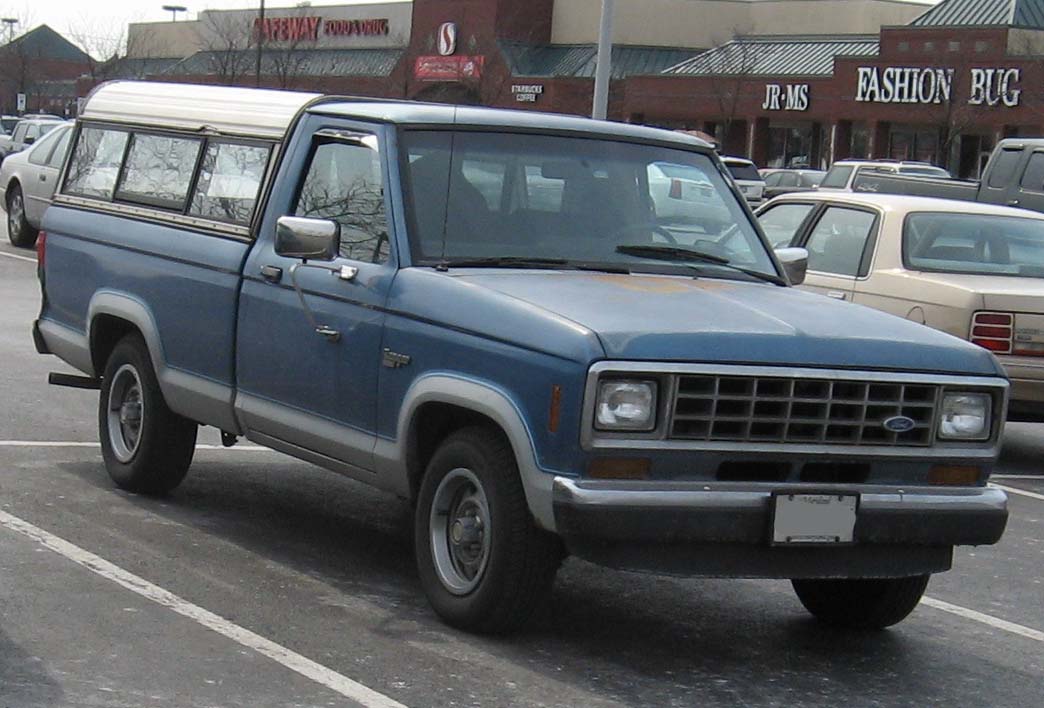
For 1983 Ford replaced the Courier in North America with the Ranger, the first compact pickup it designed itself. That truck stayed on one chassis architecture through three generations and ranked among the best-selling compact vehicles for nearly 29 years; the last one left the Twin Cities plant in Minnesota on 22 December 2011. In Asia, Australasia, Europe and Africa, Ford sold Mazda-sourced Rangers from 1998 to 2011, the second of them derived from the Mazda BT-50. Ford Argentina added a four-door cab when it began local production in 1998. The relationship with Mazda goes back to Ford's long stake in the Japanese company, described in our history of Mazda.

Generations since 2011
| Generation | Code | Years | Body styles | Engines | Power (kW / hp) |
|---|---|---|---|---|---|
| T6, first generation | P375 (PX, PX MkII, PX MkIII) | 2011–2022 (North America 2019–2023) | single, extended and double cab | 2.2 and 3.2 TDCi, 2.0 EcoBlue, 2.5 petrol, 2.3 EcoBoost | 88–201 kW (118–270 hp) |
| T6.2, second generation | P703 (RA) | from 2022 | single, extended and double cab | 2.0 EcoBlue, 3.0 V6 diesel, 2.3 EcoBoost and PHEV, 2.7 and 3.0 EcoBoost V6 | 125–302 kW (170–405 hp) |
Numbering differs by market. In most countries the first T6 counts as the third Ranger generation and the P703 as the fourth; in North America the same trucks are the fourth and fifth.
The first T6 (2011–2022)
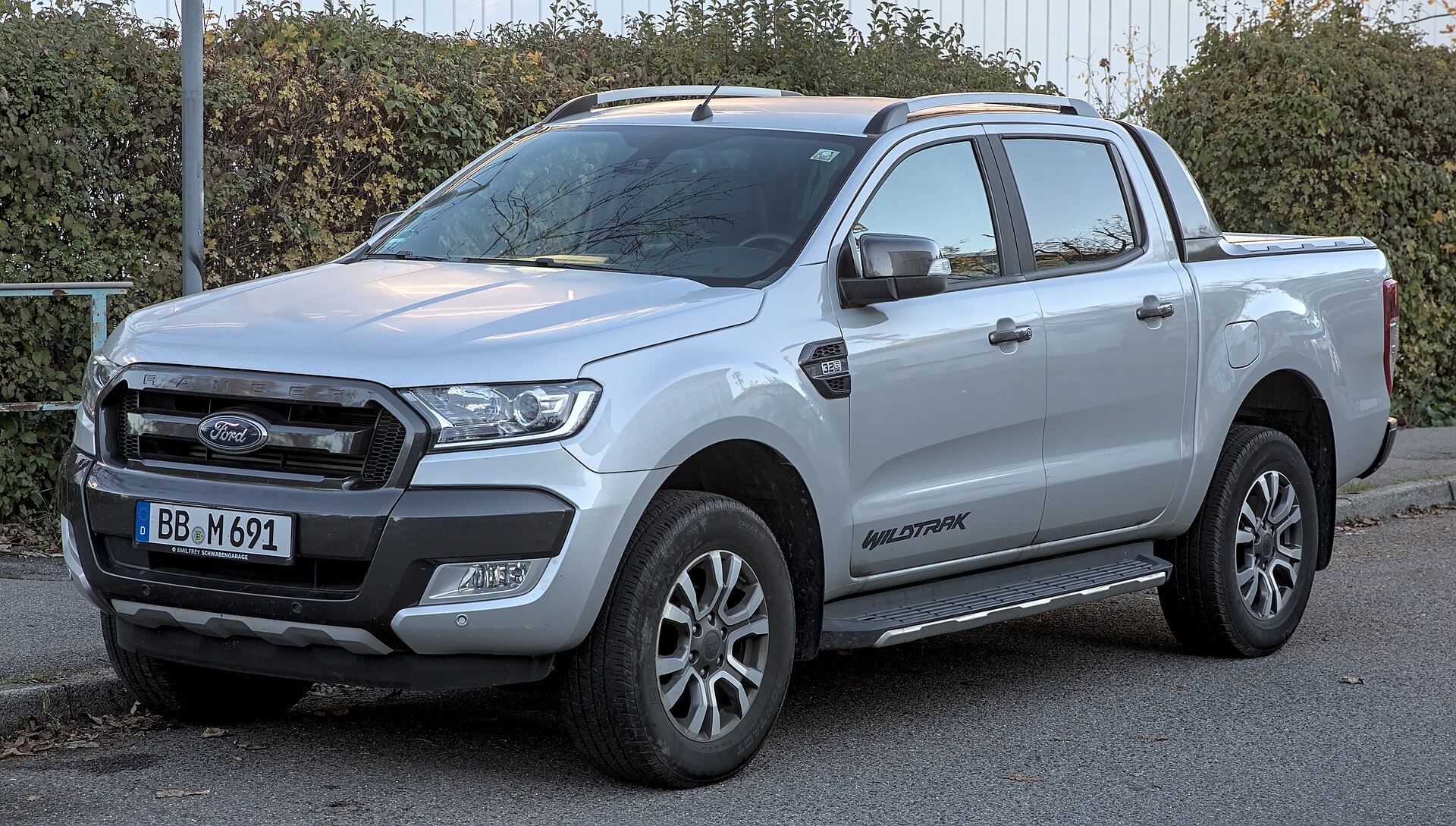
Ford showed the new Ranger at the Australian International Motor Show in October 2010, and production began in mid-2011. It was conceived as one truck for the whole world outside North America. The same engineering went into the second Mazda BT-50, which is mechanically identical, and into the Ford Everest SUV.
The truck changed twice in its life. The 2015 update (PX MkII in Australia) brought an oval grille with a single centre bar and a new interior. The 2019 update (PX MkIII) revised the front suspension, added SYNC 3 infotainment and made the 2.0-litre bi-turbo diesel available outside the Raptor. In Europe the Ranger had seven airbags, one more than elsewhere, because a driver knee airbag was standard.
In February 2018 Ford unveiled the first Ranger Raptor in Thailand: a 2.0 EcoBlue bi-turbo diesel with 154 kW (207 hp) and 500 Nm, a ten-speed automatic and standard four-wheel drive. It was never sold in North America. The T6 itself reached the United States for the 2019 model year after an eight-year gap. It was built at Michigan Assembly in Wayne from October 2018 with a fully boxed frame and a 201 kW (270 hp) 2.3 EcoBoost petrol engine as its only powertrain. In January 2021 What Car? named the Ranger Double Cab 2.0 EcoBlue 213 Wildtrak automatic its Pick-up of the Year.

The current P703 (2022 onwards)
The P703 was revealed on 24 November 2021, and production started in the second quarter of 2022 in Thailand and South Africa. The revised T6.2 platform keeps the separate ladder frame. Volkswagen has worked on the project since 2017 under the Ford–VW alliance, and the second-generation Volkswagen Amarok uses the same base.
European deliveries began with the Thai-built Raptor at the end of 2022; the diesel versions followed in early 2023 from South Africa. The range has grown since then:
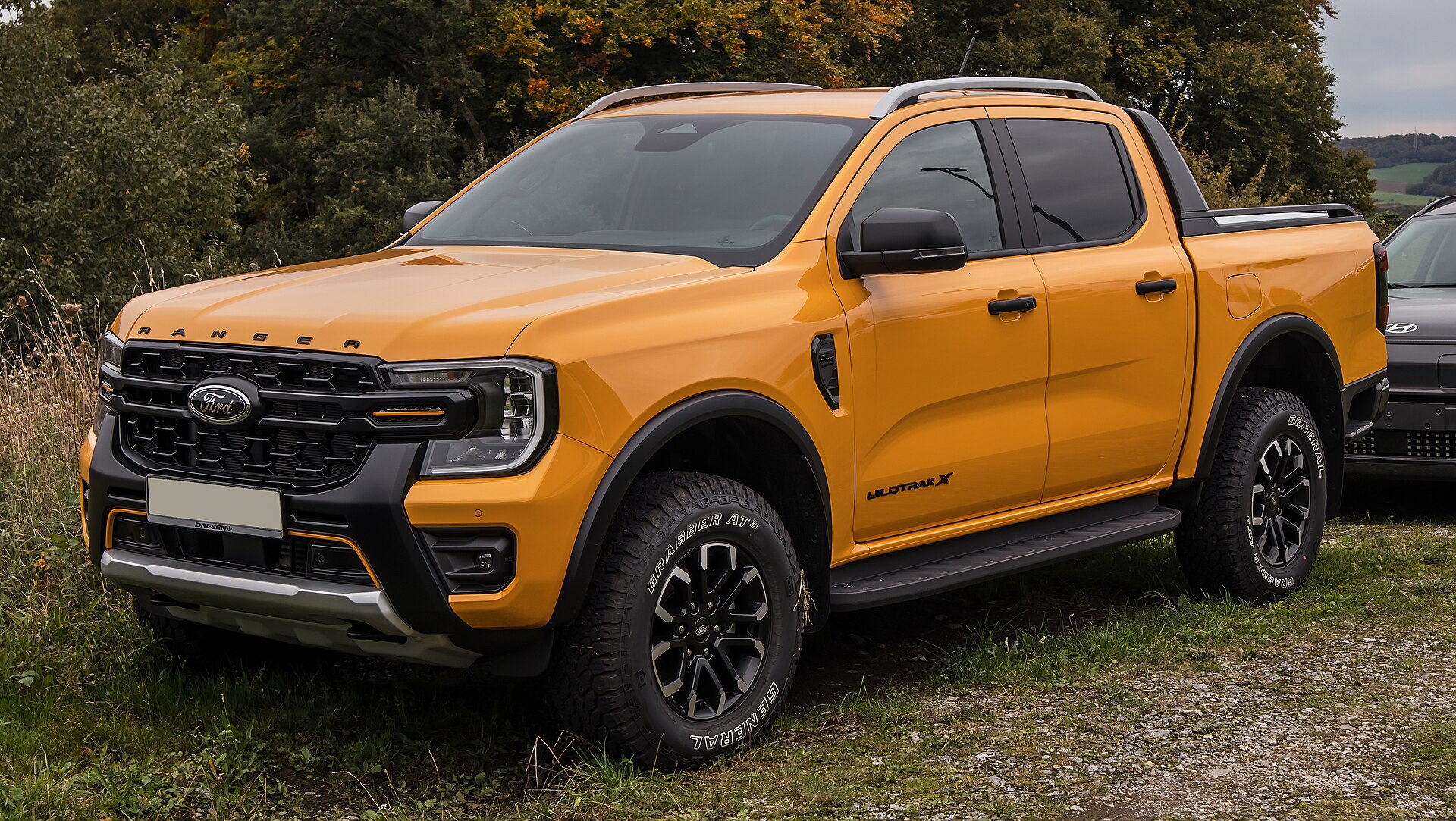
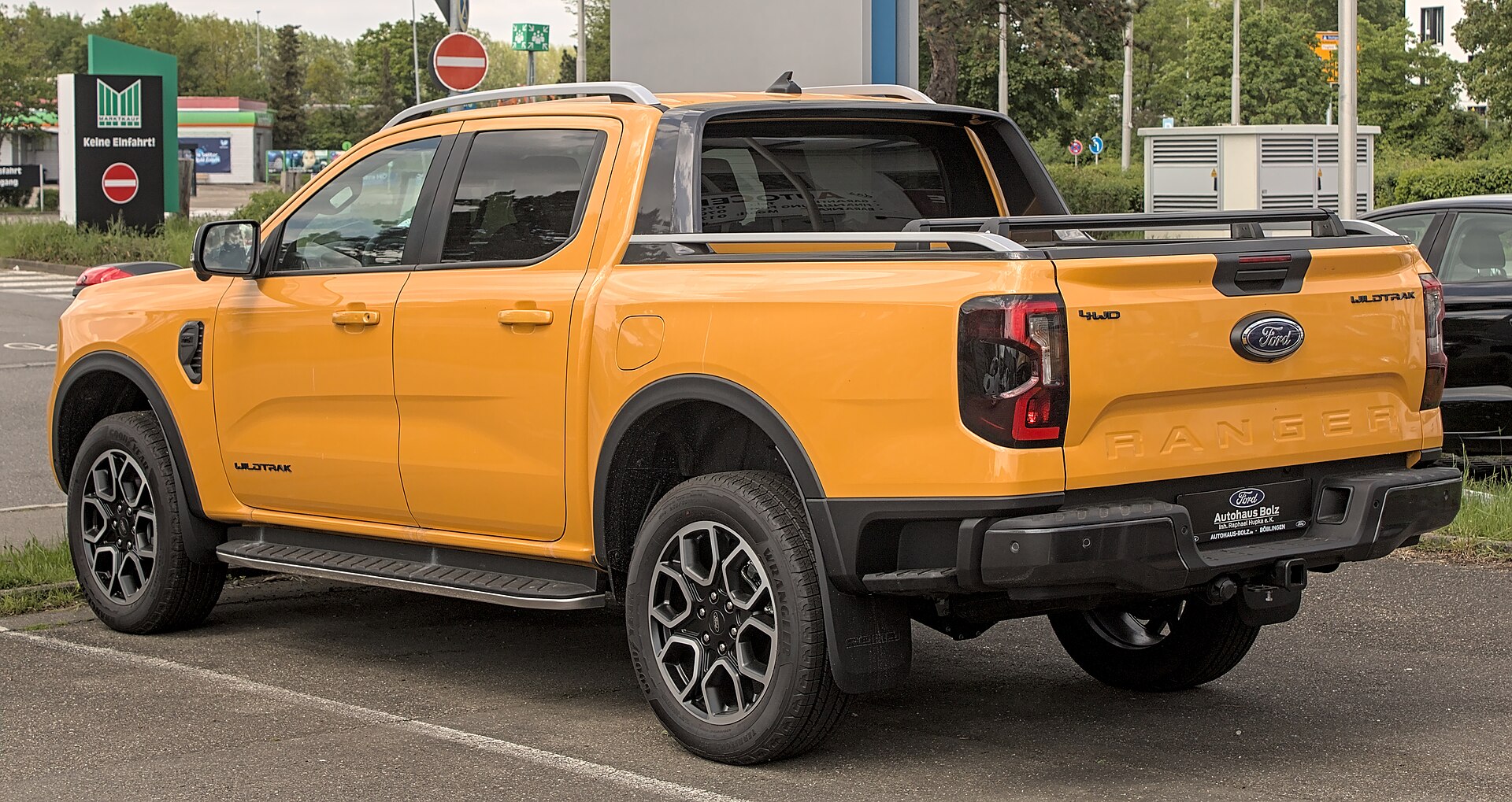
- Wildtrak X (March 2023): wider track and more ground clearance than the Wildtrak.
- Tremor: an off-road trim launched in Europe in the same month.
- PHEV (shown September 2023): 2.3 EcoBoost petrol, 75 kW electric motor and an 11.8 kWh battery, built in South Africa; Australian sales began in March 2025, European deliveries in the summer of 2025.
- MS-RT (February 2024): a sport-styled version.
- Super Duty (shown 4 April 2025): built in Thailand for 4,500 kg braked towing, 1,982 kg payload and an 8,000 kg gross combination mass, with a 3.0 V6 diesel of 600 Nm. Australian sales began in January 2026; Europe is planned before the end of 2026.
Euro NCAP tested the P703 at the end of 2022 and gave it five stars, with 84% for adult occupants, 90% for child occupants, 74% for vulnerable road users and 84% for safety assist.

Engines and power
The tables use the outputs given by the sources; kW come first, then PS for European engines and hp for the others.
| First T6 (2011–2022) | Output | Torque | Gearbox |
|---|---|---|---|
| 2.2 TDCi diesel, four-cylinder | 88–118 kW (118–158 hp) | 285–400 Nm | 6-speed manual or 6-speed automatic |
| 3.2 TDCi diesel, five-cylinder | 147 kW (197 hp) | 470 Nm | 6-speed |
| 2.5 Duratec petrol | 122 kW (164 hp) | 226 Nm | 5-speed manual |
| 2.0 EcoBlue diesel (from 2019) | 125 kW (168 hp) | 420 Nm | 6- or 10-speed automatic |
| 2.0 EcoBlue bi-turbo diesel (from 2019) | 154 kW (207 hp) | 500 Nm | 10-speed automatic |
| 2.3 EcoBoost petrol (North America) | 201 kW (270 hp) | 420 Nm | 10-speed automatic |
| Current P703 (from 2022) | Output | Torque | Market |
|---|---|---|---|
| 2.0 EcoBlue diesel | 125 kW (170 PS) | 405 Nm | Europe and others |
| 2.0 EcoBlue bi-turbo diesel | 151 kW (205 PS) | 500 Nm | Europe and others |
| 3.0 V6 diesel | 177 kW (240 PS) | 600 Nm | Europe and others |
| 2.3 EcoBoost PHEV | 207 kW (281 PS) | 697 Nm | Europe, Australia |
| 3.0 EcoBoost V6 petrol, Raptor | 215 kW (292 PS) | - | Europe |
| 2.3 EcoBoost petrol | 201 kW (270 hp) | 420 Nm | North America |
| 2.7 EcoBoost V6 petrol | 235 kW (315 hp) | about 542 Nm | North America (XLT, Lariat) |
| 3.0 EcoBoost V6 petrol, Raptor | 302 kW (405 hp) | - | North America |
The Raptor's power depends on local emission rules: 292 kW in Australia, 302 kW in the United States and less in Europe. For the PHEV, Auto Zeitung quotes 207 kW and 697 Nm, while Wikipedia lists 202 kW (271 hp) and 690 Nm. Auto Zeitung gives up to 43 km of electric range. To translate these outputs into other units, use our power converter.

Towing, payload and size
Towing capacity is the same across the European range. All current versions, the plug-in hybrid included, are rated for a 3.5-tonne braked trailer. The first T6 with the 2.2 diesel carried up to 1,333 kg of payload; firmenauto gives about one tonne for the PHEV. Four-wheel-drive and Hi-Rider versions can wade through 800 mm of water, against 600 mm for the low-riding two-wheel-drive trucks.
A P703 double cab is up to 5,381 mm long (Raptor) on a wheelbase of just over three metres, and 2,208 mm wide with mirrors. The double cab's load bed is 1,638 mm long, the Super Cab's 1,882 mm and the single cab's 2,352 mm; the bed is 1,224 mm wide between the wheel arches. Before buying, check whether a truck this long suits your parking space with our garage fit checker.
Prices and sales
In October 2025 Auto Zeitung listed the German Ranger from €43,780 in the configurator, the double cab from €46,755 and the Raptor, sold only as a double cab, at €77,767, all including VAT.
The Ranger has been Europe's best-selling pickup for ten consecutive years. Other markets per Wikipedia: 62,593 sold in Australia in 2024, 46,205 in the United States in 2024 and 70,960 there in 2025, plus 34,063 in Brazil in 2025.

Photo gallery


Ford Ranger: first vs latest generation
| Spec | Ranger T6 | Ranger P703 | Change |
|---|---|---|---|
| Years | 2011 | 2022–present | 11 years apart |
| Most powerful version | 201 kW (273 PS) | 302 kW (411 PS) | +101 kW (+50%) |
| Length | 5,282 mm | 5,370 mm | +88 mm |
| Width | 1,849 mm | 1,918 mm | +69 mm |
| Wheelbase | 3,220 mm | 3,270 mm | +50 mm |
| Lightest kerb weight | 2,092 kg | 2,314 kg | +222 kg |
Oldest and newest generation in the 1cars catalog. Power is the strongest version of each; other rows are shown only when both generations have the figure.
Popular comparisons
Ford Ranger in our rankings
More powerful than 60% of ranked pickup trucks in the 1CARS catalog (No. 8 of 20).
Ford Ranger photos 6
FAQ
How many generations of the Ford Ranger are there?
Two are based on the T6 platform: the first from 2011 to 2022 and the P703 from 2022. Counting the American compact Ranger and the Mazda-based models, the current truck is the fourth generation in most markets and the fifth in North America.
Is there a hybrid Ford Ranger?
Yes. The Ranger PHEV combines a 2.3 EcoBoost petrol engine with a 75 kW electric motor and an 11.8 kWh battery. Auto Zeitung gives 207 kW and 697 Nm, and up to 43 km of electric range.
How much can a Ford Ranger tow?
European versions are rated for 3,500 kg with a braked trailer, the PHEV included. The Ranger Super Duty, revealed in 2025, is rated for 4,500 kg.
What engine does the Ranger Raptor have?
The first Raptor (2018) used a 2.0 bi-turbo diesel with 154 kW. The current one has a 3.0 twin-turbo V6 petrol engine: 215 kW in Europe (Wikipedia's English text says 210 kW), 292 kW in Australia and 302 kW in North America.
How much did a new Ford Ranger cost in Germany in 2025?
Auto Zeitung listed prices from €43,780 in October 2025, €46,755 for the double cab and €77,767 for the Raptor.
Data sources
Data checked by an editor against the sources below.
- Wikipedia - Ford Ranger (T6)
- Euro NCAP - Jeep Compass Disappoints Honda Civic Impresses
- Euro NCAP - B7292a67 C6ef 41c0 Bc50 63072b225572
- Autozeitung - Ford Ranger 2022 Preis Motoren 200462
- Wikipedia - Ford Ranger
- NHTSA 5-Star Safety Ratings (US NCAP) — U.S. Government work, public domain