 Ford Boss 302 Mustang
All generations, specs and history
Published Sources (1) Report an error
By Sarah Whitmore, Senior Automotive Writer
- Built
- 1969–2013
- Generations
- 2
- Top power
- 331 kW (450 PS)
Timeline
Boss 302 Mustang generations
Click a generation for its own page
Newest first · 2 generations since 1969


All generations by year: Boss 302 (2012–2013) · Boss 302 (1969–1970)
Which one is mine?
Pick the year of first registration to see which generation it is.
Check by VINWhich Boss 302 to choose
Our verdict · Sarah Whitmore
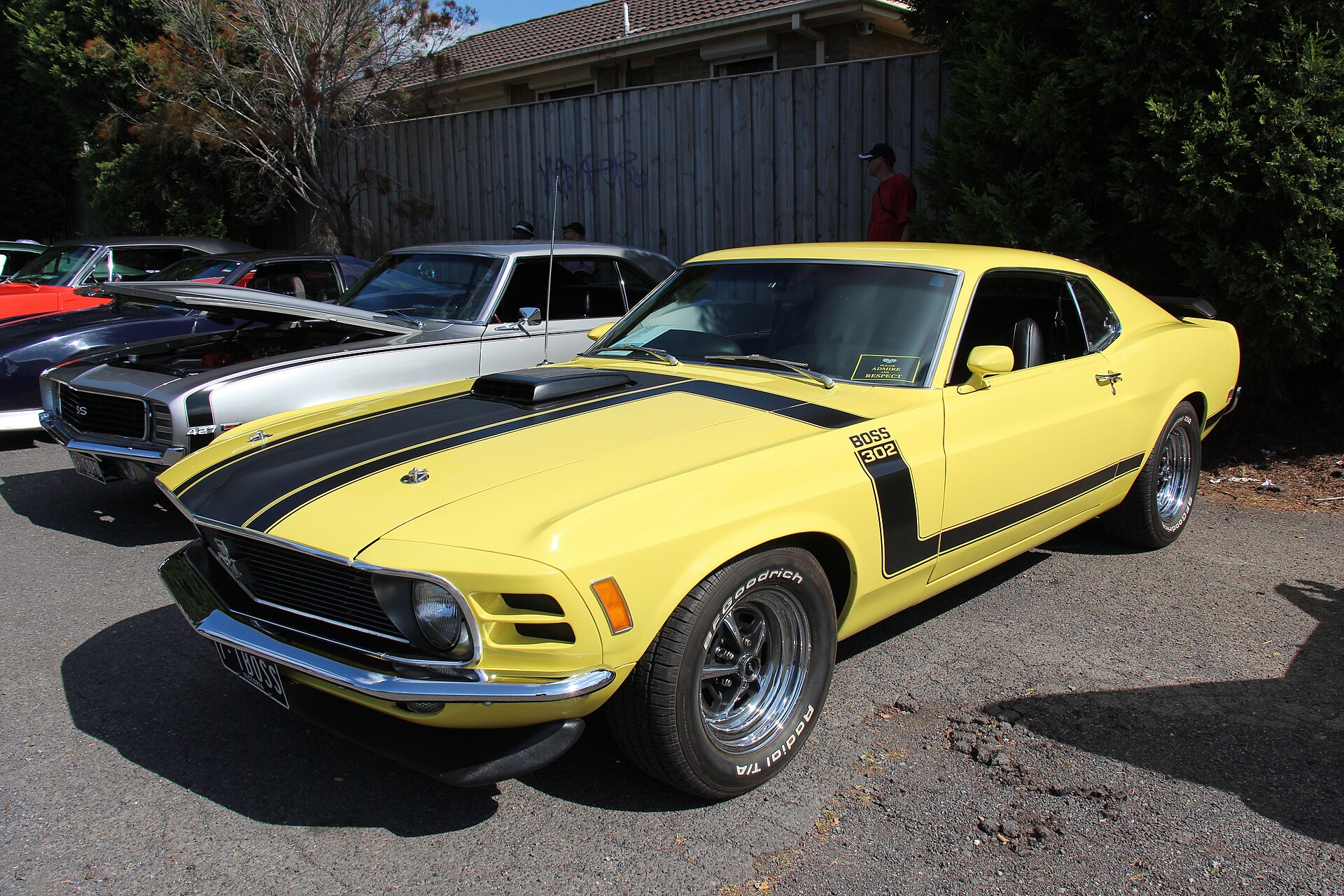
- For the Trans-Am story: a 1970 car, the year Ford won the championship.
- For the original design: a 1969 car, the first year of Shinoda's Boss.
- For track days: a 2012–2013 Laguna Seca, with Torsen differential and R-compound tyres.
The Boss 302 had a big-block sister, the Boss 429, and the same engine went into the Mercury Cougar Eliminator. Its rivals are in the American muscle car guide, and you can set the figures against each other with the car comparison tool.
The Boss 302 is the Ford Mustang built to homologate a small-block V8 for the SCCA Trans-Am series. The first version ran for the 1969 and 1970 model years with a 302 cu in V8 rated at 216 kW (290 hp, SAE gross); Ford sold 7,013 of them. The name returned for 2012–2013 on a lighter-revving, track-tuned Mustang GT with 331 kW (450 PS).
In short
- Built as Ford's answer to the Chevrolet Camaro Z/28 in the 5-litre Trans-Am class; Parnelli Jones won the 1970 championship for Ford in a Bud Moore Boss 302.
- Styled by Larry Shinoda, who named it after "the boss's car", the Mustang favoured by Ford president Semon "Bunkie" Knudsen.
- Four-speed manual only, front disc brakes as standard, US$3,720 in 1970.
- 2012–2013: 5.0 V8 with 331 kW at 7,400 rpm and 515 Nm, plus 750 Laguna Seca editions.
Specs by version
Verified Manufacturer and type-approval data from our catalog · Sources and methodology
Boss 302 at a glance
| Specification | Boss 302 (1969–1970) | Boss 302 (2012–2013) |
|---|---|---|
| Body | two-door SportsRoof fastback | two-door coupé |
| Engine | 302 cu in (4.9 l) V8, solid lifters | 5.0 l four-valve V8 (Coyote-based) |
| Power | 216 kW (290 hp, SAE gross) | 331 kW (450 PS) at 7,400 rpm |
| Torque | not published in the sources | 515 Nm (380 lb-ft) at 4,500 rpm |
| Gearbox | four-speed manual | six-speed MT-82 manual |
| Brakes | front discs standard | four-wheel discs |
| Built | 7,013 in total | just over 3,250 base cars plus 750 Laguna Seca, per Wikipedia |
| Price new | US$3,720 (1970) | not given in the sources |
The Boss 302 sits in the Mustang family; the full story of all generations is on our Ford Mustang page.
Shinoda, Knudsen and the "boss's car"
The car was styled by Larry Shinoda, a designer who had previously worked at General Motors. The name came from his description of the project as "the boss's car", meaning Ford president Semon Knudsen. He removed the fake air scoops from the rear quarter panels of the standard 1969 Mustang and added a front spoiler and a rear deck wing. Wikipedia counts it among the first production cars with both. A black horizontal rear-window shade and a blacked-out bonnet were optional.
The aim was racing. The SCCA Trans-Am series limited engines to 5 litres (305 cu in), and Penske's Chevrolet Camaro Z/28s won the title in 1968. Ford needed a homologated road car with the right engine and chassis parts, and the Boss 302 was it.

The 302 engine and chassis
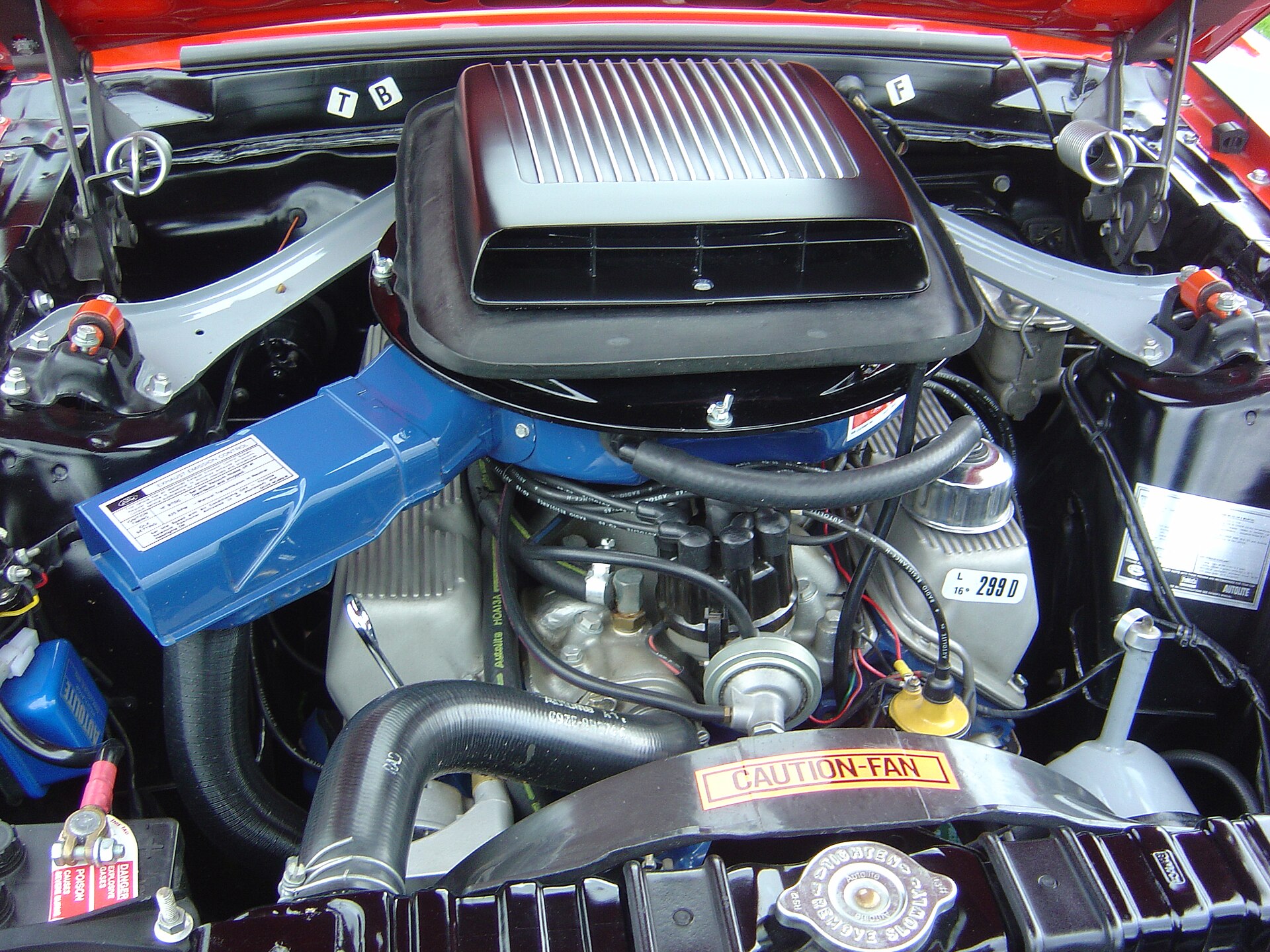
The engine was more than a tuned Windsor small-block. It had a thin-wall, high-nickel block with four-bolt main bearings instead of two, solid lifters and threaded freeze plugs. The heads had canted valves and were designed for the 351 Cleveland that Ford was about to launch, with modified coolant passages to suit the 302 block. For 1970 the intake valves became slightly smaller. Ford rated it at 216 kW (290 hp); the sources give no torque figure.
The chassis was lowered and received larger anti-roll bars, heavier spindles and reinforced shock towers. Front disc brakes were standard, drive went to the rear wheels, and the only gearbox was a four-speed manual. For 1970 Ford redesigned the dual exhaust and the suspension.
| Test (1970 Boss 302) | Result |
|---|---|
| 0–60 mph | 6.9 s |
| Quarter mile | 14.6 s |
| Top speed | 158 km/h (98 mph) |
| Source | Mustangspecs.com, quoted by Wikipedia |

1969 and 1970: what changed
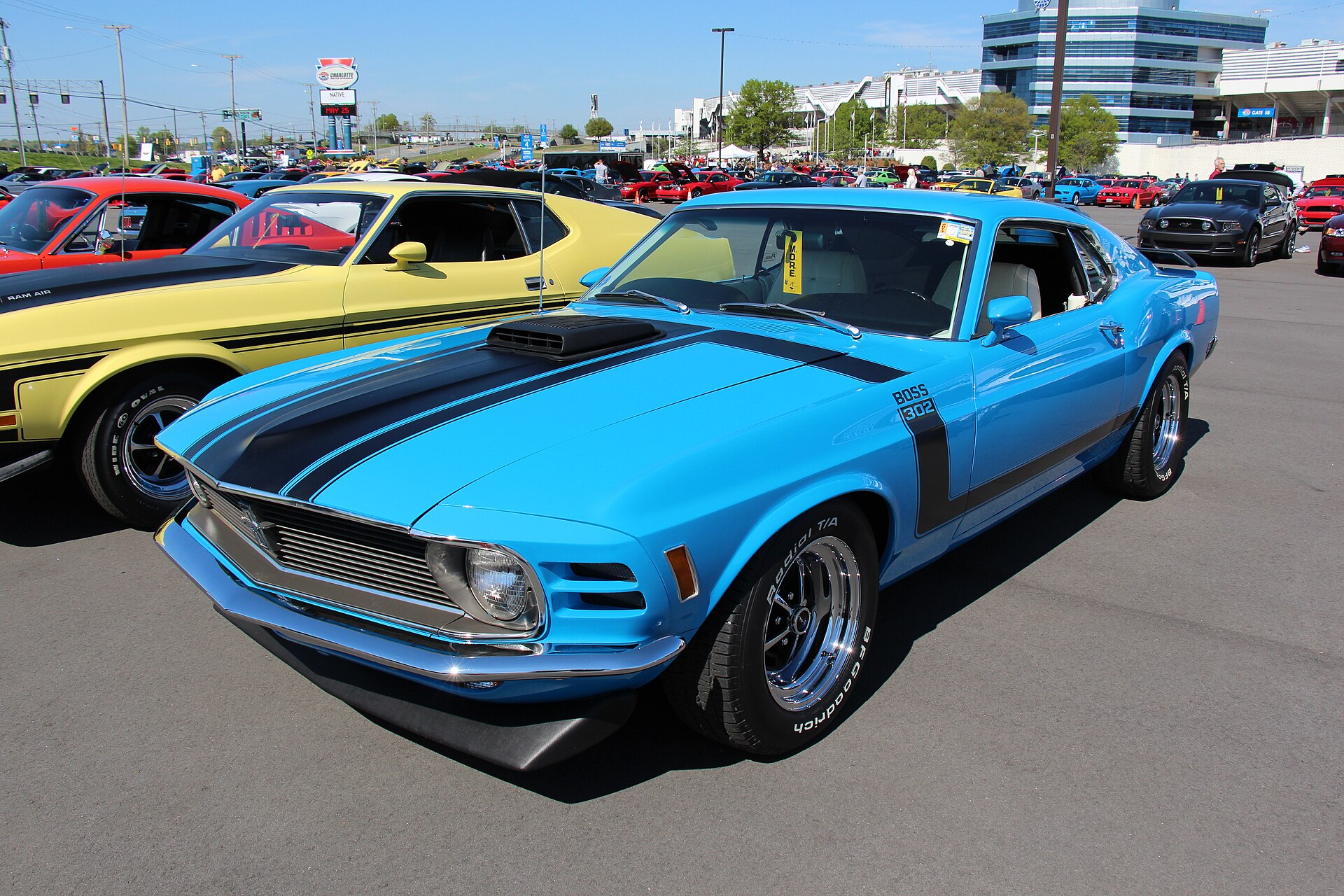
The 1970 car is easy to recognise. "Hockey stick" stripes ran along the sides, and vents replaced the outer headlights, which moved inside the grille opening. Cast aluminium valve covers replaced the chromed ones, and a Hurst shifter became standard. The price in 1970 was US$3,720; Hagerty quotes US$3,529 for a 1969 Boss 302. Ford sold 7,013 cars over the two years before dropping the model.

Trans-Am: from defeat to the 1970 title
The 1969 season went badly for Ford. Problems away from the engine, such as Firestone tyres that proved inadequate and slow pit stops, held the team back, and Penske's Camaros took the title again. For 1970 Bud Moore ran two cars on Goodyear tyres. Parnelli Jones beat Penske's lead driver Mark Donohue, who now drove an AMC Javelin, and Ford won the championship.
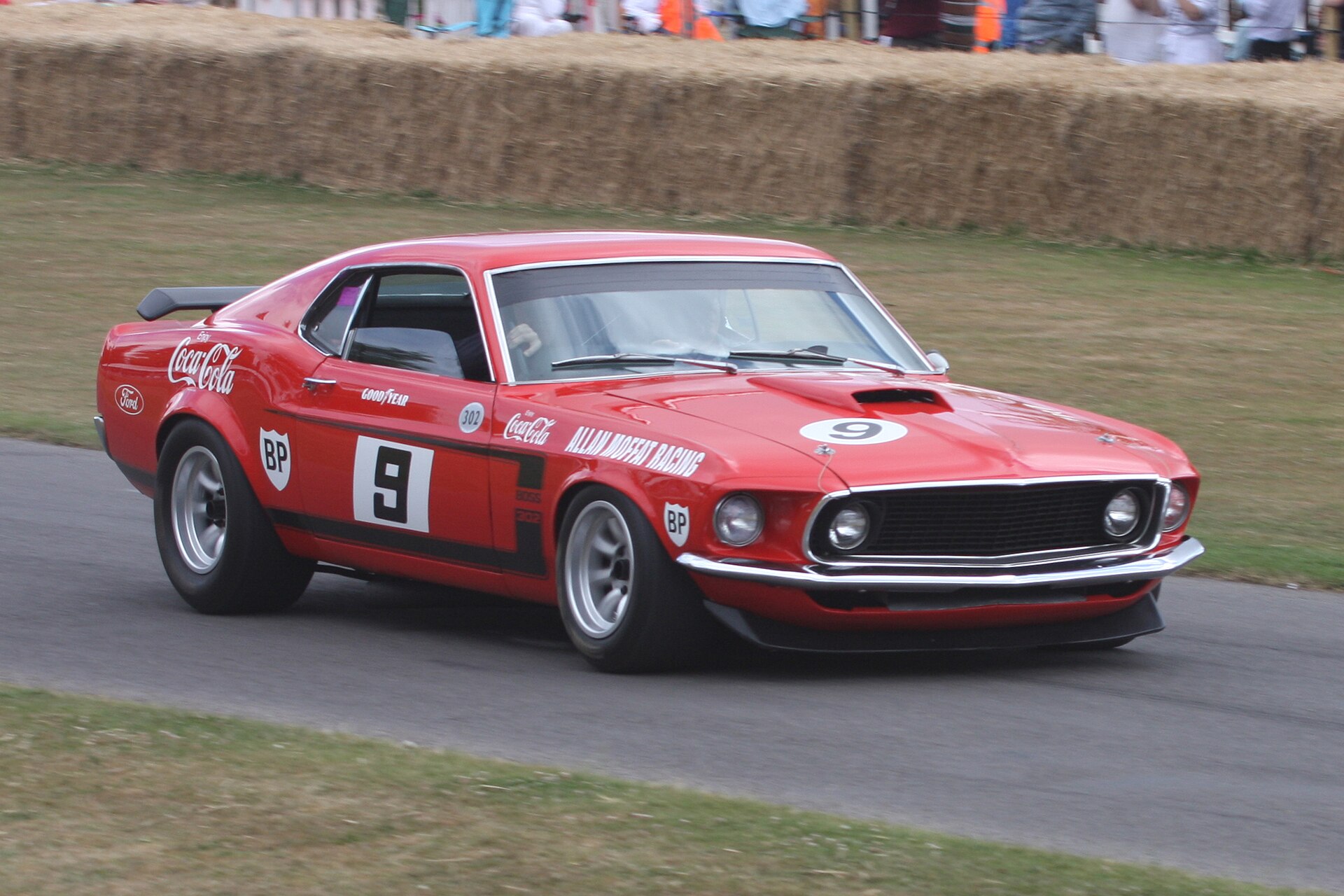
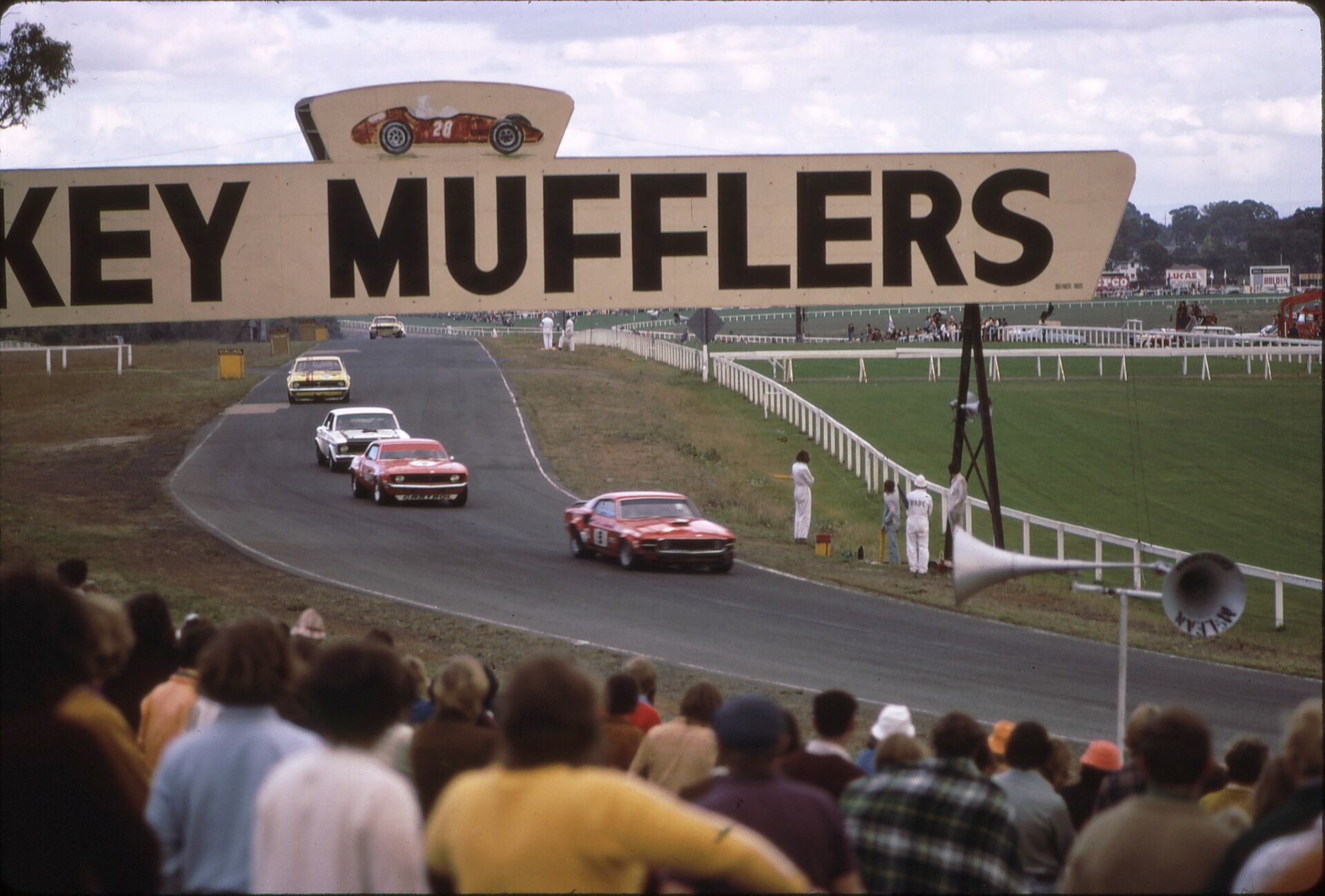
Ford dropped the Boss 302 after that season. Donohue won the 1971 title for AMC, and George Follmer, a former Mustang driver, won in 1972. In Australia, Allan Moffat raced a Boss 302 in the Australian Touring Car Championship from 1969 to 1972 and scored 101 wins from 151 starts, finishing sixth in 1970, second in 1971 and third in 1972.

Boss 302 (2012–2013)
Ford brought the name back for the 2012 model year. The engine was based on the 5.0-litre Coyote V8 of the Mustang GT, with a forged crankshaft, CNC-ported heads, new camshafts and a high-flow intake manifold taken from the Boss 302R race car. It produced 331 kW (450 PS) at 7,400 rpm and 515 Nm (380 lb-ft) at 4,500 rpm: 24 kW (32 hp) more and 14 Nm (10 lb-ft) less than the GT.
| Part | 2012–2013 Boss 302 |
|---|---|
| Gearbox | six-speed MT-82 manual |
| Axle | 3.73:1, carbon-plate limited slip; Torsen optional |
| Exhaust | four outlets: two at the rear, two side pipes with removable discs |
| Suspension | stiffer springs and bushings, larger rear anti-roll bar, front lowered by just under 13 mm (1/2 in) |
| Wheels and tyres | 19-inch, 9 in front and 9.5 in rear; Pirelli P Zero 255/40 R19 and 285/35 R19 |
| Electronics | extra "sport" mode for traction and stability control |
The aero parts were copied almost entirely from the 302R. By our calculation the new engine delivered about 66 kW per litre against 44 kW per litre for the 1970 car, half as much again from almost the same displacement. Wikipedia gives just over 3,250 base cars for the two years, a figure it marks as needing a citation.
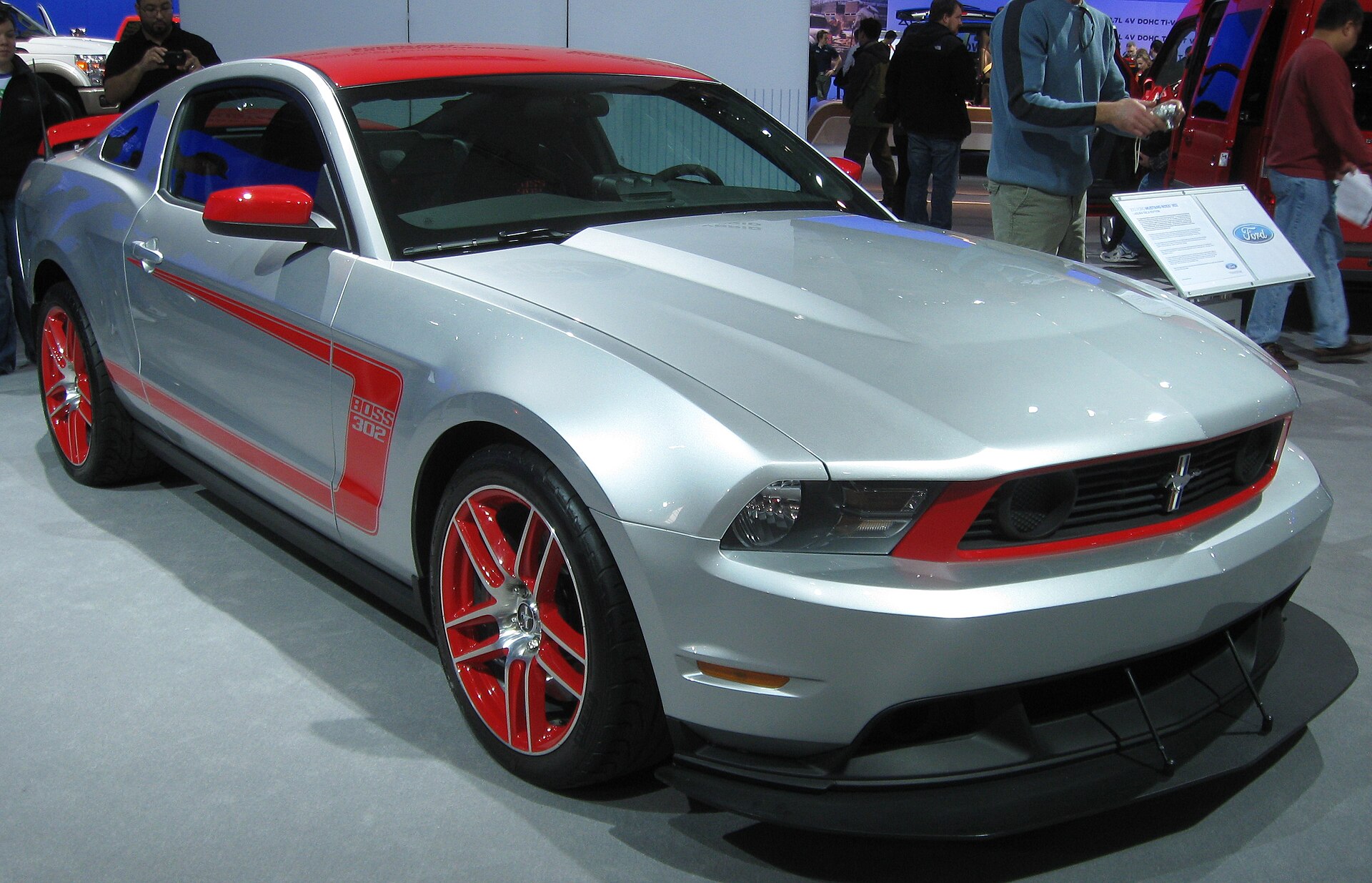
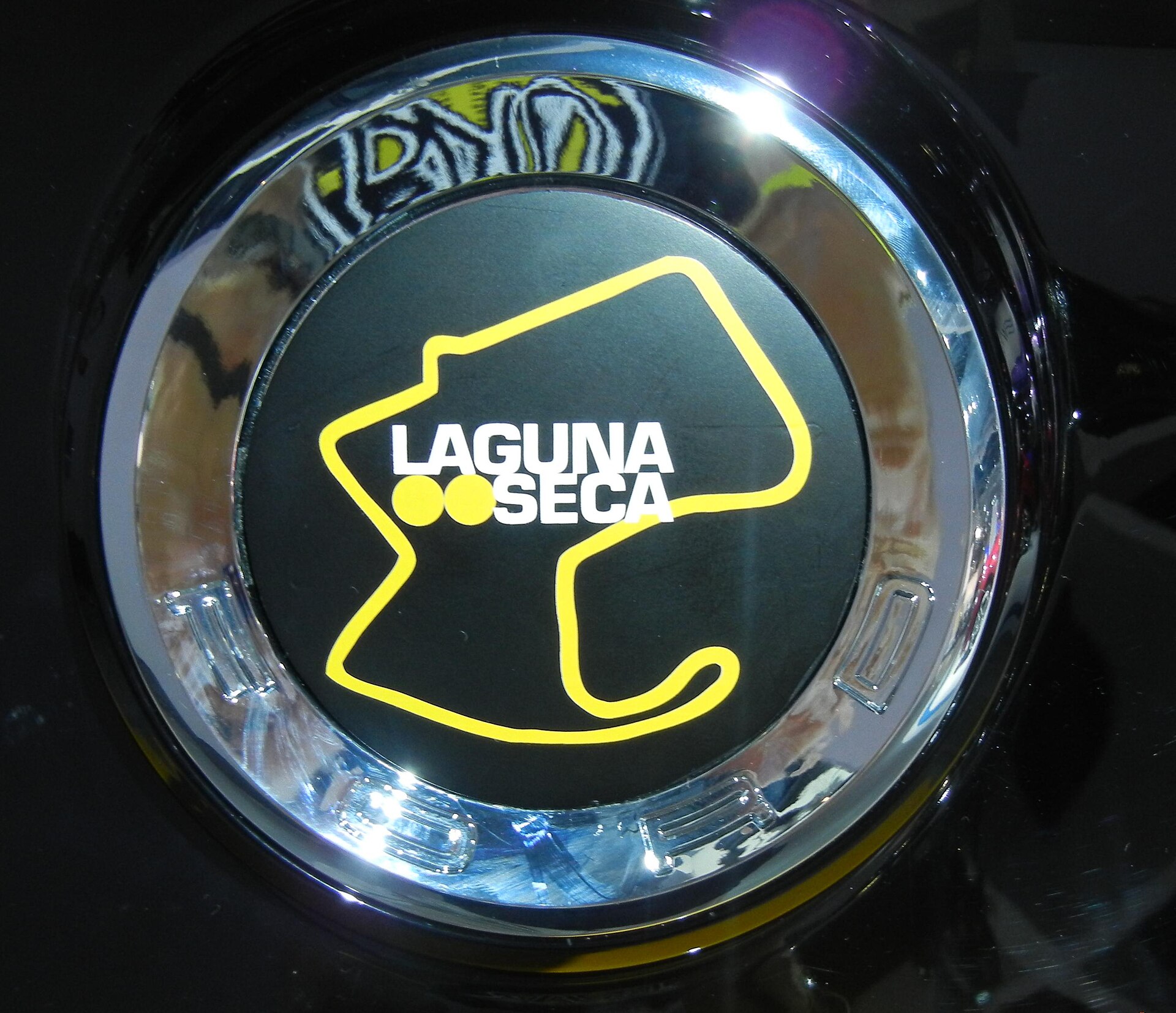
The Laguna Seca version added Recaro seats, the Torsen differential, revised suspension, a larger rear bar and brake cooling ducts. An X-brace replaced the rear seat and, according to Wikipedia, raised lateral stiffness by about 10 %. It ran on 19 x 9-inch front and 19 x 10-inch rear wheels with R-compound tyres. The 2012 cars were black or Ingot Silver with a red roof; for 2013 School Bus Yellow replaced silver, and the front splitter and rear spoiler grew. Ford built 750 Laguna Secas. The 302R and 302S were track-only cars.

Boss 302 buying guide
- Know the year: the 1970 car has the side "hockey stick" stripes, the inner headlights and the Hurst shifter; the 1969 car keeps its headlights in the outer position.
- Check the engine: the Boss block has four-bolt mains and threaded freeze plugs, and the heads have canted valves. A car with an ordinary 302 is not a matching Boss.
- Gearbox: every original car had a four-speed manual; an automatic means a conversion.
- Front brakes: discs were standard, so a car with front drums has been altered.
- Modern cars: the Laguna Seca has no rear seat but an X-brace; 750 were built, in black, Ingot Silver or School Bus Yellow with red or matt silver details.
The sources do not give current market values for either generation.
Photo gallery


Ford Boss 302 Mustang: first vs latest generation
| Spec | Boss 302 | Boss 302 | Change |
|---|---|---|---|
| Years | 1969–1970 | 2012–2013 | 43 years apart |
| Most powerful version | 216 kW (294 PS) | 331 kW (450 PS) | +115 kW (+53%) |
Oldest and newest generation in the 1cars catalog. Power is the strongest version of each; other rows are shown only when both generations have the figure.
Image credits · Photos from Wikimedia Commons under free licences
- Ford Boss 302 · Photo: Sicnag / Wikimedia Commons, CC BY 2.0
Popular comparisons
Ford Boss 302 Mustang in our rankings
- No. 35 of 154 · Most powerful American cars (331 kW · top 23%)
- No. 150 of 557 · Biggest engines: cars (4,951 cc · top 27%)
- No. 88 of 312 · Most powerful cars of the 2010s (331 kW · top 29%)
- No. 240 of 859 · Most powerful cars (331 kW · top 29%)
- No. 64 of 154 · Most powerful V8 cars (331 kW · top 42%)
- No. 133 of 313 · Most powerful coupes (331 kW · top 43%)
More powerful than 77% of ranked American cars in the 1CARS catalog (No. 35 of 154).
Ford Boss 302 Mustang photos 6
FAQ
Why is it called Boss 302?
Designer Larry Shinoda called it "the boss's car", after Ford president Semon Knudsen, and 302 is the engine size in cubic inches.
How much horsepower did the 1970 Boss 302 have?
Ford rated it at 216 kW (290 hp, SAE gross).
How many Boss 302 Mustangs were made?
7,013 in 1969 and 1970 together. For 2012–2013, just over 3,250 base cars and 750 Laguna Seca editions.
Did the Boss 302 win the Trans-Am?
Yes. Parnelli Jones won the 1970 SCCA Trans-Am championship for Ford in a Bud Moore Boss 302.
What engine does the 2012 Boss 302 have?
A 5.0-litre V8 based on the Coyote, with 331 kW (450 PS) at 7,400 rpm and 515 Nm.
Data sources
Data checked by an editor against the sources below.