 Toyota Hilux
All generations, specs and history
Published Sources (3) Report an error
By Sarah Whitmore, Senior Automotive Writer
- Built
- 1968–present
- Generations
- 9
- Top power
- 150 kW (204 PS)
Timeline
Hilux generations
Click a generation for its own page
N140/N150/N160/N170 and AN10/AN20/AN30 overlapped in 2004–2005, so AN10/AN20/AN30 sits on a second lane
- Hilux N10 1968–1972 · Pickup
- Hilux N20 1972–1978 · Pickup
- Hilux N30/N40 1978–1983 · Pickup
- Hilux N50/N60/N70 1983–1988 · Pickup
- Hilux N80/N90/N100/N110 1988–1997 · Pickup
- Hilux N140/N150/N160/N170 1997–2005 · Pickup
- Hilux AN10/AN20/AN30 2004–2015 · Pickup
- Hilux AN110/AN120/AN130 2015–2025 · Pickup
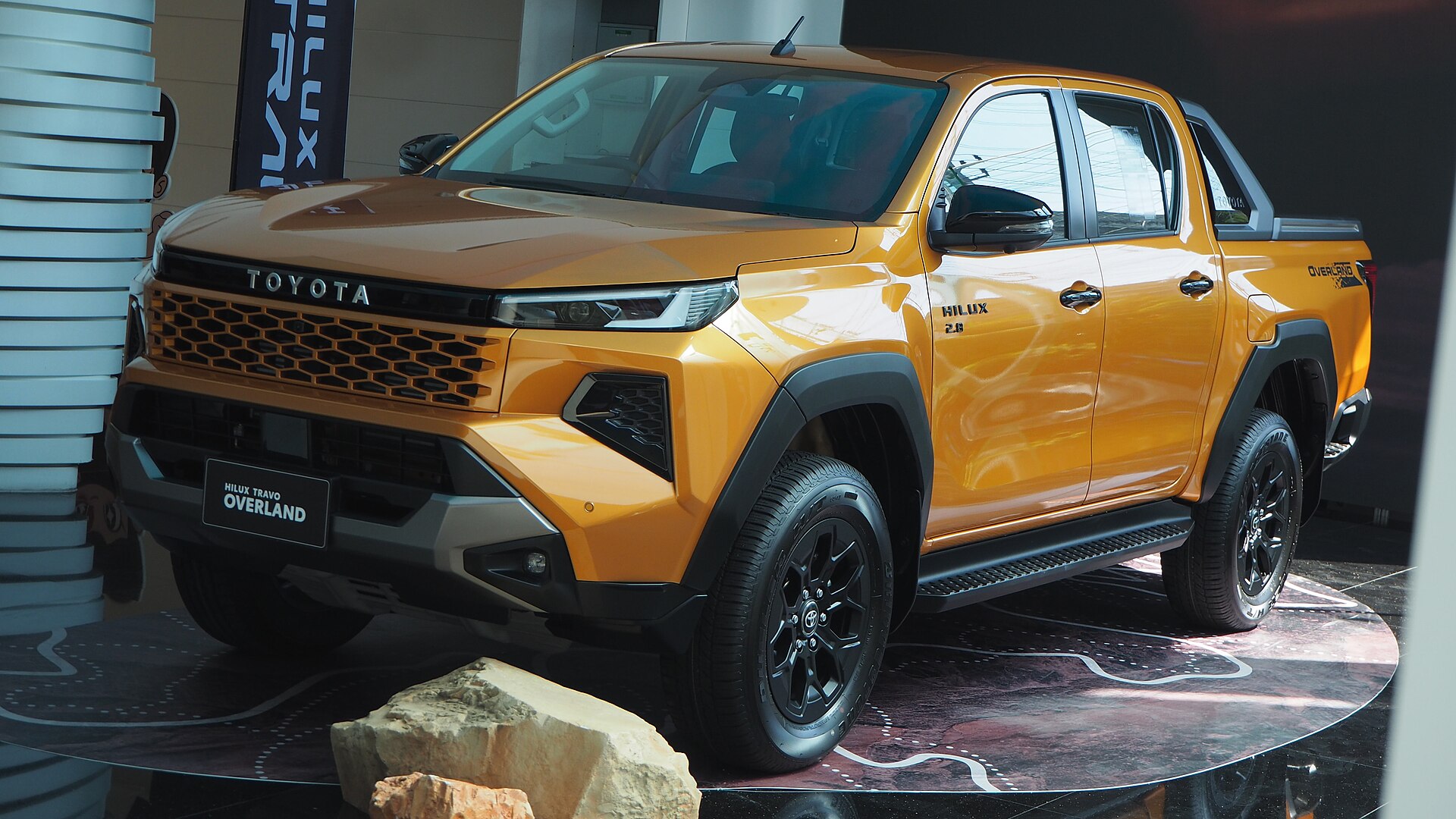
- Hilux IX Current 2025–now · Pickup
Newest first · 9 generations since 1968
-
2025
-
2015
-
2004
- 1997 N140/N150/N160/N170 1997–2005 · Pickup
- 1988 N80/N90/N100/N110 1988–1997 · Pickup
- 1983 N50/N60/N70 1983–1988 · Pickup
- 1978 N30/N40 1978–1983 · Pickup
- 1972 N20 1972–1978 · Pickup
- 1968 N10 1968–1972 · Pickup


All generations by year: Hilux IX (2025–now) · Hilux AN110/AN120/AN130 (2015–2025) · Hilux AN10/AN20/AN30 (2004–2015) · Hilux N140/N150/N160/N170 (1997–2005) · Hilux N80/N90/N100/N110 (1988–1997) · Hilux N50/N60/N70 (1983–1988) · Hilux N30/N40 (1978–1983) · Hilux N20 (1972–1978) · Hilux N10 (1968–1972)
Which one is mine?
Pick the year of first registration to see which generation it is.
- Hilux IX 2025–present
- AN110/AN120/AN130 2015–2025
- AN10/AN20/AN30 2004–2015
- N140/N150/N160/N170 1997–2005
- N80/N90/N100/N110 1988–1997
- N50/N60/N70 1983–1988
- N30/N40 1978–1983
- N20 1972–1978
- N10 1968–1972
The Toyota Hilux is a mid-size pickup with rear- or four-wheel drive and one of Toyota's best-selling products around the world. It is offered with two-door and four-door cabs and is built to handle everything from daily commuting to hard work in remote places. This article covers the eight generations built from 1968 to 2025; the eighth was unveiled in May 2015, and a ninth generation, also offered as a battery-electric version, premiered in Thailand in November 2025. By then — 47 years and seven generations after its launch — the Hilux had sold more than 16 million units.
In short
- Eight generations from 1968 to 2025 (a ninth premiered in November 2025); four-wheel drive arrived with the third generation in 1978.
- The eighth generation's diesels are 2.4- and 2.8-litre GD units with 110 and 130 kW (150 and 177 PS); petrol options include a 4.0-litre V6 with 204 kW (278 PS).
- The eighth generation carries up to 1,240 kg and tows up to 3.5 tonnes (braked trailer); ground clearance is 227 mm.
- A seventh-generation Hilux reached the South Pole in 2011–2012.
Specs by version
| Version | Engine | Power | Torque | Gearbox | Production years |
|---|---|---|---|---|---|
| AN110/AN120/AN130 · 2015–2025 | |||||
| AN110/AN120/AN130 · 2.4 D-4D (2GD-FTV) | 2.4 l · Diesel 2GD-FTV | 110 kW 150 PS148 hp | 400 Nm295 lb-ft | — | 2015 |
| AN110/AN120/AN130 · 2.8 D-4D (1GD-FTV, 2020 update) | 2.8 l · Diesel 1GD-FTV | 150 kW 204 PS201 hp | 500 Nm369 lb-ft | Automatic | 2020 |
Verified Manufacturer and type-approval data from our catalog · Sources and methodology
Toyota Hilux at a glance
Every Hilux uses a ladder frame with a longitudinal front engine. Single, extra and double cabs have been offered in most generations, with different wheelbases. The model replaced Toyota's Stout and Briska light trucks. More Toyota models are in our Toyota catalogue, and the company's story is told in Toyota history: from weaving machines to cars.
Toyota Hilux generations
First to third generations (1968–1983)
The first Hilux (N10, 1968–1972) began as a small truck with a short wheelbase and a 1.5-litre engine, replaced by a 1.6-litre four-cylinder in 1971; a long-wheelbase version followed. It used a four-speed manual, rear-wheel drive, double wishbones with coil springs at the front and a live axle on leaf springs at the rear. All brakes were drums, there was no power steering, and ground clearance was 190 mm.
The second generation (N20, 1972–1978) still had no four-wheel drive. It was refreshed after three years and sold well abroad. Engines included a 1.6 with 61 kW (83 PS); North American versions had 2.0–2.2-litre engines with 71–80 kW (97–109 hp). Four- and five-speed manuals were offered.
The third generation (N30, 1978–1983) introduced four-wheel drive, borrowed from the Land Cruiser 40 series. Ground clearance rose to 200 mm. Petrol engines of 1.6 to 2.4 litres produced 59–71 kW (80–97 PS) and 123–175 Nm; the only diesel was a 2.2 with 46 kW (62 PS) and 126 Nm. Besides four- and five-speed manuals there was a three-speed automatic. The front suspension used torsion bars with double wishbones; better-equipped versions had power steering and front disc brakes.
Fourth to sixth generations (1983–2005)
The fourth generation (N50/N60/N70, 1983–1988) offered two cab types and three wheelbases, with 190–200 mm of ground clearance. Petrol engines included 2.4-litre four-cylinders with 71–99 kW (97–135 PS) and 174–234 Nm and a 3.0-litre V6 with 110 kW (150 PS) and 244 Nm. Naturally aspirated diesels of 2.2–2.4 litres produced 46–60 kW (62–82 PS); the strongest diesel, a 2.4, delivered 68 kW (93 PS) and 216 Nm. Gearboxes were four- and five-speed manuals and three- and four-speed automatics; drive was to the rear or all wheels, with independent coil-spring front suspension, leaf springs at the rear, power steering and front disc brakes.
The fifth generation (N80–N130, 1988–1997) was built in seven countries and facelifted in 1991. Ground clearance was 205–220 mm. Petrol four-cylinders of 1.8–2.0 litres produced 57–83 kW (78–113 PS); the 3.0 V6 remained, and turbodiesels of 2.4 and 2.8 litres delivered 65 and 66 kW (89 and 90 PS).
The sixth generation (1997–2005) came with three cabs, three wheelbases and eight engines, and was facelifted after four years. Petrol engines of 2.0–2.7 litres produced 74–112 kW (101–152 PS), with a V6 of 142 kW (193 PS) at the top. Diesels included naturally aspirated 3.0-litre units with 72–77 kW (98–105 PS) and turbodiesels of 2.5–3.0 litres with 74–92 kW (101–125 PS). Ground clearance was about 195 mm.
Seventh generation (2005–2015)
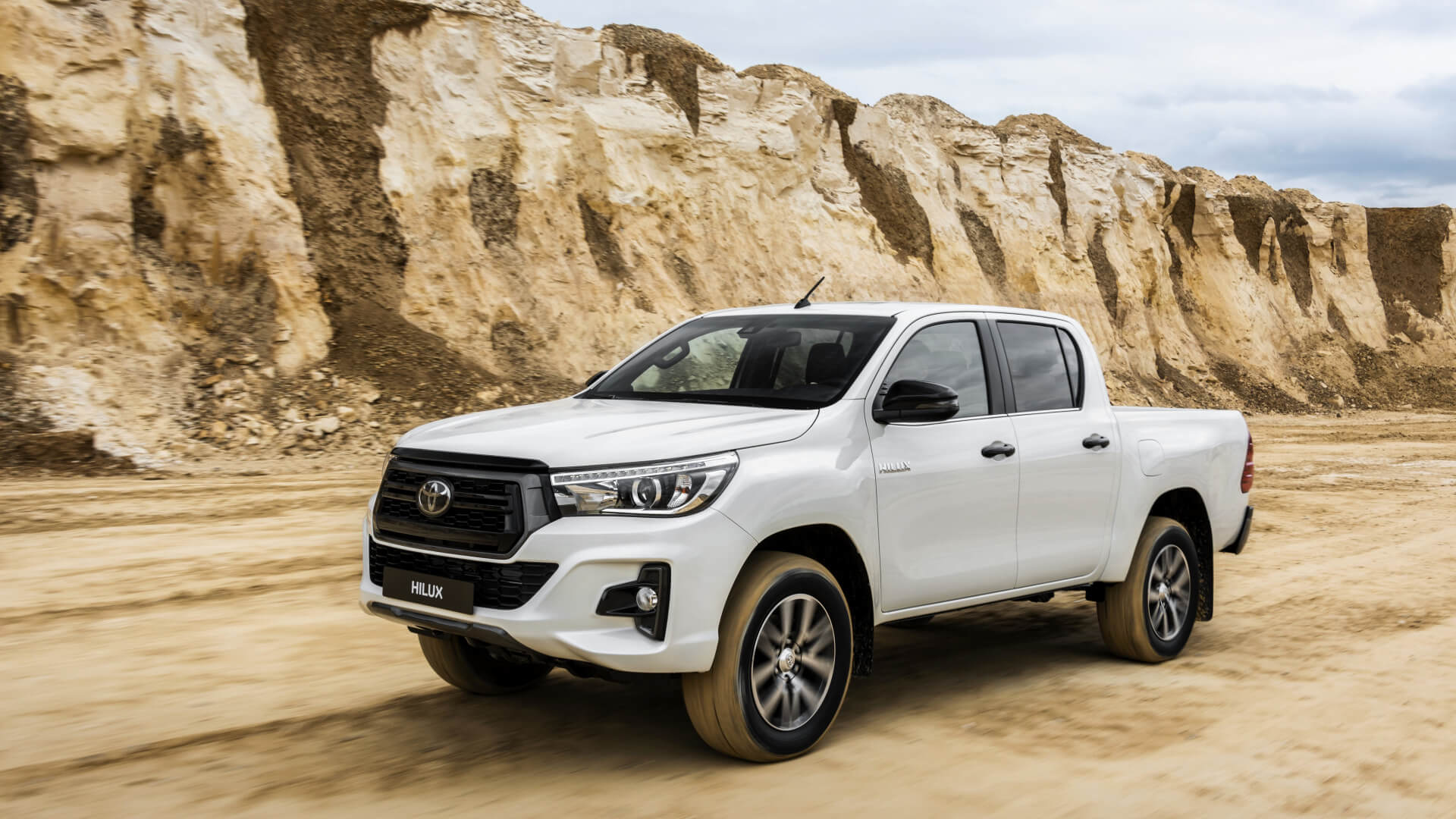
The seventh Hilux, updated three times, has a simple but robust design with large halogen headlights, a big chrome-trimmed grille and round fog lamps. It was offered as a Single Cab, Extra Cab and Double Cab, with prominent wheel-arch flares and side steps. Payload is up to 830 kg, and ground clearance is 212–222 mm. In 2011–2012 a Hilux of this generation reached the South Pole.
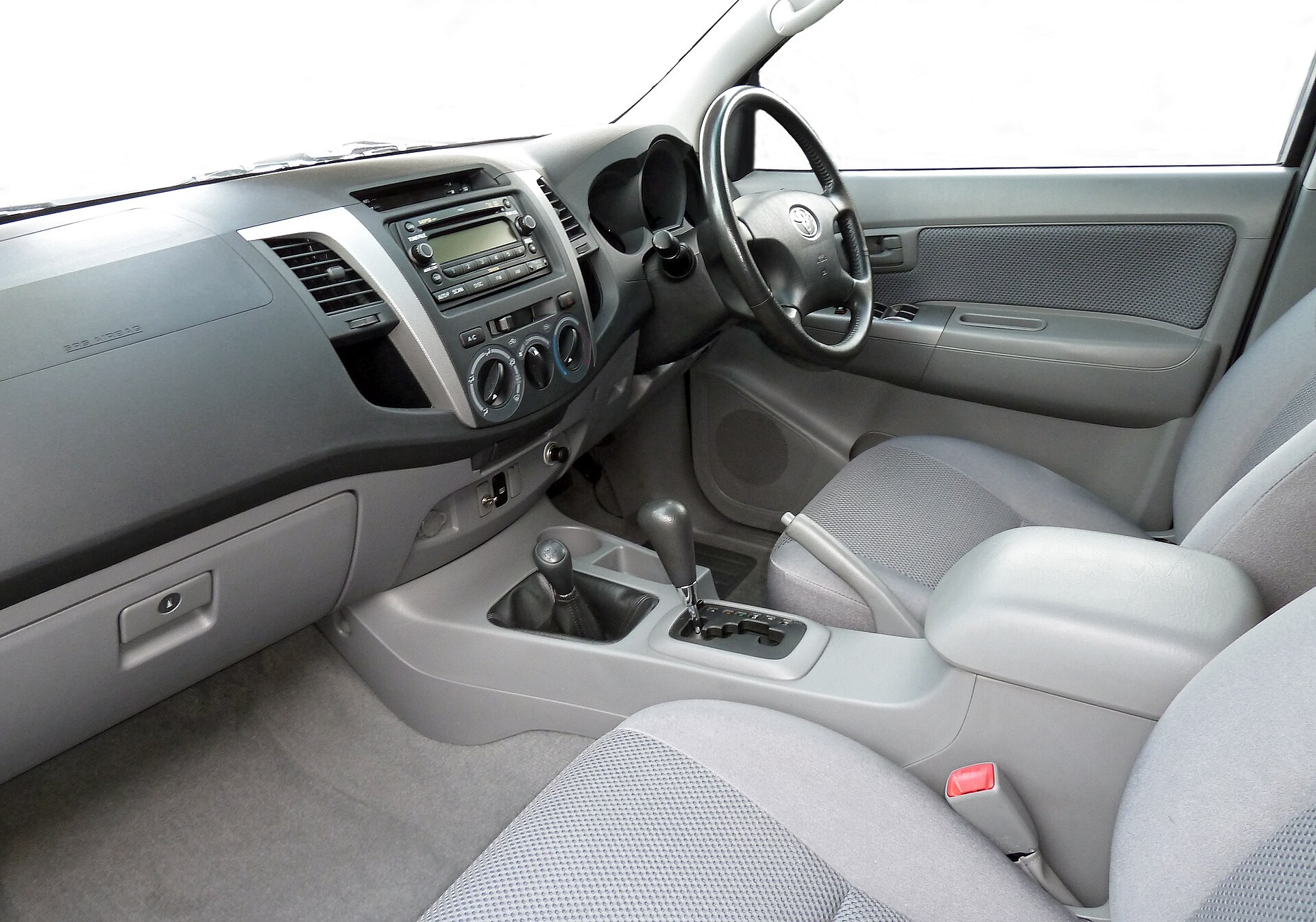
The cabin is plain and practical, with hard plastics and fabric; plastic trim can start to creak with age. The front seats are heated and have light side support. Depending on version there is a simple radio or a 6.1-inch navigation system, which can occasionally glitch. Rear knee room is limited.
Typical diesel engines are a 2.5-litre common-rail four-cylinder with 106 kW (144 PS) and 343 Nm (five-speed manual, 0–100 km/h in 13.3 seconds, 8.3 l/100 km combined) and a 3.0-litre turbodiesel with 125 kW (170 PS) and 360 Nm (12 seconds, 175 km/h, about 8.9 l/100 km). The part-time four-wheel-drive system has a rear differential lock and a front-axle disconnect. The IMV platform, shared with the Fortuner SUV, uses double wishbones at the front and a live axle on multi-leaf springs at the rear, ventilated front discs, rear drums, ABS and power steering.
Eighth generation (2015–2025)
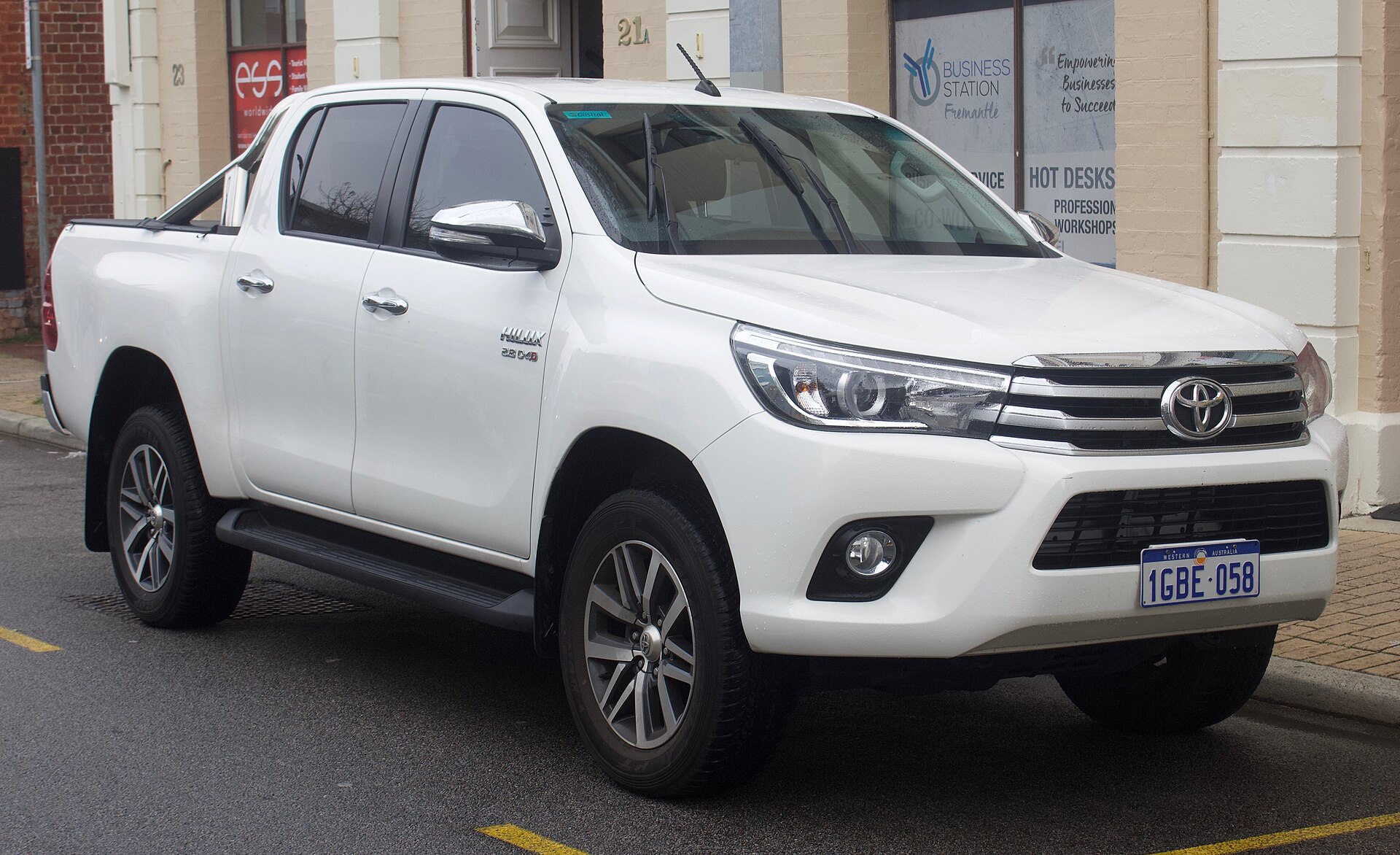
The eighth Hilux was unveiled simultaneously in Bangkok and Australia in May 2015, with changes from the frame to the engines. Slim headlights with LED daytime running lights flank a large chrome grille. It is available in eight colours with six alloy-wheel designs in 17 or 18 inches, and ground clearance is 227 mm. Depending on version, payload reaches 1,240 kg, and it can tow up to 3.5 tonnes with a braked trailer.
The interior is a big step up, with better materials and metal-effect trim. Two large instrument dials with blue lighting flank a 4.2-inch display that shows instant consumption, an Eco mode, phone and media information and remaining range. The driver's seat has good side support; the front seats have electric adjustment and heating. There is push-button start next to the four-wheel-drive selector, two glove boxes (one of them cooled) and 11 storage areas in total. A 7-inch touchscreen with Toyota Touch 2 shows navigation and the rear camera. The rear bench is designed to fold easily, but its upright, curved backrest becomes tiring on long journeys.
Engines and transmissions
| Engine (8th generation) | Fuel | Power (kW / PS) | Torque | Notes |
|---|---|---|---|---|
| 2.4 GD | Diesel | 110 kW / 150 PS | 400 Nm | 7.3 l/100 km combined |
| 2.8 GD | Diesel | 130 kW / 177 PS | 450 Nm | — |
| 2.7 | Petrol | 122 kW / 166 PS | 246 Nm | Naturally aspirated four-cylinder |
| 4.0 V6 | Petrol | 204 kW / 278 PS | 376 Nm | Higher trims |
The GD diesels follow Toyota's ESTEC efficiency concept, with common-rail injection, an exhaust manifold integrated into the cylinder head and a variable-geometry turbocharger. All engines are paired with six-speed manual or automatic gearboxes. The Hilux is offered with rear-wheel drive or part-time four-wheel drive with a two-speed transfer case (low range) and a rear differential lock.
The eighth generation sits on an improved version of the previous platform with a stiffer steel frame. Front suspension uses double wishbones and an anti-roll bar; the rear has leaf springs. Three suspension settings are available: Standard for all road types, Comfort for paved roads and Heavy Duty for big loads. Steering is hydraulically assisted.
Key specifications
| Parameter | 7th generation | 8th generation |
|---|---|---|
| Years | 2005–2015 | 2015–2025 |
| Cabs | Single, Extra, Double | Single, Extra, Double |
| Diesel power | 106–125 kW / 144–170 PS | 110–130 kW / 150–177 PS |
| Payload | up to 830 kg | up to 1,240 kg |
| Towing (braked) | — | up to 3.5 t |
| Ground clearance | 212–222 mm | 227 mm |
| Gearboxes | 5-speed manual, automatic | 6-speed manual, 6-speed automatic |
Safety
The eighth generation's reinforced frame absorbs crash energy and spreads loads. Electronic aids include VSC stability control, A-TRC active traction control, ABS with EBD, brake assist (BAS), hill-start assist (HAC) and downhill assist control (DAC). Seven airbags and ISOFIX child-seat mounts are fitted. Higher trims add leather upholstery, climate control, a rear camera, cruise control, keyless entry, a cooled glove box, LED headlights with automatic levelling and heated, electrically adjustable seats.
Strengths and weaknesses
Owners like the Hilux's styling, good headlights, comfortable chassis and drivetrain, and excellent off-road ability thanks to the ground clearance and four-wheel drive. Reliability, reasonable fuel economy, good sound insulation and strong engines also stand out. The main drawback is its size, which makes it awkward in town. Rivals include the Ford Ranger, Volkswagen Amarok, Mitsubishi L200, Chevrolet Colorado and SsangYong Actyon Sports.
Toyota Hilux evolution in numbers
Did you know?
- The Toyota Hilux has been around for 58 years: 9 generations in our catalog since 1968.
- The longest-running generation is the Hilux AN10/AN20/AN30 (2004–2015): 11 years.
Image credits · Photos from Wikimedia Commons under free licences
- Toyota Hilux AN10/AN20/AN30 · Photo: OSX / Wikimedia Commons, Public domain
- Toyota Hilux AN110/AN120/AN130 · Photo: EurovisionNim / Wikimedia Commons, CC BY-SA 4.0
- Toyota Hilux IX · Photo: Chanokchon / Wikimedia Commons, CC BY-SA 4.0
Popular comparisons
Toyota Hilux in our rankings
More powerful than 25% of ranked pickup trucks in the 1CARS catalog (No. 15 of 20).
FAQ
How many generations of the Toyota Hilux are there?
Nine. The first appeared in 1968, the eighth was unveiled in May 2015 and the ninth premiered in November 2025.
When did the Toyota Hilux get four-wheel drive?
With the third generation in 1978; the system was borrowed from the Land Cruiser 40 series.
How much can the Toyota Hilux carry and tow?
The eighth generation carries up to 1,240 kg depending on version and tows up to 3.5 tonnes with a braked trailer. The seventh generation carried up to 830 kg.
What engines does the eighth-generation Toyota Hilux have?
Diesel 2.4 GD (110 kW / 150 PS) and 2.8 GD (130 kW / 177 PS), plus petrol 2.7 (122 kW / 166 PS) and 4.0 V6 (204 kW / 278 PS), depending on the market.
How many Toyota Hilux have been sold?
More than 16 million in the first 47 years of production.
Data sources
Data checked by an editor against the sources below.
- Wikipedia — Toyota Hilux
- Co — World Premiere Of The All New Toyota Hilux
- Wikipedia — Toyota GD engine