 Toyota Sequoia
All generations, specs and history
Published Sources (1) Report an error
By Felix Hartmann, Automotive Technology & EV Contributor
- Built
- 2000–present
- Generations
- 3
Timeline
Sequoia generations
Click a generation for its own page


- Sequoia XK30/XK40 2000–2007 · SUV
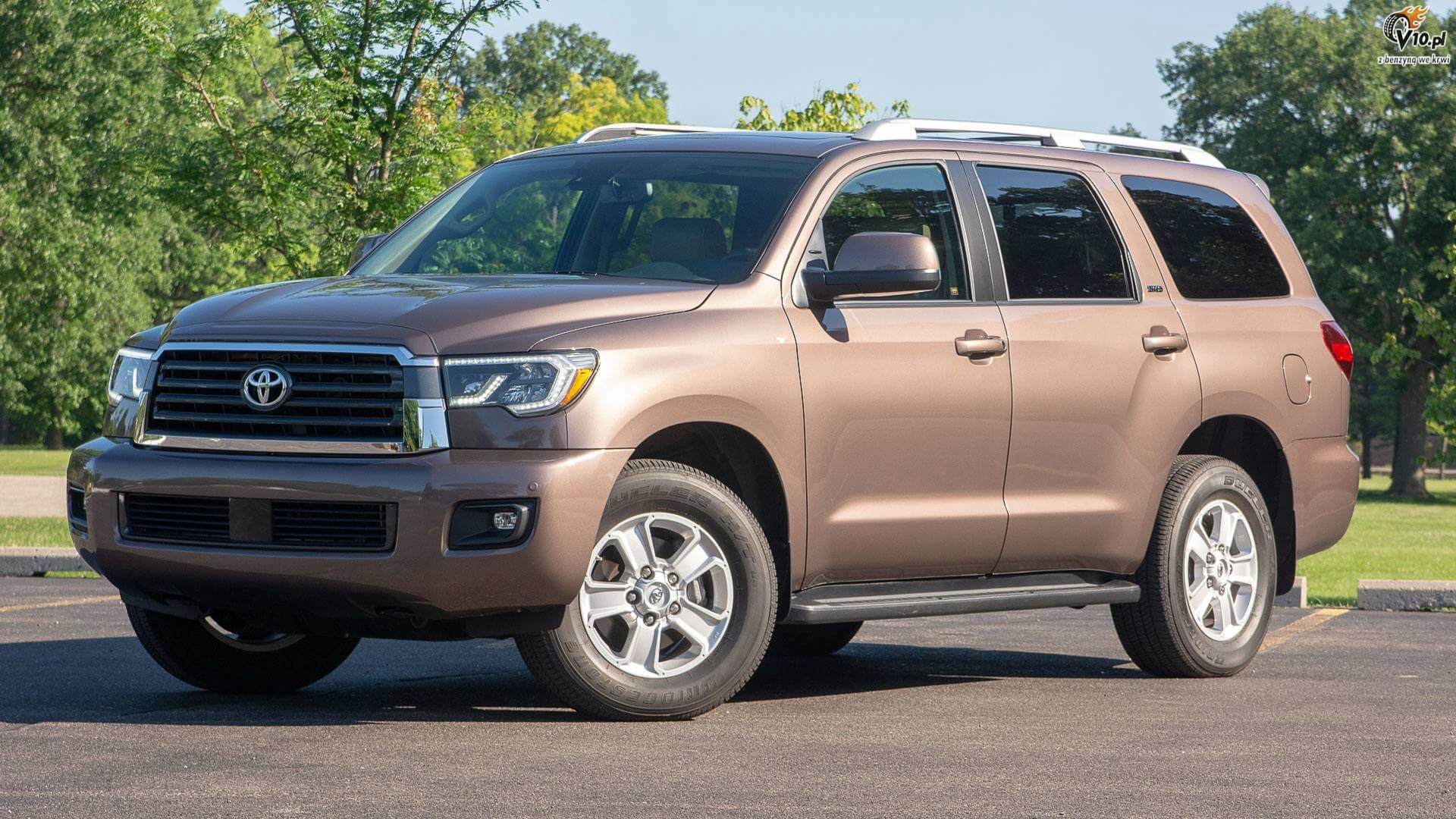
- Sequoia II 2007–2022 · SUV
- Sequoia XK80 Current 2022–now · SUV
Newest first · 3 generations since 2000
All generations by year: Sequoia XK80 (2022–now) · Sequoia II (2007–2022) · Sequoia XK30/XK40 (2000–2007)
Which one is mine?
Pick the year of first registration to see which generation it is.
- XK80 2022–present
- Sequoia II 2007–2022
- XK30/XK40 2000–2007
The Toyota Sequoia is a full-size, body-on-frame SUV built by Toyota and based on the Tundra pickup. It was first presented in 2000 as a 2001 model, priced between the mid-size 4Runner and the Land Cruiser. This article covers the first two generations: the second was unveiled in 2007 and updated several times, most recently at the Chicago motor show in 2017. A third generation, revealed in January 2022 for the 2023 model year, replaced the V8 with a 3.4-litre twin-turbo V6 hybrid (i-Force Max). The Sequoia is officially sold in parts of North and South America and the Middle East.
In short
- First generation 2000–2007 and second 2007–2022, both on the Toyota Tundra platform; a hybrid third generation followed for 2023.
- First generation: 4.7-litre V8 with 181–210 kW (243–282 hp); second generation: 5.7-litre V8 with 284 kW (381 hp).
- Up to eight seats; the second generation offers up to 3.4 m³ of cargo space and tows up to 3,350 kg.
- Ground clearance of 244–254 mm and a Multi-Mode 4x4 system with low range.
Toyota Sequoia at a glance
The Sequoia is a ladder-frame SUV with a longitudinal V8, rear-wheel drive as standard and optional four-wheel drive. It was larger than the Land Cruiser 100 yet cheaper. More Toyota models are in our Toyota catalogue, and its famous sibling is covered in our Toyota Land Cruiser 200 article.
Toyota Sequoia generations
First generation (2000–2007)
The first Sequoia was officially presented in January 2000 at the North American International Auto Show, went into production that autumn and was updated in 2004. It has a tough look with large headlights, a grille with a single horizontal bar carrying the Toyota emblem, round fog lamps, big doors, large windows and side steps. Wheels are 16-inch, with 17-inch optional. Ground clearance is 250 mm, kerb weight 2,300 kg and gross weight just under three tonnes.
Most Sequoias have eight seats; the luxurious Limited has seven. The cabin is calm and rounded in style, with a four-spoke steering wheel and clear instruments. The tailgate glass can be lowered electrically for easier loading. There is plenty of room in the first two rows; the third is less comfortable. The middle row splits 60:40, seats in all three rows slide and recline, and the driver's seat has eight-way adjustment. With the second row in place there are 785 litres of cargo space, and up to 3,630 litres with the seats folded.
The 4.7-litre V8 has 32 valves, multi-point injection and variable valve timing; depending on the year it produces 181–210 kW (243–282 hp) and 427–440 Nm. Consumption is about 16.8 l/100 km in town and 13.8 l/100 km out of town; the fuel tank holds 100 litres, 0–100 km/h takes 12.8 seconds and top speed is 160 km/h. A five-speed automatic replaced the original four-speed. Drive is rear-wheel or four-wheel with a Torsen centre differential and electronic brake-based locking. The ladder frame carries independent coil-spring front suspension and a rigid rear axle on coils; steering is rack-and-pinion with hydraulic assistance, and the brakes are discs all round with ABS.
Second generation (2007–2022)
The second Sequoia was unveiled at the Los Angeles motor show in November 2007 and went on sale in North America in December. It was updated several times, most recently in 2017. Its design is plain, with few decorative elements: a tall, high-set front with a rising bonnet, a relatively small rectangular grille with a thick chrome frame, compact xenon headlights (LED after the facelift), a prominent bumper and fog lamps near the wheel arches. Large windows, big mirrors, roof rails and optional fixed side steps complete the profile, and a tow hitch is fitted. Wheels range from 18 to 20 inches. Ground clearance is 244 mm, or 251–254 mm on the SR5, TRD Sport and Limited.
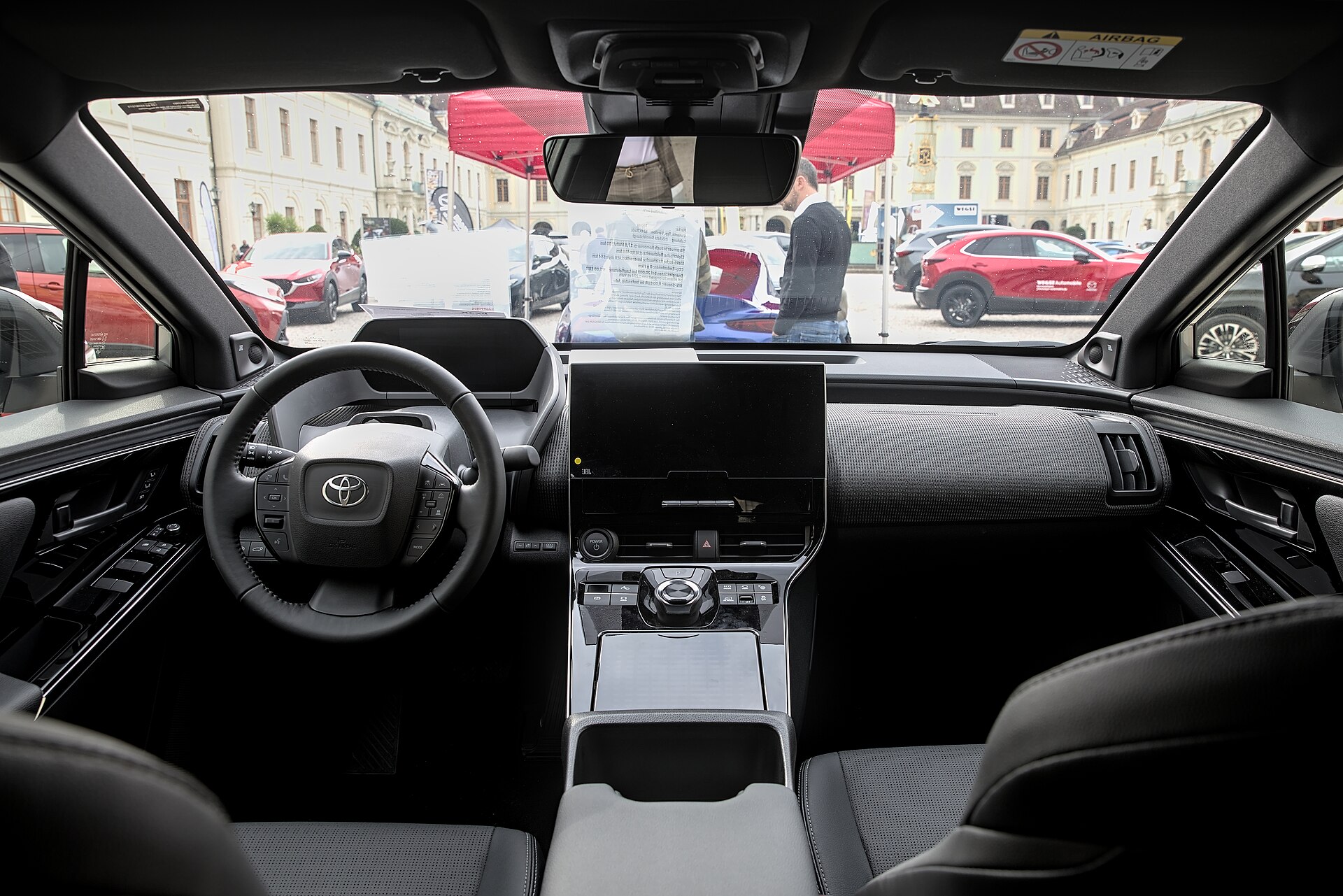
The interior changed more than the exterior. There is leather on the seats, steering wheel and door panels, and the top-spec version has a part-wood steering wheel. A 4.2-inch display sits between the dials, chunky knobs control the climate and the four-wheel-drive system, and a 6.1-inch Entune Audio Plus screen sits in the centre; rear passengers can have two folding 9-inch ceiling screens with wireless headphones. A tall centre armrest houses a large cool box. The Sequoia seats eight with two rear benches, or seven with second-row captain's chairs. The second row has its own climate control, sockets and AUX inputs, and sun blinds are fitted to the side windows. Front headroom is 108 cm, second-row 103.9 cm and third-row 89.7 cm. The boot holds 535 litres behind the third row, 1,886 litres with it folded and 3.4 m³ with the second row folded too; the 40/20/40 and 60:40 seats fold flat. The full-size spare is mounted underneath.
Engines and transmissions
| Generation | Engine | Power (kW / hp) | Torque | Gearbox |
|---|---|---|---|---|
| 1st (2000–2007) | 4.7 V8, 32 valves, VVT | 181–210 kW / 243–282 hp | 427–440 Nm | 4-speed, later 5-speed automatic |
| 2nd (2007–2022) | 5.7 V8, 32 valves, VVT-i | 284 kW / 381 hp | 543 Nm | 6-speed automatic with manual and tow modes |
The 5.7 V8 reaches 100 km/h in 6.7 seconds and 180 km/h, with consumption of up to 16.7 l/100 km. Rear-wheel drive is standard; the optional Multi-Mode 4x4 has a self-locking Torsen centre differential that splits torque 40:60 by default (variable from 30:70 to 50:50), a two-speed transfer case with low range and electronic brake-based locking. Approach and departure angles are 27 and 20 degrees, and wading depth is 700 mm.
Chassis and towing
The second generation shares the Tundra's ladder frame with a steel body and longitudinal engine. Suspension is independent with double wishbones, gas dampers and anti-roll bars at both axles; higher trims add air suspension with electronically controlled adaptive dampers. Steering is rack-and-pinion with variable electric assistance, and the brakes are discs all round with ABS, brake assist and EBD. A hitch integrated into the frame allows trailers of up to 3,350 kg, supported by trailer sway control.
Safety and equipment
The second-generation Sequoia offers a pre-collision system with pedestrian detection, radar cruise control, lane departure warning, automatic high beam, blind-spot monitoring with rear cross-traffic alert, a rear camera, LATCH child-seat anchors, the Star Safety System (stability control, traction control, ABS, EBD, brake assist and smart stop technology) and multiple airbags. Even the base version has LED headlights and fog lamps, tri-zone climate control, an eight-way power driver's seat and many cupholders; higher trims add perforated leather, heated and ventilated front seats with memory, heated second-row seats, JBL audio and the rear entertainment system.
Strengths and weaknesses
Owners praise the Sequoia's performance, high ground clearance, spacious cabin, generous equipment, powerful engine, four-wheel drive, many assistance systems and high safety, and say it copes with poor roads and light off-roading with ease. The downsides are very high fuel consumption, a size that makes town driving awkward, and expensive, sometimes hard-to-source parts. Rivals include the Chevrolet Tahoe, Ford Expedition, Nissan Patrol, Cadillac Escalade, Toyota Land Cruiser Prado, Jeep Grand Cherokee and Dodge Durango.
Toyota Sequoia evolution in numbers
Did you know?
- The Toyota Sequoia has been around for 26 years: 3 generations in our catalog since 2000.
- The longest-running generation is the Sequoia II (2007–2022): 15 years.
Image credits · Photos from Wikimedia Commons under free licences
- Toyota Sequoia XK30/XK40 · Photo: IFCAR / Wikimedia Commons, Public domain
- Toyota Sequoia II · Photo: IFCAR / Wikimedia Commons, Public domain
- Toyota Sequoia XK80 · Photo: Kevauto / Wikimedia Commons, CC BY-SA 4.0
Toyota Sequoia in our rankings
- No. 101 of 912 · Longest-running car nameplates (26 years · top 12%)
- No. 70 of 305 · Oldest car models still on sale (26 years · top 24%)
- No. 174 of 345 · Cars with the most generations (3 generations · top 68%)
In production longer than 88% of ranked nameplates in the 1CARS catalog (No. 101 of 912).
FAQ
What is the Toyota Sequoia based on?
Both generations are built on the platform of the Toyota Tundra full-size pickup.
What engine does the Toyota Sequoia have?
The second generation uses a 5.7-litre V8 with 284 kW (381 hp) and 543 Nm; the first used a 4.7-litre V8 with 181–210 kW (243–282 hp).
How many seats does the Toyota Sequoia have?
Eight with two rear benches, or seven with second-row captain's chairs.
How much can the Toyota Sequoia tow?
The second generation can tow trailers of up to 3,350 kg.
Data sources
Data checked by an editor against the sources below.