Best small SUVs and crossovers 2026: eight compact picks
A small SUV gives you a higher seat and an easier step-in without the size or price of a family SUV. The cars in this list are between 4.18 and 4.40 metres long, so they park like a supermini but carry more. All eight are on sale new in Europe in 2026, with petrol, mild hybrid, full hybrid and electric versions, and one with genuine four-wheel drive.
Quick picks
- Most economical: Renault Captur E-Tech – 4.4 l/100 km WLTP.
- Biggest boot: Hyundai Kona – 466 litres and a five-year warranty.
- Best budget buy: Citroën C3 Aircross – from €18,890 in Germany.
- Best with four-wheel drive: Suzuki Vitara ALLGRIP.
- Best electric: Volvo EX30 – 339 km WLTP from the base battery.
The table compares one representative version of each car as listed by ADAC, Germany's motoring club. Boot volumes are manufacturer figures with the rear seats up, and sliding rear benches in some cars change them by a wide margin.
| Model (version) | Length | Boot | WLTP | Braked towing | Euro NCAP | List price from, Germany |
|---|---|---|---|---|---|---|
| Renault Captur (E-Tech 160) | 4,239 mm | 326 l | 4.4 l/100 km | 1,000 kg | 5 stars, 2019 | €28,550 (2025) |
| Hyundai Kona (1.6 GDI HEV) | 4,350 mm | 466 l | 4.6 l/100 km | 1,110 kg | – | €33,450 (2025) |
| Citroën C3 Aircross (Turbo 100) | 4,395 mm | 460 l | 5.9 l/100 km | 1,500 kg | – | €18,890 (2024) |
| Peugeot 2008 (1.2 Hybrid 145) | 4,304 mm | 434 l | 4.9 l/100 km | 1,100 kg | – | €33,660 (2025) |
| Suzuki Vitara (1.4 Hybrid ALLGRIP) | 4,185 mm | 375 l | 5.4 l/100 km | 1,200 kg | 5 stars, 2015 | €31,350 (2025) |
| Nissan Juke (1.6 Hybrid) | 4,210 mm | 354 l | 4.7 l/100 km | 750 kg | 5 stars, 2019 | €29,750 (2024) |
| Honda HR-V (e:HEV) | 4,355 mm | 319 l | 5.4 l/100 km | – | 4 stars, 2022 | €33,900 (2025) |
| Volvo EX30 (P3 electric) | 4,233 mm | 318 l | 17.0 kWh/100 km | 1,000 kg | 5 stars, 2024 | €34,990 (2026) |
A dash means we found no checked figure for the current car. If you mostly drive in town and do not need the higher seat, our best small city cars are shorter and cheaper still.
-
1. Renault Captur II
Most economical
- Production years
- 2019–present
- Body type
- Crossover
- Fuel
- Petrol, Diesel, Hybrid, Plug-in hybrid, LPG / CNG
- Power output
- 67–116 kW (91–158 PS)
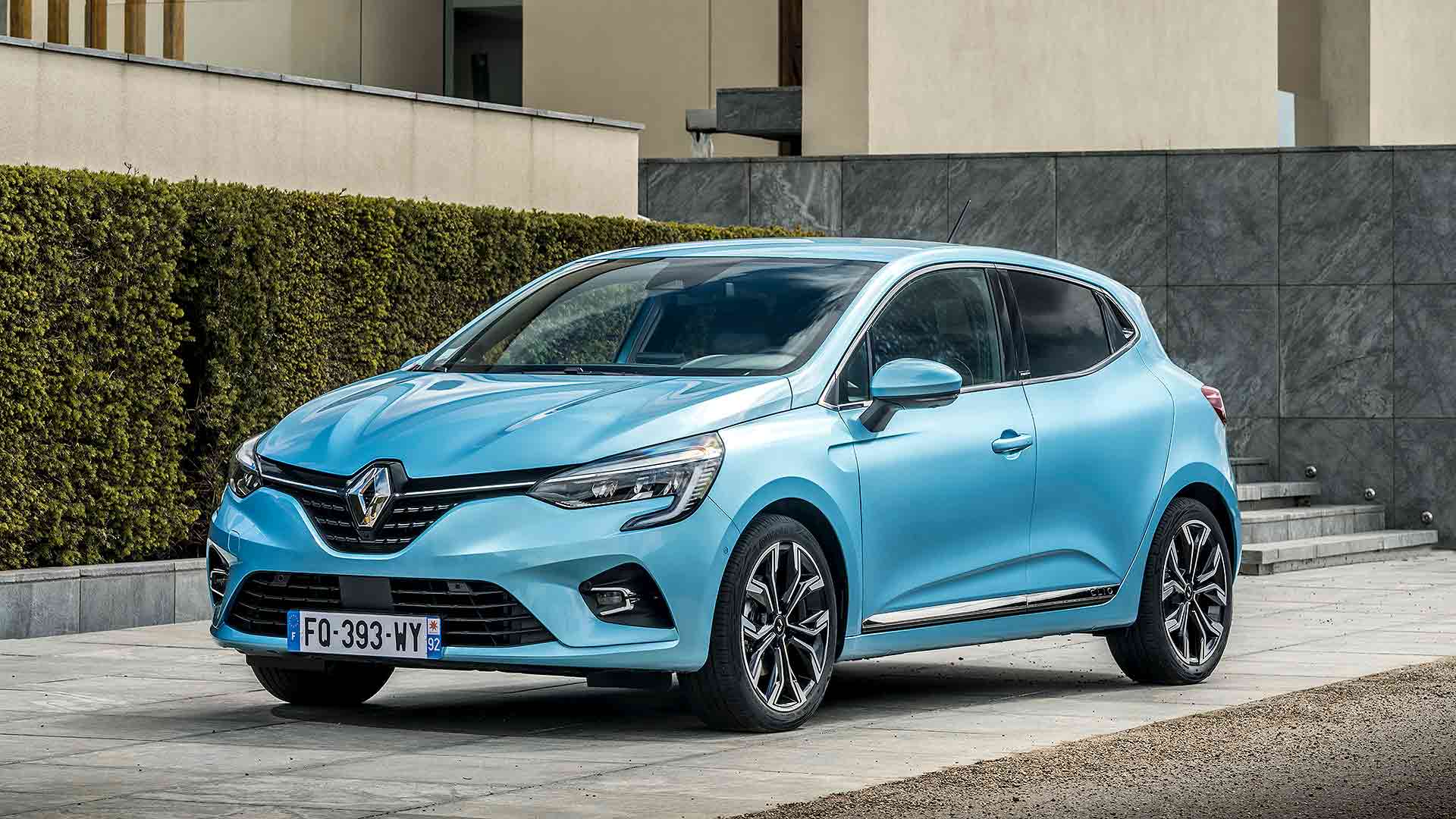
The second Captur arrived in 2019 and was facelifted in 2024. Its E-Tech full hybrid uses Renault's multi-mode automatic gearbox; the 160 version has 116 kW (158 PS) and is rated at 4.4 l/100 km WLTP, the lowest figure in this list. It reaches 100 km/h in 8.9 s and costs from €28,550 in Germany. Cheaper petrol versions start at €23,490, and an LPG version is also offered. The drawbacks: ADAC lists a boot of only 326 litres for the hybrid, and the five-star Euro NCAP result dates from 2019.
Pros
- 4.4 l/100 km WLTP (E-Tech 160)
- Petrol, mild hybrid, full hybrid and LPG versions
- Five-star Euro NCAP (2019)
Cons
- 326-litre boot (E-Tech) and an older safety rating
Spec sheet: Renault Captur II TCe 90 67 kW (91 PS)
Full review: Renault Captur II -
2. Hyundai Kona II (SX2)
Biggest boot
- Production years
- 2023–present
- Body type
- SUV
- Fuel
- Petrol, Hybrid, Electric
The second Kona was revealed in December 2022 and grew to 4,350 mm. That makes room for a 466-litre boot in the hybrid, the largest in this list. The 1.6 GDI hybrid has 102 kW (138 PS) since 2025 and uses 4.6 l/100 km WLTP; turbo petrols run from 74 kW to 132 kW. The Kona Electric is built at Nošovice in the Czech Republic, and its long-range battery is rated at up to 490 km WLTP. Hyundai's warranty runs for five years. The drawback: the hybrid is slow, needing 11.0 s to reach 100 km/h.
Full review: Hyundai Kona II (SX2)Pros
- 466-litre boot (hybrid)
- Petrol, hybrid and electric versions
- Five-year warranty
Cons
- Hybrid needs 11.0 s to 100 km/h
-
3. Citroen C3 Aircross II
Best budget buy
- Production years
- 2024–present
- Body type
- SUV
- Fuel
- Petrol, Electric
- Power output
- 74–107 kW (101–145 PS)
Unveiled in April 2024, the second C3 Aircross is built on Stellantis' low-cost Smart Car platform. It undercuts every rival here: ADAC lists the Turbo 100 with 74 kW (101 PS) from €18,890 in Germany, and the hybrids from €24,990. Despite the price it is 4,395 mm long with a 460-litre boot, it may tow 1,500 kg braked, and a seven-seat option is offered. The electric e-C3 Aircross promises more than 300 km of range. The drawbacks: the petrol uses 5.9 l/100 km WLTP, the vehicle warranty is two years, and we found no Euro NCAP rating for this generation.
Pros
- Lowest price in this list
- 460-litre boot and seven-seat option
- 1,500 kg braked towing (Turbo 100)
Cons
- No checked Euro NCAP rating yet
Spec sheet: Citroen C3 Aircross II 1.2 Turbo 100 74 kW (101 PS)
Full review: Citroen C3 Aircross II -
4. Peugeot 2008 II
Best to drive quickly
- Production years
- 2019–present
- Body type
- SUV
- Fuel
- Petrol, Diesel, Electric
- Power output
- 74–115 kW (101–156 PS)
The second 2008 was announced in June 2019 on the CMP platform and facelifted in May 2023. The 1.2 Hybrid 145 with 107 kW (145 PS) reaches 100 km/h in 8.3 s, quicker than the Captur and Juke hybrids, and still uses 4.9 l/100 km WLTP. The 4,304 mm body holds 434 litres. The electric E-2008 gained a 54 kWh battery and 406 km of range with the facelift. ADAC breakdown figures for 2022–2023 registrations are low. The drawback: the hybrid starts at €33,660 in Germany, much more than the related C3 Aircross.
Pros
- 0–100 km/h in 8.3 s (Hybrid 145)
- 434-litre boot
- Electric E-2008 with 406 km range
Cons
- Hybrid is expensive at €33,660 (2025)
Spec sheet: Peugeot 2008 II PureTech 100 74 kW (101 PS)
Full review: Peugeot 2008 II -
5. Suzuki Vitara LY
Best with four-wheel drive
- Production years
- 2015–present
- Body type
- SUV
- Fuel
- Petrol, Diesel
- Power output
- 82–103 kW (111–140 PS)
On sale since 2015 and facelifted for the second time in 2024, the Vitara is the only car here offered with proper four-wheel drive. The ALLGRIP version of the 1.4 Boosterjet mild hybrid has 81 kW (110 PS), 175 mm of ground clearance and a 1,200 kg braked towing limit, from €31,350 in Germany. At 4,185 mm it is the shortest car in the list. ADAC's breakdown rate for 2023 registrations is just 2.6 per 1,000 cars. The drawbacks: the 375-litre boot is average, and its five-star Euro NCAP rating dates from 2015.
Full review: Suzuki Vitara LYPros
- ALLGRIP four-wheel drive
- Shortest car here at 4,185 mm
- Low ADAC breakdown rate
Cons
- Euro NCAP rating from 2015
-
6. Nissan Juke F16
Best for style
- Production years
- 2019–present
- Body type
- SUV
- Fuel
- Petrol, Hybrid
- Power output
- 86–105 kW (117–143 PS)
The second Juke was unveiled in September 2019 and is built in Sunderland, UK. Euro NCAP gave it five stars in 2019. In March 2022 it gained the 1.6-litre hybrid shared with the Renault Captur, rated at 105 kW (143 PS) and 4.7 l/100 km WLTP. The 1.0 DIG-T petrol with 84 kW (114 PS) starts at €24,950 in Germany. At 4,210 mm it is easy to park. The drawbacks: the boot holds 354 litres, and the hybrid may tow only 750 kg braked.
Pros
- Five-star Euro NCAP (2019)
- Hybrid with 4.7 l/100 km WLTP
- Built in Sunderland, UK
Cons
- 354-litre boot and 750 kg towing (hybrid)
Spec sheet: Nissan Juke F16 1.0 DIG-T 86 kW (117 PS)
Full review: Nissan Juke F16 -
7. Honda HR-V RV
Best for long-term cover
- Production years
- 2021–present
- Body type
- Crossover
- Fuel
- Petrol, Hybrid
- Power output
- 89–133 kW (121–181 PS)
The third-generation HR-V was facelifted in 2025 and in Europe is sold only as a 1.5 e:HEV hybrid with 96 kW (131 PS). ADAC lists 5.4 l/100 km WLTP and 10.6 s to 100 km/h, from €33,900 in Germany. From January 2026 Honda extends cover to up to eight years or 160,000 km when the car is serviced by Honda dealers. The drawbacks: Euro NCAP awarded four stars in 2022, and the 319-litre boot is one of the smallest here.
Pros
- Up to eight years of cover with dealer servicing
- Hybrid-only line-up
- 5.4 l/100 km WLTP
Cons
- Four-star Euro NCAP (2022) and 319-litre boot
Spec sheet: Honda HR-V RV 1.5 l e:HEV 96 kW (131 PS)
Full review: Honda HR-V RV -
8. Volvo EX30 I
Best electric small SUV
- Production years
- 2023–present
- Body type
- Crossover
- Fuel
- Electric
- Power output
- 200–315 kW (272–428 PS)
The EX30 went on sale in Germany in 2024 and is sold only as an electric car. Since April 2026 the range starts with the P3, which has 110 kW (150 PS), a 49 kWh (net) battery and 339 km of WLTP range for €34,990 in Germany. It uses 17.0 kWh/100 km, charges at up to 134 kW DC and reaches 100 km/h in 8.6 s. Larger batteries and a twin-motor version with 315 kW (428 PS) sit above it. Euro NCAP awarded five stars in 2024. The drawbacks: the boot holds 318 litres and the car weighs 1,840 kg.
Pros
- 339 km WLTP from the base battery
- Five-star Euro NCAP (2024)
- Up to 315 kW (twin motor)
Cons
- Small 318-litre boot
Spec sheet: Volvo EX30 I Single Motor 200 kW (272 PS)
Full review: Volvo EX30 I


Data ranking: Smallest SUVs and crossovers — all 146 models in our catalog with a figure, ranked by the numbers.
How we chose
Selection. We considered small SUVs and crossovers up to about 4.4 m long that are sold new in Europe in 2026 and have a published model page on 1cars. Popular rivals such as the Ford Puma, Volkswagen T-Roc and Toyota Yaris Cross are not in this list yet because our catalogue does not have model pages for them; they will be considered when it does. Larger premium models such as the BMW X1 and Mini Countryman belong in a compact premium list.
Data sources. Generation years and Euro NCAP stars with their test year come from the 1cars catalogue; the Juke rating comes from English-language Wikipedia. Dimensions, boot volumes, consumption, towing limits, warranty terms and German list prices come from the ADAC Autokatalog pages for the named versions (accessed October 2026). Battery sizes and electric ranges come from ADAC or Wikipedia, as noted in each entry. Breakdown rates are from the ADAC breakdown statistics shown on the ADAC model pages.
Ranking. The order is editorial: it balances economy, space, price, safety and warranty. It is not a test score. Prices are German list prices with the year the version went on sale and will differ in other markets. Our model pages give the full engine history, for example for the Hyundai Kona and the Volvo EX30.
Frequently asked questions
Which small SUV has the biggest boot?
In this list, the Hyundai Kona hybrid with 466 litres, followed by the Citroën C3 Aircross (460 litres) and Peugeot 2008 (434 litres). The Honda HR-V and Volvo EX30 have the smallest boots here, at about 320 litres.
Is a small SUV better than a supermini?
A small SUV gives a higher seating position and usually a bigger boot, which helps with child seats and older passengers. It costs more and is heavier, so a supermini of the same length is often cheaper to buy and run.
Which small SUV has real four-wheel drive?
The Suzuki Vitara with ALLGRIP, which ADAC lists with 175 mm of ground clearance and 1,200 kg braked towing. The Volvo EX30 is also available with twin-motor all-wheel drive, but as a fast electric car rather than for rough tracks.
What is the cheapest small SUV here?
The Citroën C3 Aircross: ADAC lists the Turbo 100 from €18,890 in Germany (2024). Its hybrid versions cost from €24,990, still less than the entry prices of most rivals in this list.