 Honda HR-V
All generations, specs and history
Published Sources (5) Report an error
By Felix Hartmann, Automotive Technology & EV Contributor
- Built
- 1998–present
- Generations
- 3 · GH to RV
- Top power
- 136 kW (185 PS)
- Euro NCAP
- 4 stars · RV
Timeline
HR-V generations
Click a generation for its own page


RU and RV overlapped in 2021–2022, so RV sits on a second lane
- HR-V GH 1998–2006 · Crossover · 77–92 kW (105–125 PS)
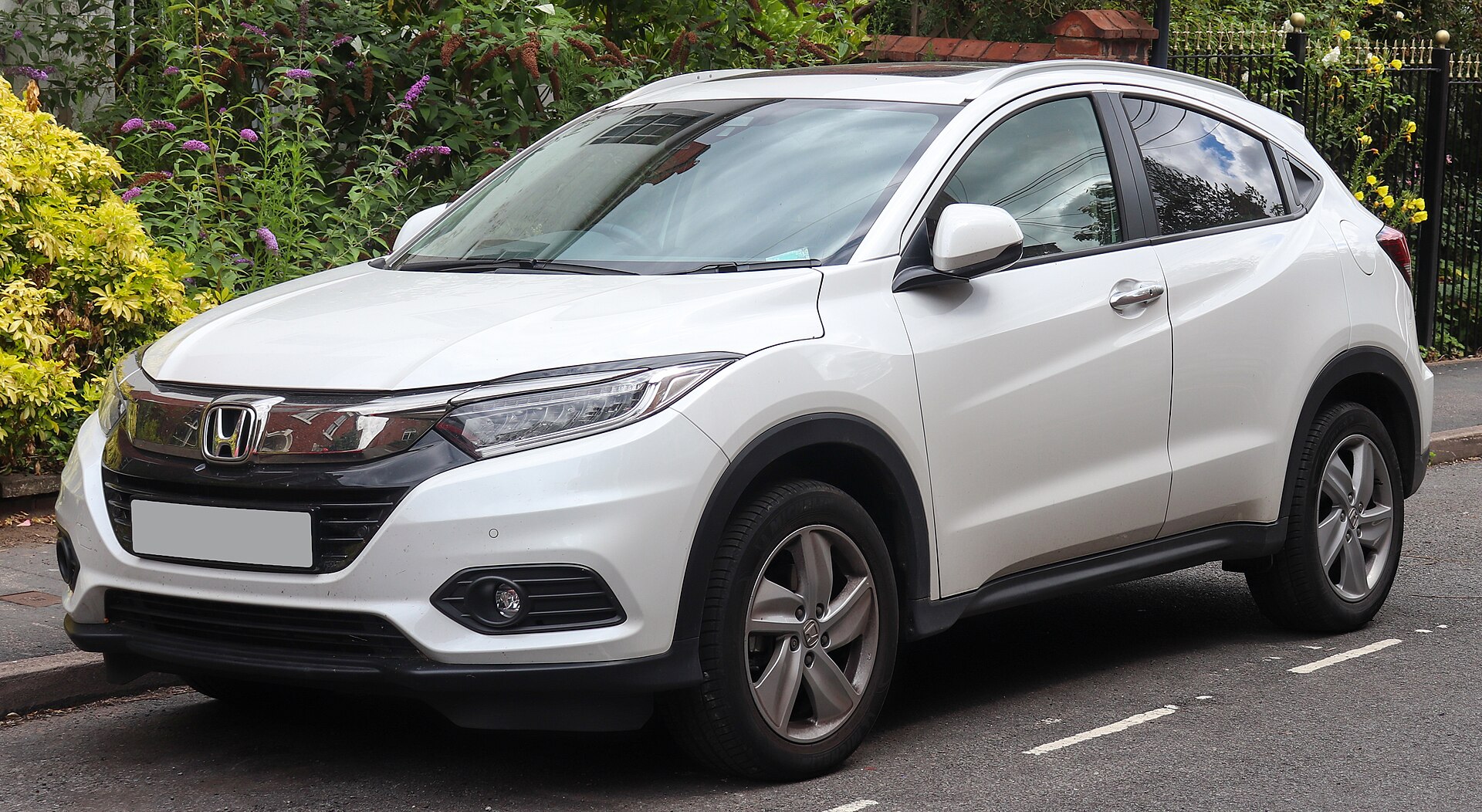
- HR-V RU 2013–2022 · Crossover · 88–136 kW (120–185 PS)
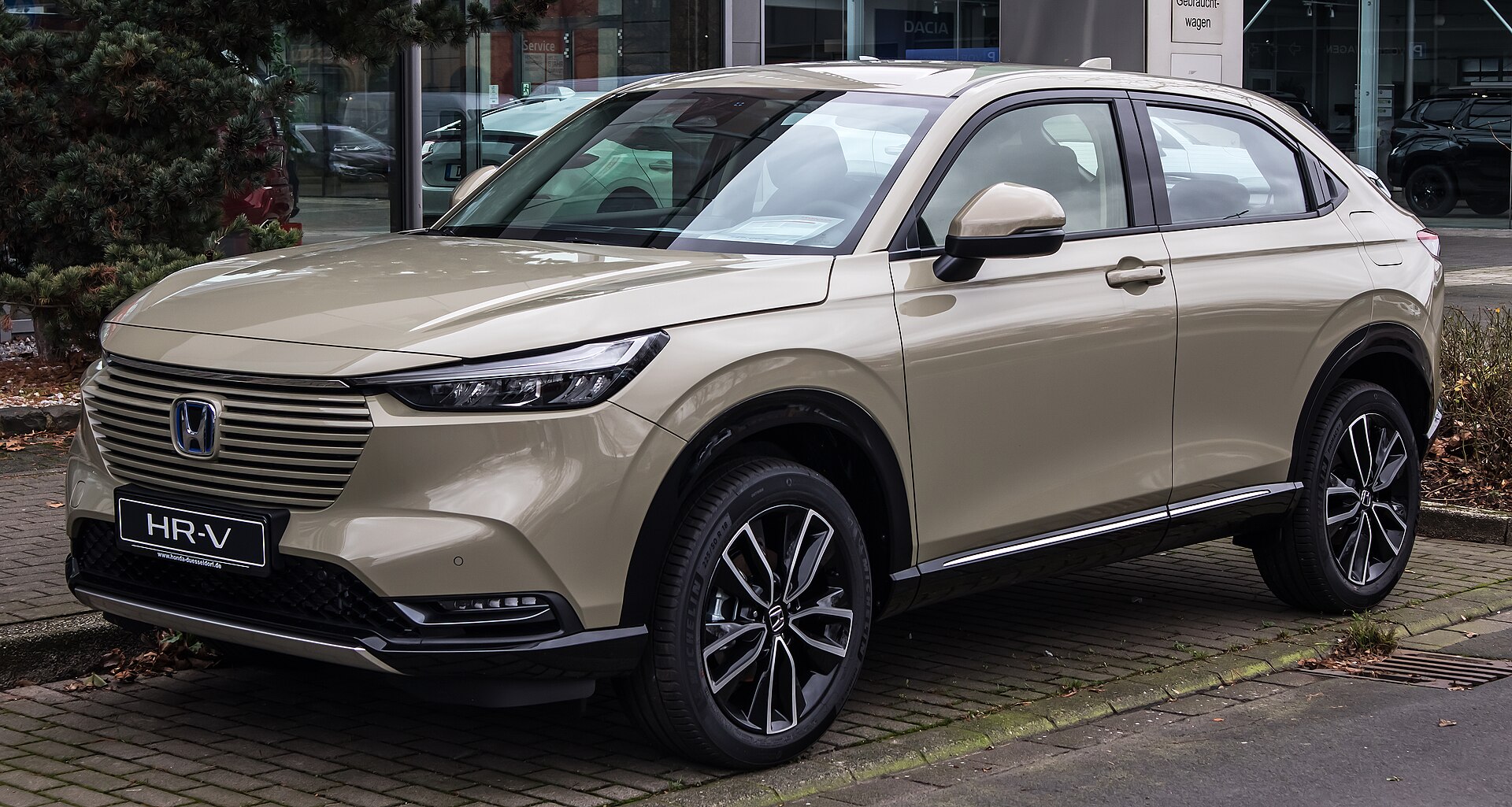
- HR-V RV Current 2021–now · Crossover · 89–133 kW (121–181 PS)
Newest first · 3 generations since 1998
-
2021
-
2013
-
1998
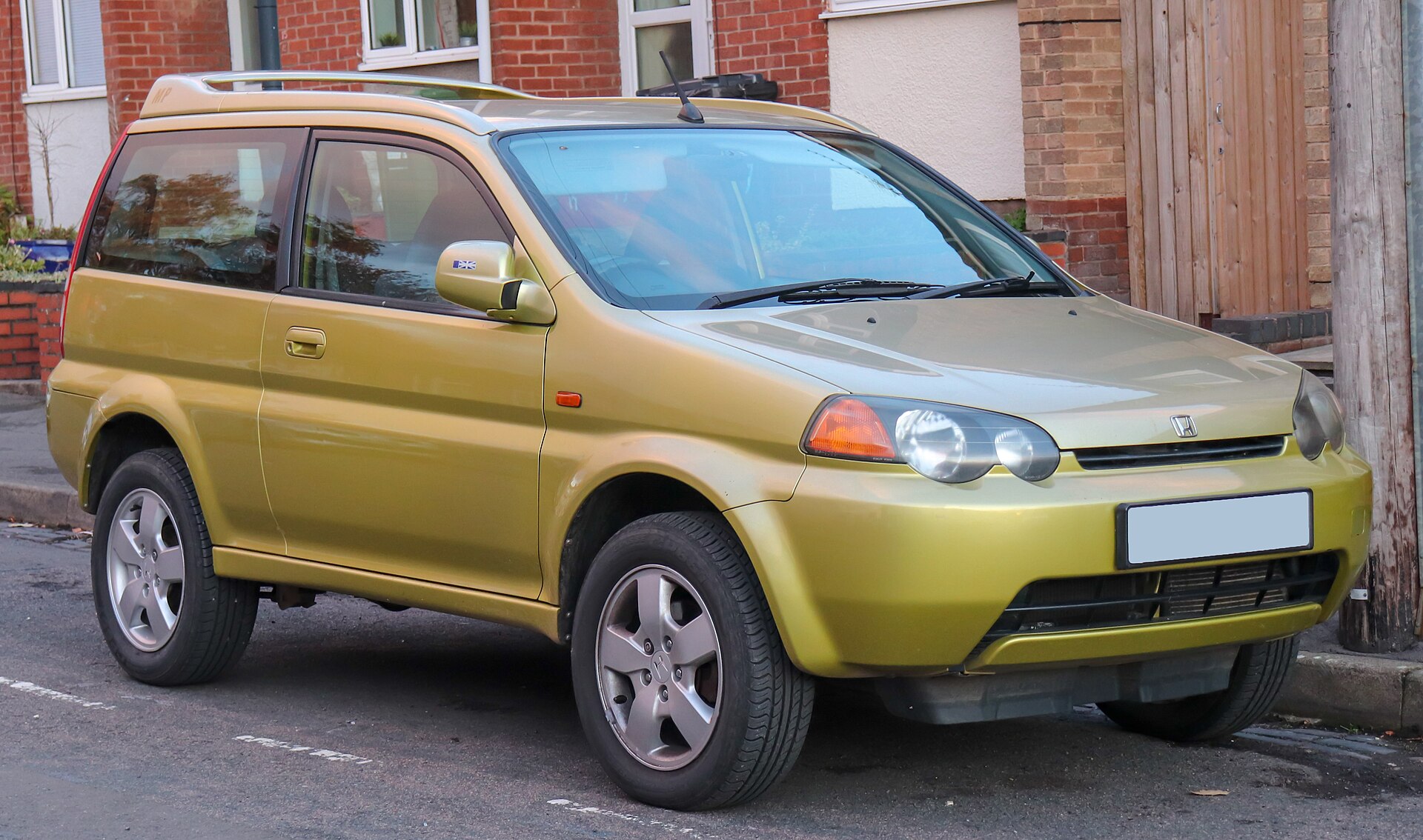
All generations by year: HR-V RV (2021–now) · HR-V RU (2013–2022) · HR-V GH (1998–2006)
Which one is mine?
Pick the year of first registration to see which generation it is.
Check by VINVerdict
Our verdict · Felix Hartmann
The facelifted HR-V is a modern compact crossover with efficient, reliable mechanicals, a roomy and comfortable cabin and a wide range of standard and optional equipment, wrapped in attractive styling in the brand's typical style. The choice of engines is limited, and all-wheel drive is not available everywhere, but it remains a sensible choice for a small family.
The Honda HR-V is a compact crossover with front- or all-wheel drive and one of Honda's global models. Three generations have been built; this article focuses on the second, built from 2013 to 2021, and its 2018 facelift.
In short
- First generation (GH) from 1998/1999 to 2006 as a three- and five-door; second generation from 2013, known in Japan as the Vezel; third generation from 2021.
- The second generation shares its platform with the Honda Jazz (Fit) and has Magic Seats in the rear.
- European engines: 1.5 i-VTEC petrol with 96 kW (130 PS) and 1.6 i-DTEC diesel with 88 kW (120 PS); a 1.8 petrol in North America and a hybrid in Japan.
- 185 mm of ground clearance and 453 to 1,026 litres of luggage space (European measurement).
Size at a glance
| Dimensions | Honda HR-V RV |
|---|---|
| Length | 4,355 mm171.5 in |
| Width | 1,790 mm70.5 in |
| Height | 1,582 mm62.3 in |
| Wheelbase | 2,610 mm102.8 in |
| Boot | 319 L11.3 cu ft |
Running cost
Fuel · HR-V RV 1.5 e:HEV
about 1,400 EUR fuel a year at 15,000 km
5.4 l/100 km · petrol at 1.75 EUR/l · change mileage, fuel price or version
Specs by version
Engines
| Version | Engine | Power | Torque | Production years |
|---|---|---|---|---|
| Hybrid · 1 version | ||||
| RV · 1.5 e:HEV | 1.5 l · 4 cyl · Hybrid 1,500 cc | 96 kW 131 PS129 hp | 253 Nm187 lb-ft | 2021 |
| Diesel · 1 version | ||||
| RU · 1.6 i-DTEC | 1.6 l · 4 cyl · Diesel 1,600 cc | 88 kW 120 PS118 hp | 300 Nm221 lb-ft | 2015–2020 |
| Petrol · 4 versions | ||||
| GH · 1.6 (D16W1) | 1.6 l · 4 cyl · Petrol 1,600 cc | 77 kW 105 PS103 hp | 138 Nm102 lb-ft | - |
| GH · 1.6 VTEC (D16W5) | 1.6 l · 4 cyl · Petrol 1,600 cc | 92 kW 125 PS123 hp | 142 Nm105 lb-ft | - |
| RU · 1.5 i-VTEC (L15B) | 1.5 l · 4 cyl · Petrol 1,500 cc | 97 kW 132 PS130 hp | 155 Nm114 lb-ft | 2013–2022 |
| RU · 1.5 VTEC Turbo Sport (Europe) | 1.5 l · 4 cyl · Petrol 1,500 cc | 134 kW 182 PS180 hp | - | - |
Performance
Show all 4 versions
| Version | CO₂ |
|---|---|
| Hybrid · 1 version | |
| RV · 1.5 e:HEV | 122 g/km |
| Diesel · 1 version | |
| RU · 1.6 i-DTEC | 132 g/km |
| Petrol · 2 versions | |
| RU · 1.5 i-VTEC (L15B) | 150 g/km |
| RU · 1.5 VTEC Turbo Sport (Europe) | 162 g/km |
Dimensions and weight
Show all 4 versions
| Version | Kerb weight |
|---|---|
| Hybrid · 1 version | |
| RV · 1.5 e:HEV | 1,381 kg3,045 lb |
| Diesel · 1 version | |
| RU · 1.6 i-DTEC | 1,415 kg3,120 lb |
| Petrol · 2 versions | |
| RU · 1.5 i-VTEC (L15B) | 1,314 kg2,897 lb |
| RU · 1.5 VTEC Turbo Sport (Europe) | 1,451 kg3,199 lb |
Verified Manufacturer and type-approval data from our catalog · Sources and methodology
Safety
-
RV · Euro NCAP 2022
-
RV · NHTSA 2025
US NCAP (NHTSA)
-
RU · NHTSA 2020
US NCAP (NHTSA)
Stars from different years and organisations are not directly comparable: test protocols change every few years.
Honda HR-V at a glance
More Honda models are listed in our Honda catalogue.
| Generation | Code | Years | Notes |
|---|---|---|---|
| First | GH | 1998/1999–2006 | Three-door, then five-door; Honda Logo platform; facelift 2001 |
| Second | RU | 2013–2021 | Vezel in Japan; Jazz/Fit platform; facelift 2018 |
| Third | - | 2021 onwards | New generation; a larger, different HR-V for North America from the 2023 model year |
History
The HR-V's production history began at the end of the 1990s with a three-door model, joined by a five-door version a year later. In that form the small SUV stayed in production until 2006, and for the next several years nothing was heard of the model. Then Honda unveiled the second generation: in Japan as the Vezel at the Tokyo motor show in late 2013, as an HR-V concept at the New York motor show in April 2014 and as the production HR-V at the Los Angeles motor show in November 2014. In 2018 the second generation was facelifted. The update was not radical: the exterior was revised, the cabin slightly improved and the engines made more efficient, and new Sport and Touring versions were added.
Exterior
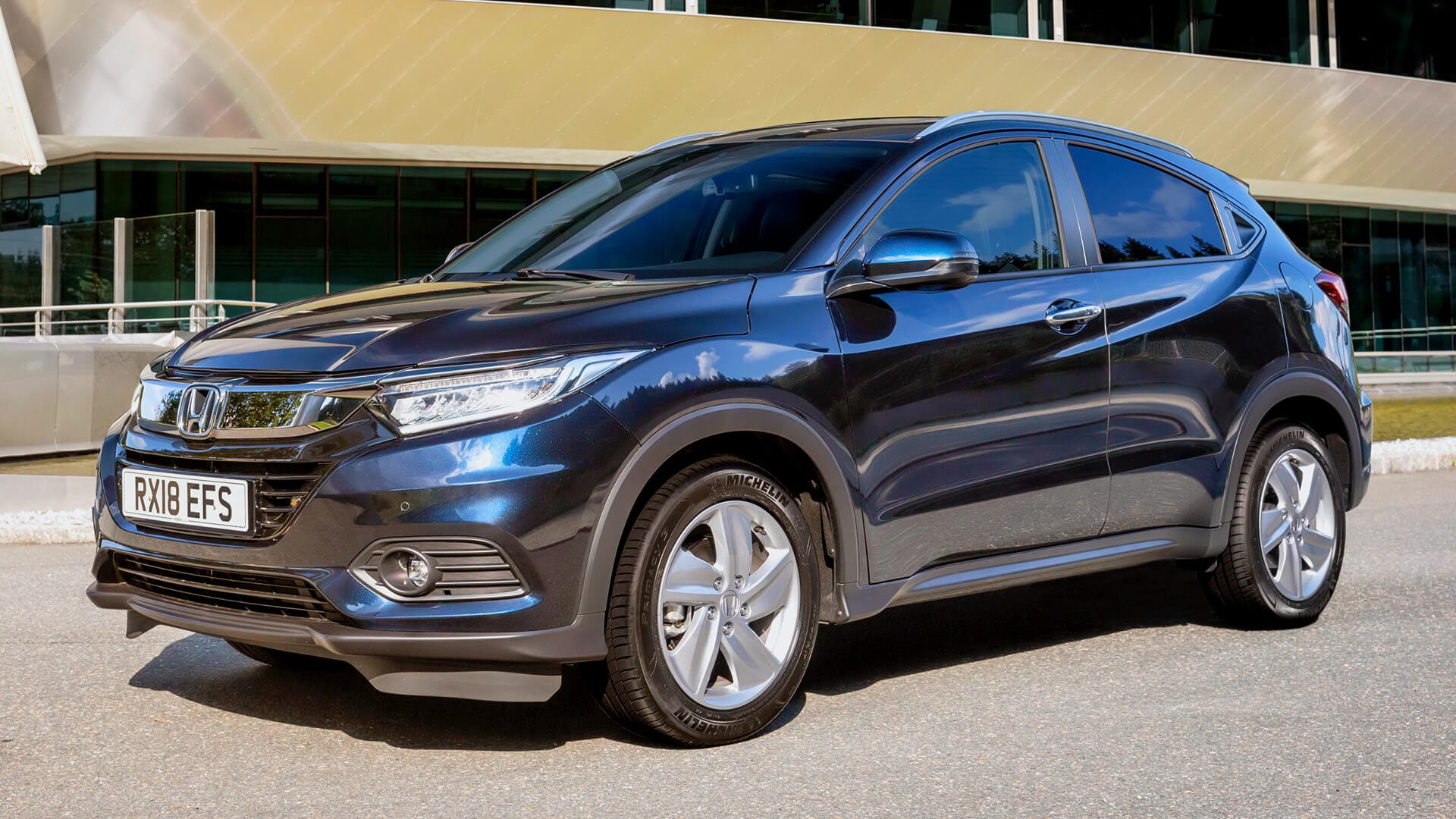
Despite its 2001 update, the first HR-V looked rather like an MPV - some people even looked for a sliding door. The second generation was a completely new model with nothing in common with its predecessor: a city crossover with a sporty, coupé-like shape.
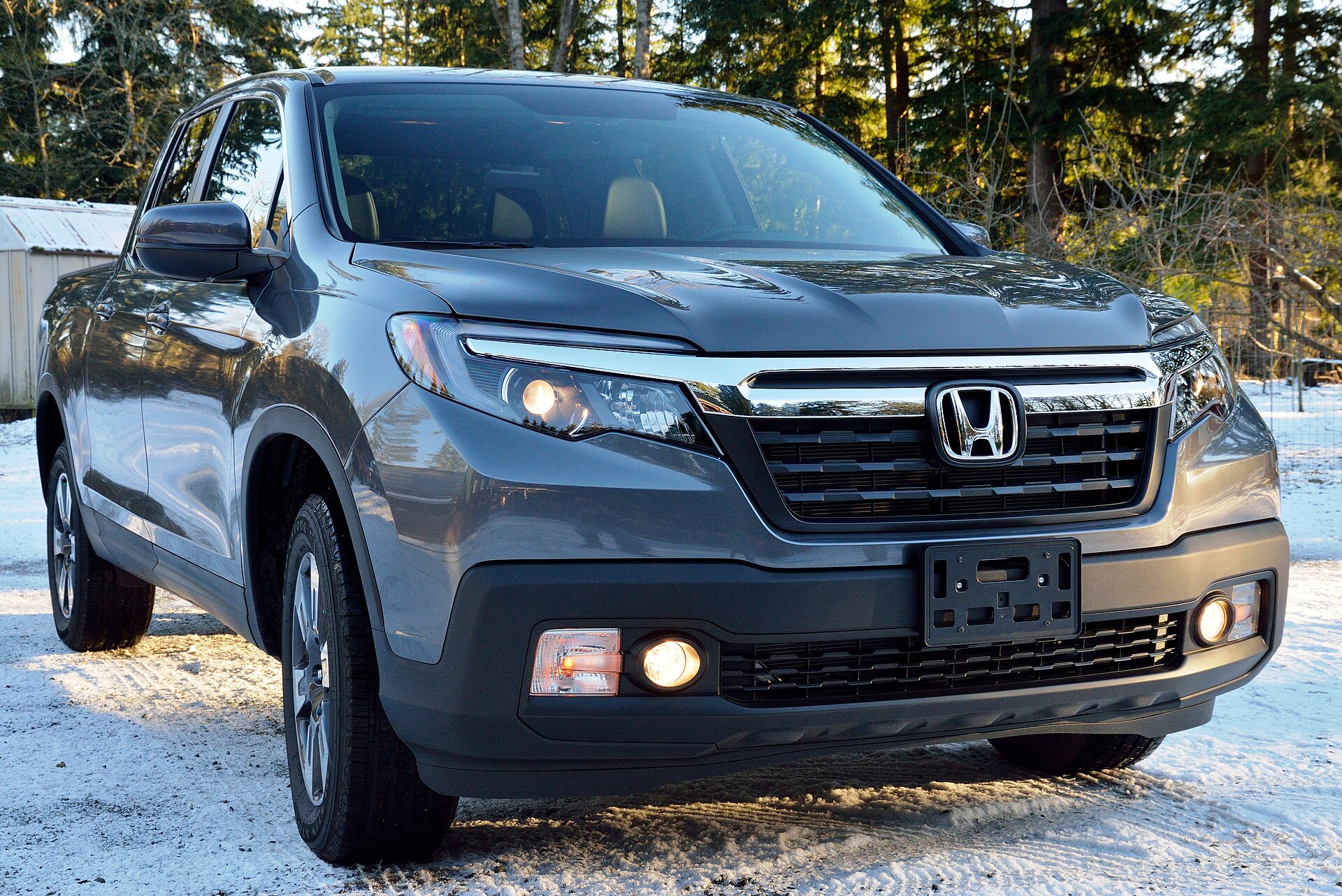
The front is not especially aggressive. The sharp points of the grille are hidden under plastic trims, with the chrome Honda badge in the centre and, unusually, the number-plate mount integrated into the grille. The headlights give the car presence with their large size, sharp corners and LED elements. The large bumper has three sections at the bottom: a big central intake and rectangular side sections with oval fog lamps. The bonnet has crisp creases that add some aggression but fade where they meet the grille trims. The facelift brought a revised grille with a new version of Honda's "flying wing", new headlights - projector halogen units as standard and optional LED lights similar to Acura's "Jewel Eye" - and a retouched bumper with a larger intake and bigger fog-lamp housings.
In profile, the rear door handles are hidden in the window frames, so the HR-V looks almost like a coupé. Large wheel arches with extra trims reach well into the rear doors, which makes some people think the back seats can only be reached through the front doors. The sloping roof ends in a large spoiler with a brake light. Ground clearance is 185 mm - more than enough for a city crossover. Entry versions ride on 17-inch wheels, while the Sport version has exclusive 18-inch matt black wheels.
At the rear, fang-shaped tail lights extend across the tailgate, linked by a strong line. The large plastic bumper trim carries two reflectors, and a single exhaust exits at the lower right. The facelift added a chrome strip between the lights and three new paint colours.
Interior
Although the HR-V is positioned as an affordable model, its cabin impresses, with quality leatherette, plastics, fabric and metal trim, a decent infotainment system and a high level of safety.
The driver has a slim three-spoke multifunction steering wheel with two joysticks and many buttons along the lower spoke. Behind it, the pre-facelift instrument panel has a large analogue speedometer in the centre and two smaller dials at the sides, the right one with a trip-computer display; after the facelift the side dials became two small screens, one of them a digital rev counter. Even the inexpensive materials are well finished, and the plastics are soft to the touch. The HR-V seats five. The front seats have a wide range of adjustment, heating and pronounced side support, and the facelift brought new cupholders. The glovebox is large and cooled.
The asymmetric centre console is clean and uncluttered. It is dominated by a large infotainment screen operated by buttons and touch, and after the facelift a physical volume knob replaced the touch buttons. The system supports Android Auto, Apple CarPlay and HondaLink. A single air vent sits to the left of the screen, with a line of three narrow vents to the right, and below is a large panel of touch-sensitive climate controls. Honda says the facelift improved materials and noise insulation, with more sound-absorbing material and active noise cancellation through the audio system.
The tunnel is equally uncluttered, with a few buttons, a neat gear selector, the electric parking-brake switch, a storage tray, a wide armrest and, to the left, a small phone tray with a USB socket. The rear bench seats three with three head restraints - reasonably comfortably for such a small car - and has a fold-down armrest with cupholders. The 60/40 Magic Seats fold flat or flip up their cushions. In European measurement the boot holds 453 litres, or 1,026 litres with the rear seats folded (published figures give 470 and 1,533 litres, measured differently). A space-saver spare and tools are stored under the floor.
Engines and transmissions
| Engine | Market | Power | Torque | Gearbox |
|---|---|---|---|---|
| 1.5 i-VTEC petrol, direct injection | Europe and others | 96 kW (130 PS) | 155 Nm | 6-speed manual or CVT |
| 1.6 i-DTEC turbodiesel | Europe | 88 kW (120 PS) | 300 Nm | 6-speed manual |
| 1.8 i-VTEC petrol | North America | 105 kW (141 hp) | 172 Nm | CVT; AWD available |
| 1.5 hybrid (i-DCD) | Japan | - | - | 7-speed dual-clutch |
The 1.5 i-VTEC has direct injection, variable valve timing and 16 valves and uses 5.2–5.6 l/100 km. The 1.6 i-DTEC diesel from the Earth Dreams family uses about 4 l/100 km; the fuel tank holds 50 litres. In Europe the HR-V reaches 100 km/h in 10.1–11.2 seconds and has top speeds of about 187–192 km/h. In North America the 1.8 lost its manual gearbox and was later offered only with a CVT, with optional Real Time all-wheel drive using a multi-plate clutch. After the facelift the CVT was reprogrammed to simulate gear changes under hard acceleration. In Japan a hybrid was also sold, combining the 1.5 petrol engine with an electric motor of about 22 kW (30 PS) and a seven-speed dual-clutch gearbox.
Chassis
The HR-V is built on Honda's global compact platform shared with the Jazz/Fit, with a transverse engine and a body using a large share of high-strength steel. The front suspension uses MacPherson struts and the rear a semi-independent torsion beam, with hydraulic dampers and anti-roll bars at both ends. Rack-and-pinion steering has electric assistance with new software that varies the steering effort with speed. All four wheels have disc brakes, ventilated at the front, plus many electronic aids.
Safety and equipment
High-strength steel increases body stiffness, and the facelifted crossover offers ABS and EBD, hill-start assist, tyre-pressure monitoring, a light sensor, adaptive cruise control, Vehicle Stability Assist, front and side airbags, curtain airbags with a rollover sensor, brake assist, Collision Mitigation Braking, lane departure warning, Road Departure Mitigation, Lane Keeping Assist, LED daytime running lights, a rear camera, seat-belt reminders and ISOFIX mounts, depending on the version.
A typical base version has front and side airbags, stability control, an electric parking brake, Eco Assist, cloth seats, hill-start assist, cruise control, halogen headlights with LED running lights, a 5-inch audio system with USB and Bluetooth, a rear camera, Magic Seats, heated electric mirrors, air conditioning and 17-inch wheels. Higher versions add Display Audio with a 7-inch touchscreen and six speakers, a colour driver display, heated front seats, keyless start, touch-control climate, Honda Sensing, navigation with voice control and leather upholstery.
What owners say
Owners of the first generation praise its road manners, easy handling, ground clearance and roomy boot, as well as economy, reliability, comfort and safety; with all-wheel drive it goes where ordinary crossovers would get stuck. On the downside, they mention the dated styling, complicated engine repairs, a fairly small cabin, the CVT, firm suspension, expensive parts and slow warm-up in winter.
Rivals
The second-generation HR-V competed with the Nissan Juke, Renault Captur, Peugeot 2008, Jeep Renegade, Mazda CX-3, Toyota C-HR, Opel Crossland X and Volkswagen T-Roc.
Honda HR-V evolution in numbers
Did you know?
- The Honda HR-V has been around for 28 years: 3 generations in our catalog since 1998.
- The longest-running generation is the HR-V RU (2013–2022): 9 years.
- The biggest jump in power came with the HR-V RU: up to 136 kW (185 PS), 44 kW more than the HR-V GH.
Most powerful version, kW
Figures from the 1cars catalog: power is the strongest version of each generation; generations without the figure are left out.
Honda HR-V: first vs latest generation
| Spec | HR-V GH | HR-V RV | Change |
|---|---|---|---|
| Years | 1998–2006 | 2021–present | 23 years apart |
| Most powerful version | 92 kW (125 PS) | 133 kW (181 PS) | +41 kW (+45%) |
Oldest and newest generation in the 1cars catalog. Power is the strongest version of each; other rows are shown only when both generations have the figure.
Image credits · Photos from Wikimedia Commons under free licences
- Honda HR-V GH · Photo: Vauxford / Wikimedia Commons, CC BY-SA 4.0
- Honda HR-V RU · Photo: Vauxford / Wikimedia Commons, CC BY-SA 4.0
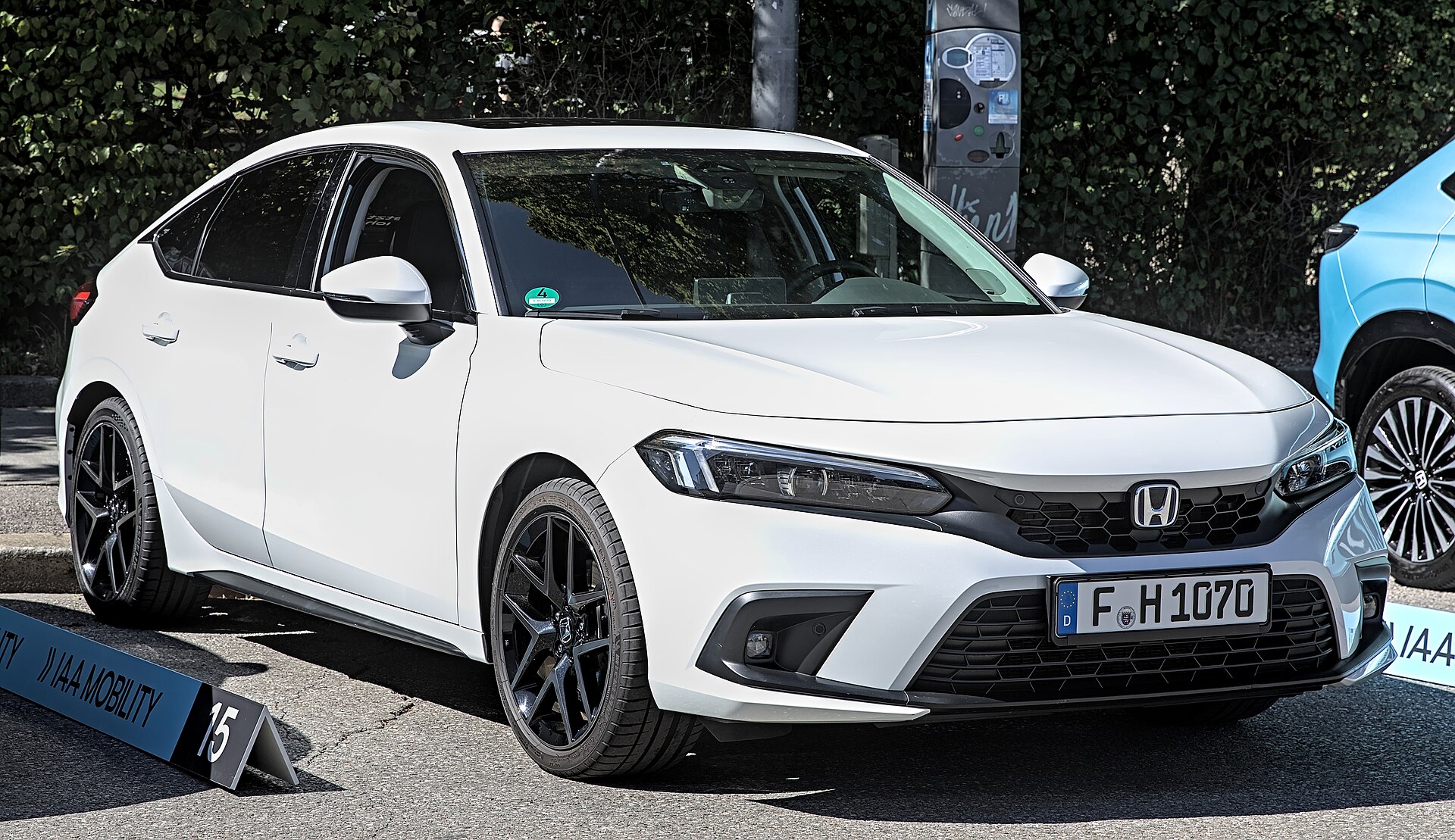
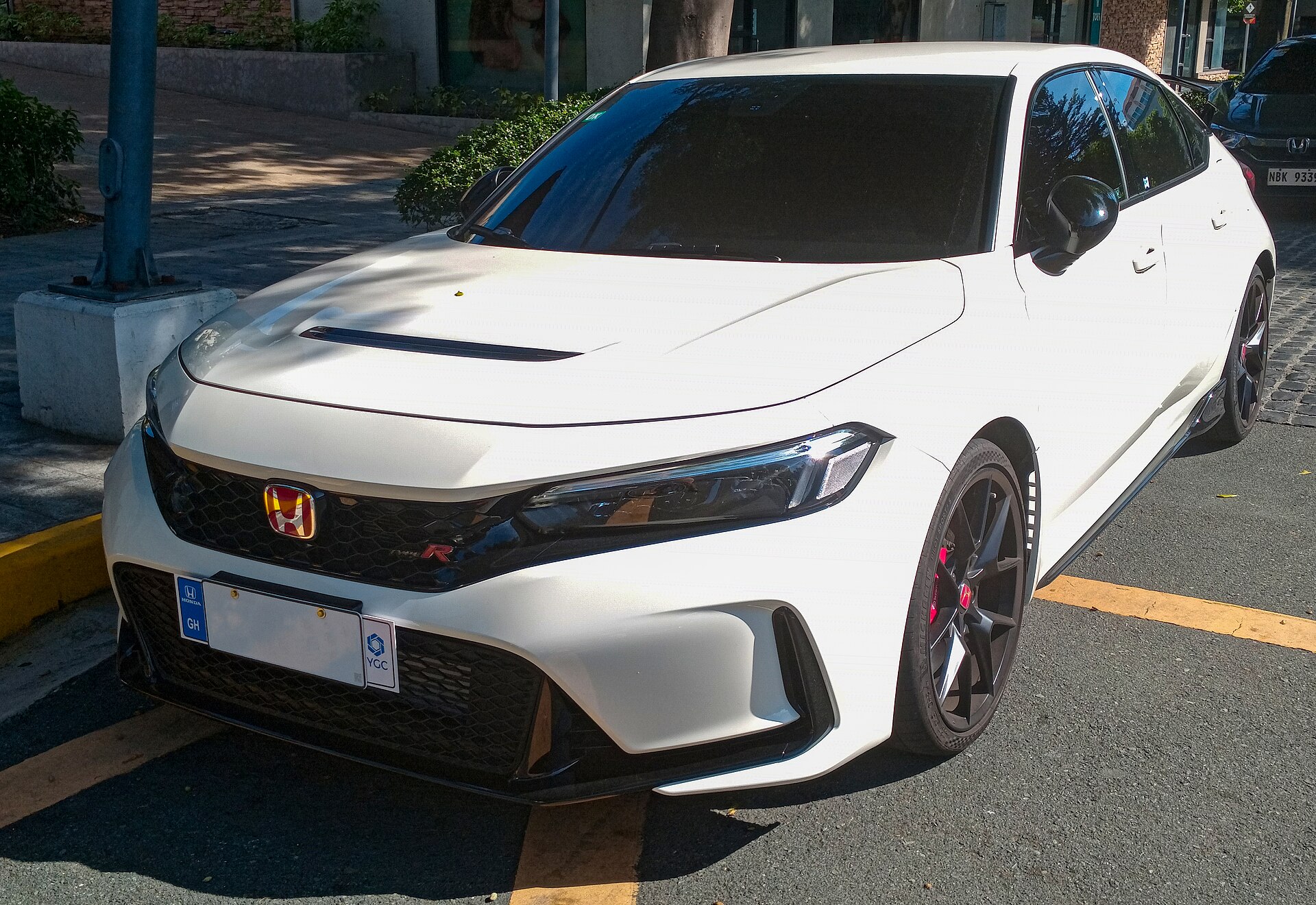
- Honda HR-V RV · Photo: © M 93 / Wikimedia Commons, CC BY-SA 3.0 de
Honda HR-V in our rankings
- No. 17 of 99 · Lightest SUVs and crossovers (1,314 kg · top 18%)
- No. 60 of 256 · Most economical cars (5.4 l/100 km · top 25%)
- No. 36 of 146 · Smallest SUVs and crossovers (4,355 mm · top 26%)
- No. 22 of 77 · Most economical SUVs and crossovers (5.4 l/100 km · top 30%)
- No. 283 of 912 · Longest-running car nameplates (13 years · top 32%)
- No. 96 of 304 · Lightest cars (1,314 kg · top 32%)
Lighter than 82% of ranked SUVs and crossovers in the 1CARS catalog (No. 17 of 99).
FAQ
Is the Honda HR-V the same as the Honda Vezel?
Yes. The second-generation HR-V was sold in Japan as the Vezel.
Is the Honda HR-V all-wheel drive?
It depends on the market: European versions are front-wheel drive, while AWD was offered in markets such as Japan and North America.
What engines does the Honda HR-V have in Europe?
A 1.5 i-VTEC petrol with 96 kW (130 PS) and, until 2020, a 1.6 i-DTEC diesel with 88 kW (120 PS).
How big is the Honda HR-V boot?
453 litres in European measurement, or 1,026 litres with the rear seats folded.
Data sources
Data checked by an editor against the sources below.
- Wikipedia - Honda HR V
- Wikipedia - Honda HR V (third generation)
- Co - Specifications
- EEA CO₂ monitoring (European Environment Agency, CC BY 4.0)
- NHTSA 5-Star Safety Ratings (US NCAP) — U.S. Government work, public domain