Best small city cars: seven easy-to-park picks
A good city car has to do a few things well: fit into short parking spaces, turn tightly, use little energy in stop-start traffic and protect its occupants at urban speeds. Size matters most, so this list concentrates on microcars, city cars and the smaller superminis rather than family hatchbacks.
We only considered models that have a full model page on 1cars and whose key facts – production years, engines and power – could be checked against a verified catalogue entry or an independent source such as manufacturer data, Wikipedia or Euro NCAP. Cars that did not pass that test, and budget saloons or raised crossovers rather than true city cars, were left out.
The seven cars below span almost seventy years, from Dante Giacosa's rear-engined Fiat 500 of 1957 to the electric Renault ZOE and the current Hyundai i20. Most are best bought used. For each one we explain why it earns its place, who it suits and the one drawback you should know about before buying.
-
1. Smart ForTwo
Best for tight parking
- Production years
- 1998–2024
- Body type
- Hatchback, Convertible
- Fuel
- Petrol, Diesel, Electric
- Power output
- 30–66 kW (41–90 PS)
The ForTwo is the purest answer to city driving. The first generation was about 2.5 m long and the second 2,690 mm, short enough to park nose-in where other cars need a parallel space. Every generation was built at Smartville in Hambach, France, around the steel Tridion safety cell. The second generation (2007–2014) used a 999 cc Mitsubishi three-cylinder, with 52 kW (71 PS) in the mhd version, and an electric drive followed from November 2009. It suits solo commuters and couples who rarely carry much luggage. The honest drawback: with two seats and a small boot, it works as a second car for most households.
Full review: Smart ForTwoPros
- Very short: about 2.5–2.7 m depending on generation
- Tridion steel safety cell
- Electric version available from 2009
Cons
- Only two seats and limited luggage space
-
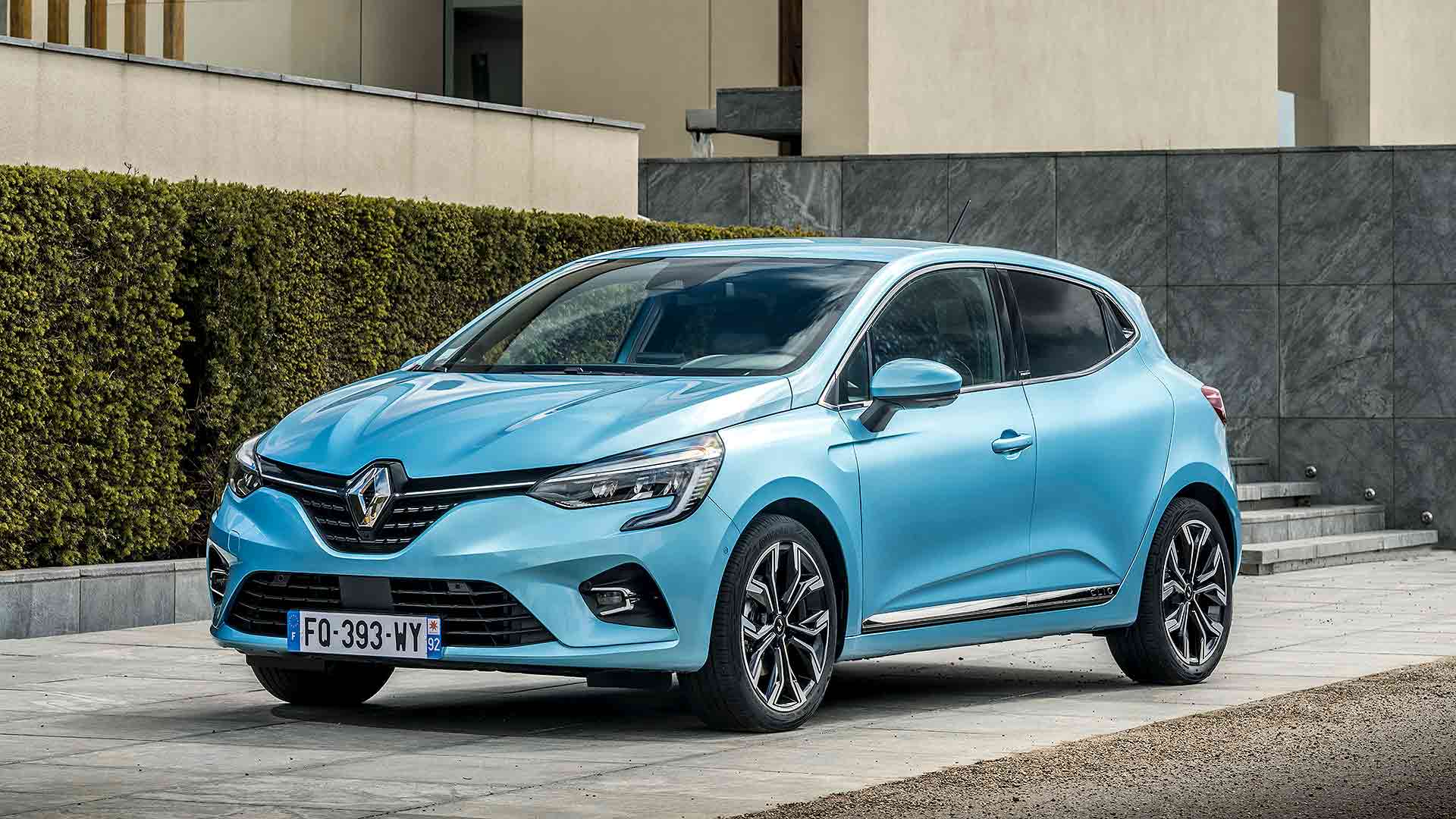
2. Renault ZOE
Best electric city car
- Production years
- 2012–2024
- Body type
- Hatchback
- Fuel
- Electric
- Power output
- 65–100 kW (88–136 PS)
Built at Flins in France from December 2012 to March 2024, the ZOE was Europe's best-selling all-electric car in 2015 and 2016 and, by the end of 2020, Europe's best-selling plug-in car of all time. The battery grew from 22 kWh to 41 kWh in 2016 and 52 kWh in 2019, lifting the WLTP range to 395 km, while motor outputs rose from 65 kW to 100 kW (136 PS). With home charging it is a natural fit for short urban trips. The drawback is safety: Euro NCAP gave it five stars in 2013, but the 2021 re-test of the facelifted car ended with zero stars.
Pros
- No tailpipe emissions in town
- Up to 395 km WLTP with the 52 kWh battery
- Large choice of used cars
Cons
- Zero stars in the 2021 Euro NCAP re-test
Spec sheet: Renault ZOE R110 (80 kW) 80 kW (109 PS)
Full review: Renault ZOE -
3. Mini Cooper
Best fun-to-drive choice
- Production years
- 2001–present
- Body type
- Hatchback
- Fuel
- Petrol, Diesel
- Power output
- 55–225 kW (75–306 PS)
The third-generation Mini, sold from 2014 to 2024, keeps the sharp steering the brand is known for in a body still compact enough for narrow streets; the five-door version is 3,982 mm long. Engines range from a 1.2-litre three-cylinder with 55 kW (75 PS) and the 1.5-litre Cooper with 100 kW (136 PS) to the 2.0-litre John Cooper Works with 170 kW (231 PS), plus diesels. Three-door cars were built in Oxford and at VDL Nedcar in the Netherlands, and a convertible joined in 2015. It suits drivers who want a small car that is also enjoyable on a country road. The drawback: the three-door's rear seats are tight for adults.
Full review: Mini CooperPros
- Wide engine range, 55–170 kW in series models
- Three-door, five-door and convertible bodies
- Agile handling
Cons
- Cramped rear seats in the three-door
-
4. Fiat 500
Best classic city car
- Production years
- 1957–present
- Body type
- Sedan, Station wagon, Hatchback
- Fuel
- Petrol, Diesel, Hybrid, Electric
- Power output
- 10–147 kW (14–200 PS)
Dante Giacosa's Nuova 500 was launched in July 1957 and built until 1975, with almost 3.9 million made. A rear-mounted, air-cooled two-cylinder of 479 cc gave about 10 kW (13 hp) at first; the 500 D of 1960 had a 499 cc engine with 13 kW (17 bhp). At 2,970 mm long it is still one of the easiest cars to park, and the 500 F of 1965 finally replaced the rear-hinged doors with front-hinged ones. It suits classic enthusiasts who drive mostly in town. The honest drawback: performance and crash protection are those of a 1950s design, so it is not a car for daily commuting on fast, busy roads.
Pros
- Tiny footprint: 2,970 mm long
- Simple air-cooled twin-cylinder engine
- Front-hinged doors from the 500 F (1965)
Cons
- 1950s performance and crash protection
Spec sheet: Fiat 500 Hybrid 1.0 l Firefly Hybrid 48 kW (65 PS)
Full review: Fiat 500 -
5. Volkswagen Polo
Best all-rounder
- Production years
- 1975–present
- Body type
- Hatchback, Sedan, Station wagon
- Fuel
- Petrol, Diesel, LPG / CNG
- Power output
- 29–147 kW (39–200 PS)
The Polo began in 1975 as a rebadged Audi 50 and has grown through six generations: the fifth was named World Car of the Year in 2010, and the sixth, from 2017, uses the MQB A0 platform. More than 13 million have been sold worldwide, so there is a wide choice of used cars with petrol or diesel engines. A Polo is roomier and quieter at speed than the microcars on this list, which makes it the best choice if your week mixes town streets with motorway trips. It suits small families and commuters. The drawback: recent generations have grown, so it is no longer among the easiest cars to park.
Pros
- Six generations: wide used choice
- Comfortable on longer trips
- World Car of the Year 2010 (fifth generation)
Cons
- Larger than true city cars in recent generations
Spec sheet: Volkswagen Polo VI 1.0 MPI 65 48 kW (65 PS)
Full review: Volkswagen Polo -
6. Hyundai i20
Best recent supermini
- Production years
- 2008–present
- Body type
- Hatchback
- Fuel
- Petrol, Hybrid
- Power output
- 62–88 kW (84–120 PS)
The third-generation i20 was unveiled in February 2020, and cars for Europe are built at Hyundai's plant in Izmit, Turkey. The 1.0 T-GDi petrol comes with 48-volt mild-hybrid assistance at 74 kW (100 PS) or 88 kW (120 PS), and there is a simpler 1.2 with 62 kW (84 PS). For enthusiasts, the i20 N uses a 1.6-litre turbo with 150 kW (204 PS) and a six-speed manual. It suits buyers who want a recent, well-equipped small hatchback with modern assistance systems. The drawback: Euro NCAP rated it four stars in 2021, not the five stars of the best rivals.
Pros
- Mild-hybrid 1.0 T-GDi petrol
- Recent design, built from 2020
- Sporty i20 N with 150 kW (204 PS)
Cons
- Four-star Euro NCAP rating (2021)
Spec sheet: Hyundai i20 BC3 Petrol 62 kW (84 PS)
Full review: Hyundai i20 -
7. Daewoo Matiz
Best budget buy
- Production years
- 1998–2018
- Body type
- Hatchback
- Fuel
- Petrol, LPG / CNG
- Power output
- 38–49 kW (52–67 PS)
Styled by Italdesign from its 1993 Lucciola study, the Matiz arrived in 1998 as a tall five-door microcar only about 1.5 m wide, and about 2.3 million were built in its first ten years. The 796 cc three-cylinder gives 38 kW (51 PS), and in Germany a 1.0-litre four with 47 kW (64 PS) followed from 2003. It suits drivers on a tight budget who want four doors in a very small footprint. The honest drawback is safety: in Euro NCAP's 2005 test the Matiz received three adult-occupant stars, one of them struck through because of high chest loads in the side impact.
Full review: Daewoo MatizPros
- Very narrow: about 1.5 m wide
- Five doors in a microcar
- Simple three- and four-cylinder petrol engines
Cons
- Weak side-impact result in Euro NCAP (2005)


Data ranking: Smallest cars — all 420 models in our catalog with a figure, ranked by the numbers.
How we chose
Selection. We considered hatchbacks of segments A and B with up to 85 kW in our catalogue and reviewed every candidate. We left out the Datsun mi-DO, FAW V2, Proton Persona 400 and Lada VAZ-2109 (budget designs with too little verifiable data or a weak fit with the city-car brief), the Renault Sandero Stepway (a raised, crossover-style hatchback) and the ZAZ Chance (a compact saloon and hatchback derived from the Daewoo Lanos). We added the Mini, Volkswagen Polo and Hyundai i20, and replaced the separate Zoe Z.E. 40 entry with the main Renault ZOE model page. Every car listed has a published model page on 1cars.
Data sources. The facts on each card (years, body, fuel, power) come from the 1cars catalogue; for the Fiat 500 we corrected the production years and power from Wikipedia before publication. Facts in the text come from manufacturer data as reported by English- and German-language Wikipedia, from Euro NCAP results and, for the Daewoo Matiz, from our researched fact sheet (ADAC, Euro NCAP, Wikipedia). Where sources disagree we give the more conservative figure.
Ranking. The order is editorial. It reflects how well each car meets the city brief – size, manoeuvrability, running needs and safety – not a test score or sales figures. Prices are deliberately not given.
Frequently asked questions
What makes a good city car?
A short body that is easy to park, a tight turning circle, low energy use in stop-start traffic and sound safety at urban speeds. If you also drive long distances on motorways, a slightly larger supermini such as the Volkswagen Polo or Hyundai i20 is more relaxed.
Is an electric car a good choice for the city?
For short urban trips with charging at home, yes. The Renault ZOE with the 52 kWh battery has a WLTP range of up to 395 km. Check the safety rating of the exact version: the facelifted ZOE scored zero stars in the 2021 Euro NCAP re-test.
Is a classic Fiat 500 practical as a city car today?
As an occasional town car or weekend classic, it is charming and very easy to park at 2,970 mm long. As a daily commuter on busy roads, its 1950s performance and crash protection are a real limitation.
Why are there no prices in this list?
Prices depend on the country, age, mileage and condition of each car and change quickly. We only publish facts that can be checked, so compare current local listings and a full service history before you buy.